
Lift sunken concrete back to level. No tear-out required.
I'm Ready For A Free Quote
Thank You For Your Submission!
A team member will be reaching out to you shortly.







These problems get worse every season if left alone.
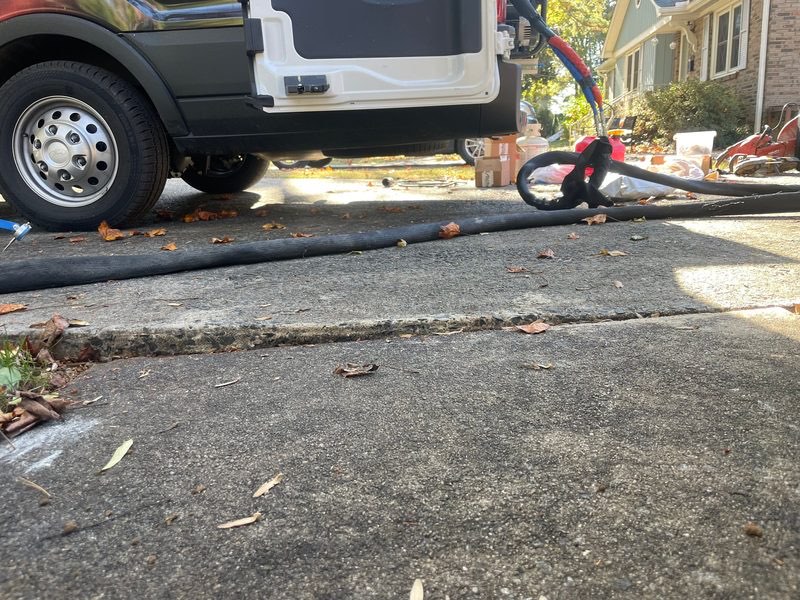
Your driveway has a visible dip or drop-off near the garage. Water pools in the low spot after every rain instead of draining to the street. Concrete leveling fixes the pitch, not just the puddle. When a slab settles, the concrete no longer drains the way it was poured to drain. Lifting concrete back to grade sends water to the street again, and the soil under it stops washing out. Leveling the concrete runs cheaper than a full replacement and takes one day. Level concrete drains. Settled concrete does not.
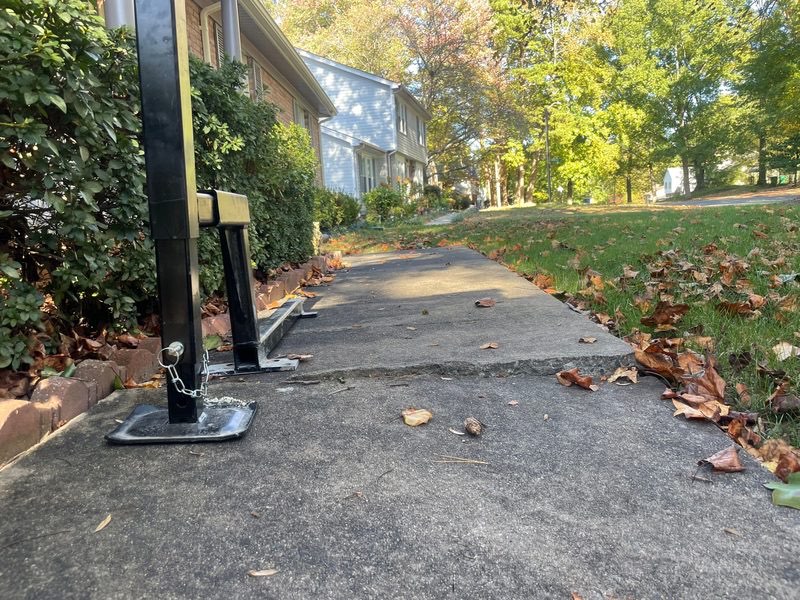
One section of your sidewalk sits higher or lower than the next. The lip between slabs catches your foot every time you walk past. Uneven concrete is a trip hazard before it is anything else. Concrete lifting raises the low slab to meet the high one so the joint sits flush. Foam does the work, the concrete surface never comes out, and leveling beats replacing every time. Sunken slabs come up instead of being hauled away, and the concrete you paid for stays.
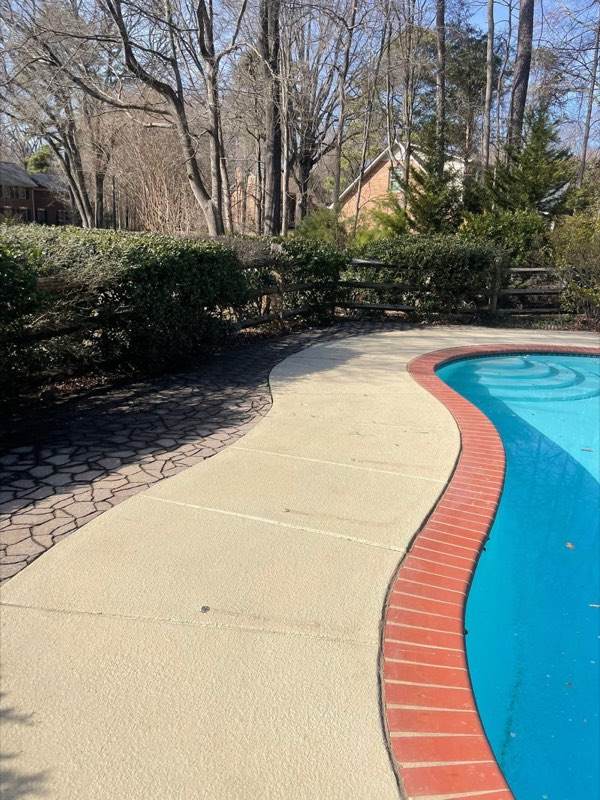
Your pool deck has tilted or dropped around the edges. Water runs toward the house instead of away from it. Concrete around a pool deck settles because the soil under it washes out. Concrete leveling puts the slope back so runoff goes away from the house, and the foam fills the void in the soil at the same time. That is concrete repair that lasts. Concrete around water needs the leveling done right the first time.
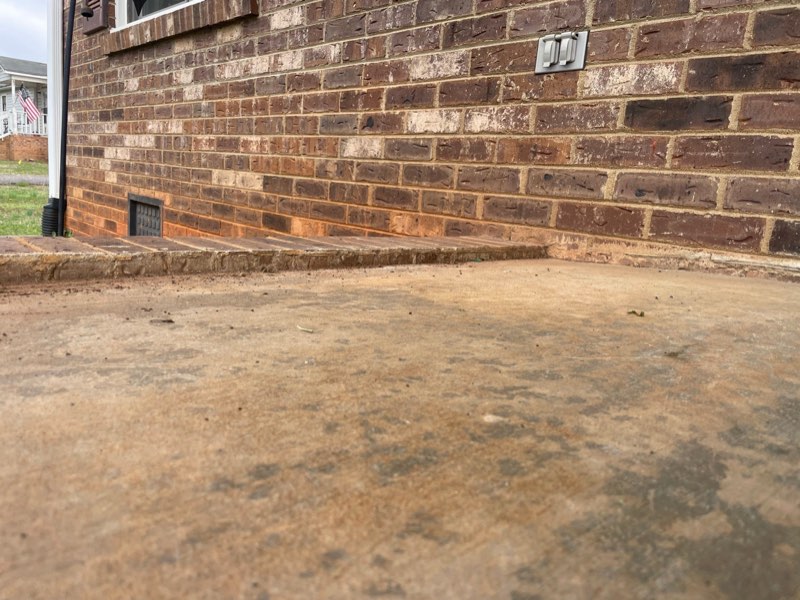
A gap has opened between your porch and the house. The stoop pulls away a little more each year as the ground underneath erodes. A sunken porch keeps sinking because the soil under it keeps moving. Concrete leveling stops that by filling the void with foam, then lifting the porch back to the door. Concrete on supported soil stays put. Foam fills what the ground gave up, and the concrete sits level again.
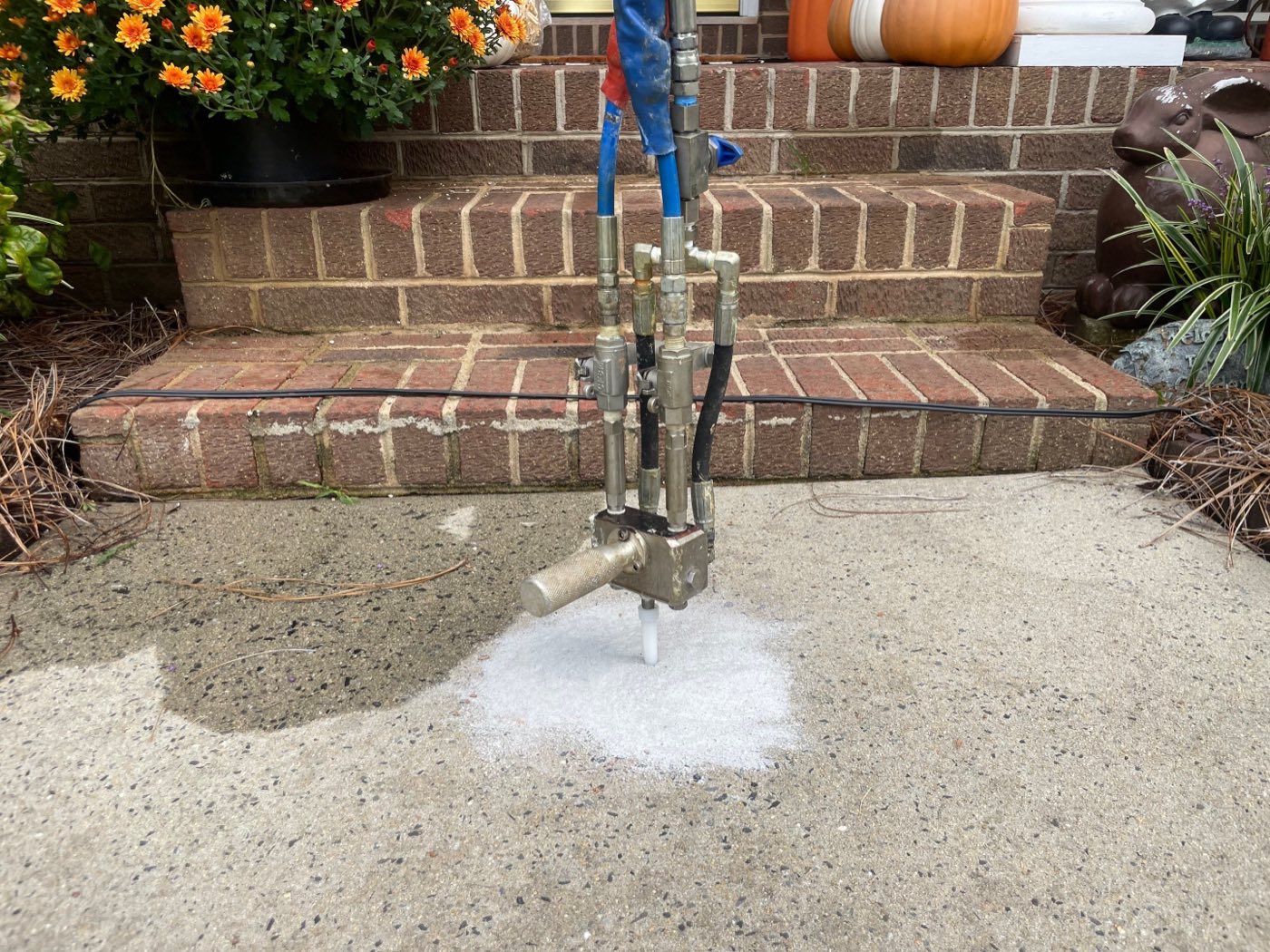
Concrete leveling fixes sunken, uneven, and settled slabs without tearing them out. The soil underneath your concrete washes away over time. Water, freeze-thaw cycles, and poor compaction leave voids under the slab. It loses support and sinks. Left alone, settled concrete sends water toward your home — which can lead to foundation damage or basement water problems. Leveling fills those voids and lifts everything back where it belongs. Foam is why this works. Mudjacking pumps a heavy slurry that adds weight to ground that already failed. Concrete leveling with foam weighs a fraction of that, so the ground carries the concrete instead of the concrete crushing it. Lighter material, stable concrete: that is the whole idea. That is what makes the leveling different.
We drill small holes — about the size of a penny — through the slab. High-density polyurethane foam goes in and expands to fill the void. The slab lifts back to grade. The foam is waterproof and won't wash out like the soil did. Mudjacking slurry washes out the same way the original soil did. Foam does not. That is the difference between concrete repair that holds and concrete repair you pay for twice, and it is most of the reason we stopped offering mudjacking. Foam is the whole reason leveling replaced mudjacking on most jobs.
Driveways and garage floors settle the most. Heavy loads and water runoff erode the sub-base faster. Leveling brings them back flush and restores proper drainage away from your home. Concrete leveling and drainage go together. A level slab moves water off the property, and lifting the concrete is usually cheaper than the drainage work people do instead. Ask for an estimate on both, because uneven concrete is almost always a water problem first. Most leveling jobs finish in one visit, and the concrete is walkable that evening.
Settled patios and pool decks create trip hazards and direct water where it shouldn't go. Lifting them back to grade protects your home and makes the surface safe again. A safe surface is the point. Concrete lifting takes a sidewalk or a porch back to grade in an afternoon, and the concrete you already own goes on serving. The leveling cost is a fraction of replacing it. A sunken porch, a dropped stoop, a tilted walk: same method, same day.
Our Process
We walk your property and measure how far each slab has dropped. You see exactly where the problem is and what’s causing it before any work starts. The inspection is free and the estimate is written. We probe the soil, measure the drop, and tell you whether concrete leveling or full replacement is the honest answer. Most of the time the concrete is fine and only the soil failed. The concrete tells us more than the paperwork does. Our concrete services are quoted the same way every time. We quote leveling and replacement side by side on one estimate.
We drill small holes through the settled slab at precise locations. Each port is placed where the void underneath needs to be filled. Where the ports go is what separates good leveling from a patch job. They go where the void is, not on a grid, and the foam travels along the underside of the concrete to fill it. Uneven concrete comes back when that step is rushed. It spreads under a driveway until the concrete carries evenly again.

Expanding polyurethane foam goes in through each port. It fills the void and lifts the slab back to grade. We monitor the lift with a level the entire time. Lifting concrete is measured, not guessed. The foam goes in slowly and the slab comes up in small increments, because concrete lifted too fast cracks. Leveling is a patient job, and that is the difference between real leveling and jacking something up. A slow lift is what keeps the concrete whole.
We patch every drill hole with concrete and seal the joints between slabs. This keeps water from getting underneath again. Sealing the joints is the last defense. Water that gets under a slab washes out soil and the concrete drops again, which is why concrete leveling includes the sealing. Skip it and you are buying concrete repair twice. Sealed joints keep the concrete dry underneath.
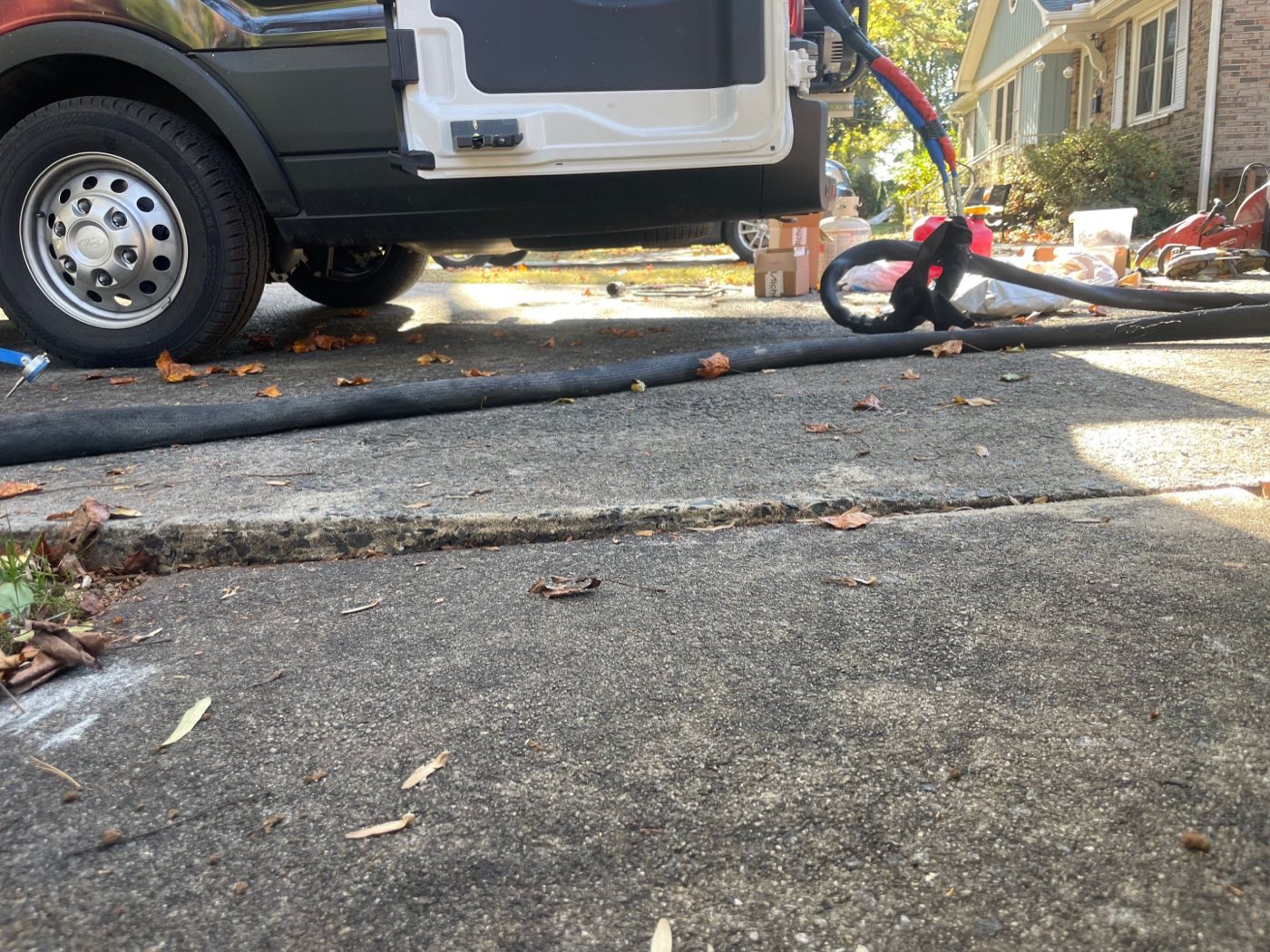
Most concrete leveling jobs take a few hours — not days. Your driveway, sidewalk, or patio is walkable the same day. There’s no heavy equipment tearing up your yard and no week-long curing time. We show up, lift the slab, patch the holes, and leave the site clean. The holes are patched flush and the concrete is usable the same day. No demolition, no new concrete, no week of your driveway being gone. Foam sets in minutes and the leveling is done before we leave. The concrete you keep is the cheapest concrete there is. Leveling keeps what you already have.
We don’t just lift the slab and move on. We figure out why it settled in the first place. If water is washing out the soil underneath, we address that too. Fixing the symptom without fixing the cause means the problem comes back. The cause is almost always soil. Concrete leveling that ignores the cause is a patch, so we fill the void, support the slab, and correct the drainage that washed it out. Concrete does not sink on its own, and concrete repair without ground work comes back. Handle the drainage, then do the leveling, and the concrete stays.
Every job comes with a written warranty. You get a detailed proposal before we start — what we’ll do, how long it takes, and what it costs. No surprises. No pressure. Just straight answers and concrete that stays where it belongs. We will tell you when leveling is the wrong call. Badly broken concrete needs replacing, and we say so rather than lifting a slab that is going to fail anyway. The estimate says which, and our concrete services cover both. We will price the concrete both ways.
Get My Free Quote
When the voids are filled with high-density polyurethane foam and the root cause is addressed, leveling is a long-term solution. The foam doesn’t break down, wash out, or compress over time. It stays in place and holds the slab at grade. The foam does not shrink, rot, or wash out, so the concrete holds at grade. Mudjacking material breaks down. That single difference is why concrete lifting outlasts the older method by years, and leveling done with foam is a one-time job. A fill that holds is what makes the leveling permanent.
Most residential jobs are done in a few hours. You can walk on the surface right away. Driveways and garage floors are typically ready for vehicles within a day. Foam cures hard in about fifteen minutes, so driveways take traffic the same afternoon. Leveling does not need a cure week the way new concrete does, and the cost reflects that. Sunken slabs go back to work the day the leveling is done. A stoop is usually leveling work of an hour.
In most cases, yes. If the slab is cracked but still in large solid pieces, it can be lifted. If the concrete is crumbled or broken into many small fragments, replacement may be the better option. We’ll tell you which approach makes sense during your free inspection. Bring us the worst slab on the property and we will tell you whether concrete leveling makes sense. The estimate is free, the soil probe is free, and nobody pushes concrete replacement that is not needed. Uneven concrete almost always runs cheaper to lift than to replace. The concrete estimate is free and there is no pressure. We level concrete, we do not sell replacement.
Foam jacking uses lightweight, expanding polyurethane foam injected through small holes. Mudjacking pumps a heavy cement slurry through larger holes. Foam cures faster, weighs less, won’t erode, and requires smaller drill points. It’s the more precise and durable method. Mudjacking drills bigger holes and moves more material for less control. Foam needs a smaller hole, travels farther under the concrete, and lifts from more points. For most concrete lifting jobs it is simply the better tool, and leveling with foam leaves a cleaner slab. It still has uses, but not under a driveway you park on.
In most cases, no. Homeowner insurance typically considers concrete settlement a maintenance issue, not sudden damage. If the settlement was caused by a covered event like a burst pipe, part of the repair may fall under your policy. Check with your provider for your specific situation. Insurance rarely covers soil movement, which is what causes most of it. That makes concrete leveling an out-of-pocket cost for almost everyone, and it is one reason we quote it against full replacement so you see both numbers. Concrete repair runs cheaper than concrete replacement nearly every time. Leveling concrete is the cheaper path almost every time. The leveling price sits on the estimate before we start.
Queen Foundation Repair provides concrete leveling across multiple states. Select your area below to see local service details.