Water showing up in the basement after a hard rain, a wall that has started to bow, cracks you keep checking on. We do foundation repair, basement waterproofing and french drain installation for homes from Squirrel Hill North to Brighton Heights. The inspection is free.
Get Your Free Inspection
We appreciate you reaching out.
One of our team members will be with you shortly.





WHAT TO LOOK FOR
Some of it shows up inside, some of it outside. Water on the basement floor, a wall that has moved, a smell that will not clear, a puddle in the yard that never drains. Here is what people call us about most, and what each one usually means.
It is getting in below grade
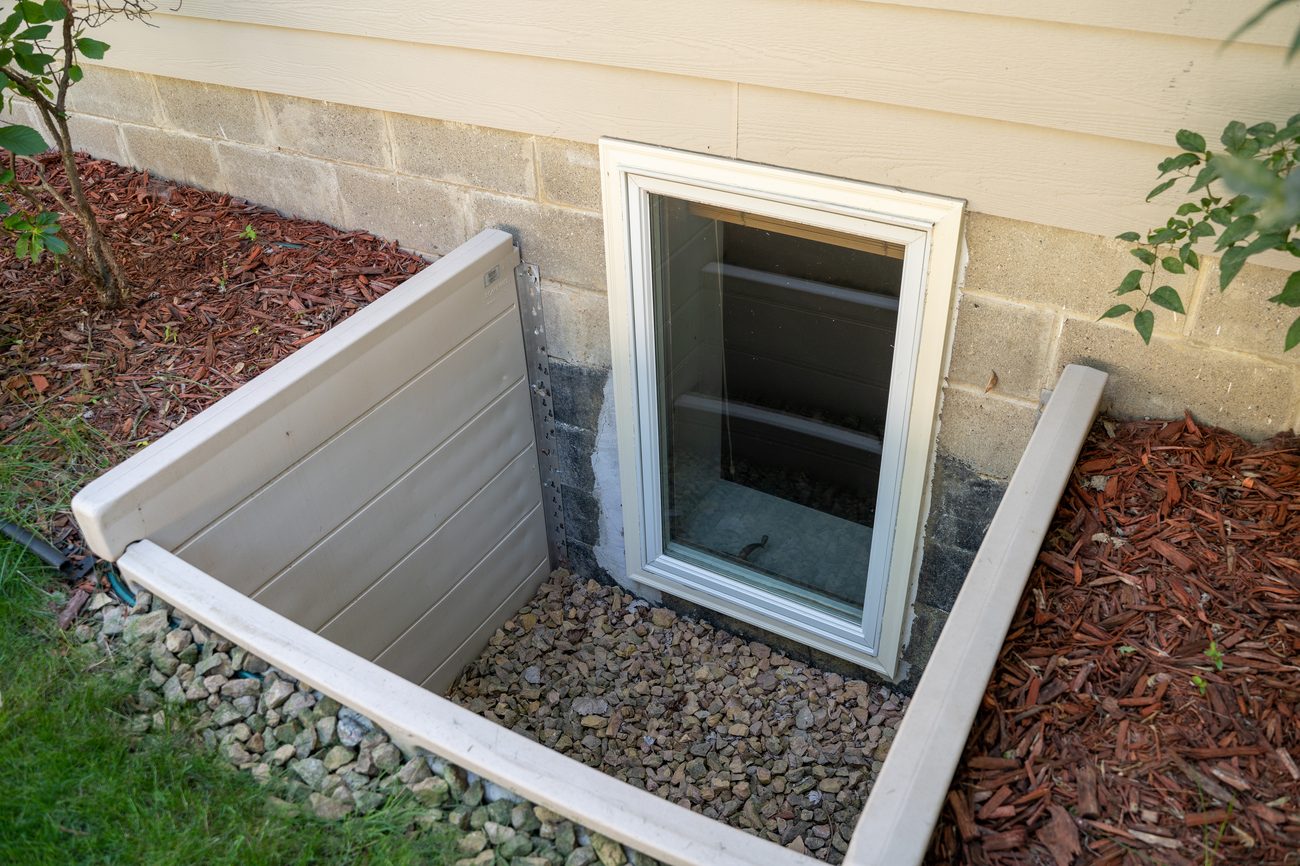
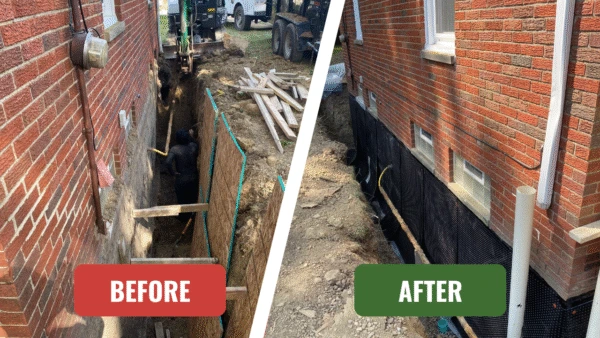
Water reaches the floor when it has nowhere else to go. The fix is usually outside the wall, moving it away before it ever gets in.
Pressure from the outside
Soaked ground pushes against the wall and it gives in the middle. This one does not settle down on its own, and it is worth looking at soon.
The corner has moved
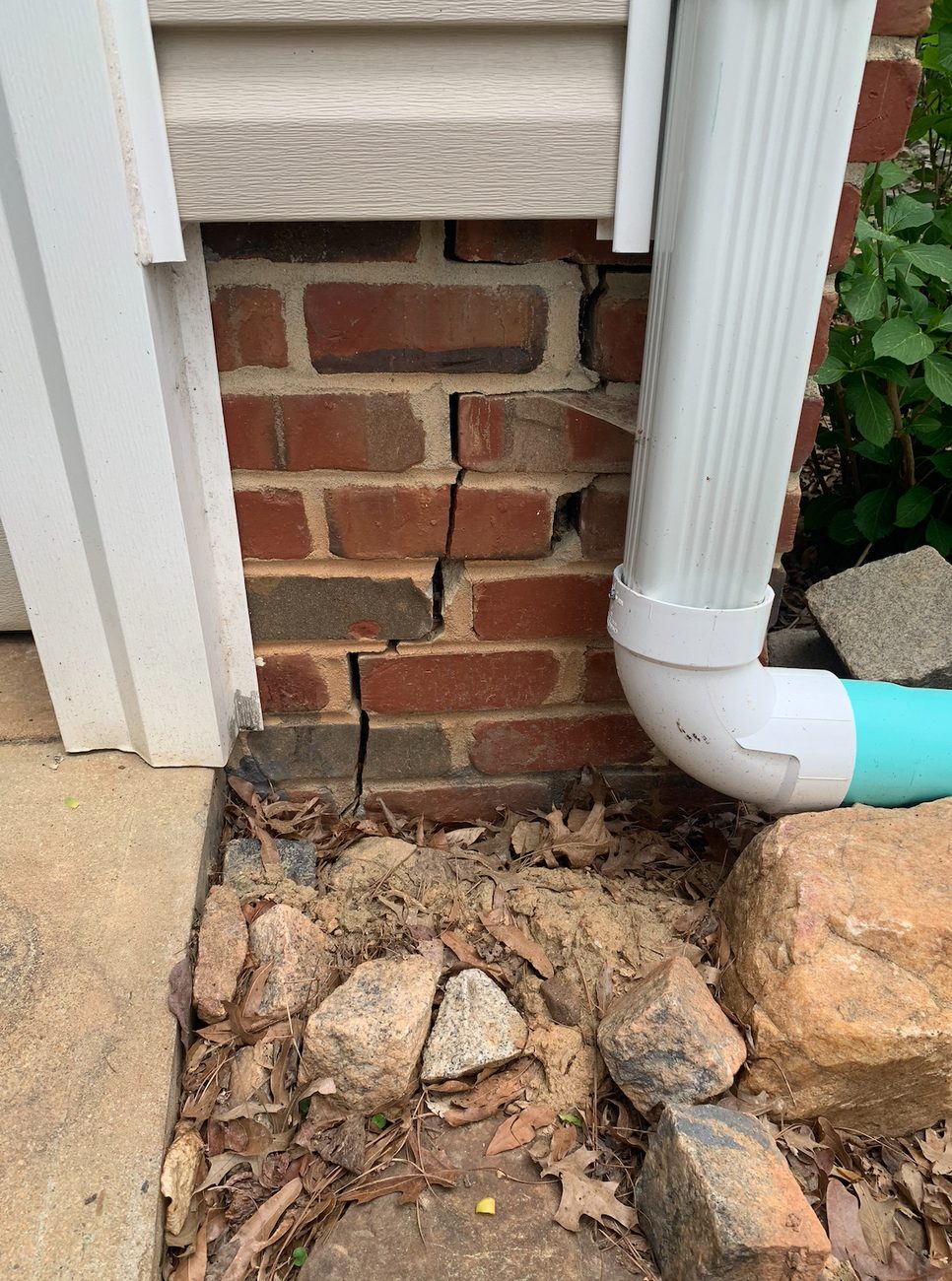
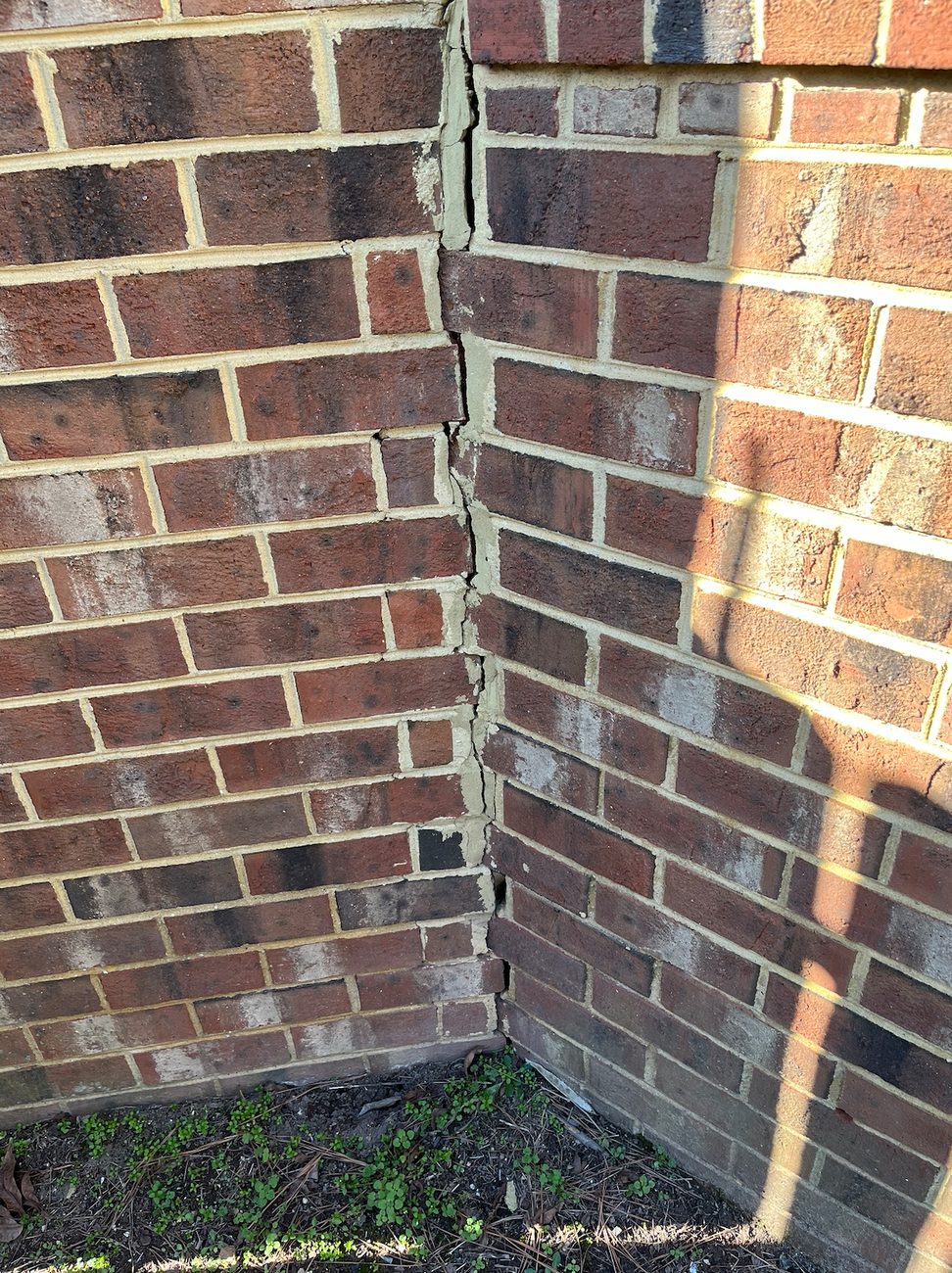
Cracks that climb the mortar joints mean one part of the house has dropped. Width matters more than length, and growth matters more than either.
Damp air, not dirty air
The smell comes from moisture the room cannot get rid of. Air fresheners cover it. Drying the space out is what actually stops it.
It has nowhere to drain
Water that sits beside the house eventually finds the wall. Giving it a path away from the foundation is cheaper than dealing with it inside.
Which way it runs matters
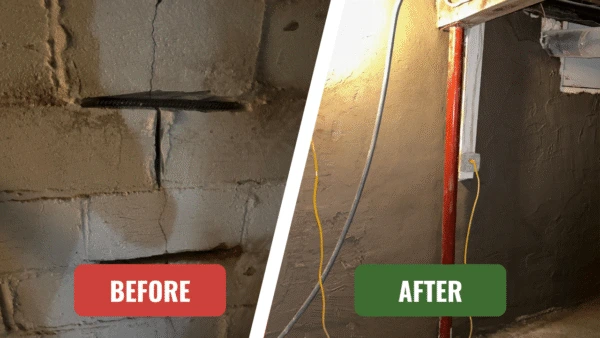
A crack that runs sideways along the wall means pressure from outside. One that runs straight up and down is usually the house settling in.
Most of this is fixable and a lot of it is not urgent. A hairline crack in a poured wall is common and often means nothing. What is worth a call is a wall that is bowing, a crack you can fit a coin into, a crack that is getting longer, or any of it with water coming through. If doors and windows start sticking at the same time, get it looked at.
Some of these fix the water and some of them fix the structure, and plenty of houses here need a bit of both. Here is what we do, what each one is actually for, and how it works.
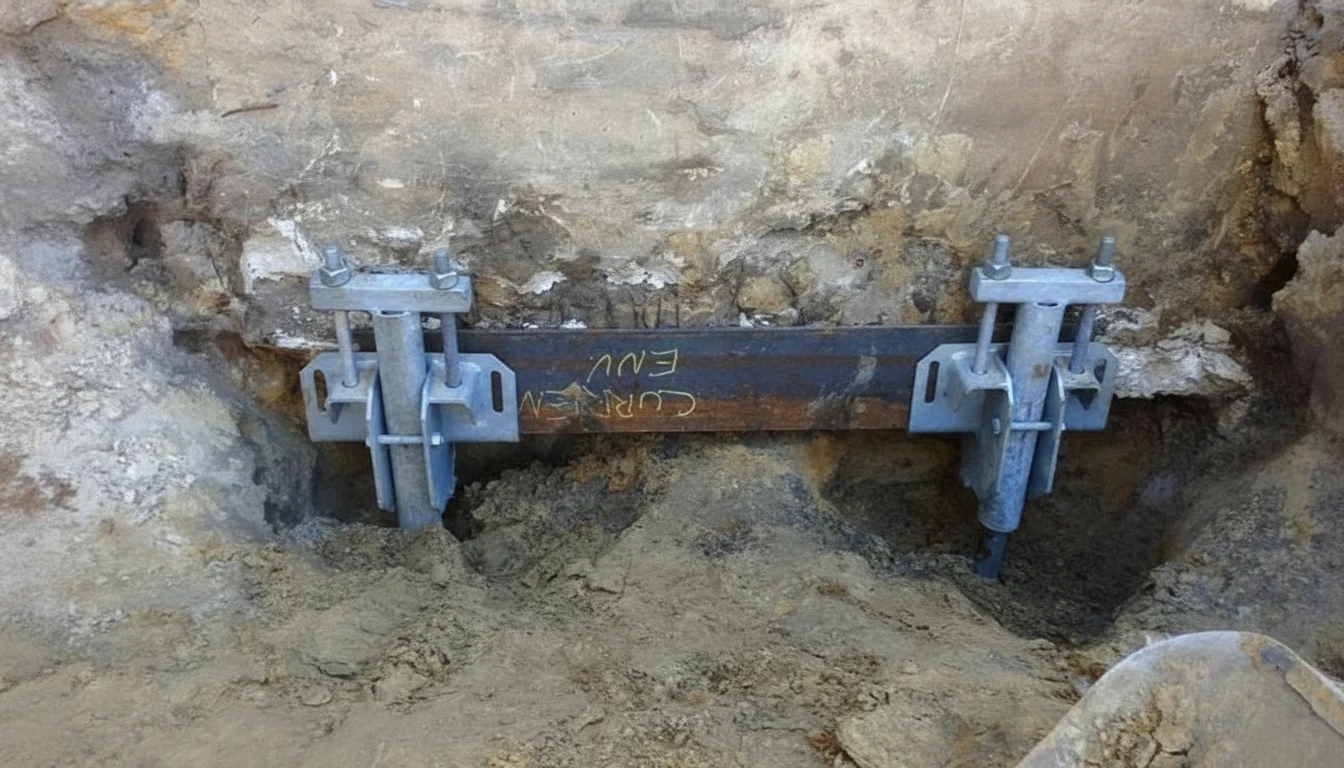
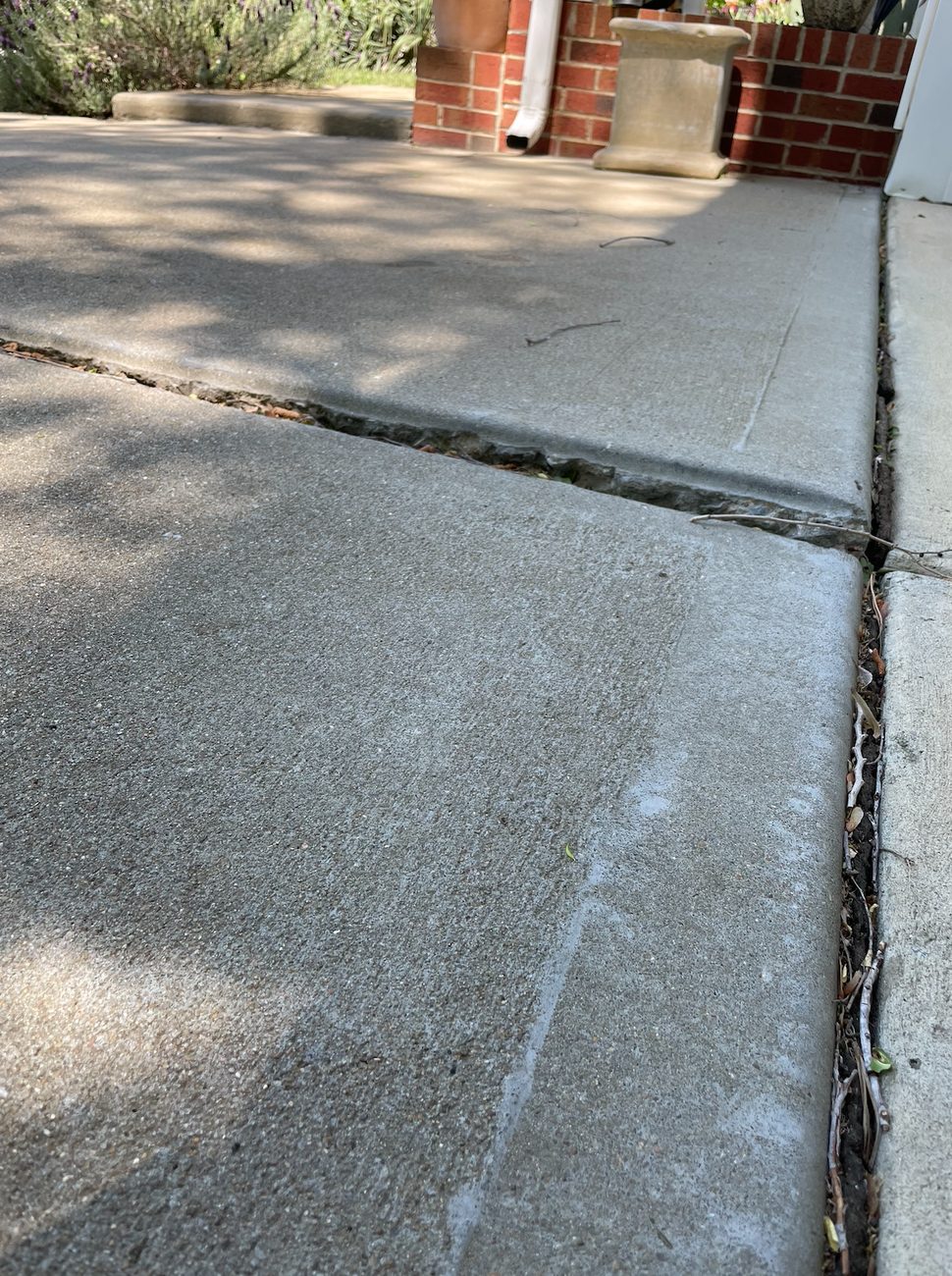
Steel piers driven to solid ground under a footing that has dropped, so the doors, floors and cracks upstairs stop getting worse.
Learn moreYou usually notice it upstairs before you notice it downstairs. A door that will not latch, a gap opening where the trim meets the ceiling, a crack climbing the brick outside. Underneath all of it, one part of the footing has settled lower than the rest and the house is following it down. Ground around Brighton Heights has been cut and filled more than once over the years, so a house can drop at one corner and sit perfectly still at the other.
Foundation repair puts the load back onto ground that will hold it. Steel piers are driven down past the disturbed layer until they reach something solid, then brackets transfer the weight of the footing onto them. Where the drop is small, that is enough to stop it there. Where a house has gone far enough out of level, the piers can bring it part of the way back, and the cracks upstairs close as it comes. Helical piers turn into the ground like a screw; push piers use the weight of the house to drive them.
What piers do not do is dry out a basement. If water moving through the ground is why the footing dropped, the drainage has to be handled as well or the same thing happens again in a few years. That is why the inspection looks at the outside of the house as closely as the inside. We work homes from Greenfield to Squirrel Hill North, and the inspection is free.
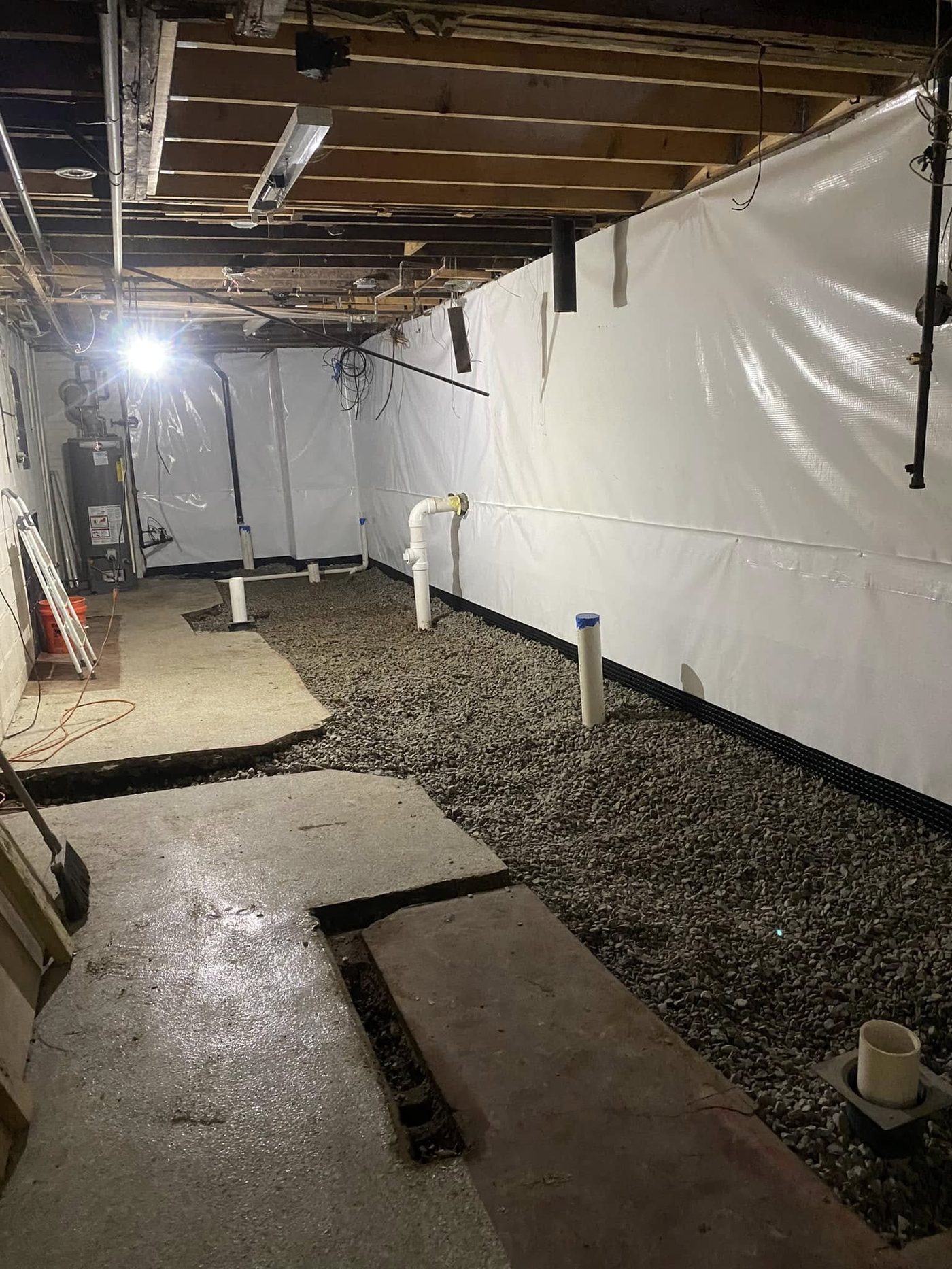
A full system that takes water out from under the slab and moves it away, so a basement that floods every spring stays dry.
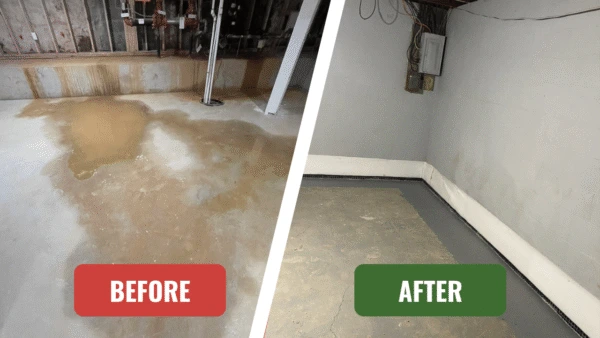
Learn moreYou go down after a storm and find water across the floor with nothing to point at as the source. Water builds up in the ground outside, presses in at the joint where the wall meets the floor, and comes through wherever it finds the easiest path. Which is why patching the wet spot almost never lasts. In Greenfield we see it most in houses where the ground slopes back toward the building.
Basement waterproofing gives that water somewhere to go instead of trying to hold it out. A channel is cut around the inside edge of the slab, perforated pipe is set into gravel below floor level, and everything runs downhill to a sump basin. The pump lifts it and sends it well clear of the house. Wall vapour barriers direct anything coming through the block down into the same pipe rather than onto the floor. The concrete goes back over it, so nothing is visible when the work is done. Where the wall itself is weeping rather than the joint, the barrier is taken higher so the block drains from behind instead of being sealed from in front, which is what fails.
It will not fix a plumbing leak, and it will not stop condensation on its own, which is a different problem with a different answer. If your basement smells musty but the floor is dry, say so, because that changes what we recommend. Homes from Squirrel Hill North to Brighton Heights get the same inspection either way, and it costs nothing.
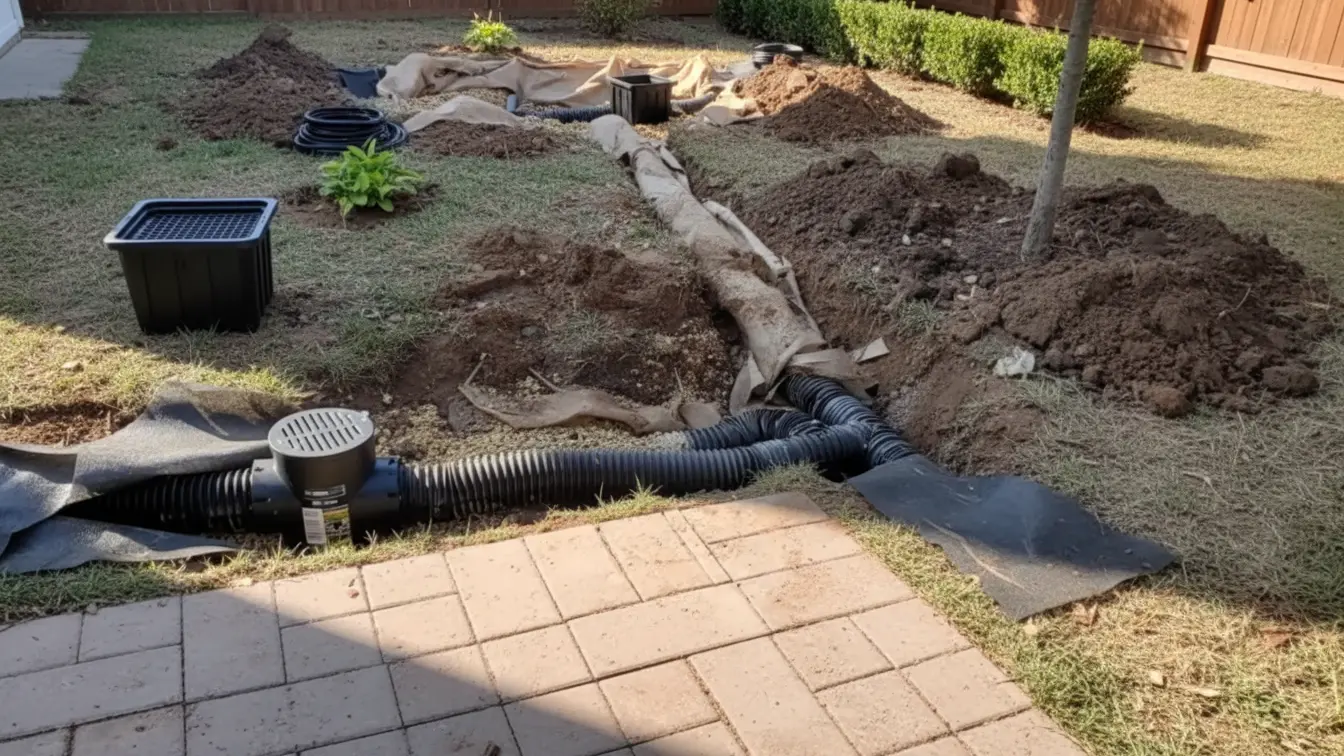
A gravel and pipe trench that catches water before it reaches the house and carries it somewhere it can do no harm.
Learn moreWater on a hillside does not sit still, it travels, and a house built into a slope is standing directly in its way. More people call us about this than anything else in the city. You see it as a patch of yard that stays soggy for days, or a puddle beside the wall that never quite dries. Ground around Brighton Heights holds water long after the rain has stopped.
A french drain intercepts it. We dig a trench along the uphill side of the problem, line it with filter fabric so it does not silt up, lay perforated pipe on a slope, and backfill with washed stone. Water in the soil finds the stone, drops into the pipe, and runs away downhill to daylight or a dry well. Where downspouts are dumping at the wall, we tie them into solid line and carry them out too, which is often half the problem on its own. Depth matters more than length here. The pipe has to sit below the level the water is travelling at, which on a slope means following the grade rather than the property line.
It works on water in the ground. If your basement is taking water through a crack in the wall, that crack still needs sealing, and we will tell you so rather than sell you a trench you do not need. Regrading is sometimes the cheaper answer and we will say that too. We cover Greenfield and the rest of the city, and the estimate is free.
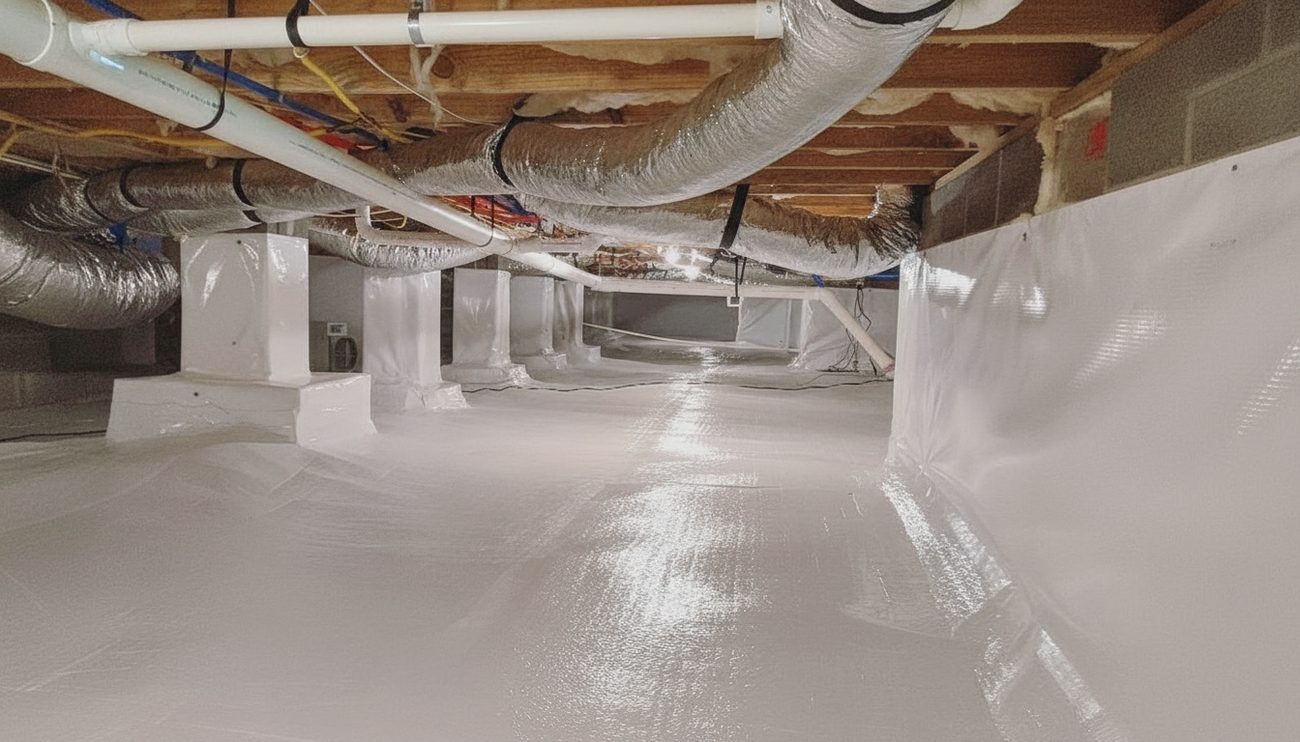
A sealed liner across the floor and up the walls that shuts damp ground out, so the air upstairs stops smelling like the crawl space.
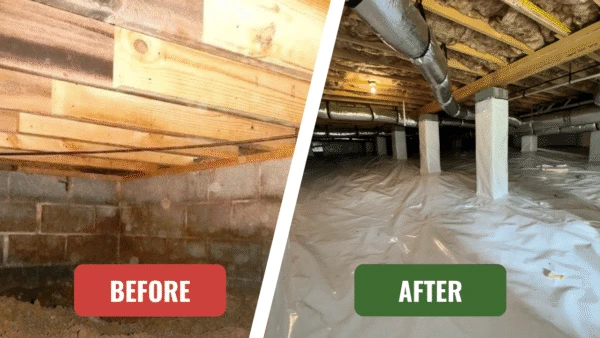
Learn moreMost Pittsburgh houses have basements, but plenty of additions and older sections sit over a crawl space, and those are where the musty smell usually starts. Bare earth gives off moisture constantly. That damp air does not stay put either, it rises through the floor into the rooms above, which is why the smell turns up in a hallway nowhere near it. Squirrel Hill North has a good number of homes with a crawl under part of the footprint.
Encapsulation seals the space off from the ground. A heavy liner is laid across the dirt and run up the walls, with the seams taped and the edges fastened and sealed. Vents to the outside get closed, because outside air in summer carries more moisture in than it takes out. A dehumidifier set to drain keeps what is left under control. Where water is actually pooling down there, drainage and a sump go in first, because a liner over standing water only hides it. The liner is run up over the top of the footing and sealed to the wall rather than stopped at the base, because that joint is where most of the moisture was getting in.
It will not carry structural weight. If the floor above is bouncing or sagging, that is a support problem and needs jacks or new posts, not plastic. We check for both while we are down there. Homes from Greenfield to Brighton Heights get the same free inspection, and you get told plainly which of the two you actually have.
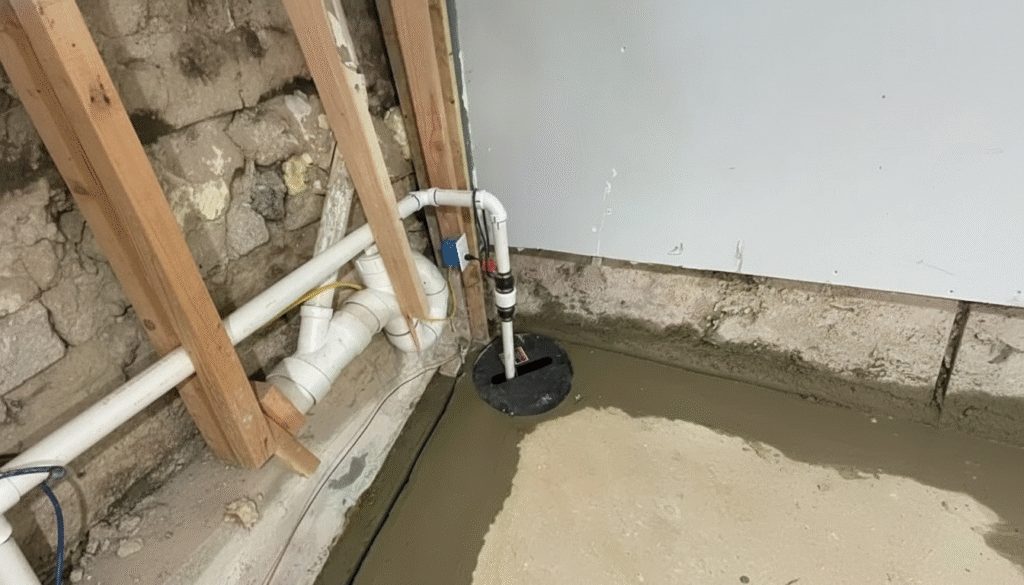
A basin set into the low point of the slab with a pump that moves water out, plus a backup for when the power goes.
Learn morePeople usually find out their pump has died during the exact storm they needed it for. Everything else in a basement system collects water and steers it; the pump is what lifts it out of the building. Age is the usual reason, and a pump that has run hard for years in a Brighton Heights basement will not last much longer.
Installation starts with the low point of the floor. A basin is set into the slab so the surrounding drainage can feed it, and the pump sits inside on a solid base rather than on silt. A check valve stops the water it just lifted from running straight back down the pipe. The discharge line runs outside and away from the foundation, not to a spot two feet from the wall where it soaks straight back in. A battery backup keeps it running when the power drops, which in a bad storm is exactly when it will. Two pumps in one basin is worth it on a house that has flooded before, the second set slightly higher so it only wakes up when the first cannot keep pace.
A pump on its own does not waterproof anything. If nothing is channeling water toward the basin, the pump sits dry while the far corner of the basement floods. It works as part of a system. We look at what is already in place across Greenfield and the rest of the city before recommending anything, and that look is free.
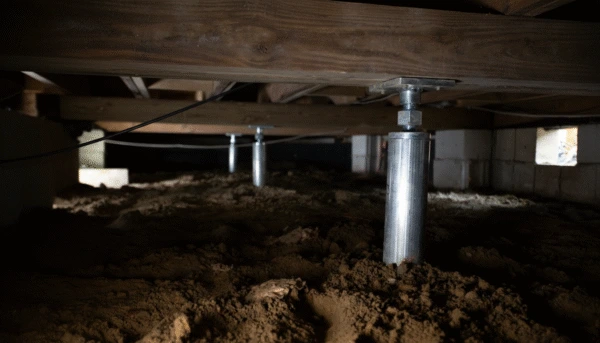
Support posts, beams and joists put right where a crawl space has sagged, so the floors above stop bouncing and sloping.
Learn moreWhen a floor upstairs feels springy or slopes toward one wall, the reason is usually a few feet below it. Posts settle into soft ground, beams sag between supports, and joists that have sat in damp air for decades lose the strength they started with. You feel it as a bounce when someone walks past. Older sections of Greenfield homes tend to show this before anything else does.
Repair rebuilds the support underneath. Failing posts are replaced with adjustable steel columns set on proper concrete footings, so the load has something solid beneath it instead of bare dirt. Sagging beams are jacked back up slowly, over days rather than hours, because bringing a floor up too fast cracks the plaster above it. Joists that have gone soft are sistered with new lumber alongside the old, and any rotted ends get cut back and supported properly. Footings are poured under each new column rather than setting it on the dirt, because a steel post on bare ground punches down into it and you are back where you started in a couple of seasons.
Lifting a floor does not stop the damp that weakened it. If the ground down there is wet, that has to be handled too or the new timber ends up in the same condition as the old. We look at both together. Homes from Squirrel Hill North to Brighton Heights get a free inspection, and you will be told which part is urgent and which part can wait.
Queen Foundation Repair is here to help with the structural side and the water side of the same house. We are a leading provider of foundation work across the Pittsburgh area, handling basement waterproofing, french drain installation, foundation repair, and sump pump installation.
Most of what we look at starts small. Water across the basement floor after a hard rain, a wall that has started to bow, a patch of yard that never dries out. Left alone, those get more expensive, because whatever is putting water against the house does not stop while you decide what to do about it.
That is why we look before we quote. Someone comes out, checks the house inside and out, and tells you in plain words what is happening and what it would take to fix. You get the price in writing before anything starts. If what you have is cosmetic, we will say so rather than sell you a repair you do not need.
Most of the houses we work on here sit on a slope, with basements that have been taking pressure from the ground behind them for decades. We cover the whole area, from Squirrel Hill North to Brighton Heights, and you can see everything Queen Foundation Repair does across Pennsylvania. We are licensed and insured, the warranty stays with the house if you sell it, and the inspection is free either way. Call us and we will come and look.
Get your free inspection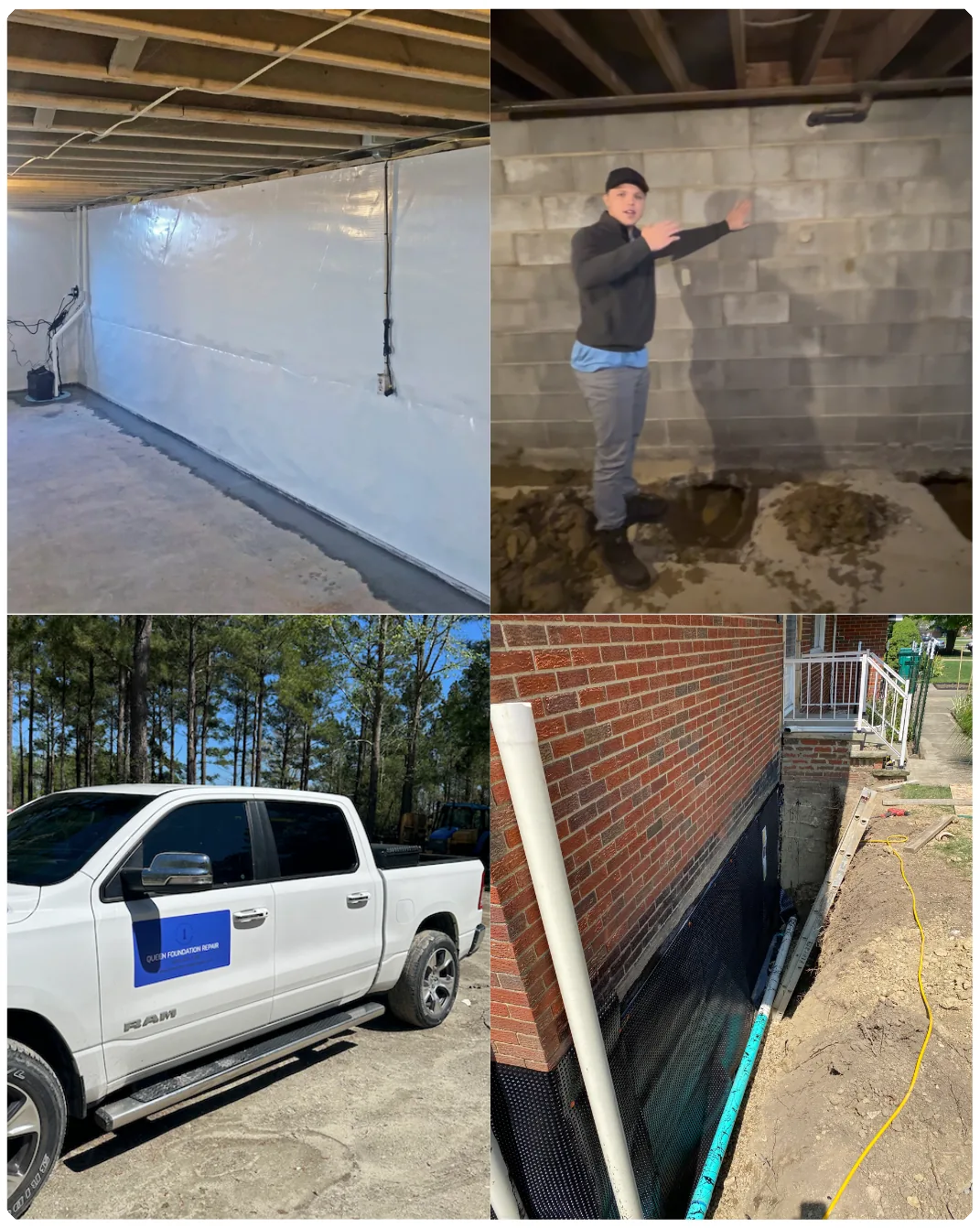
WHAT YOU GET
We answer fast and get out to the house quickly, so you're not sitting for weeks just to find out what's wrong and what it'll cost.
No charge to have us come out, find what's going on, and lay out what the fix takes. You know where you stand before spending a dollar.
Licensed, with full liability and workers' comp coverage, so the work is done to code and your property is protected if anything goes sideways.
The repair comes with a written warranty that transfers to the next owner, so it protects your home's value if you ever sell.
A clear, written price upfront before anything starts, no vague ballpark and no surprise add-ons once the work is underway.
Most Pittsburgh basements sit below a slope, taking pressure from ground that stays wet. We are in them daily, from Squirrel Hill North to Brighton Heights.
Four steps, and the price is in your hands before anyone starts work.
COMMON QUESTIONS
The questions we get asked most around Pittsburgh, answered straight. Costs are ranges because every house is different, and we have said plainly where you may not need the work. Squirrel Hill North to Brighton Heights, same answers.
What it costs
It depends on what is actually wrong, and the range is wide. Sealing a single crack is a few hundred dollars. Interior drainage with a sump runs into the low thousands, depending on how much of the perimeter needs it. Underpinning with piers is the expensive end, well into five figures on a bad settlement, because the price follows how many piers the house needs and how deep they have to go. Anyone quoting a figure over the phone without seeing it is guessing.
Less than most people expect, in a lot of cases. If the water is coming from a downspout dumping at the wall, or ground sloping back toward the house, fixing that outside is the cheapest work we do and sometimes it is the whole answer. A full interior drainage system with a sump sits in the low thousands. What moves the number is how much of the perimeter is affected and whether the wall itself needs work as well. We tell you which of those you have before you spend anything.
There is no single average that means much, because a corner and a whole perimeter are different jobs. Interior drainage with a sump generally lands in the low thousands. Exterior work costs more because of the excavation involved. We give you a written price for your house rather than a number off a chart.
French drains and yard drainage
Price follows length and depth more than anything else. A short run to take a downspout away from the house is at the cheap end. A full run along the uphill side of a property, dug deep enough to catch water moving through the soil, costs considerably more because of the excavation and the stone. Ground conditions matter too, since rock or a steep slope slows everything down. We measure the actual run and quote that, rather than pricing per foot off a table.
Deep enough to sit below the water it is meant to catch, which on a slope means following the grade rather than a fixed number. For yard drainage that is often a couple of feet. For a drain protecting a foundation it usually goes down near the footing. Too shallow and the water simply passes underneath it.
They can silt up if they were installed without filter fabric, and they need somewhere to discharge, which is not always easy on a tight lot. They also do nothing for water already coming through a crack in the wall. If regrading or fixing your downspouts would solve it, that is cheaper and we will tell you so.
Water in the basement
Water is coming up rather than in. Groundwater under the slab finds its way through the joint where the floor meets the wall, or through the concrete itself, so there is no hole to point at. It usually shows up after heavy rain and dries slowly. Interior drainage handles it by giving that water a path out.
Not really. Even if nothing is stored down there, constant damp raises the humidity in the whole house, feeds mould, and works on the timber above it. It also gets harder to sell later. Occasional condensation is a different and smaller problem, so it is worth knowing which one you have.
Often, though not always. The smell itself comes from damp, and where there is enough damp for the smell there is usually enough for mould somewhere out of sight. Drying the space is what actually deals with it. Cleaning a visible patch without fixing the moisture just moves the problem along a few months.
Cracks and bowing walls
Width, direction, and whether it changes. A thin vertical crack in poured concrete is usually the concrete curing. A crack you can fit a coin into, one running sideways, or one that is longer than it was last year deserves a look. Any crack with water coming through it needs attention regardless of its size.
When the crack runs horizontally, when the wall around it has started to bow inward, or when doors and windows upstairs begin sticking at the same time. Those together say the wall is under load it cannot handle. Mark the ends with a pencil and a date, and if it moves, call someone.
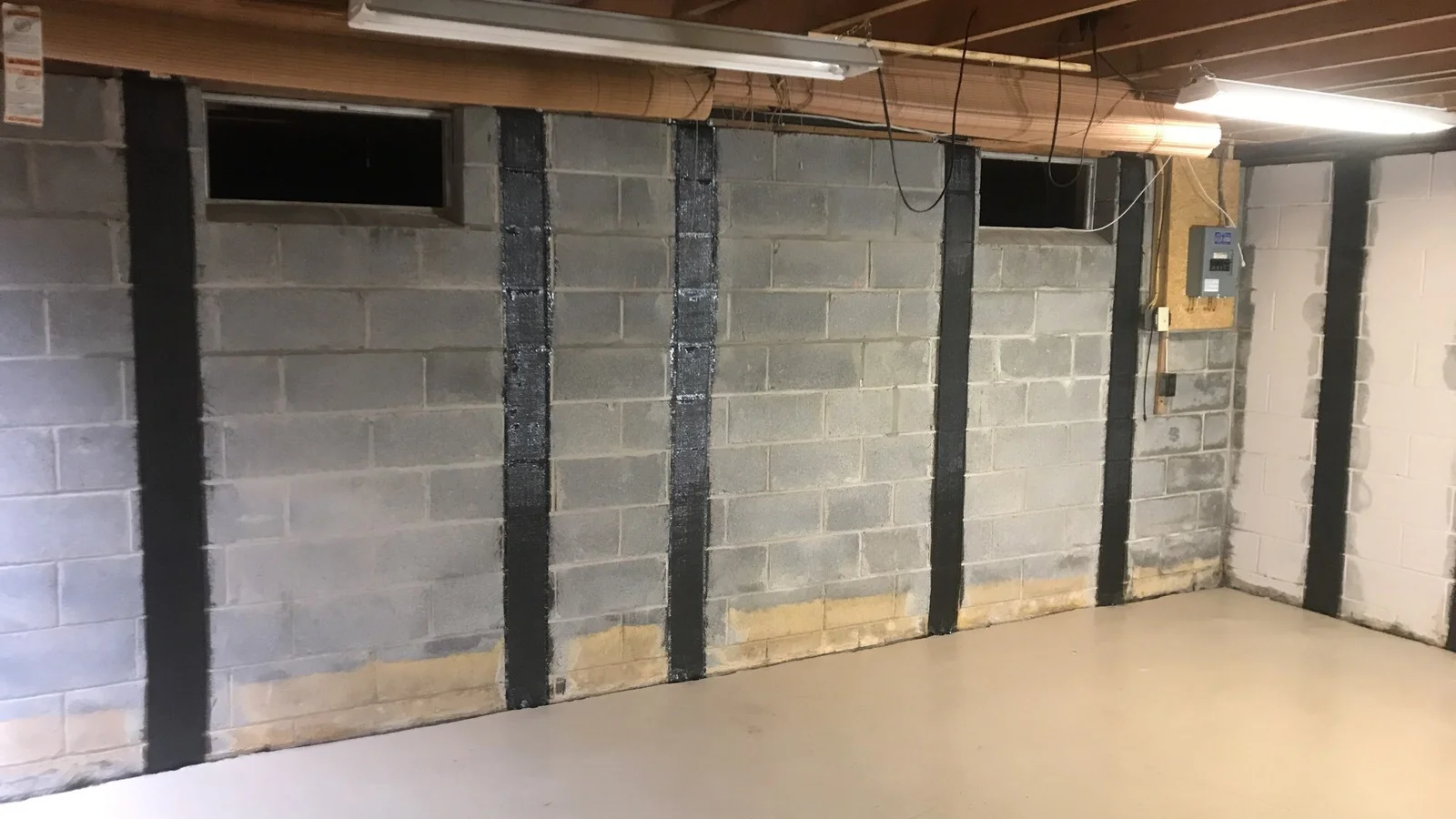
Yes, and how depends on how far it has gone. Up to about an inch of movement, carbon fiber straps bonded floor to ceiling will hold it and stop it going further, and they finish flat enough to paint over. Past that, steel beams anchored into the floor and tied into the joists above take the load instead. A badly bowed wall may need excavating from outside so it can be straightened or rebuilt. What none of these do on their own is deal with the wet ground that pushed it in, so that gets handled at the same time.
Insurance and selling
Usually not, and it is worth understanding why before you file. Standard policies exclude gradual seepage, groundwater and earth movement, which covers most of what we are called out for. What tends to be covered is sudden accidental damage, like a burst supply line washing soil out from under a footing. Sewer and drain backup is normally an add-on rather than standard. Pennsylvania also sells separate state coverage for damage from old coal mines, which regular policies exclude. Check your policy or ask your agent.
Quite possibly. Most towns around Pittsburgh check your gutters and drains before a sale to make sure rain water is not running into the sewer line. If it is, you have to fix it before you can close. Sometimes that is just redirecting a downspout. Sometimes the line itself needs work, which costs a good deal more.
It is not automatically a reason to walk away, but it should change the number. Get it looked at before closing so you know whether it needs bracing or full excavation, because those are very different figures. Ask the seller for documentation of any past repair, and check whether a warranty came with it that transfers to you. A wall that has been properly braced and has not moved since is a solved problem. One that nobody has measured is an open question, and you are the one who ends up answering it.
How we work
Someone who will look at the outside of the house as well as the inside, because that is usually where it starts. Ask whether the estimate is free, whether the price comes in writing, and whether the warranty transfers if you sell. If nobody has been out to look, treat the number you were given as a guess.
Around seven to ten years for most units, less if it runs hard every spring. Signs it is going include running constantly, cycling on and off quickly, or making a noise it did not used to. Test it by pouring a bucket of water into the basin. If it does not kick on, replace it before the next storm.
If the crack is letting water in, or it is growing, yes, because both get more expensive the longer they run. If it is a hairline in poured concrete that has not changed in years, probably not, and we will say so. The point of the inspection is telling you which of those you have.
AREAS WE SERVE
We cover the whole Pittsburgh area, not just the city limits. Foundation repair, basement waterproofing, french drain installation and sump pump work, from the South Hills up through the North Side. If your house is in one of the neighborhoods below, or near it, we come out and the inspection is free.
Pittsburgh ZIP Codes We Cover
Ready to Get Started?
No obligation, fast and easy.
We appreciate you reaching out.
One of our team members will be with you shortly.