A musty crawl space, doors that stick, cracks working up the brick? Most Matthews homes sit over a crawl space, and the older ones feel it first. From Downtown Matthews out to Callonwood, we handle crawl space encapsulation, foundation repair, and french drain installation, starting with a free inspection.
Get Your Free Inspection
We appreciate you reaching out.
One of our team members will be with you shortly.





COMMON WARNING SIGNS
Trouble shows up differently house to house in Matthews. A ranch over a crawl space tells you one way, a newer two-story on a slab tells you another, and some homes show it in the trim before anything looks serious. Here are the six signs we're called about most.
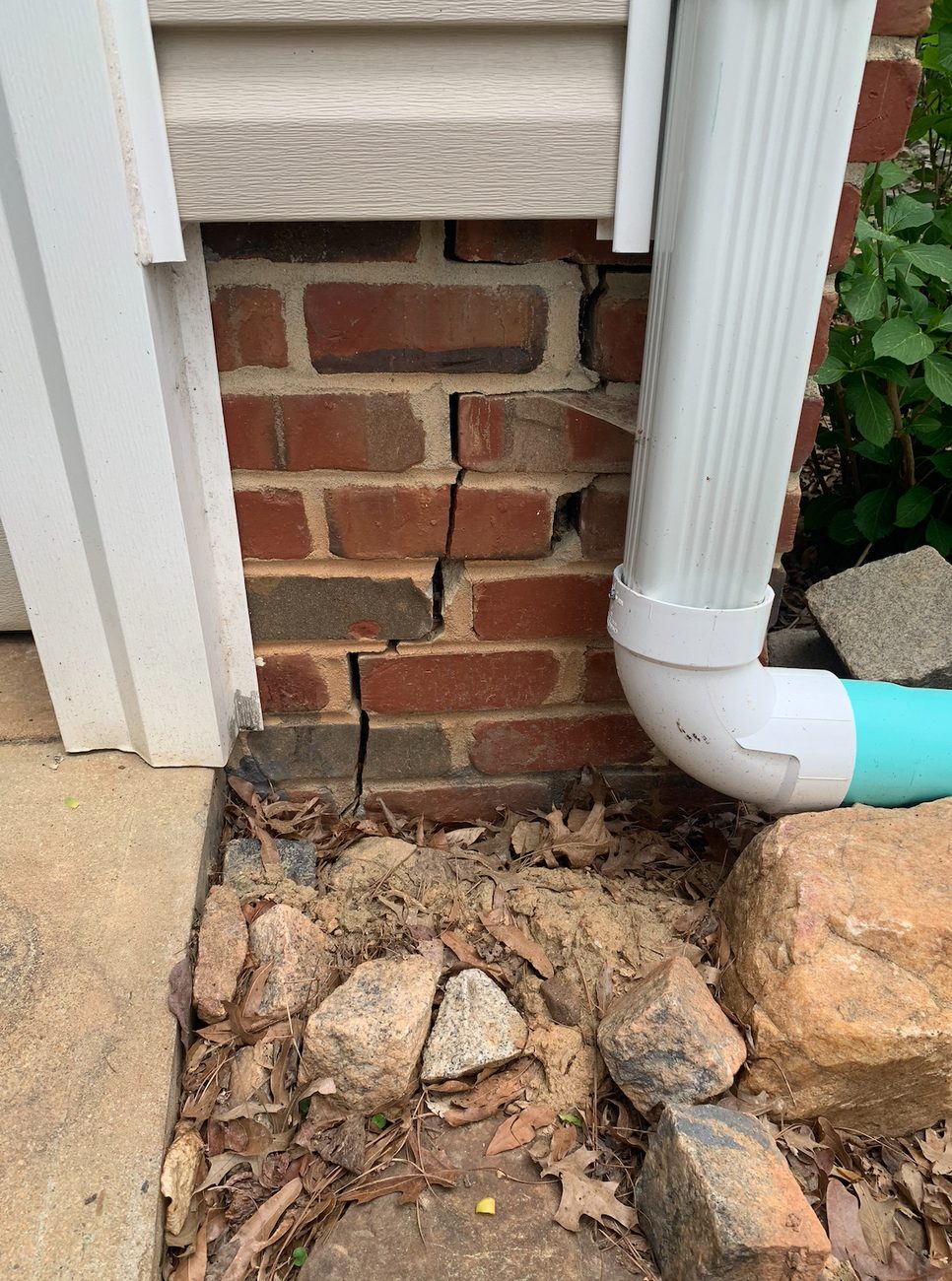
Cracks Climbing the Brick Outside
Stair-step cracks in the mortar, or a gap opening where brick meets trim. The footing under that wall has settled, and the cracks widen as it moves.
Doors That Stick, Windows That Drag
Doors that stick or won't latch, windows that drag in their frames. The foundation under them has shifted out of level, and the openings rack more each season.
A Floor That Slopes or Bounces
A floor that slopes toward the middle, or a bounce you feel walking across the room. The supports underneath have weakened, and the sag deepens with time.
A Crawl Space That Stays Damp
A crawl space that smells musty, or insulation hanging wet under the floor. Ground moisture is rising into the wood, and damp framing slowly loses its strength.
Standing Water After Every Storm
Standing water beside the foundation after storms, or a yard that stays soggy for days. The ground isn't draining, and that water works down against the footings.
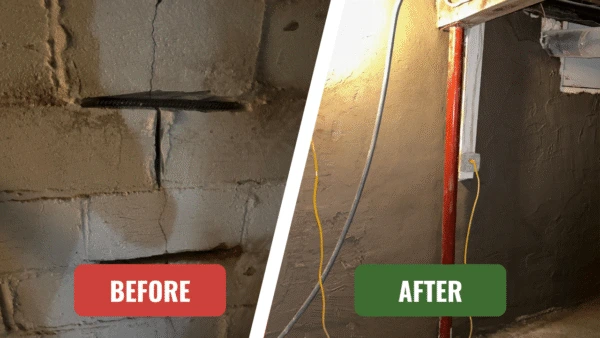
A Crack Across the Block Wall
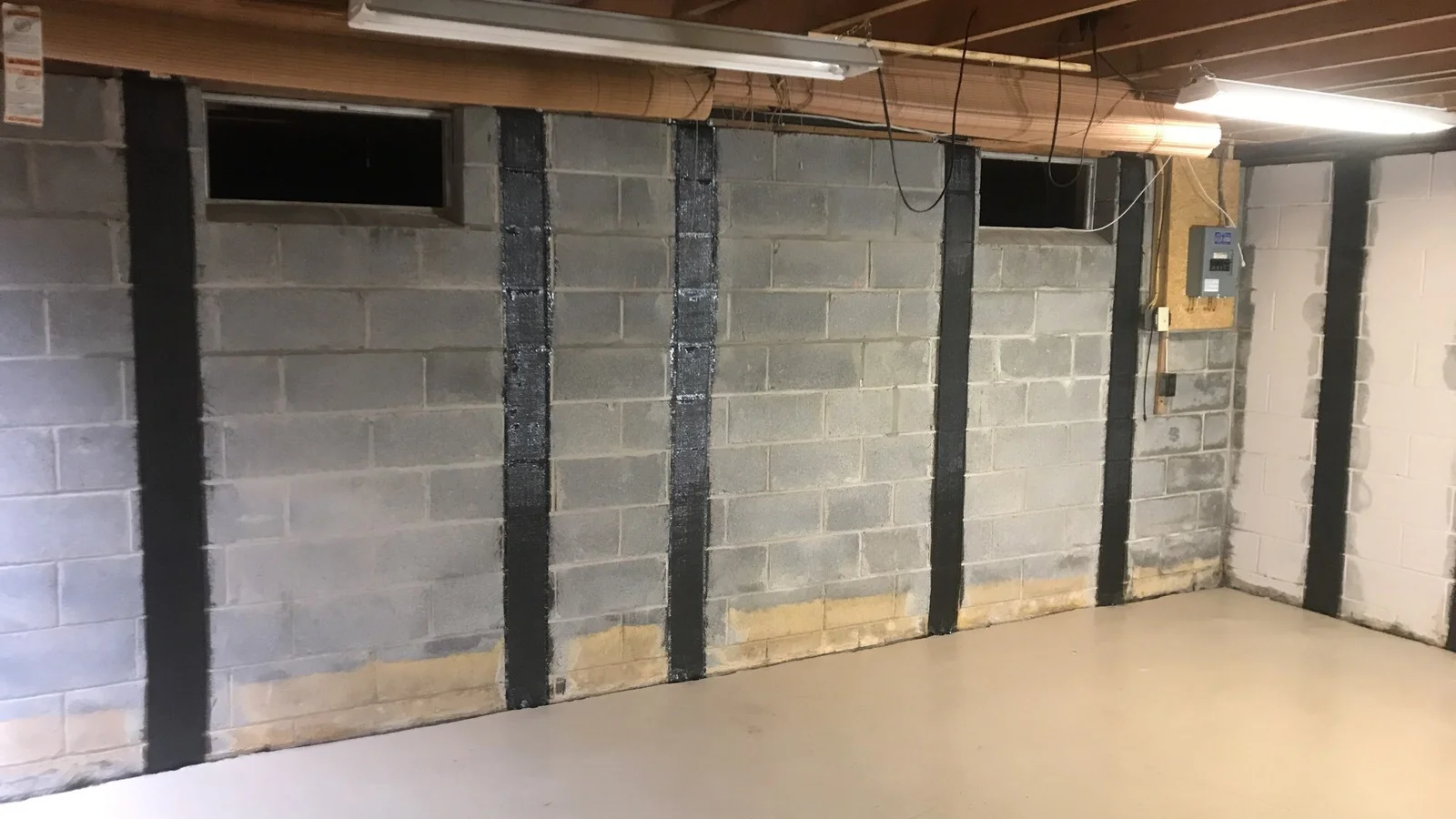
A crack running across a block wall, or a wall edging inward. Soil pressure is pushing from outside, and the wall gives more each wet season.
Standing water after a storm is the one worth acting on first, because it is usually what causes the rest. Ground that stays soaked softens under a footing, and the doors and the brick follow later. A crack you can cover with a thumb may have been there for years, but if the water is still arriving, it will not stay that width. Somebody will come and look for nothing.
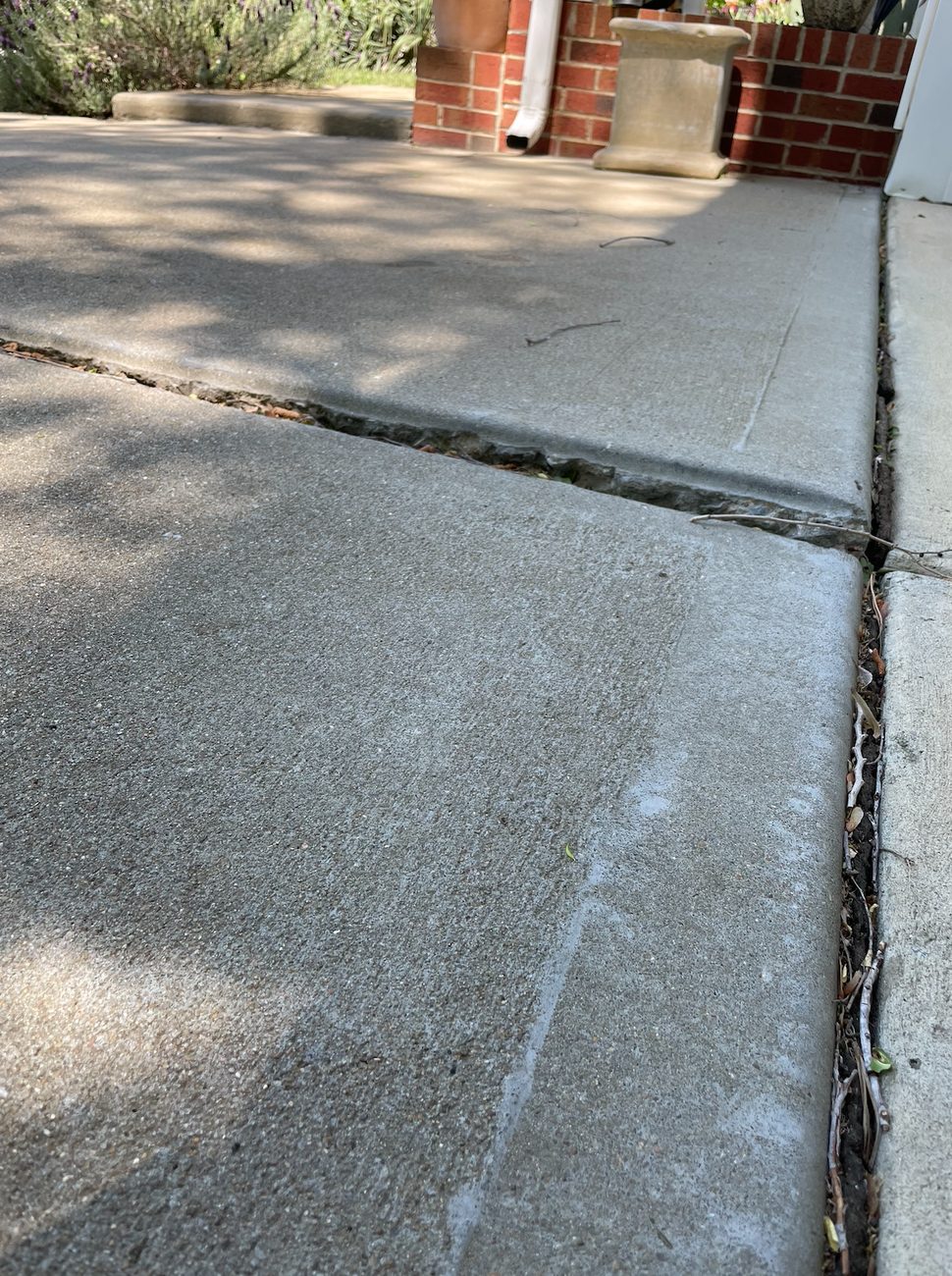
Whether it's a foundation that's settled, a crawl space gone damp, or a slab that's dropped an inch at the joint, everything we fix in Matthews is below. Tap any card for the how.
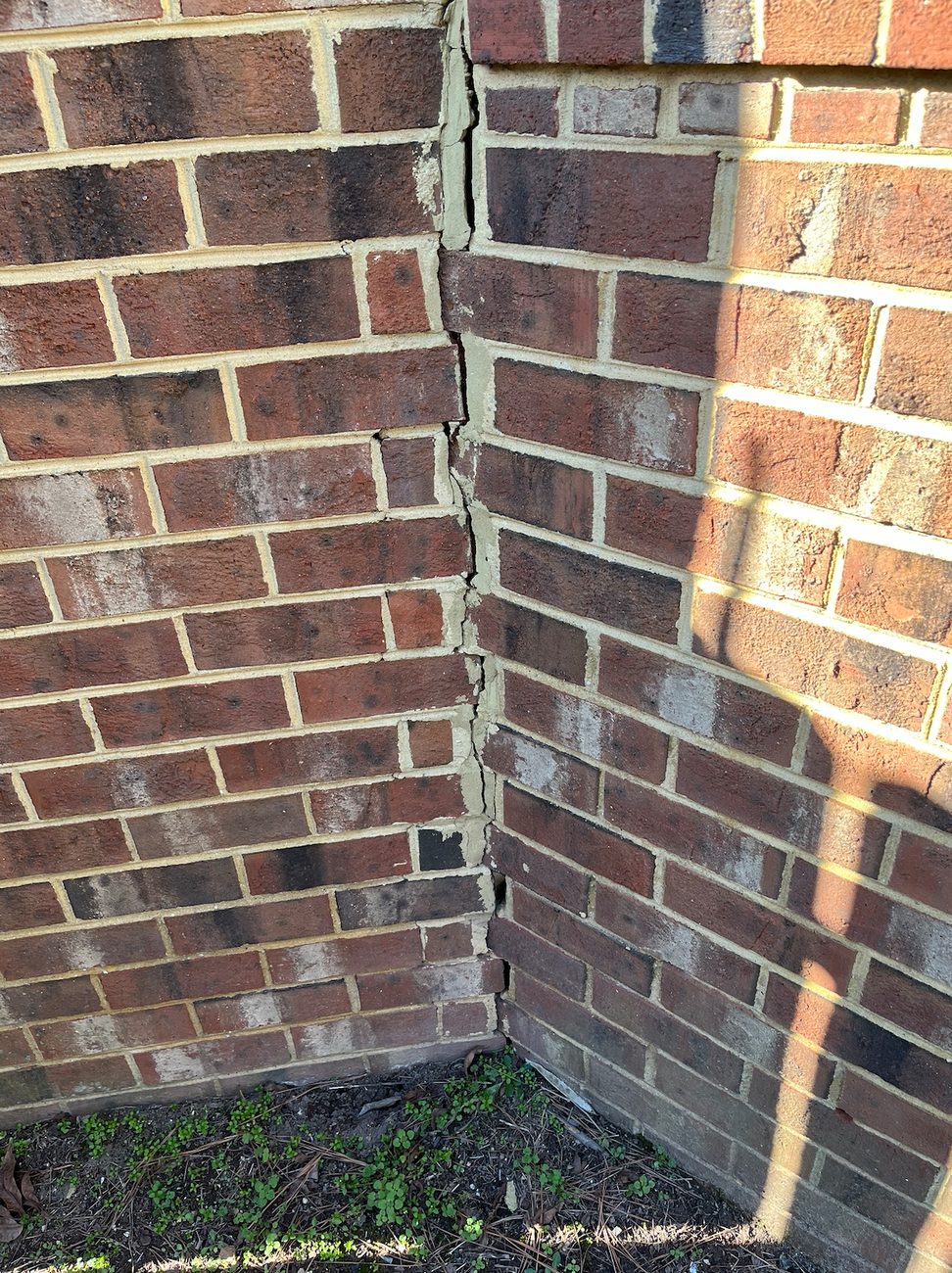
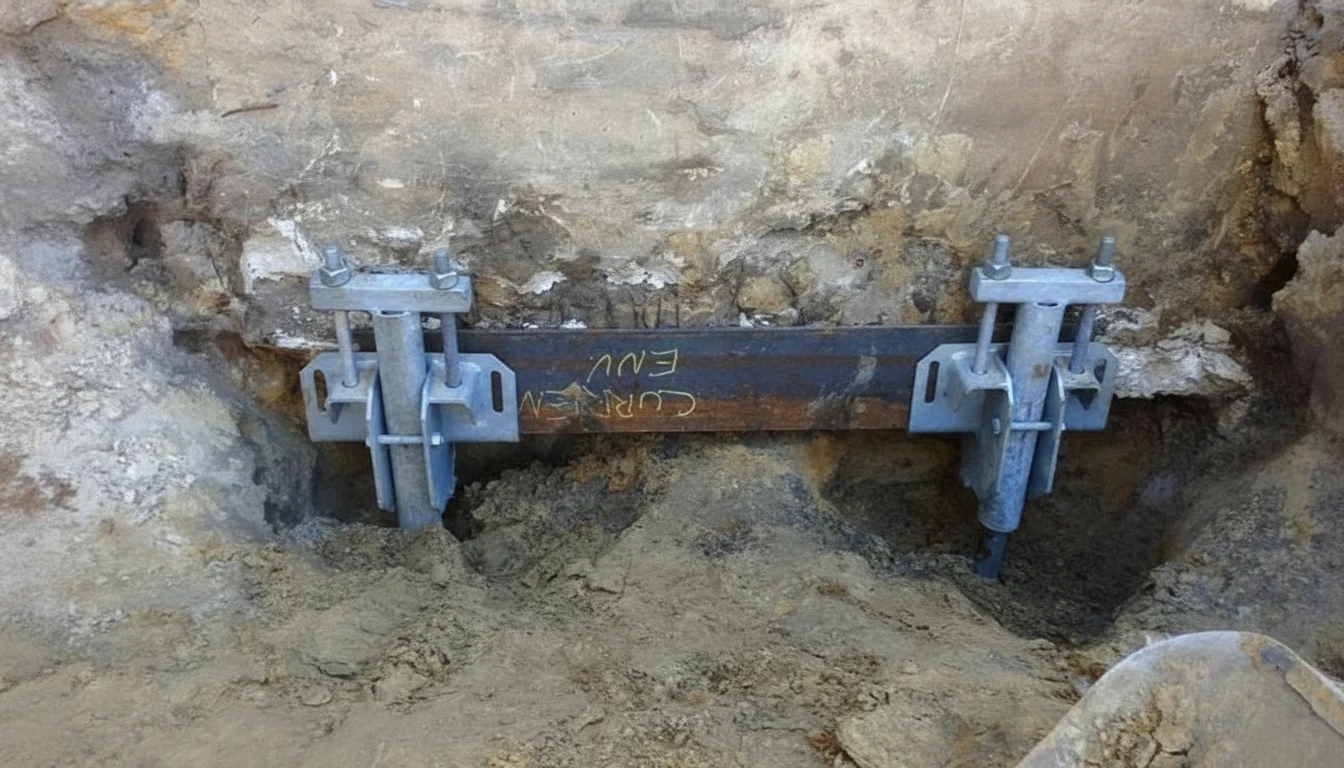
We bring a settled foundation back toward level with steel piers set to solid bearing, and we match the repair to how far the house has moved.
Learn moreA crack over the window that used to be hairline and isn't anymore. A latch that misses unless you lift the door. A porch corner sitting lower than it did last summer. That's a foundation losing its bearing, and around here it tends to happen where soft, waterlogged ground quits holding the footing up.
We see it in the older streets of Sardis Forest and out around Deerfield Creek alike, and the fix depends on what's moving. For a settled footing, we install steel push piers beneath it, drive them to load-bearing strata, and transfer the house onto them, lifting back toward level where the structure allows. Where access is tight or the loads are lighter, helical piers do the same job with less disturbance. If the floors sag but the perimeter is sound, the answer is usually in the crawl space instead: steel supports on proper footings and sistered framing. The piers themselves go in from outside with compact equipment, one bracket at a time, and most homes are back to normal life the same week.
What we won't do is quote piers before we know it's a pier problem. Sometimes the honest fix is bracing, or drainage, and it costs a fraction as much. We put both numbers in front of you when that's the case, and the choice stays yours. The free inspection settles which one your house is, and the number you get covers the actual repair, in writing, before anyone touches a shovel.
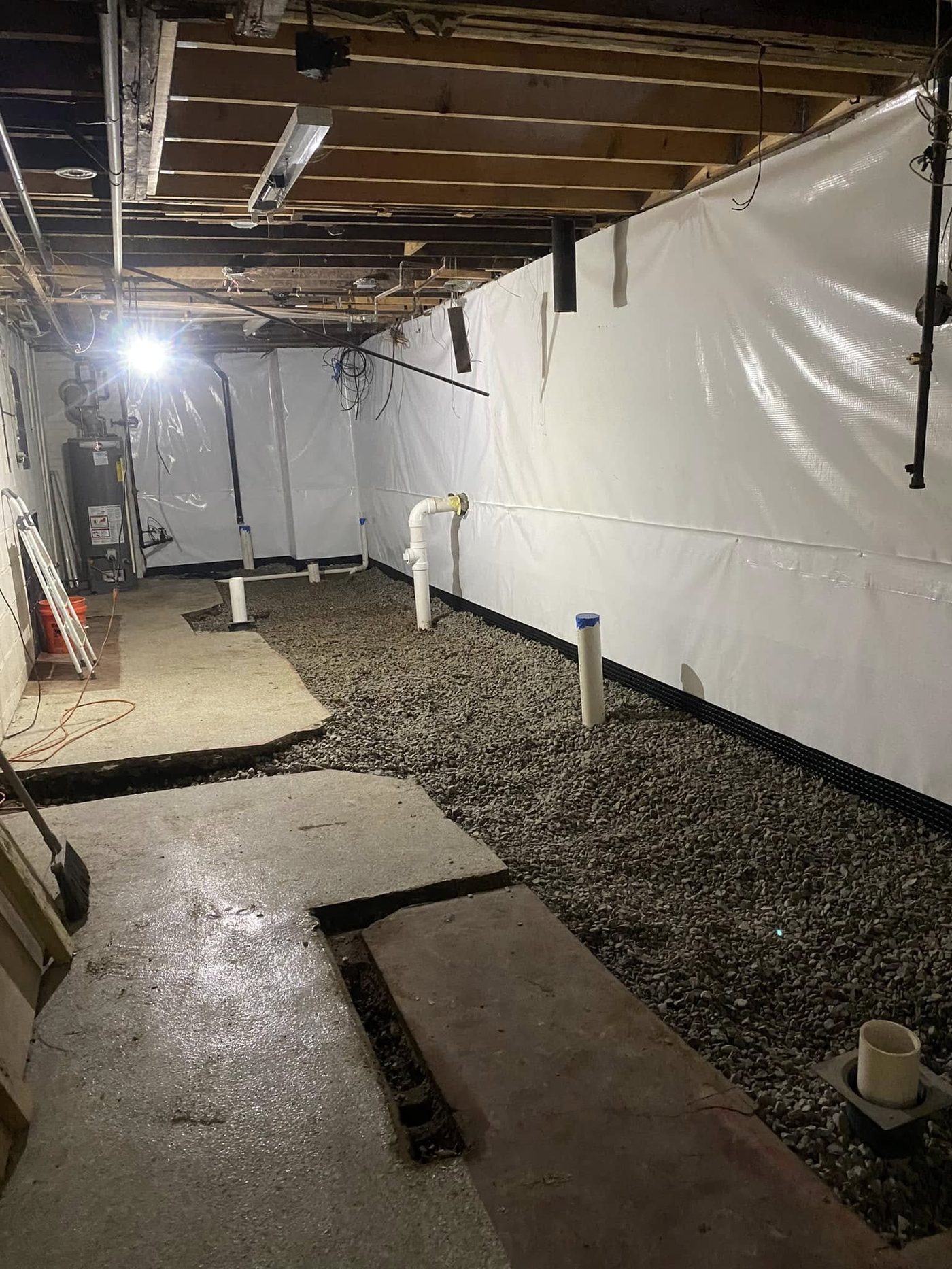
We dry out below-grade space by fixing where water gets in first, then adding the drainage and pump that handle whatever still comes through.
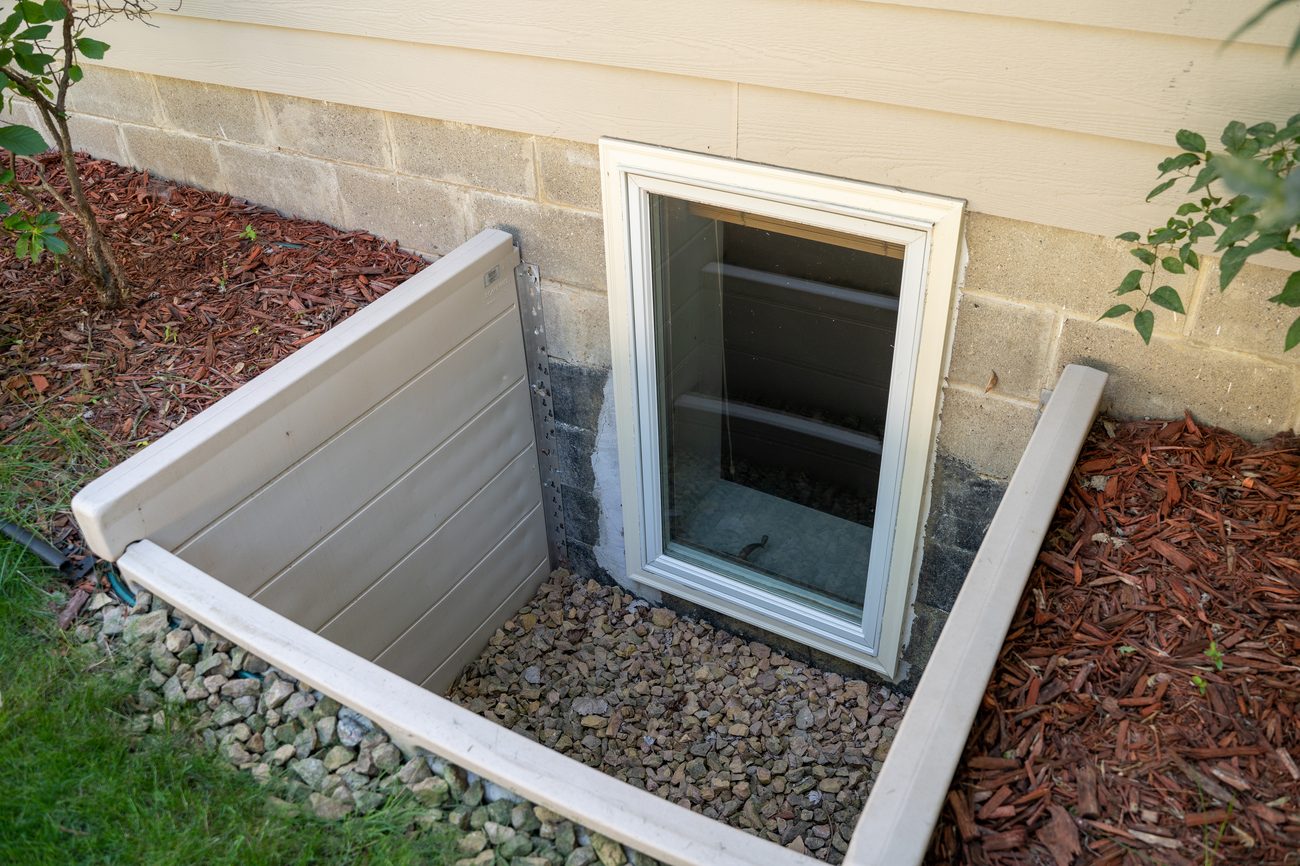
Learn moreA damp corner in the lower-level room after a storm. Paint bubbling near the floor line. That smell that tells you water's been there even when you can't see it. True basements are the exception in Matthews, but the homes that have below-grade space fight this fight every wet month, usually because roof water is being dumped right beside the wall.
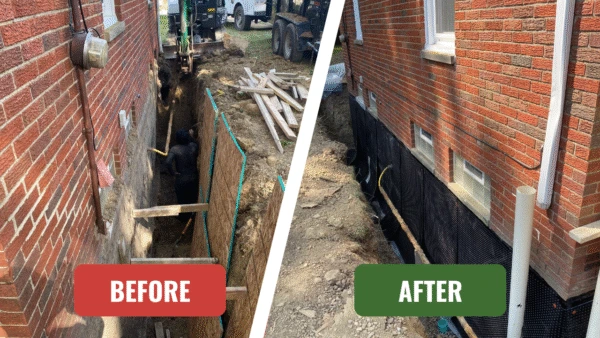
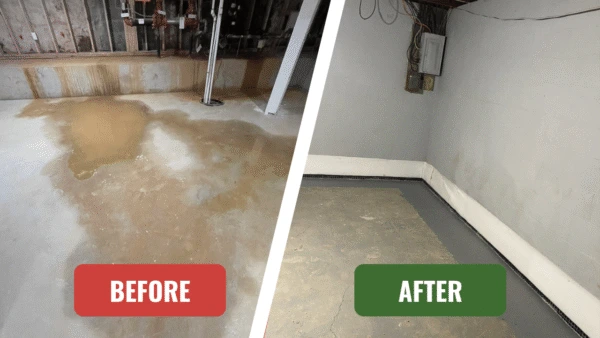
So the work starts outside. Extending downspouts, correcting the grade, and getting the gutters doing their job stops a surprising share of it, and it's the cheapest real fix there is. For water that still finds a path, we cut a perimeter drain at the footing inside and run it to a sump pump, then finish with a vapor barrier and a dehumidifier so the space stays dry instead of just drier. Where a wall itself weeps through the block, we seal it and channel the seepage into the same system rather than pretend paint can hold it back. Homes in Providence Hills and over in Brightmoor have gotten the full version of that treatment.
A battery backup on the pump is worth the add here, because the storms that flood crawl spaces are the same ones that drop the power. We also route the discharge well away from the foundation, so the pump isn't handing the same water right back to the wall. Ask us to walk the water path with you at the free inspection, and you'll see exactly where yours is getting in before you spend anything.
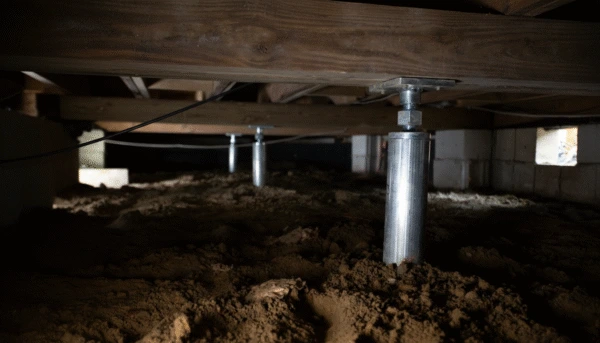
We put solid support back under sagging floors, replace moisture-worn framing, and dry the crawl space so the repair actually lasts.
Learn moreA bounce in the hallway floor that wasn't there last year. A gap opening under the baseboard. A damp smell drifting up through the vents when the heat kicks on. Under the house, that usually means the framing is wet, and wood that stays wet gives up its strength a little at a time. You feel it long before you see it.
The repair works from the ground up. We set adjustable steel supports on poured footings to take the sag out and carry the load properly, sister the joists that have weakened, and replace any girder that's too far gone to save. Where ductwork or plumbing hangs in the way, we work around it rather than through it, and the floor above stays put while the new support goes in. Then we deal with the moisture itself, because new lumber over the same wet dirt just buys you a few years. Depending on the house, that means sealing the ground, fixing a vent, or pairing the repair with drainage so the space stops re-wetting itself. That's the pattern in the pre-1980s homes around Sardis Plantation, and we've done the same work closer to Matthews Commons.
Here's what surprises people: the damage is usually smaller than the floor makes it feel. Half the calls we get need a few supports and one sistered joist, not a rebuilt frame. We'll crawl it for free, show you photos of what's actually under there, and price only what's genuinely failing.
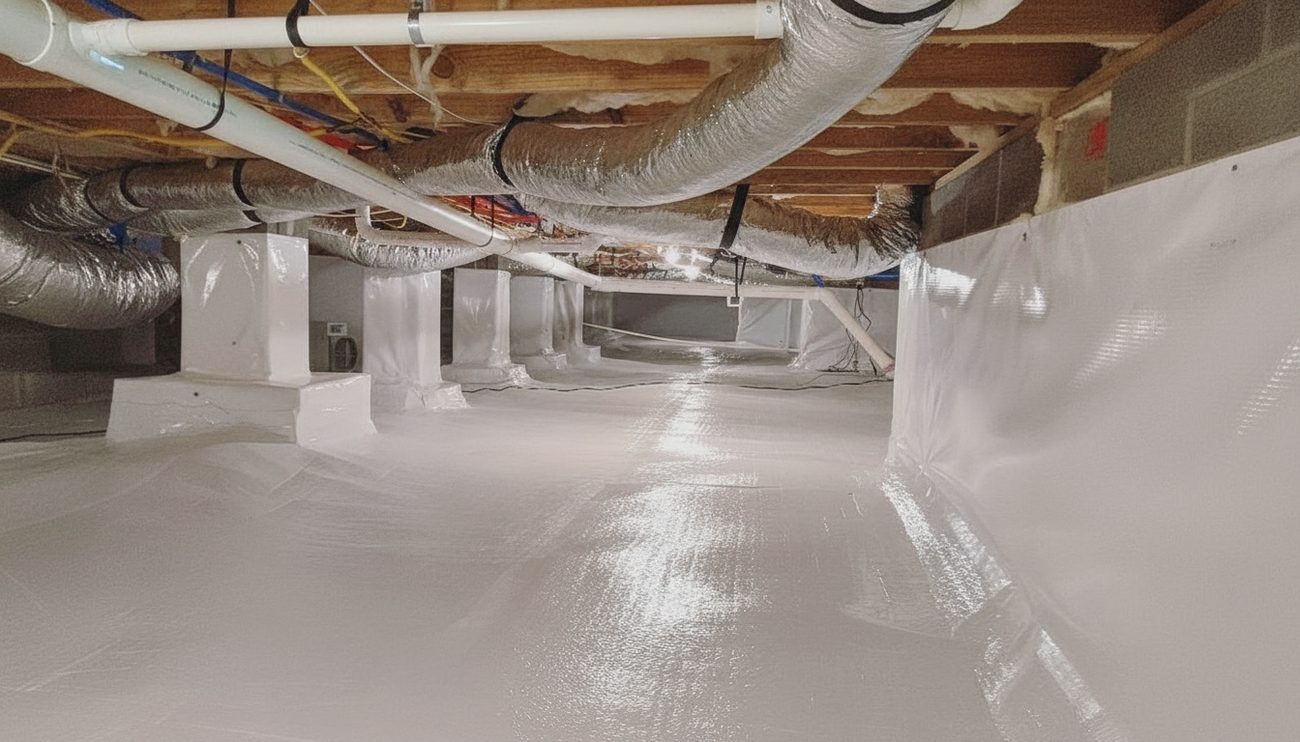
We seal the crawl space floor and walls, close the vents, and add a dehumidifier so moisture stops reaching the wood and your air.
Learn moreMusty air on the first floor that no candle covers. Floors cold in winter, clammy in July. Allergies that act up at home and calm down on vacation. Around half the air you breathe downstairs comes up from the crawl space, and in Matthews that space sits over damp ground with vents pulling humid summer air straight in.
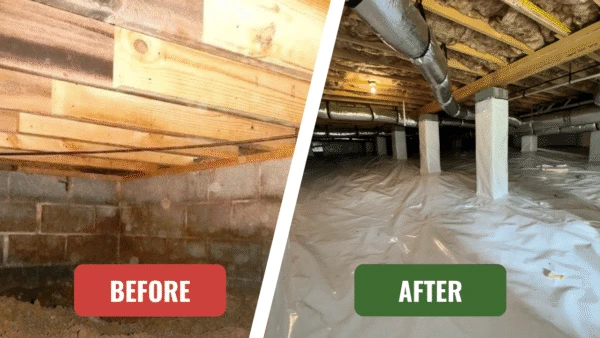
Encapsulation closes that system down. We lay a heavy crawl space vapor barrier across the ground and up the walls, seal the seams and the vents, and set a dehumidifier sized to the space so the humidity stays where wood and air both like it. The liner gets sealed at the piers and the seams so it works as one surface, not a loose tarp, and the crawl space door gets the same treatment as the vents. Done right, it protects the framing your floors ride on, takes the musty edge out of the house, and usually makes the rooms above easier to heat and cool. The utility bill tends to notice before you do. We've sealed newer builds around Stevens Mill and the traditionals in Chestnut Place the same way.
The order matters more than the product. If water is getting in, we fix that first, dry the framing, then seal, because wrapping a wet crawl space just traps the problem under plastic. Same rule for damaged framing: the repairs come before the liner does. The free inspection tells you honestly whether your house needs the full treatment or something smaller.
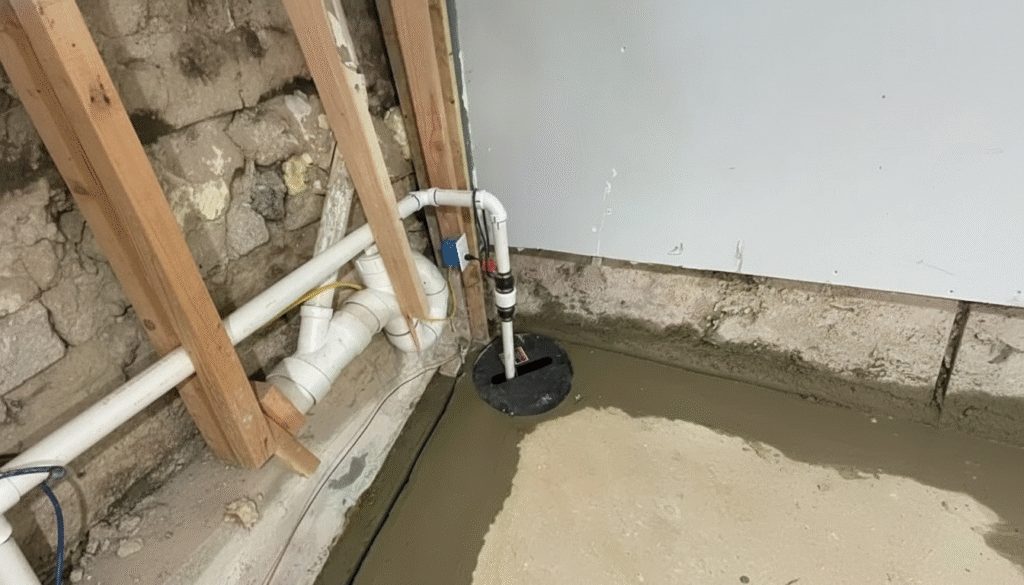
We set a sump basin at the low point, pump collected water out and away, and add battery backup so storms don't stop it.
Learn moreA puddle under the house that shows up with every storm and hangs around past the weekend. Ground down there that never quite firms up. When water collects faster than the soil can take it away, it needs an exit, and gravity alone isn't offering one. Left standing, it feeds everything you don't want living under a house.
A sump system gives it that exit. We set the basin at the true low point, where the water already wants to go, tie in any interior drain lines that feed it, and run the discharge far enough from the house that the same gallon doesn't circle back. Where the yard falls away from the house, we run it to daylight and let gravity finish the job. The pump kicks on by float as the basin fills, and a check valve keeps the line from draining backward when it stops. For the townhomes at Mint Lake Village and the newer streets on Matthews Ridge, we usually add the battery backup, because the storm that fills the basin fastest is the one that knocks the power out. And where the crawl space is encapsulated, the basin gets a sealed lid so the pump serves the sealed space instead of undermining it.
A pump is often the finishing piece of a bigger drainage fix rather than the whole answer, and we'll tell you plainly which yours is. The free inspection shows where the water is sitting and what it takes to move it out and keep it out.
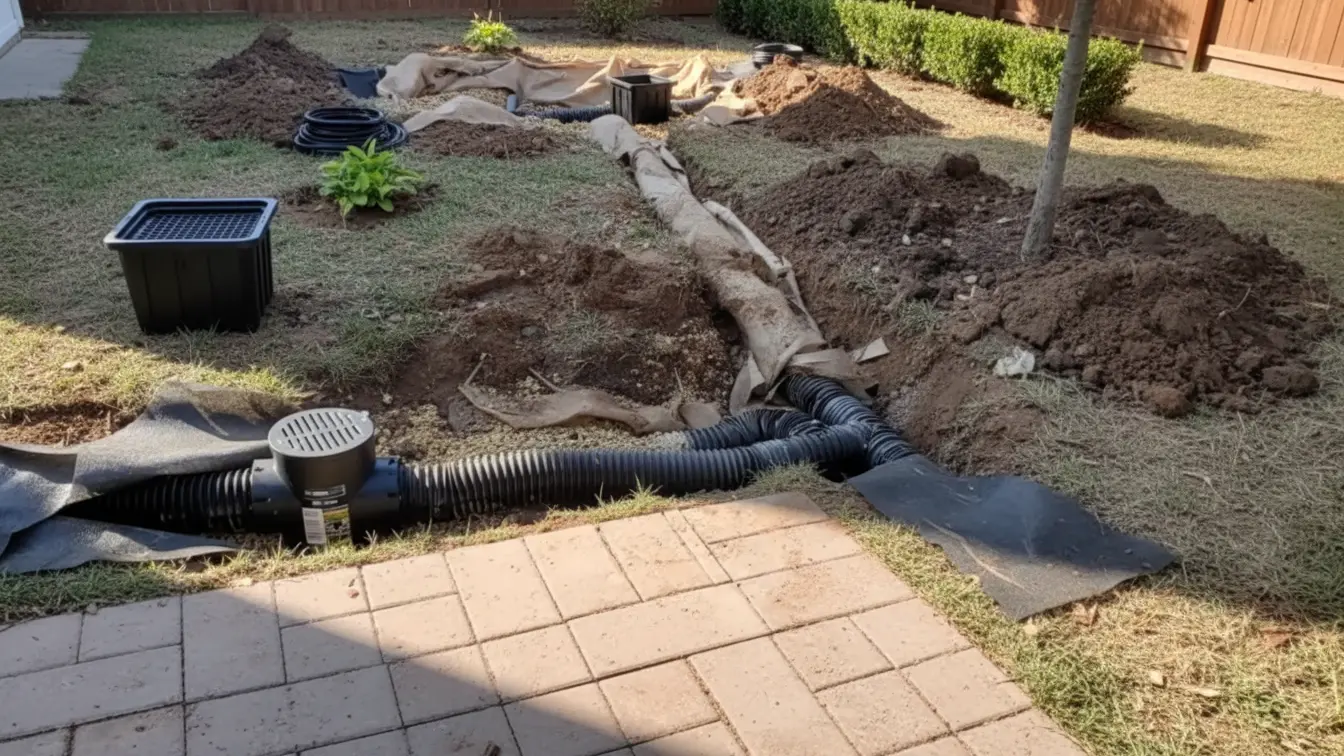
We bury a drain line that picks up water in the yard or at the footing and moves it off before it ever reaches the house.
Learn moreA stretch of yard that's still mush a week after the rain quit. Water lapping at the slab edge every storm. Mulch that keeps floating out of the same bed. Some lots here just shed slowly, and the low path the water picks too often runs straight at the house. Every storm just reruns the same experiment.
A french drain gives it a better offer. We trench across the slope that feeds the problem, lay perforated pipe in washed gravel, wrap it in filter fabric so the soil can't silt it shut, and carry the flow to daylight or a sump with real fall the whole way. Cleanouts go in where the run is long, so the line can be serviced years from now without digging. Where the trouble is under the house instead of beside it, the interior version rings the footing and feeds the pump. We've run them through yards in Sardis Grove and out at Matthews Estates, and no two follow quite the same line. Depth follows the water too: shallow for surface flow across a yard, down at footing level when the job is keeping a crawl space dry.
The difference between a drain that works for twenty years and one that quits in three is all in the details you can't see once it's buried: the fall, the fabric, the outlet. We size and route it to your actual water, and the free inspection is where we map that path with you.
Queen Foundation Repair works under and around Matthews homes: crawl space encapsulation and crawl space repair first, because that's what this town's houses need most, along with foundation repair, french drain installation, and concrete leveling. One company carries the whole list on purpose. A damp crawl space, a settling footing, and a yard that won't drain are usually chapters of the same story, and fixing them separately is how a homeowner pays twice.
The order of operations is the difference. We diagnose before we price, and when we trace a Matthews problem to its source, it lands on water nearly every time, not the swelling clay other companies like to blame. That's why we'll spec a french drain over a set of piers whenever the drain is the true fix, at a fraction of the cost, and why every job begins with a free inspection and a written price.
The houses here range from the oldest streets around Crestdale to subdivisions out by Deerfield Creek that are barely twenty years old, and we work on all of it. When something at your place starts acting off, Queen Foundation Repair will come take that first look and tell you straight.
Get your free inspection
WHAT YOU GET
We answer fast and get out to the house quickly, so you're not sitting for weeks just to find out what's wrong and what it'll cost.
No charge to have us come out, find what's going on, and lay out what the fix takes. You know where you stand before spending a dollar.
Licensed, with full liability and workers' comp coverage, so the work is done to code and your property is protected if anything goes sideways.
The repair comes with a written warranty that transfers to the next owner, so it protects your home's value if you ever sell.
A clear, written price upfront before anything starts, no vague ballpark and no surprise add-ons once the work is underway.
We're in Matthews all the time, working on everything from the older homes around Crestdale to the newer builds out in Callonwood, so whatever your house is doing, we've likely already fixed it nearby.
Here's how a job runs with us, from the first call to the walkthrough at the end.
STRAIGHT ANSWERS
The questions below are the ones Matthews homeowners actually ask us, from Brightmoor to Providence Hills: what repairs cost, whether insurance helps, and when a crack is worth worrying about. The answers here are the same ones we give in person.
Signs & Severity
Doors and windows that start sticking for no reason, cracks stepping through brick or spreading across drywall, floors that slope or bounce, and a crawl space that smells musty after rain. One sign on its own often means nothing. The pattern to watch is change: a crack that keeps growing, a door that worked fine last season, a slope that's getting worse. If something at your house is changing, a free foundation inspection will tell you whether it matters.
Depends on the shape and the trend. Short vertical hairlines in mortar are usually the house settling in and often need nothing. The ones worth attention run in a stair-step pattern through the joints, open wide enough to slide a coin into, or keep lengthening month over month. Take a photo with a tape measure in frame, check it again in a few weeks, and if it's moved, have it looked at. We'll tell you honestly which kind you have.
Because the ground under and around the house is still holding that rain days later. Lots near McAlpine Creek and Four Mile Creek sit low and drain slowly, and open foundation vents pull humid outside air in against cool framing, where it condenses. The damp itself is fixable: get the water moving away from the house with proper drainage, then seal the space so the moisture stops coming back. Which step comes first depends on where yours is coming from.
Repairs & Methods
Piers are the main tool, but not the only one. Push piers are steel columns driven down to load-bearing soil using the weight of the house itself, best for heavier structures that have genuinely settled. Helical piers screw into the ground and are verified by torque as they go in, which suits lighter loads, porches, additions, and tight access. Once the piers are seated, the foundation transfers onto them and can often be lifted back toward level. But if the floors sag while the perimeter is fine, the fix is crawl space supports instead, and if water is doing the damage, drainage comes before steel. The right answer starts with figuring out what's actually moving, which is exactly what the free inspection is for, and the repair comes with a written scope before work begins.
Yes, if you fix what's feeding it. Crawl space mold removal that stops at cleaning and treating the surfaces buys you a year or two, because mold is a moisture symptom, not a standalone problem. The lasting version pairs the cleanup with drying the space out: moving water away from the foundation, sealing the ground, and controlling the humidity. Do those and the mold has nothing to live on. Skip them and you'll be paying for the same cleanup again.
Not yet. Sealing a crawl space that still takes on water just traps the problem under the liner, and it's the most common shortcut we get called to undo. The order that works: get the standing water handled first with drainage and a sump pump, let the framing dry, make any wood repairs, and then encapsulate. Done in that order, the seal keeps the space dry year after year. Any company that offers to wrap a wet crawl space without fixing the water first is selling you the second half of a job.
Crawl Space & Water
For most Matthews homes, yes, and for some, honestly, no. It earns its cost when the symptoms reach the living space: musty air on the first floor, humidity the AC can't keep up with, cold floors, allergies that ease up when you leave the house. Sealing the space protects the framing your floors sit on, steadies the indoor air, and usually trims heating and cooling bills, since a good share of your downstairs air rises from the crawl space. Where the space stays reasonably dry on its own, a simpler vapor barrier and vent work may be all the house needs, at a fraction of the price. The honest answer comes from looking, not from a brochure, and if the smaller fix is the right one, that's the one we'll quote.
Repair is structural: putting solid supports under sagging floors, sistering weakened joists, replacing framing that moisture has worn down. Encapsulation is environmental: sealing the ground and walls with a heavy liner, closing the vents, and drying the air so the wood stops taking on moisture in the first place. A crawl space vapor barrier is the liner itself, one layer of that system. Plenty of houses need both, and when they do, the repairs go in first, then the seal.
A quality liner, sealed and installed right, runs fifteen to twenty-five years, and often longer if nothing disturbs it. Dehumidifiers are the shorter-lived part, usually eight to twelve years before replacement. What actually shortens an encapsulation's life is water that was never dealt with: a system installed over an unsolved drainage problem fails early no matter the materials. That's why we fix the water first, and why the warranty covers the system as installed.
Cost & Insurance
It spans a wide range, so here are honest brackets rather than one misleading number. Sealing a stable foundation crack typically lands in the hundreds, not thousands. Crawl space support work, jacks and sistered framing, commonly runs in the low to mid thousands. Pier underpinning is the big-ticket end: most jobs fall somewhere between four and fifteen thousand depending on how many piers the structure needs, how deep stable soil sits, and how hard the spots are to reach. Every house lands differently, which is why the number that matters is the written, itemized quote you get after the free inspection, priced to what your foundation actually needs and nothing extra. If the honest fix is drainage instead of piers, the quote will be smaller, and we'll be the ones to tell you so.
Full encapsulation for a typical Matthews home usually lands between five and fifteen thousand. The spread comes down to size, condition, and what has to happen first: a crawl space that needs drainage work, wood repairs, or mold treatment before sealing costs more than one that's dry and sound. A simpler vapor-barrier job, without the full sealing and drying system, runs well under that range and is sometimes all a drier house needs. You'll get the exact number in writing once we've been under the house, and if the smaller version does the job, we'll say so.
Usually not, and it's better to hear that straight. Most policies treat settling, soil movement, and gradual water damage as maintenance, which is excluded, so a foundation that's settled over years or a crawl space that's been damp for seasons is typically on the homeowner. Where coverage does come into play is sudden events: a burst supply line that floods the crawl space overnight, for example, is an entirely different conversation than slow seepage. If you think you have a claim, read the water-damage and earth-movement sections of your policy, document everything with photos and dates, and call your agent before any repair work gets underway. We'll put our findings in writing either way, and plenty of customers have used our inspection report as part of their claim paperwork.
Process & Timeline
Whenever you've found the problem. Foundations don't hold their damage steady while you wait for a season, and a crack that's moving in March is still moving in July. That said, drier stretches, late summer into fall around here, make drainage and excavation work simpler, and scheduling is usually easier outside the spring rush when every wet crawl space in the county calls at once. If your issue is active, book the inspection now and let us worry about working around the weather.
Yes, almost always. Pier work happens outside and under the house, crawl space work happens below your floors, and neither requires you to pack a bag. Expect some equipment noise and vibration during the heavier days, a crew moving around the yard, and sections of landscaping temporarily disturbed near pier locations. Interior wall-crack repairs are about as disruptive as a painter. We'll tell you at the quote exactly which days will be the loud ones so you can plan around them.
The inspection itself takes about an hour, and you'll have the written quote before we leave or within the day. Once scheduled, most jobs wrap fast: crack repairs in a day, crawl space support and encapsulation work usually one to three days, and pier underpinning anywhere from two days to a week depending on the pier count. Weather can stretch outdoor phases a little. You'll get a real timeline with the quote, not a shrug, and we'll tell you if your job is the exception.
Trust, Warranty & Local
Yes on both counts. The repair comes with a written warranty covering the work performed, pier systems on structural jobs, and the installed components of drainage and encapsulation systems, with the terms spelled out in the paperwork you keep, not in fine print you have to chase. And it transfers: if you sell the house, the coverage follows the property to whoever buys the house, and that's worth real money at resale, because a documented, warrantied repair is an asset instead of a red flag. At the final walkthrough we go through what's covered, what maintenance keeps it valid, and exactly what a future buyer would need from you. If a covered issue ever comes back down the road, you call the number on your paperwork and we handle it.
Yes. North Carolina requires disclosing known problems, but disclosure isn't the obstacle people fear, uncertainty is. An unrepaired crack invites buyers and inspectors to imagine the worst and negotiate accordingly. A repaired one, backed by paperwork and a warranty that transfers, usually costs you far less at the closing table than the discount an unknown problem demands. Some sellers repair before listing, others price it in and pass our written quote to the buyer. Either way, documentation is what protects your sale price.
Mostly geography and construction age. The Charlotte area gets over forty inches of rain a year, and the local ground soaks slowly once it's compacted, so storms leave soil around foundations wet for days. Lots near the creeks sit lower and hold that moisture longest. Add in how the town was built, older homes on shallow footings near downtown, newer subdivisions on graded lots, and you get houses whose footings and framing spend part of the year dealing with damp ground. None of that makes Matthews homes a bad bet. The maintenance that matters most here happens at ground level.
AREAS WE SERVE
We serve the greater Matthews area and the Charlotte metro around it, not just the town limits. From Sardis Plantation over to Matthews Estates, we fix settling foundations, damp crawl spaces, and yards that won't drain, and every job starts with a free inspection wherever you are in and around Matthews.
ZIP Codes We Serve
Ready to Get Started?
No obligation, fast and easy.
We appreciate you reaching out.
One of our team members will be with you shortly.