Stair-step cracks, doors that stick, a crawl space that smells musty after it rains? Those are the calls we get across Greensboro, from Fisher Park to Starmount Forest. We handle crawl space encapsulation, french drains, foundation repair, and basement waterproofing. Free inspection, no pressure.
Get Your Free Inspection
We appreciate you reaching out.
One of our team members will be with you shortly.





Warning Signs
Foundation and crawl space problems don't announce themselves. They show up as small things you learn to live with, until they get worse. Across Greensboro's older homes, the signs range from cracks and sticking doors to a damp, musty crawl space. Here's what to watch for.
Cracks in the Walls or Brick
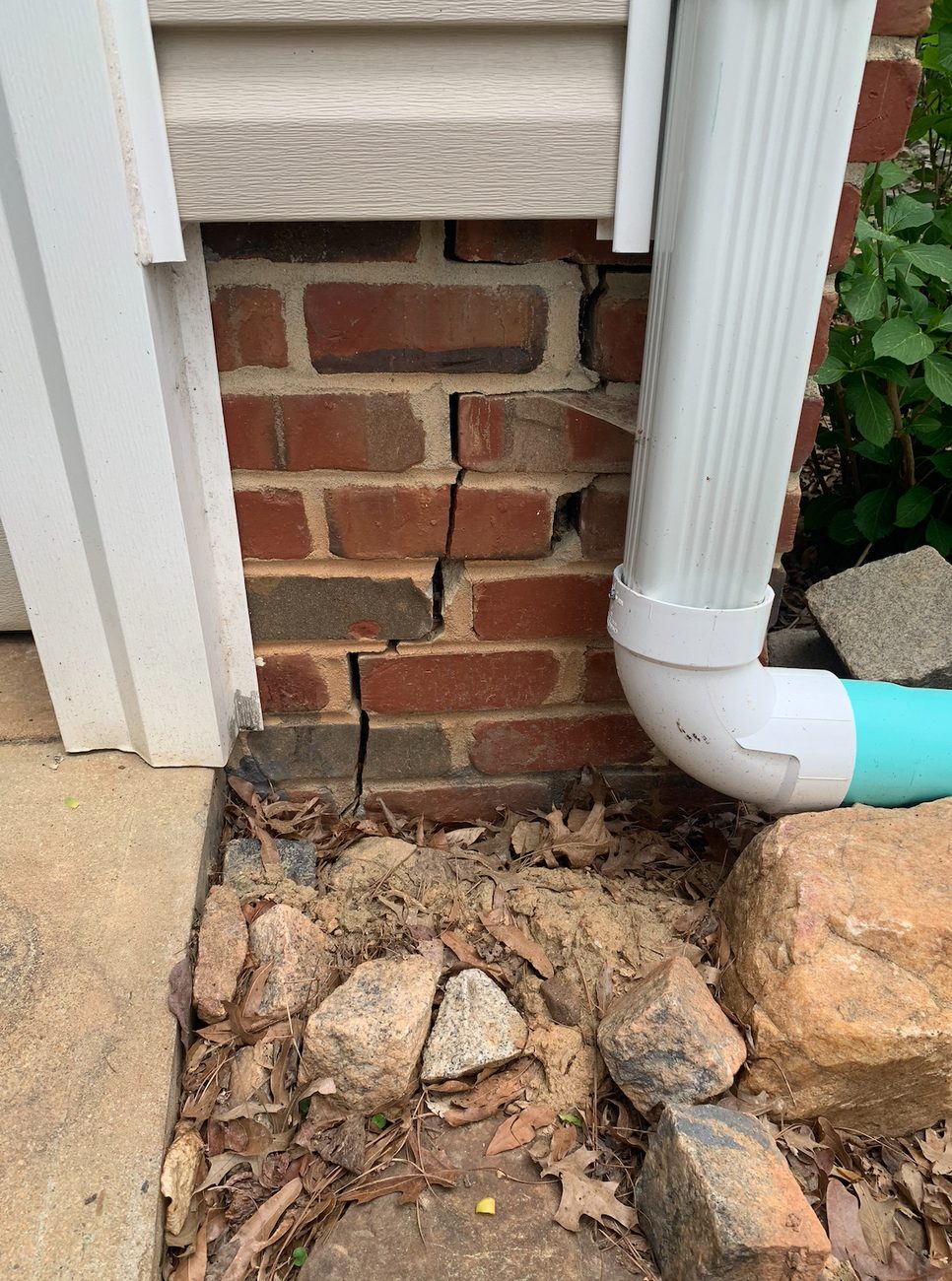
Stair-step cracks in the brick, cracks spreading across the drywall, and they keep getting wider. Those are the signs the foundation underneath is moving.
Doors and Windows That Stick
Doors that catch on the frame, windows that won't open like they used to, gaps opening at the top corners. When the foundation shifts, the frames go out of square.
Floors That Sag or Bounce
Floors that slope to one side, or feel bouncy like a trampoline in the middle of the room. Underneath, the crawl space supports are starting to give way.
A Damp or Musty Crawl Space
You open the crawl space and that damp, musty smell hits you, dark stains and mold spreading on the joists. That's moisture building up under the house, and it doesn't stay down there.
Water Standing After Rain
Water pools in the same spot every time it rains, in the yard or under the house. With nowhere to drain, it sits against the foundation.
Damp Walls or Water Stains Below
Brown water stains running down the foundation walls, white chalky lines, or block that never dries out. Where the water gets in, mold and wood rot follow.
Not every crack means the house is falling down. Hairline cracks in the drywall are usually cosmetic, and a lot come from normal settling. What matters is whether they're growing. Stair-step cracks in brick, doors that suddenly won't latch, floors that keep dropping, or a crawl space that stays wet, those point to something structural underneath. If the signs are getting worse, that's the time to have it looked at. We'll come out and tell you straight what it needs.
From a foundation settling out of level to a crawl space that stays damp and musty to water pooling against the house after every storm, these are the calls we get across the Triad, and every one starts with a free inspection to find where the water is getting in.
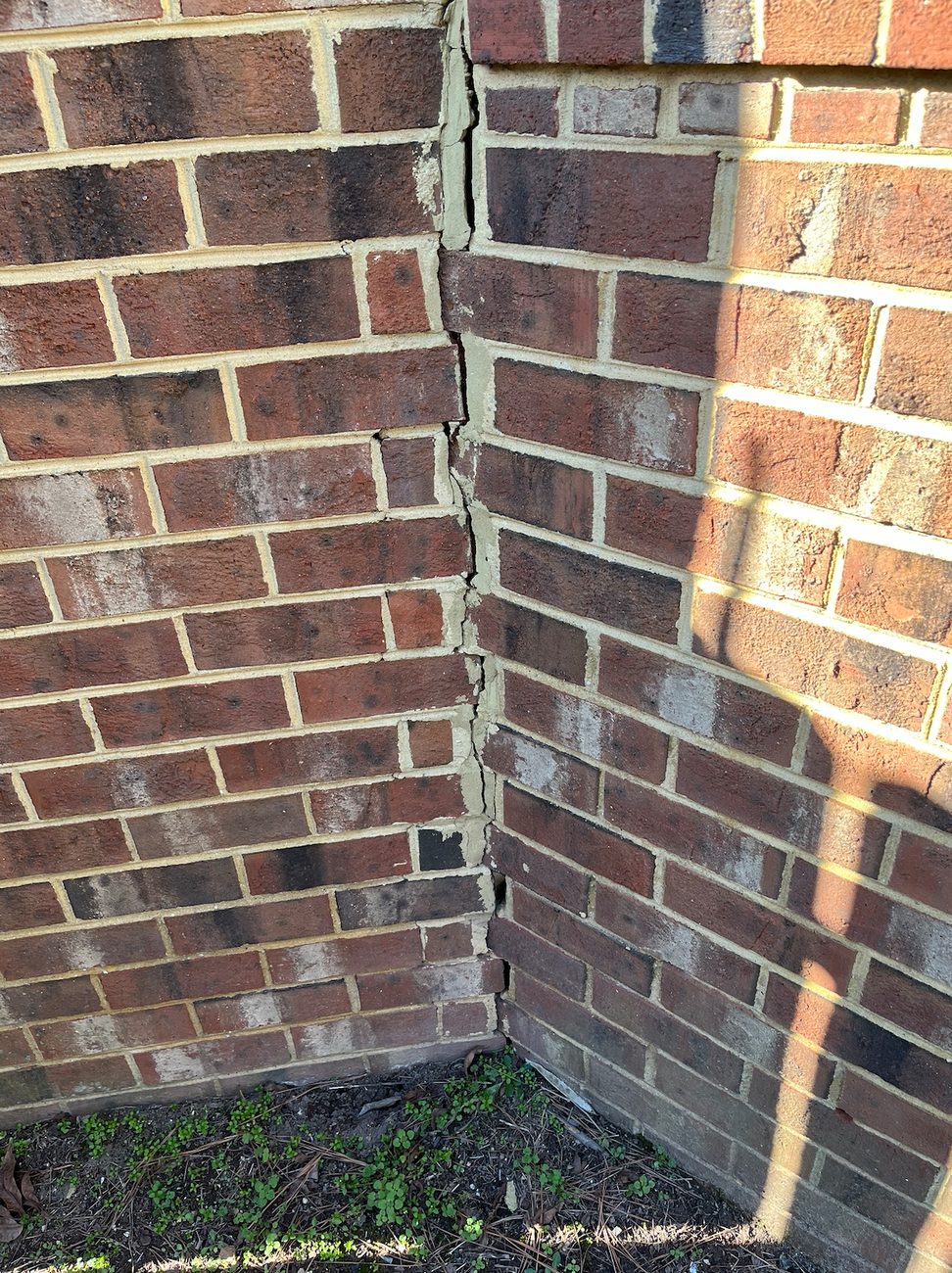
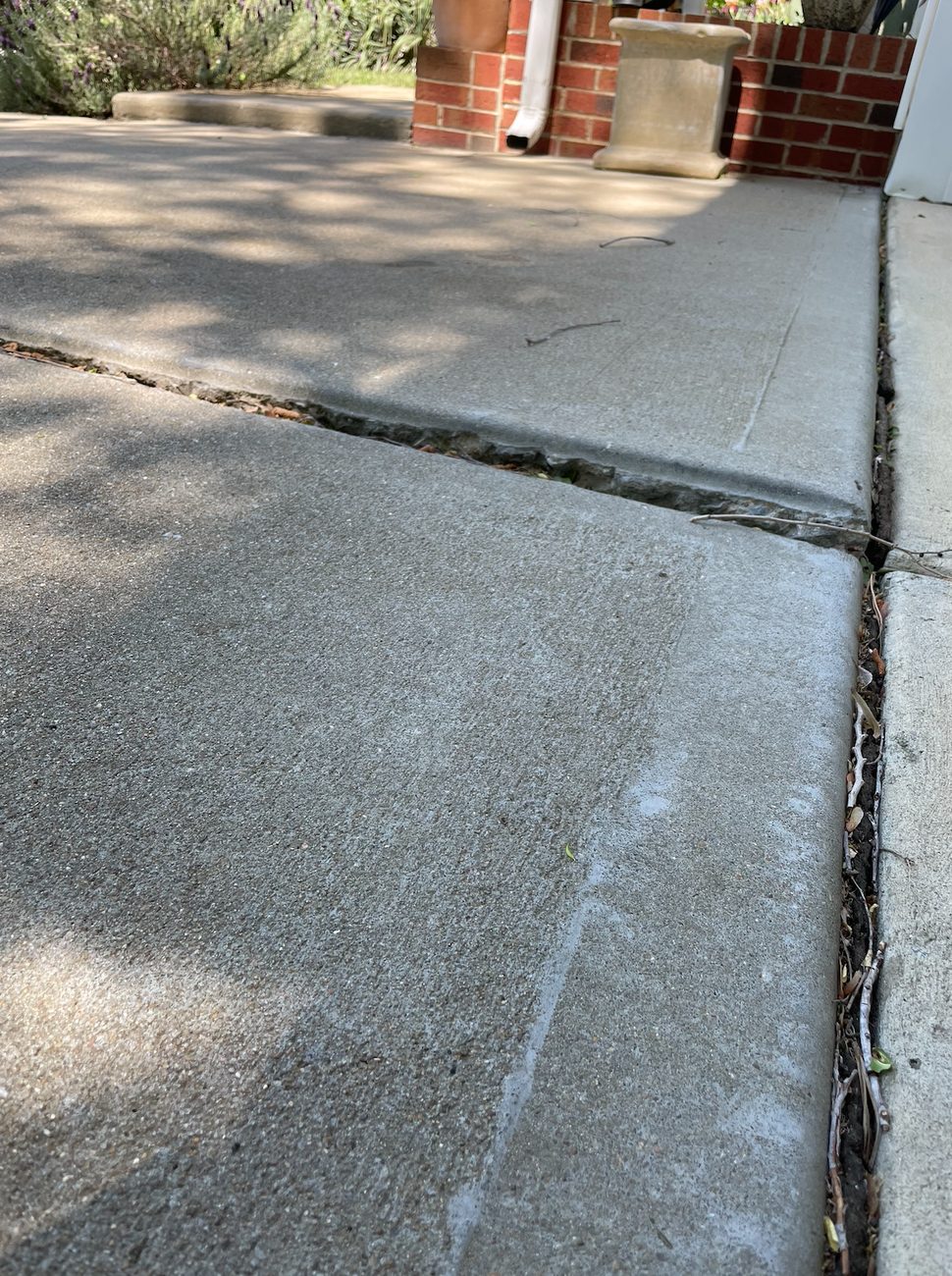
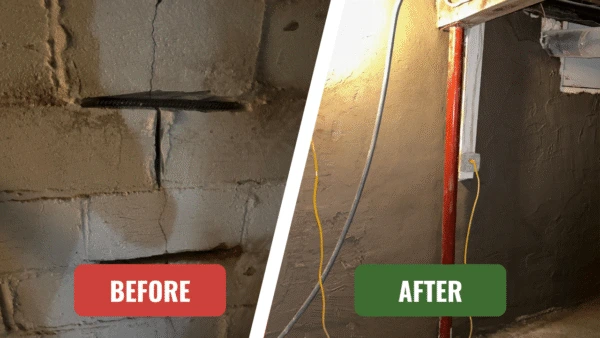
We close up the stair-step cracks, bring sloping floors back to level, and free the doors and windows that stick, lifting a settled foundation back onto stable, load-bearing ground.
Learn moreDoors that stick, cracks stepping up the brick, floors that slope toward the middle of the room. The honest first question is the one you're already asking: is this serious, or can it wait? In Greensboro it usually traces back to water, the soft ground washing out from under the footings and poor drainage letting it pool against the house, until the foundation settles out of level.
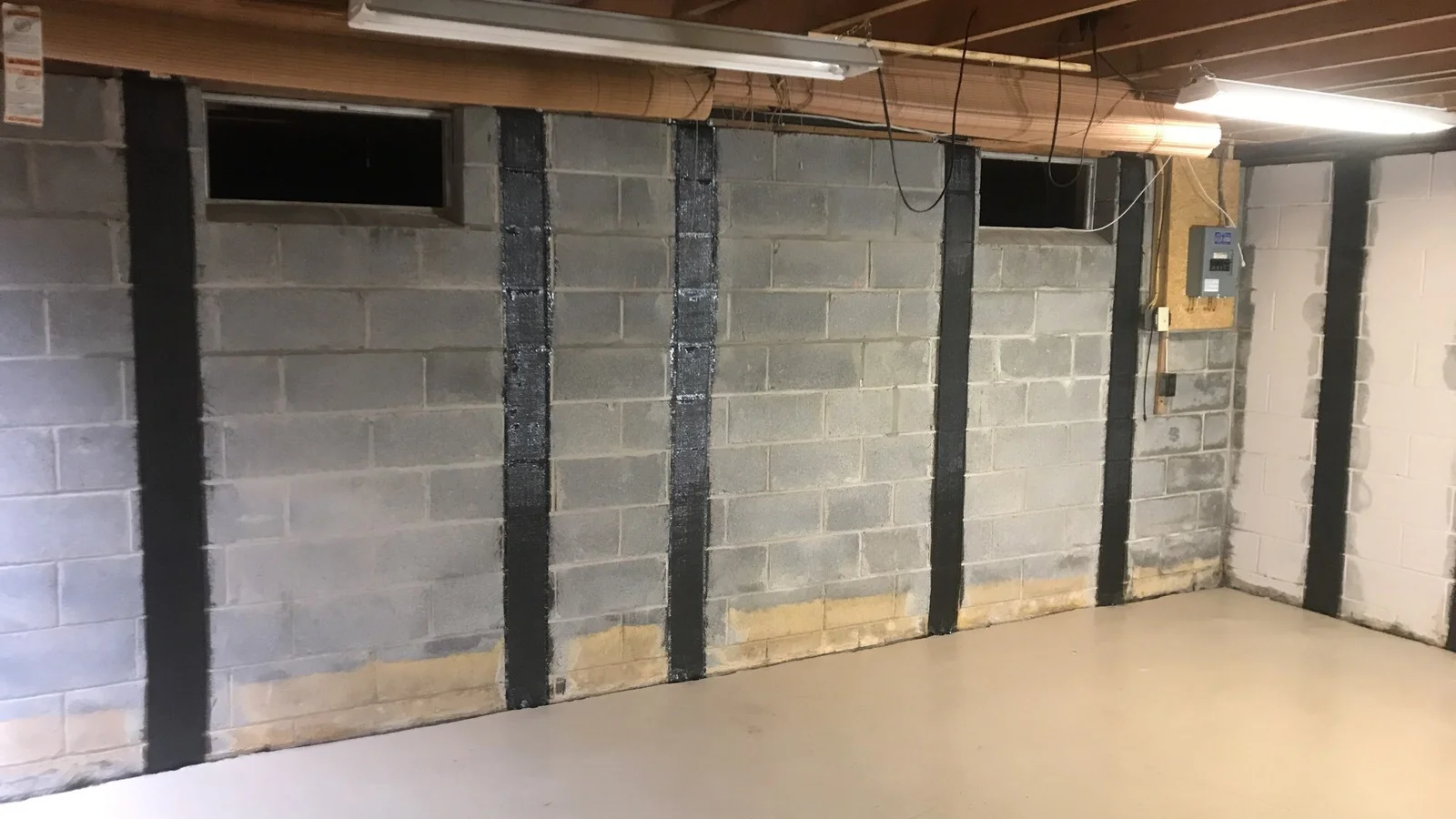
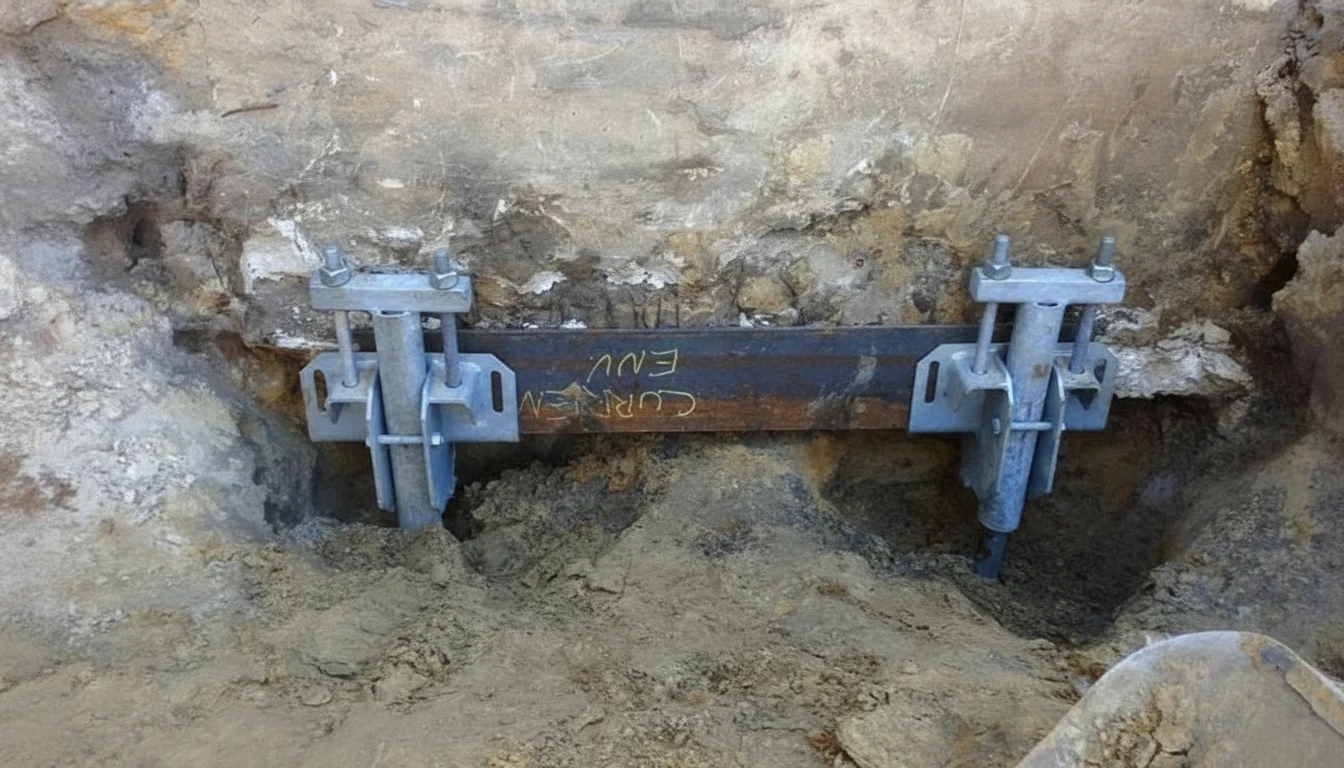
How we fix it depends on what's moving and how far it's gone. For a settling foundation, we underpin the house with steel push piers or helical piers driven down to stable ground, then lift it back toward level. Helical piers go in where access is tight or the soil is weaker; push piers use the weight of the house to reach deeper ground. Under a sagging floor, we shore up the crawl space and sister the joists that have given way. Foundation crack repair seals the block or poured walls once the movement is stopped, so water stays out. There's no single fix we push on every house, we match the method to the problem.
Not every crack means the house is in trouble, and we'll tell you straight when it's cosmetic and your money is better kept in your pocket. We work on homes across Greensboro, from the older ones in Fisher Park to the newer builds out by Lake Jeanette. It starts with a free, no-pressure inspection and a straight answer on what your home actually needs.
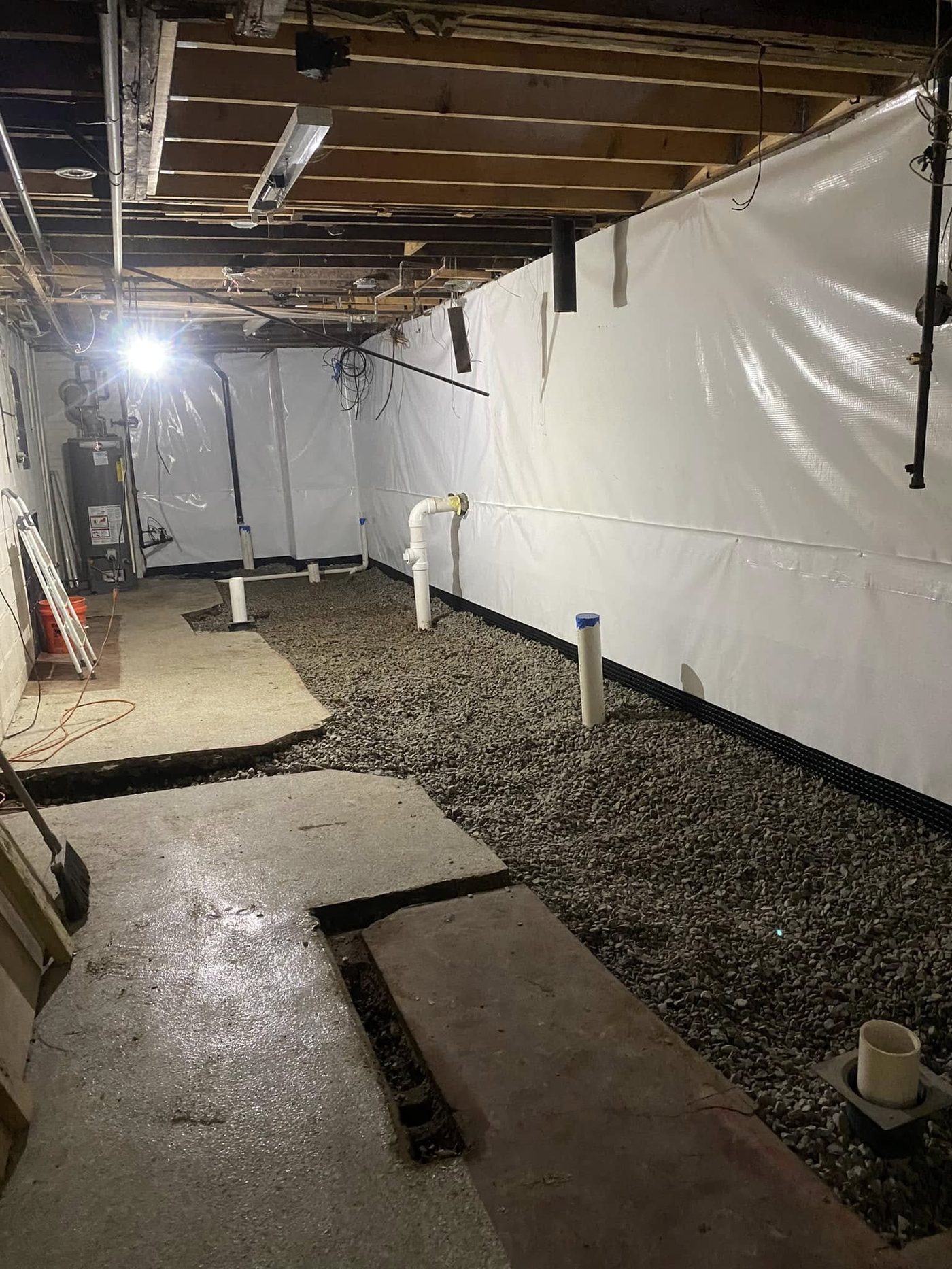
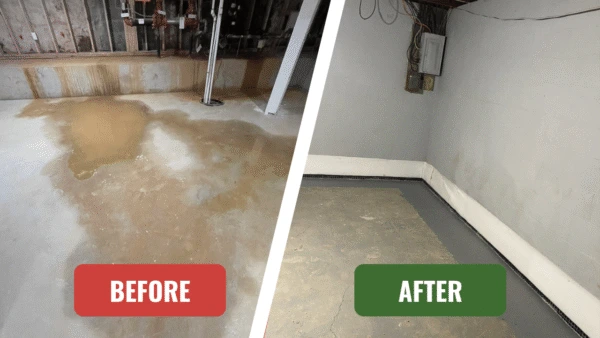
We dry out the damp walls, clear the musty air, and stop the water that seeps in after every rain, sealing the basement and carrying the water that collects away from the house.
Learn moreA basement that smells musty, walls that stay damp with a chalky white film, water creeping across the floor after a hard rain. In Greensboro this is a water problem before it's a foundation one. Gutters that dump at the wall, ground that slopes toward the house instead of away, and a high seasonal water table near the Buffalo Creek watersheds all push water at the block, until it finds the seam where the wall meets the floor.
How we keep it out depends on where it's getting in, so that's what we find first. A lot of the time the fix begins outside, with regrading and downspout extensions that move the roof water away before it ever reaches the wall. When water is already coming through, we run an interior french drain around the perimeter under the slab and tie it to a sump pump that lifts it out and away from the house. We seal the cracks that are letting it through and add a wall vapor barrier to handle the damp. There is no single system we drop on every basement, we match it to how the water is getting in.
Not every damp wall needs a full interior drain, and we'll say so when better grading would do it. We waterproof basements in the older parts of Greensboro like Westerwood, and out toward the homes around Irving Park. It starts with a free, no-pressure inspection and a straight read on where your water is coming from.
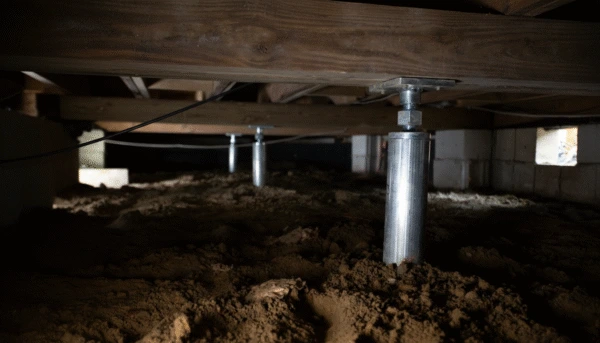
We firm up the floors that sag and bounce overhead by rebuilding the failing supports and joists below, so the rooms sit solid instead of dipping toward the middle.
Learn moreFloors that dip toward the middle of a room, a spot that bounces when you walk it, a door upstairs that suddenly won't latch. Under the house the story is usually the same, the wood posts and girders that carry the floor have shifted, rotted, or settled, and the joists above them have started to sag. In Greensboro the reason underneath is almost always moisture, since the older vented crawl spaces here trap damp air against the framing until it gives.
Fixing it means going back to solid support. We set new steel posts or adjustable jacks on proper concrete footings, sister or replace the joists that have rotted through, and swap out a girder that has failed, then bring the floor back up to level slowly, a little at a time, so nothing above it cracks. Where the supports settled because the ground under them washed out, we stabilize that first. And because the water is what rotted the wood to begin with, we deal with the moisture at the same time, so you are not back under there in five years. We don't just jack it and leave.
Some bouncy floors are a single sistered joist, not a rebuild, and we'll tell you which one you have. We do crawl space work on the older homes around Sunset Hills, and out toward Lindley Park. It starts with a free, no-pressure inspection and an honest look at what is actually carrying your floors.
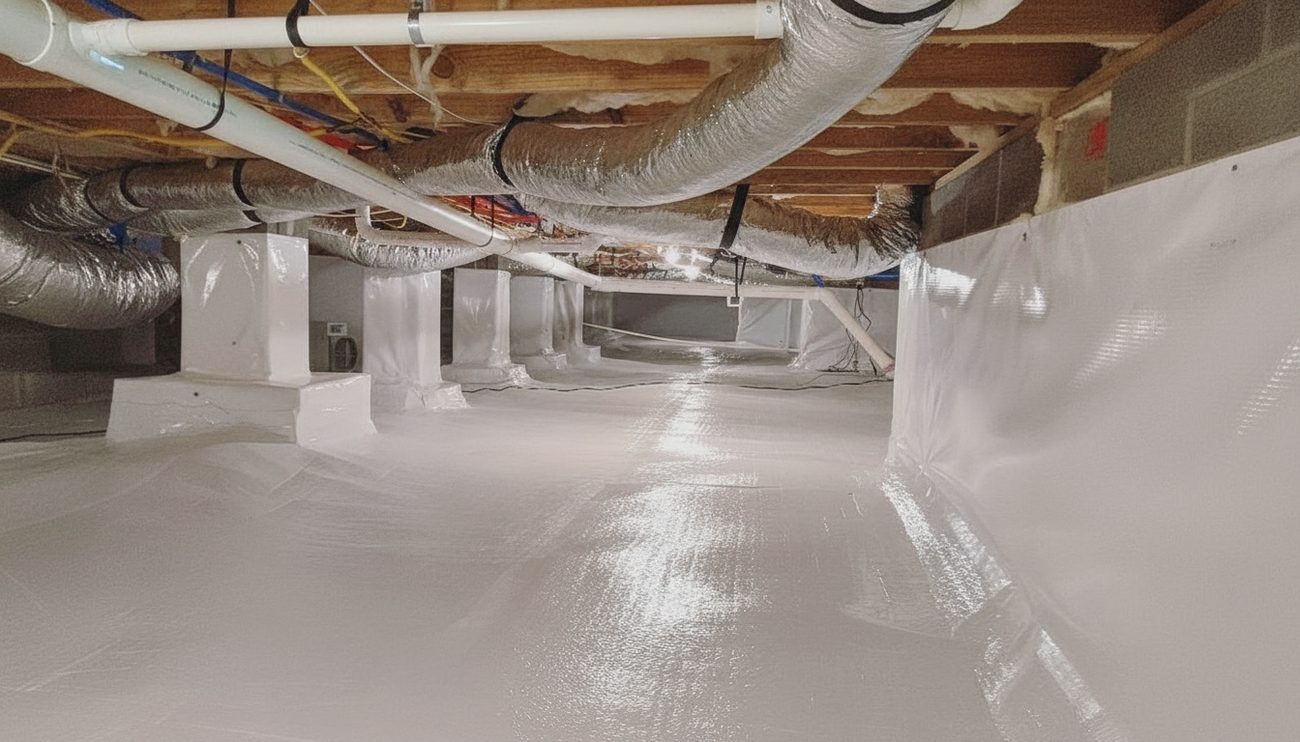
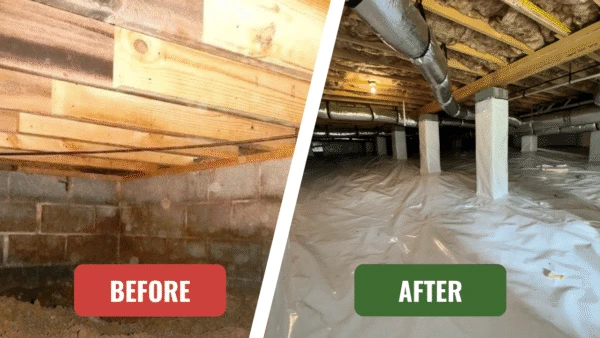
We stop the damp, musty air and moisture rising from the crawl space by sealing it off from the wet ground and outside air, so the house above stays dry.
Learn moreA musty smell that rises into the house on humid days, insulation drooping off the floor joists, standing water or a damp sheen on the dirt after it rains. A vented crawl space in Greensboro is built to let outside air in, and on this Piedmont clay that means warm, wet air condensing on cool framing all summer, plus ground moisture wicking up from below and a high water table near the Buffalo Creek watersheds.
Encapsulation seals all of that off. We close the vents, line the floor and walls with a heavy vapor barrier that laps together at the seams, and seal it to the foundation so the wet ground and outside air are shut out. Where water actually comes in, we add a drain and a sump pump before the liner so it has somewhere to go, and a dehumidifier holds the space dry through the summer. For a crawl space that is only lightly damp, a vapor barrier and better drainage may be all it needs, and we'll say so rather than sell the full system.
Once it is sealed, the musty smell finally leaves the house, the mold stops, and the wood floors above quit taking on moisture. We encapsulate crawl spaces across Greensboro, from the older homes near College Hill to the ranches out around Starmount Forest. It starts with a free, no-pressure inspection and a straight answer on what your crawl space really needs.
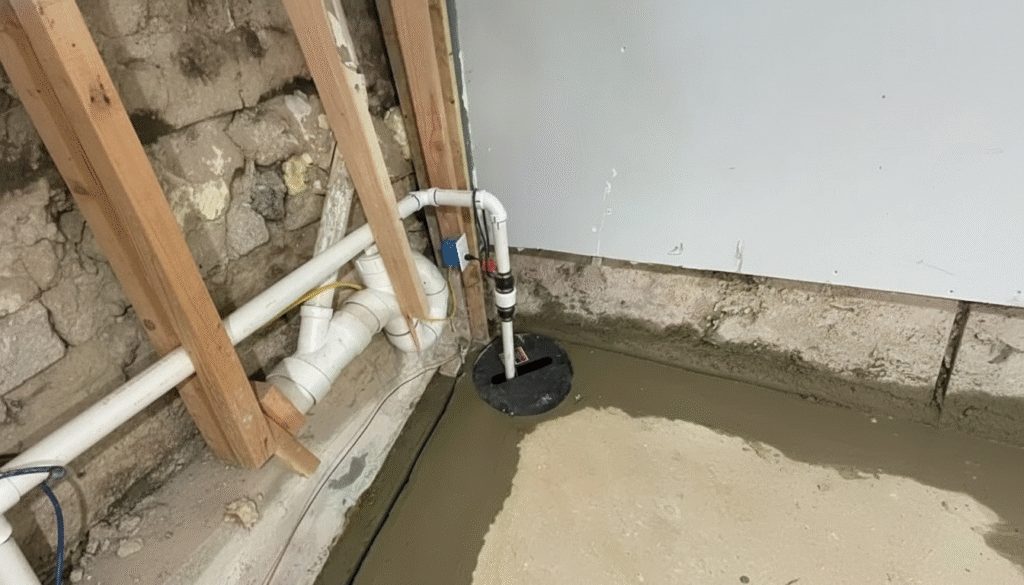
We clear the water that keeps collecting under the house with a sump pump in the low spot, pumping it out on its own before it can pool and sit.
Learn moreWater that keeps collecting in the same low corner of the crawl space or basement, a spot that never quite dries out between storms, an old pump that runs constantly or has quit altogether. Near the Buffalo Creek watersheds the seasonal water table sits high, and once water is under the house it has nowhere to go on its own.
A sump pump is the backstop that moves it out. We dig a pit at the lowest point where the water wants to collect, set a pump that switches on by itself as the water rises, and run the discharge line far enough from the foundation that it doesn't just circle back. On a full system it ties into the interior drain that feeds it, and for the storms that knock the power out, a battery backup keeps it running when you need it most. It isn't the whole answer on its own, it's the piece that clears the water the drainage collects, so we look at both together.
If your real problem is grading or a downspout dumping at the wall, a pump alone just masks it, and we'll point that out instead of selling you one. We install and replace sump pumps across Greensboro, in the older homes near Glenwood and the crawl spaces out toward Hamilton Lakes. It starts with a free, no-pressure inspection and an honest read on whether a pump is what you actually need.
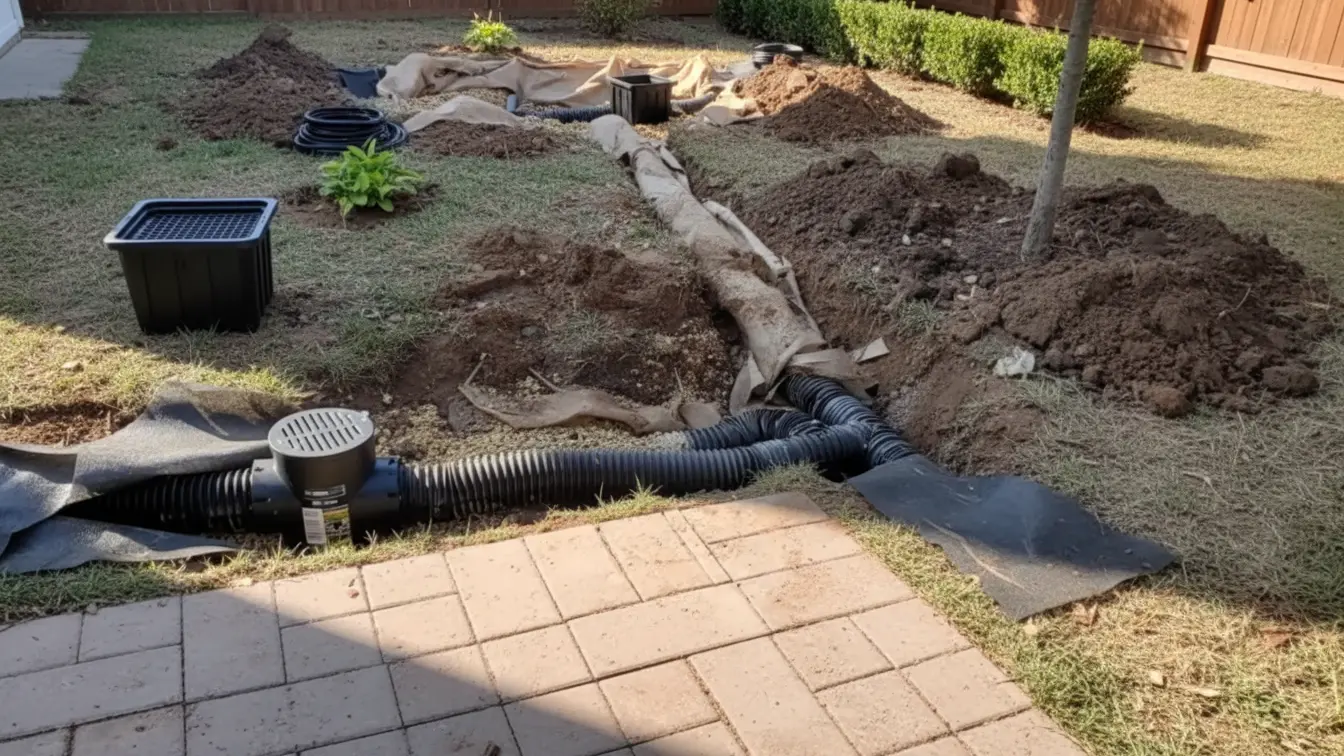
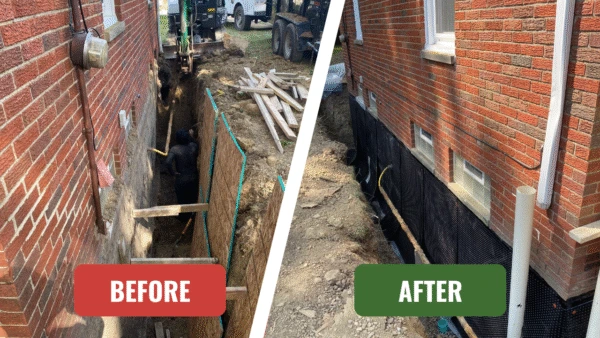
We take on the water that pools against the foundation with nowhere to drain, laying a french drain that catches it and carries it well away from the house.
Learn moreWater that pools against the foundation and just sits there, a low stretch of yard that stays soggy for days, a crawl space or basement that takes on water after every hard storm. On Greensboro's rolling ground, roof runoff and surface water run downhill and collect right alongside the footings, and that standing water is what erodes the soft saprolite under the house and keeps the crawl space wet.
A french drain gives that water a path out. We cut a gravel trench with a perforated pipe that catches the water and carries it away by gravity, either along the outside of the foundation where it's collecting or under the slab inside, depending on where it is actually getting in. We tie it to a sump pump when there is nowhere to drain by gravity, and pair it with regrading and longer downspout runs so the roof water never reaches the wall in the first place. This is also the step that makes everything else last, since piers and wall repairs hold once the water that caused the movement is finally going somewhere.
If the fix is really just a downspout and a little grading, that is what we'll tell you, not a trench you don't need. We put in french drains across Greensboro, from the sloped lots around Latham Park to the older yards near Kirkwood. It starts with a free, no-pressure inspection and a straight answer on where your water needs to go.
Queen Foundation Repair works on foundations, crawl spaces, and drainage for homeowners across Greensboro. Most of what we see in the Triad comes back to water. A lot of the older homes here sit on vented crawl spaces that stay damp, and the rolling lots send runoff straight down at the footings, so much of the work is drying things out and moving water away from the house before it starts to settle.
We handle crawl space encapsulation, french drains and grading, basement waterproofing, foundation piering, and concrete leveling for sunken driveways and walkways. The calls that come in are musty crawl spaces, standing water in the yard after a storm, floors that have started to slope, doors and windows that stick, and stair-step cracks climbing the brick.
We work with homeowners all across Greensboro, from the older neighborhoods like Fisher Park, Sunset Hills, and College Hill to the newer builds out toward Lake Jeanette and Irving Park. Every job starts with a free inspection, a look under the house and around the foundation to find where the water is getting in.
Get your free inspection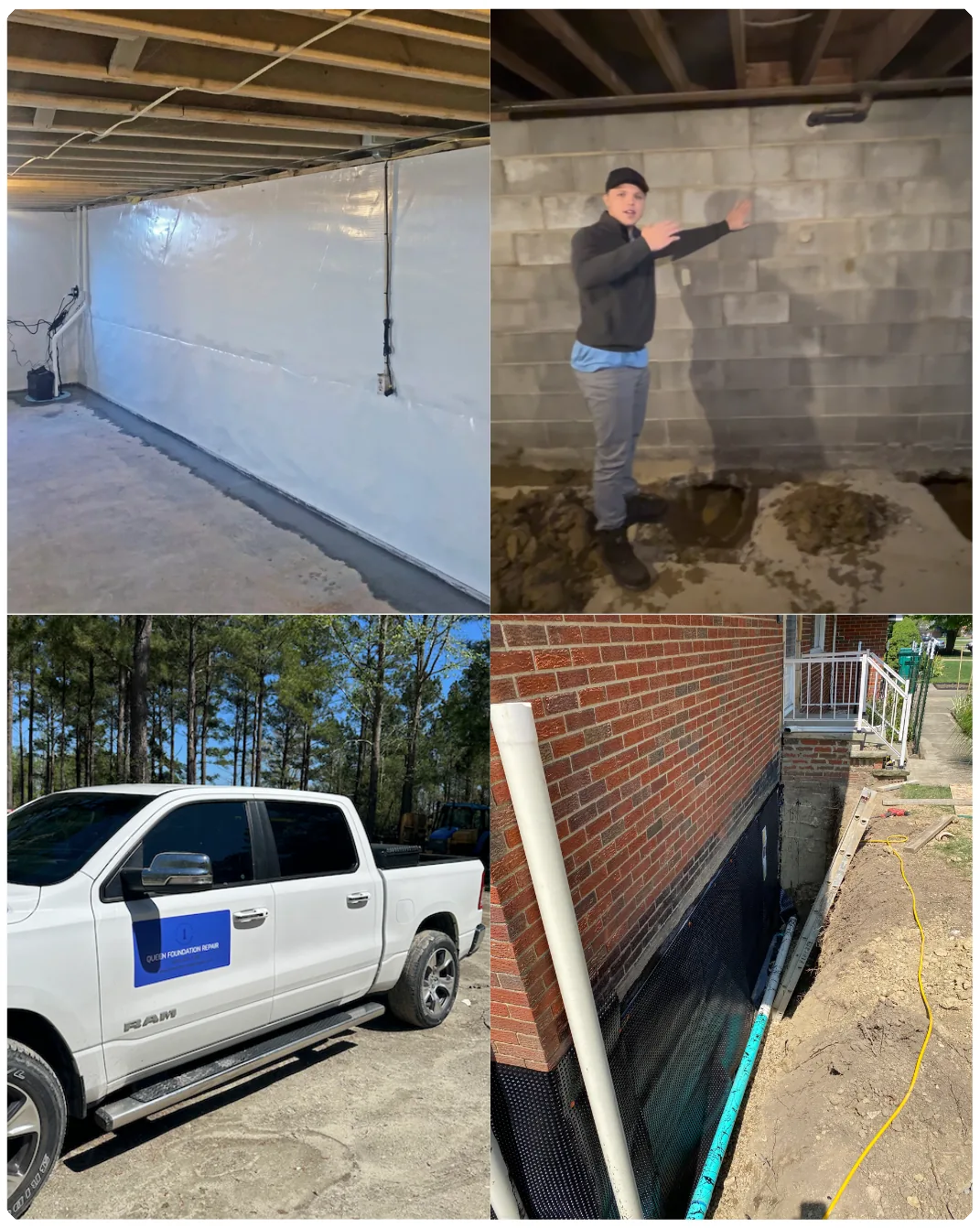
WHAT YOU GET
We answer fast and get out to the house quickly, so you're not sitting for weeks just to find out what's wrong and what it'll cost.
No charge to have us come out, find what's going on, and lay out what the fix takes. You know where you stand before spending a dollar.
Licensed, with full liability and workers' comp coverage, so the work is done to code and your property is protected if anything goes sideways.
The repair comes with a written warranty that transfers to the next owner, so it protects your home's value if you ever sell.
A clear, written price upfront before anything starts, no vague ballpark and no surprise add-ons once the work is underway.
We handle all structural and waterproofing services across Greensboro, where most of the trouble comes back to water, from older crawl spaces in Fisher Park to newer slab and basement builds out by Lake Jeanette.
Here’s how it goes, from the first call to the final walkthrough.
FREQUENTLY ASKED
Straight answers to what Greensboro homeowners actually ask us, from families in Westerwood to the newer builds out by Adams Farm, on what a crack really means, what the work costs, whether insurance helps, and how long a good repair lasts.
Signs & When to Worry
Most homeowners notice it in small ways first. Cracks climbing the drywall or stair-stepping through exterior brick, doors and windows that stick or won't latch, floors that slope or feel bouncy underfoot, a musty smell drifting up from the crawl space, or gaps opening where the trim meets the wall. Any one of those can be nothing, or it can be the early sign of movement or moisture below. The honest way to know is to have someone look, and that's what the free inspection is for.
It depends on the crack, and the good news is a lot of them turn out to be nothing. Thin, hairline cracks running straight up and down are usually just normal settling and concrete curing, the kind almost every house gets. What we watch for is different: horizontal cracks, stair-step cracks through the block or brick, anything wider than about an eighth of an inch, or a crack that's clearly getting longer over time. Those can point to real movement or water pressure pushing on the wall, and they're worth looking at sooner rather than later. The tricky part is you usually can't tell which kind you've got from a photo. That's why we come out and measure it, tell you straight whether it needs structural work or just monitoring, and put it in writing.
Because in Greensboro, water is almost always the real story, not the red clay everyone blames. Our Piedmont clay is the low-swell kind, so it doesn't puff up and shove your foundation the way you'll hear some companies claim. What actually moves houses here is water washing out the softer soil underneath, especially on the cut-and-fill lots carved into these rolling hills, and along the low ground near North and South Buffalo Creek where heavy rain pools and drains slow. Add in the older parts of town, where plenty of homes still sit over open, vented crawl spaces that stay damp for months, and you've got moisture doing the damage over time. So when we fix a foundation or a crawl space here, we start by finding where the water's coming from. Fix the water, and the repair actually holds.
Repairs & Methods
It comes down to getting the foundation back onto stable ground and holding it there. For a settled section, that usually means steel piers driven or screwed down through the loose soil until they reach something solid, then transferring the home's weight onto them and lifting the sunken area back toward level. Sunken concrete slabs or walkways can often be raised with injected foam instead. Which method fits depends on what's under your house and how far it has moved, and that's exactly what the inspection sorts out.
A vapor barrier is a plastic sheet laid over the dirt floor of the crawl space to slow moisture coming up from the ground. It helps, but it's only part of the picture. Full encapsulation seals the whole space, the floor and the walls, with a heavier liner, closes off the outside vents, and usually adds a dehumidifier to keep the air dry year-round. The barrier slows moisture; encapsulation actually controls it. Which one you need comes down to how wet your crawl space really is.
A repair done right lasts, and the reason some don't is simple: whoever fixed it dealt with the cause, not just the symptom. If a crew patches a crack or props up a floor but never touches the water washing out the soil underneath, the house keeps moving and the problem walks right back in a year or two. That's the most common reason people end up paying twice. The way we approach it, we find what's actually driving the movement first, usually water and drainage around here, fix that alongside the structural work, and use methods built to hold, like steel piers that rest on stable ground instead of the soil that failed. Good work also comes with a warranty in writing, so you're not just taking our word for it. Done that way, the fix is meant to be permanent.
Crawl Spaces & Water
It's common around here, but no, it isn't something to shrug off. Most older Greensboro homes were built with open, vented crawl spaces, and in our humid summers that warm outside air drifts in, hits the cooler ground, and leaves everything damp. Add any standing water after a hard rain and you've got the recipe for that musty smell, along with mold, wood rot, and sagging floors down the road. The damp itself is the warning sign, and sealing and drying the space is what stops it.
For a lot of homes here, yes. A sealed, dried crawl space keeps moisture out, which protects the wood framing your floors sit on, cuts down on mold and musty air, and often makes the floors above feel warmer and less bouncy. It can even help with energy bills, since your HVAC isn't fighting damp air. It isn't cheap, so it's worth doing when the moisture is genuinely a problem, not just because someone's selling it. The inspection tells you honestly whether your crawl space actually needs it.
It depends on where the water's coming from. A french drain is a gravel-and-pipe channel that catches water in the soil and carries it away before it reaches your foundation, which is often the answer for a yard or crawl space that stays wet. A sump pump sits at the low point and pumps out water that has already collected. Plenty of homes need both working together, the drain to move water away and the pump as backup for the heavy rains. We size it to your actual water problem, not a package.
Cost & Insurance
The honest answer is it depends on what's actually going on down there, so anyone who quotes you a number over the phone is guessing. It swings on how much of the house is affected, what's causing it, and which method the fix calls for. To give you a rough national range, a minor crack repair can run a few hundred dollars, while a full pier job under a settled corner runs into the thousands, and a big structural job with drainage work climbs from there. Here in Greensboro, a lot of what looks scary turns out to be a crawl space or drainage issue that costs far less than people fear, and plenty of cracks need nothing structural at all. That's exactly why the inspection is free. You get a real, itemized number in writing, based on your actual house, before you decide to spend a dime.
Usually not, and it catches a lot of people off guard, so it's worth understanding before you file. Standard homeowners policies cover sudden, accidental damage, like a pipe bursting or a tree falling on the house. What they almost always exclude is the gradual stuff: settling, soil movement, drainage, and general wear over time, which is exactly what most foundation and crawl space problems come from. So if your foundation settled slowly over the years, that's typically on you, not the insurer. There are exceptions, like when a covered event, say a sudden plumbing leak, is what caused the damage, and it's always worth reading your policy or calling your agent to check. We can't tell you what your carrier will approve, but we can document exactly what we find and what caused it, which is the paperwork you'd need if you do decide to file.
Yes, the inspection and the written estimate are free, no strings. Someone comes out, looks at what's actually happening, and gives you a real number in writing, whether that's a full repair plan or just a note that you don't need much at all. As for paying, foundation and crawl space work is a big expense to hit all at once, so financing is commonly available to spread it out. When we send your estimate, we'll walk through the options so you can pick what works for your budget.
The Process
The hands-on repair is usually faster than people expect. A typical crack repair or pier job on one section of the house often wraps in a day or two, and even larger structural jobs are frequently done within a week. Crawl space encapsulation usually runs a couple of days. What can stretch the timeline is the front end, the inspection, the written plan, and any permit the city needs before work starts. We'll give you a realistic schedule with your estimate so there are no surprises.
Sometimes, and if you do, we'll tell you upfront. In North Carolina, certain work needs a permit, closing in a vented crawl space is one example, and bigger structural repairs can call for a licensed engineer to sign off before the city will approve them. Not every job needs either one. A minor crack repair usually doesn't. Part of the inspection is figuring out exactly what your job requires, so nothing gets missed and the work is done to code.
In almost every case, yes. Most foundation and crawl space work happens outside the house or underneath it, so you can go about your day while the crew works. You might hear some noise or feel a little vibration during pier work, and there may be a few hours where it's easier to stay out of one area, but moving out isn't necessary for the vast majority of jobs. If yours is the rare exception, we'll tell you well ahead of time so you can plan.
Trust & Warranty
With quality foundation work, it usually does, and that's a bigger deal than it sounds. A transferable warranty means if you sell the house down the road, the coverage on the repair passes to the buyer, which turns a past foundation problem from a red flag into a selling point. It tells a buyer the issue was handled properly and they're protected. Transfer is normally a simple step, often a short form and sometimes a small fee, handled around the sale. What matters is that you get the real terms in writing before any work starts: what's covered, for how long, and whether it transfers. We'll spell all of that out in your estimate so there's no guessing later. A warranty you can actually hand to the next owner is worth asking about with anyone you hire.
Absolutely, and often it's easier to sell than a house with problems nobody's addressed. A documented repair, especially one with a transferable warranty, tells buyers the issue was handled the right way instead of left to guess about. In most cases you'll need to disclose the repair when you sell, but that paperwork works in your favor, since it shows exactly what was done and that it's covered. Keep your inspection report, the estimate, and the warranty together. That folder answers a buyer's questions before they even ask.
Get more than one opinion, and be wary of anyone who pressures you to sign today or quotes a big number without really looking. The good signs are simple: a written estimate that explains the cause and the fix, a company that's licensed and insured, a warranty in writing, and someone willing to tell you when you don't need much work at all. If a quote comes in far below everyone else's, ask what's being left out. The right company explains your options in plain language and lets you decide on your own time.
AREAS WE SERVE
From the historic streets around Dunleath and Kirkwood to the newer builds out past Adams Farm, we help homeowners across Greensboro and the greater Triad fix settling foundations, wet crawl spaces, and drainage that never quite carries the water away. Wherever you are in and around the city, the inspection is free.
ZIP Codes We Serve
Ready to Get Started?
No obligation, fast and easy.
We appreciate you reaching out.
One of our team members will be with you shortly.