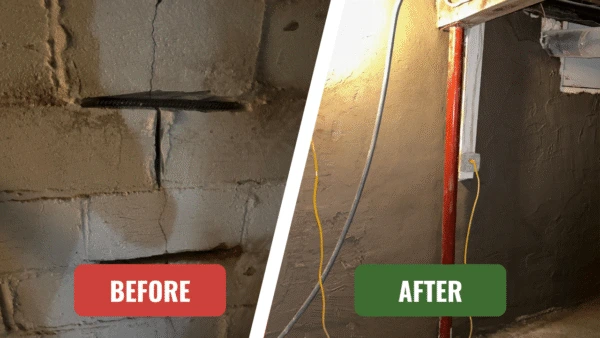
A basement wall that has come in along one course, a crack that opened over the winter and did not close, water across the floor once the thaw started. From Longfellow over to Northeast we handle foundation repair, basement waterproofing and basement wall repair, and the inspection is free.
Get Your Free Inspection
We appreciate you reaching out.
One of our team members will be with you shortly.





WHAT TO LOOK FOR
These are the six we get called about most in Minneapolis, and they nearly always turn up in the basement before anywhere else. Some will have been there a long time and done nothing since. Others are a house that has not finished moving yet.
Pressure from the frozen side
One course has moved further in than the rows above and below it. The ground pushes sideways as it freezes, and a buried wall takes that push.
The wall took the load
A line running sideways along the block, sometimes turning down at one end. Hairline is common here. Wide enough to see through is not.
The melt has nowhere to go
It arrives with the melt and not with rain. That water cannot soak into ground that is still hard underneath, so it runs downhill to your basement.
The frame moved with it
It starts at the top corner of a door or window and runs up and out. That is the shape movement makes when something below has shifted.
The frame is being lifted
Trim pulling away from the ceiling, often on one side of the house only. Something below has lifted and taken the framing up with it.
Water is finding the seam
The basement slab has split, often damp along its length after a heavy melt. The slab and the wall move at different rates and part company.
What it costs to put right tracks how long it has been left alone. A wall that has come in half an inch is a different job, and a different price, from one that has come in two inches. The same goes for a crack that is still opening. We would rather look at it while the number is small, and you will get a straight answer on what it needs, whether that is a lot or very little.
A wall that has come in along one course, a crack that opened and never closed again, water across the basement floor once the ground lets go. Those are the calls we take across Minneapolis. Tap a service to see how that repair is done.
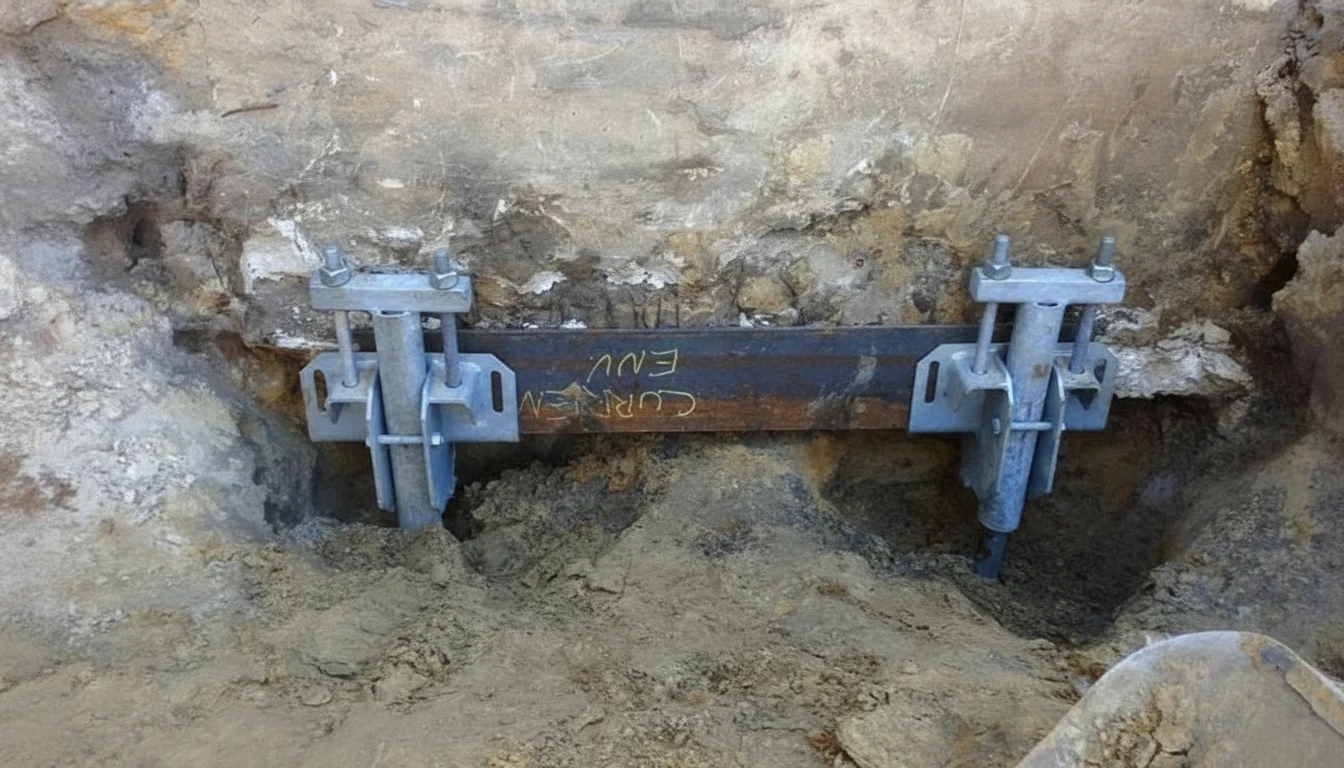
Stops a house that has moved from shifting further, brings it back toward level, and closes the cracks the movement opened up.
Learn moreMovement here is rarely one long slow drop. A house in Longfellow gets lifted a little and set down again each year, and after enough of those the footing is no longer sitting where it started or on what it started on.
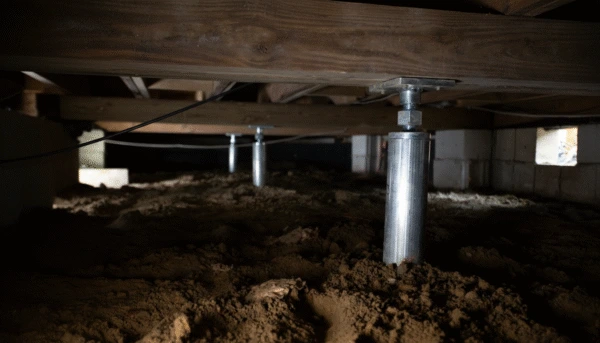
Foundation repair puts the load below the layer that keeps changing. Piers are driven or turned down past the frost depth until they reach material that stays put, and brackets transfer the weight of the house onto them. Depth is decided on site, not from a chart. From there the structure is brought back toward level in stages, watched as it goes, so plaster and brick come with it instead of tearing. Foundation settlement repair is measured work rather than a single lift.
What it does not do is stop the ground freezing. It takes the house out of the argument rather than settling it, which is why the drainage around the footing gets looked at in the same visit. In Nokomis that has meant piers along one side and grading work along the other. The inspection is free.
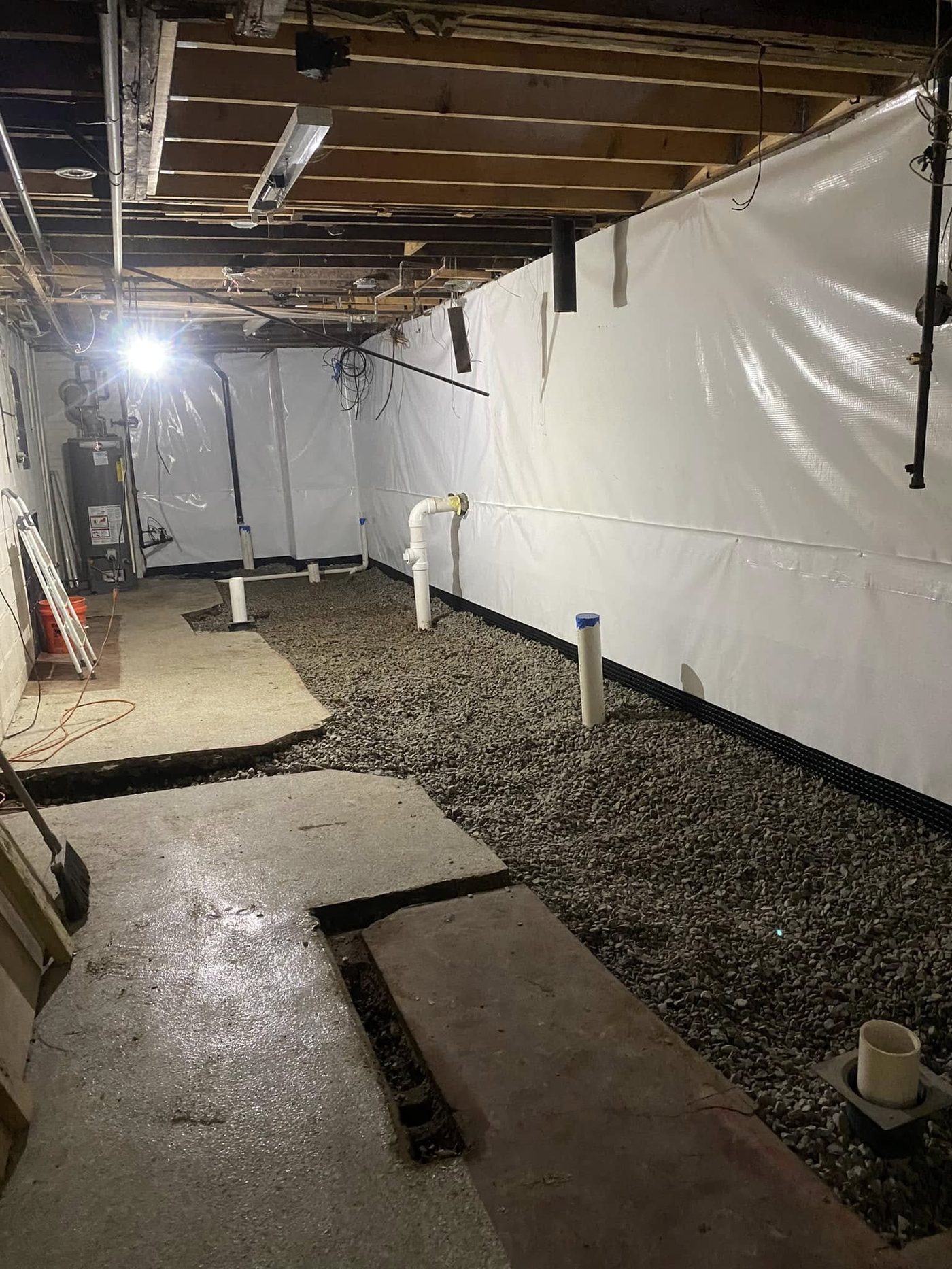
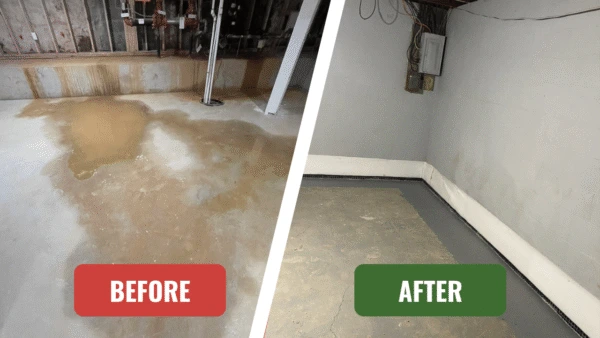
Keeps water off the basement floor by catching it inside the wall and sending it to a pump before it reaches the room.
Learn moreMost people find out the hard way. In Northeast the snow goes, the melt has nowhere to soak because a couple of feet down the ground is still hard, and all of it runs to the lowest place available. Often that is somebody's basement floor.
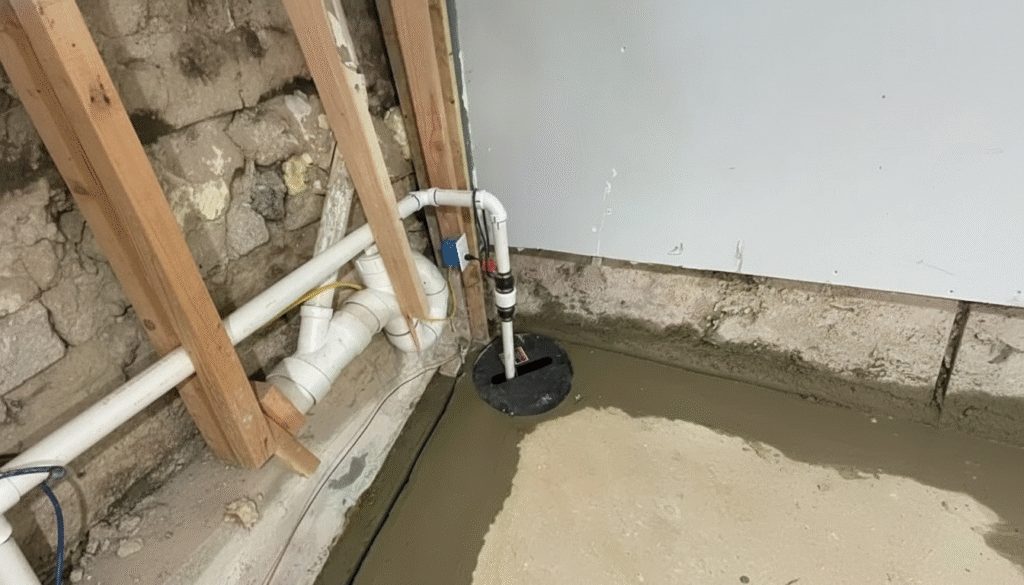
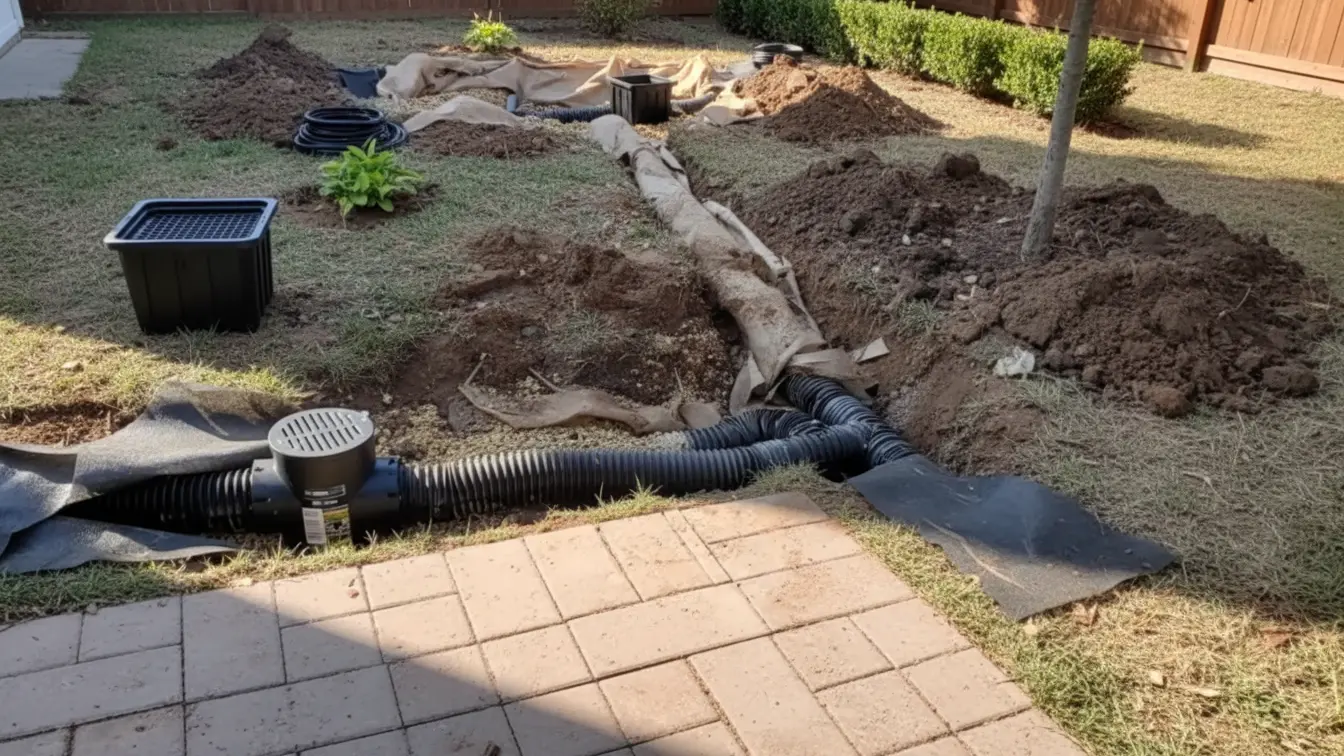
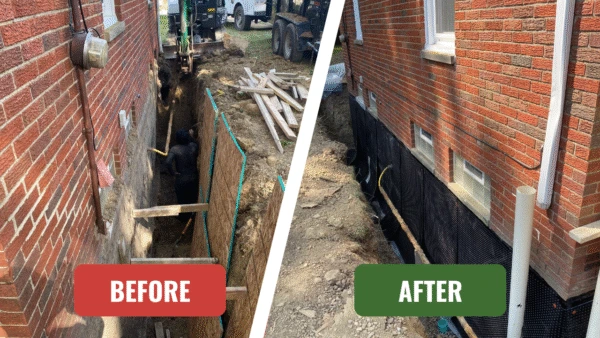
Basement waterproofing gives that water a better route. A channel is cut at the base of the wall, drain tile is bedded in washed stone below the slab, and it all runs to a pit where a pump lifts it clear of the house. Interior basement drainage handles what has already worked through the wall, which suits block that weeps across its whole face. Where a specific section is the leak, the outside gets excavated and sealed instead, though the window for that work is short here. The pit and the discharge get sized to the volume the ground actually delivers when it all arrives at once, which is a different number from an ordinary storm.
It will not hold up a wall that has already moved. That is separate work and we will say so. In Kingfield the wall came first. Sealing a wall that is still taking water from outside just moves the problem behind the coating.
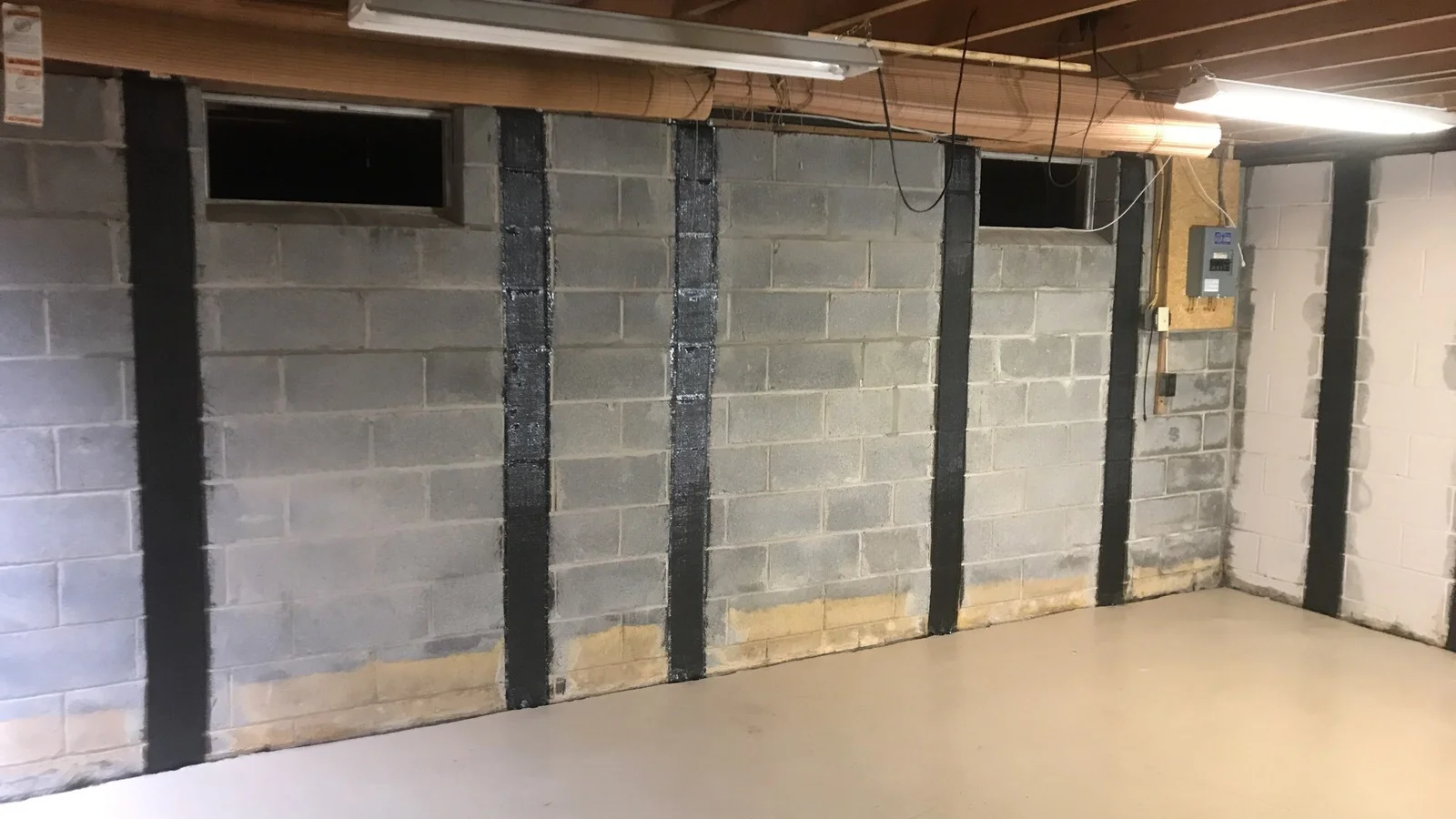
Holds a basement wall that has come inward against the pressure pushing it, and straightens it back where there is room to.
Learn moreA wall that has moved in along one course is the most common structural call we get in this city, and the reason is seasonal. Ground in Powderhorn expands against the outside of that wall every time it freezes, and a tall buried wall is what the expansion pushes against.
Basement wall repair starts with deciding whether the wall can be held where it is or needs to come back. Carbon fibre straps bonded across the face stop further movement and finish flat enough to paint over. Steel beams anchored at the footing and the joists do the same on a wall that has gone further, and can be tightened over time to recover part of the deflection. Straps are spaced by the height of the wall and what it is built from, not on a standard interval. On a wall that has moved a long way, straightening is done gradually rather than forced in one go.
Bracing manages the wall honestly, but the pressure returns every freeze until the water in that ground is controlled. In Seward the drainage went in alongside. Bracing buys time and rebuilding ends it, and the wall itself decides which one you are looking at.
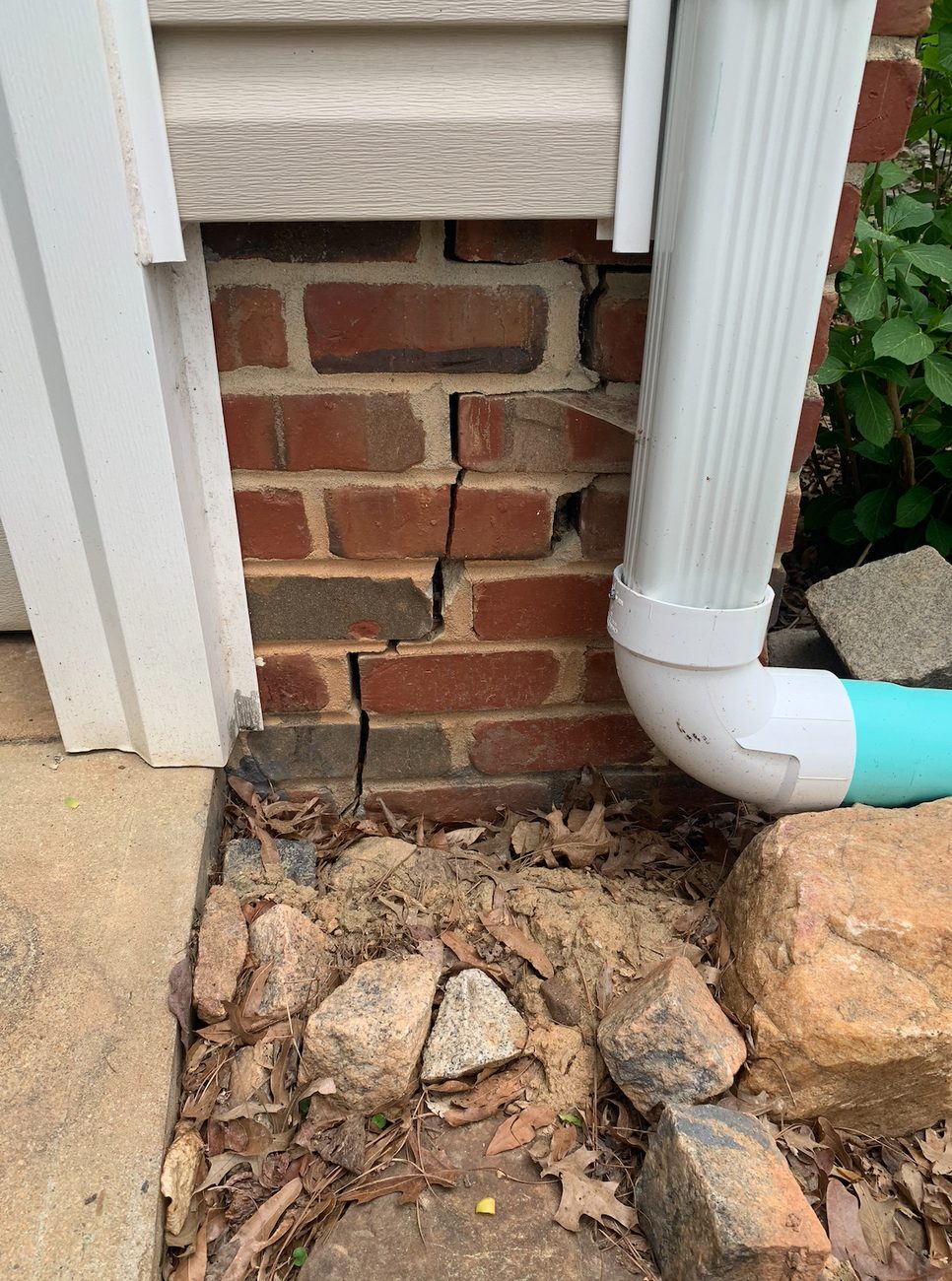
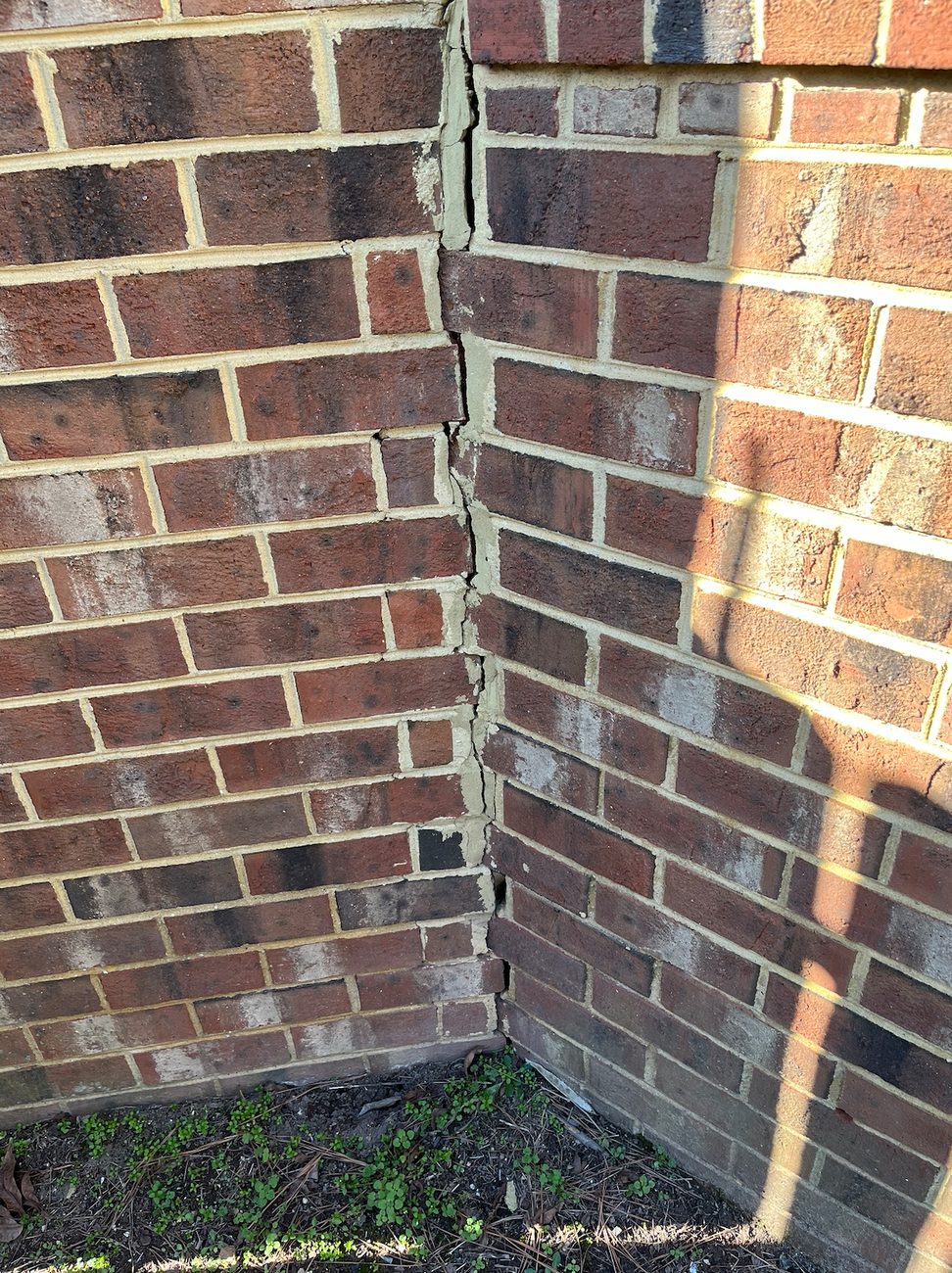
Seals cracks through the full depth of the wall rather than skimming the surface, and reinforces masonry so it stops opening again.
Learn moreNot every crack is doing something, and the ones that are tend to announce themselves after a hard freeze. A thin vertical line in a poured wall in Fulton is usually shrinkage left from the concrete curing and can sit unchanged for decades.
Foundation crack repair treats the ones that matter by injecting resin under pressure so the material travels the full depth of the wall and bonds both faces together, rather than sitting in the first half inch the way a surface patch does. Block walls behave differently, since the crack follows the joints, so the fix is closing it and adding reinforcement across it so the wall stops flexing at that line. On a crack that leaks, the injection carries right through to the outside face so no void is left where water can sit and freeze. Timing matters here too, since a crack measured in the cold and one measured in the heat are often not the same width.
Injection cannot hold a wall still being pushed. In Whittier we have braced first and injected after. Order matters more here than product does, and getting it backwards means paying twice.
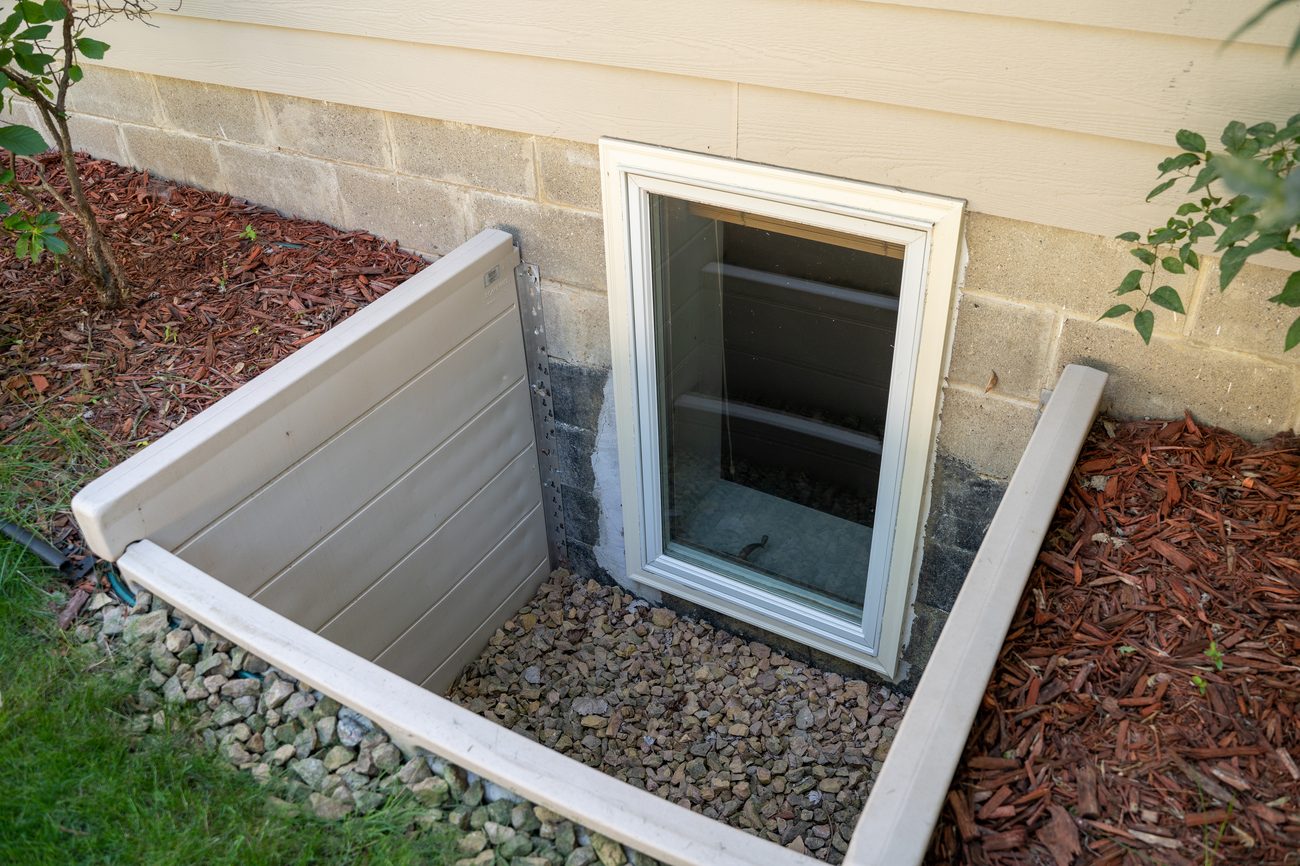
Cuts a code-sized window and well into the basement wall so a finished room down there has a legal way out and real daylight.
Learn moreThis comes up more here than almost anywhere, because basements are standard and finishing one is the cheapest way to add a bedroom. A sleeping room below grade in Standish needs an opening somebody can climb out of, and an original basement window is nowhere near that size.
Egress window installation means cutting the opening properly, setting a header so the wall above stays supported, and fitting a window that meets the clear-opening dimensions rather than one that merely looks bigger. Outside, a well is built and backfilled with drainage stone tied into the perimeter system so it does not become a bucket, sized so a person can turn around inside it. The well has to drain properly here or it fills and then locks solid against the wall. Cutting an opening is easier in warm weather, and scheduling it that way keeps the room usable later on.
It is a structural cut in a load-bearing wall, so on a wall already showing movement it waits until that is dealt with. In Como one moved a bay over. An opening only counts as an exit if it meets the code, and that gets measured rather than guessed.
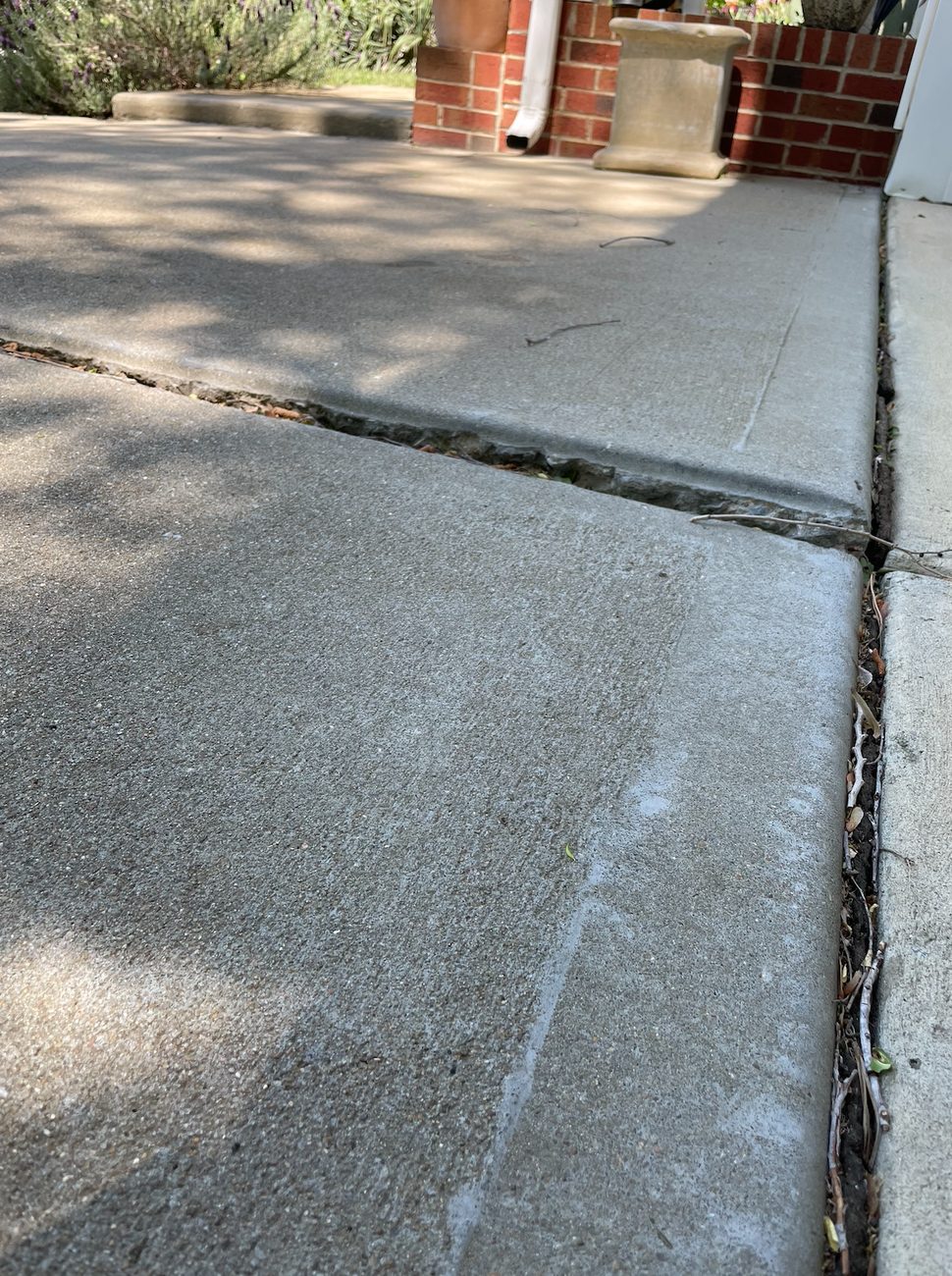
Raises lifted or sunken drives, walks and steps back to level by filling the void underneath, without tearing out the concrete you have.
Learn moreFlatwork moves first and moves most, because there is very little weight holding it down. A drive in Linden Hills can rise and come back unevenly, leaving a lip that was not there before, and once it tips toward the house it starts delivering melt to the foundation.
Concrete leveling brings it back without replacement. Small holes are drilled through the slab and material is pumped underneath, filling the void first and then raising the concrete in controlled stages while it is watched with a level. Polyurethane foam is light and sets within minutes, so a drive can be used the same day, and its weight does not add to what the ground beneath is already carrying. Slab jacking costs a fraction of tear-out and keeps the concrete already there. Material goes in as a series of small lifts rather than all at once, so the slab rises evenly instead of cracking across the middle.
It will not save a slab broken into pieces, and the cycle here does plenty of that. In Bryn Mawr the drainage came first. The inspection is free.
Queen Foundation Repair handles the two things that go wrong under a Minneapolis house: basement walls pushed in by the ground behind them, and water that finds its way onto the floor. We are a leading provider of foundation work across Minneapolis, covering foundation repair, basement waterproofing, basement wall repair and foundation crack repair.
Most of what we get called to started small. A crack somebody first noticed a year or two back, a wall that has come in a little further each year, water on the floor that used to dry and now does not. Left alone those get dearer, because whatever is causing them does not stop.
So we look before we quote. From Longfellow across to Northeast, someone comes out, goes over the property and down the basement, and tells you plainly what is happening and what putting it right involves. The price is in writing before work starts. If it is cosmetic, we will say so rather than sell you a repair you do not need.
This kind of damage builds up quietly rather than arriving all at once, which is why catching it early costs so much less than waiting. You can see everything Queen Foundation Repair does across Minnesota. Licensed and insured, the warranty moves with the house if you sell, and the estimate is free.
Get your free inspection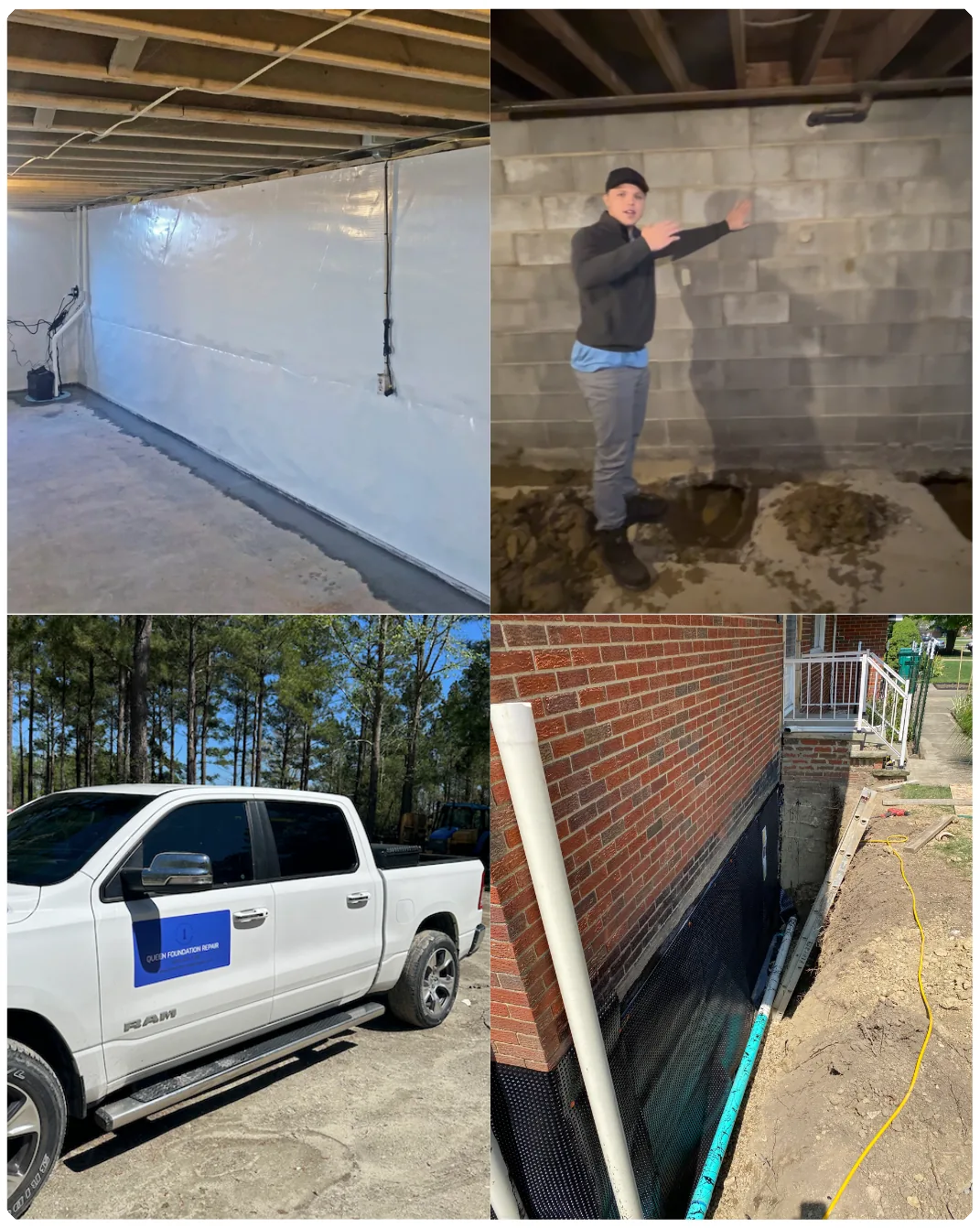
WHAT YOU GET
We pick up quickly and get out to the property fast, so you're not waiting weeks to learn what's wrong and what it costs.
No charge for us to come out, work out what's happening, and lay out what the fix involves. You know where you stand before deciding.
Licensed, with full liability and workers' comp cover, so the work meets code and your property is protected if anything goes wrong.
Every repair carries a written warranty that passes to the next owner, so it protects the value of the house if you sell.
A clear written price before anything starts. No vague ballpark, and nothing new appearing once a crew is already on the job.
From the older basements around Longfellow to the newer builds out past Nokomis, we are down these basements every week.
COMMON QUESTIONS
The questions we get asked most in Minneapolis, from Longfellow over to Northeast, and the honest answers to them. Anything not covered here, ask on the phone and you will get the same answer.
What It Costs
There is no single number, and anyone who gives you one over the phone is guessing. Small crack work on a poured wall usually runs in the hundreds. Carbon straps or braces on a bowing wall land in the low thousands, depending on how many go in. Piers cost more again, because that is a dig, and the count depends on how much of the house is being carried. What decides your number is how far it has gone, so the inspection comes first and it is free.
It depends on how far in the wall has come and what is holding it. Carbon fiber straps are the cheaper route and suit a wall that has moved a little, usually a few hundred dollars per strap with several needed. Steel braces or wall anchors cost more and are what a wall that has moved further needs. Rebuilding a section is the top of the range and nobody quotes that without seeing it. The measurement decides which of those you are in, and taking it costs nothing.
The question is whether it is still moving. A crack that has sat unchanged for years is often cosmetic. One that is still opening will cost more every year you leave it, and it will come up when you sell. An inspection tells you which you have, and that costs nothing.
A Wall That Is Bowing
Hold a string line or a long level against the wall from floor to ceiling and look at the gap in the middle. A wall that is straight touches all the way. Most bowing shows up partway up rather than at the top or bottom, and it usually comes with a horizontal crack along the same course.
Yes, and there are two routes. Carbon fibre straps bonded across the face stop further movement and finish flat enough to paint over. Steel beams anchored at the footing and the joists hold a wall that has gone further and can be tightened over several seasons to recover some of it. Which one applies depends on how far it has come in, and that gets decided on site rather than from a photo. The water in the ground behind it gets dealt with in the same plan, or the pressure simply returns next winter.
It is not automatically a walk-away, but find out how far it has come in and whether it is still moving before you sign. A wall braced properly with paperwork behind it is a solved problem. An unbraced wall nobody has measured is an open number, and there is a wide gap between those two.
Cracks and Water
Usually yes. Injecting resin under pressure from inside fills the crack through the full depth of the wall and bonds both faces, which is a genuine repair rather than a cover. Digging the outside is reserved for cases where the wall itself is failing rather than cracked, and here the working season for excavation is short.
Usually less serious than one in a wall. Floor slabs are not holding the house up, so a hairline is often just curing shrinkage. What matters is whether it is damp along its length, whether one side sits higher than the other, and whether it is getting longer. Any of those three is worth a look.
Because the melt has nowhere to go. A foot or two down the ground is still solid while the surface softens, so the water cannot soak away and runs across the top instead, finding the lowest thing available. Later in the year the same rainfall soaks in and you never see it.
What the Work Involves
Crack injection is usually a morning. Straps or braces on a wall are commonly one to two days. Piers take longer because of the digging, and weather can push it. You will get a number before anyone starts, and if it changes you will hear why.
Not for interior work. Carbon straps, braces and crack injection all happen from inside the basement. Piers and exterior drainage do mean digging along the affected side, and the ground gets put back. Anyone quoting the job should tell you upfront which of those it is.
For the inspection it helps, because you know the history of the house and we do not. For the work itself, most people are not there the whole time. Access to the basement is what matters, and you will be told what was done and shown photos at the end.
Cabins and Lake Places
Yes, and it comes up often enough that it is worth saying plainly. Second properties get the same problems as houses and often worse ones, because nobody is there when the ground is doing its worst. We will drive out and look at one the same way we would a house in town, and the visit costs nothing. Bring us the address and we will tell you whether it is worth the trip before you commit to anything.
It depends on how many corners have dropped and how far out the place is. Most cabin work needs fewer piers than a house does, so the number is often smaller than people expect. Ask for travel to be in the written quote rather than added later, and get that number before anything starts.
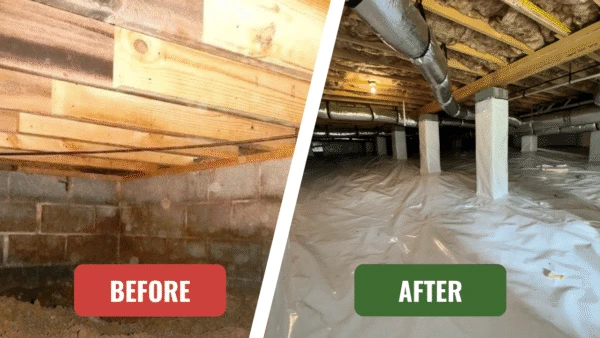
Yes. The useful time is early, once the ground has softened and before anything gets covered up. That is when a season's worth of movement is easiest to see and cheapest to deal with. Nobody needs to be there. We walk the outside, the crawl space and the block, and send photos with what we found.
Insurance and Selling
Generally no. Earth movement and gradual water are standard exclusions, and this kind of damage is neither sudden nor accidental, so it falls outside almost every policy. Sudden accidental discharge is the covered path, so a pipe bursting behind a wall is a different case. Read your own exclusions rather than assuming.
Minnesota requires a written disclosure of the material facts you know about that would significantly affect an ordinary buyer's use of the property, and a qualifying inspection report can be provided instead. A documented repair with a transferable warranty belongs on it and shows as a problem already handled. Anything beyond that is a question for your agent or attorney, not for us. Getting it documented before you list is far easier than negotiating it after an inspection finds it.
Every repair carries a written warranty and it transfers to the next owner if you sell. That matters more here than in a mild climate, because the ground keeps doing this after we leave and you want the paperwork to outlast it.
WHERE WE WORK
We cover the whole Minneapolis area, not just the addresses close to downtown. That takes in the older basements through Longfellow and Powderhorn, the newer builds out toward Nokomis, and the lake places further north when somebody needs us there. If a house needs looking at, we come and look at it.
ZIP CODES WE COVER
Ready to Get Started?
No obligation, fast and easy.
We appreciate you reaching out.
One of our team members will be with you shortly.