Standing water under the house that never seems to dry, a floor that gives a little when you cross it, doors that have started to catch. From Greenbrier out to Great Bridge we handle foundation repair, crawl space encapsulation and crawl space repair, and the inspection is free.
Get Your Free Inspection
We appreciate you reaching out.
One of our team members will be with you shortly.





WHAT TO LOOK FOR
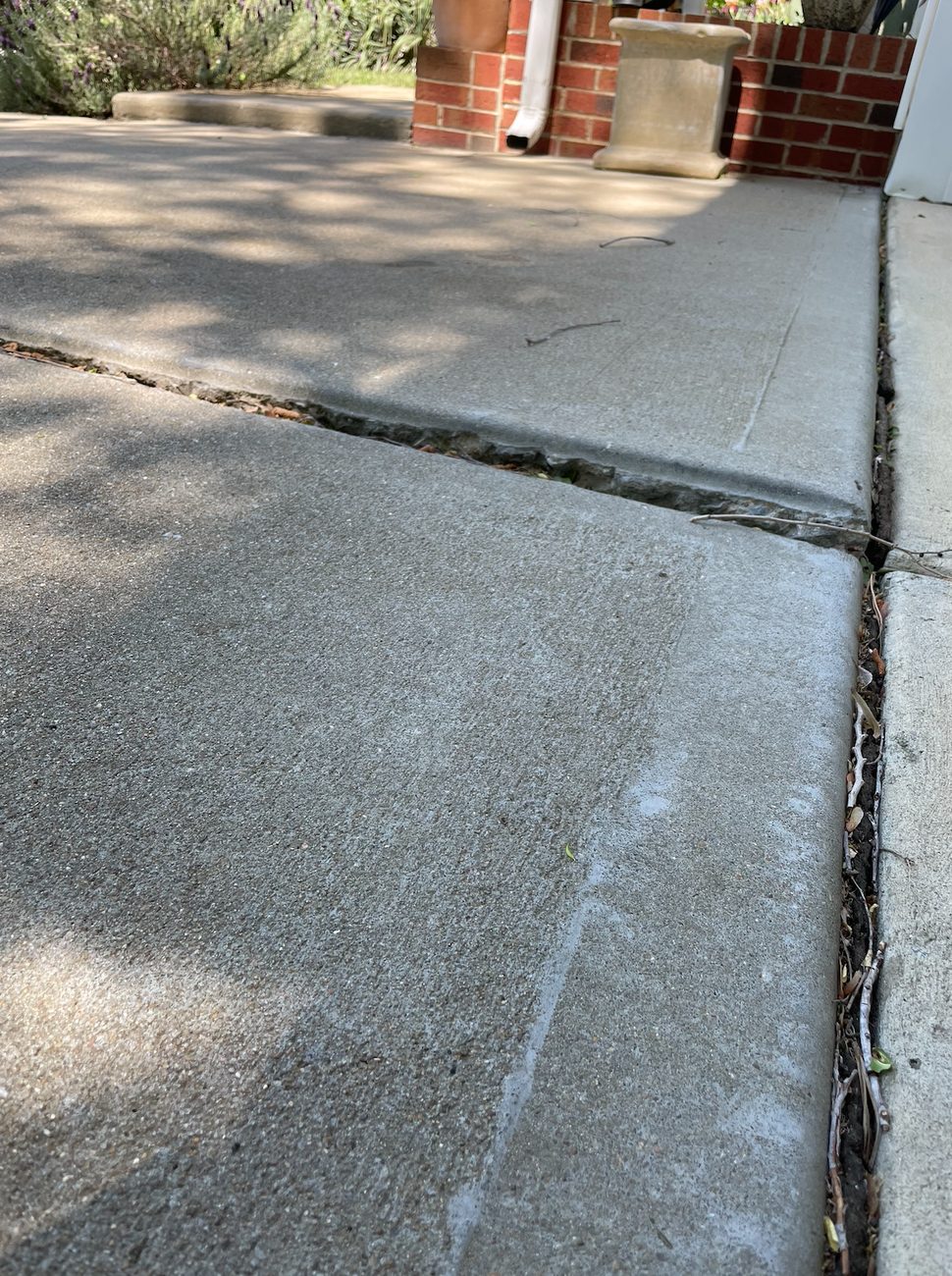
The water table here sits closer to the underside of a floor than it did twenty years ago, and most of what we see starts there. Some of it is the house settling instead. Either way it turns up as damp ground, soft floors or a door that catches.
The ground is not draining
Water sitting on the dirt days after the rain stopped. Down here the water table is high enough that it does not always have anywhere to go.
The support has given
One spot gives a little when you cross it, or a doorway has a lip in it. Something underneath has stopped carrying its share of the weight.
It is coming from below
Windows fogging on the inside, a smell you cannot place, air that feels heavy. A good share of what you breathe up here comes from under the floor.
One corner has dropped
The crack follows the mortar joints up the brick in a staircase. It means part of the footing has moved down further than the rest of it.
The opening is no longer square
It closed fine last year and now it needs a shove, or the gap runs wider at the top. The frame has moved with the floor.
Something outside is pushing
One course has come in further than the rows above and below it. That is wet ground behind the wall, and of everything here it goes first.
Standing water that never dries out is the one that changes things. Ground here holds water longer than it used to, and a spot that stays wet is working on whatever is sitting in it. A floor gone soft above that water is the next stage, not a separate problem. The longer either runs the more of the framing it reaches, and having a look at it costs you nothing.
A floor that has gone soft in one spot, water still standing under the house after a wet week, a foundation wall leaning further in than it was. Those are the calls we get across Chesapeake. Tap any service to see what the repair involves.
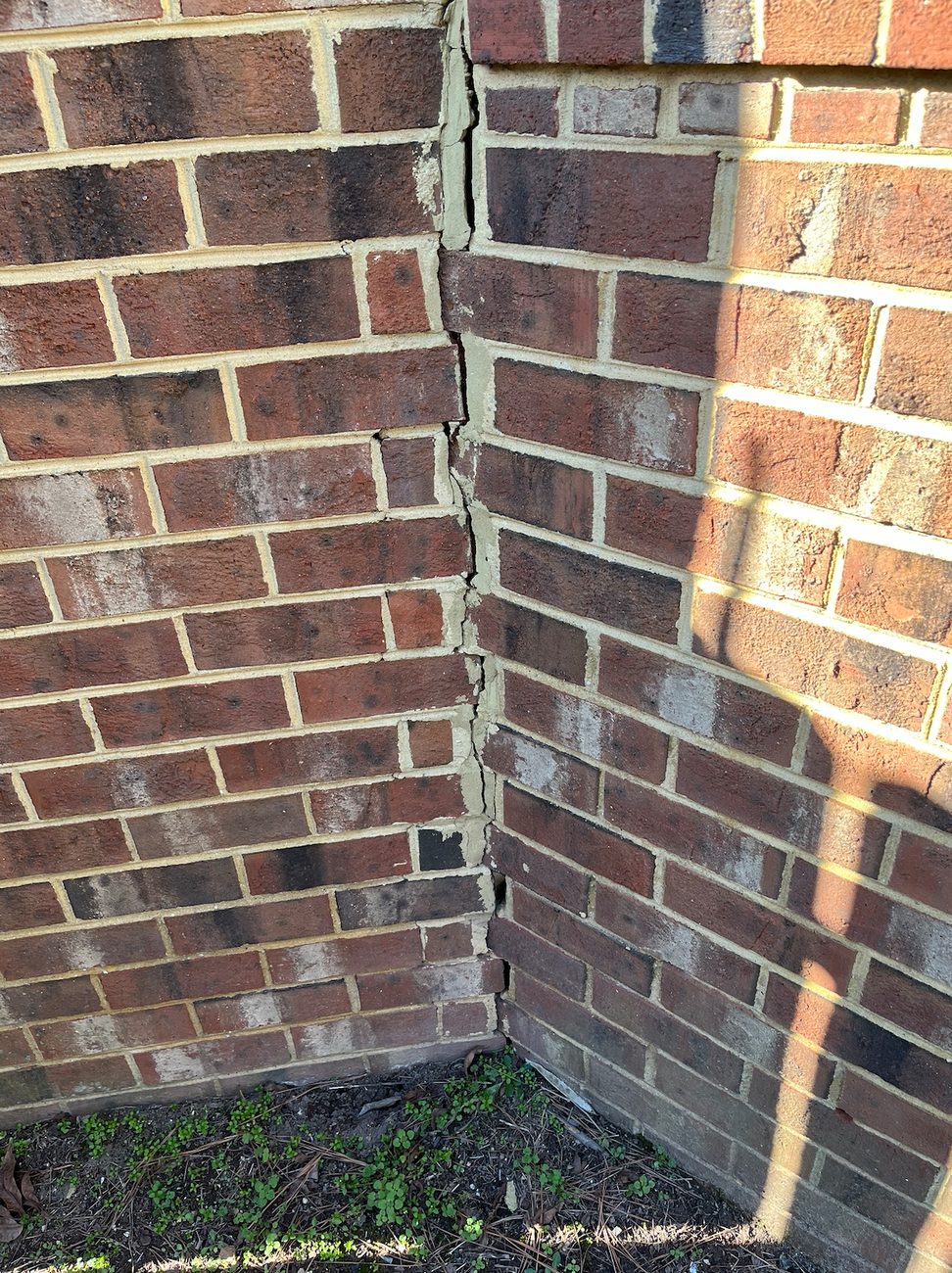
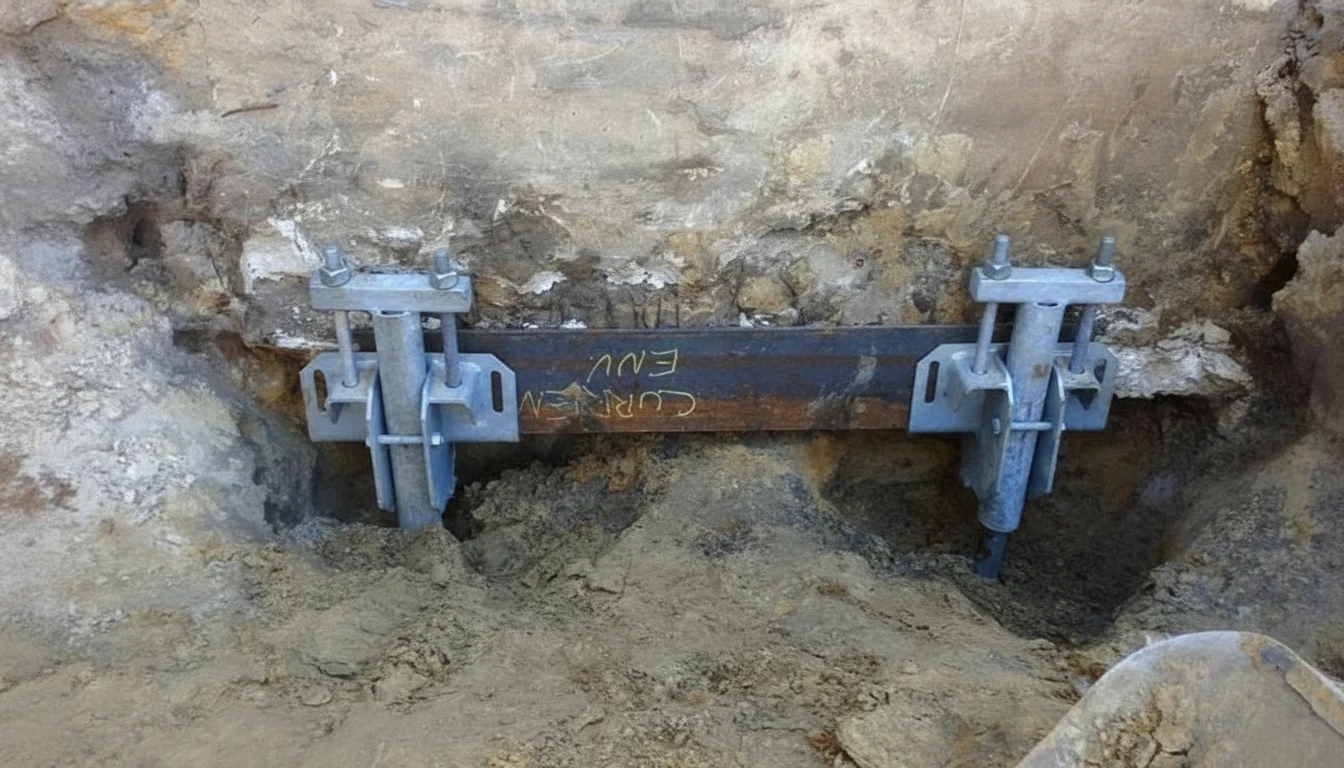
Stops a house that has settled from dropping further, brings it back toward level, and closes the cracks the movement opened up.
Learn moreOut here the ground is coastal plain sediment rather than rock, so a footing is bearing on material that keeps compressing. In Greenbrier that shows up as slow, even settlement that nobody notices for years and then notices all at once.
Foundation repair starts with finding where the support stopped. Piers are driven or turned down through the soft material until they reach something that will carry the load, and brackets transfer the weight of the house onto them. From there the structure is brought back toward level in stages, so the framing and the finishes come with it rather than tearing. Foundation settlement repair is measured work, checked as it goes, not a single lift.
What piers do not do is dry out the ground they pass through. If the crawl space above them stays wet, the wood keeps paying for it even though the footing is now stable. That is why the moisture side gets looked at in the same visit. In Great Bridge that has meant piers under one corner and a drain along the back. The inspection is free.
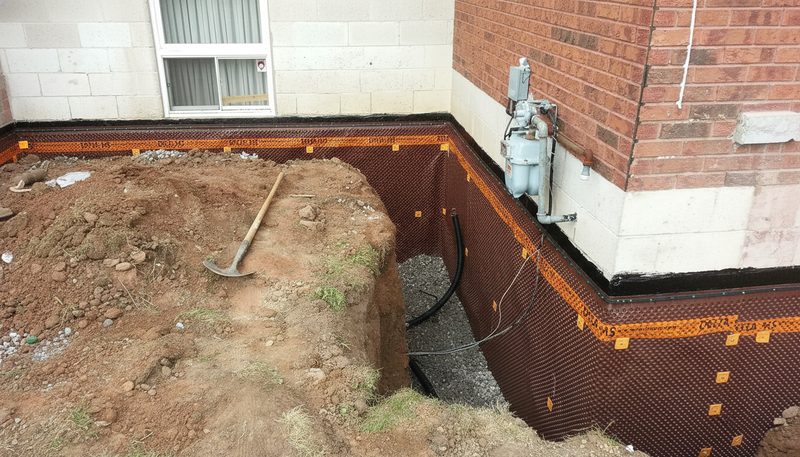
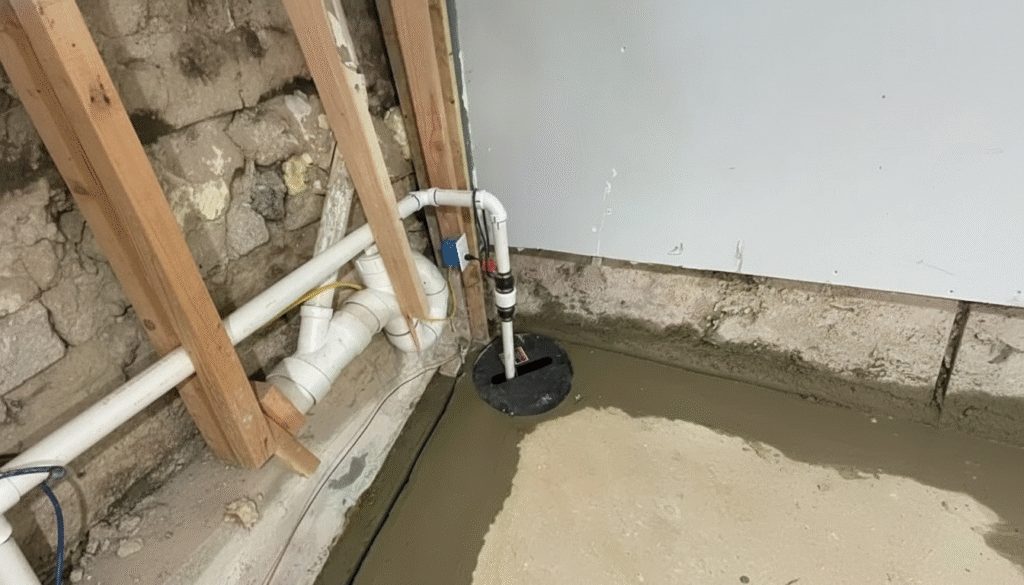
Keeps water out of the structure below the house by draining it away before it reaches the block and the framing.
Learn moreThere is no basement to waterproof on most houses here, but there is a foundation wall sitting in wet ground, and block will pass water straight through when the soil against it stays saturated. In Deep Creek that is the normal state of the ground rather than the exception.
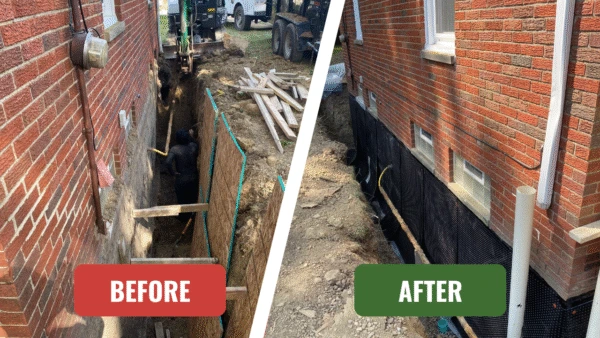
Foundation waterproofing works from both sides. On the outside, the wall is dug out where access allows, cleaned and coated with a membrane so the water never reaches the masonry. On the inside, drain tile is bedded in stone at the footing and run to a pit where a pump lifts it clear. Perimeter drainage does most of the work; the coating stops what the drainage does not catch. Which combination a house needs depends on how much water is arriving and from where.
It does not raise a settled footing, and it does not replace fixing a downspout that discharges at the wall. Those get handled separately and we will say which yours needs. In Greenbrier the grading did most of it. We will come out and say which yours needs, free.
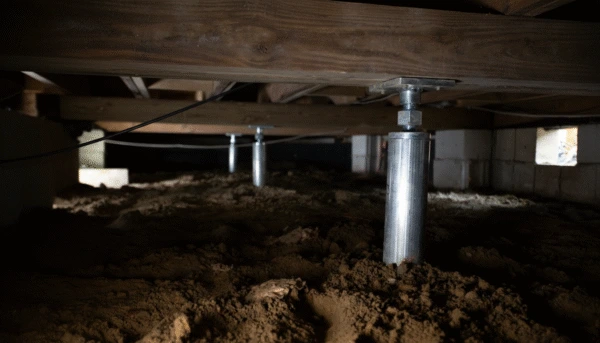
Rebuilds failed piers, sagging girders and rotted joists, so the floor above you stops giving way when you walk across it.
Learn moreA floor that gives underneath you is telling you the structure below has stopped doing its job. In Great Bridge the usual causes are original piers that have settled into soft ground and girders that have been damp long enough to go soft at the ends where they bear.
Crawl space repair works from the ground upward. Failed piers are rebuilt on proper footings, adjustable posts go in where a girder needs support it never had, and joists that have lost strength are sistered or replaced outright. Posts are set on poured pads rather than on the dirt, because a jack post bearing on bare ground will find its way into it within a few seasons. The floor is brought back gradually so the finishes above do not crack on the way up. Where a girder has been damp for years the bearing ends fail first, so the work often concentrates there.
None of it lasts while the space stays wet. Wood that rotted once will rot again in the same conditions, so the moisture work is part of the same plan rather than a later phase. In Grassfield the drainage came first. Having it looked at costs you nothing.
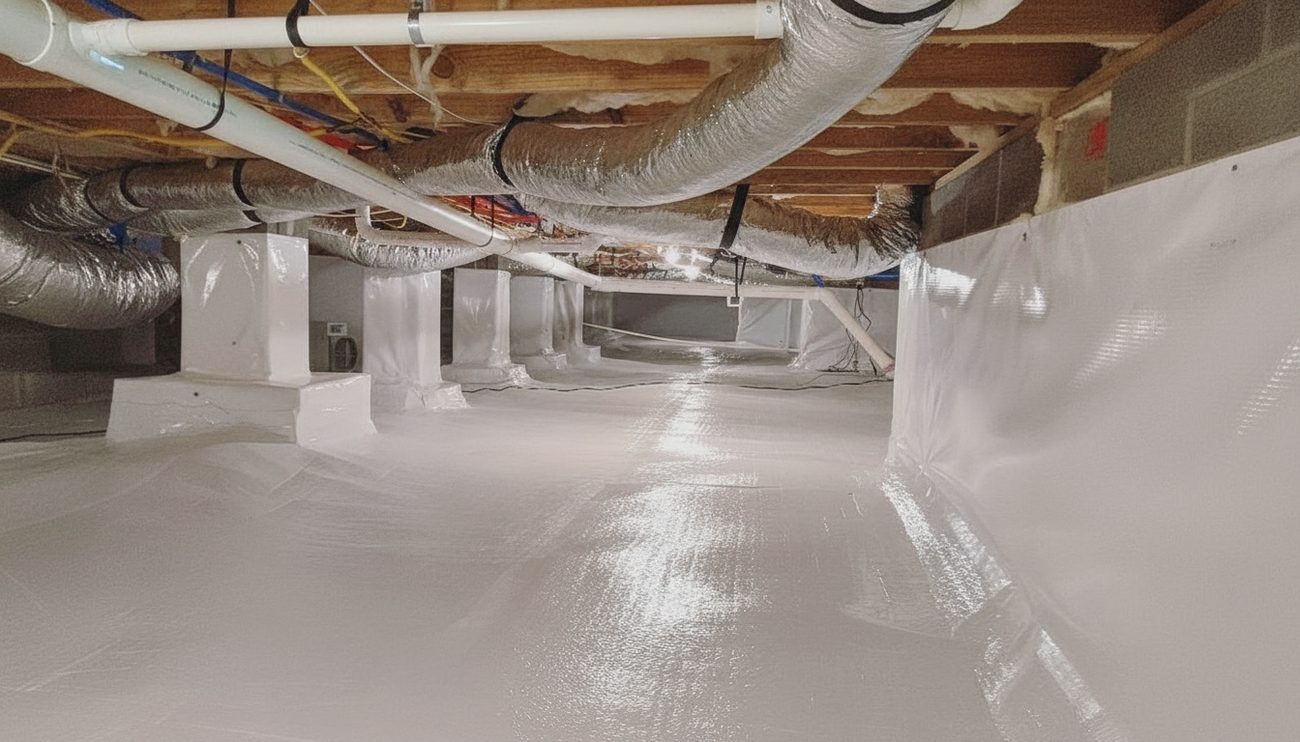
Seals the ground and walls under the house and controls the humidity, so the damp stops feeding the joists and the rooms above.
Learn moreOpen dirt gives off moisture continuously, and around here the dirt is rarely dry. A crawl space in Western Branch that was merely damp when the house was built now sits over ground that holds water most of the year, and the vents that were meant to dry it out pull humid coastal air straight in instead.
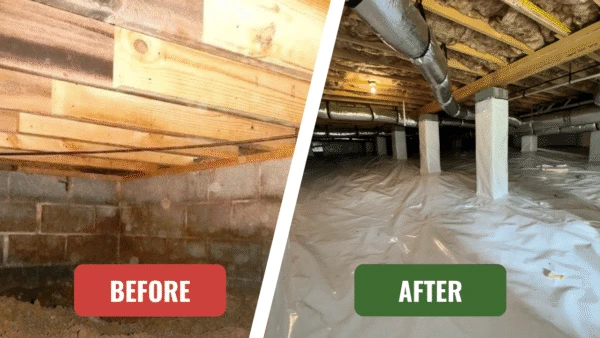
Crawl space encapsulation closes the loop. A heavy liner goes over the ground and runs up the piers and walls, sealed at the seams and fastened at the top so the soil stops being part of the room. The vents are closed, the rim is insulated, and a dehumidifier holds the space at a level where mold has nothing to work with. Crawl space moisture control is the part that keeps it that way once the liner is down.
It will not fix sagging floors on its own and it will not hold back groundwater that is actually running through. Standing water gets drained before anything is sealed. In Deep Creek that meant a sump before the liner, and somebody will tell you which order yours needs at no charge.
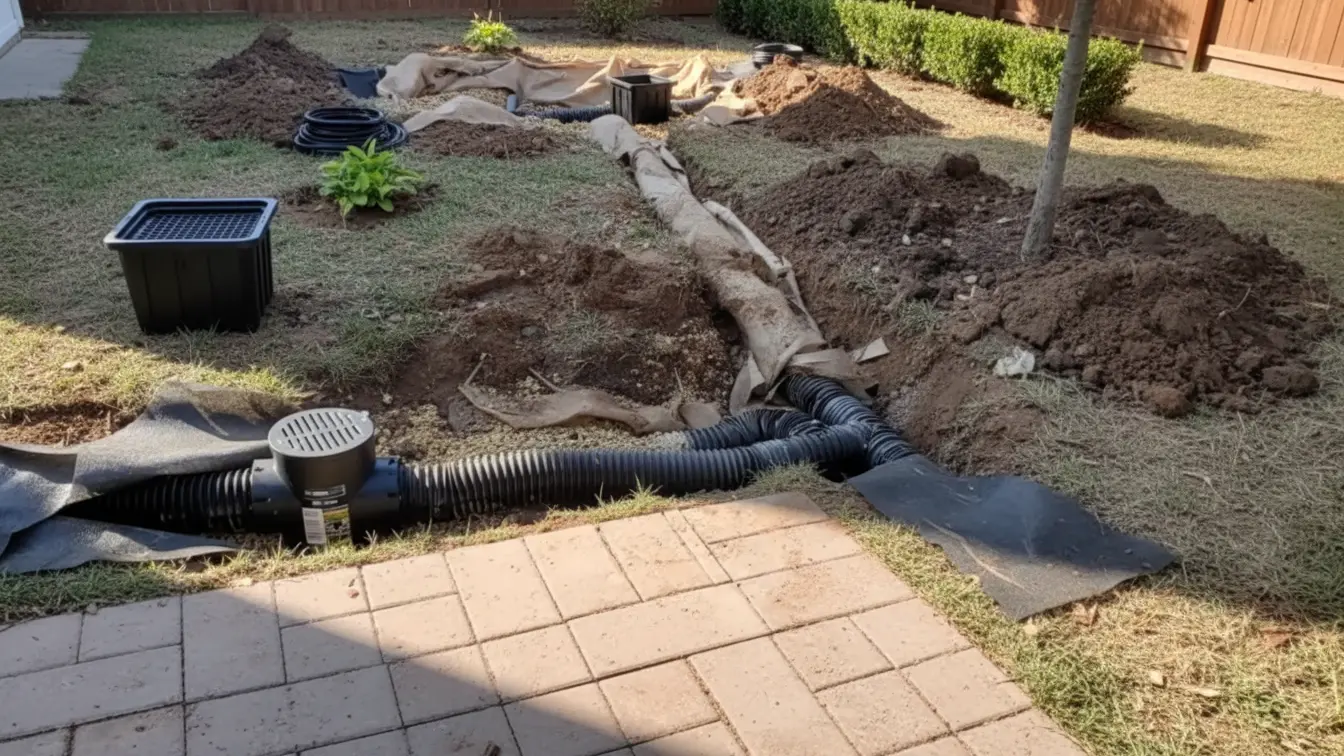
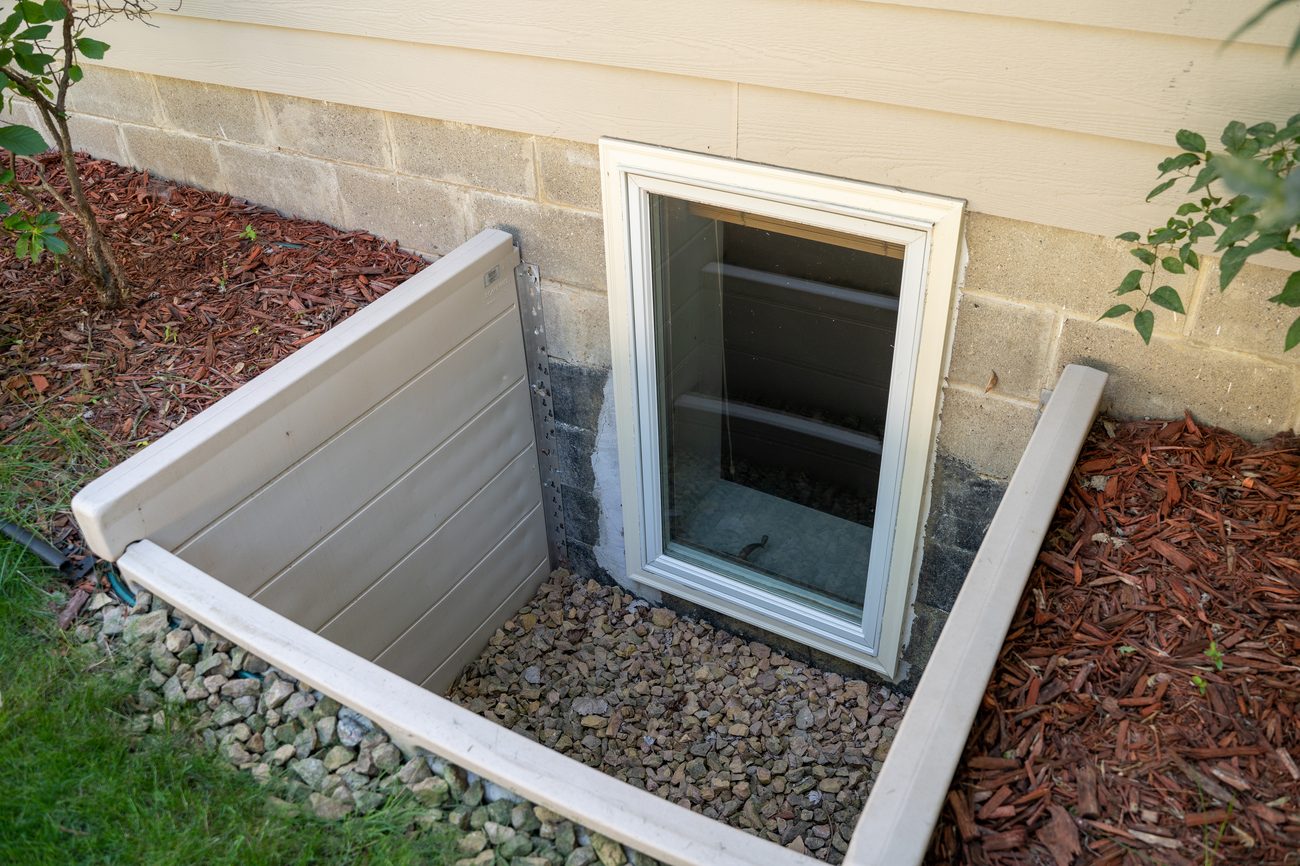
Catches water crossing the yard and routes it somewhere else, so it stops collecting against the house after every storm.
Learn moreFlat ground is the difficulty here. Water that lands on a lot in Grassfield has almost no fall to carry it away, so it spreads out, sits, and soaks down into the same ground the house is standing on.
A french drain installation is a trench, a bed of washed stone and perforated pipe wrapped so fine sediment cannot silt it up, laid on whatever fall the site allows. On flat ground the trench deepens as it runs to keep water moving, and where there is no outlet to daylight it feeds a basin and a pump instead. Exterior yard drainage is the cheapest place to solve a water problem, because it is the furthest upstream you can reach it. Cleanouts go in at the turns, because a line you cannot flush is a line you will be digging up again in a few years.
A drain will not dry ground that is wet because the water table is high rather than because rain is pooling. Those need different work and we will tell you which you have. In Western Branch it turned out to be both. The visit to work that out costs nothing.
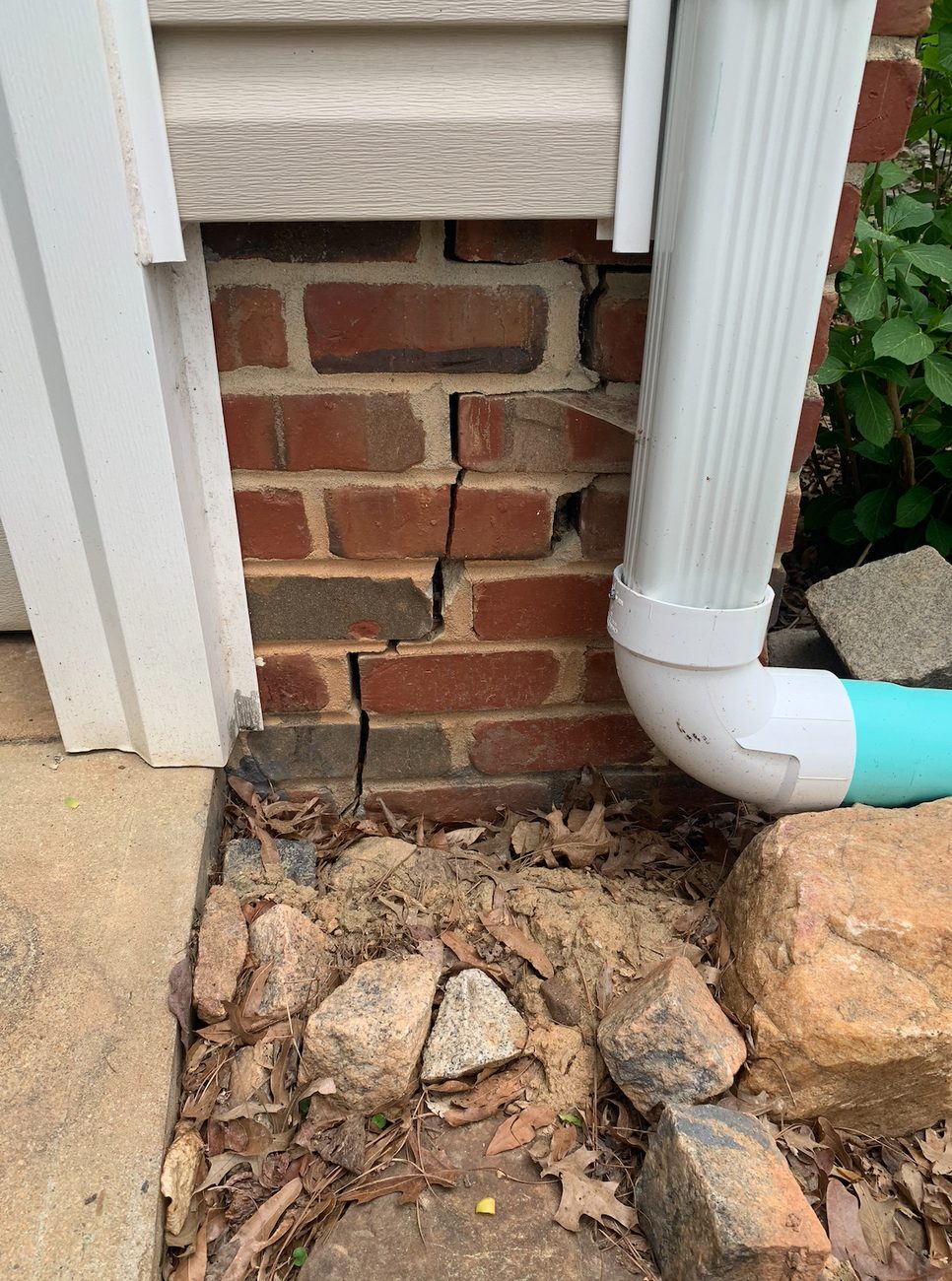
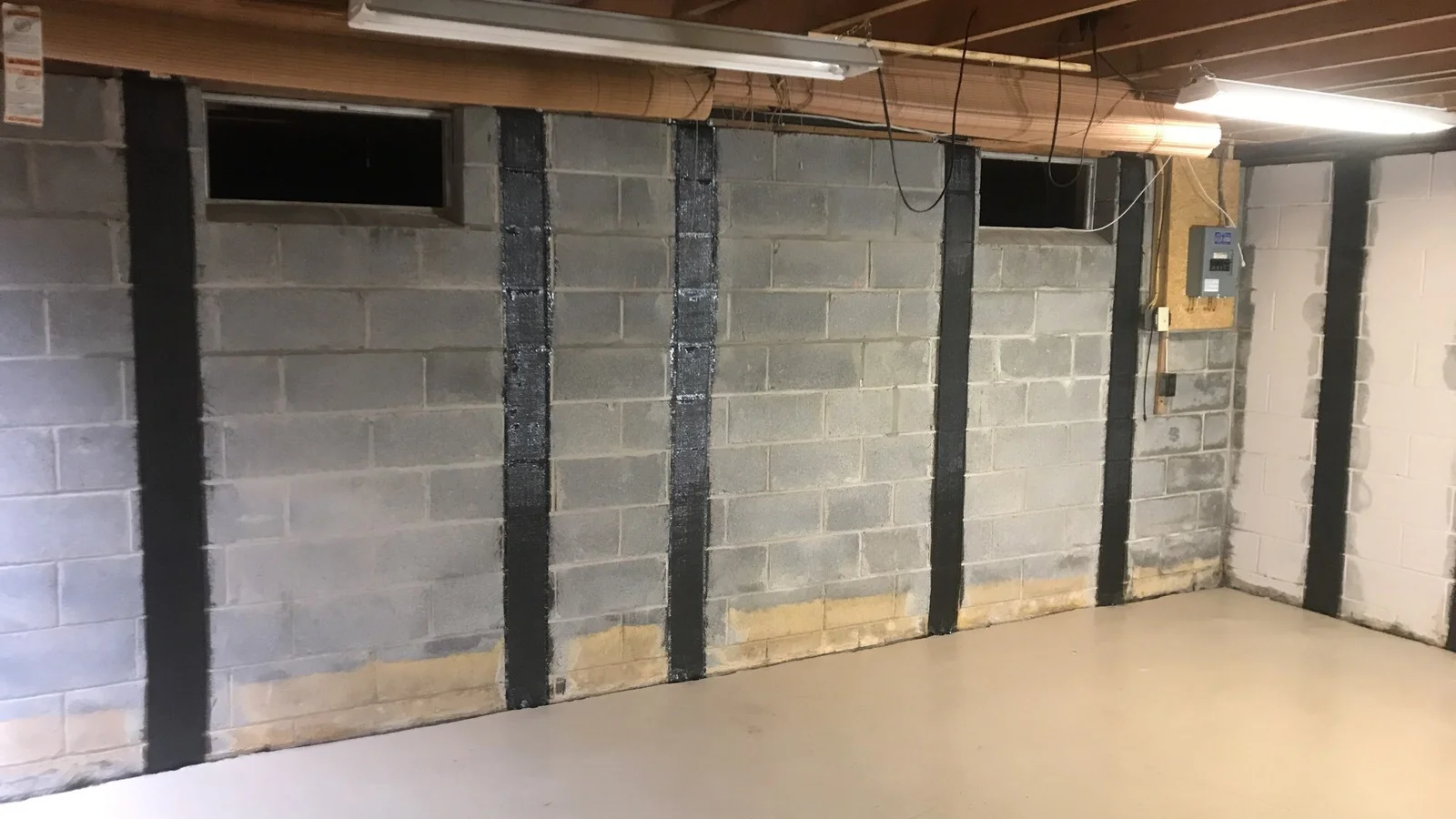
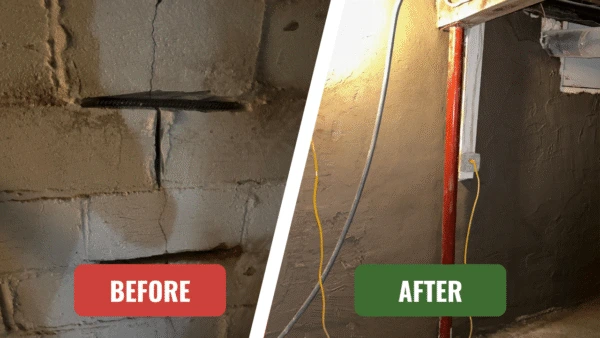
Seals cracks through the full depth of the wall rather than skimming the surface, and reinforces block so it stops opening again.
Learn moreNot every crack is doing something. A thin vertical line in a poured wall in Hickory is usually shrinkage from the concrete setting, and it can weep after a storm for years without ever moving again.
Foundation crack repair handles those by injecting resin under pressure so the material travels the whole depth of the wall and bonds both faces, rather than sitting in the first half inch the way a surface patch does. Block walls behave differently: the crack follows the joints, so the fix is closing it and adding reinforcement across it so the wall stops flexing at that line. On a crack that leaks, the injection is carried through to the outside face so no void is left for water to sit in.
What injection cannot do is hold a wall that is still being pushed, or close a crack that keeps widening because the footing under it is dropping. Those need the movement stopped first. In South Norfolk we have turned crack work down for exactly that reason, and told the owner why.
Queen Foundation Repair handles the two things that go wrong under a Chesapeake house: ground that stays wet under the floor, and a footing bearing on material that keeps compressing. We are a leading provider of foundation work across the city, covering foundation repair, crawl space encapsulation, crawl space repair and foundation waterproofing.
Most of what we get called to started small. Damp ground that used to dry out and now never quite does, a soft spot in one room, a door that has begun to catch. Left alone those get dearer, because the moisture underneath keeps working on the wood.
So we look before we quote. From Greenbrier out to Great Bridge, someone comes out, goes over the property and under the floor, and tells you plainly what is happening and what putting it right involves. The price is in writing before work starts. If it is cosmetic, we will say so rather than sell you a repair you do not need.
Almost every house here sits on a crawl space or a slab rather than a basement, which changes what the work looks like. You can see everything Queen Foundation Repair does across Virginia. Licensed and insured, the warranty moves with the house if you sell, and the estimate is free.
Get your free inspection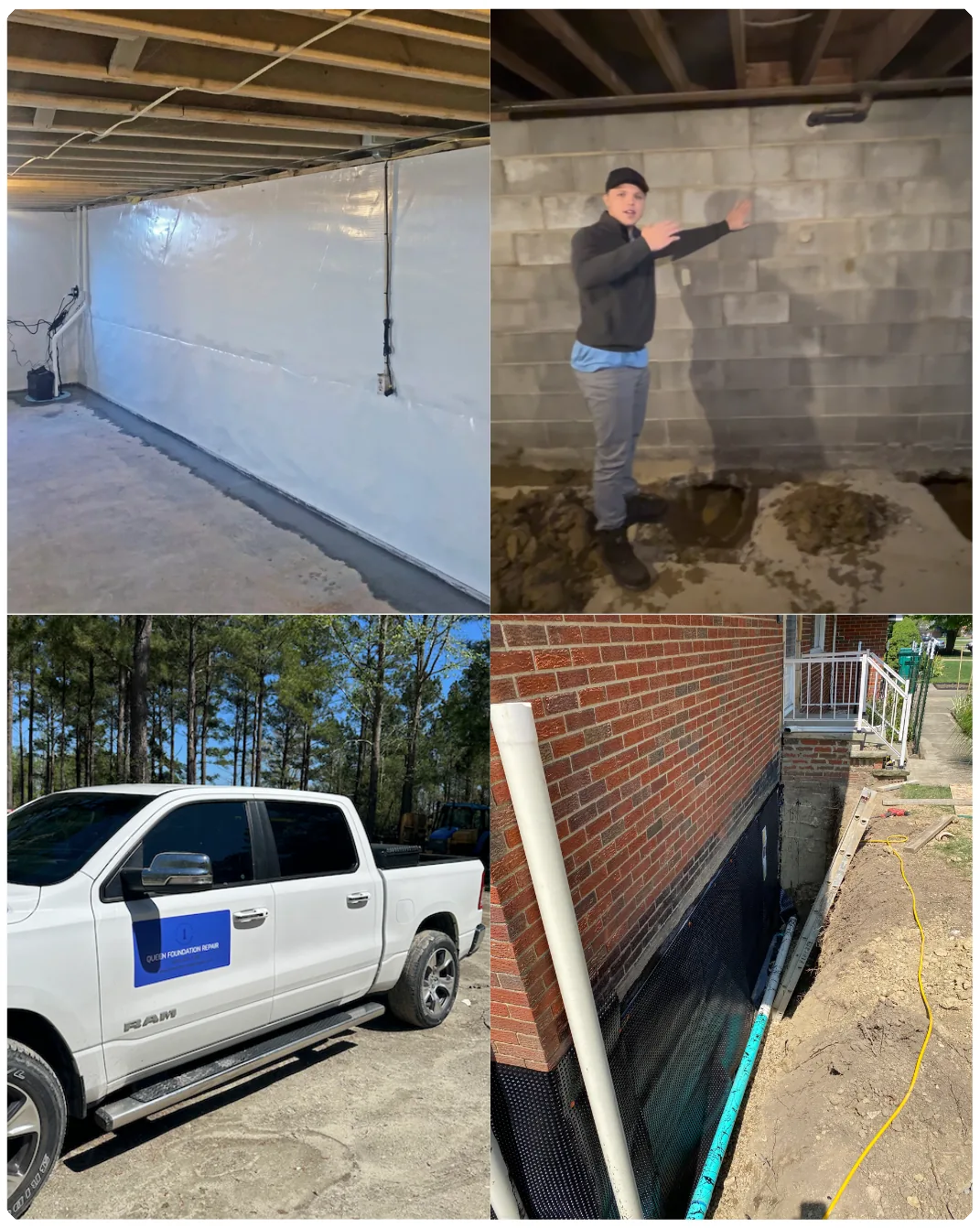
WHAT YOU GET
We pick up quickly and get out to the property fast, so you're not waiting weeks to learn what's wrong and what it costs.
No charge for us to come out, work out what's happening, and lay out what the fix involves. You know where you stand before deciding.
Licensed, with full liability and workers' comp cover, so the work meets code and your property is protected if anything goes wrong.
Every repair carries a written warranty that passes to the next owner, so it protects the value of the house if you sell.
A clear written price before anything starts. No vague ballpark, and nothing new appearing once a crew is already on the job.
From the crawl spaces around Greenbrier to the low lots out past Great Bridge, we work on wet ground here every week.
COMMON QUESTIONS
The questions we get asked most in Chesapeake, from Greenbrier out to Great Bridge, and the honest answers to them. Prices are given as ranges, because the real number depends on what is found under the floor.
What It Costs
Most crawl spaces in this area land somewhere between about five and fifteen thousand dollars, and the footprint drives it more than anything else. A dehumidifier adds to that. If there is standing water down there, drainage has to go in first and that is its own line rather than something buried inside the encapsulation price. Older houses often need debris cleared and a joist or two dealt with before a liner can go down, and that shows up separately too.
A single sagging spot fixed with a post and a proper footing is usually a few hundred to a couple of thousand dollars. Replacing a run of rotted joists or a girder costs considerably more. The number depends almost entirely on how much wood has gone soft, which is why nobody can quote it without getting under there first.
On its own, a barrier laid loose over the dirt is the cheapest thing you can do and it does help. It is not the same as encapsulation, which seals the seams, runs up the walls and controls the air. If your budget only covers a barrier, it is still better than bare ground, and we will tell you that rather than upselling. What it will not do is control the air, which is the part that protects the joists over the long run.
Is It Worth It, Honestly
If the ground under your house is genuinely wet, yes, because the damp is feeding rot in the joists and pushing humid air up into the rooms. If the crawl space is already dry and stays dry, no, and we would rather say so than sell you a liner. The other half of the answer is what the space is doing to your comfort upstairs, because a good share of the air in the house comes from down there.
There are real ones. It costs money up front, the dehumidifier uses power and needs servicing, and a sealed space hides problems you would otherwise see, so it needs checking once a year. Done badly, sealing a space that still has water running through it just traps the water. Anyone who tells you there is no downside is selling.
You can, and plenty of people do. It is unpleasant work in a tight space and the seams and the perimeter are where a homemade job usually falls short. If you are laying plastic over dirt to cut the damp a bit, go ahead. If the space has standing water or soft joists, that is a different problem and a barrier will not touch it. Get somebody under there to look first, so you know which of the two you are dealing with before you buy plastic.
Dehumidifiers
If the space is properly sealed, usually yes. Once the vents are closed the space no longer dries itself, so something has to control the moisture that is still coming through the walls and the air. Sealing without any means of drying is the most common way an encapsulation disappoints people.
It will hold the air dry, which is what stops mold and rot. What it will not do is deal with water arriving from the ground, so if there is standing water the drainage has to come first. A dehumidifier fighting an active leak runs constantly and still loses.
It should cycle rather than run flat out. In a sealed space it typically works hardest through the humid months and much less the rest of the year. If yours never switches off, something is wrong: either the space is not sealed properly or water is getting in somewhere.
Sagging Floors
When it has changed. A floor that has had a gentle dip since you moved in is usually old settlement that finished long ago. A soft spot that has appeared or got worse in the last year is active, and active means the wood or the support under it is still failing. Bounce is worth checking; a spot that gives noticeably is worth a call. Put a marble down if you are unsure: a floor that has always been slightly off will not change, and an active one will.
From underneath. Failed piers get rebuilt on proper footings, adjustable posts go in where a girder needs support it never had, and joists that have gone soft are sistered or replaced. The floor is brought back gradually over days rather than jacked up in one go, so the finishes above do not crack.
Undersized units running constantly, condensate lines that clog or freeze, filters nobody changes, and machines installed in spaces that were never properly sealed. Most of the complaints we hear are one of those four rather than a faulty unit. A unit sized for a basement will not hold a large crawl space.
Insurance
Not as a rule. Insurers treat it as maintenance rather than damage, because the moisture built up over years instead of arriving in one event. If a burst pipe flooded the space, the damage from that may be claimable even though the encapsulation itself is not.
Usually not. Rot and gradual moisture are excluded on a standard policy, and that is what causes most sagging floors here. A floor that failed because a supply line burst underneath it is a different case and worth claiming. It is worth reading the exclusions on your own policy rather than taking anyone's word for it.
Generally no. Earth movement and gradual water are both standard exclusions, which covers most of what causes foundation trouble. Sudden accidental discharge is the covered path. Virginia has no state program filling these gaps, so the policy you hold is the whole answer.
Why It Happens Here
Because the ground is dropping. Hampton Roads has one of the highest rates of relative sea level rise on the Atlantic coast, and more than half of that is the land sinking rather than the water climbing, at up to six millimetres a year against about three of sea level rise. The practical effect is that the water table sits closer to the underside of your floor than it did twenty years ago. You did not change anything. The ground did.
Because the water table is too high to dig one. On flat coastal ground, a basement would spend much of the year below the level water naturally sits at. That is why houses here are built on crawl spaces and slabs, and why almost all the work we do is under a floor rather than down a stairwell.
It can be. A door that closed fine and now catches, especially with a gap that runs wider at one end, usually means the opening is no longer square, and that means the floor under it has moved. Check whether it is one door or several. Several across the house points at the structure rather than the door.
WHERE WE WORK
We cover the whole Chesapeake area and out across Hampton Roads, not just the addresses closest to us. That takes in the crawl spaces around Greenbrier, the low ground out past Great Bridge, and the older streets over in South Norfolk. If a house needs looking at, we will come and look at it.
ZIP CODES WE COVER
Ready to Get Started?
No obligation, fast and easy.
We appreciate you reaching out.
One of our team members will be with you shortly.