A basement that takes water every storm, a crack creeping across the block, a downspout puddle that stays. Akron sits on hills, and water runs downhill. We offer basement waterproofing, french drain installation, and sump pump installation from Firestone Park to Merriman Valley, and the first look is free.
Get Your Free Inspection
We appreciate you reaching out.
One of our team members will be with you shortly.





Warning Signs
Water shows up at the bottom of the house first. A damp line on the block after rain, a puddle that sits by the foundation, a door upstairs that started sticking. Most of these signs are cheap to fix early and expensive to ignore, so it pays to look.
Cracks in the Brick or Block Outside
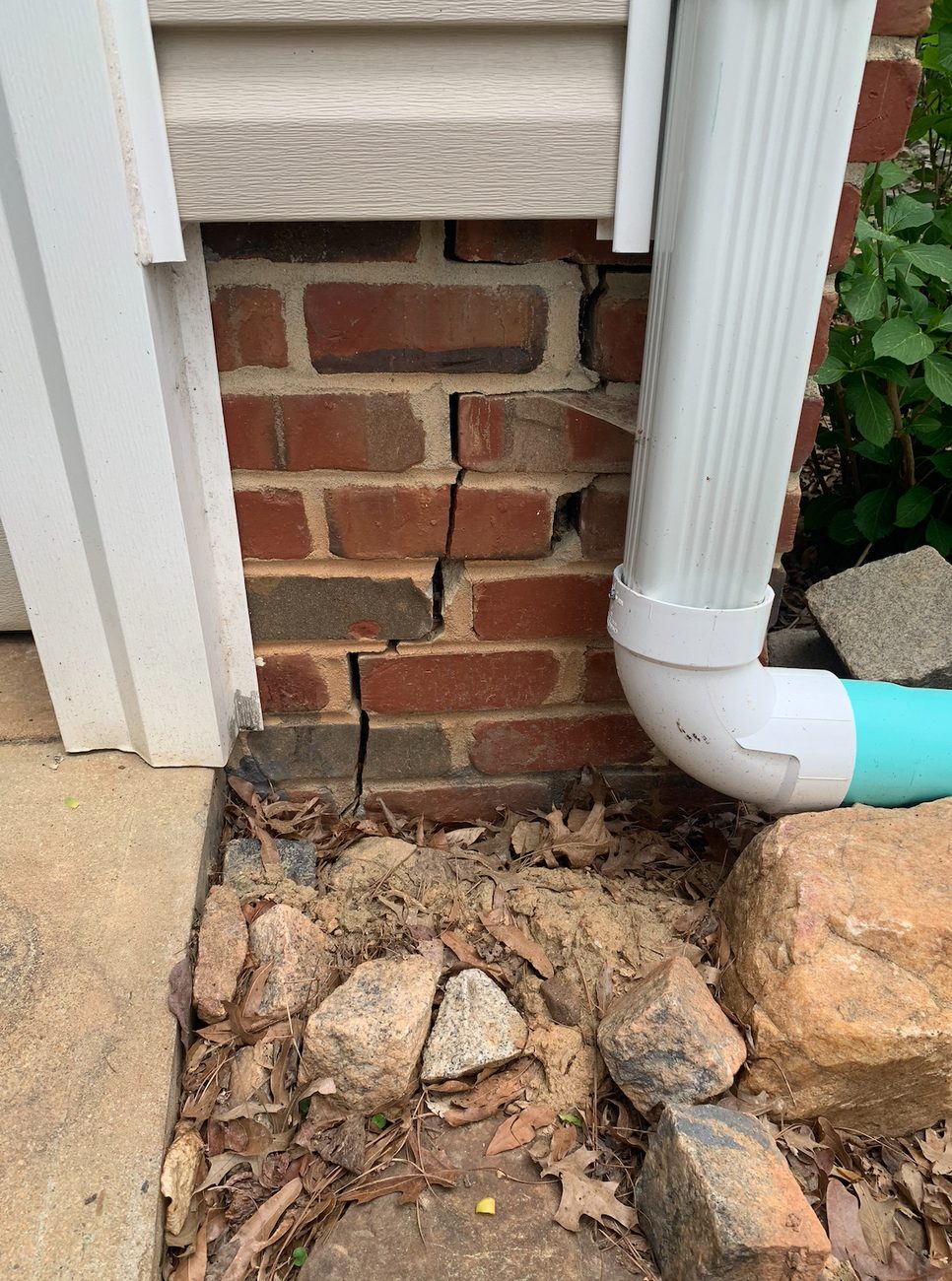
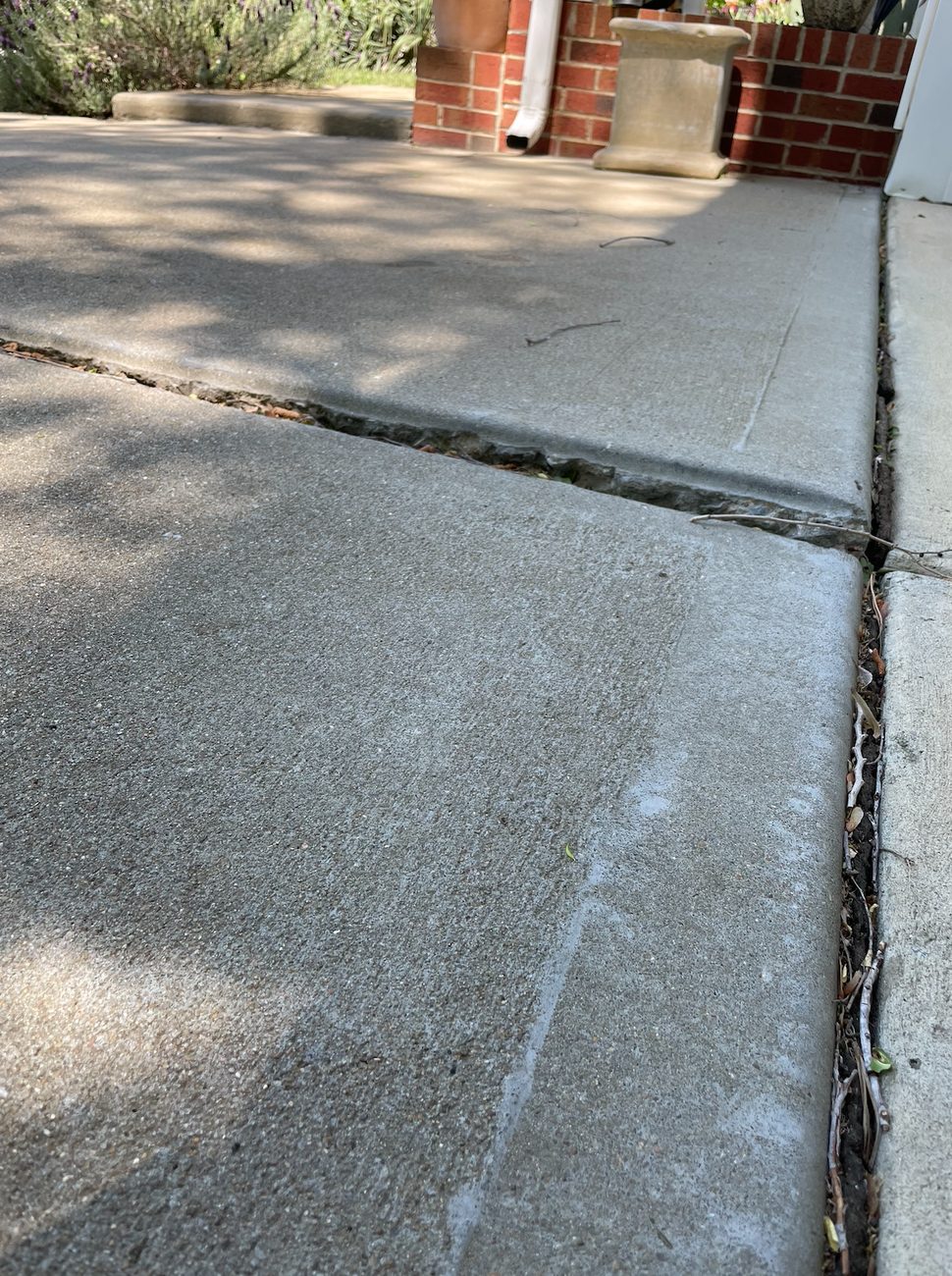
A crack angling through the brick, or block splitting near a corner. The ground under that part of the house has settled, and the crack grows with it.
Doors and Windows That Stick
A door that sticks, a window that takes two hands to open. The frames go out of square as the house settles, one room at a time.
Floors That Slope or Bounce
A floor that leans toward one wall, or bounces when someone walks past. The framing underneath has settled or gone soft, and the floor shows it.
Water Stains on the Basement Wall
Stains on the block that darken after rain, white powder where water dried. The wall is letting ground water through, and it will not stop on its own.
Water Pooling by the Foundation
Puddles that sit against the house after the rain has stopped. On a slope, the yard uphill drains toward you, and the water ends up at the wall.
A Crack Running Along the Basement Wall
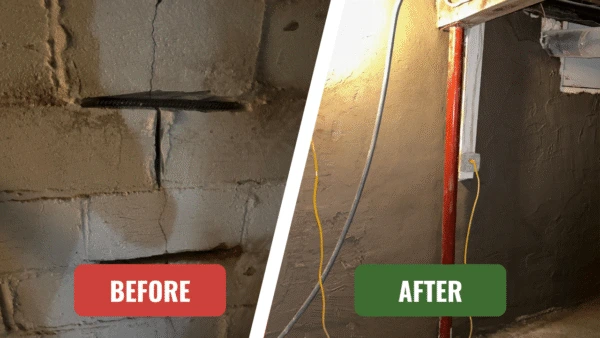
A long crack following the mortar line, or a wall that looks pushed in. Wet ground is pressing against it, and the wall gives more each year.
Some of this is cosmetic. Old hairline cracks, a little white powder on the block, paint peeling where the air stays damp. The signs that matter are the ones that change: a crack that widens, water that keeps coming back, a wall that is not straight anymore, doors that stick worse than they did. If you are not sure which kind you have, have us look. The inspection is free, and if it is nothing, we say so.
Most of the calls are about water in the basement or a wall that is starting to move. Some are about a settled porch or a sunken slab. The eleven services cover all of it, and a free inspection tells you which one you need.
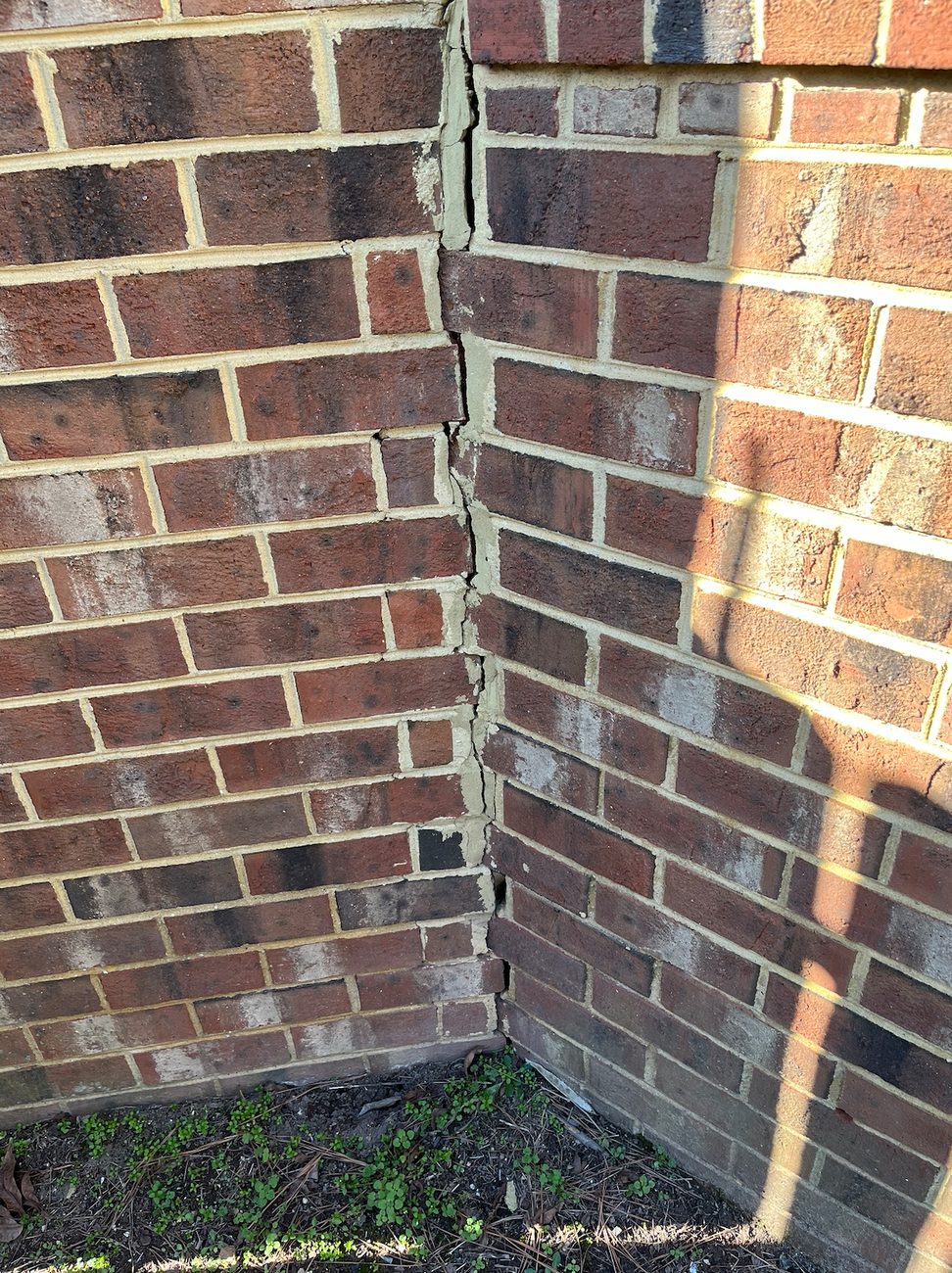
Puts a settled house back on solid footing with steel piers, closing the cracks and freeing the doors that the settling caused.
Learn moreThe signs build up slowly. A crack over a door gets patched and comes back. The hallway floor develops a lean. The back door sticks in wet weather. Around Akron, two houses on the same street can sit on completely different ground, gravel under one and a clay pocket under the other, which is why one house settles while its neighbor never moves an inch. Your house is not failing. One part of its foundation is sitting on ground that gave.
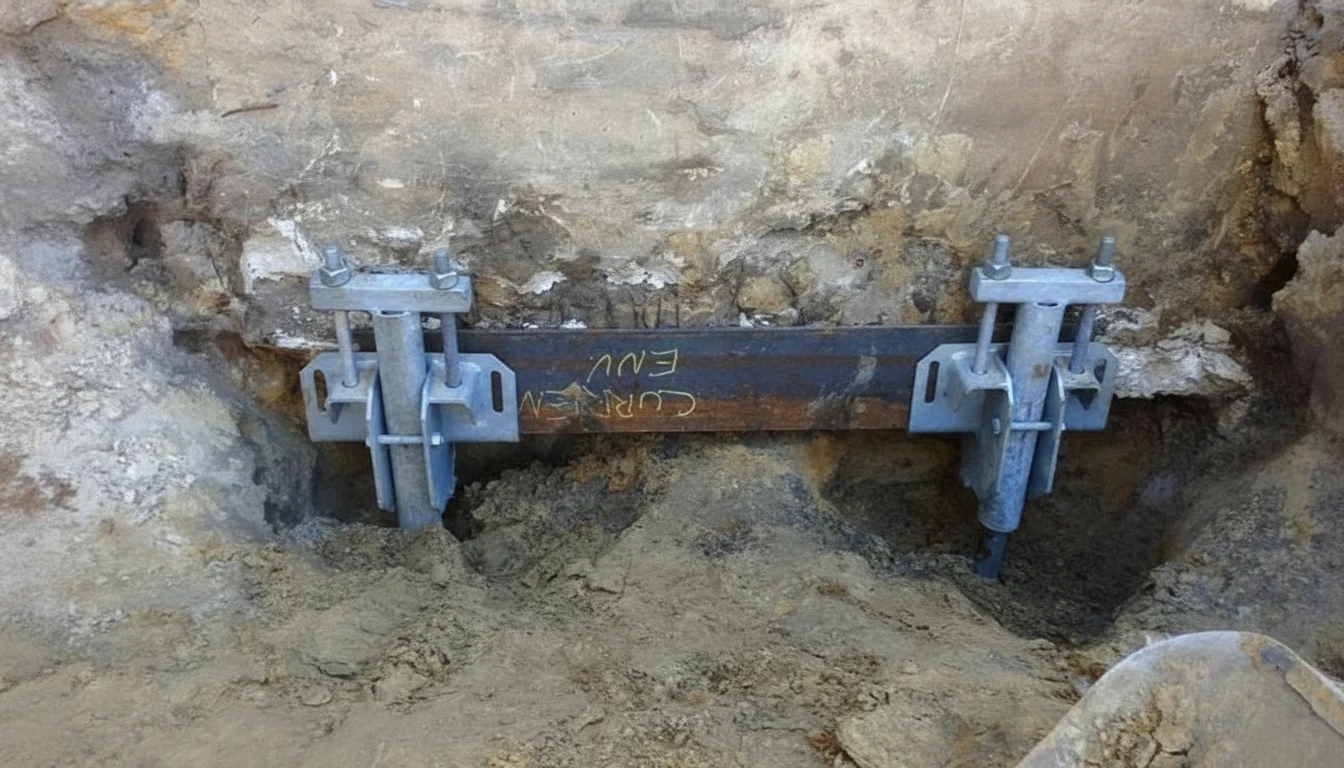
What we do about it depends on what the measurements show. A footing that has dropped gets steel piers driven down until they reach ground that holds, and the weight of the house moves onto the steel. If the framing and plaster can take it, we lift the foundation back toward level. If lifting would cause damage, we lock it in place instead. Damaged block gets repaired or rebuilt. When water caused the settling, which is common on these hills, the drainage gets corrected as part of the same job. This work has taken us under the old streets of North Hill and the houses of Middlebury, and every job is scoped from its own numbers.
Many of the cracks we measure turn out to be old movement that finished decades ago, and that answer is free. When the movement is current, you get the measurements, the plan, and an itemized price in writing before you decide anything. No corner drops overnight, so take the time to compare bids if you want to. The numbers will hold up.
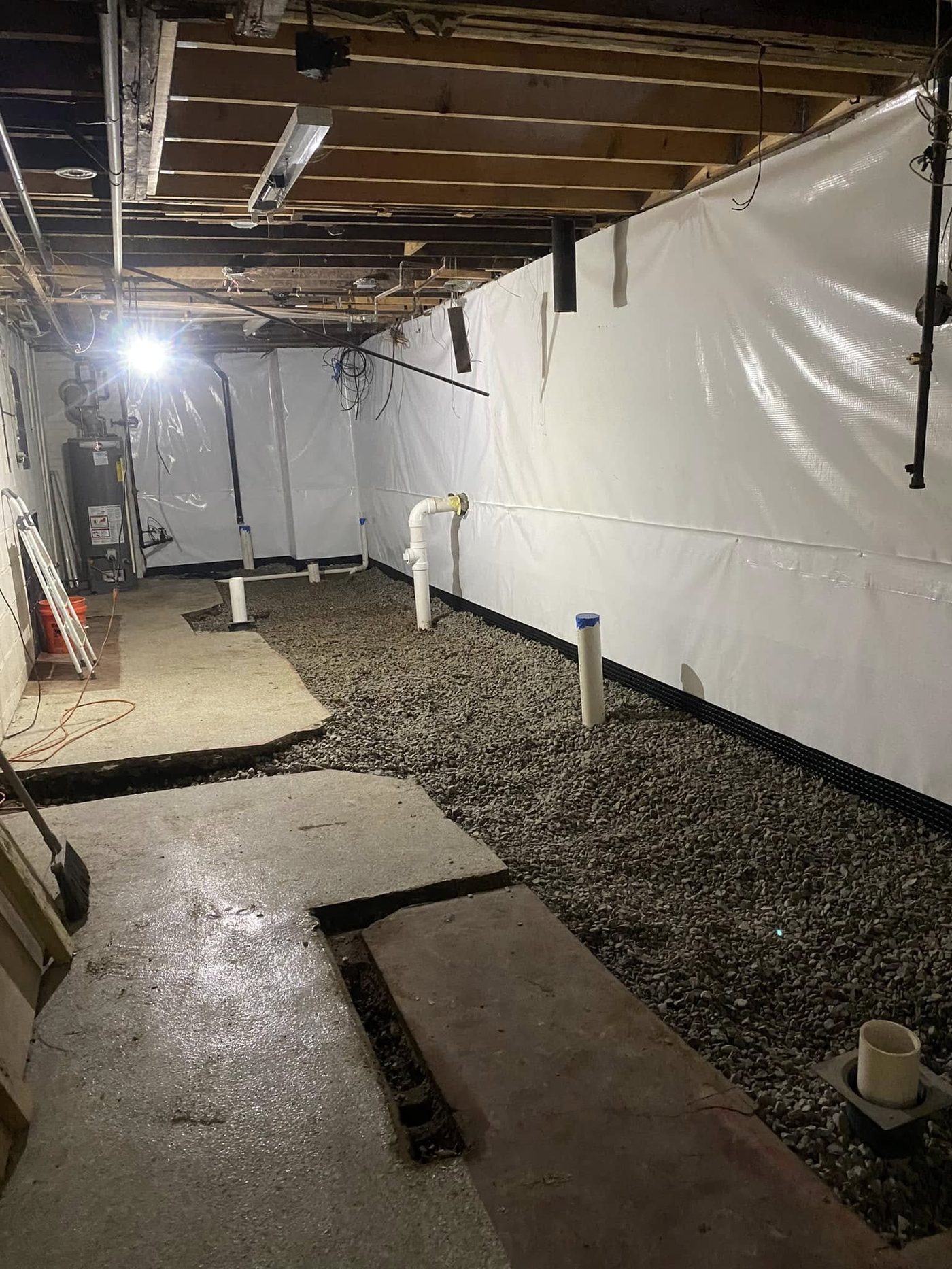
Dries out a basement that floods in every storm, with drainage that catches the hillside water at the wall and pumps it out.
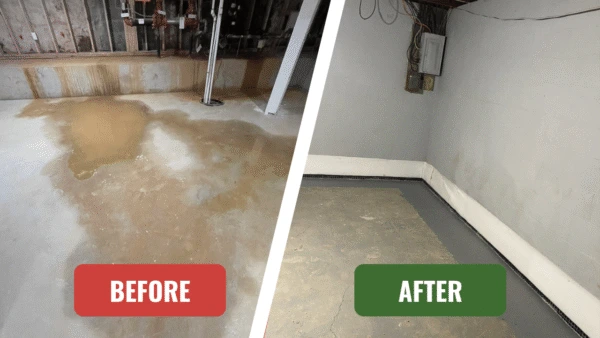
Learn moreOn a hill street, somebody’s basement is the low point, and if it is yours, you know the routine. The shop vac stays by the stairs. The boxes sit up on pallets. A musty smell arrives before the rain does. The block wall was built long before waterproofing was common, and the ground behind it takes on runoff from the whole street above you. That is more water than any block wall can keep out on its own.
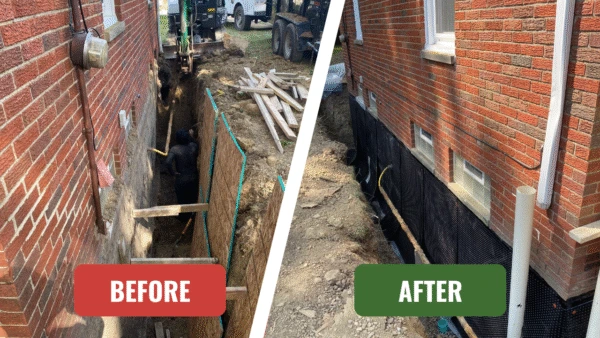
The right system starts with where the water enters. Most block basements here do best with interior perimeter drainage, a channel cut in at the edge of the slab that catches seepage at the wall and delivers it to a sump pump, no matter how much the hill sends down. When a wall is failing or the yard is being excavated anyway, exterior waterproofing seals it from the soil side with a membrane and new footing drains. One weeping crack in poured concrete needs only injection, a much smaller job. The worker houses of Goodyear Heights and the bungalows of Kenmore rarely need the same scope, so we look before we quote.
Before pricing any system, we check the outside first, because a bad downspout or a low grade line causes a surprising number of wet basements and costs very little to fix. When a full system is the right answer, the scope, the price, and the transferable warranty all go into the written estimate, which is free.
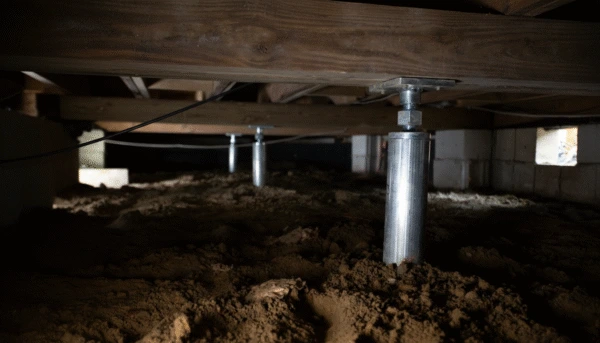
Firms up a bouncy addition floor by setting steel posts on real footings and doubling up the joists that damp ground weakened.
Learn moreThe main house sits on a basement, but the kitchen addition usually does not. That is the room where the floor gives a little at the threshold, where the dishes rattle when someone walks by, and where cold air comes up through the boards. Under it is a shallow crawl space that nobody has looked into for years, with wood posts that have been sitting on damp ground for decades and are starting to give out.
The repair puts real support back under the floor. Old posts come out, and steel jack posts go in on poured concrete pads, each one set snug under its beam and sized for the load it carries. Joists that moisture has weakened get new lumber fastened alongside them. A beam that has split or twisted comes out for a new one. If the ground stays wet down there, a moisture barrier or a small drain goes in during the same visit, since new wood over wet ground does not stay new. We have leveled floors over crawl spaces in Ellet and Lane-Wooster, and most of these jobs take a day or two.
Sometimes the whole problem is one failed post, and the estimate will say exactly that. One of our crew goes under with a work light and a level, checks the sag, photographs it all, and writes up what the fix takes. The inspection costs nothing, whether the answer is one post or a full releveling.
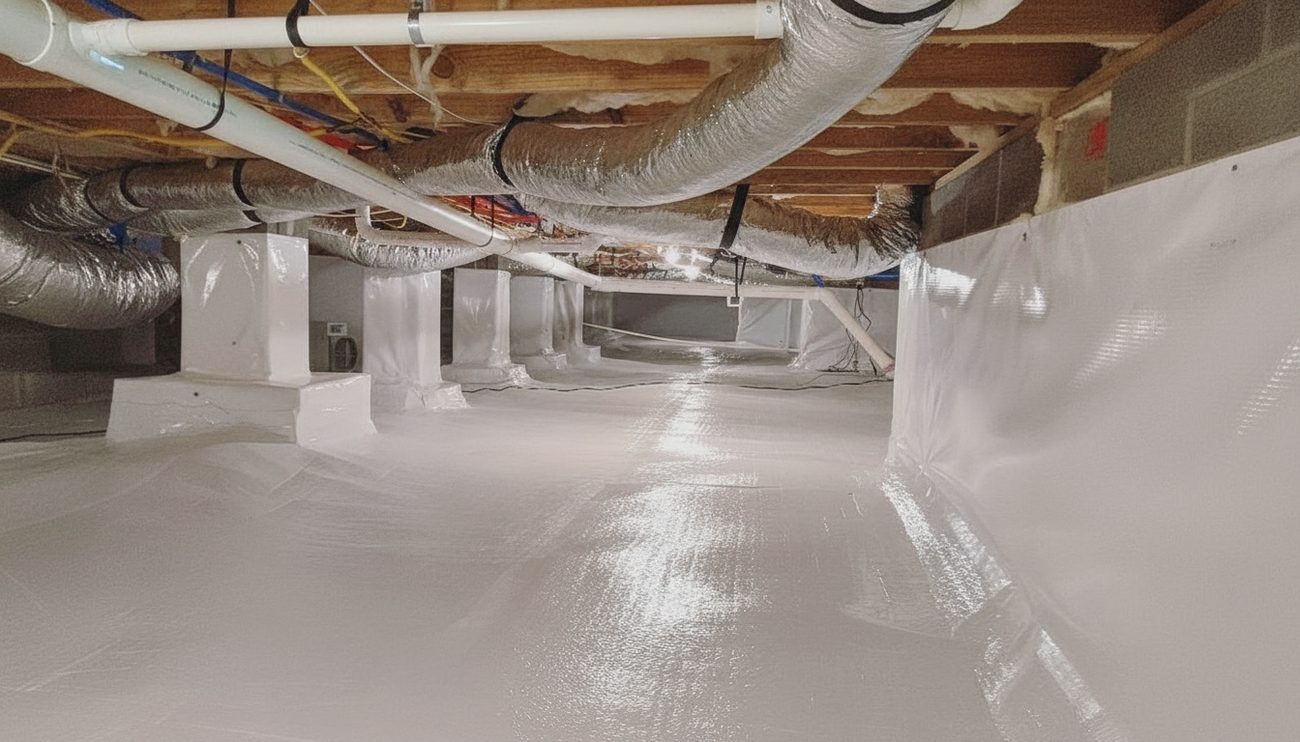
Turns a damp dirt crawl space into sealed dry space with a heavy liner and controlled air, protecting the floor above it.
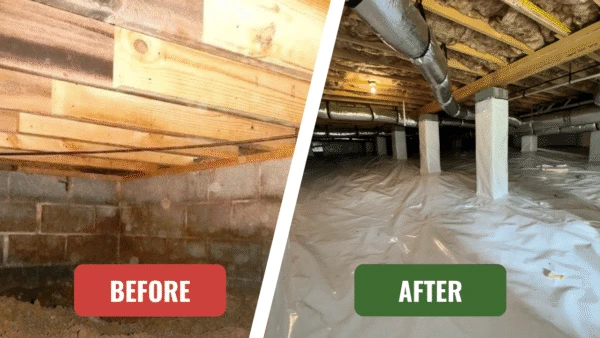
Learn moreThere is a room in the house that never smells quite right, and the crawl space hatch nearby explains why. Under the addition is bare dirt, vents that rusted open years ago, and framing dark with moisture. The space stays damp all year, and air moves upward through a house, so the rooms above are breathing a share of whatever is down there. The room over it stays chillier than the rest of the house, and the floor has started creaking more than it used to.
Encapsulation closes the space off completely. A heavy vapor barrier gets fitted over the ground and up the block walls, the seams get taped, and the vents get sealed shut. From then on, the crawl space is part of the house instead of part of the outdoors. If the moisture readings stay high afterward, a compact dehumidifier holds the air at a set level. If actual water collects after rain, drainage and a small sump go in before the liner does, because sealing water inside makes everything worse. We have done this under the ranches near Chapel Hill and the colonials of Northwest Akron, and the difference upstairs is noticeable within weeks.
Not every crawl space needs the full package. If a proper ground cover and a rerouted downspout will do the job, that is the recommendation, at a small share of the cost, and the readings decide it. Free inspection, written scope, and a warranty that transfers with the house.
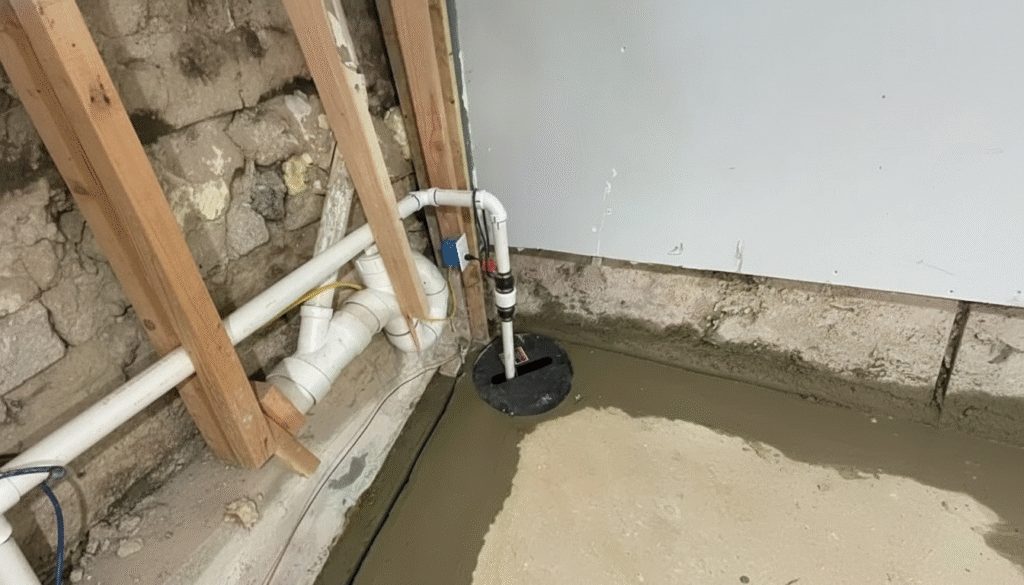
Puts a correctly sized pump under the basement with a sealed pit, a solid discharge line, and battery power for outages.
Learn moreEvery spring brings the same problem: months of snow turning to water in a single week, ground that is already full, and one small pump expected to handle all of it. If your pump cycles constantly, trips the breaker, or was already here when you bought the house, it deserves a look before the next melt tests it. And because the biggest storms often knock the power out, a pump with no battery has no answer for that night.
A proper installation is more than a pump in a hole. The pit sits where the drainage runs lowest, dug deep enough to let the pump rest between runs, and a sealed lid keeps damp air out of the room. The pump gets sized against the water we actually measure arriving, never a label. The discharge line ends well away from the house so nothing soaks back, a check valve stops backflow, and the battery unit takes over on its own when the power drops. Around Summit Lake and South Akron, most of the pumps we replace were never big enough to begin with.
If your pump is in good shape and the problem is really the drainage feeding it, we will tell you that and quote the cheaper fix first. The free inspection follows the water from the yard to the discharge point, and the sizing, the scope, and the warranty all go in writing. Most installations are finished in a day.
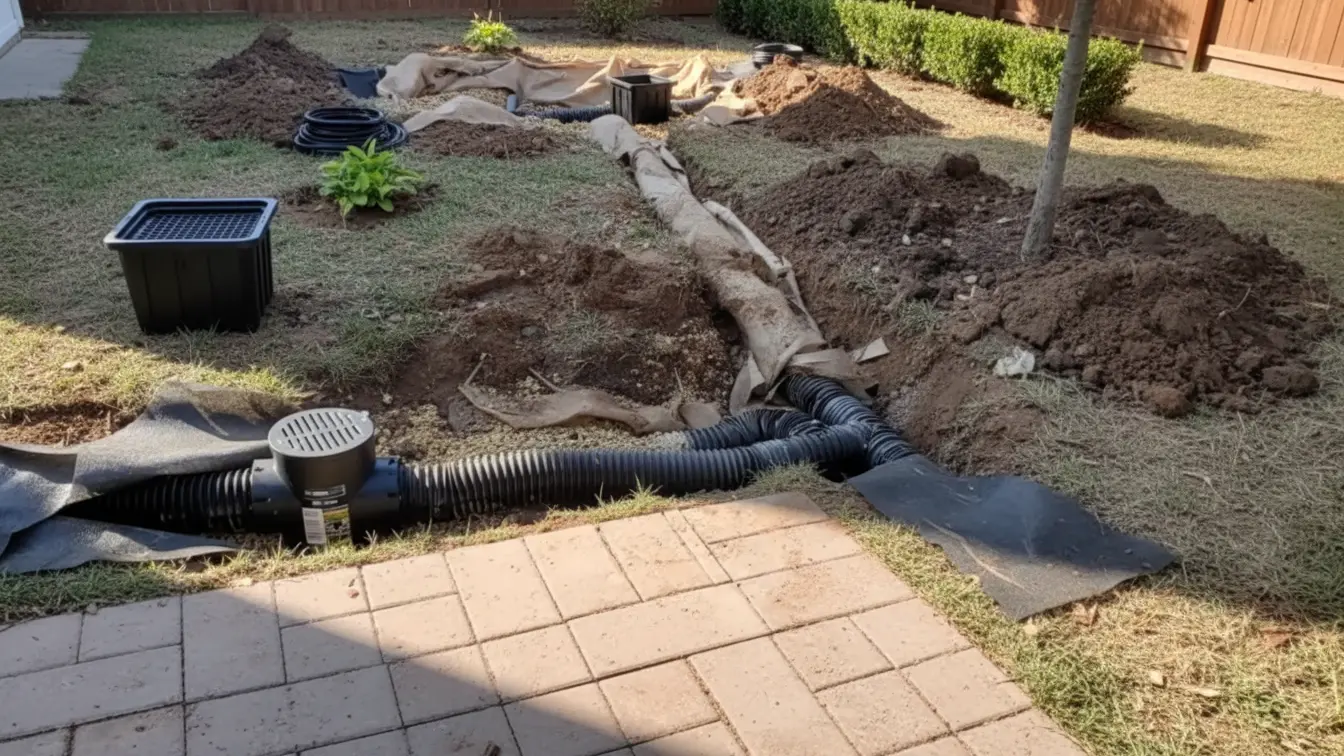
Catches the water moving through your yard before it reaches the house and walks it away underground.
Learn moreSome Akron yards collect water like a funnel. Rain that lands three lots uphill ends up in yours. The side strip stays soft for weeks. The flower bed along the house holds standing water after every storm. The lot has always drained this way, and it always will, unless the water gets a better route. That is the whole idea of a french drain: an easier underground path that leads away from the house instead of into it.
We cut a trench across the water’s route, bed perforated pipe in washed gravel, and grade it so the flow leaves toward daylight or a dry well. A drain set high on the lot works as a curtain drain, catching uphill water before it arrives. Set at footing depth, the drain relieves the soaked ground pressing on the basement wall itself. Downspout lines usually get buried into the same run, because the roof dumps more water at the corners than the entire rest of the lot. On the streets of Wallhaven and West Akron, the difference between a wet basement and a dry one often comes down to whose water gets managed first.
Trenching runs by the foot and usually sits near the bottom of the estimate in cost. When it is the only fix the house needs, the write-up says exactly that. Path, depth, and outlet are spelled out in the quote, and the lawn grows back over the work.
Queen Foundation Repair handles basement waterproofing and french drain installation across Akron, as well as sump pump installation, foundation repair, and basement wall repair, plus helical piers, egress windows, and concrete leveling. Water work leads because that is what this city needs most. One free inspection covers the water and the structure at the same time.
We figure out the cause before we talk price. Around Akron the cause is usually water coming downhill through ground that drains unevenly, so we walk the yard before we walk the basement. The estimate is written and itemized, the inspection is free, and when a crack is only cosmetic, that is what we tell you. If the right fix is a cheap drain correction, that is the quote you get. Warranties are written and transfer if you sell the house.
Most houses here went up during the rubber boom, when the city was growing faster than any in the country, and their basements are closing in on a hundred years old. We work on them every day around Middlebury and North Hill. The first visit costs nothing, and you will know where you stand before we leave.
Get your free inspection
What You Get
We answer fast and get out to the house quickly, so you're not sitting for weeks just to find out what's wrong and what it'll cost.
No charge to have us come out, find what's going on, and lay out what the fix takes. You know where you stand before spending a dollar.
Licensed, with full liability and workers' comp coverage, so the work is done to code and your property is protected if anything goes sideways.
The repair comes with a written warranty that transfers to the next owner, so it protects your home's value if you ever sell.
A clear, written price upfront before anything starts, no vague ballpark and no surprise add-ons once the work is underway.
Akron’s hills are full of rubber-boom houses with basements dug into the slopes. We work on them every day, from Goodyear Heights to West Akron, so most problems look familiar to us by now.
The same four steps on every job, from hello to warranty.
Plain Answers
The searches at midnight are the same from Fairlawn Heights to Summit Lake: is this bad, what will it cost, who pays for it. Eighteen straight answers below, the way we’d give them standing in your driveway.
Signs & Severity
Common, yes. Normal, no. Most older basements here show some dampness after a serious storm, because block walls pass a little moisture and hillside lots deliver plenty of it. That is the baseline: a damp patch that dries in a day and does not spread. What moves it past normal is change. Water that arrives faster than it used to, reaches farther across the floor, or shows up after ordinary rain instead of only the big storms means the drainage cannot keep up anymore. Water paired with a leaning wall or a widening crack is more serious still, because that points to pressure rather than moisture. Here is a practical test: if you have started planning storage and furniture around where the water goes, it stopped being normal a while ago. The inspection is free, and living with it is genuinely one of our recommendations when that is the truth.
Because water follows elevation and soil, and both can change within a single block here. Your lot may sit a few feet lower than the neighbor’s, or on a clay pocket while their yard drains through gravel, or at the end of a low path that collects runoff from three roofs. Grading, downspouts, and old buried drains split the water unevenly too. It is not about the quality of the house. It is about the way the lot drains, and drainage can be redirected once someone maps where the water actually travels.
No, and anyone who says otherwise is selling something. Concrete cracks as it cures, and thin vertical hairlines that never change are part of owning it. The cracks worth fixing are the ones that do something: leak when it rains, widen from year to year, run horizontally, or step through the block joints toward a corner. It is also smart to fix cracks before finishing a basement, because drywall hides the evidence. Photograph the borderline ones with a coin for scale, and if a crack grows between photos, it has answered the question.
Repairs & Methods
The trade splits it into three approaches. Interior drainage collects water at the edge of the slab and pumps it out, and it is the workhorse for block basements. Exterior sealing means excavating and waterproofing the wall from the soil side, the strongest and most expensive option, saved for walls that are failing. One leaking crack in a poured wall is an injection job, the small surgical fix. Most Akron houses need exactly one of the three, not a package of all of them, and the wall itself tells us which one.
Start by cutting the water off before it reaches the wall, then help the wall shed whatever still arrives. A curtain drain across the slope catches the uphill water on its way down. Buried downspout lines remove the roof water, which is often the biggest single source. Regrading buys extra protection at the surface. Behind all of that, an interior drainage channel and a sump pump handle whatever the ground still delivers. Coatings alone will not win this one, because coatings cannot stop water that the ground is pushing through the wall.
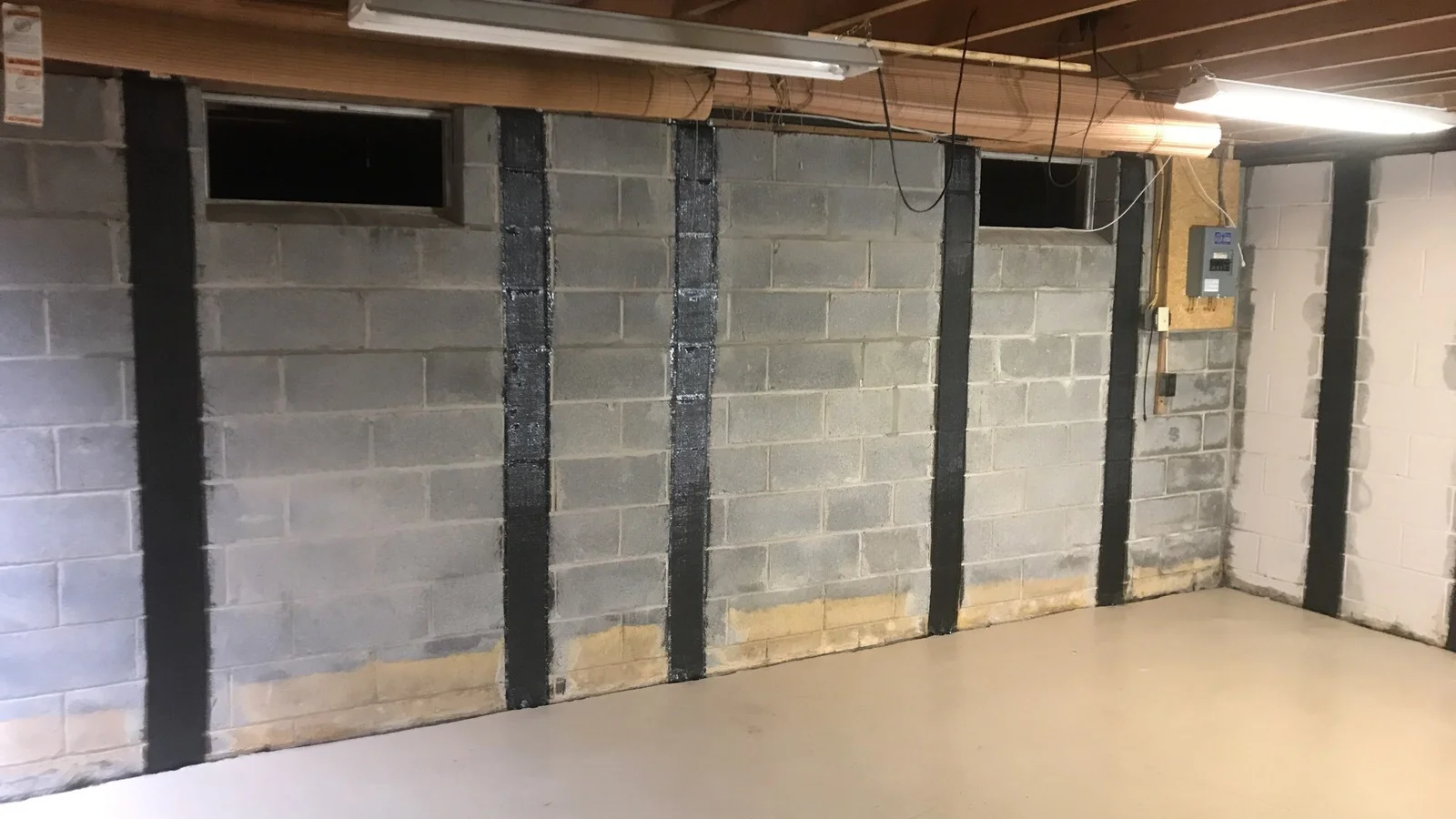
First take away the pressure, then reinforce the wall. The pressure is soaked ground, so drainage is part of every real wall repair. The reinforcement depends on the movement: carbon fiber straps for an early bow, steel bracing or wall anchors for a wall that has moved further, and a rebuilt section when the block has broken. The order matters, because reinforcement without drainage leaves the force in place. Caught under an inch of movement, this is routine work that usually takes one day. The measurement decides the method, and measuring is free.
Basement & Water
Try the alternatives first if the flooding is only occasional. Downspout extensions, regrading, and a french drain across the wet side all subtract water, and sometimes they solve the problem completely. A sump pump earns its place when water reaches the basement no matter what the yard does, or when an interior drainage system needs somewhere to send its water. The two work together: drains collect, pumps remove. What no basement should depend on is a lone pump with no drainage feeding it and no battery behind it.
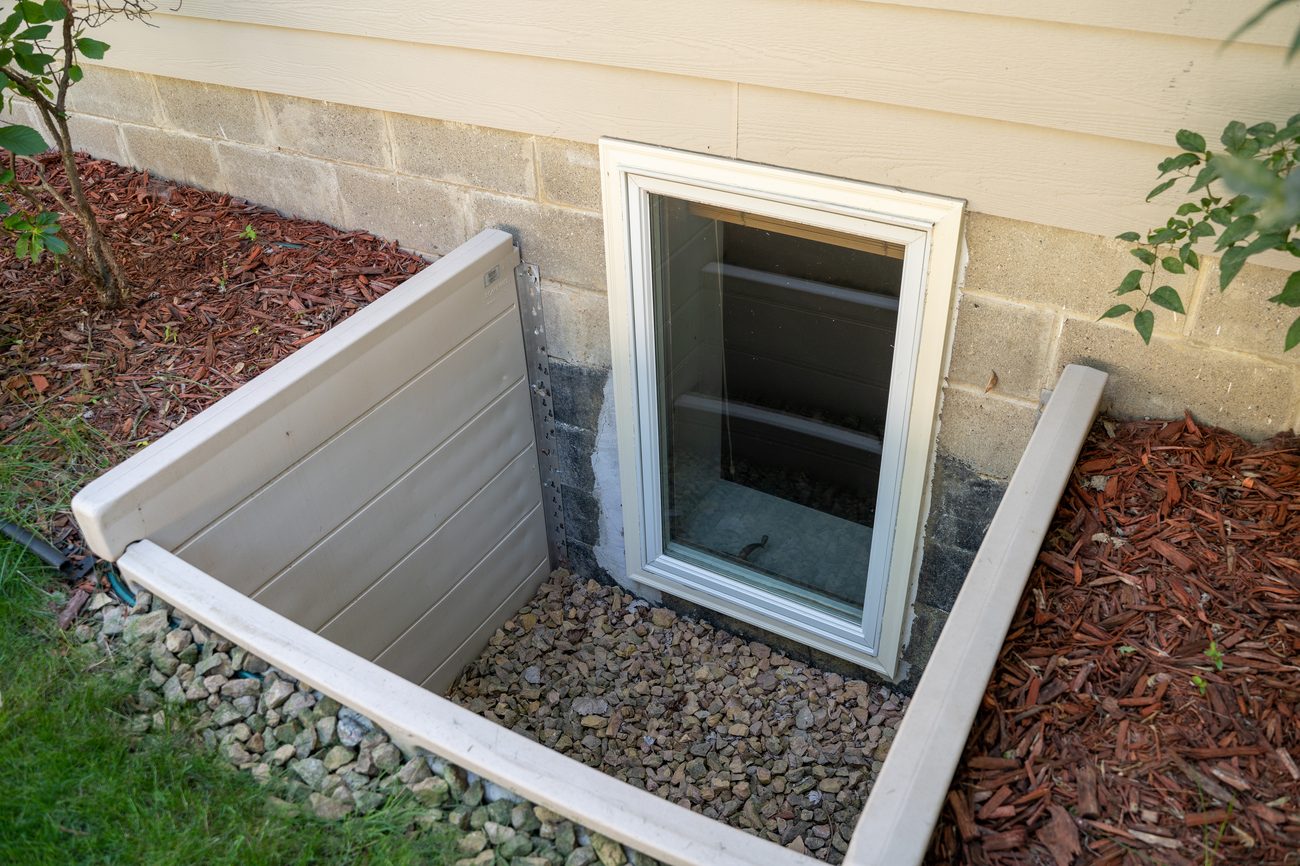
For a one-time event: a wet vac, fans, and a dehumidifier running until the moisture readings drop, not just until things look dry. For prevention on a budget, work from the outside in. Clean the gutters, extend the downspouts well past the wall, regrade the soil so it falls away from the house, and clear the window wells. Inside, seal visible gaps around pipes and cover any open sump pit. What that list cannot do is stop groundwater under pressure. When water rises through the floor, you need drainage, not towels.
It is the only sensible order. A finished basement puts drywall, flooring, and furniture between you and the evidence, and a century-old block wall will test it sooner or later. Waterproofing first costs a fraction of redoing a finished room after one wet spring, and it protects the remodel instead of competing with it. If the readings and the history say your basement runs dry, we will say that too, and you keep the money. Test first, finish second, in that order every time.
Cost & Insurance
The honest range is wide because the phrase covers three different jobs. Crack injection usually costs a few hundred dollars. A complete interior drainage setup with a sump pump, the standard block-basement fix, usually falls between $3,000 and $10,000 nationwide based on the footage involved. Exterior excavation and sealing starts around $10,000 and climbs, which is why it is prescribed only when a wall truly needs it. The encouraging local pattern: hillside water problems around Akron often shrink to drainage corrections, downspouts, grading, or a curtain drain, at a fraction of system prices. Treat any number quoted before an inspection as a guess. Ours comes after the walk-through, itemized and in writing, and if the cheap fix is the right fix, that is the one on the paper.
Small repairs, like injecting or reinforcing a single crack, sit in the hundreds of dollars. Pier work is the expensive end: underpinning a settled section commonly falls between $5,000 and $15,000 nationwide, scaling with the number of piers and the depth to solid ground, and a large multi-corner job can exceed that. In between sit wall reinforcements and partial rebuilds in the low thousands. Two things keep the number reasonable. First, most alarming-looking symptoms measure out smaller than they look, and old settlement that has stopped moving needs nothing at all. Second, drainage corrections often shrink the structural work required. A trustworthy quote itemizes the piers, the depths, and the scope, so you can compare it line by line against anyone else’s bid. Free estimates make that comparison easy, and we would rather win on the itemization than on adjectives.
Plan on no, and treat anything covered as a bonus. Standard homeowners policies classify groundwater seepage, gradual foundation movement, and waterproofing as maintenance, all excluded, and flood damage needs its own policy. What is covered is sudden, accidental water: a burst supply line, a failed water heater, and often the resulting damage from a covered event even where the underlying repair is excluded. Worth a call to your agent: a sewer and drain backup endorsement, an inexpensive add-on many Ohio carriers offer that covers one of the messier basement events. In the meantime, keep records like an adjuster: dated photos of the walls and the water, receipts, and inspection reports. That file supports a future claim, feeds the state disclosure form when you sell, and shows a buyer’s inspector a real repair history. Prevention is still cheaper than restoration by a wide margin, and that is the real math.
Process & Timeline
Whenever you find the problem. Interior work, including drainage systems, pumps, wall reinforcement, and injection, runs all year, because the basement does not care about the weather. Exterior digs need workable ground, so deep excavation waits for the warmer months. Frost depth here is real, which is why footings outdoors are set so deep, but it stops digging, not repairs. If anything, the off months are a quiet time to get on the schedule quickly, and a system installed before the melt beats one installed after it.
Yes, and nearly everyone does. The work keeps to the basement and the yard, never your kitchen. Expect some honest noise for a day or two, a protected path to one door, and dust control wherever we cut. Utilities pause briefly if they pause at all, always with notice first. Even a structural lift is a slow, quiet process measured in fractions of an inch. Most people tell us afterward that the disruption was smaller than they expected it to be.
The installation itself is the short part. Crack injection takes a morning. An interior drainage system with a sump typically runs one to three days. Exterior excavation or structural pier work stretches toward a week, depending on scope. Then comes drying time for basements that have been wet a long while, because block releases moisture slowly, and finishing over damp readings is how mold gets started. From the first call to a finished, working system, two to three weeks is a typical span when the weather cooperates.
Trust, Warranty & Local
It transfers automatically, because it is registered to the property rather than to you, and that is worth real money at sale time. What it covers depends on what was installed: a drainage system’s warranty stands behind the system moving the water it was built to move, and a reinforcement warranty stands behind the wall holding its position. What no honest warranty covers is a brand-new problem arriving somewhere else, a downspout someone disconnects, or grading the next owner changes. That is why the paperwork spells out the scope in plain words instead of fine print. If warranted work ever falls short, the return visit costs nothing and the fix is on us. Keep the folder with the house documents. In Ohio, the disclosure form asks directly about basement history, and a repaired, warrantied, transferable answer is the strongest thing a seller can put on it.
Ohio sellers must fill out the state property disclosure before a buyer signs, and it asks specifically about water intrusion, basements, and structural condition. Problems you know about have to go on the form, and surprises found afterward can become legal trouble. The practical angle: an unexplained wet basement invites lower offers and hesitant buyers, while a documented, warrantied repair presents as a solved problem with the proof behind it. Repairing before listing usually earns back more than the discount it prevents.
Because the city is built on high ground that drains toward its valleys, and the houses went up across those paths during a boom that moved faster than any drainage planning. Every storm sends water down the same slopes, through ground that passes it unevenly, past whichever basements sit along the route. Add downspouts pointed at foundations and a century of settled grading, and the pattern explains itself. The houses are not defective. They are simply standing where the water has always traveled, and drainage built for that path changes the outcome.
Areas We Serve
We work across the whole Akron metro, not just inside the city line. From the streets above the Towpath to the blocks around Summit Lake, we handle wet basements, leaning walls, settled slabs, and yard drainage problems. Every one of them starts with a free inspection and a written plan.
Akron ZIP codes we cover:
Ready to Get Started?
No obligation, fast and easy.
We appreciate you reaching out.
One of our team members will be with you shortly.