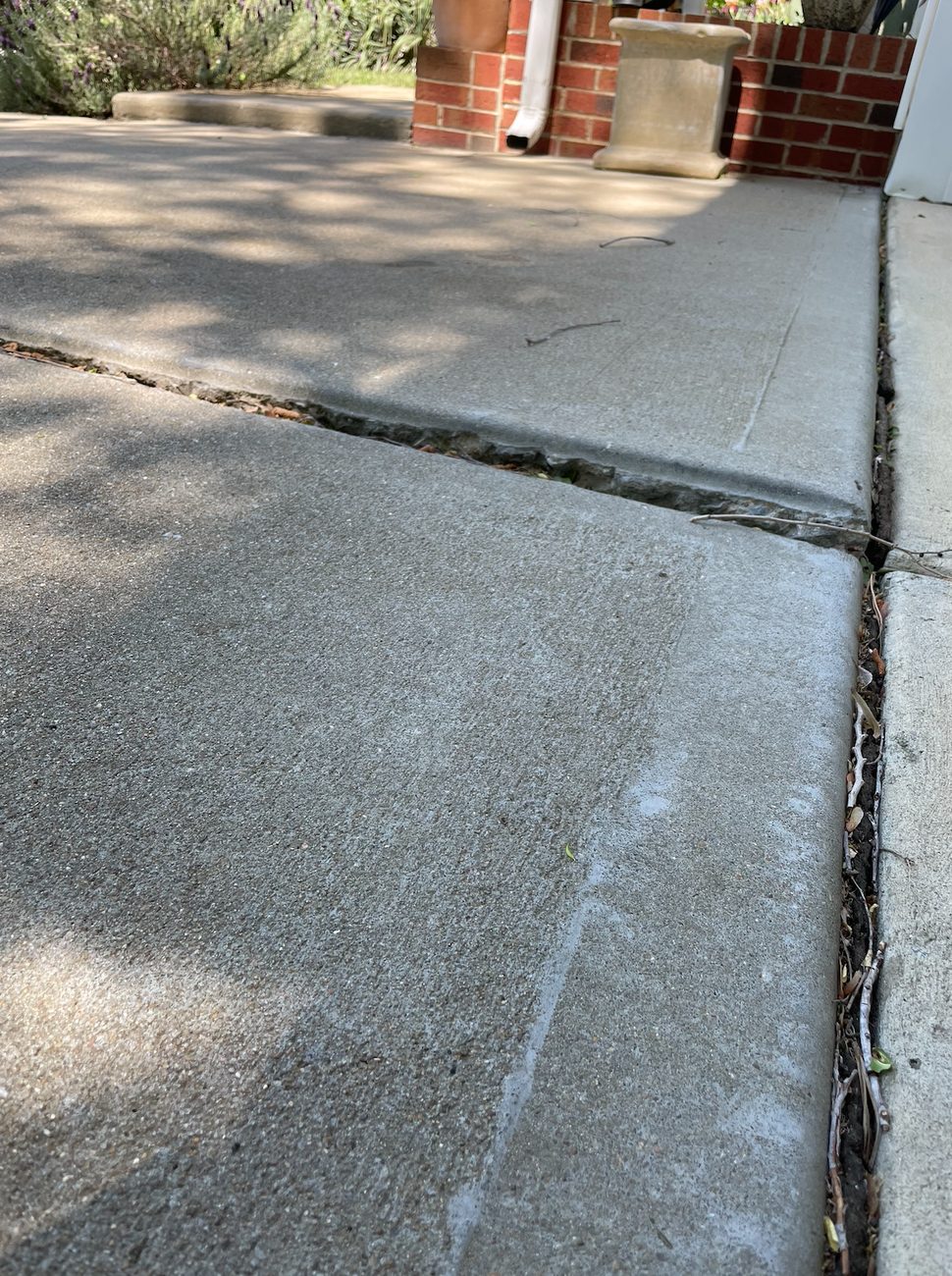
A basement that floods when the snow melts, a crack that keeps widening, a sump pump running nonstop. Erie gets more snow than almost anywhere in the country. We do basement waterproofing, french drain installation, and sump pump installation throughout Erie, Millionaires Row to Lakeside, and the inspection is free.
Get Your Free Inspection
We appreciate you reaching out.
One of our team members will be with you shortly.





Warning Signs
The signs show up small. A damp mark low on the basement wall, a crack that has gotten wider, a floor that is not quite level anymore. Catching these early is the difference between a small repair and a big one, so they are worth taking seriously.
Cracks in the Outside Wall
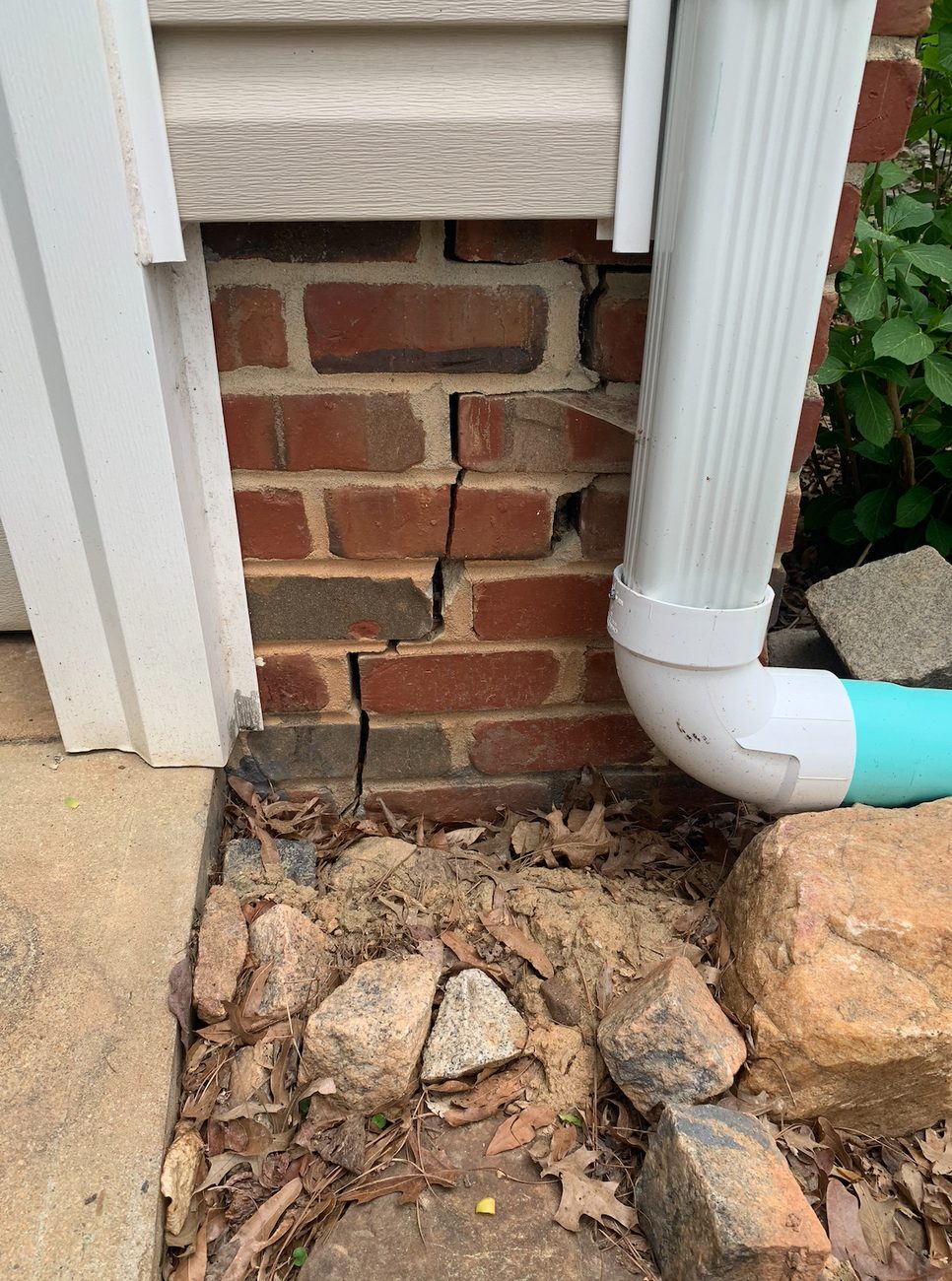
A crack above a basement window, or brick separating at the porch. Part of the foundation has dropped, and the crack tracks the movement.
Doors and Windows That Catch
A door that catches on the frame, a window that will not stay open. The house has settled out of square, and the openings show it early.
A Floor That Is Not Level
A slope you feel through a room, or a soft spot near a wall. The framing under it has settled or taken on moisture, and neither fixes itself.
Water Coming Through the Basement Wall
A wet line across the wall after storms, white residue when it dries. The ground outside is holding water against the block, and it comes through.
Standing Water in the Yard
Water that pools near the house and stays for days. The clay ground here drains slowly, and water that sits by the foundation ends up in the basement.
A Bowed or Cracked Basement Wall
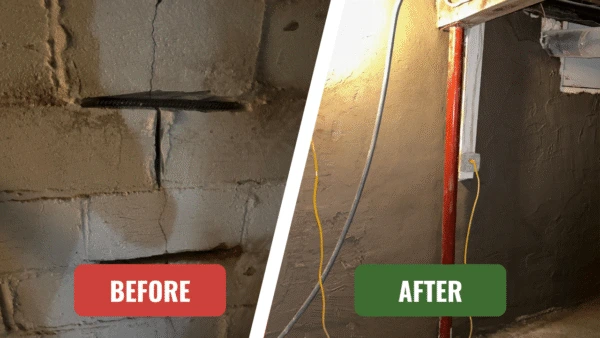
A crack running the length of the wall, or a wall that is no longer straight. Wet ground pushes hard, and block walls give slowly under it.
Plenty of these signs turn out to be cosmetic, and we will tell you when they are. What should not wait: a wall that is visibly bowed, a horizontal crack, water that returns after every storm, or a crack that keeps growing. Those get worse on their own schedule. The inspection is free either way, and you will know exactly what you are dealing with before we leave the driveway.
Most of the work here is about water, from wet basements to failed drainage. The rest is structural, like settled foundations and bowed walls. All eleven services are listed below, and a free inspection sorts out which ones your house actually needs.
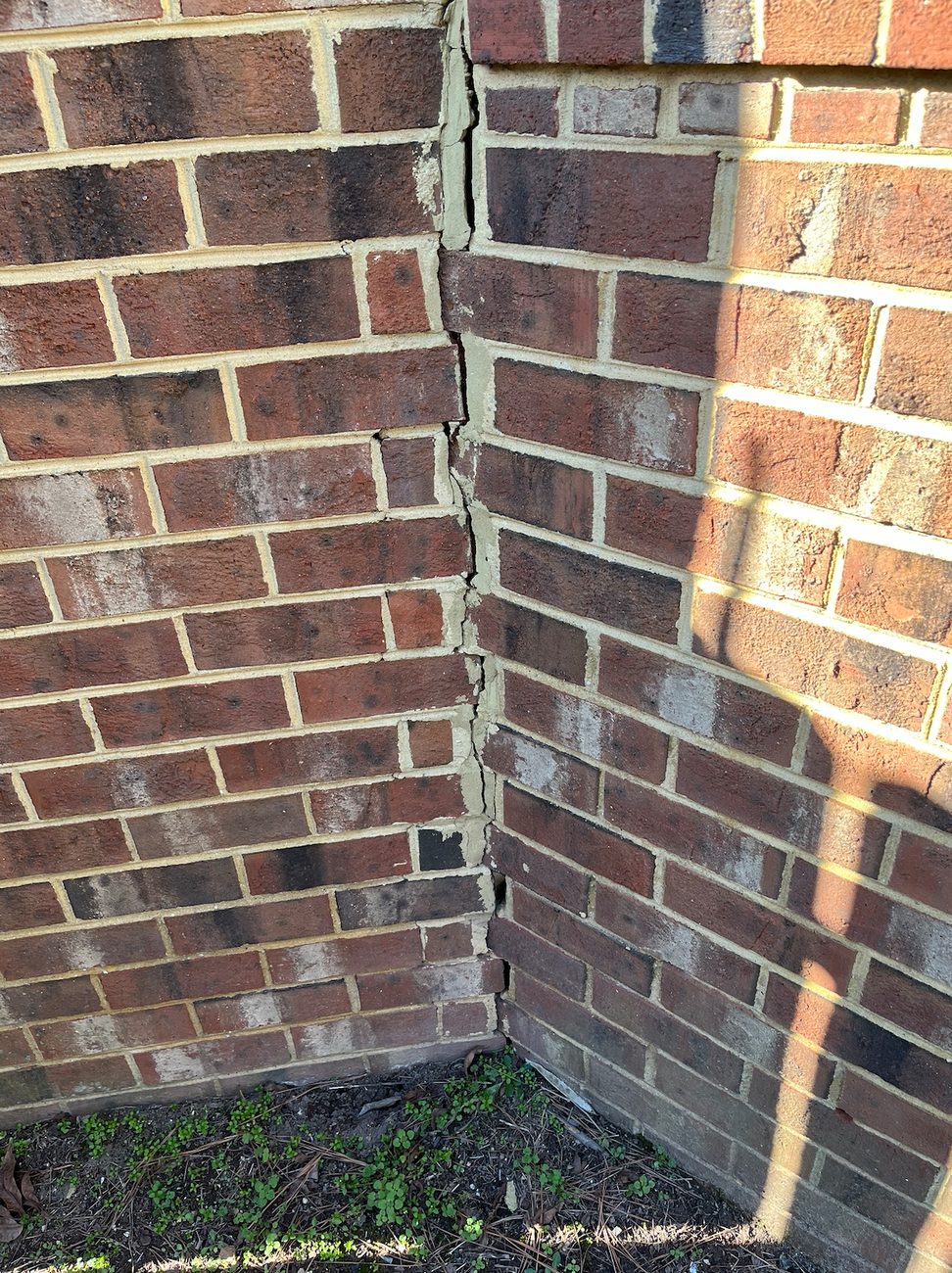
Repairs the settled foundation under an older Erie house with steel piers, closing the cracks and evening out the floors.
Learn moreThe house has been showing small signs for years. A crack over the porch door that has been repainted twice. A hump in the hallway floor that everyone steps around. Daylight under one corner of the sill. Most Erie foundations went in before anyone thought about waterproofing, and the ground they sit in holds water long after every storm. Sooner or later, one footing starts to give.
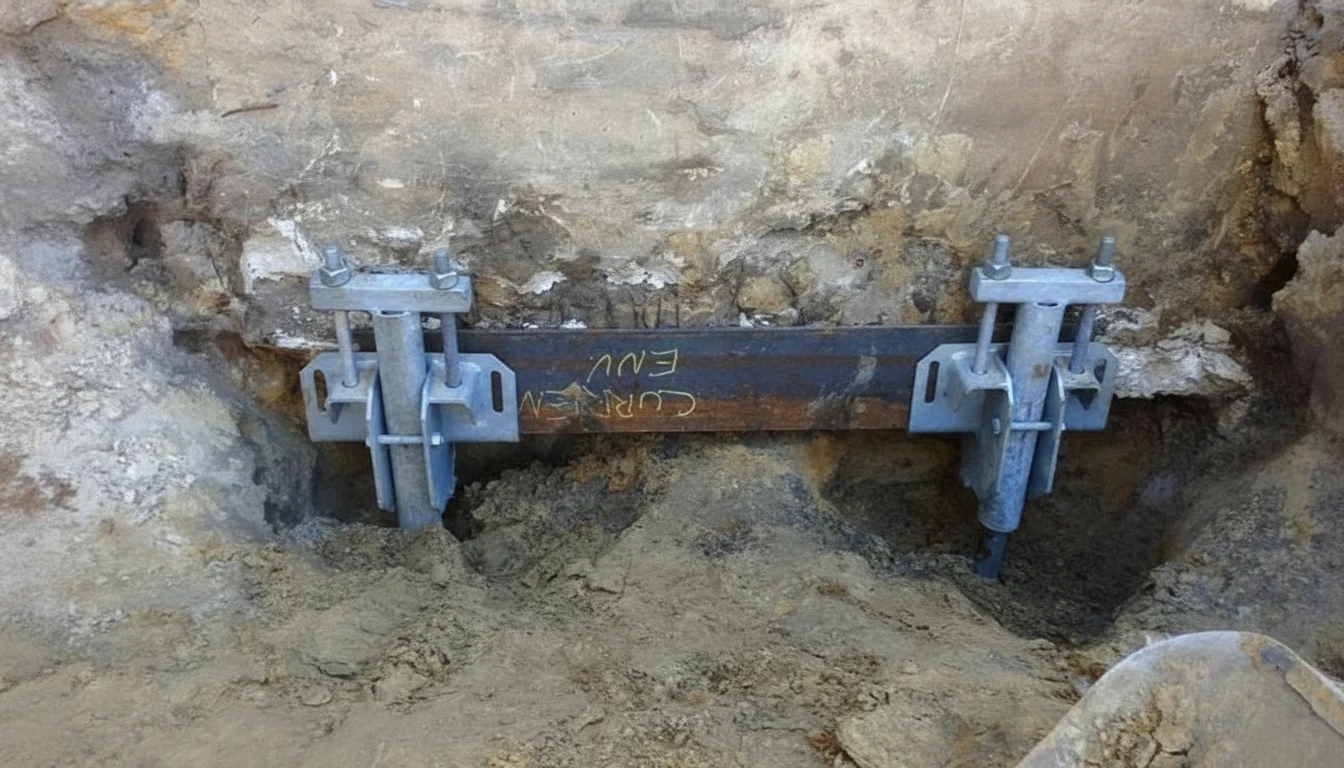
The repair matches the movement. A dropped footing gets steel piers, push or helical by conditions, driven down to bearing ground, and the house’s weight transfers onto the steel. We lift back toward level when the plaster and brick can take it, and hold steady when they cannot. Failing block and stone get repointed, reinforced, or rebuilt one section at a time. And since wet ground drives most of the movement here, drainage correction goes into the same scope, so the repair is not fighting the water that caused it. Around Academy and Downtown Erie, no two of these jobs have ever matched exactly, which is why every scope starts from its own measurements.
A crack that stopped moving forty years ago needs an answer rather than a contract, and answers are free. Where the movement is current, you get the numbers behind that conclusion, an itemized written price, and time to compare it with other bids. Houses fail slowly here, so there is room to decide carefully.
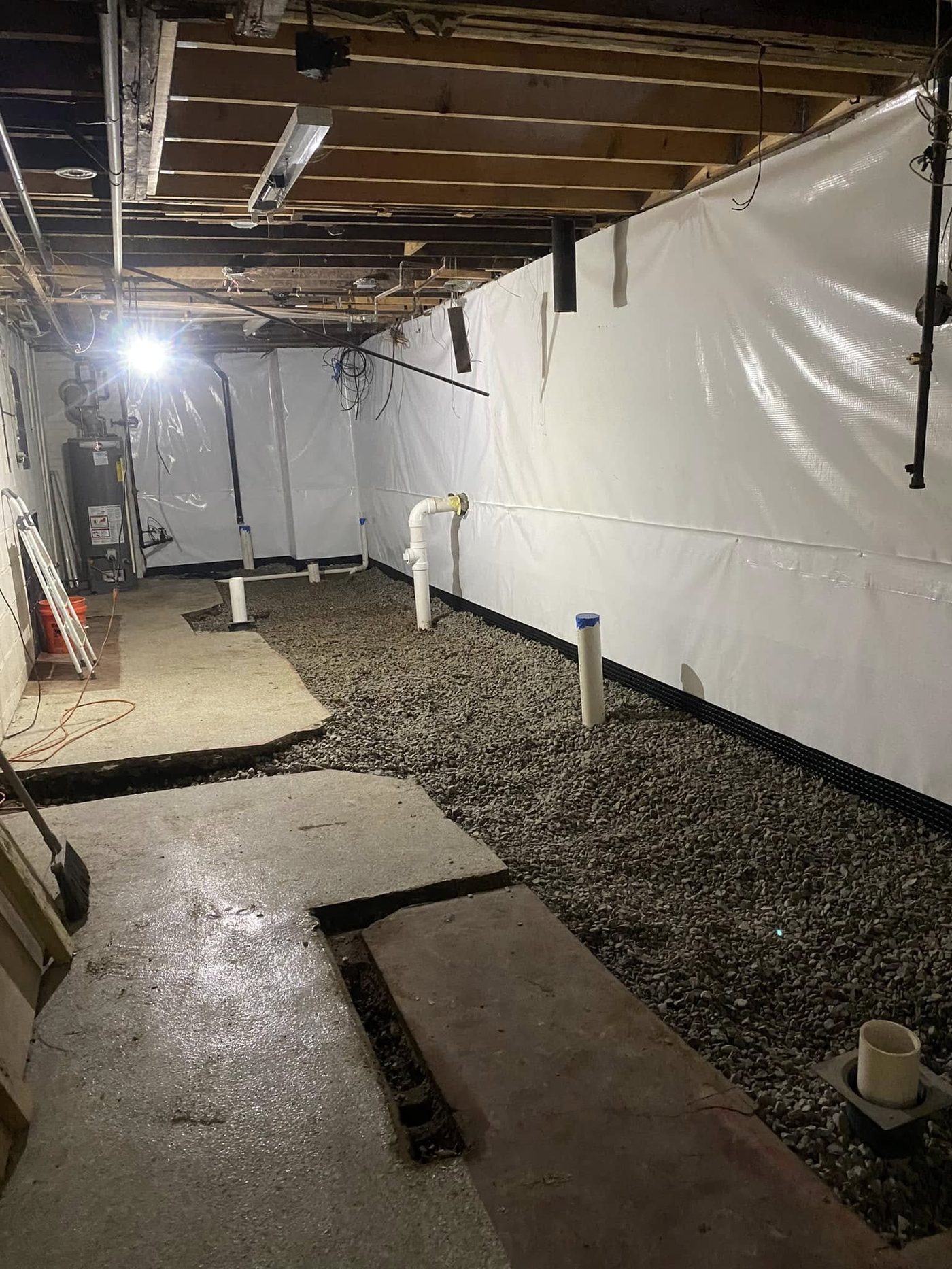
Ends the yearly basement flooding with interior drainage sized for Erie weather, collecting the water and pumping it out.
Learn moreThe routine is familiar in this town. Water shows up in the same corner, the wet vac stays within reach, and everything cardboard lives up on pallets. The wall was laid up two generations before waterproofing became standard practice, and the clay-heavy ground outside delivers more water than the block can shed. The basement has never really been dry, but it can be, and the fix usually costs less than the flooring the water keeps ruining.
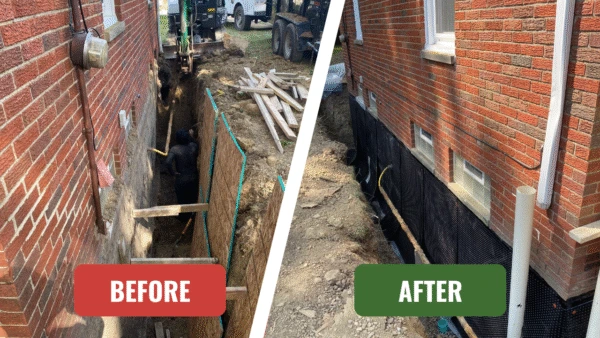
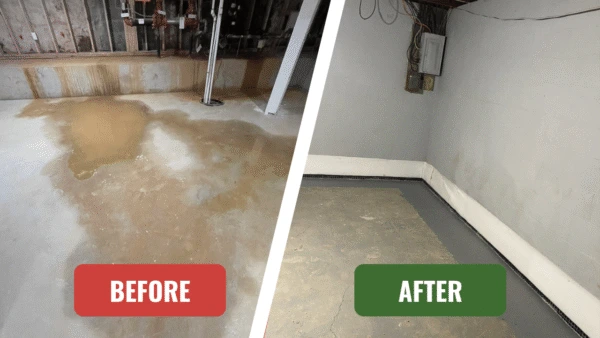
The main tool is an interior drainage system: a channel set into the edge of the slab around the perimeter, catching seepage at the exact line it enters and piping it to a sump pump, out of sight and working in every season. Exterior waterproofing, meaning excavation, a sealed membrane, and new footing drains, is the heavier remedy for walls that are deteriorating or being dug up anyway. One leaking crack in poured concrete takes just an injection and an afternoon. The stone foundations off Glenwood need different handling than the block walls of East Bayfront, and the inspection is what tells us which approach fits your wall.
The outside gets checked before anything is priced, because a downspout emptying at a corner or a grade sloping toward the house causes a surprising share of wet basements and costs a fraction to fix. When a system is the right answer, the scope and the price go on paper along with a transferable warranty, and the look costs nothing.
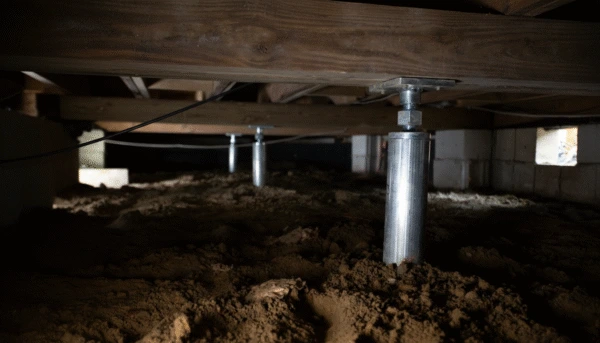
Restores the sagging floor over a crawl space with steel posts on real footings and new lumber beside the weakened joists.
Learn moreThe full basement stops at the main house. The enclosed porch and the kitchen bump-out usually ride on shallow crawl spaces instead, and that is where the floor bounces when the dog runs through, where the table sits uneven, and where the cold comes up through the boards. Down below, posts set on bare ground have spent decades slowly sinking and rotting at the same time.
The reset is honest structural work in a tight space. The improvised supports come out, and steel jacks go onto individual poured pads, every one snugged under its beam and rated for the true load. Joists that damp has weakened get doubled with fresh lumber fastened alongside, and any beam that has crushed or rolled gets replaced whole. Standing water or constant damp gets a liner or a compact drain during the same trip, because dry framing over wet ground never lasts. It is the same job under a porch in Southwest Erie or an addition out toward the Wesleyville Line, usually one to two days, and the floor above stops moving that same evening.
When the fix is one failed post, the estimate says one post, priced accordingly, and nothing gets added to pad it out. Someone from our crew physically crawls under with a lamp and a level, photographs everything, and hands you the written result. The inspection is free, whatever size the answer turns out to be.
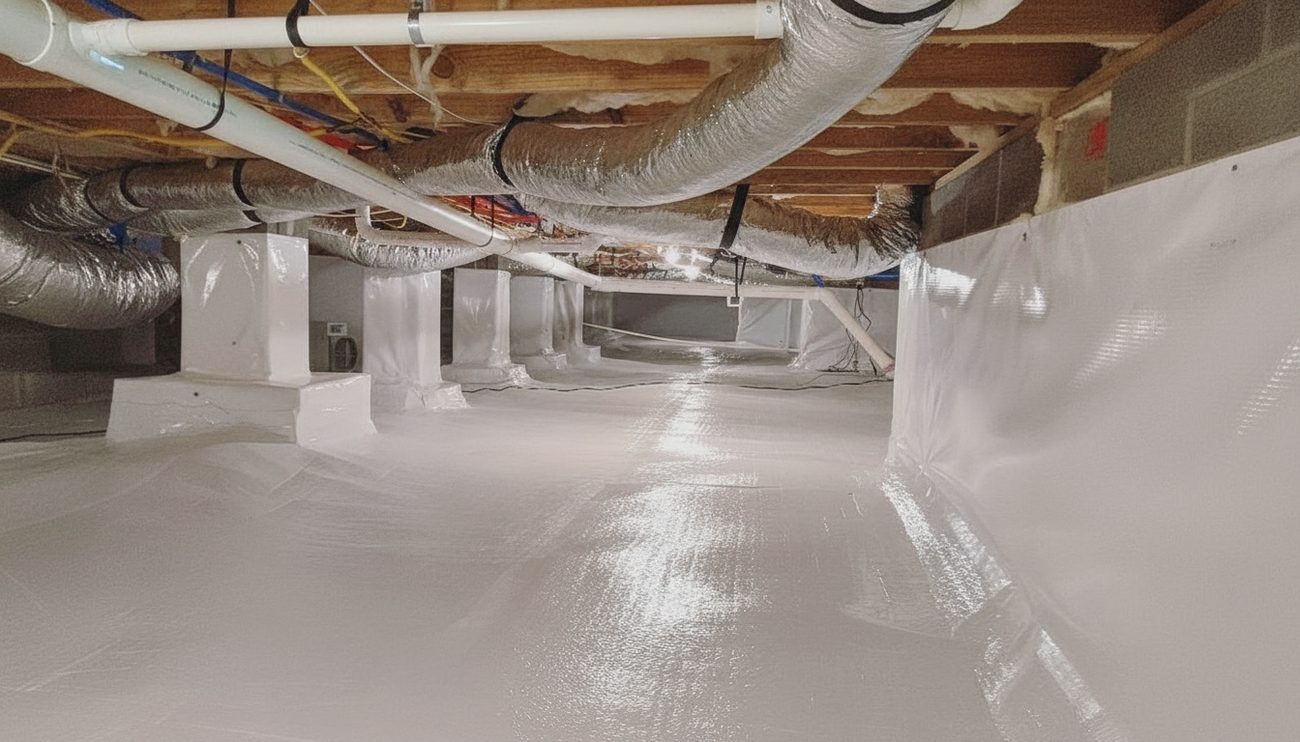
Turns the wet crawl space into sealed, dry storage with a heavy ground liner, closed vents, and managed moisture.
Learn moreYou can smell it in the back hall before you ever open the hatch: earth, damp, and a faint edge of mildew that no air freshener covers. Below the addition, the ground is bare, the vents have rusted open, and the joists overhead are dark with the moisture they hold. The room above runs colder than the rest of the house, the floor has started to cup, and anything stored down there comes back up smelling like dirt.
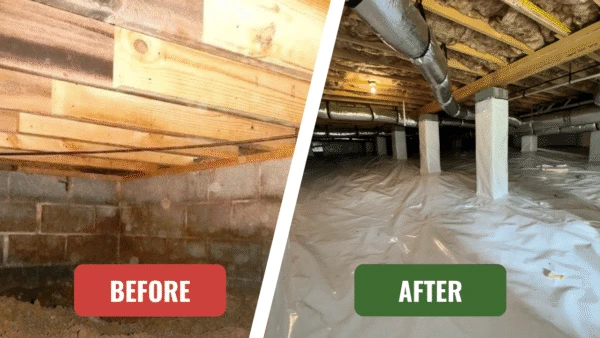
Encapsulation shuts the whole exchange down. A thick reinforced liner gets laid over the ground and carried up the walls, every seam taped shut, and the vents sealed closed. The crawl space stops trading air with the outdoors and joins the inside of the house. If readings stay damp afterward, a compact dehumidifier keeps the space at a set point. If real water arrives after rain, drainage and a small sump precede the liner, because trapping water under plastic is worse than doing nothing. Under the ranches near Belle Valley and the postwar streets of Glenwood Hills, the results show quickly: the floors settle, the smell goes away, and the drafts stop.
Some crawl spaces only need a proper ground cover and a redirected downspout, at a fraction of the full price, and that call belongs to the moisture readings, not a sales sheet. The inspection costs nothing, the scope is written out either way, and the warranty follows the house.
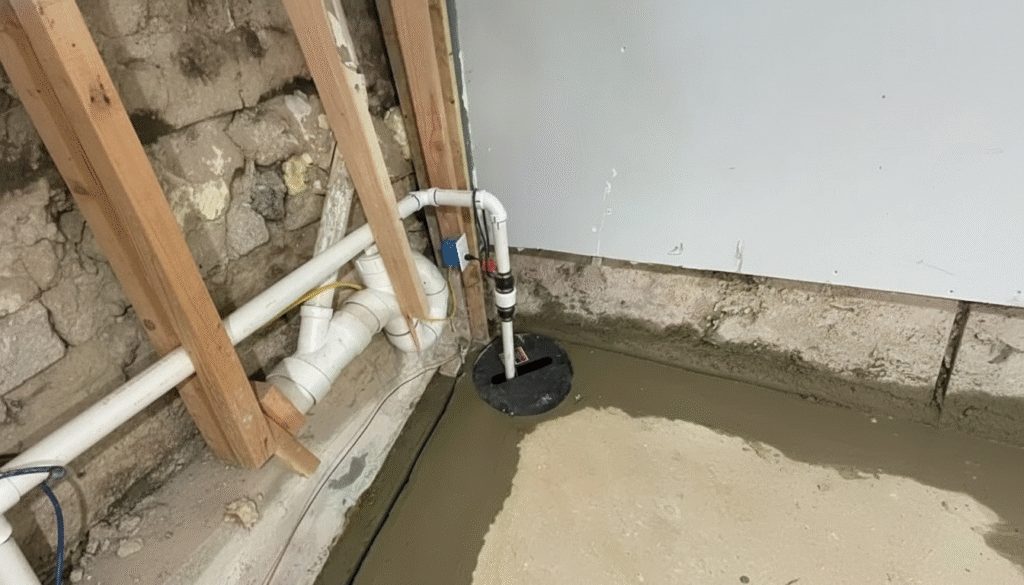
Installs the pump, pit, and battery backup that keep the basement dry through the biggest melt of the year.
Learn moreEvery Erie basement owner knows the week that matters: the big melt, when months of snow turn to water in a few days and the ground sends all of it downward. That is the week the small pump from the hardware store runs flat-out and still loses ground, and a power outage in the same storm finishes the job. A basement that comes through that week dry was set up for it ahead of time, on purpose.
Setting up on purpose looks like this. The pit is set where the drainage bottoms out, deep enough for the pump to rest between runs, with a sealed lid over it. The pump is sized against the inflow we actually measure, not the label on a box. The discharge line ends well clear of the foundation so nothing returns, a check valve blocks backflow between runs, and a battery backup stands over all of it, taking the handoff automatically when the power drops. From the west side blocks of Frontier to the streets above the Bayfront, the pumps we replace are almost never broken. They were simply never enough for this town.
If your pump is adequate and the real problem is what the yard feeds it, you will hear that instead, with the cheaper fix quoted first. The free inspection traces the water along its full path, the sizing math goes into the written quote, and most installations are finished inside a day.
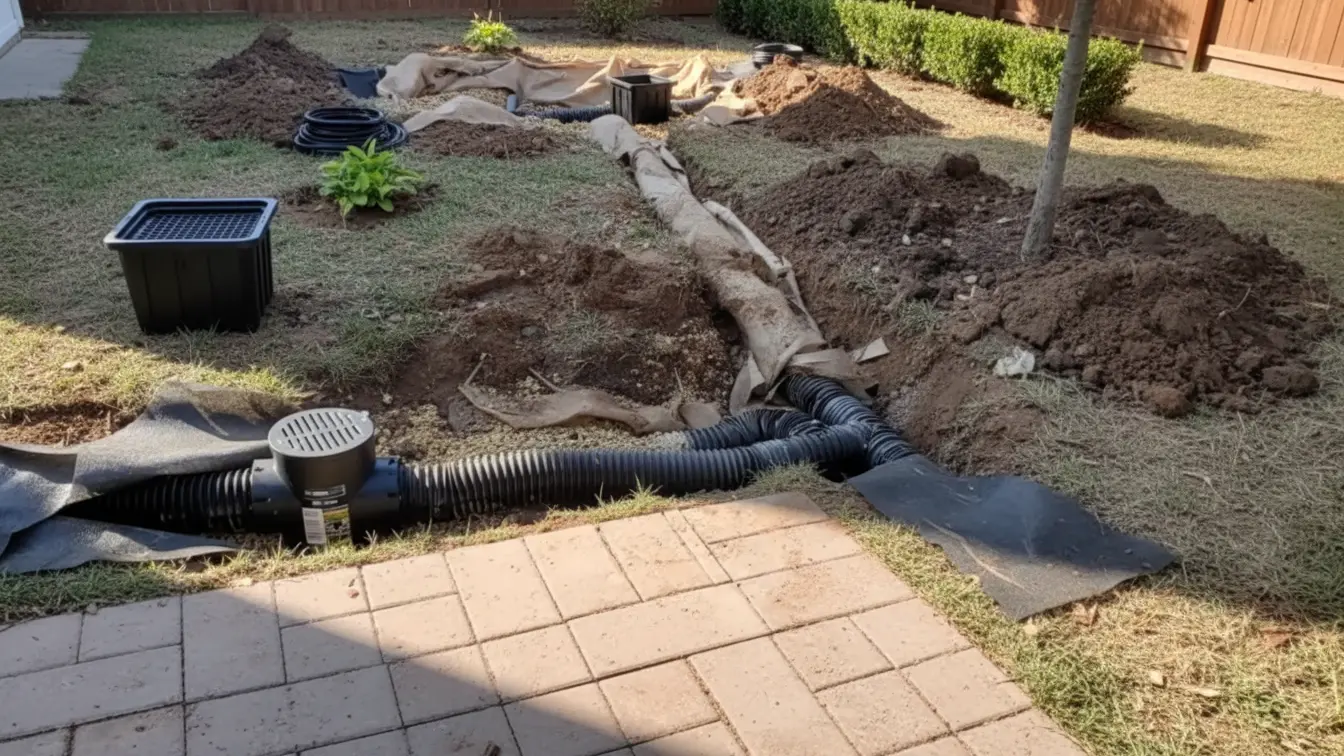
Gives the slow clay ground a faster way to shed water, collecting it in buried gravel and pipe before it reaches the wall.
Learn moreClay ground drains slowly, and in this town that means very slowly. The side yard stays soft long after the rain stops, the bed along the wall holds standing water, and every serious storm leaves a pond in the same low spots. The water will keep taking the same path until it is offered a better one, and offering a better path is exactly what a french drain does.
The better path is a trench cut across the flow, with perforated pipe bedded in stone at the bottom, angled to walk the flow out to daylight or into a dry well. Placed shallow across a slope, it intercepts surface water before it reaches the house. Placed at footing depth, it relieves the saturated ground that leans on the basement wall itself. Buried downspout extensions usually join the trench, because the corners under the downspouts take more water than the whole yard does. Around Little Italy and Marvintown, where the lots are narrow and the houses sit close, one well-placed trench has dried more than one basement, and cleanouts at the turns keep the line serviceable for decades without digging.
Trenching is priced by the foot, easy to read on an estimate, and often the least expensive line on it. Sometimes it is the whole answer, and the write-up will say so when it is. The lawn closes over the work quickly, and the water follows its new path from the first storm on.
Queen Foundation Repair works across Erie on basement waterproofing, on french drain installation, and on sump pump installation. The structural side runs from foundation repair and basement wall repair to helical piers, egress windows, and concrete leveling. In this town the water side has to come first. One free inspection covers everything.
We find the cause before we quote the fix. Erie gets over a hundred inches of snow most winters, and when it melts, the clay ground holds that water against basement walls. So the inspection starts outside, where the water comes from, and ends inside, where it shows up. If the fix is a longer downspout, that is what the estimate will say. Estimates are free, written, and itemized, and warranties transfer with the house.
A lot of the houses we work on were built before the Depression, with stone or block foundations that have held up well. They just need help with the water, and we treat that as normal work, not a crisis. From Little Italy to Academy, that is most of what we do. The first visit costs nothing, and if the problem is small, the answer will be too.
Get your free inspection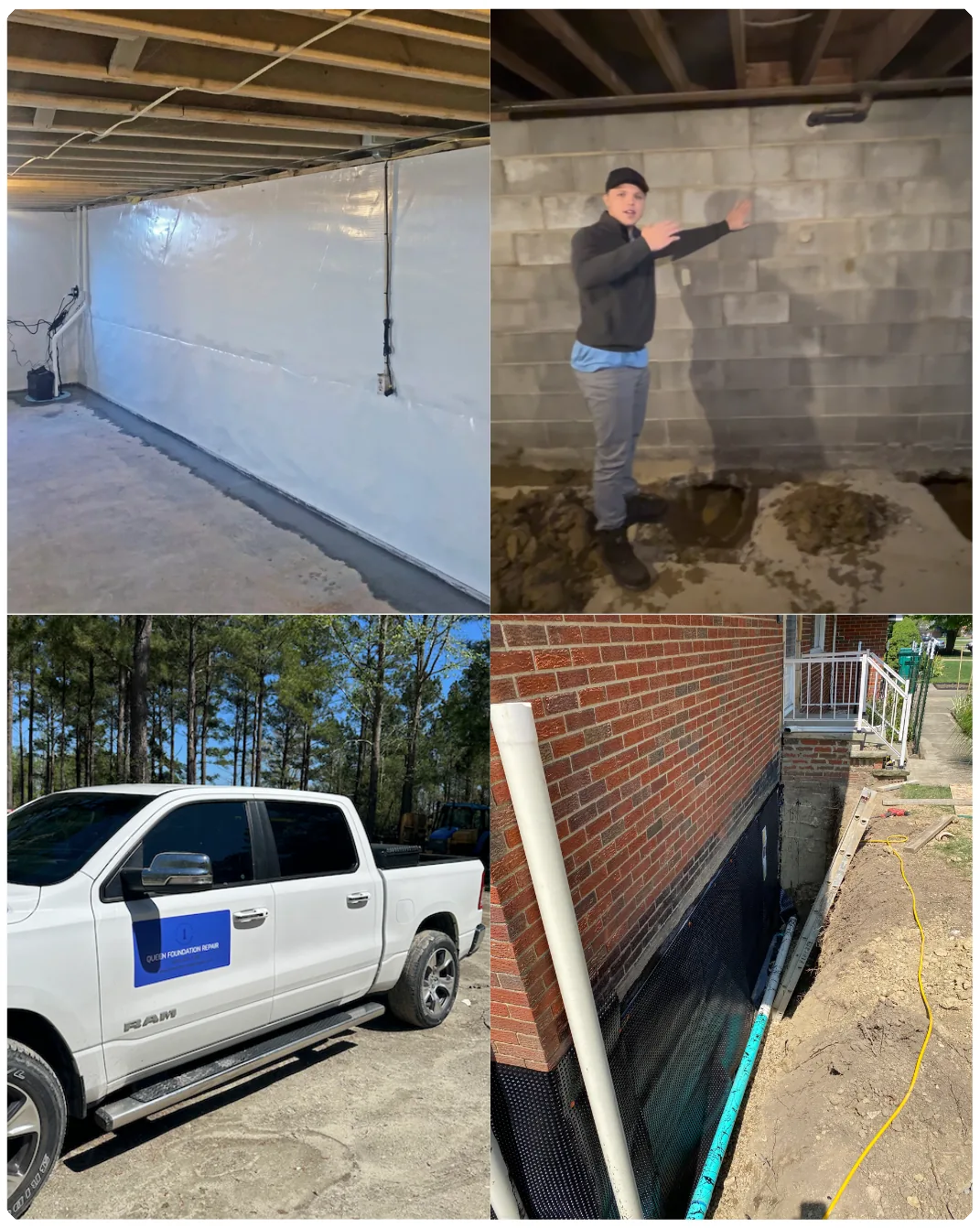
What You Get
We answer fast and get out to the house quickly, so you're not sitting for weeks just to find out what's wrong and what it'll cost.
No charge to have us come out, find what's going on, and lay out what the fix takes. You know where you stand before spending a dollar.
Licensed, with full liability and workers' comp coverage, so the work is done to code and your property is protected if anything goes sideways.
The repair comes with a written warranty that transfers to the next owner, so it protects your home's value if you ever sell.
A clear, written price upfront before anything starts, no vague ballpark and no surprise add-ons once the work is underway.
Erie houses mostly share the same build: stone and block foundations under frames that went up before the war. We work on them every week, from Marvintown to East Bayfront, so the problems are familiar and the diagnosis is fast.
Four steps from first call to filed warranty, each one on paper.
Local Knowledge
Between Academy and Perry Square the winter questions repeat every year: how bad, how much, who pays. Eighteen answers below, written the way we’d say them across the hood of the truck.
Signs & Severity
Because the water arrived months earlier and has been waiting in the yard as snow. Erie stacks up around a hundred inches of it in a normal winter, and when a warm spell comes, that whole reserve turns to water within days. Summer rain gets absorbed one storm at a time. The melt hands the ground an entire season of precipitation at once, and clay that drains slowly passes the extra along to the nearest basement. That is why basements here have their worst weeks at the end of winter while July leaves them alone. It is also why systems in this town get designed around the melt: pits and pumps sized for the release, drainage that catches the water on its way downhill, and discharge lines placed so they cannot freeze shut when they are needed most. Build for the melt, and the rest of the year takes care of itself.
A little dampness once a year, drying on its own, is an old wall doing what old walls do, and it is worth watching rather than spending on. It becomes serious with volume and repetition: puddles instead of damp patches, water after ordinary rain, or seepage that shows up alongside a horizontal crack or a lean in the wall. Those mean the ground is pressing the block harder than it can handle. The free inspection reads which stage your basement is at, using a moisture meter instead of a guess.
The moving ones. A house from the twenties carries plenty of old, stable cracks: hairlines that set generations ago, mortar checks, old plaster cracks upstairs. Those can be left alone. Attention goes to cracks that leak, widen past a quarter inch, step through the block joints, or run horizontally, and to fresh cracking upstairs, which means current movement. A cheap trick that works: photograph the suspects next to a coin, and check again in a few months. A crack that changed between photos has answered the question, and it points to foundation crack repair.
Repairs & Methods
The one matched to your wall, but the shortlist here is consistent. Clay holds water against foundations, so interior perimeter drainage with a sump pump suits most block basements: it relieves what the clay delivers, in every season, without excavation. Exterior sealing earns its higher cost on walls that are deteriorating or already being dug up. Injection handles a single leaking crack in poured concrete. The approach that consistently fails here is paint-on coating, because paint cannot stop water under pressure. Move the water away instead of holding it back.
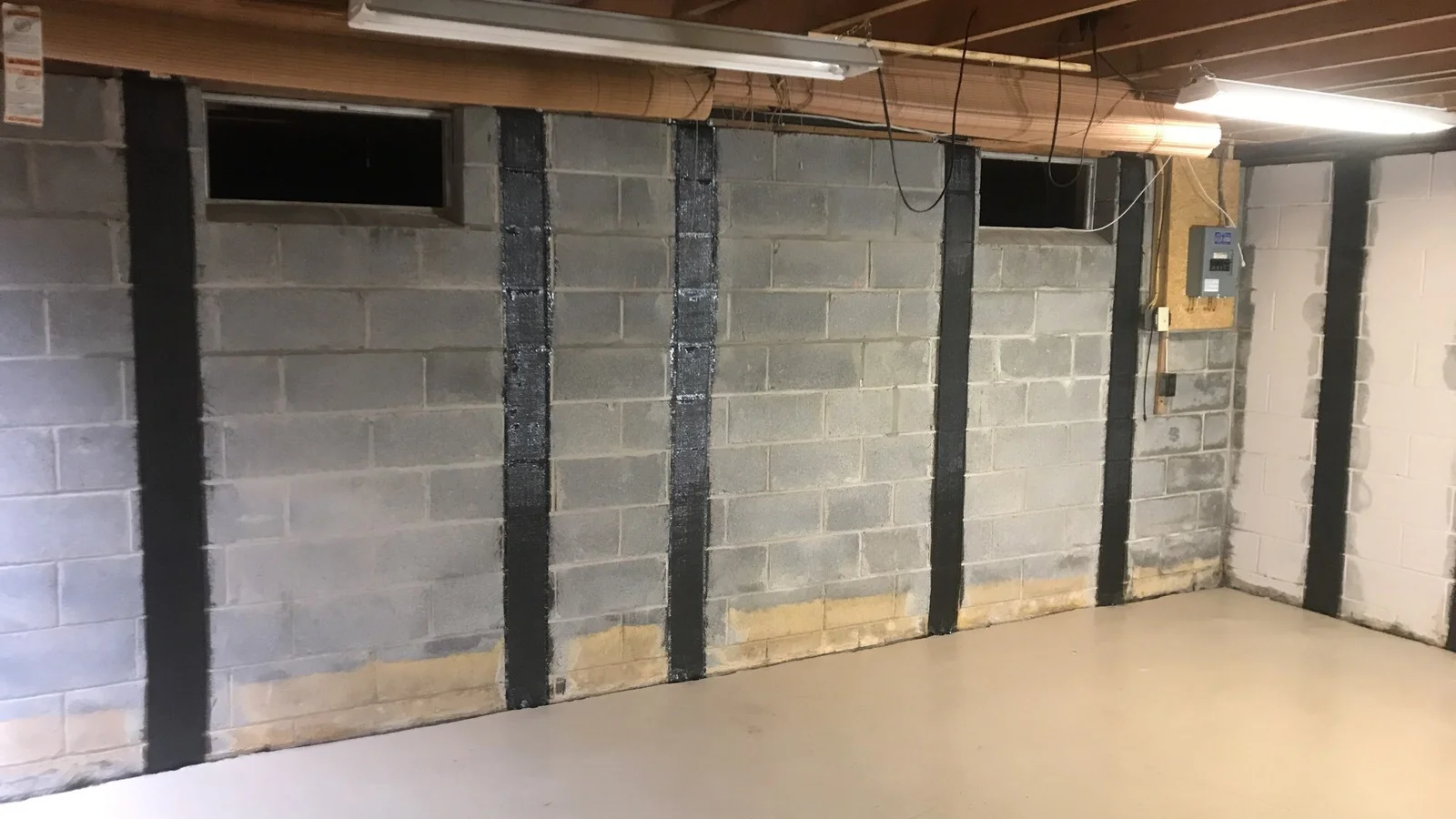
First take the pressure off, then reinforce. The pressure comes from saturated ground, so real repairs pair the reinforcement with water relief on the outside of that wall, through drainage, downspouts, and grading. The hardware scales with the movement: carbon fiber straps early, steel bracing or earth anchors further along, and a rebuilt section when block has sheared. Under an inch of bow, caught soon, this is routine one-day work. The free inspection measures the wall, photographs the baseline, and prices the options in writing.
Yes, and honestly it is a fine time of year for it. Interior drainage, sump pits, wall reinforcement, and crack injection all happen indoors, where the weather has no vote, and the winter schedule often moves faster. Only excavation waits for workable ground, because the frost goes deep here. Plenty of Erie systems have gone in during the cold months and were ready and running when the melt arrived, which is the best timing there is: the fix in place before the flood, instead of after it.
Basement & Water
Bigger than the label suggests, and sized from measured water rather than square footage. The mistake that floods basements here is buying a pump for average rainfall when the real test is the melt, when weeks of snow release through slow clay all at once. We measure how fast water actually arrives at the pit, then size the pump, the pit depth, and the discharge line to that number with margin to spare. A battery backup goes with it, because the weather that makes the most water is the same weather that takes the power out. A pump one size too small is the same as no pump at all during the week that matters most, and a finished basement is what rides on the difference.
More than most people expect, because melting snow follows the same routes rain does. A downspout that dumps roof melt at the corner concentrates the thaw exactly where it does damage, and soil that slopes toward the house collects everything draining downhill. Extending downspouts, regrading the first few feet, and clearing gutters before the snow flies all shrink what reaches the foundation, before any buried drainage enters the conversation. It is the cheapest fix on the list, which is why it is always step one, and we check it before quoting anything larger.
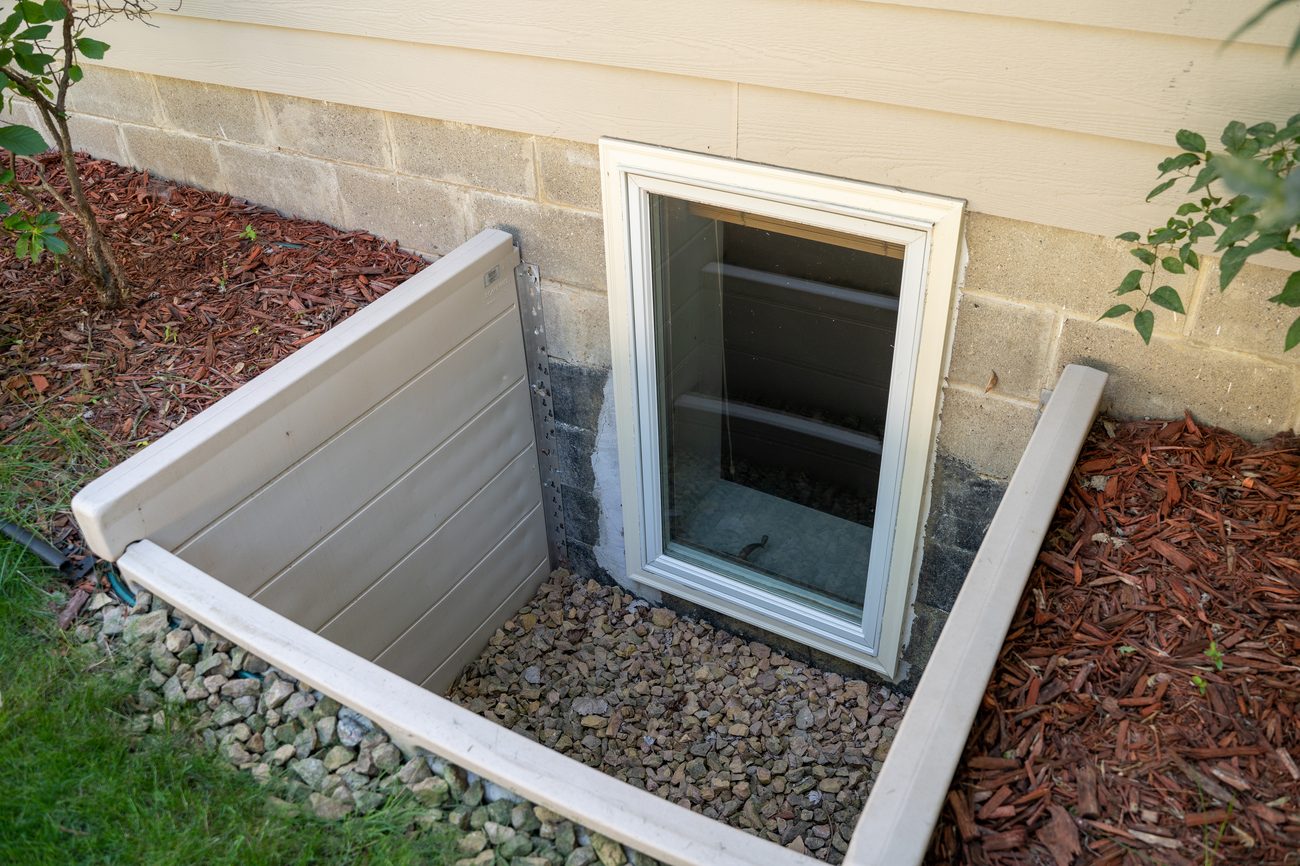
The outside chores, absolutely: gutters cleaned, downspouts extended, grade corrected, window wells cleared and covered. That list costs a weekend, runs ahead of every professional fix, and settles the mild cases on its own. Sealing a single dry hairline crack is fair game too. Where the do-it-yourself list stops working is water under pressure: seepage through the wall, moisture rising through the floor, or a crack that reopens through fresh sealant. Do the cheap half first, and if water still arrives, the remaining half needs real equipment and a warranty behind it.
Cost & Insurance
Honest ranges first: a few hundred dollars to seal one crack, somewhere between $3,000 and $10,000 nationally for interior perimeter drainage with a sump pump depending on wall footage, and roughly $10,000 upward for exterior excavation and membrane work, which is reserved for walls that require it. The local pattern worth knowing: a meaningful share of Erie’s wet basements shrink down to drainage corrections and correctly sized pumps, the modest end of that sheet, once somebody actually traces where the water comes from. No number quoted over the phone means much. The one that counts follows the free inspection, itemized in writing, with the smaller options listed first whenever they are real options. The system should fit the wall, not the sales month, and a quote written before anyone has traced your water is not worth keeping.
The span is wide because the phrase covers everything from an afternoon of crack injection, a few hundred dollars, to underpinning a settled corner with steel piers, which commonly runs $5,000 to $15,000 nationally and more for multi-corner work. Wall reinforcement and partial rebuilds fill the middle, in the low thousands. Before assuming the worst, two things: most alarming-looking symptoms in older houses measure out as old, finished settlement that needs zero dollars, and drainage corrections often shrink whatever structural scope remains. The estimate itemizes the piers, the depths, and the steps, so a second bid can be compared line against line. The free inspection comes first, always, and panic has never once improved a price. What does improve it: catching movement early and fixing the water that feeds it.
Almost never for snowmelt, and it is better to know that now than during a claim. Standard policies exclude meltwater, groundwater, and gradual seepage as maintenance issues, and true flood coverage is a separate policy. What is covered is the sudden indoor accident: burst pipes or a failed water heater, and frequently the damage left behind, even where the source repair is not. Two practical moves: ask your agent whether a sewer and drain backup endorsement is available, the inexpensive add-on that catches one of the nastier basement events, and keep a running file of dated photos and receipts. That file supports any future claim, feeds Pennsylvania’s disclosure form at sale, and costs nothing but minutes. Then put the money you hoped insurance would provide into prevention, which removes the water from the picture instead of paying you back after it has already arrived.
Process & Timeline
Indoor work does not check the forecast. Drainage systems, sump installations, wall reinforcement, and injection all proceed in any month, and winter scheduling often runs quicker than summer. Excavation is the exception, since it waits for ground a machine can open, and the frost here can reach several feet in a hard year. The order that serves people best: diagnose the problem whenever it appears, do the interior work promptly, and queue any outside digging for the thaw with its price already locked in writing.
Comfortably, yes. Everything happens in the basement and the yard, and life upstairs continues over it. Plan for a couple of days of honest noise, plastic sheeting where dust might wander, and a crew path through the closest door. Utility pauses are rare, brief, and announced ahead of time. Structural lifts, when they happen, creep upward in small fractions and are far quieter than the word suggests. Most people tell us afterward that the whole thing was shorter and quieter than they expected.
Pumping the water out is quick, a matter of hours with the right equipment. Drying takes longer, because block and concrete give up their moisture slowly. Expect days of fans and a dehumidifier, with a moisture meter making the call rather than appearances, because rushing carpet or drywall onto damp readings is how mold gets started. If flooding has become a yearly event, the better question is about drainage: a fix installed in the off months ends the cleanups, and it costs less than repeating them.
Trust, Warranty & Local
The warranty transfers with the property automatically, no fee and no paperwork relay, and at sale time here that matters more than most places. Pennsylvania law puts a property disclosure in front of every buyer before signing, with pointed questions about water intrusion, sumps, basements, and structural condition. Known problems must be stated. An unexplained water history on that form invites discounts, while a documented repair with a live transferable warranty turns the same line into a strength: the problem was found, professionally repaired, and remains guaranteed for the next owner. Agents in this market treat that folder as leverage. Keep every page of it filed with the deed, and when the buyer’s inspector turns his attention to the basement, the answers are already sitting in writing.
Often yes, as long as you buy with a written repair number in hand. Almost every older house in Erie has some water history, so the useful questions are narrow ones: what exactly happens, what would fixing it cost, and did the seller disclose it the way Pennsylvania law requires. Get the problem diagnosed before closing, and negotiate with the estimate. A modest drainage fix on a fairly priced house is a negotiating point. Real caution belongs to walls bowed past an inch, active settlement, and vague disclosure forms.
Add it up: more snow than nearly any city its size in the country, clay and shale ground that holds whatever melts, a housing stock where two of every five homes were built before 1939, and a water table that sits close in a lake town. Every thaw pushes a season’s worth of water through slow ground past old walls, and the basements sit at the bottom of it all. They were built before modern drainage existed, and adding drainage now simply finishes the job the original builders never had the chance to do.
Areas We Serve
We serve the whole Erie metro, the city and the townships alike, from the streets behind the Bayfront out past Frontier Park. Whether it is a wet basement, a leaning wall, a sunken slab, or drainage that stopped working, the inspection is free anywhere in the area, and the plan comes in writing.
Erie ZIP codes we cover:
Ready to Get Started?
No obligation, fast and easy.
We appreciate you reaching out.
One of our team members will be with you shortly.