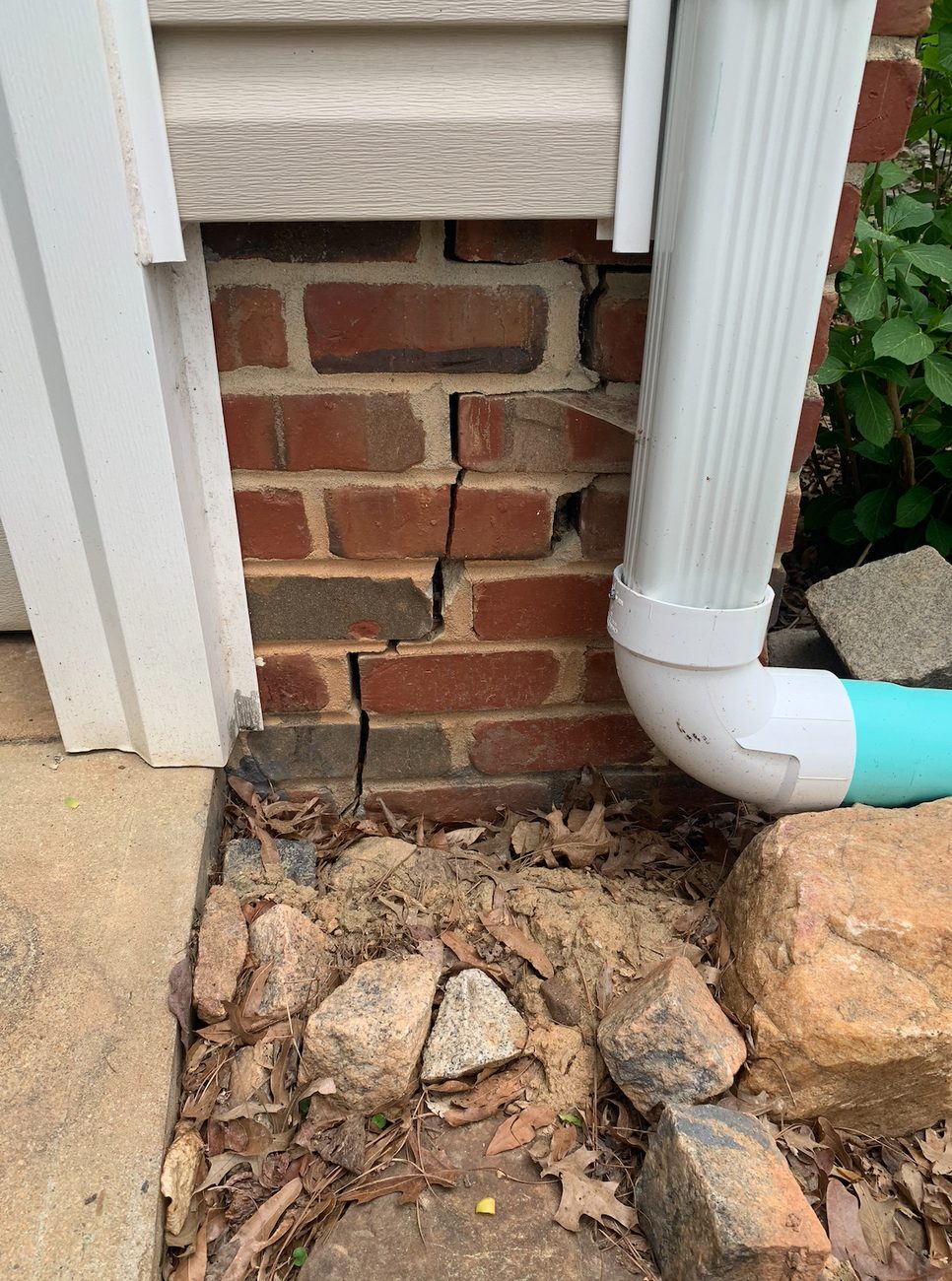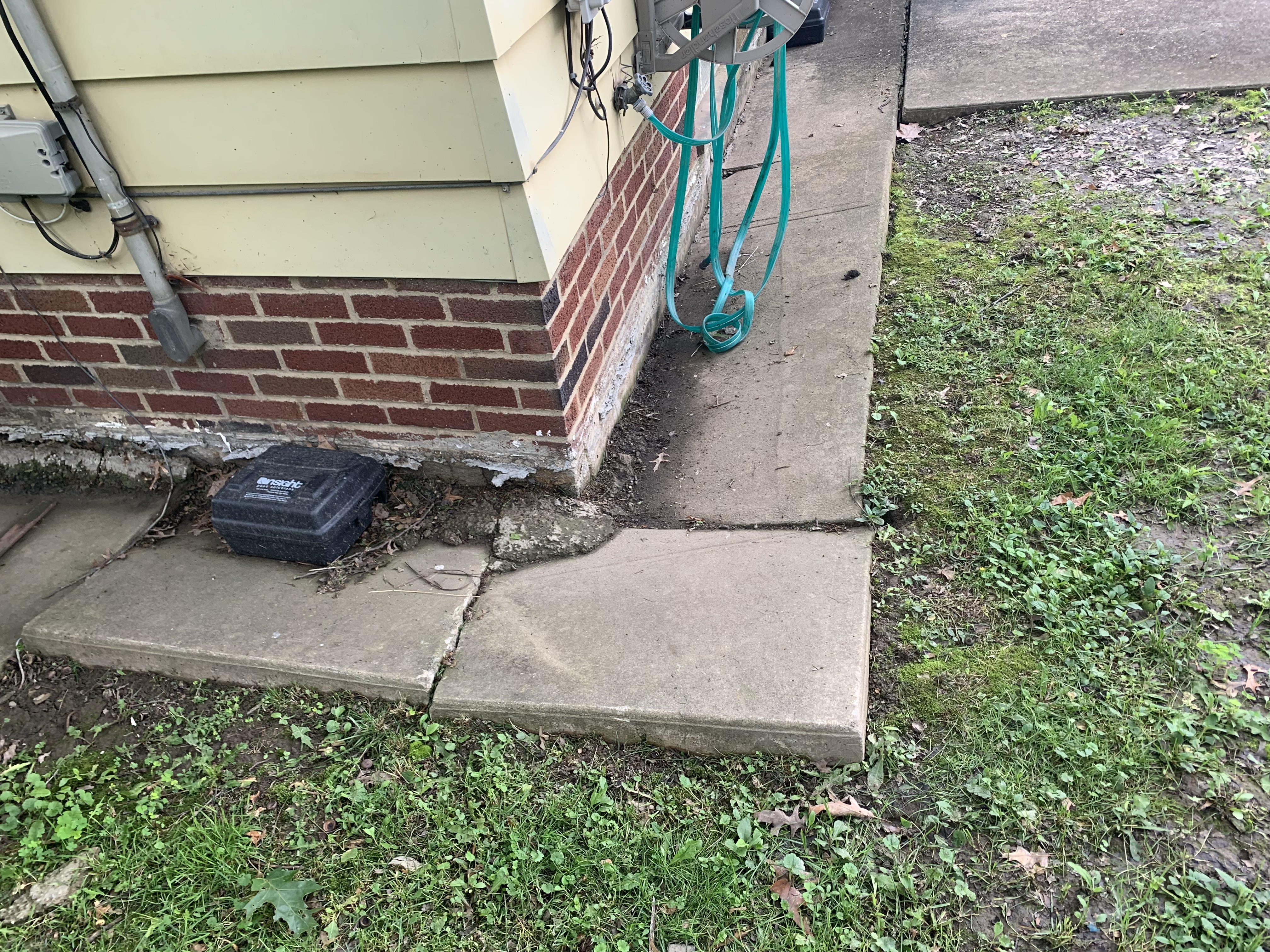
A crack running across the slab, a step where the driveway meets the house, doors that stopped latching. Foundation repair, french drain work and crawl space encapsulation on houses from Whiskey Creek out to Fort Myers Shores. The inspection costs nothing.
Get Your Free Inspection
We appreciate you reaching out.
One of our team members will be with you shortly.





WHAT WE SEE MOST
Fort Myers houses sit on a slab, with crawl spaces under the older raised stock. The ground is sand over limestone, and the river and canals keep water moving through it. When the sand goes, the concrete above it follows. This is what that looks like.
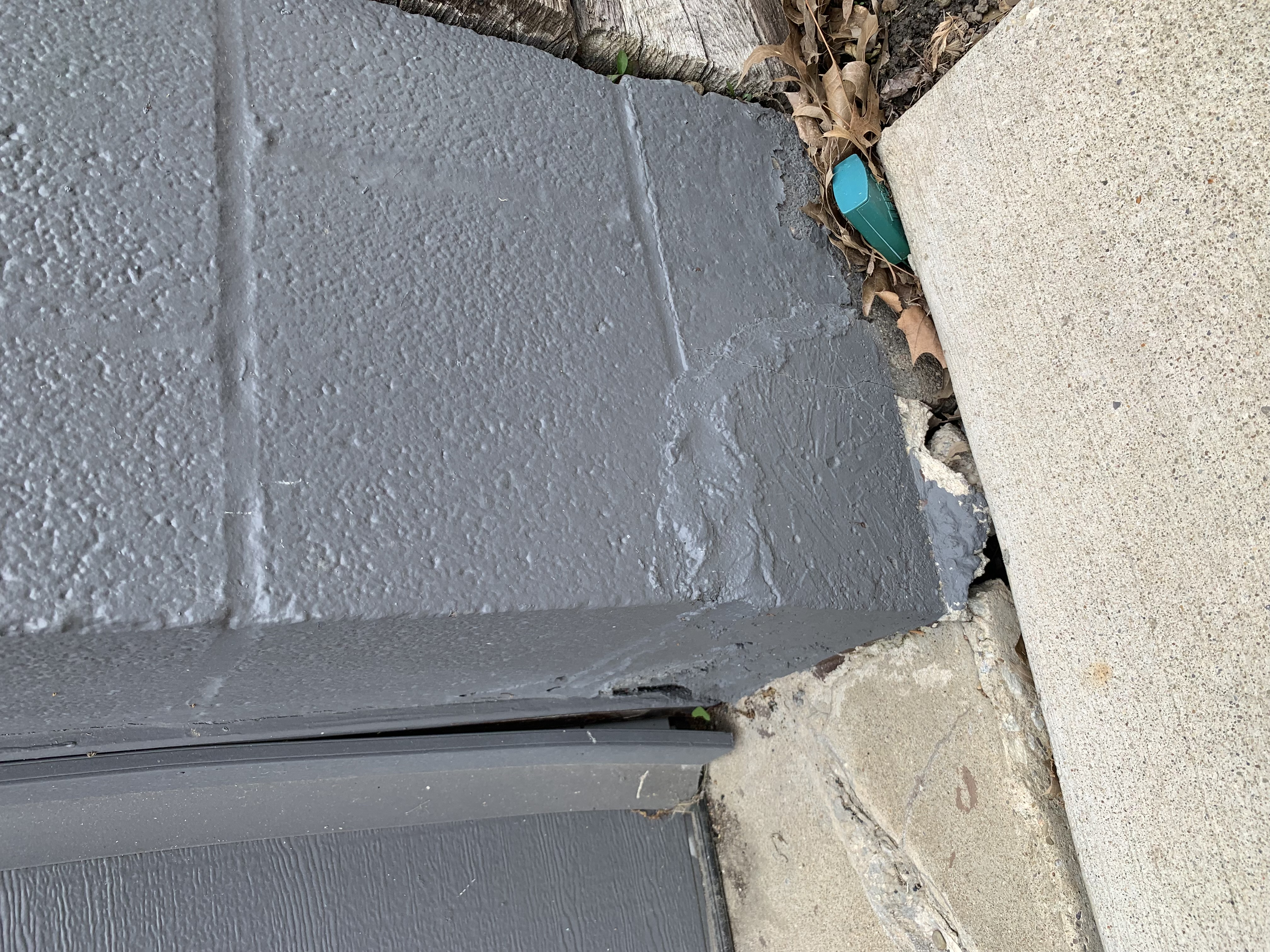
Stair-step cracks outside
They show at a corner or over a window, stepping down through the joints. That pattern means one part of the footing went lower than the rest.
Floors that slope
Set something round down and it always rolls the same way. On a slab that means the ground under one end stopped carrying it a while ago.
Doors that stick
It shut fine for years and now it catches at the top or drags. The opening is no longer square because the floor moved under it.
Water up through the slab
A damp patch on the floor that dries and returns in the same spot. The water table sits close to the surface and finds its way up.
A crawl space that stays damp
Under the older raised houses the ground is open sand and it never really dries. What comes off it goes up into the rooms as humidity.
Gaps at the ceiling line
A line opening where the wall meets the ceiling, widest at one end. The frame is being pulled out of shape by something moving below it.
Most of it is worth watching before it is worth fixing. What earns a call sooner is movement that carries on: a crack that opens again after it was filled, a slab further down than it was last winter, ground dipping behind a seawall. Around here the ground moves because water moved it, so the repair that lasts is the one that deals with the water as well as the concrete.
A slab that has cracked, ground that will not drain, a crawl space that never dries out, a seawall letting the yard through. Those are the calls across Fort Myers. Tap any service to see what the work involves and when it is honestly not what you need.
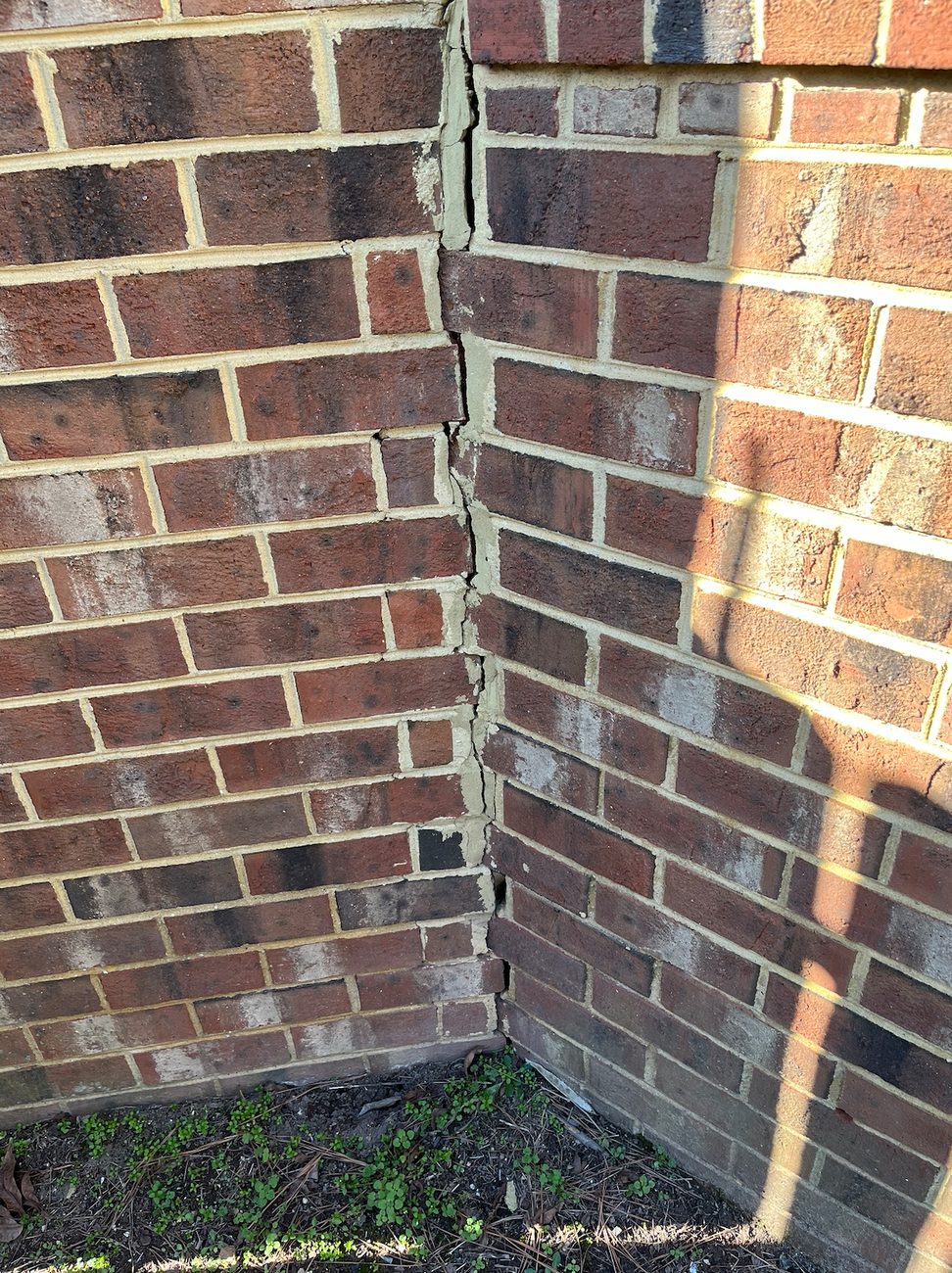
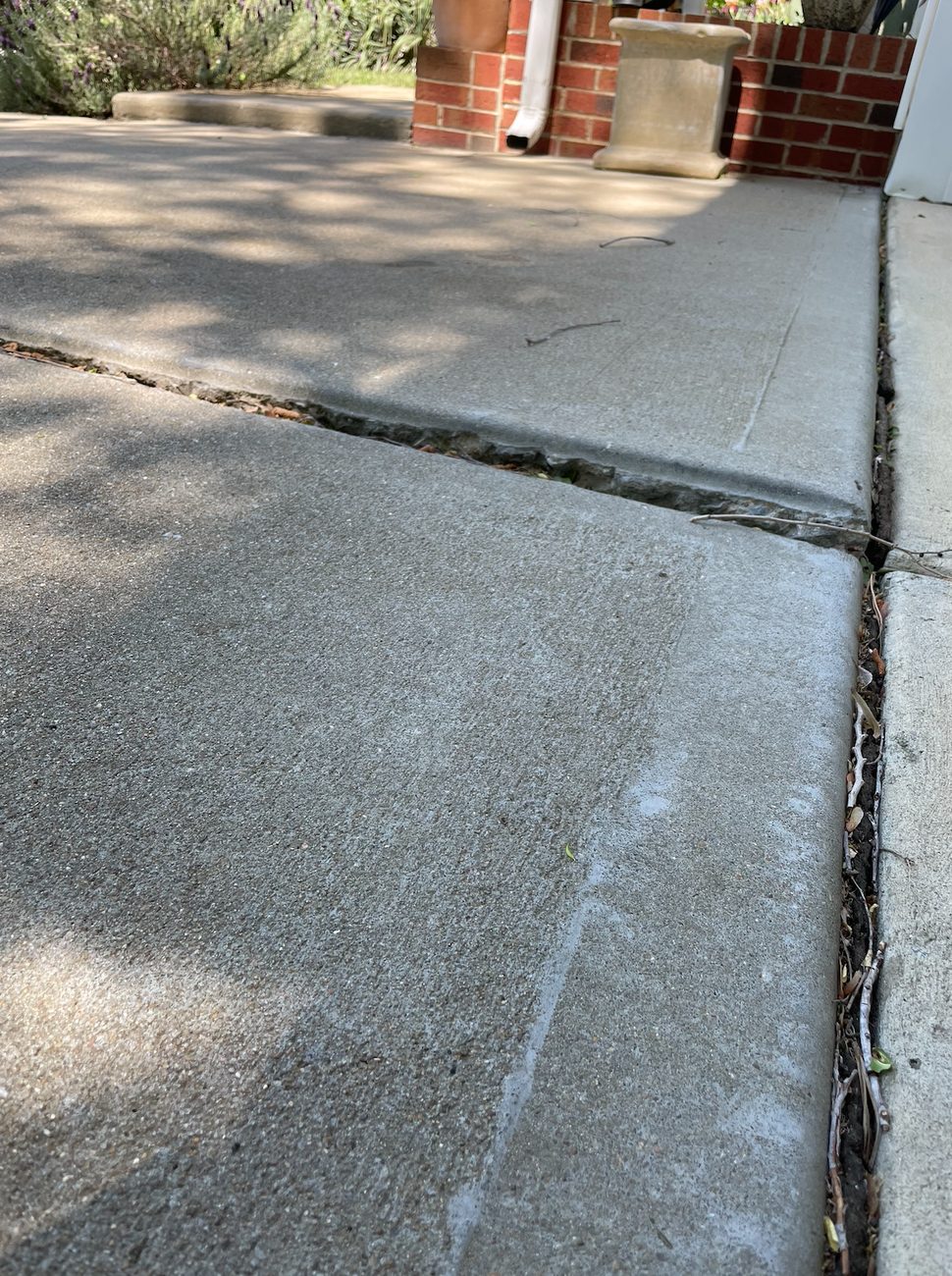
Stabilizing and lifting slabs that have settled, taking sloping floors and cracked stucco back to level on ground that will hold.
Learn moreA crack you can follow across the slab, floors that run downhill toward one wall, stucco splitting where it turns a corner. On a slab house the concrete did not shrink. The ground beneath one part of it went somewhere, and the slab came down into the space that was left.
What we do about it depends how far it has gone. Where a section has settled, underpinning is the answer: steel piers driven down through the sand until they reach something that will carry weight, then the house moved onto them. Where the slab has voids underneath but has not broken up, grout goes in underneath and lifts it back, which is the usual answer to slab settlement around McGregor. The Whiskey Creek houses from the seventies usually want piers.
Neither one dries the ground out. If a downspout, a leaking service line or the grade is still feeding water under that corner, the same thing happens again a few years on. We look at where the water goes before we quote the repair, because fixing the slab without fixing that is buying time rather than buying a repair.
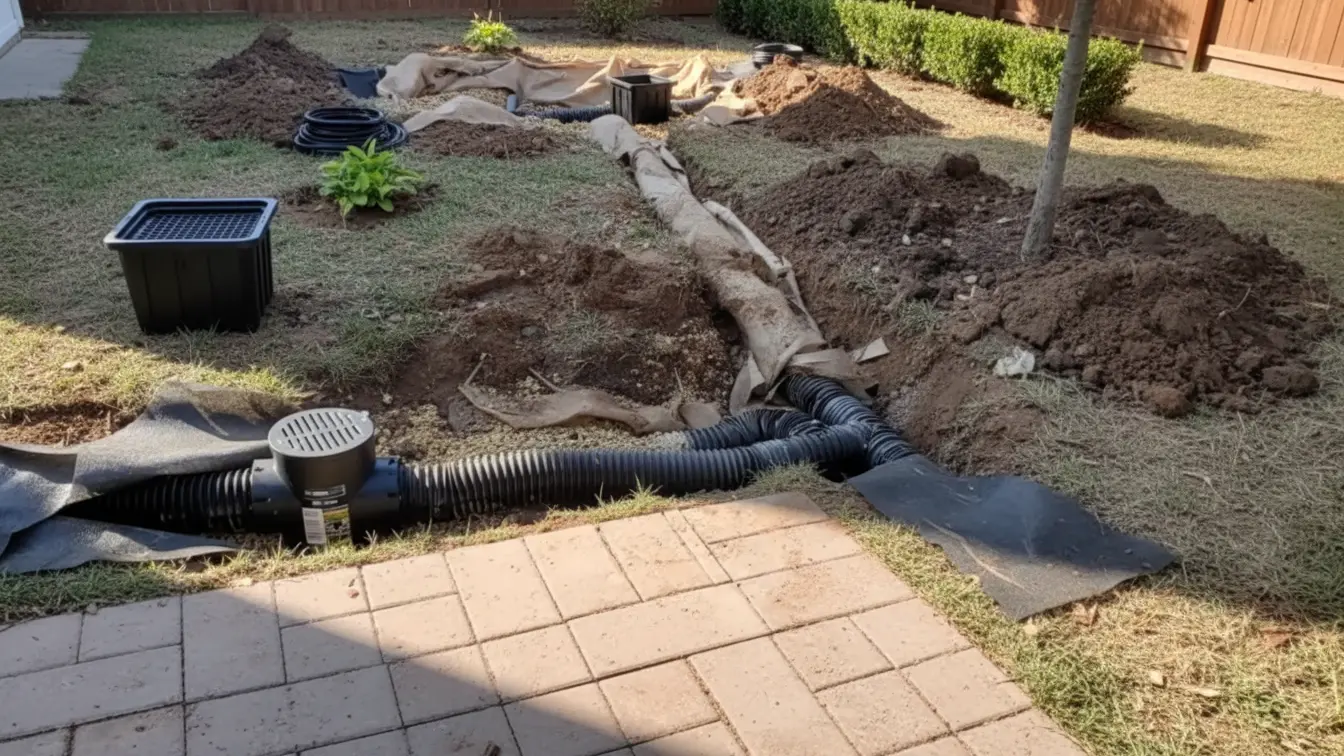
Cutting a drain line that catches water below ground and carries it off before it works the sand out from under your slab.
Learn moreA strip of lawn still soft three days after rain, water standing against the wall in the same place every storm, a fan of sand across the driveway once it dries. On the flat Whiskey Creek lots and a high water table, rain here has nowhere to be, so it sits. While it sits it is quietly moving material out from under the edge of the slab.
A drain gives it a route out. We open a trench above wherever the water keeps turning up, lay filter fabric so sand cannot choke the pipe, then perforated pipe on a steady fall packed in washed stone. Water reaches the stone, drops into the pipe and leaves. In sand the depth matters more than the length, because the pipe has to sit under the level the water actually travels at.
Where it lets go decides whether it works at all. Ending a line in ground that is already saturated achieves nothing. This handles groundwater and surface water, not a crawl space damp from humid air, and on some lots regrading is the cheaper answer. We will tell you when that is the case. Around Fort Myers Shores it more often is.
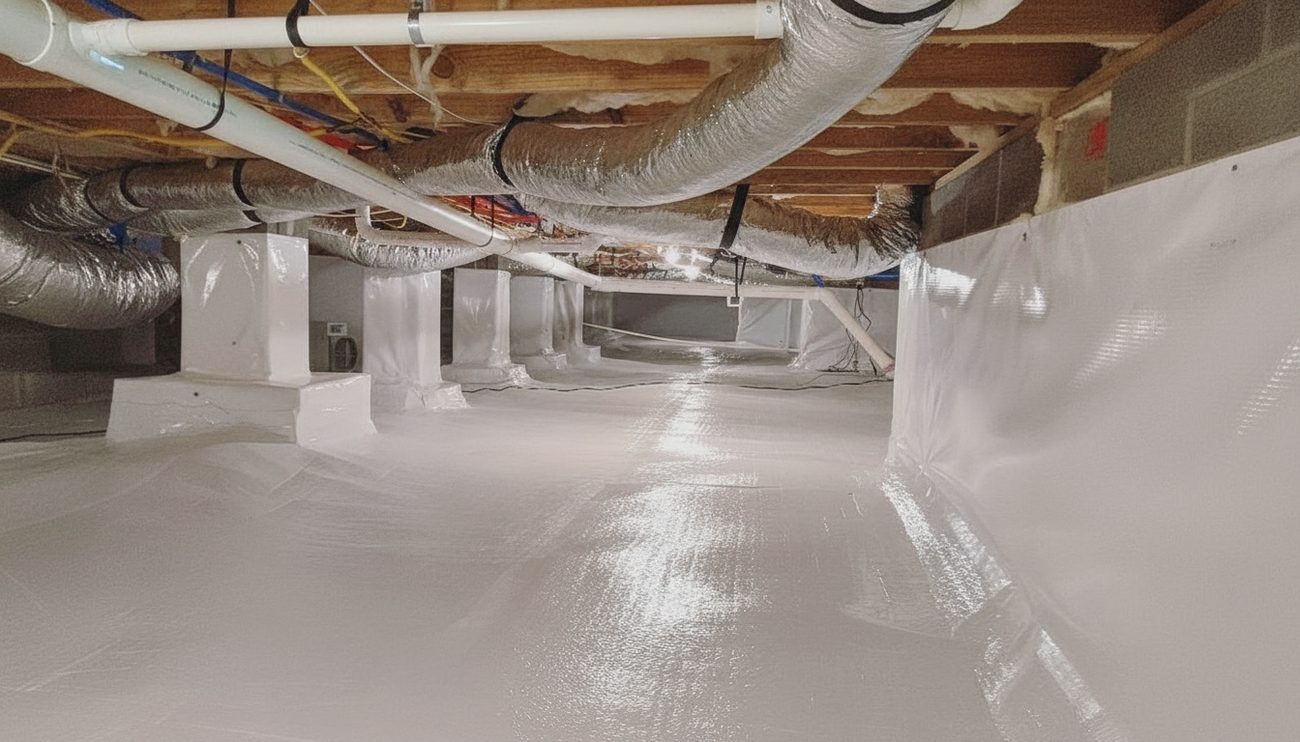
Sealing the open ground under a raised house so the damp stops rising into the rooms above and the space stays dry.
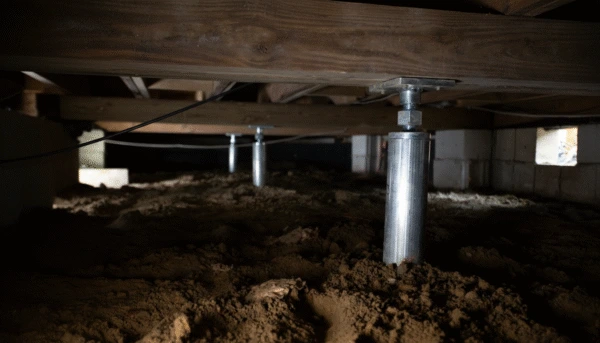
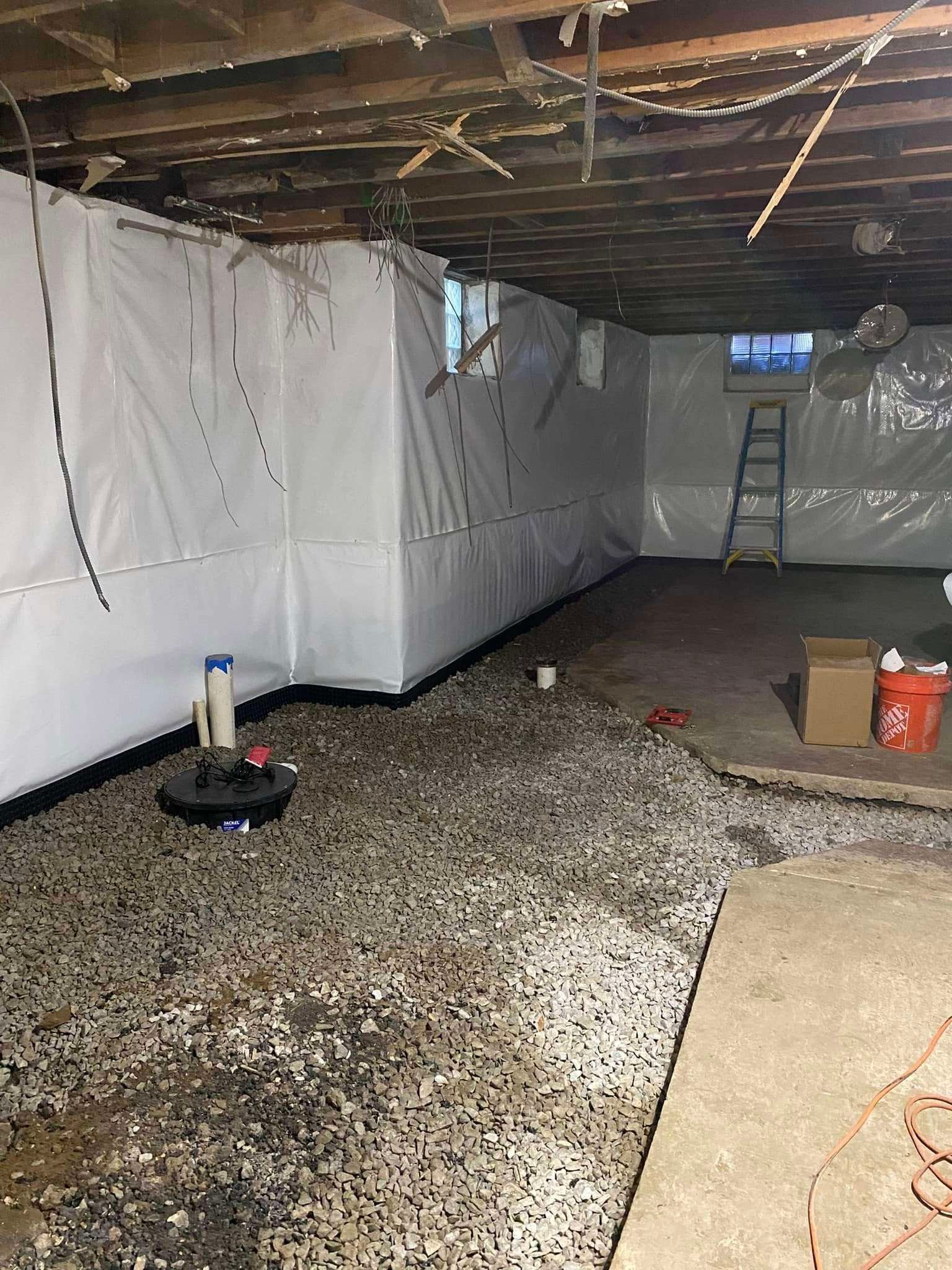
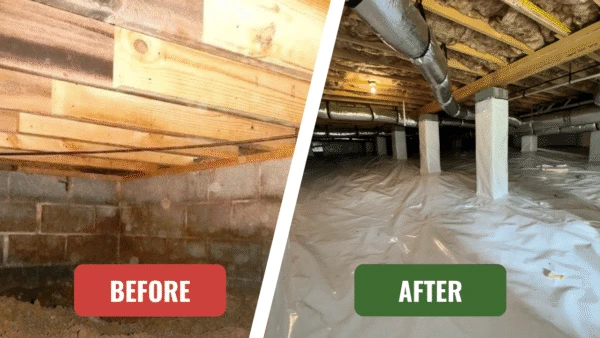
Learn moreA smell that meets you in the hall, humidity the air conditioning cannot bring down, insulation sagging wet between the joists. Under the older raised houses around McGregor the crawl space floor is open sand, and open ground gives off water without stopping. What comes off it has one direction to go.
Encapsulation shuts it off. A heavy liner goes across the whole floor, up the piers and up the walls, taped at the seams and sealed over the footing so nothing gets in behind it. Vents get closed, because the air outside here carries in more moisture than it takes away. Whiskey Creek crawl spaces are nearly all like this. A dehumidifier sized to the space holds it there and drains itself. Sized wrong it runs all day and never quite catches up, which is the most common thing we find already installed.
This is not structural. A floor that already sags needs supports as well as a liner. Where water genuinely stands under the house, drainage has to go in first, because sealing over standing water only puts a lid on it and the smell comes back.
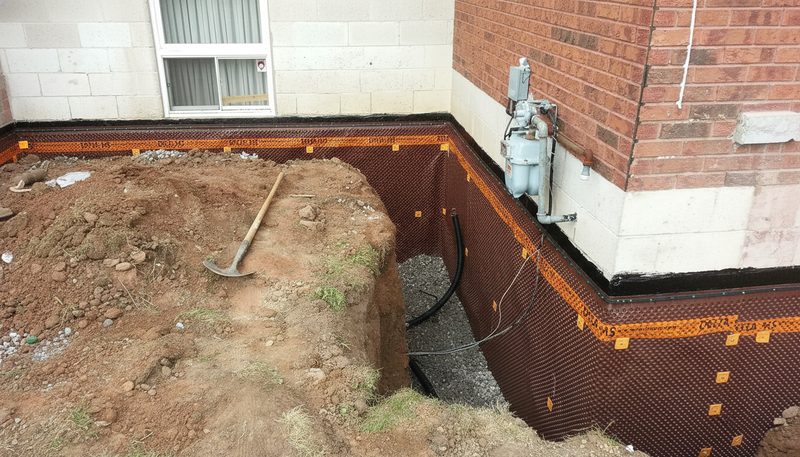
Keeping water off the foundation itself, with a membrane on the outside face and a drain at the footing to carry it away.
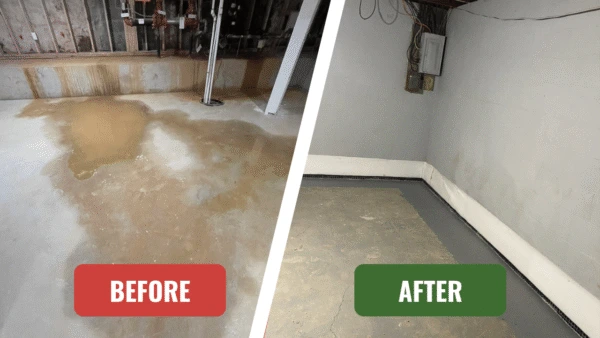
Learn moreA chalky white bloom along the bottom of the wall, a stain that comes back every wet season, damp showing at the slab edge inside. Water is sitting against the foundation instead of moving past it. With the water table as high as it is around McGregor, that is most of the year rather than a few weeks of it.
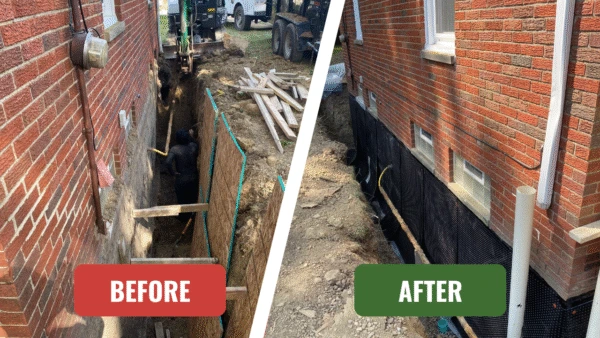
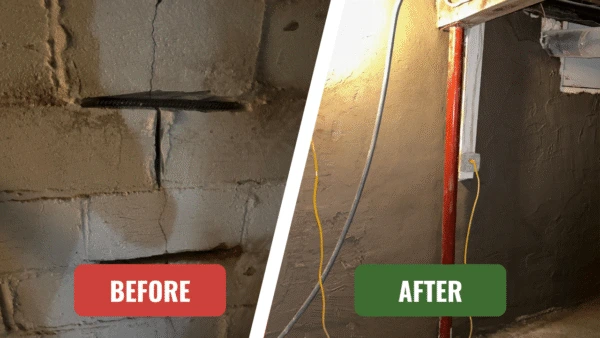
Waterproofing the foundation means working on the outside face of it. The wall gets excavated down to the footing, cleaned off, and coated, then a dimple-board membrane goes over the coating so any water that arrives runs down the sheet instead of soaking in. A perforated drain sits at the footing in washed stone and takes it away from the house entirely.
This is not the same job as a french drain in the yard, and it is not a fix for a slab that has already dropped. It keeps water off the foundation. Where the ground under the slab has already washed out, that gets dealt with first and this stops it happening again around Fort Myers Shores.
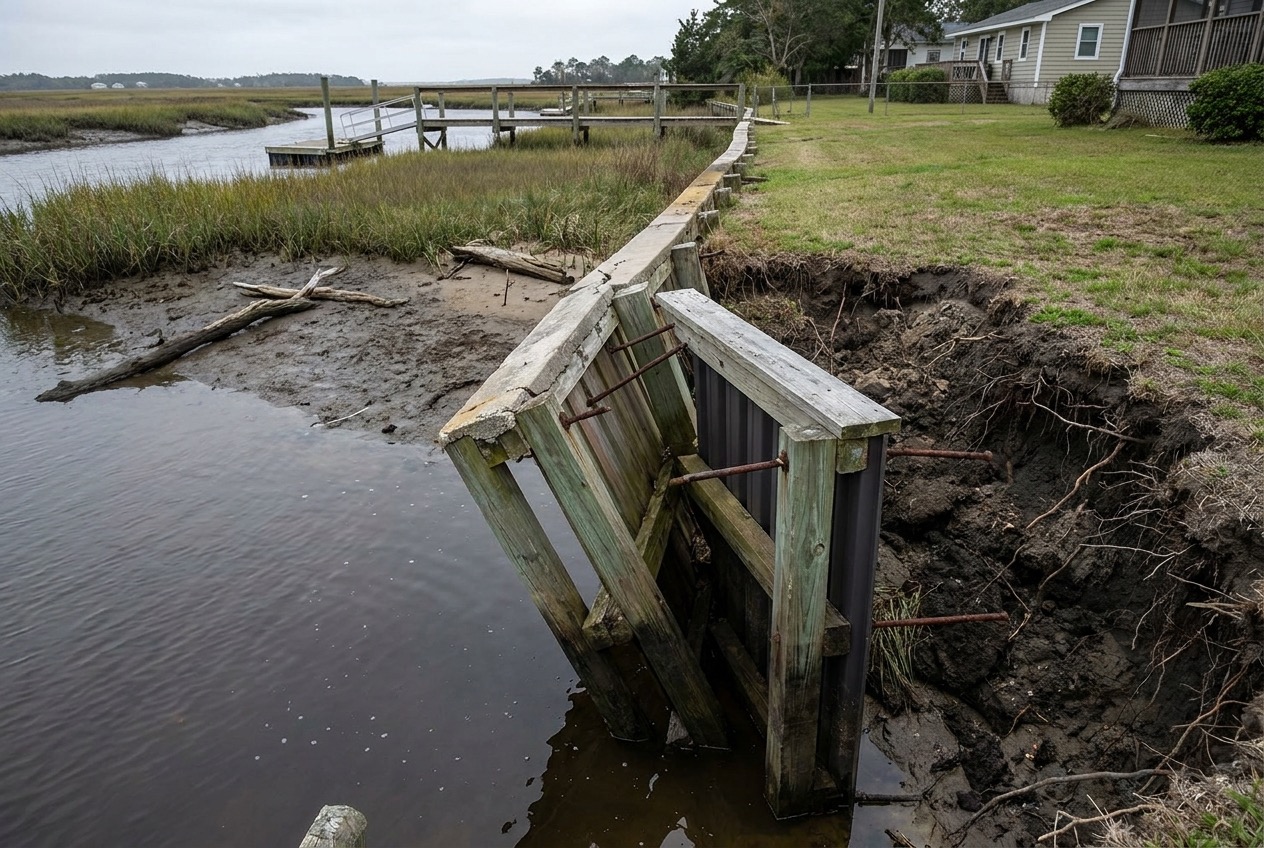
Stopping the ground behind a failing seawall washing out through it, before the yard and then the house start going with it.
Learn moreA dip in the grass a few feet back from the wall, a gap opening where the cap meets the panels, a wall starting to lean out. Off McGregor Boulevard and through the canal network this is the failure that costs the most, because a seawall is not only holding water back. It is holding your yard up.
The cause is usually not the concrete, it is what is passing through it. Once a joint opens, every tide and every heavy rain pulls sand out through the gap and drops it in the water where nobody watches it go. We seal the paths first, then inject material to fill the voids that already formed behind the wall, working along it until the ground stops taking any more.
Where the wall itself has moved, tiebacks anchor it back into solid ground behind. What grout cannot do is rescue a wall that has failed structurally, and we would rather say replacement than patch it and be back in two years. Catching a washout early is the difference between those two numbers, and on the Fort Myers Shores canals we see both.
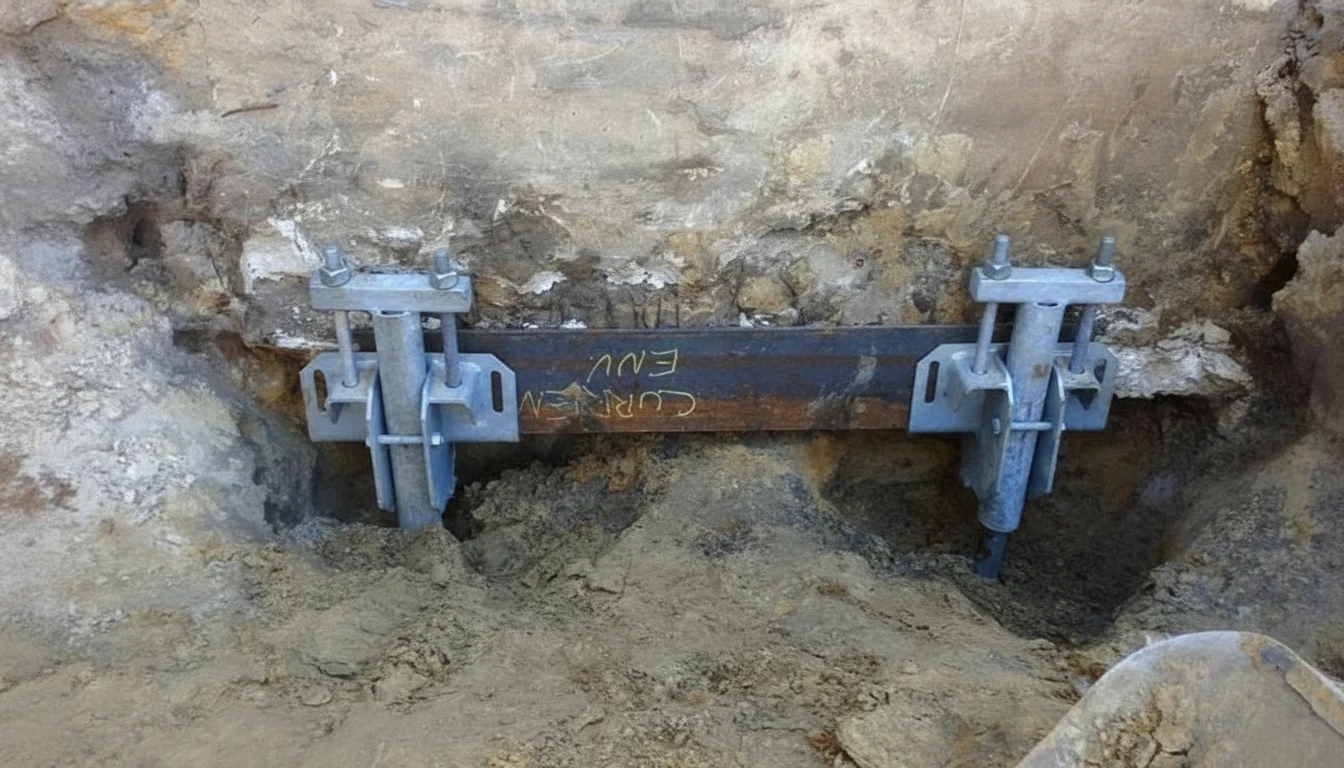
Steel piers turned down through the loose sand to a layer that carries weight, with the house then transferred onto them.
Learn moreCracks you have filled more than once that keep coming back, one corner that has carried on dropping while the rest has not shifted, doors on that side that never sit right again. A lot of low ground around Fort Myers Shores was filled before anything was built on it, and fill that was never properly compacted keeps settling for decades.
A helical pier is a steel shaft with wide plates near the bottom, turned into the ground under power rather than hammered. The useful part is the reading the machine gives while it turns: it measures the force the turning takes, and that number says how much weight the plates will hold. So the ground decides the depth, not a figure on a drawing.
Once it reaches a layer that holds, a bracket ties the footing to the shaft and that part of the house rests on steel instead of sand. Piers answer a house going down and nothing else. Around McGregor it is normal for one side to want twice the depth the other did.
Queen Foundation Repair handles the two halves of the same problem: ground that has shifted under a house, and the water that shifted it. We are a leading provider of foundation work across the Fort Myers area, covering foundation repair, french drain installation, crawl space encapsulation and seawall repair.
Most of what we get called to started small. A hairline in the slab that runs a little further each year, a floor that dips in one spot, concrete outside sitting lower than the step. Left alone those get dearer, because whatever is carrying the sand off keeps carrying it while you think about it.
So we look before we quote. Someone comes out, goes over the property inside and out, and tells you in plain words what is happening and what putting it right involves. The price is in writing before any work starts. If what you have is cosmetic, we will say so instead of selling you a repair you do not need.
The houses we are under most sit out toward Whiskey Creek and Fort Myers Shores, and most of them have been standing long enough to have moved once already. We work the houses, wherever they sit, and you can see everything Queen Foundation Repair does across Florida. Licensed and insured, the warranty moves with the house if you sell, and looking costs you nothing.
Get your free inspection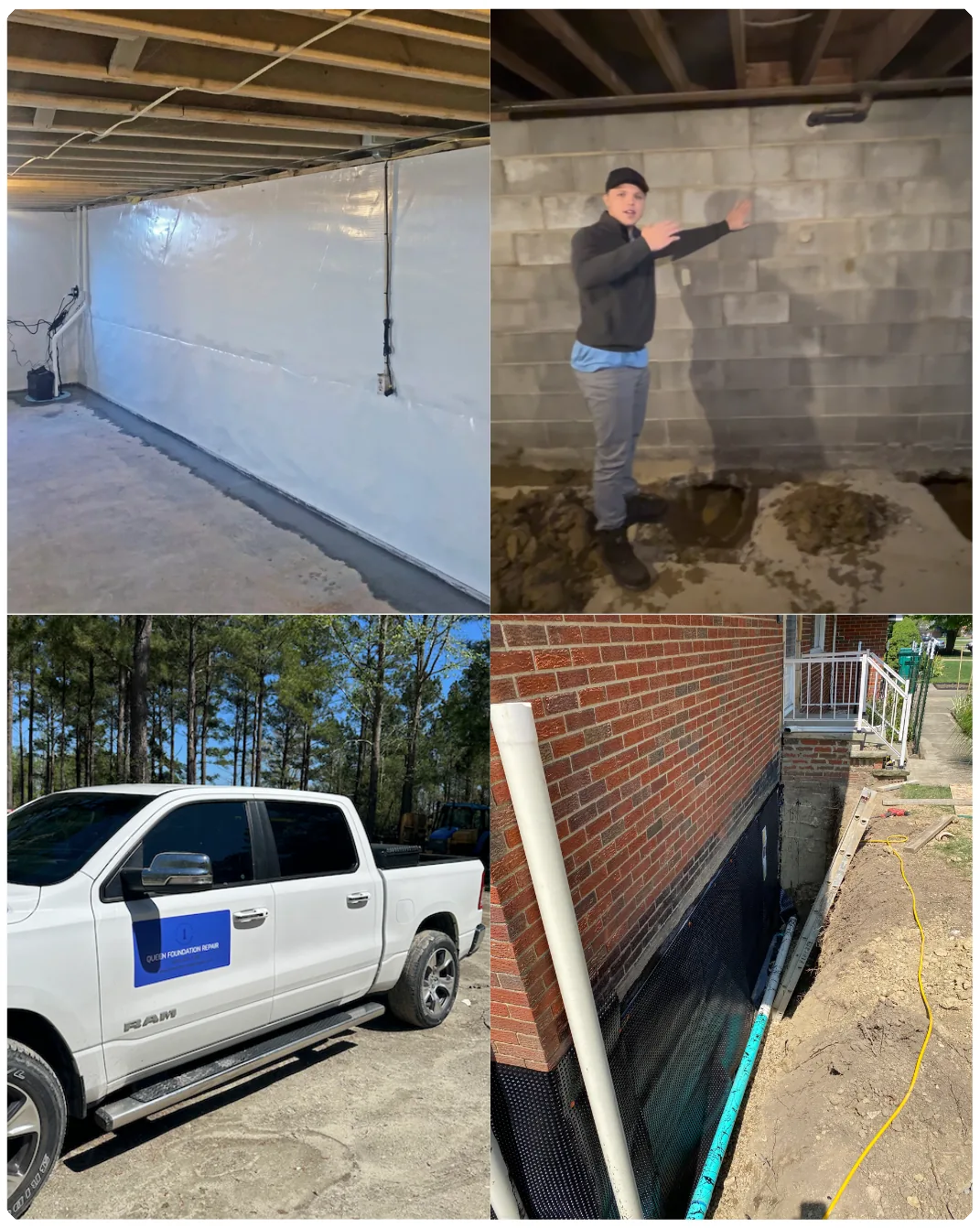
WHAT YOU GET
We pick up fast and get out to the property quickly, so you're not waiting weeks to learn what's wrong and what it costs.
No charge for us to come out, work out what's happening, and lay out what the fix involves. You know where you stand before spending anything.
Licensed, with full liability and workers' comp cover, so the work meets code and your property is protected if something goes wrong.
Every repair carries a written warranty that passes to the next owner, so it protects the value of the house if you sell.
A clear written price before anything starts. No vague ballpark, and nothing new appearing once a crew is already on site.
Most Fort Myers homes sit on a slab over sand that shifts when water runs through it. We are under these houses daily, from Whiskey Creek to McGregor.
COMMON QUESTIONS
These are the questions Fort Myers homeowners bring us. What a job costs turns on how far the ground has gone and what it takes to hold it. Whiskey Creek or Fort Myers Shores, we cover it.
What It Costs
Most Florida jobs land between $2,000 and $12,000. Sealing a crack from inside is the low end and often comes in under $1,000. Piers under a settled corner run a few thousand each, and how many depends on how much of the house has moved. A whole-house job can pass $25,000, though that is not the usual call. We measure how much of the house has actually moved before quoting, and the figure goes to you in writing before anything is booked.
Figure $3 to $8 per square foot with foam. One sunken driveway panel is a few hundred dollars. A full driveway more often lands between $1,500 and $4,000. Replacing the same concrete costs several times that, which is the whole argument for lifting it instead.
A typical Fort Myers crawl space runs $3,000 to $8,000, roughly $3 to $7 a square foot installed. A liner over dry ground with decent access sits at the bottom of that. Drainage, a sump or a dehumidifier moves it up, and access is the thing that surprises people most.
Cracks in a Slab
It depends what the crack is doing. Rigid epoxy injection knits a structural crack back together and is the right answer when the movement has stopped. Flexible urethane suits a crack that is wet or still shifting slightly, because it stays elastic instead of splitting alongside the repair. Surface patching shifting slightly, because it stays elastic instead of splitting alongside the repair. Surface patching is neither of those, and it is why so many cracks come back looking worse.
Some are. A thin line in poured concrete is usually the pour shrinking as it cured and can sit that way for decades. What is not normal is a crack that widens, one that steps down through stucco joints, or one that reopens after being filled.
Nearly always. The work happens outside or under the floor and crews clear out each evening. Where a slab section is being lifted you stay off that part while it sets, which is usually a matter of hours rather than days, and the rest of the house carries on as normal.
Sinkholes in Lee County
Pasco, Hernando and Hillsborough, north of Tampa. That is the belt. Lee County is not in it, but it is karst all the same, and a Lee County review put 23 communities at differing risk with Fort Myers Shores high because the bedrock there is shallow. Worth knowing, not worth panicking about.
Limestone under the whole state, and groundwater slightly acidic enough to dissolve it. That leaves voids underground. When the sand above one of them finally drops into it, the ground at the surface goes down with it, and that is the day somebody finally notices something is wrong.
Usually. Doors and windows going out of square, cracks widening quickly rather than slowly, a depression in the yard that refills and returns, or a slab dropping visibly inside months rather than years. Fast change is the signal, not the crack itself.
Drainage and French Drains
Between $10 and $25 per linear foot installed. Fort Myers sits toward the upper half because sand and a high water table mean the pipe has to go deeper to sit below the level the water actually travels at. A short run fixing one bad corner is a few hundred dollars.
Yes, on your own property. What you cannot do is discharge onto a neighbor's land or into somewhere it causes a problem for them, which is where disputes start. Work close to a canal or a seawall can need a permit because it touches state waters, and we pull those.
Roughly $2,000 to $5,000 here, depending on depth, what the trench has to route around, and where the water can be discharged to. Irrigation lines, tree roots and a driveway crossing all push it upward, and so does having nowhere obvious to send the water once you have collected it.
Lifting Concrete
When the slab itself is sound, yes, easily. Lifting costs a fraction of tearing out and repouring, it is done in hours instead of days, and you can drive on it the same afternoon. When the concrete is broken into pieces or crumbling, lifting only buys you a level version of a slab that still needs replacing.
It does nothing about why the slab sank. If the downspout that washed the sand out still empties at that corner, it comes down again. The injection holes stay faintly visible, and a badly cracked slab can crack further as it lifts.
Indoors, self-leveling compound over a sound slab is cheapest by a distance. Outdoors there is no cheap version worth having. Foam lifting is the economical answer outdoors once you account for what tearing out and repouring the same concrete would cost you.
Crawl Spaces and Seawalls
Not when the crawl space is actually driving something upstairs, like humidity you cannot shift or a smell in the hallway. Sealing the ground stops the moisture at source. It is a gimmick when it is sold for a space that is already dry and already covered, which does happen.
Not for the encapsulation itself. Insulation and some efficiency work can qualify under federal energy credits, and a dehumidifier does not. Check with whoever files your return rather than taking a contractor's word for it, and that includes ours. We quote the work, not the tax position.
Sealing joints and filling the voids behind a wall that is otherwise sound runs a few thousand dollars. Tiebacks to pull a leaning wall back cost more. Full replacement is the expensive end at roughly $500 to $1,200 per linear foot, which is why catching a washout early matters so much on the canals.
WHERE WE WORK
We serve the entire Fort Myers metro, not just the city limits, working the older slab houses along the river the same as the newer builds out east and down through Lee County. Same sand, same canal water moving through it. Wherever you sit in that, looking costs you nothing.
ZIP CODES WE COVER
Ready to Get Started?
No obligation, fast and easy.
We appreciate you reaching out.
One of our team members will be with you shortly.