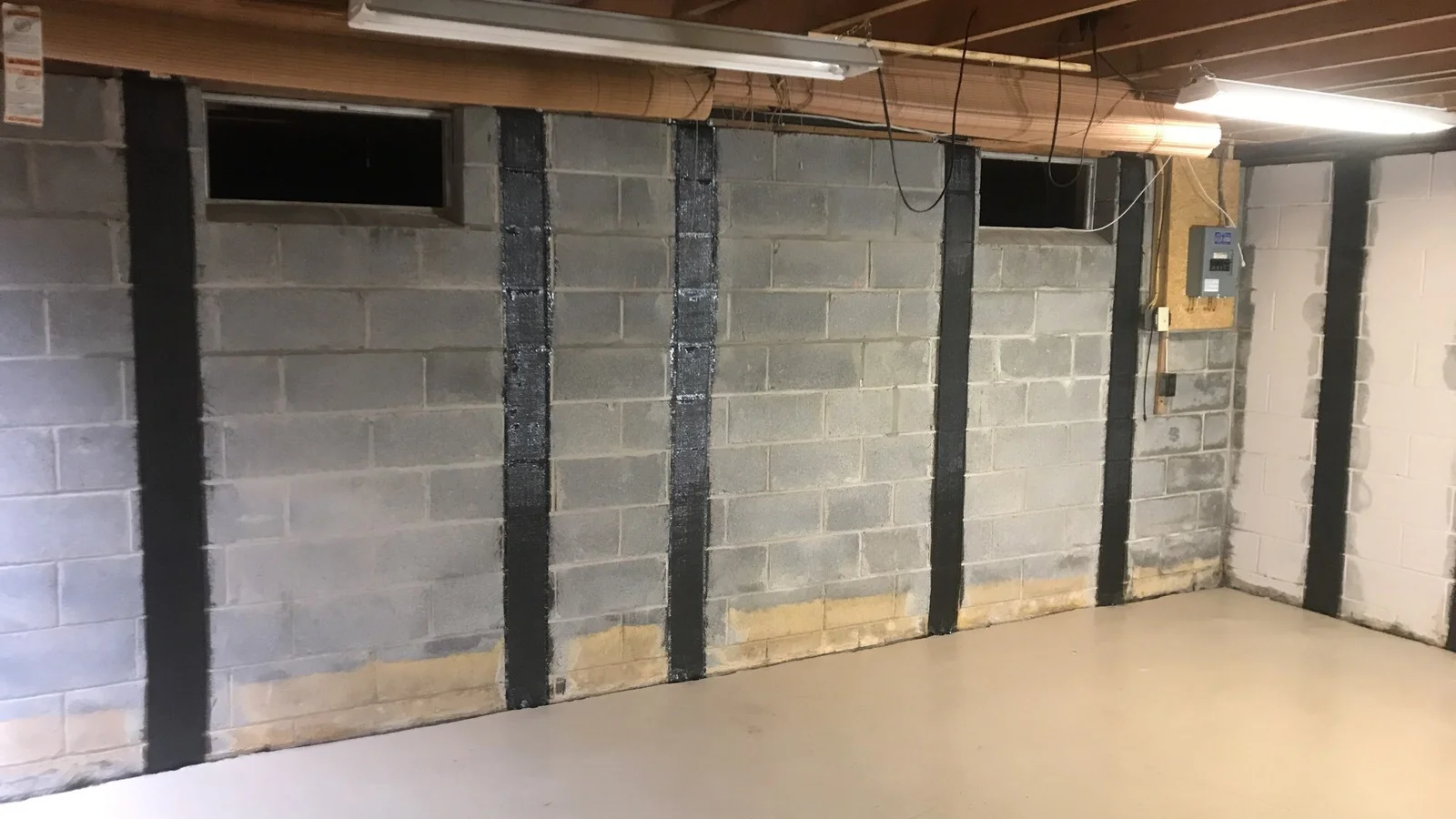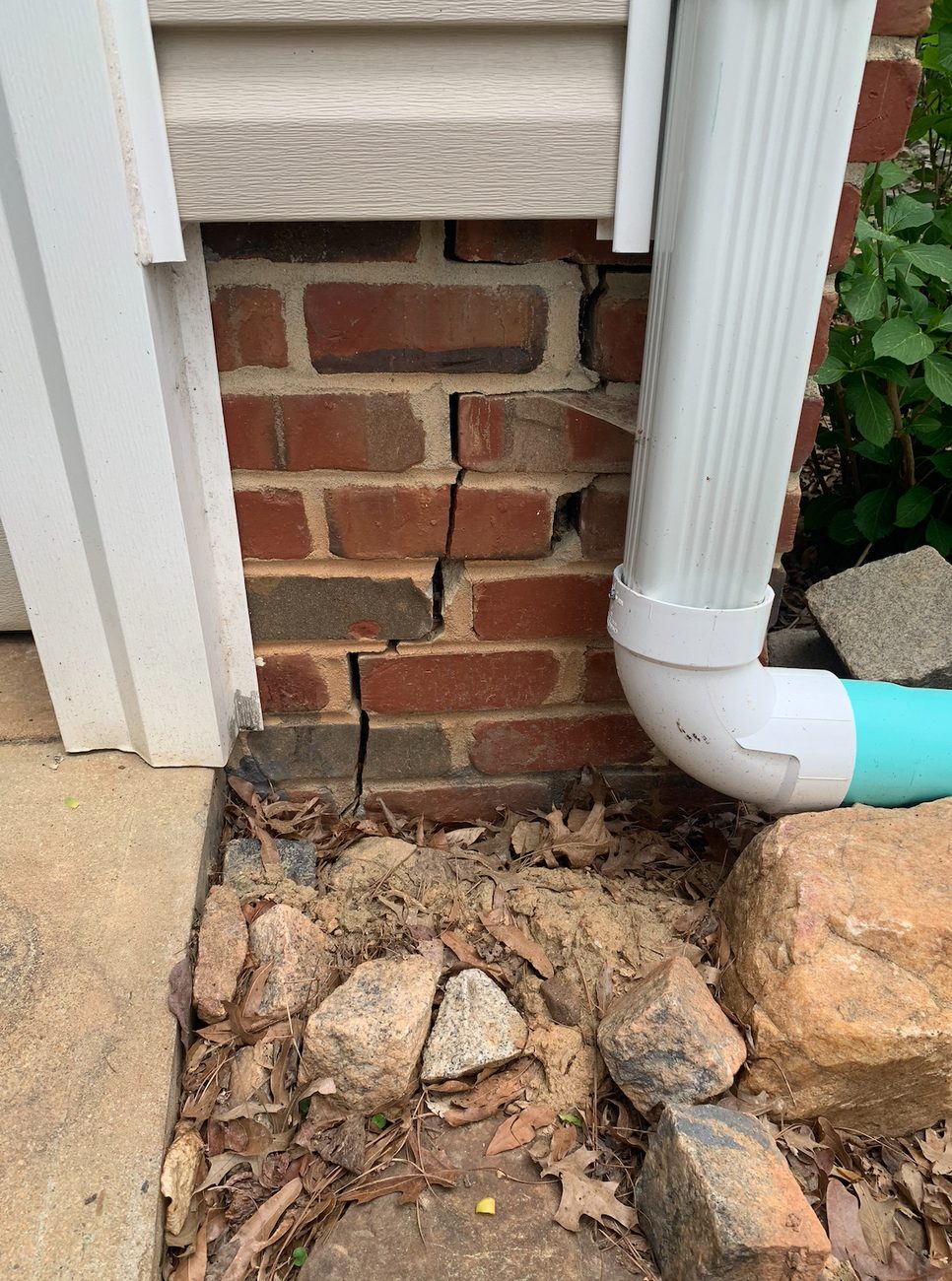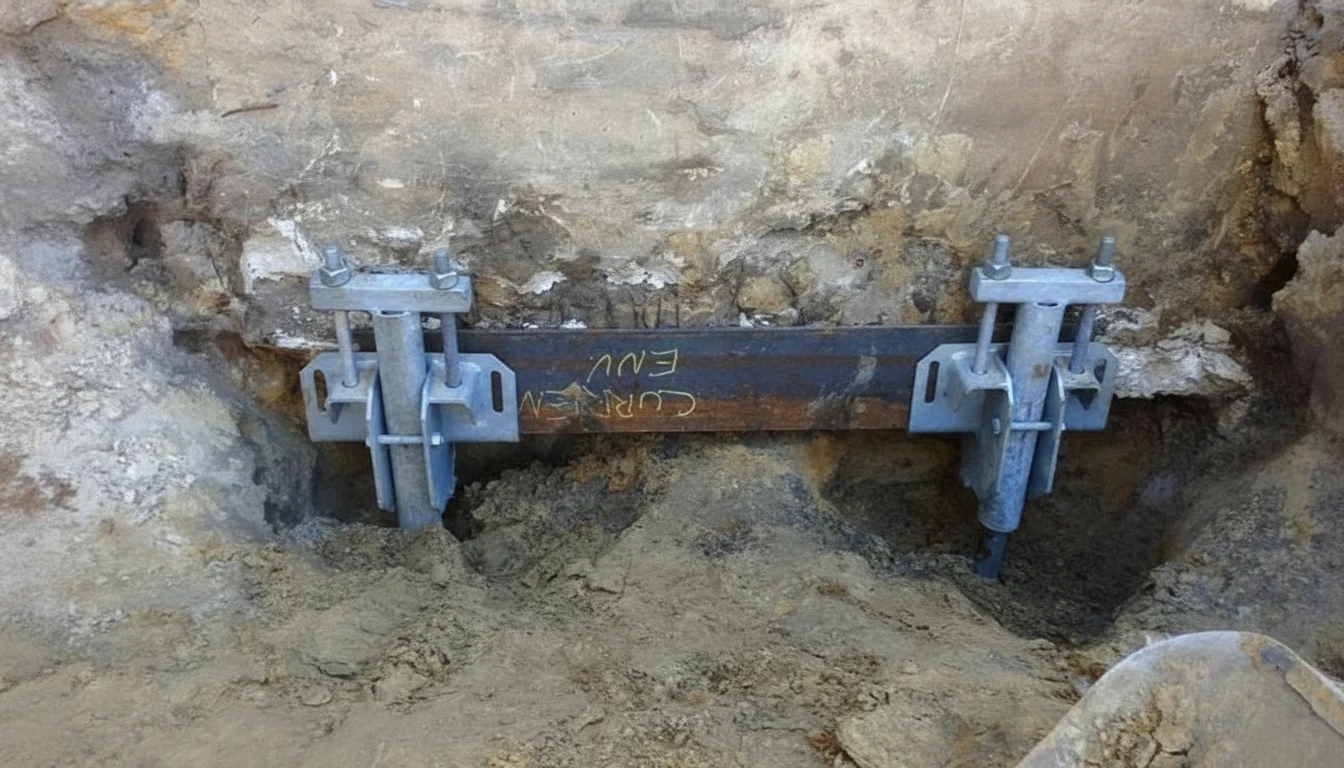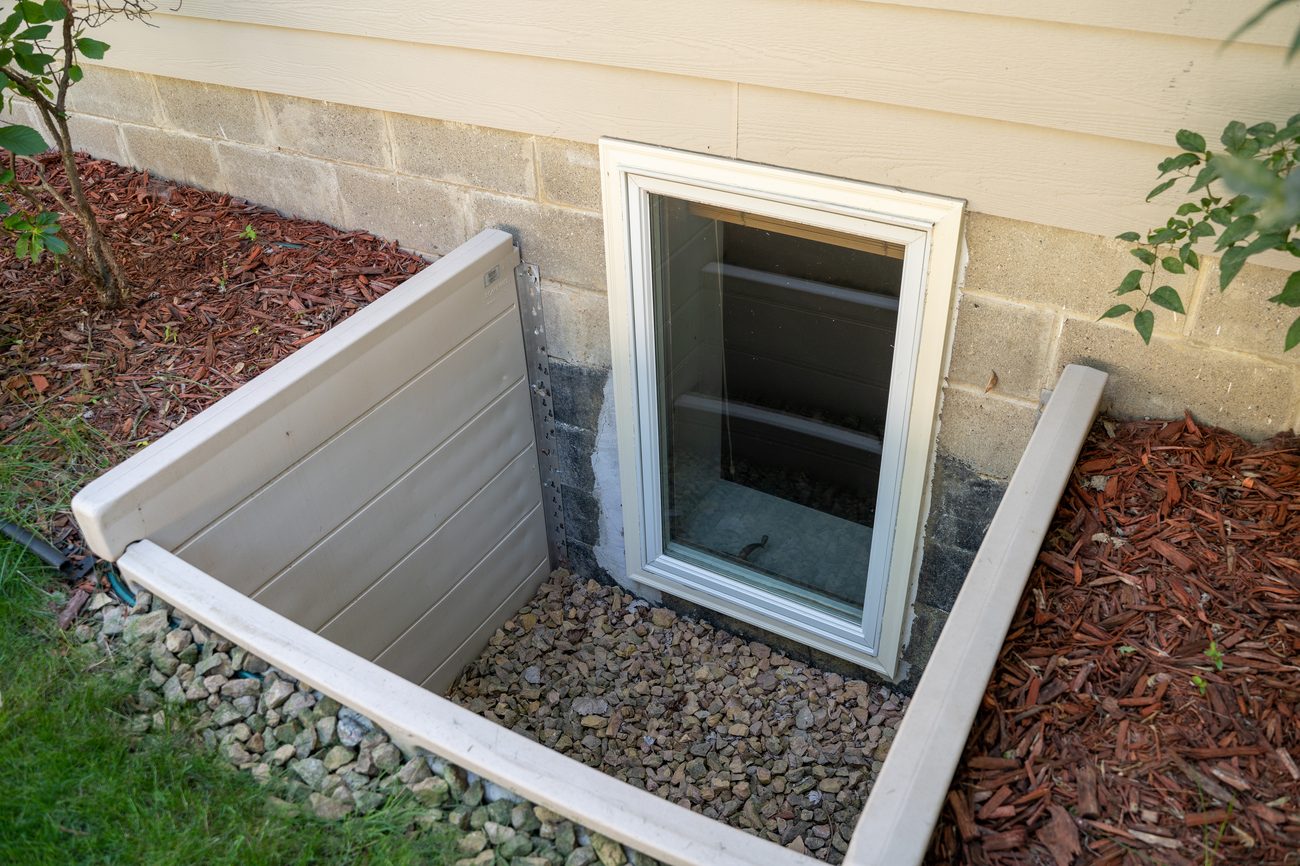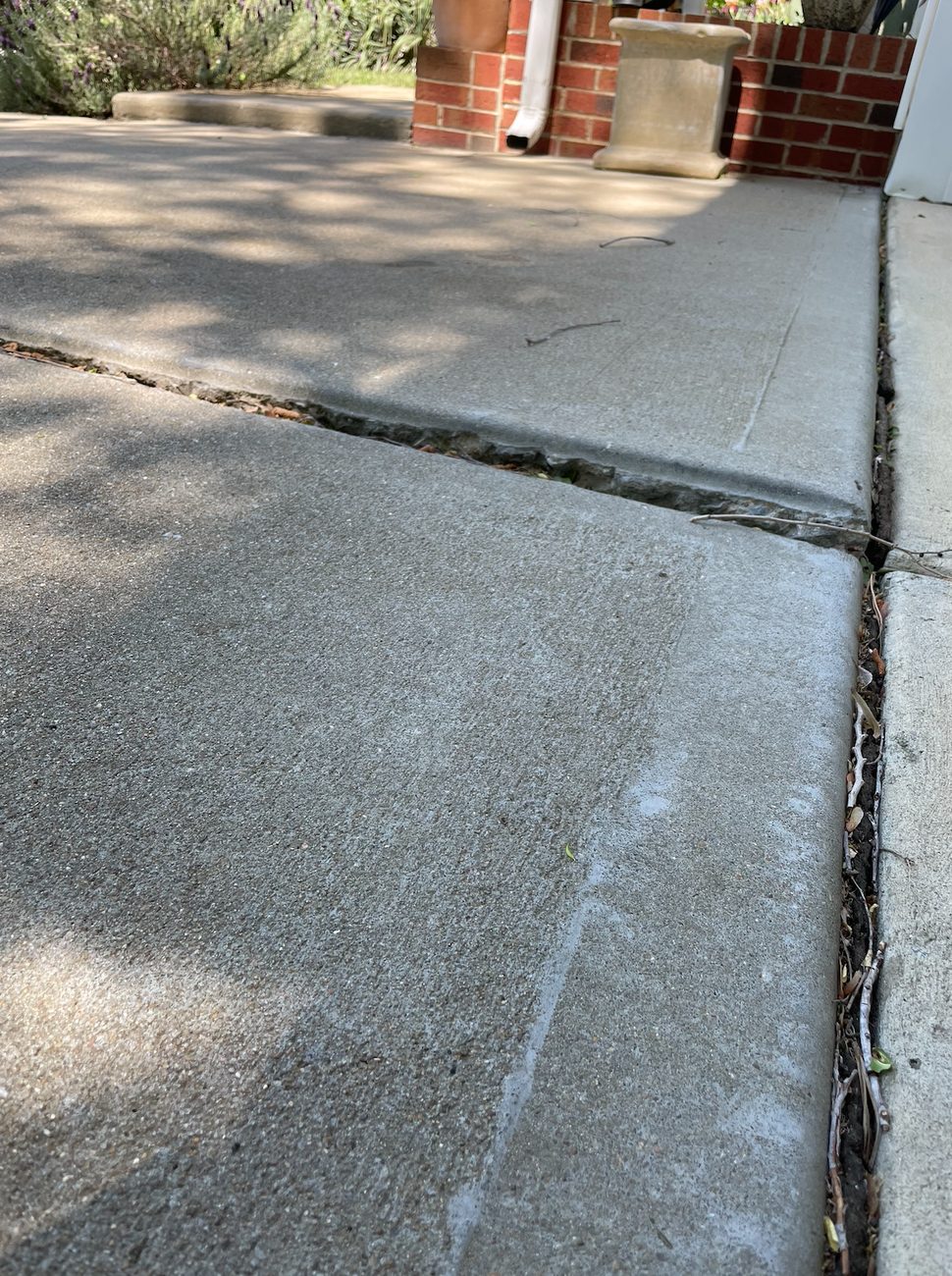
A crawl space that never dries, doors that stick, a corner settling low? Nearly half the homes here went up after 2000, and this coastal ground tests every one. From Northwoods to Jacksonville Commons, we take on foundation repair, crawl space encapsulation, and french drain installation, and the inspection is free.
Get Your Free Inspection
We appreciate you reaching out.
One of our team members will be with you shortly.





COMMON WARNING SIGNS
Between the fast-built subdivisions and the ranches from Camp Lejeune's early decades, Jacksonville houses show trouble in their own ways, and the coastal ground underneath plays no favorites. Here are the six warning signs local homeowners call us about first. Each points to a different repair in the crawl space or the basement. Every home here shows one of them eventually. Damp crawl space, cracked concrete, or a wet basement. All three trace back to water under the home.
Cracks Off the Window Corners
Cracks angling from a window corner, or a seam opening where the addition meets the house. Wet ground has let a footing sink, and the frame follows down. That is foundation repair, and the concrete has to be supported first. Concrete piers, then the framing, then the basement. Each repair in the right order. Concrete carries, framing follows, the basement stays dry.
Doors That Swell Shut
Doors that swell shut every summer, or a latch that misses more each year. The frame is racking as the foundation eases, and humidity finishes the job. Crawl space encapsulation plus waterproofing keeps the home dry. That service pairing is the standard on a home near the water. Encapsulation, insulation, and a dry crawl space. That combination protects the whole home.
A Soft Spot in the Floor
A soft spot in the hallway floor, or a slope you notice when something rolls. The supports below are standing in damp air, and wet framing gives. Mold follows the moisture, and insulation stops holding heat. Your power bill shows it before the floor does. Insulation in a damp crawl space stops working. Dry it out and the insulation earns its keep again.
Moisture Under Everything
Condensation on the ductwork, or insulation sagging wet under the floor. The water table here rides high for months, and that moisture climbs into everything above it. A sealed crawl space is the cheapest repair on this list. It protects the home and the concrete underneath. Mold never gets started in a sealed crawl space. No mold, no rot, no repair later.
A Yard That Ponds
A yard that ponds after storms, or water standing under the house days later. Flat, sandy ground has nowhere to send it, and it waits against the foundation. Basement waterproofing moves it away before the concrete cracks. A dry basement is a stable home. Waterproofing first, then the foundation repair holds. Reverse that order and the repair fails.
A Block Wall Leaning In
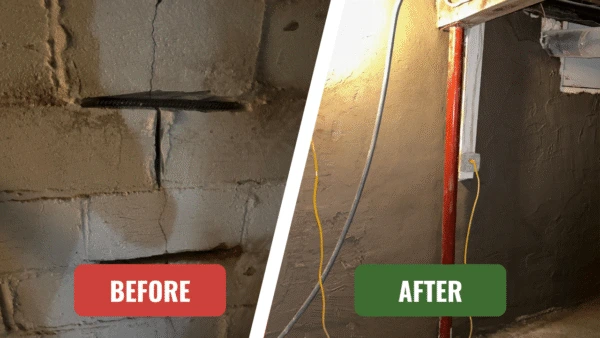
A crack running along the block, or a wall that leans in after a wet season. Saturated ground pushes hardest here, and the lean only grows. Foundation repair with piers is the fix, not a patch.
Coastal houses collect small complaints, and not every one is structural. A summer-stuck door alone can be humidity; a hairline in young concrete is often just curing. What earns attention is the pattern: sticking that outlasts the season, cracks that keep lengthening, floors that keep softening, water that returns to the same spot. The free inspection reads the difference, and when the answer is your house is fine, that's exactly what we say. We would rather quote no repair than sell a service the home does not need. That is why the first service call is free. No home gets a repair it does not need. We put that in writing before any service starts.
From a crawl space that won't dry to a footing that's given, every repair we do in Jacksonville is on this list, and each card opens into the full picture. Crawl space services, basement work, and concrete repair all listed. One home, one quote, one crew. Crawl space services and basement services on the same sheet. One crew, one home, one visit.
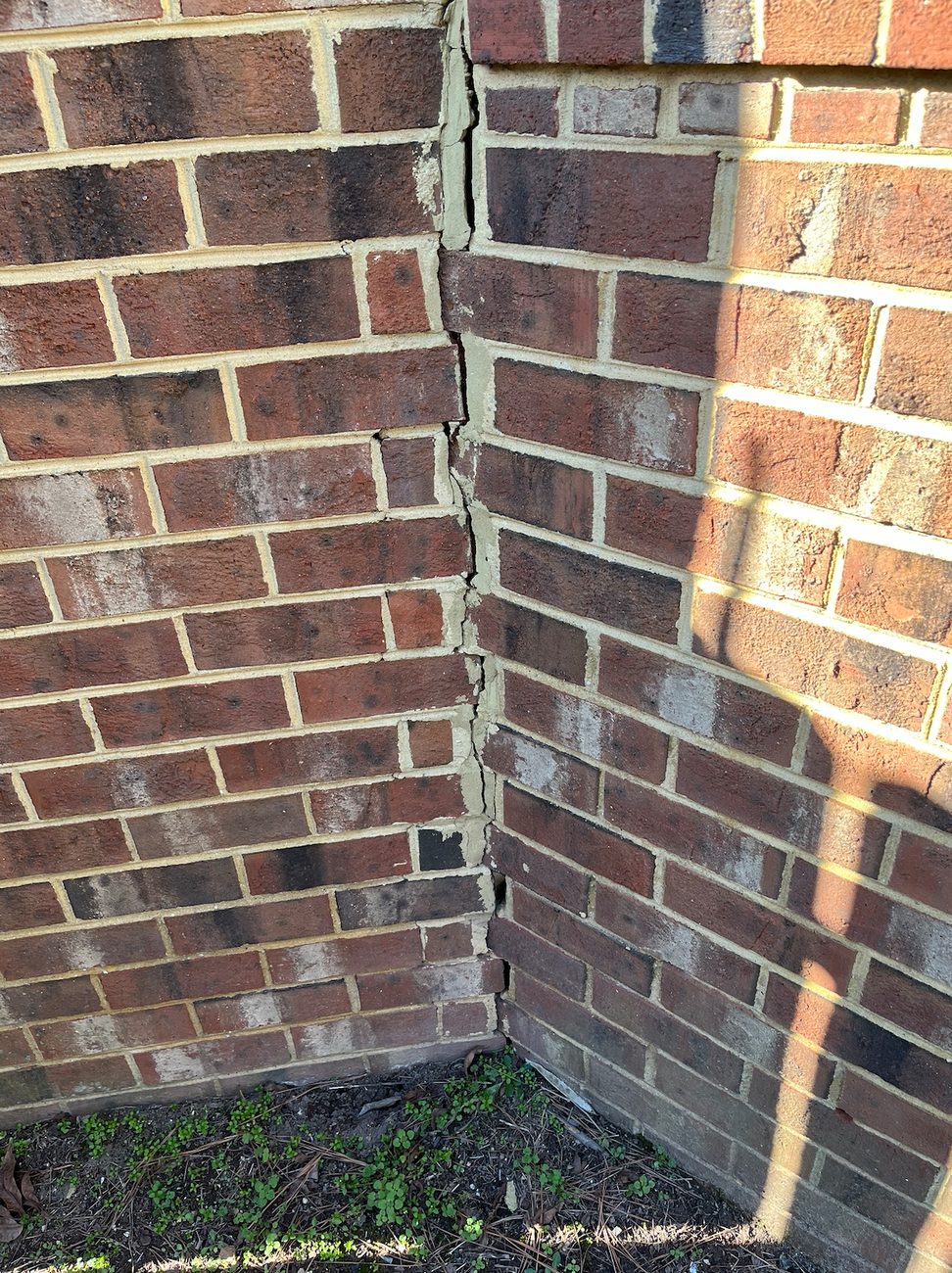
We carry a settled foundation down to soil that actually bears, on steel piers, then lift back toward level as far as the house safely goes. Concrete piers carry the home while the repair sets. The home comes back to level and stays there. Concrete does the carrying, not the framing. That is what makes the repair permanent.
Learn moreA corner of the house riding lower than it did two summers ago. A garage slab splitting away from the main footprint. Trim gaps that keep reopening after every repaint. Coastal ground carries houses softly, and when months of a high water table have worked under a footing, the house starts writing you notes about it. The notes arrive slowly enough that most owners can't date when they started, only that they've multiplied. A crawl space inspection tells us if it is the soil or the framing. Either way the home needs the same first step. A dry crawl space before any structural repair. Skip it and the concrete moves again.
The repair goes deeper than the wet layer. Steel push piers drive down section by section until they seat against soil that bears weight year-round, not just in a dry August, and the house transfers onto them for a measured lift back toward level. Helical piers do the same duty under porches, steps, and lighter framing, turning in with compact gear that spares the yard. When the perimeter checks out and the trouble is a springy floor inside, crawl space supports carry the fix instead. Northwoods and the newer streets of Williams Farm have both seen plenty of each. Where finishes upstairs are fragile, we stage the lift across visits so plaster and tile come along instead of cracking in protest.
Every pier gets its depth logged as it goes in, so what you bought is documented, not approximated. And when the honest problem is drainage rather than bearing, which happens plenty on this ground, the quote says drainage and costs accordingly. The look that decides it is free either way. Foundation repair quotes and crawl space repair quotes cost nothing.
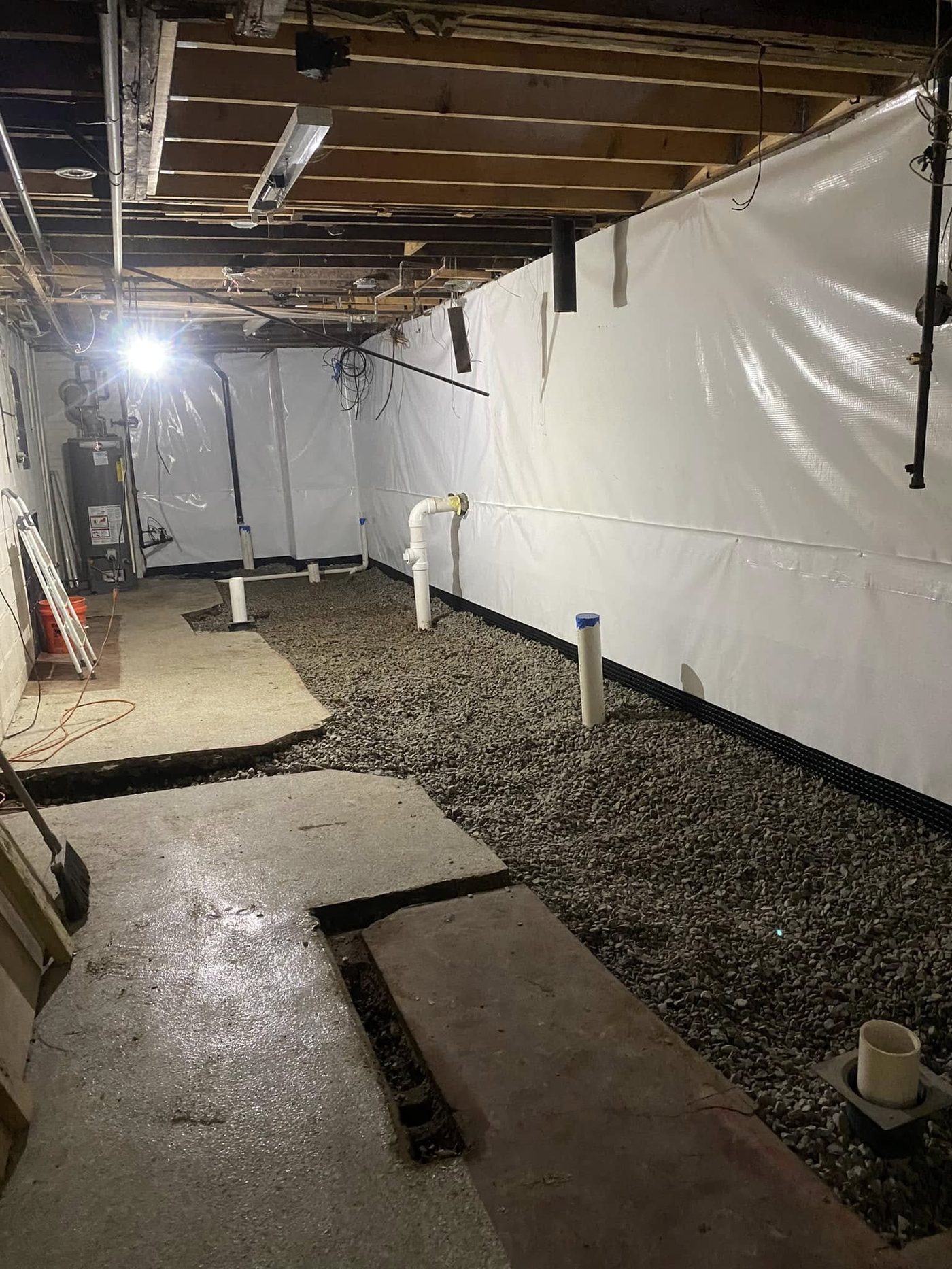
True basements are rare on this ground, and the few below-grade spaces in town need sealing and drainage built for a coastal water table.
Learn moreFull basements are scarce in Jacksonville for an honest reason: dig eight feet down here and you're standing in the water table half the year. But the town still has its exceptions, older homes near Downtown Jacksonville with partial cellars, storm shelters, sunken garages and utility rooms, and every one of them fights water with the deck stacked against it. The owners usually know the rhythm by heart: dry by Memorial Day, damp again by the first fall storm. That cycle is what crawl space encapsulation ends. The home holds its humidity instead of the crawl space setting it. Encapsulation and insulation together. The crawl space stays dry through every season.
Protecting a below-grade space on this ground means managing water that never really leaves. Outside, gutters and grading send the storm load away before it stacks against the wall. Inside, a perimeter drain at the footing intercepts what the water table pushes through and delivers it to a sump pump sized for coastal rain, with a battery backup because the storms that matter here take the power grid with them. Sealed walls and a dehumidifier close out the humidity, and the drain line stays serviceable through cleanouts instead of sealed away behind finish work. The older blocks of Georgetown hold most of the below-grade spaces we treat.
If you're considering finishing a below-grade room, have us look first; on this water table, the drainage has to be won before the drywall goes up. The assessment is free, and if your space can't be kept reliably dry, we'll tell you that plainly instead of selling you a fight against the ocean's cousin. Waterproofing services here have to handle salt air and a high table. Standard basement services are not enough on this ground. The waterproofing has to be built for it. Generic basement services will not hold here.
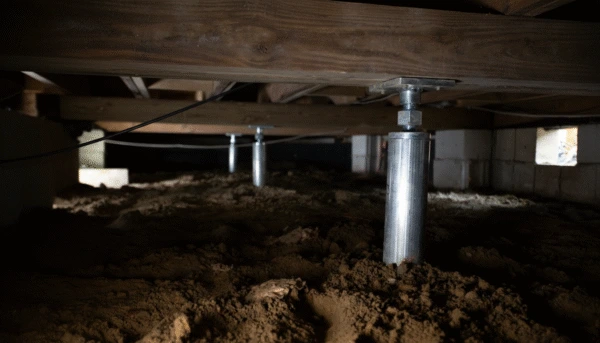
We restore solid support under sagging floors and swap out framing that coastal moisture has softened, then dry the space so it holds. Then the crawl space stays dry and the repair below the home holds too.
Learn moreFloors that flex where they used to feel solid. A bathroom that's developed a lean toward the tub. That give at the threshold you've learned to step over. Under a Jacksonville house, the framing spends much of the year in air kept damp by the ground below it, and wood that never fully dries loses its grip on the job. Girders sag first, then the joists follow, and the floor above simply reports what's happening below it. The crawl space tells you more about the home than the walls do.
We rebuild from the dirt up. Adjustable steel columns on poured pads replace whatever's failing, sisters go on alongside joists that have softened, and beams past rescue come out whole. Then the dampness itself gets addressed, better ground cover, drainage, or full sealing depending on what the space needs, because new lumber in the same wet air is a repair with an expiration date. Where ducts and plumbing crowd the crawl, we work around them, and the rooms above stay livable the whole time. We're under houses in Brynn Marr and out toward Bell Fork for exactly this, week in and week out.
The good news we deliver most often: it's rarely as far gone as the floor makes it feel. We crawl the whole footprint, photograph what's actually carrying and what isn't, and price only the pieces that need help, separated line by line so you can phase the work if the budget wants breathing room. The crawl-through costs you nothing, and the pictures are yours either way. You see the crawl space, the concrete, and the framing yourself.
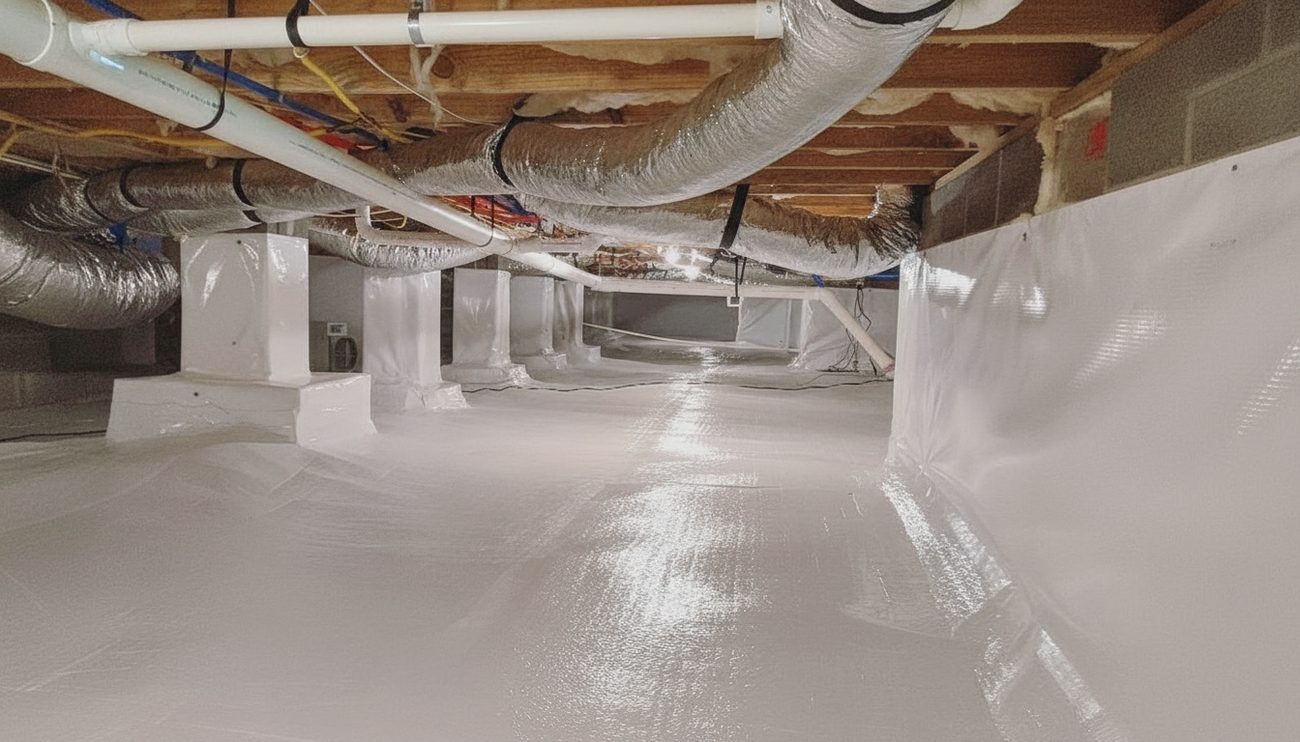
We seal the crawl space against ground moisture and coastal humidity with a heavy liner, closed vents, and a dehumidifier sized to win. Sealed crawl space, dry insulation, and a home that holds its air.
Learn moreOn this ground, an open crawl space is a standing invitation. The water table rests eighteen inches down for months at a stretch, coastal air arrives pre-loaded with humidity, and the vents that were supposed to help pull all of it straight under your floors, where it condenses on cool wood and ductwork and goes to work on the framing, the ductwork, and eventually the air upstairs, since a share of every breath on the first floor rises from below. Mold and moisture in the crawl space reach every room in the home.
Encapsulation closes the invitation. A heavy crawl space vapor barrier covers the ground and climbs the walls, sealed at every seam, pier, and the door. The vents close permanently, and a dehumidifier rated for coastal duty, not a hardware-store box, holds the space at a humidity the framing can live with. Floors warm up, the musty edge leaves the downstairs air, and the wood above the liner finally gets to stay dry. Carolina Forest and Foxhorn Village are full of crawl spaces we've sealed this way. The dehumidifier drains itself, the system runs without homework, and summer cooling bills usually notice the difference.
Sequence is everything on ground like this, and it never bends: standing water gets drained and the framing gets dried and repaired before any liner goes down, because plastic over a wet coastal crawl space is a terrarium, not a fix. The free inspection tells you what order your house needs, and whether it needs the full system at all. Sometimes basement waterproofing alone handles it. We tell you which service the home actually needs. Sometimes it is crawl space repair, sometimes concrete. We show you which before quoting the service.
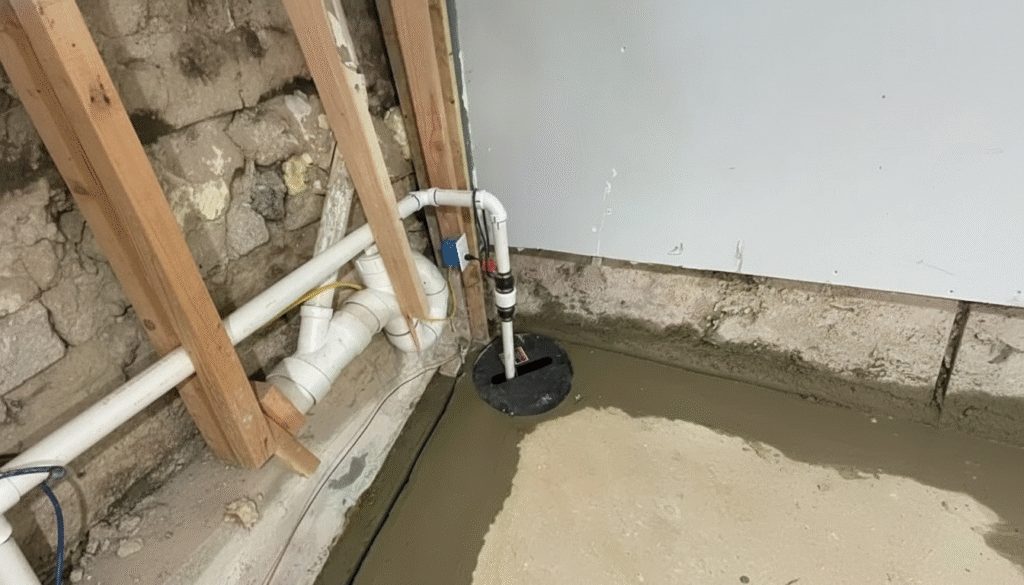
We set a sealed basin at the true low point and a pump rated for coastal storms, with battery backup for when the grid goes down. A dry basement protects the foundation repair you paid for. Home value follows a dry basement. So does the life of every repair below it. A dry basement is the cheapest insurance a home has.
Learn moreSome Jacksonville lots don't have a drainage problem so much as a geography assignment: flat ground, water sitting high beneath it, and a crawl space that collects whatever the difference comes to. After a coastal storm, the water under the house can outstay the week. A sump system is how it gets an eviction date. Passive drainage can't lift water uphill, and on a lot this flat, uphill is the only direction left. That is why drainage is part of every foundation repair here.
We set the basin where the water already congregates, connect whatever drain lines serve it, and seal the lid so the system works with the crawl space instead of venting it. The discharge line runs far enough that gravity keeps its promise, with a check valve holding the door shut behind each cycle. Around here the battery backup isn't an upsell, it's the point: the storms that load the basin hardest are the same ones that black out the grid, and a pump without power mid-hurricane is furniture. Jacksonville Commons and Evansbrook keep us busiest on these. Upkeep amounts to a float test now and then and a battery swap every few years, and we show you both before we leave.
Paired with the right drainage, a sump turns a crawl space that's wet half the year into a managed one. We'll walk the water path with you, mark the true low point with you standing there, and put the whole system, basin, line, and backup, on paper free before anything gets cut. Crawl space repair, concrete work, and waterproofing all quoted together. No service gets added to the home later. The crawl space scope is fixed before we start. No extra service appears on the final bill.
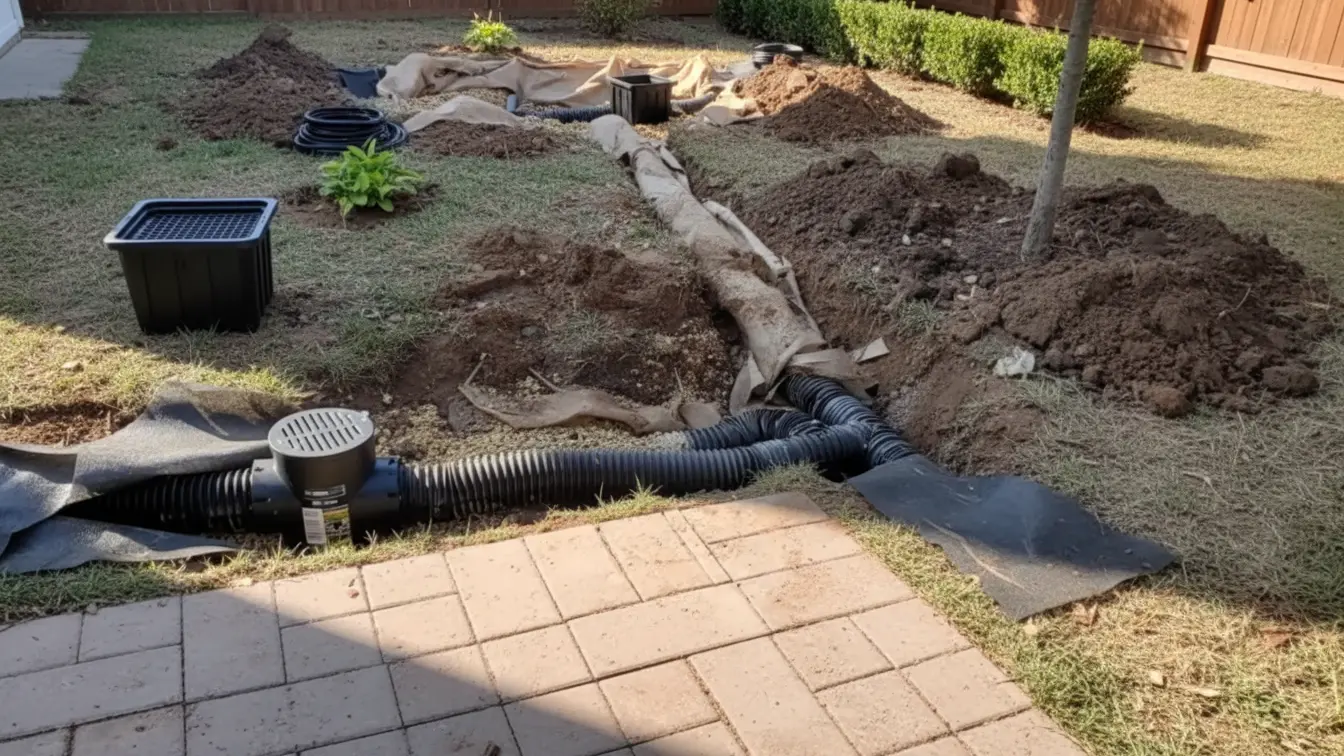
On flat coastal lots, we trench in gravel-bedded drain lines that collect ponding water and give it somewhere to go besides your foundation. Drainage is part of every foundation repair we quote here.
Learn moreFlat land doesn't move water, it stores it. That's the quiet problem under half the yards in town: rain lands, the sandy topsoil fills, the layer below is already wet, and the extra ponds wherever the mower left a low spot, too often the strip beside the house. Watch the yard in a steady rain and you can trace the whole system: where it lands, where it crawls, where it gives up and stands. Then we size the crawl space repair to what the home actually needs.
A french drain manufactures the slope that this flat lot never had. We trench through the collection zone, bed perforated pipe in washed stone with fabric holding the sand back, and engineer fall toward an outlet that can truly take the flow, a lower boundary, a dry well, or a sump when the lot offers nothing better. Where the wet lives under the house, the interior version circles the footing and feeds the pump. Cleanouts go in wherever runs grow long, so the line can be flushed a decade from now without anyone digging up the lawn. White Oak Estates and the older streets of Northwoods have both had us trenching this year.
On coastal ground the outlet is the whole game, plenty of failed drains just move water from one puddle to another. We map where every gallon ends up before we dig, and that plan comes to you in writing with the free assessment, outlet named and fall calculated, before a shovel touches the grass. Insulation, a vapour barrier, and the crawl space sealed properly. That is the full service on most homes here. A sealed crawl space, dry insulation, solid concrete. That is the whole service on most homes.
Queen Foundation Repair is the company Jacksonville homeowners call when the ground gets into the house: crawl space encapsulation, foundation repair, crawl space repair, concrete leveling, and french drain installation, all under one roof and one phone number. On a coastal lot these jobs are cousins, and treating them separately is how problems get solved twice. Waterproofing and repair belong in the same service visit.
Diagnosis comes before any number. Around here the trouble usually comes back to the water table, not a broken foundation, and finding that out first is the difference between a drainage bill and a pier bill. So the first visit is free, the quote arrives itemized in writing, and when the cheaper fix is the right one, that's the one we recommend. The warranty is written too, and it follows the house to the next owner.
We work the whole town, from the older streets of Georgetown to the homes around Country Club and the subdivisions out past Jacksonville Mall, and we know what a PCS timeline does to a repair schedule. Tell us what your house is doing, and you'll get a straight read, a real number, and room to decide. No home gets pushed into a repair it does not need.
Get your free inspection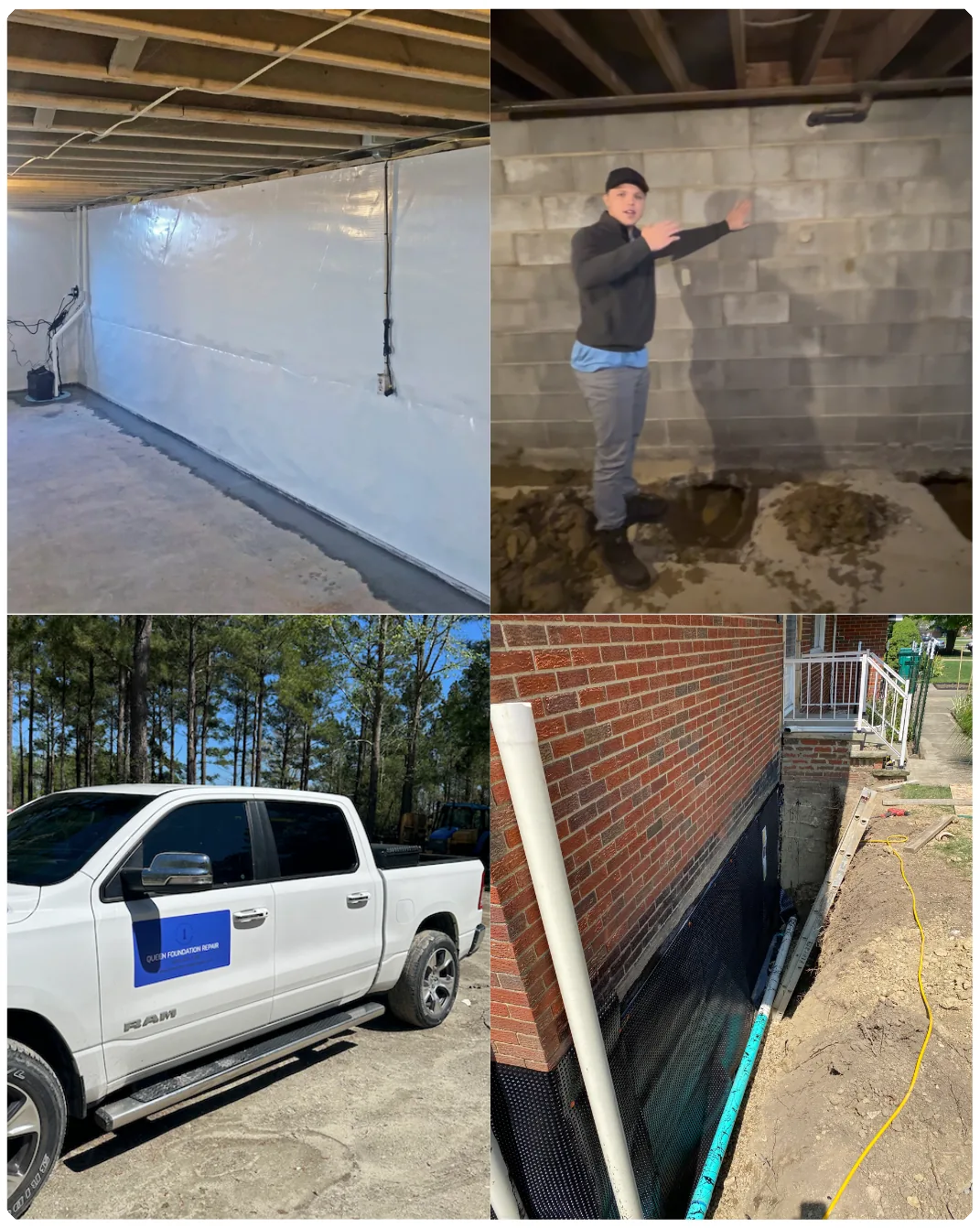
WHAT YOU GET
We answer fast and get out to the house quickly, so you're not sitting for weeks just to find out what's wrong and what it'll cost. The crawl space inspection and the repair quote are both free.
No charge to have us come out, find what's going on, and lay out what the fix takes. You know where you stand before spending a dollar. Every service and every repair explained first.
Licensed, with full liability and workers' comp coverage, so the work is done to code and your property is protected if anything goes sideways. Your home and the repair are both covered.
The repair comes with a written warranty that transfers to the next owner, so it protects your home's value if you ever sell. A dry basement and a sound crawl space show up in the appraisal.
A clear, written price upfront before anything starts, no vague ballpark and no surprise add-ons once the work is underway.
This is a military town and we work like it: fast scheduling around PCS dates, paperwork your buyer or landlord can rely on, and crews from Downtown to Carolina Forest every week. Foundation repair, crawl space services, and basement work across the area.
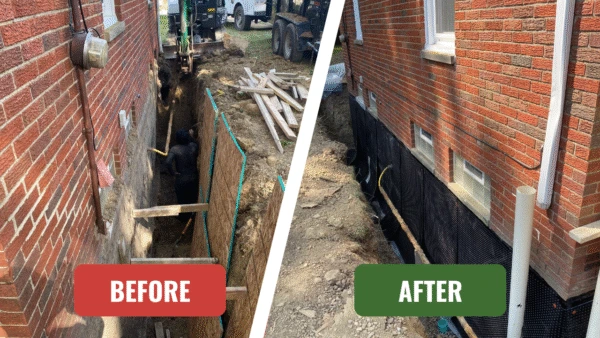
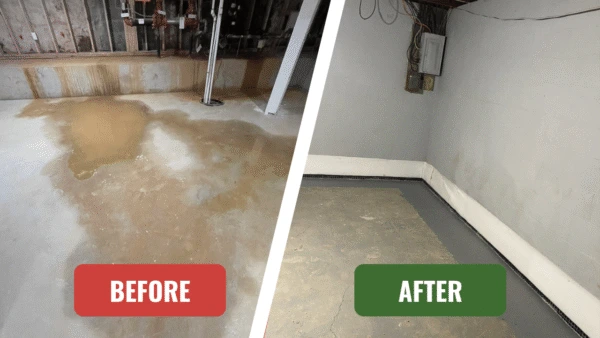
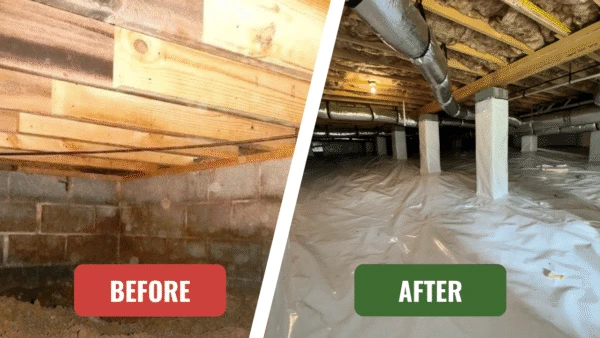
The whole job, first ring to final walkthrough, in four honest steps.
COASTAL ANSWERS
From Evansbrook to Bell Fork, these are the questions Jacksonville homeowners actually ask us, about the water, the costs, and what living on coastal ground really means for a house. Straight answers, the same ones we give in your driveway.
Signs & Severity
Different than in an old one. Houses built since 2000, which is nearly half the town, show it as drywall cracks over doorways, a garage slab pulling from the house, or one corner of a fast-built foundation settling ahead of the rest. The framing is young and flexible, so the early signs are subtle. What matters is whether they progress: a crack that grows or a door that worsens each season is ground movement, not settling-in. A free inspection reads which one you have.
Common, yes. Normal to live with, no. The water table under Jacksonville rides high for months at a time, so untreated crawl spaces run damp most of the year, and plenty of neighbors just accept the musty smell. But common doesn't mean harmless: that moisture is slowly softening framing and feeding mold season after season. The houses that stay dry down there aren't lucky, they're sealed and drained. Yours can be either kind.
Check, don't panic. A serious storm soaks the ground fast, and saturated soil can shift a footing, so walk the house afterward and photograph anything new: cracks, doors that suddenly stick, low spots in the yard that didn't pond before. Most post-storm findings turn out cosmetic. The ones worth a call are new stair-step cracks in block or brick, doors that won't latch at all, or water that reached places it never had. We'll look free, and storm season keeps us honest about scheduling fast.
Repairs & Methods
The method has to respect the ground it's standing in. Coastal soil layers here stay soft and wet near the surface, so a lasting repair reaches past them: steel push piers driven down to bearing that holds in every season, or helical piers that screw in and prove their capacity by torque reading as they go, which suits this ground especially well. Once the piers seat, the house transfers onto them and lifts back toward level where it's safe. Just as often on this ground, though, the honest fix is drainage, moving the water that softened the soil in the first place, and that costs a fraction of steel. We check the cheaper explanation first, always, and the written quote names whichever one your house actually needs, itemized so you can see every piece.
Yes, and this is exactly where it earns its reputation, but only as a system. A liner alone can't argue with a water table eighteen inches down. Paired with drainage and a sump to manage the water and a sealed barrier with a real dehumidifier to manage the air, it absolutely holds, and coastal crawl spaces are where the before-and-after is most dramatic. What doesn't work is the shortcut version. Sequence and sizing decide the outcome here, not the brochure.
Drainage, every time, and be wary of anyone who says otherwise. Sealing over standing water traps it against your framing, which is worse than leaving the space alone. The working order: give the water an exit with a drain and sump, let the framing dry out, repair what the moisture already softened, and then seal the space so it stays that way. On this water table that sequence isn't a preference, it's physics. We build it into every quote, even when it means the encapsulation waits a beat.
Crawl Space & Water
Here, more than almost anywhere. The case for sealing a crawl space is strongest exactly where ground moisture is relentless, and a coastal water table is as relentless as it gets. A sealed system protects the framing that carries your floors, pulls the musty edge out of the downstairs air, warms winter floors, and gives the AC a fighting chance in August, because it stops conditioning a swamp. It also reads well at resale in a town where houses change hands fast. The honest exceptions: a crawl space that genuinely stays dry, or a budget that only stretches to the drainage half, which is the half that matters most. We'll tell you which case yours is from under the house, and the smaller quote wins whenever it honestly can.
Because summer is when the system runs hardest against you. Warm, humidity-loaded coastal air pours through the vents, meets framing and ductwork kept cool by the shaded ground, and condenses, the same way a cold glass sweats on the porch. Add a water table that hasn't fully receded and you get peak dampness, peak mold activity, and the strongest smell of the year drifting up through the floors. It fades in fall, but it returns every June until the vents close and the space is sealed.
The liner runs fifteen to twenty-five years when it's installed over solved drainage, and coastal humidity doesn't shorten that; unsolved water does. Dehumidifiers work harder here than inland, so expect eight to twelve years from each unit and treat the first one's runtime as information about your crawl space. The real lifespan question is what happened before installation: drainage first, seal second, and the system goes the distance. We put the maintenance rhythm in writing with the warranty.
Cost & Insurance
Ranges you can actually plan around: a stable crack seals for a few hundred dollars. Crawl space support work, new columns and sistered framing, usually lands in the low thousands, sometimes the middle of them. Pier underpinning is the big line: most Jacksonville jobs come in between four and twelve thousand depending on how many piers, how deep the good soil sits, and how tight the access is. Two locals facts help here. Soft coastal ground sometimes needs an extra pier or two of depth, and, on the other side of the ledger, a good share of feared foundation jobs turn out to be drainage jobs at a fraction of the price. The free inspection sorts your house into the correct column before any number gets written down, and every quote arrives itemized to the line.
For a typical Jacksonville footprint, a full system, liner, sealed vents, dehumidifier, and the drainage that makes it work, generally lands between eight and fifteen thousand, with the drainage share running higher here than inland because the water table demands it. Smaller, drier spaces come in under that. A simple vapor barrier without the full system runs far less and occasionally suffices, though on this ground that's the exception. The number that counts is written after we've crawled yours, free, and if the smaller version will honestly hold, that's the one we'll put on paper.
Two different questions, two honest answers. Standard homeowners policies exclude gradual problems, settling, seepage, long-term crawl space moisture, which covers most of what we repair. Storm claims are the real exception on the coast: when a named storm floods or damages the structure suddenly, coverage can genuinely apply, and after Florence plenty of Onslow County claims paid out. The keys are speed and documentation: photograph everything with dates immediately, before cleanup, read the wind and water provisions in your policy, and call your agent early, since flood versus wind matters enormously to adjusters. Our written inspection reports have ridden along with many storm claims since Florence, and we document honestly whichever direction the evidence points, including when it points at plain maintenance. If a claim is realistic we'll say so; if it isn't, we'll save you the deductible-sized disappointment.
Process & Timeline
The practical answer: late fall through spring, after hurricane season and before the summer humidity peak, is the easiest window for drainage and crawl space work, and scheduling breathes easier then too. The honest answer: an active problem doesn't respect the calendar, and waiting through a wet winter usually costs more than working in one. Interior and under-house work happens year-round without trouble. If a storm's coming and something's already moving, call, that's exactly the week not to wait.
Stay, almost always: the work lives under and outside the house, and families sleep at home through pier jobs and encapsulations alike. Expect some equipment noise on the loud days, plus a crew working around the yard. Rentals are half this town and no obstacle: we coordinate directly with tenants or your property manager, schedule around their day, and document everything so an owner three time zones away, or three duty stations away, sees exactly what happened under the house with photos and paperwork.
Faster than you'd guess, and we've built our scheduling around exactly this question. The inspection happens within days of your call, the written quote follows same-day, and most repairs run one to three days of actual work once scheduled. Even pier jobs typically fit inside a week. Tell us the report date up front and we'll work the timeline backward with you, because a documented, warrantied repair beats explaining an open problem to a buyer, an appraiser, or a property manager from across the country.
Trust, Warranty & Local
It follows the house, full stop. Sale, new tenants, a property manager taking over, none of it touches the coverage, because the warranty attaches to the repair, not to whoever signed for it. That matters double in a town where military timelines move families every few years: the buyer inherits documented work with living coverage, which is an asset instead of a question mark. Structural work carries the strongest terms, systems carry component coverage, and everything is spelled out in plain type at the final walkthrough, with the transfer process explained before you need it. One call activates it, whether that call comes from you, your property manager, or whoever owns the house next. Keep the folder with the closing documents and the coverage takes care of itself.
Yes, and in this market the math usually favors dealing with it. North Carolina requires disclosure, and Jacksonville's buyers move fast on clean houses, VA loans and PCS timelines don't leave patience for mysteries. An undocumented crack invites the appraiser's imagination and the buyer's discount, both of which run bigger than most repair bills. Fix it with paperwork and a transferable warranty and the issue becomes a selling point; or hand our written quote to the buyer so the unknown becomes a priced line item. Both paths beat the as-is gamble here.
Geography, mostly. Jacksonville sits low and flat beside the tidal New River, on sandy ground where the water table spends months near the surface. Rain has nowhere to hurry off to, the air carries humidity most of the year, and the big storms bring totals inland towns never see. Then the houses: crawl spaces with open vents, many built fast during growth spurts, over ground that was already wet. All of it is manageable. A dry house here was never luck, it's drainage, sealing, and maintenance in the right order.
AREAS WE SERVE
We cover greater Jacksonville and the Onslow County communities around it, well past the city line. Piney Green, Half Moon, and Pumpkin Center are all regular stops, and inside town we work everywhere from Northwoods to Bell Fork, fixing wet crawl spaces, settling foundations, and yards that won't drain, with a free look to start.
ZIP Codes We Serve
Ready to Get Started?
No obligation, fast and easy.
We appreciate you reaching out.
One of our team members will be with you shortly.