Floors that dip, a damp crawl space, cracks opening in the brick? Most Reidsville ranches date to the fifties, and the crawl space feels it first. From Downtown Reidsville to Pennrose Park, we take care of crawl space encapsulation, french drain installation, and foundation repair, and the inspection is free.
Get Your Free Inspection
We appreciate you reaching out.
One of our team members will be with you shortly.





COMMON WARNING SIGNS
In a town where most houses went up before 1970, trouble under the floor is more common than people think. A brick ranch shows it one way, an older two-story another. Here are the six warning signs Reidsville homeowners call us about most.
Cracks Stepping Through the Brick
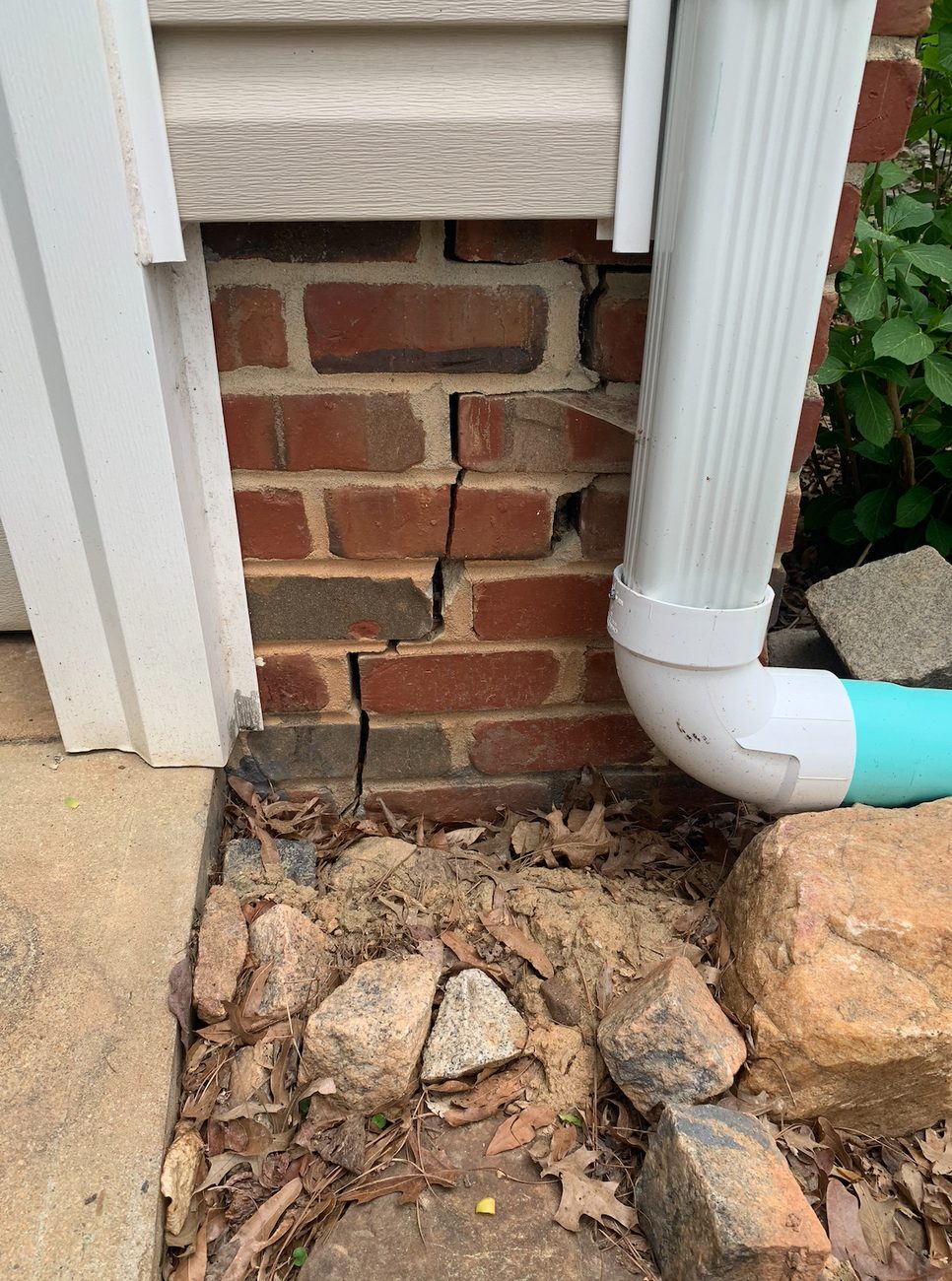
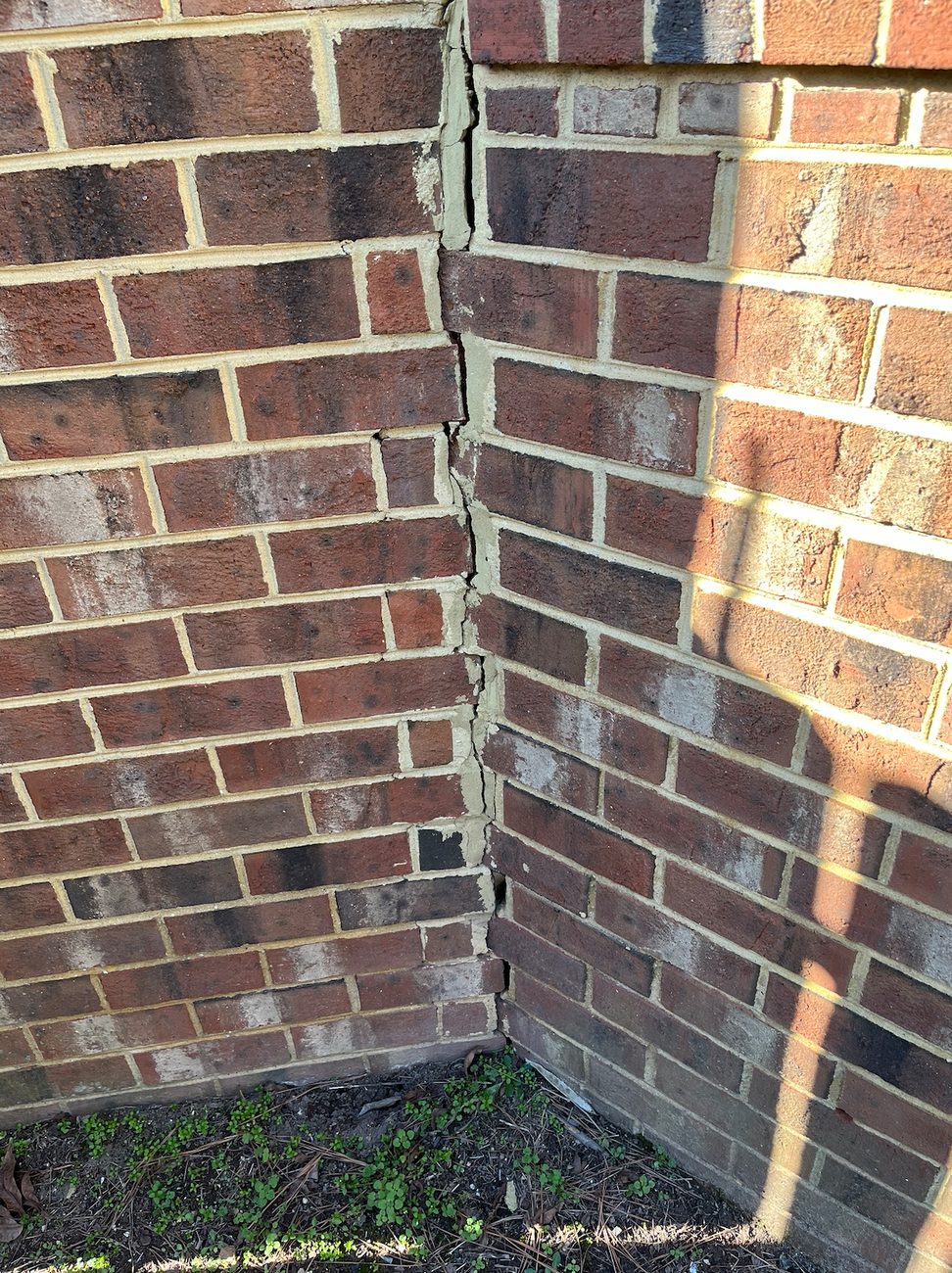
Cracks stepping through brick joints, or a corner pulling away from the porch. The footing beneath has given unevenly, and the gap grows season by season.
Doors That Rub, Windows That Fight
A door that rubs the frame every summer, or windows that need a shove. The wall under them has eased out of level, and it keeps easing.
A Dip You Feel in the Floor
A dip you can feel under the hallway, or furniture that leans on its own. The beams below have lost support, and the dip only deepens.
That Musty Smell After Rain
A musty smell that comes back after every rain, or wet insulation under the floor. Ground moisture is soaking the framing, and soft wood follows.
Water That Won't Leave the Yard
Puddles that sit beside the house for days, or a yard that squishes a week after rain. The ground here sheds slowly, and that water finds the foundation.
A Bowing Block Wall
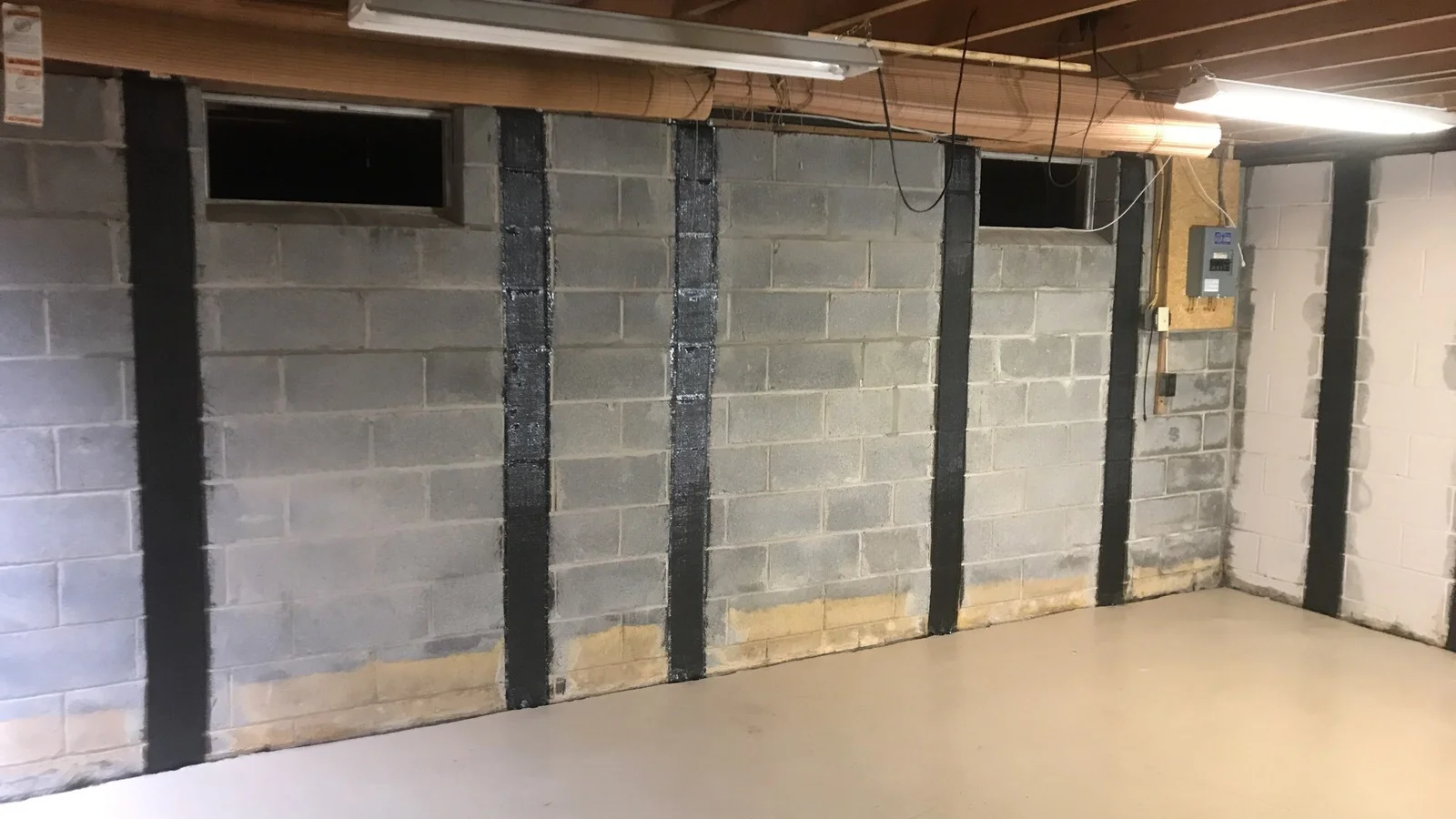
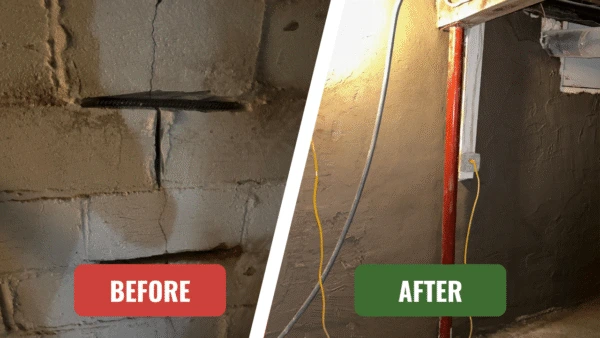
A long crack across the block wall, or a bow you can see down its face. Wet soil is pressing from outside, and block only bends so far.
Plenty of what's on this list turns out minor. A hairline in mortar laid sixty years ago is often just age, and watching it costs nothing. What deserves a call is movement: cracks that widen, a door that fit last spring, a floor lower than it was, water showing up where it never did. The free inspection tells you which kind your house has, and if the answer is relax, that's what we'll say.
A settling ranch, a crawl space that never dries, a basement that seeps every spring: the full list of what we fix in Reidsville is below, and every card opens to the details.
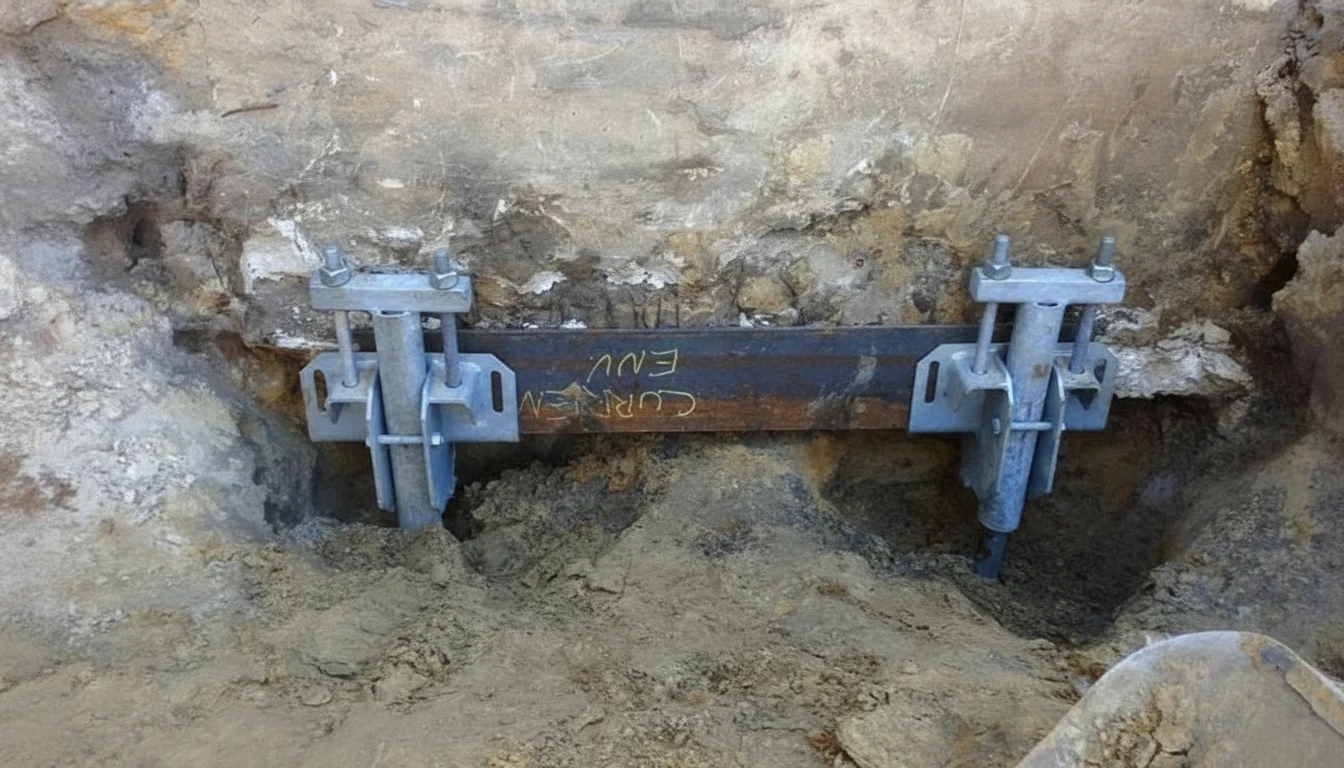
We set steel piers under a settled foundation, carry the weight down to solid ground, and lift back toward level where the structure safely allows.
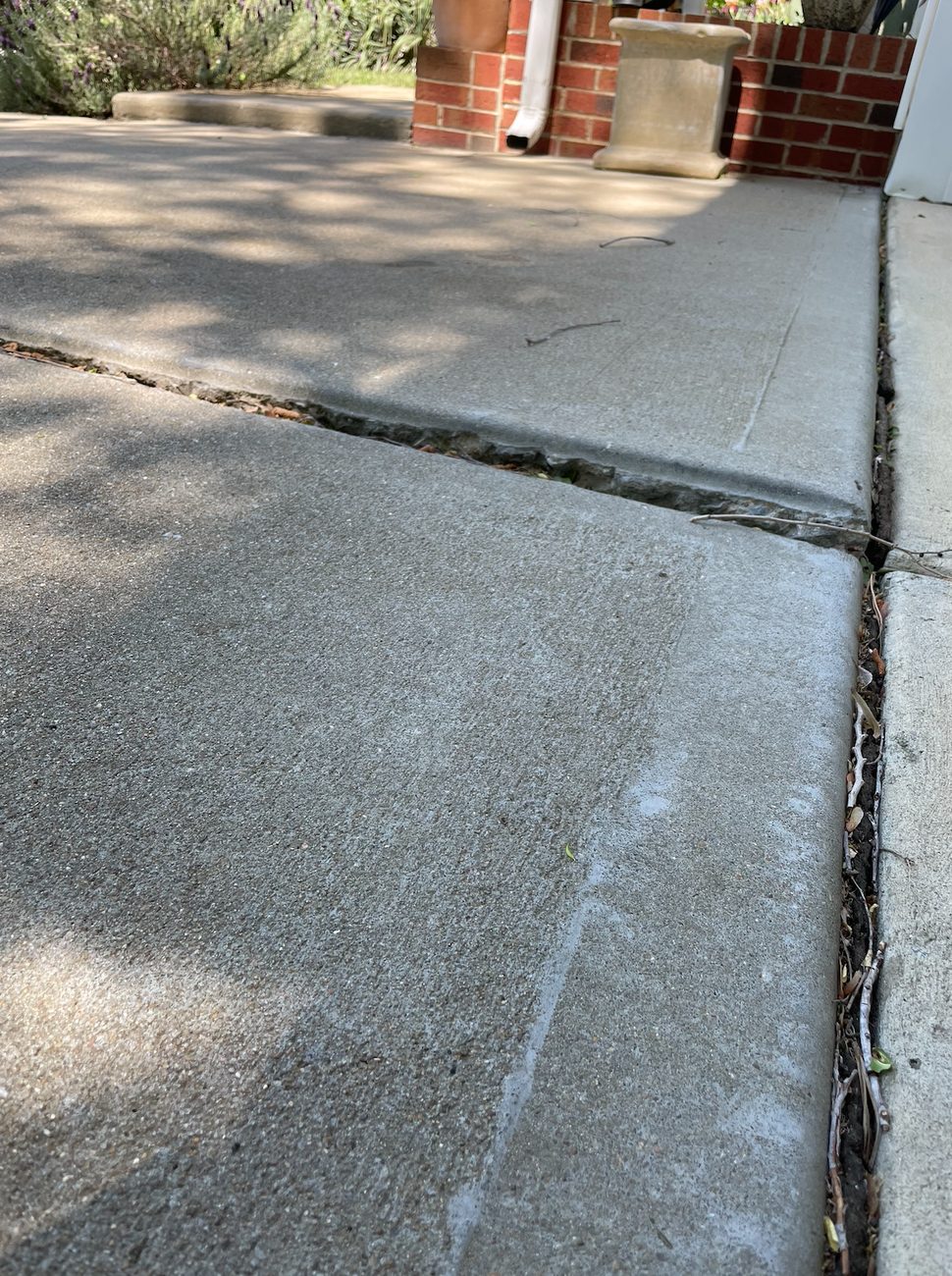
Learn moreA front step pulling away from the stoop. A crack over the garage that's wider at the top than the bottom. A ridge line that's stopped being straight. Houses here have carried sixty or seventy years of weather, and when the ground under a footing softens and quits holding, the house lets you know in inches.
The repair is about reaching ground that holds. We drive steel push piers beneath the settled footing until they seat in soil that bears load, then transfer the house onto them and bring it back toward level as far as the structure safely allows. Lighter spots, porches, and tight corners get helical piers instead, turned in with smaller equipment. Where a lift isn't safe for the finishes, we stabilize at the current height and stop the movement instead. If the perimeter is solid and it's the floors inside that give, the fix moves to the crawl space: steel supports on poured pads and doubled-up framing. Each pier's depth gets recorded as it goes in, so the repair is documented rather than guessed. We've done all three from Downtown Reidsville out to the houses along Vance Street.
Piers are the right answer only when the ground is truly the problem, and often it isn't; water is doing the damage, and a far cheaper drainage fix solves it. We check that first, tell you plainly which case is yours, and put the whole scope in writing with the price before anything starts. The inspection that sorts it out costs nothing.
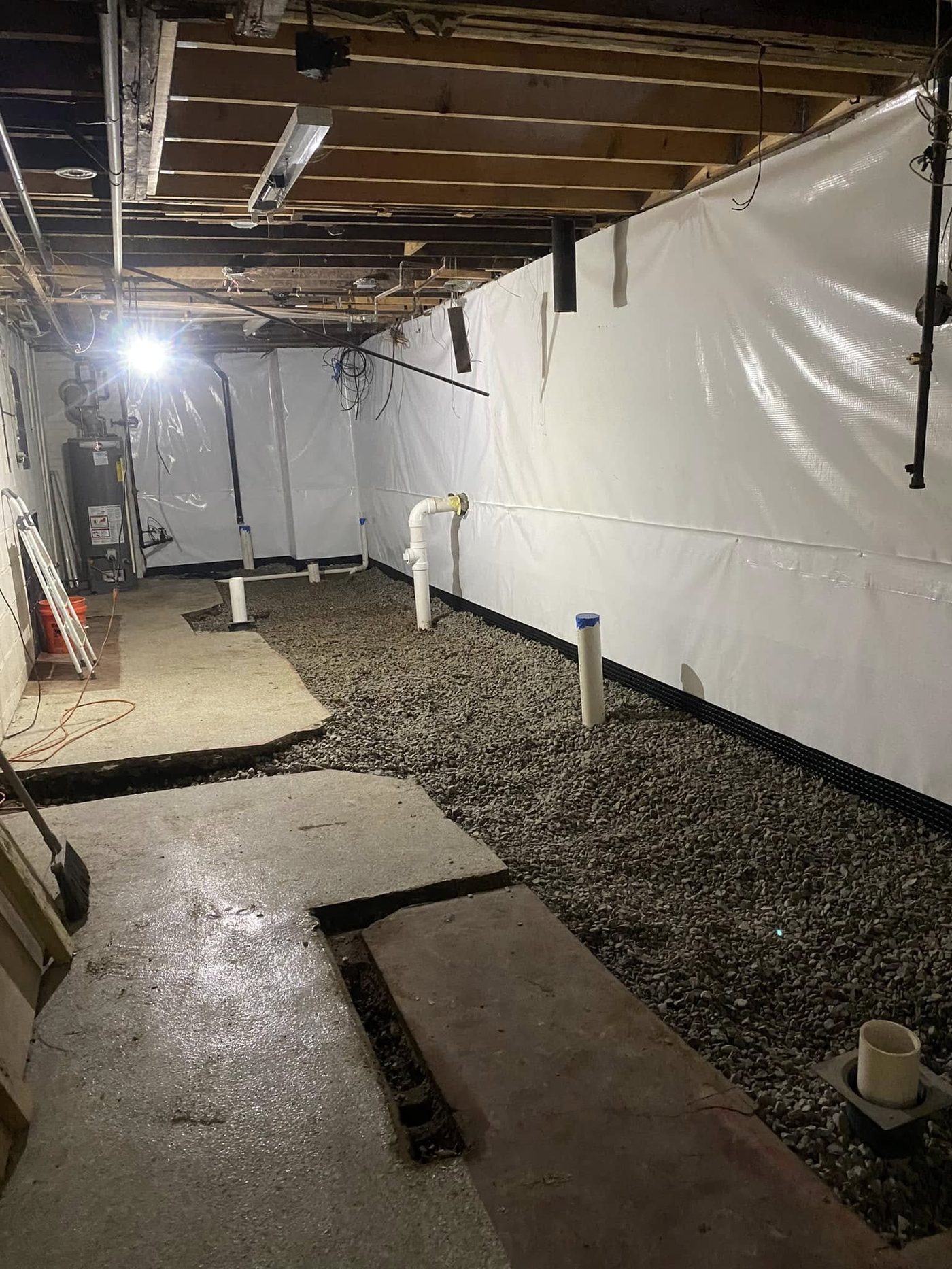
For the older basements in town that seep each spring, we stop the water at the walls, drain what gets through, and keep it that way.
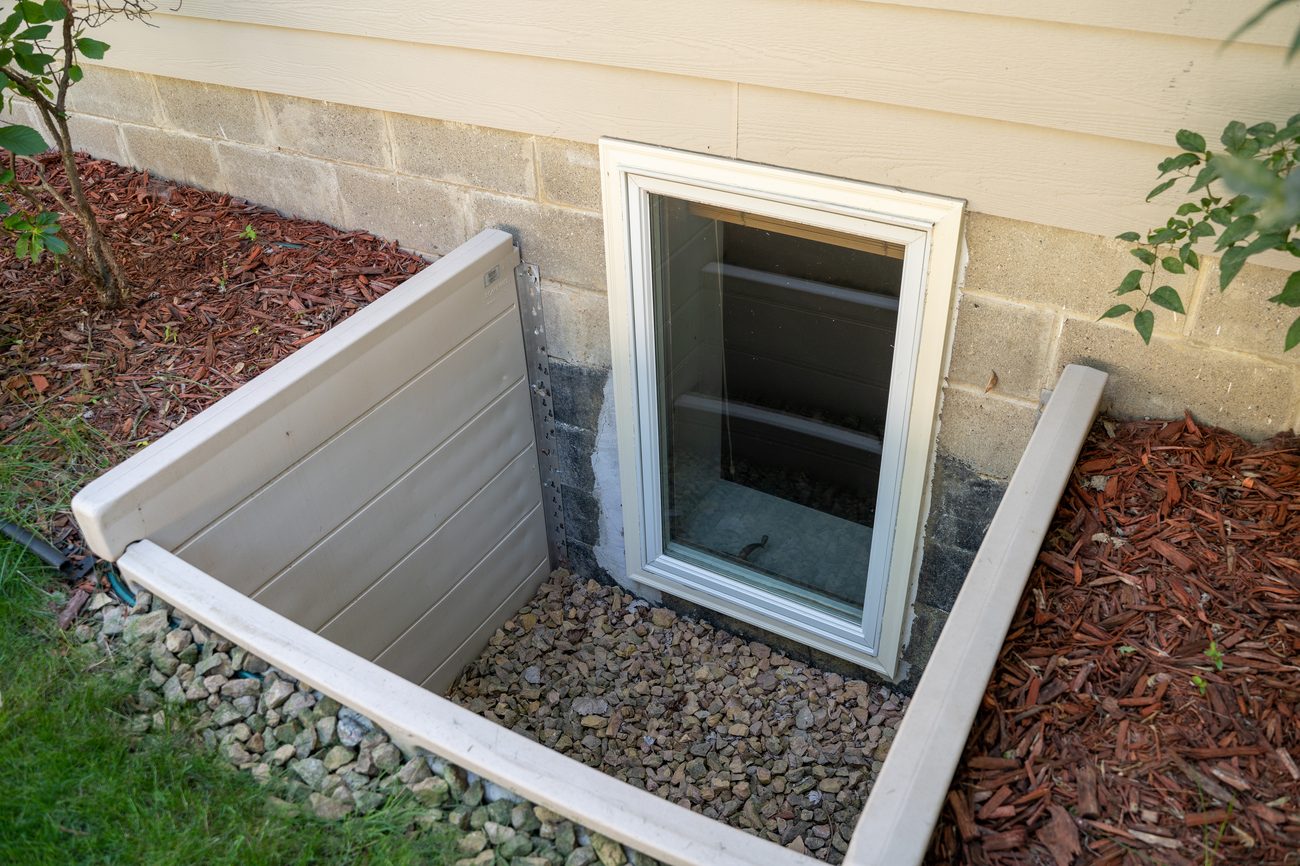
Learn moreReidsville has something the newer suburbs mostly don't: real basements, under the older homes near downtown, and plenty of them weep every wet season. A gray tide line on the block. Boxes you've learned to keep on pallets. A dehumidifier that runs all spring and never quite wins.
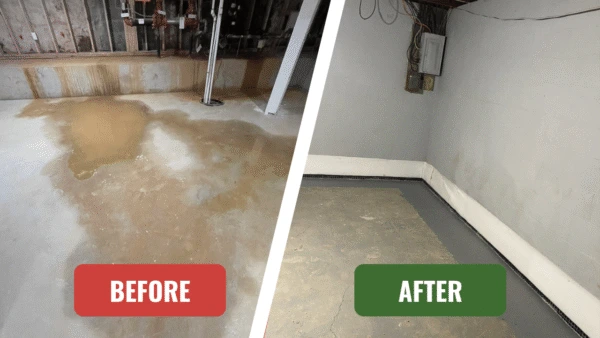
We work from the outside in. Gutters, downspout extensions, and grading come first, because a wall that never meets the water never has to fight it. What still gets through meets an interior perimeter drain cut at the footing, which collects the seepage and sends it to a sump pump instead of your floor. The drain runs at the slab edge where you'll never see it, and the sump sits in a sealed basin with a lid that keeps its humidity out of the room. Weeping walls get sealed and channeled into the same system, and a vapor barrier with a properly sized dehumidifier finishes the drying. That's the package we've put into the older homes around the Richardson Houses area and along Piedmont Street.
Not every damp basement needs all of it, and we'd rather sell you the two pieces that fix yours than the five that pad an invoice. The assessment is free, the quote is itemized line by line, and if a hundred dollars of downspout extensions would honestly do it, you'll hear that from us first. And basements this age deserve one more honesty: some walls have seeped a little for fifty years without threatening a thing, and we'll tell you when yours is one of them.
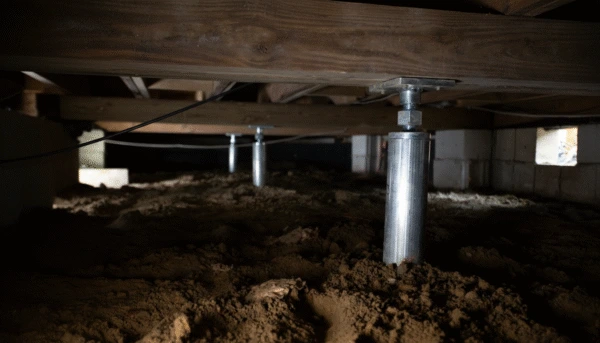
We rebuild the support under soft, sagging floors, replace framing that moisture has eaten, and dry the space so the fix doesn't repeat itself.
Learn moreA floor that gives a little more each year. A hump where two rooms meet. That hollow sound under the hallway that wasn't there when you bought the place. Under a fifties ranch, floor trouble almost always means the framing below has been living damp, and damp wood carries less every season. The vents feed the moisture, the ground feeds it, and the framing pays for both.
We start at the dirt and work up. Adjustable steel columns on poured footings take over from failed posts and lift the sag out slowly, without cracking plaster upstairs. Joists that have softened get a new joist bolted alongside; girders past saving come out and are replaced. Then the moisture gets handled, because bolting new lumber over wet ground just restarts the clock. Sometimes that means a better barrier and venting, sometimes drainage alongside the repair, matched to what your crawl space is actually doing. The ranches off Scales Street and the older places on Lawson Street have kept us busy with exactly this work.
Most floors feel worse than they are. A bounce that alarms the whole family often needs three columns and an afternoon, not a rebuilt substructure, and we'll show you photos from under your own house so you can see the difference yourself. Where a girder is sound and only a post has sunk, the fix is smaller still, and we price it that way. The crawl-through and the written price are free.
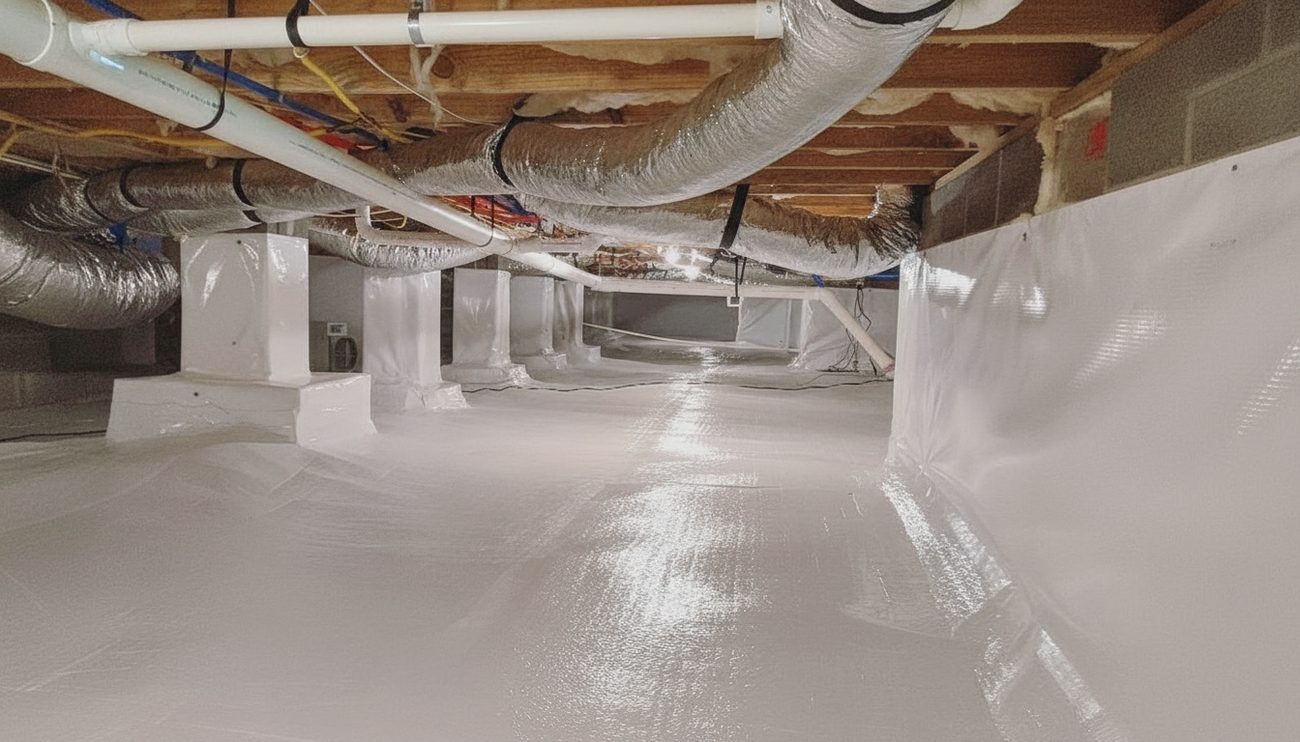
We seal the crawl space with a heavy liner, close the vents, and set a dehumidifier, so ground moisture stops climbing into your floors and air.
Learn moreThe vents in a mid-century crawl space were built to a theory that turned out backwards: summer air here arrives loaded with humidity, hits the cool dark under the house, and condenses on every joist. Add ground that holds rain for days, and the space below your floors stays wet enough to smell it upstairs. And since half the air on your first floor rises from down there, the crawl space is an air-quality project as much as a structural one.
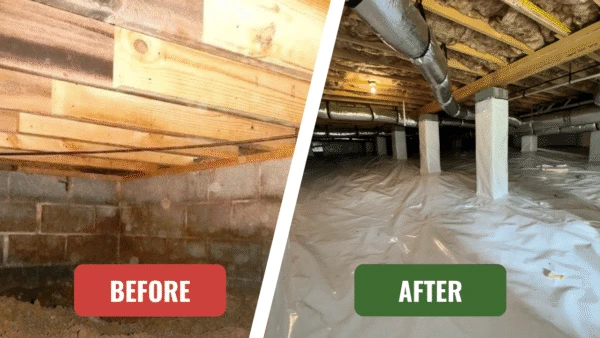
Encapsulation retires that whole cycle. A thick crawl space vapor barrier goes down across the ground and up the block walls, sealed at every seam and pier. The vents close, the outside air stays outside, and a dehumidifier sized to the square footage holds the space at a humidity wood can live with. The crawl space door gets sealed to match, and the unit drains itself, so there's no pan to remember. Floors get warmer, the must fades, and the framing stops absorbing its slow damage. We've sealed crawl spaces under the ranches of Pennrose Park and the newer places off Freeway Drive alike.
Order matters more than equipment: standing water gets drained first, wet framing gets dried and repaired, and only then does the liner go down, because sealing water in is worse than leaving it alone. We'll tell you honestly whether your crawl space needs the full system or just a better barrier, and the look under there is free.
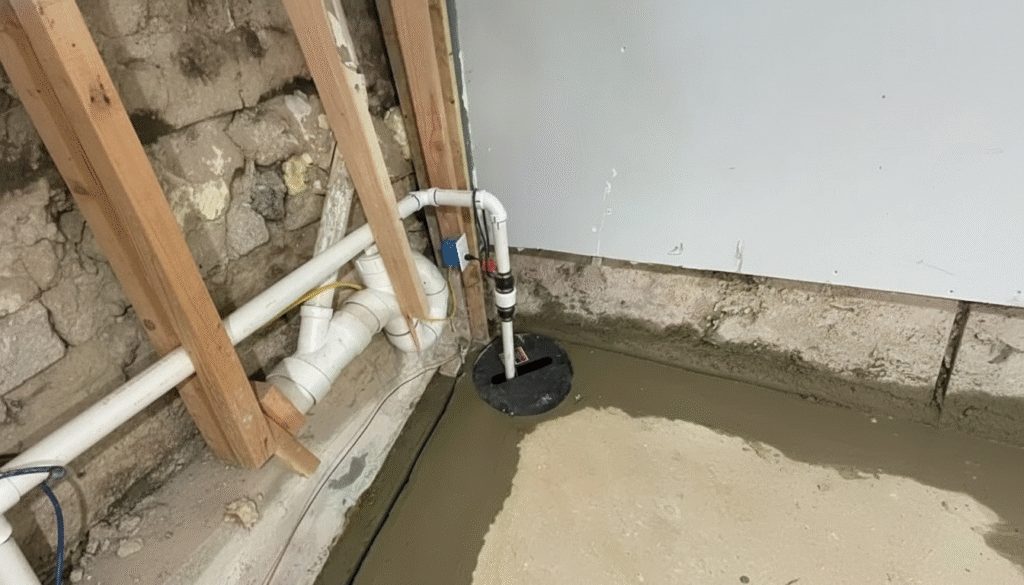
We set a sump basin where the water already gathers, pump it well away from the house, and back it up for the storms that cut the power.
Learn moreSome houses in town sit low enough that water simply arrives: under the floor after every hard rain, in the same corner of the basement, week after wet week. You can't argue with elevation. What you can do is give the water a better exit than your foundation.
That's a sump system. We find the spot the water keeps choosing, the genuine bottom of the problem, set a sealed basin there, and tie in the drain lines that feed it. The pump lifts what gathers and pushes it through a discharge line that releases well away from the house, with a check valve so nothing runs back. Where the discharge would only re-soak the same low ground, we extend the line until the grade truly falls away, because a pump that recycles its own water is theater. A battery backup earns its keep here, because the thunderstorm that fills the basin is usually the one that takes the power with it. The low blocks off Morehead Street and parts of Downtown Reidsville have needed more of these than anywhere else in town.
A pump alone fixes a collection problem; paired with the right drainage it fixes a water problem. We'll tell you which one your house has after a free walk-through, with the price for exactly that in writing. Upkeep is a two-minute routine, a float check and an occasional battery swap, and we'll walk you through it at the install.
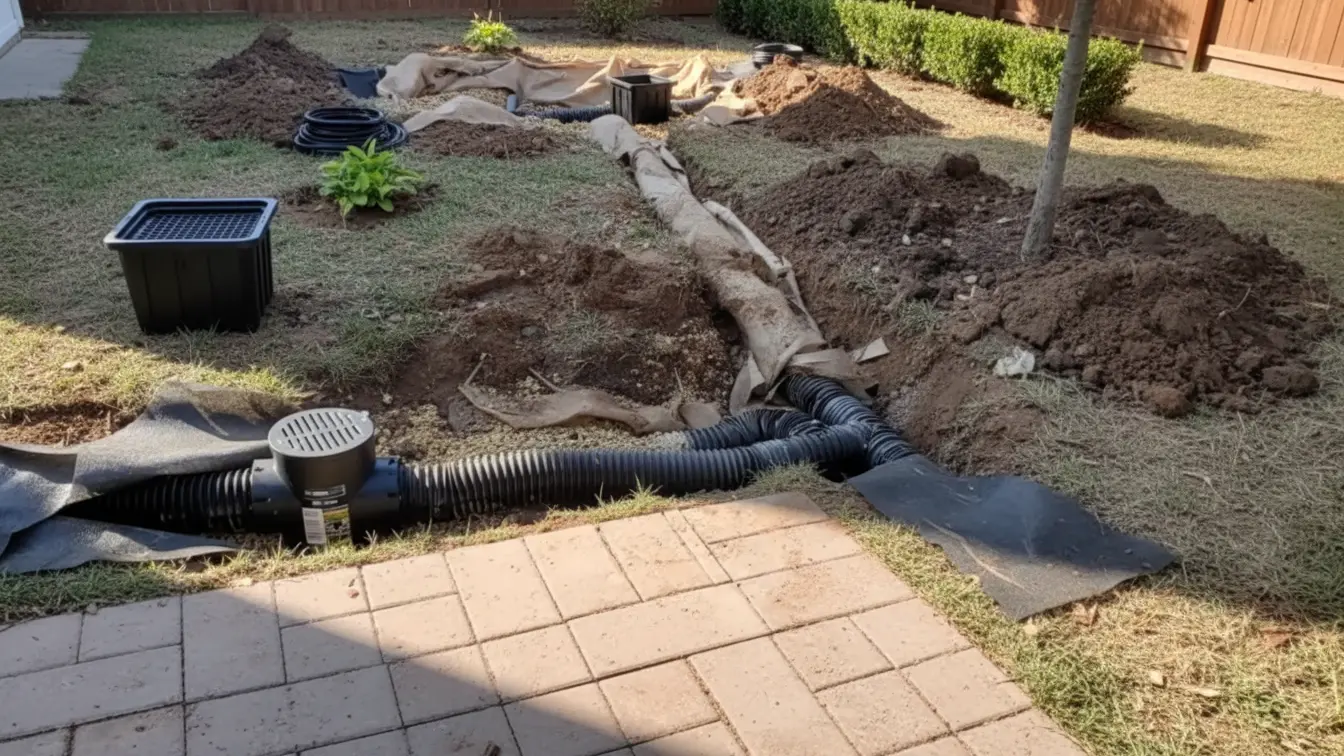
We trench in a gravel-bedded drain that catches the water your yard can't shed and walks it downhill before it reaches the house.
Learn moreThere's a kind of yard in this town that stays spongy for a week after the rain quits, where the mower leaves ruts in July. The ground takes water slowly here, and whatever it can't absorb travels the surface looking for a low spot, which is too often the strip along your foundation. You can watch it happen in a hard rain, a slow silver sheet headed straight for the house.
A french drain interrupts that trip. We cut a trench directly across the path the water always takes, bed perforated pipe in washed stone, wrap the assembly in fabric that keeps silt out, and run it on a true fall to a discharge point that can actually take the flow, daylight on a slope, or a sump when there isn't one. Cleanouts go in on the long runs, so the line can be flushed years from now without a shovel. The stone bed does the collecting; the pipe just provides the ride out. When the wet is under the house rather than beside it, the same idea moves inside, ringing the footing. We've trenched them through yards along Vance Street and below the slopes of Pennrose Park.
What separates a twenty-year drain from a three-year one is buried where you'll never see it: the fall, the fabric, the outlet. We build for the twenty and put the layout on paper before we dig. Walking your water path with you costs nothing.
Queen Foundation Repair covers the structural and water side of Reidsville houses: crawl space encapsulation, french drain installation, basement waterproofing, foundation repair, and concrete leveling. One outfit for all of it, because these jobs overlap more than they separate, and the company that sees the whole picture quotes the right fix instead of the familiar one.
We diagnose before we price. In a town of older houses, what looks structural usually comes down to water, and we'd rather find that out before quoting steel. And when a crack needs nothing but watching, we'll say that too. The first look is free every time, and the paperwork comes before the work: an itemized price and a written warranty that transfers if you sell. When the cheaper fix is the correct one, that's the one we put on paper.
The houses we know best are Reidsville's own: the older blocks around the Richardson Houses, the ranches along Vance Street, and most streets in between. The first visit is free, the read is straight, and the decision stays where it belongs, with you.
Get your free inspection
WHAT YOU GET
We answer fast and get out to the house quickly, so you're not sitting for weeks just to find out what's wrong and what it'll cost.
No charge to have us come out, find what's going on, and lay out what the fix takes. You know where you stand before spending a dollar.
Licensed, with full liability and workers' comp coverage, so the work is done to code and your property is protected if anything goes sideways.
The repair comes with a written warranty that transfers to the next owner, so it protects your home's value if you ever sell.
A clear, written price upfront before anything starts, no vague ballpark and no surprise add-ons once the work is underway.
Ranches from the sixties and older basements are our daily work in Reidsville, from Downtown out to Freeway Drive, so odds are we've fixed your house's problem before, nearby.
Four steps, no surprises, from the first phone call to the last walkthrough.
HONEST ANSWERS
These are the questions we hear at kitchen tables from Pennrose Park to Lawson Street: what things cost, what insurance will and won't do, and which cracks actually matter. The answers below match what we'd tell you at your own kitchen table.
Signs & Severity
In houses this age the first signs are usually small and repeat themselves: a door that needs a hip check every summer, fine cracks over window corners, a floor with a new lean, a musty edge to the hall air after rain. One of these alone rarely means much. The pattern worth acting on is change, anything that's wider, lower, or stickier than it was last season. A free inspection settles it either way, and most first visits end with reassurance, not a repair.
Both kinds live on Reidsville brick, so it's a fair question. Hairlines that follow one mortar joint, stay thin, and never grow are usually the house being seventy years old. The concerning ones step diagonally through several courses, take a coin edge-on, or reopen after tuckpointing. Date a photo of yours, check it in a month, and if it's moved, have it measured. We'll tell you plainly which kind you own, and watching costs nothing.
Because the ground under town holds onto rain. Reidsville sits on slow-draining clay, and the low blocks near Little Troublesome Creek stay saturated for days after a storm. Open crawl space vents make it worse in summer, pulling humid air under the house to condense on cool wood. The fix is a sequence, move the water away first, then seal the space, and which step matters most depends on where yours is coming from. That's what the free look determines.
Repairs & Methods
Piers carry most of the serious cases, but the right method follows the diagnosis. Push piers drive steel column sections down to load-bearing soil using the structure's own weight, which suits the full weight of a house. Helical piers screw in and verify their capacity by torque as they go, better for porches, additions, and lighter corners. Once seated, either kind lets us lift the structure back toward level where it's safe to. But settling that traces to soft, wet ground sometimes needs drainage more than steel, and sagging floors over a sound perimeter need crawl space supports instead. We work through those cheaper possibilities first, in that order, and quote piers only when piers are the answer. Whatever the fix turns out to be, you'll have it itemized in writing before we start.
It can be, the way it's sometimes sold. A liner slapped over standing water, vents left leaking, no dehumidifier, that version is a gimmick, and it fails. Done in order, water managed first, framing dried, then a sealed liner and a sized dehumidifier, it's simply building science, and the results are measurable: humidity down, musty smell gone, floors warmer. The difference isn't the product, it's the sequence and the honesty of the person selling it. We'll tell you if your crawl space doesn't need it.
Water first, always. Sealing a liner over standing water locks the moisture in with the wood, which is worse than doing nothing. The right order runs: drain the water with a french drain, sump, or regrading, let the framing dry and repair what softened, then encapsulate. Any contractor willing to skip to the liner while the ground under your house is wet is selling you their schedule, not your fix. We sequence it properly even when it means two visits instead of one.
Crawl Space & Water
For most Reidsville houses, yes, and the math is simpler than the brochures make it. A sealed crawl space protects the framing that holds your floors up, which is the expensive thing, and it changes the air you actually breathe, since a good share of first-floor air rises from below. Owners notice warmer floors, a missing musty smell, and a dehumidifier upstairs that finally rests. Heating and cooling usually ease too, because the system stops fighting a swamp under the house. Where it's not worth it: a crawl space that stays naturally dry, needs only a simple vapor barrier, or belongs to a house you're selling next spring. We'll tell you which case is yours from under the house, not from a sales sheet, and if the smaller job wins, that's the quote you'll get.
Real downsides exist and deserve saying. It costs real money up front. The dehumidifier uses electricity and eventually needs replacing. A sealed space must be kept sealed, so future plumbers and cable installers have to respect the liner. And if the water problem underneath was never fixed, encapsulation hides it while it worsens, which is the expensive downside. None of these outweigh the benefits for a chronically damp crawl space, but they're why we don't prescribe it for every house we visit.
The liner itself, when it goes in properly, holds up fifteen to twenty-five years, often longer if nobody drags equipment across it. Dehumidifiers are the mortal part, plan on eight to twelve years per unit. What actually determines lifespan is what happened before installation: a system over solved drainage lasts decades, a system over ignored water fails in two or three. Ours goes in after the water work, and the warranty paperwork spells out both the coverage and the simple upkeep.
Cost & Insurance
Honest brackets beat a fake number, so here they are. Sealing a stable crack runs a few hundred dollars, not thousands. Crawl space support work, steel columns and sistered joists, typically lands in the low thousands, sometimes mid. Pier underpinning sits at the serious end: most Reidsville jobs fall between four and twelve thousand depending on pier count, soil depth, and access, with big or complicated houses running past that. Two things keep the number honest here. First, the free inspection often finds that a feared foundation problem is actually a drainage problem, which costs a fraction. Second, the quote is itemized, so you see each pier and each hour rather than one round scary figure. No one can price your house from a webpage, but everyone should walk in knowing these ranges.
For a crawl space around two thousand square feet, the common range is eight to fourteen thousand fully done: liner, sealed vents, dehumidifier, sump if needed. Smaller spaces and simpler conditions land under that; spaces needing drainage or wood repair first land over. A basic vapor barrier without the sealing system costs far less and sometimes suffices. The only number that means anything is the itemized one we write after crawling yours, and that inspection is free.
Mostly no, and that answer should come to you straight. Homeowners policies treat gradual problems, settling, seepage, long-term dampness, as maintenance, and maintenance is excluded. That covers most of what we repair. The exceptions are sudden accidents: a supply line bursts and floods the crawl space overnight, a storm event the policy names. Those can sometimes become claims, and sudden and accidental is the phrase adjusters live by. If you suspect yours qualifies, photograph everything with dates before touching anything, read the water and earth-movement sections of your policy, and call your agent early. Our written inspection report has ridden along with plenty of claims over the years, and we'll document honestly whichever way it points, including when the honest answer is that this one's on you. Budgeting for the repair beats betting on the adjuster.
Process & Timeline
The season that matters is the one when you found the problem. Foundations don't pause for winter, and a moving crack moves year-round. Practically, late summer and fall give the driest ground for drainage and excavation work, and spring is our busiest phone season, so scheduling breathes easier outside it. Crawl space and interior work happens comfortably in any month. If your issue is active, the calendar answer is now; if it's borderline, we'll tell you it can wait for better weather.
Yes, nearly always. The work happens under and around the house, not in your living room, and families stay put through pier jobs, crawl space work, and waterproofing alike. Expect truck noise, some vibration on the heavy days, and a crew in the yard. Interior crack injection is quieter than a paint job. We'll flag the loud days in advance so you can plan the toddler's nap or the workday calls around them.
The inspection takes about an hour, and the written quote follows the same day. Once you say go, most jobs are short: crack repairs need a day, encapsulation and crawl space supports typically take one to three, pier underpinning two days to a week depending on count. Add a weather day for outdoor phases in a wet stretch. You'll get real dates with the quote, and if your job is the rare long one, you'll know that before you sign anything.
Trust, Warranty & Local
Yes, in writing, and yes, it transfers. Structural work like piers carries the strongest coverage; drainage systems and encapsulation carry warranties on the installed components; even sealed cracks are covered against reopening. The terms live in plain type in your closing paperwork, not in a footnote you discover later, and at the final walkthrough we go through exactly what's covered and what simple upkeep keeps it that way. The transfer matters more than most people expect: when you sell, the coverage follows the house, and a buyer reading a transferable warranty sees a solved problem where they'd otherwise see a gamble. That difference shows up in the offer. If a covered issue ever resurfaces, the number's on the paperwork, you call it, and we come back out. That's the entire process.
You can, North Carolina just requires disclosing what you know. The real question is economics: buyers discount uncertainty far harder than they discount a documented repair. An unexplained crack invites the imagination, and imaginations negotiate expensively. A repaired one with paperwork and a transferable warranty usually costs a seller less than the concession an as-is sale demands. Some owners repair before listing; others get our written quote and hand it to the buyer as certainty. Either path beats hoping nobody notices, because inspectors notice.
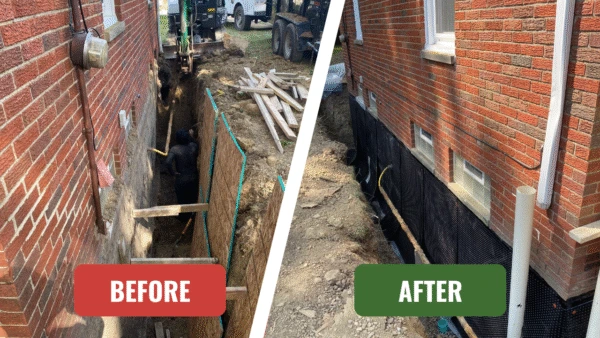
It works when the method matches the wall. The three approaches: exterior waterproofing, excavating and sealing the outside of the wall, the most thorough and the most expensive; interior drainage, a perimeter drain and sump that manage the water that arrives, which is what older basements here typically need; and sealants or coatings, which handle minor damp but can't hold back real pressure. Reidsville's older basements do best with the middle path plus gutter and grading work outside. Paint alone is not a cure. We match the method to your wall and put the reasoning in the quote.
AREAS WE SERVE
We serve the greater Reidsville area and a good stretch of Rockingham County around it, not just the blocks inside city limits. From Pennrose Park to the streets around Downtown, and out past Lake Reidsville and Lake Hunt, we fix settling foundations, wet crawl spaces, and damp basements, and the first look is free wherever you are.
ZIP Codes We Serve
Ready to Get Started?
No obligation, fast and easy.
We appreciate you reaching out.
One of our team members will be with you shortly.