Stair-step cracks, sticking doors, a musty crawl space. In Charlotte it usually traces to the red clay, from Dilworth's older homes to the graded lots around Ballantyne. We handle foundation repair, crawl space encapsulation, and drainage, starting with a free inspection.
Get Your Free Inspection
We appreciate you reaching out.
One of our team members will be with you shortly.





Warning Signs
One sticking door is easy to explain away. A crack, a floor that feels off, same thing. It's when they add up that you're looking at a foundation on the move, and in Charlotte that usually traces to the clay and graded fill underneath.
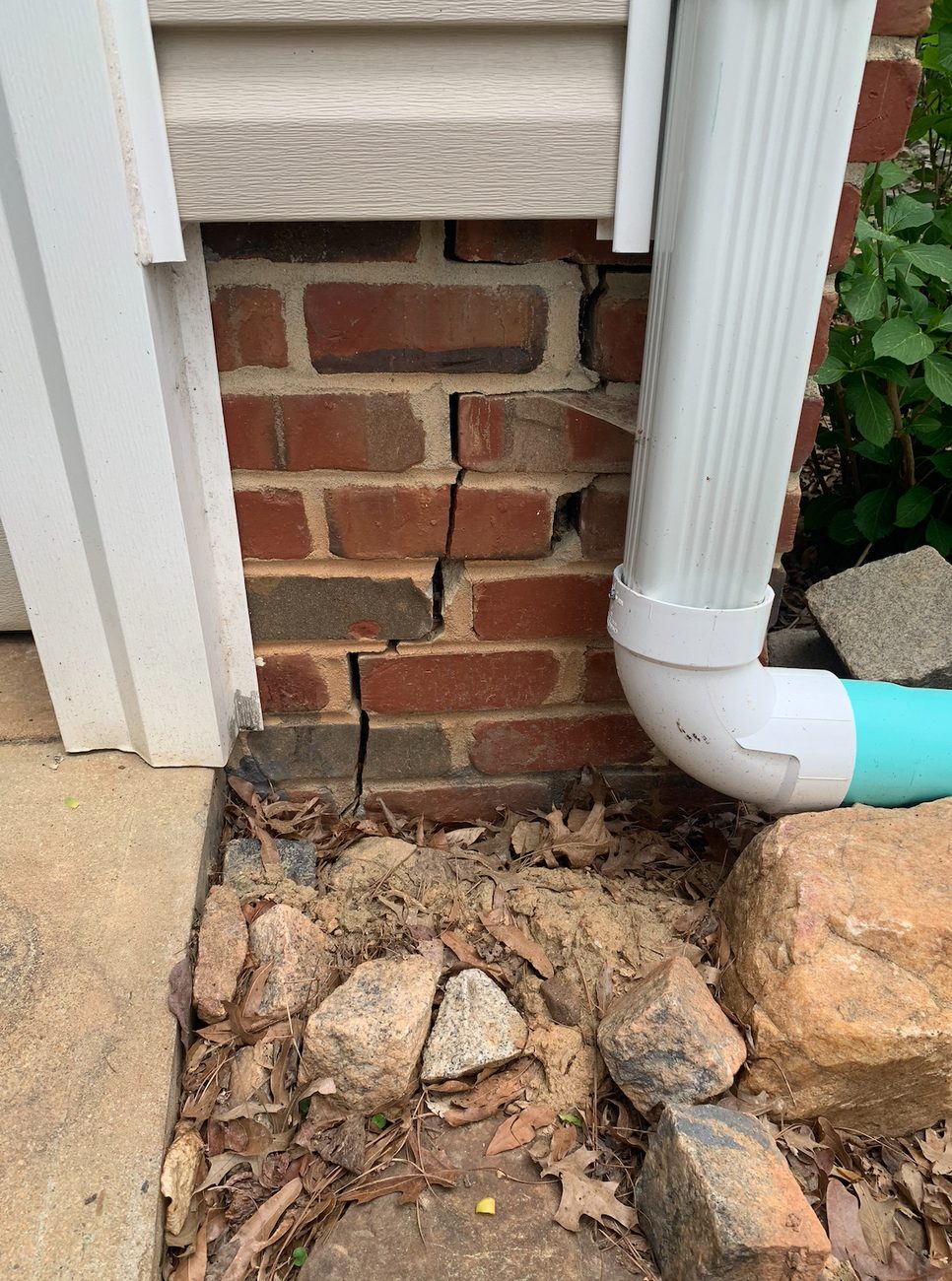
Stair-Step Cracks in the Brick
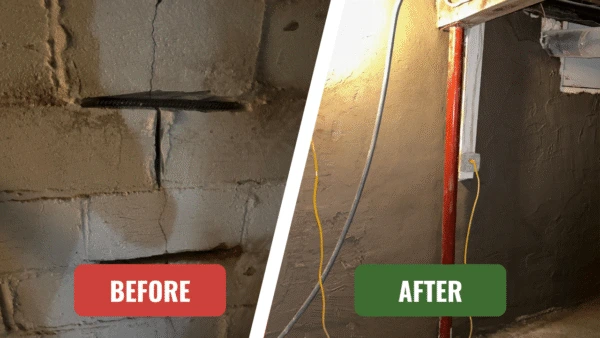
Cracks that climb the mortar joints in a stair-step usually mean one corner has settled. Steel piers lift it back and close the gap for good.
Doors and Windows That Stick
When doors won't latch and windows jam for no reason, the frame's been pulled out of square by settling underneath. Level the foundation and they close right again.
Sloping or Bouncy Floors
Floors that tilt or bounce mean the support underneath is failing, either settlement below or joists rotted by crawl-space moisture. We shore up whichever it is.
A Musty, Humid Crawl Space
That damp, musty smell is humid air sitting in an open crawl space over wet clay. Encapsulation seals it off and dries the space out.
Water Pooling by the Foundation
Puddles against the house after a hard rain usually come from downspouts and grading sending water toward the foundation, not away. Drainage moves it out.
A Bowing Wall or Wide Crack
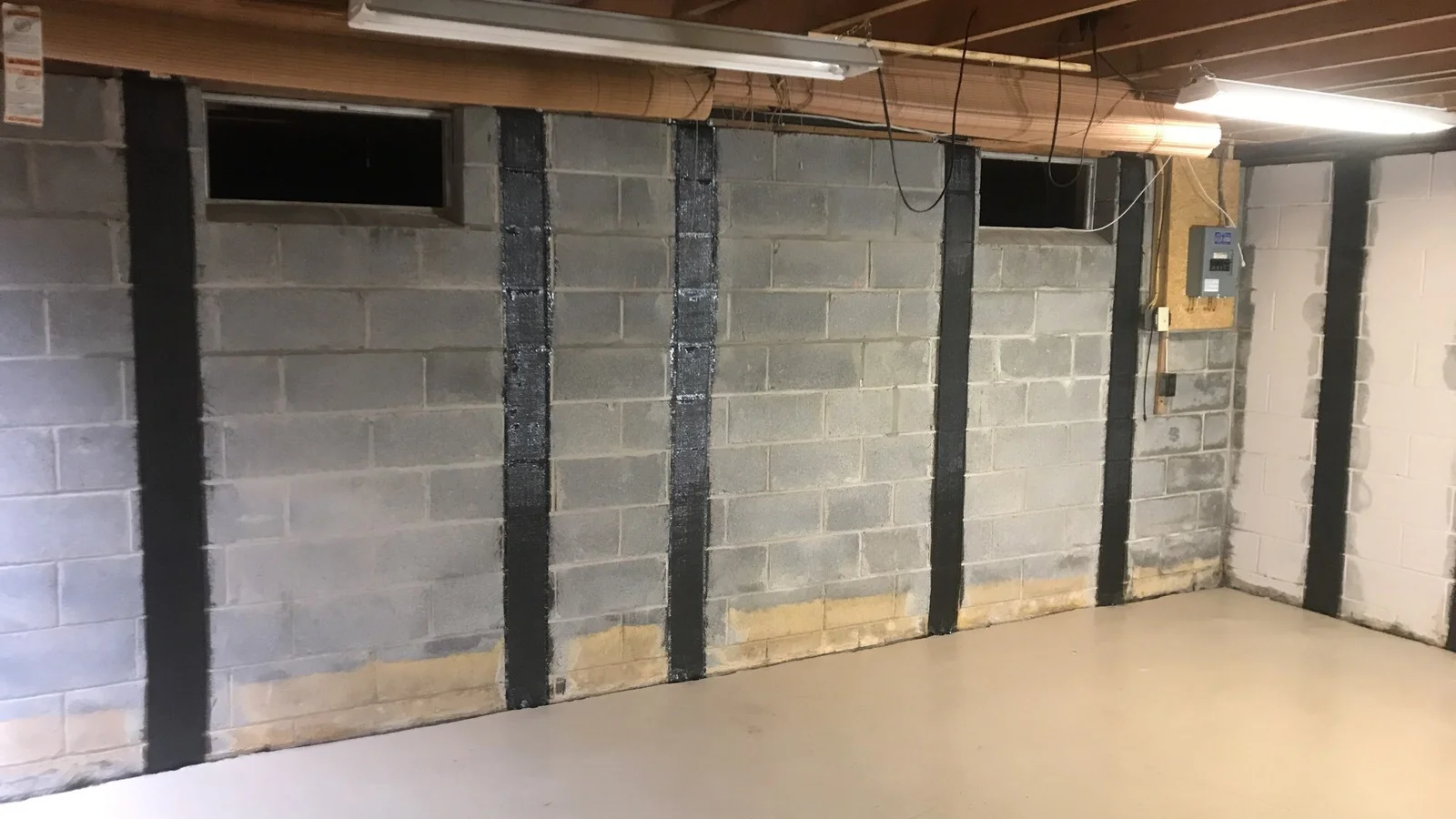
A wall that leans in, or a crack straight across it, is under real pressure from the clay. Carbon fiber or anchors brace it before it moves.
Seeing one or two of these doesn't always mean a major repair, and it doesn't always mean structural damage. Some of it is cosmetic. The only way to know for sure is to have someone look in person. We'll tell you honestly what's going on and whether it needs work, and the inspection is free.
From the first hairline crack to a fully sealed crawl space, we handle the whole range of foundation and moisture work around Charlotte. Tap any service below to see what it involves and when it's the right fix for your home.
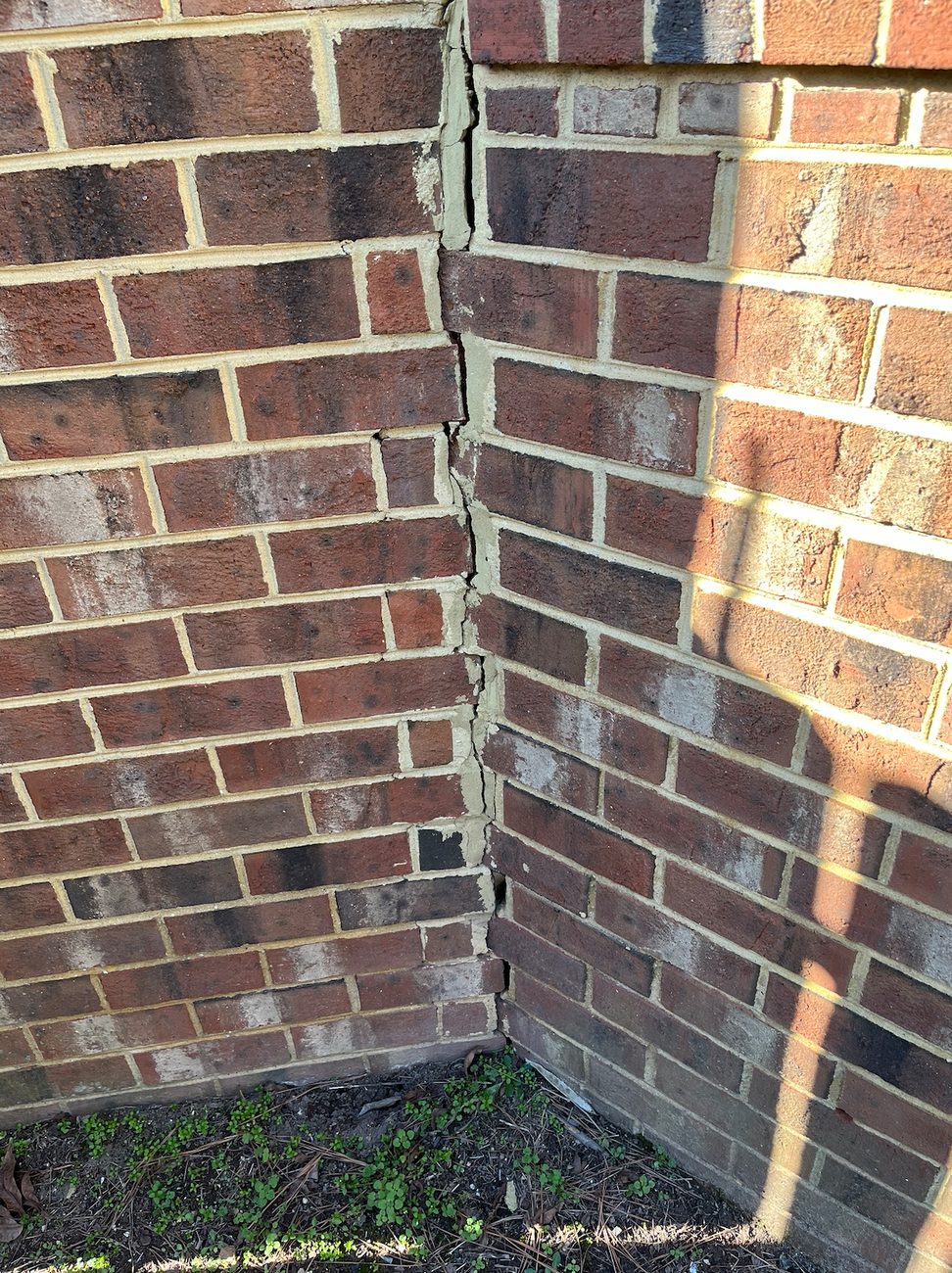
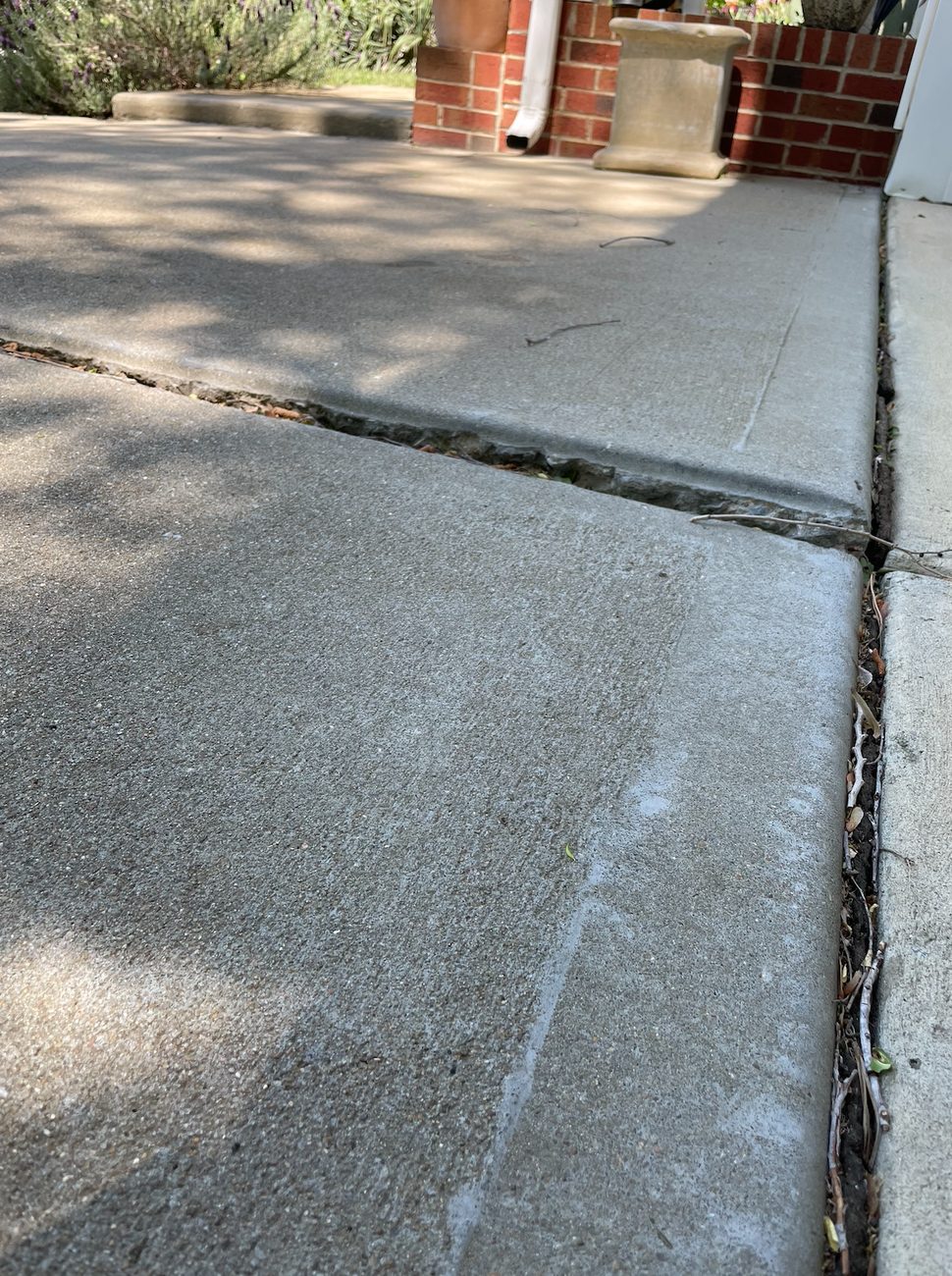
The permanent fix for a settling or sinking foundation. We stabilize the structure, close stair-step cracks, and bring floors and door frames back where they belong.
Learn moreIn Charlotte, a settling foundation almost always comes down to the red clay under the house. It swells when it's wet, shrinks when it's dry, and that push and pull slowly works it out of level. You feel it first in small things. Doors stop latching. Cracks step up through the brick. Floors start to slope or feel bouncy.
It hits the newer subdivisions hardest, where the lots were cut and filled to sit level and that fill settles slower than the ground beside it. You see a lot of it around Ballantyne. Older homes settle too, just more slowly, as the clay keeps working on footings that have held for decades. Dilworth is full of it.
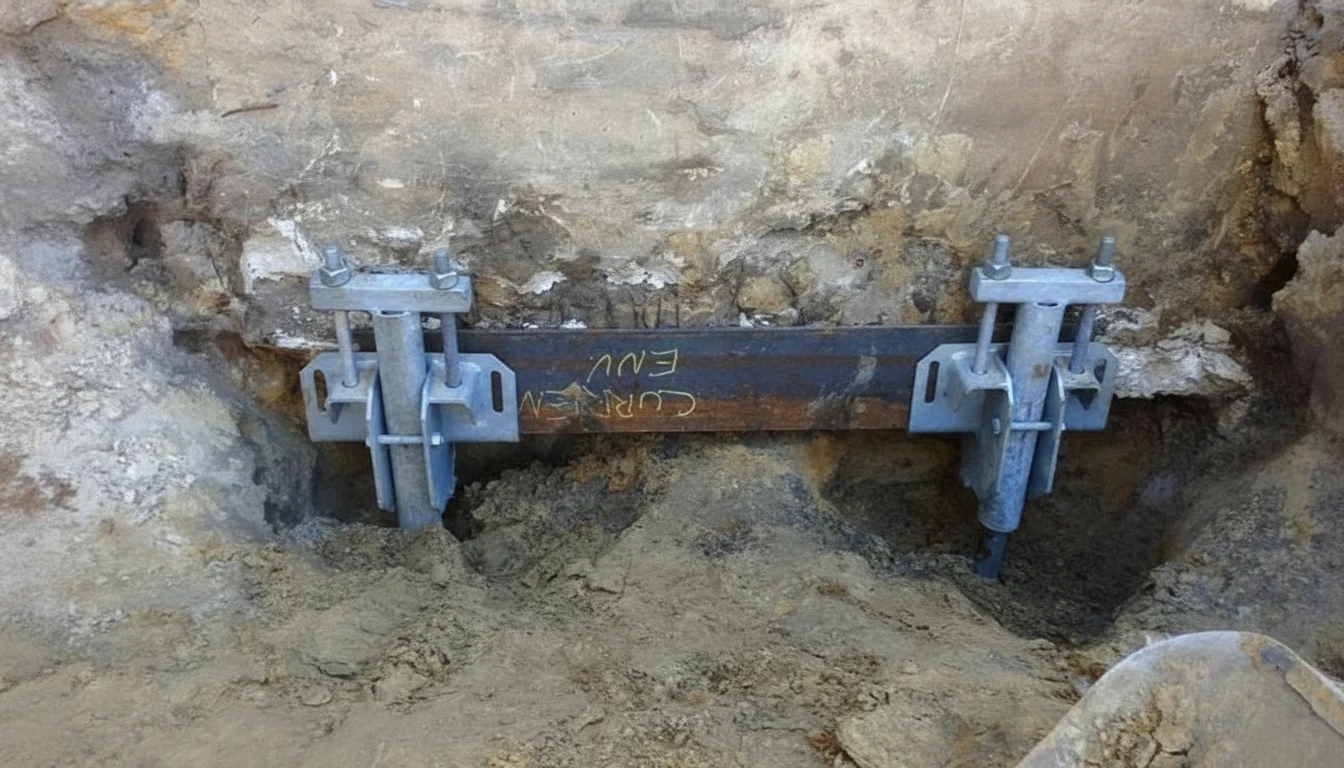
There's no single repair that fits every house. When it's truly settled, the fix is underpinning: we drive steel piers down through the clay to solid ground and lift the house back to level, then let the piers carry the load from there instead of the moving soil. For lighter structures and room additions, helical piers do the same job. Done right it's permanent, not a patch that reopens next season, and it carries a transferable warranty. But piers aren't always the answer. Sagging floors over a crawl space usually trace to the supports down there, not the foundation. If water is driving the movement, we fix the drainage first. And plenty of cracks are cosmetic and need nothing structural. A free inspection tells you which, and if it calls for a structural engineer, we'll say so.
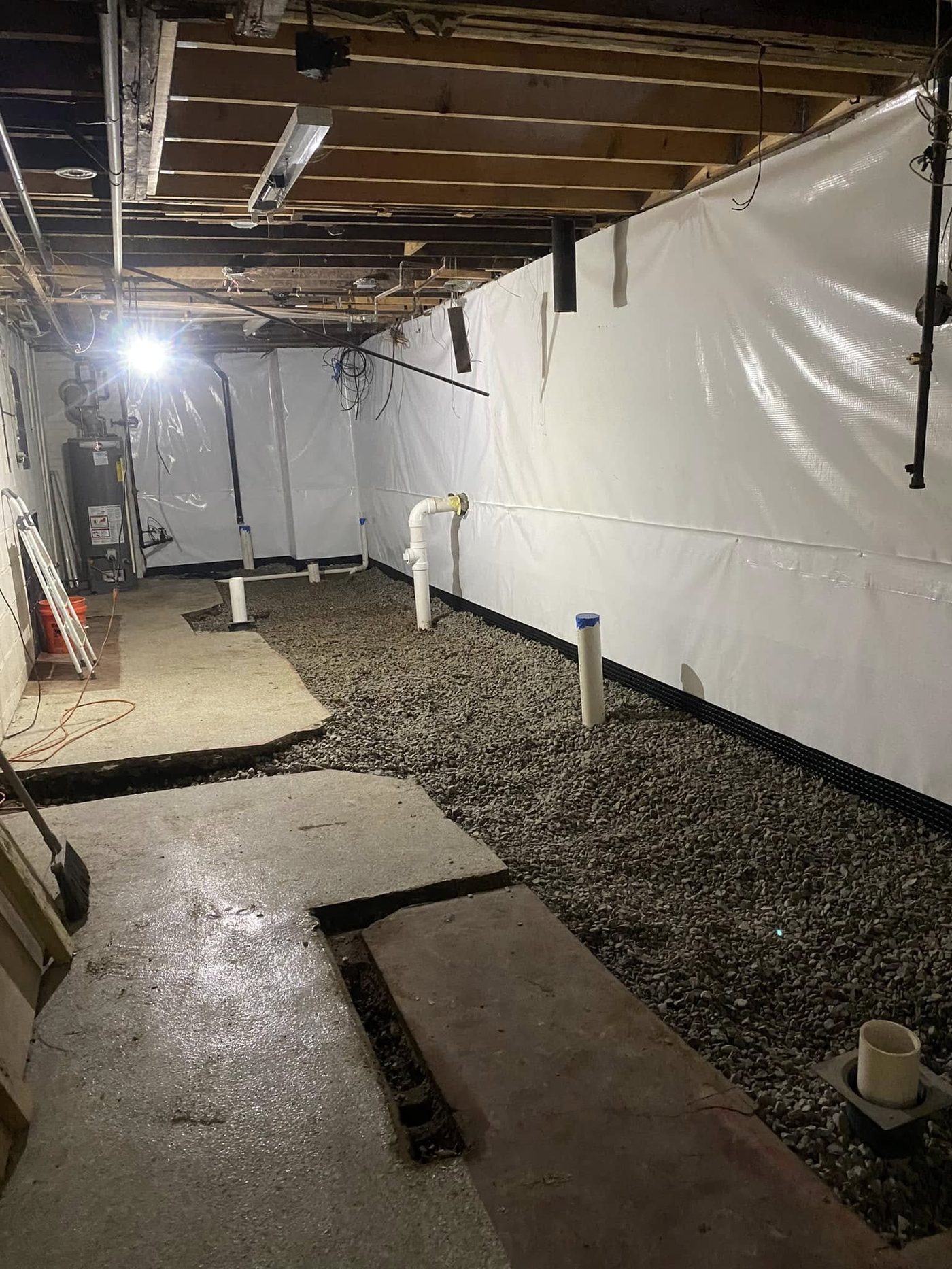
For the Charlotte homes that do have a basement, we stop water from getting in and keep it out for good, walls, floor, and the joints in between.
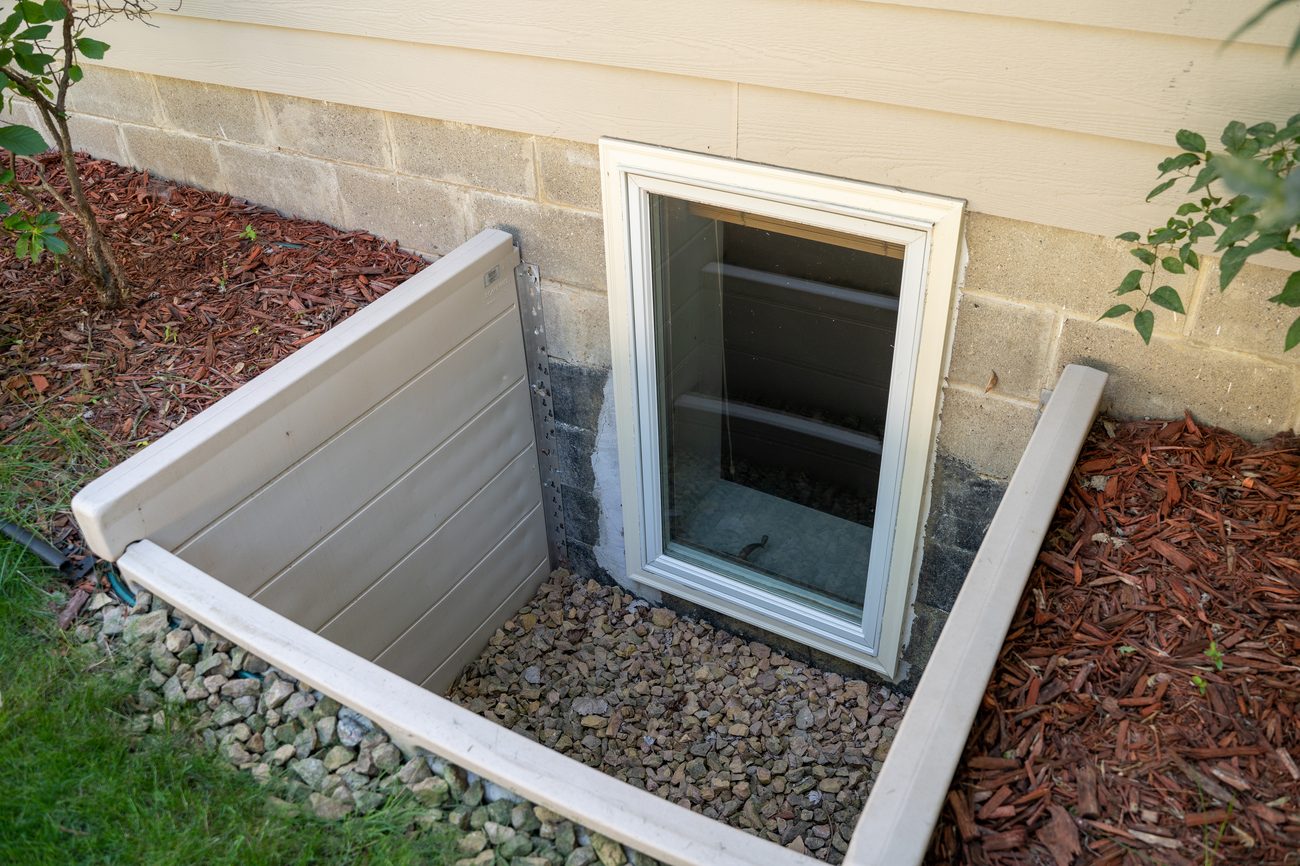
Learn moreMost homes in Charlotte sit on a crawl space or a slab, so a wet basement is less common here than a wet crawl space. You won't find many in Myers Park or Eastover, and where they do turn up, it's usually an older home or a walk-out built into a sloped lot. If yours takes on water, here's how we stop it.
The water is almost always the red clay. It holds moisture and presses it against the walls after a hard rain, and walk-outs get it worse since a wall or two sits partly above ground. You'll see it as a damp wall, a white chalky line, a puddle in the corner, or a musty smell that won't clear.
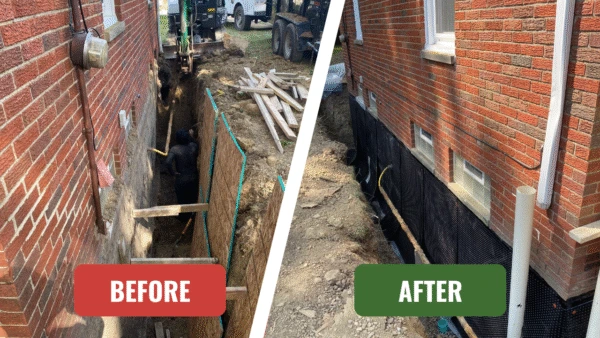
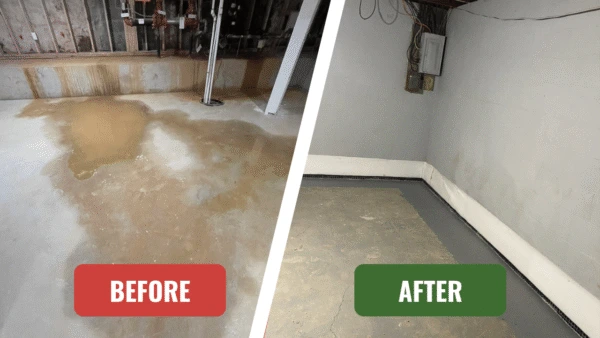
There's no single fix; it comes down to how the water's getting in. The first move is often outside and the cheapest: fix the grading and extend the downspouts so the water never reaches the wall. When it's already coming up at the floor, we run an interior drain around the footing to a sump pump that carries it out. A single leaking crack just gets sealed. The worst cases call for waterproofing the wall from the outside, which means digging. And if a wall is bowing in from the clay, that's a structural repair, not just waterproofing. Plenty of damp basements don't need the full system, and if what you really have is a wet crawl space, we'll say so, because that's encapsulation. A free inspection sorts out which one you've got.
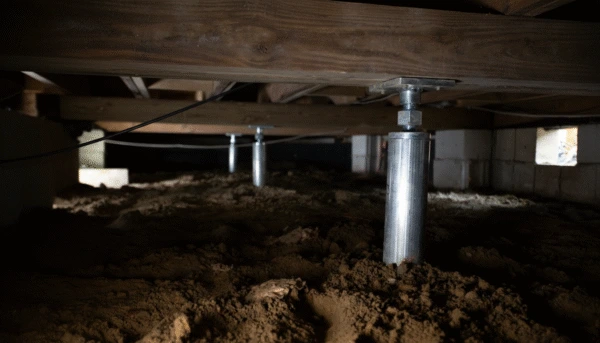
For crawl spaces that have already taken damage: sagging floors, rotted joists, failing supports. We rebuild the structure underneath so the floors above sit solid again.
Learn moreWhen the floors in a Charlotte home start to bounce, dip, or slope, the trouble is usually down in the crawl space. Years of damp air have weakened the wooden joists and beams that carry the floor, and the posts holding them up have settled into the soft clay. You feel it upstairs first: a springy spot in the hallway, a slope toward an outside wall, a door that won't close square over a floor that's dropped. Left alone it spreads, because the load the failing supports gave up shifts onto the ones beside them.
It's most common in the older bungalows around Elizabeth and NoDa, where the original framing has carried the house for the better part of a century.
We rebuild from the ground up. A joist or beam that's rotted or split gets sistered with new lumber alongside it or replaced outright. Where the floor has dropped, we set adjustable steel crawl space jacks on poured footings and bring it back to level slowly, over days, so nothing above cracks. Sagging floor joists get reinforced, and failing block piers get rebuilt on ground that won't move. Damp is what weakened the wood in the first place, so the moisture gets handled too, but the repair itself is structural: back to solid, level, and load-bearing. A free inspection tells you which parts actually need work and which are still sound, so you're not paying to replace wood that's fine, and we'll be straight about what can wait and what can't.
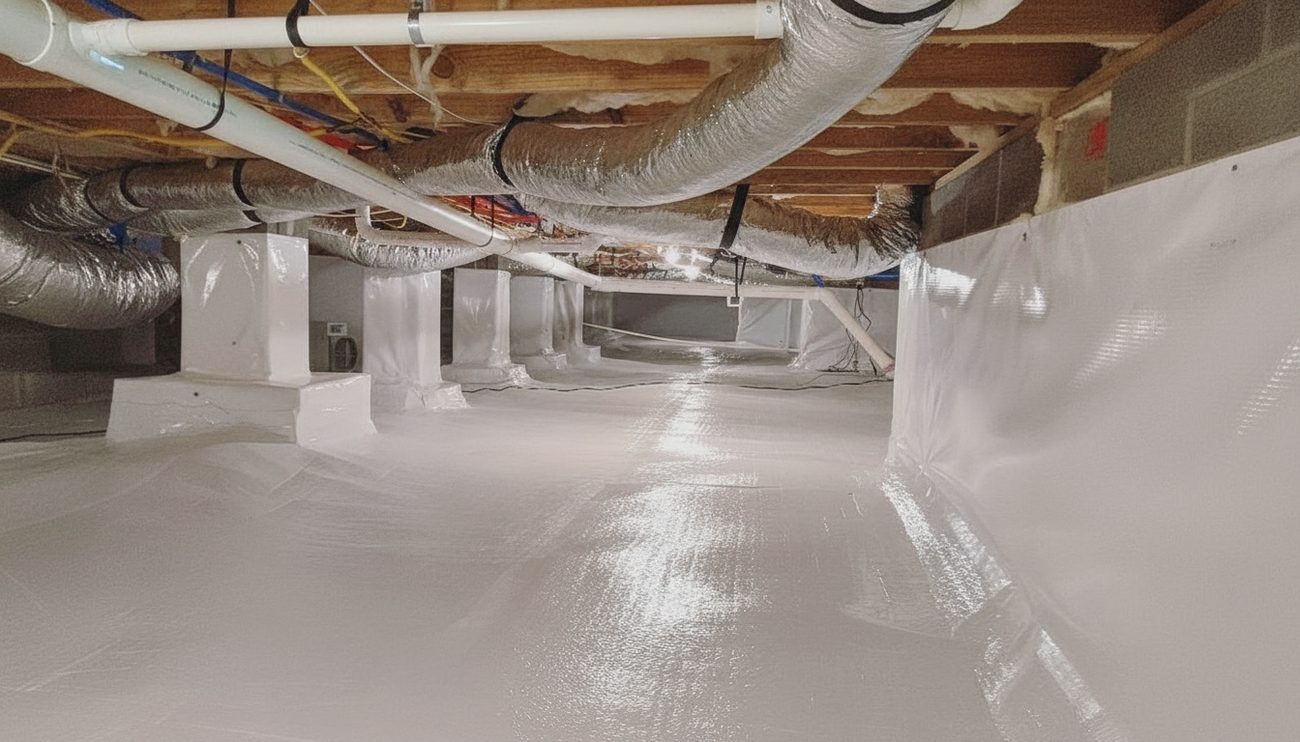
Seals your crawl space off from the damp Charlotte ground and humid air, stopping the mold, musty smell, and wood rot that come with an open, vented crawl.
Learn moreCharlotte is a crawl-space town. Most homes sit over one, and most of those crawls are open to the outside air, which is the whole problem. Our summers are humid and the ground under the house is damp red clay, so that warm, wet air drifts in through the vents, hits the cool crawl, and turns to water. You smell it upstairs before you ever see it: a musty smell, then mold on the joists, floors that feel springy, or hardwood that starts to cup.
It shows up worst in older homes with open, vented crawls, the bungalows around Plaza Midwood and Dilworth especially, though any vented crawl over Charlotte clay will do it.
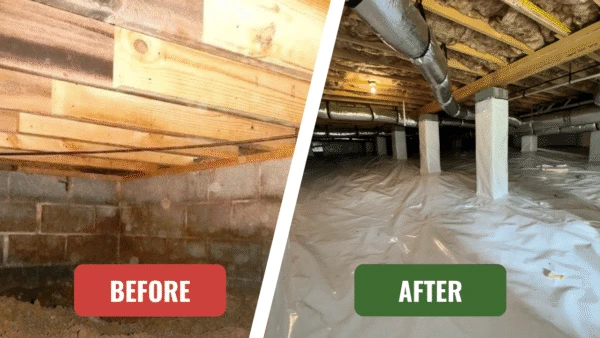
Encapsulation seals the crawl off from all that moisture. We line the floor and walls with a heavy vapor barrier, close up the vents so the humid outside air stays out, and add a crawl space dehumidifier to hold the space around 55 percent humidity. If there's standing water down there, a drain and a sump pump go in first. Sealed and dried, the musty smell clears, the mold has nothing to grow on, and the floors above stop feeling damp and springy. Not every crawl needs the full system, though. A dry, tight one might just need a vapor barrier and better drainage outside. A free inspection tells you how far it really needs to go, and we'll tell you if it doesn't need much at all.
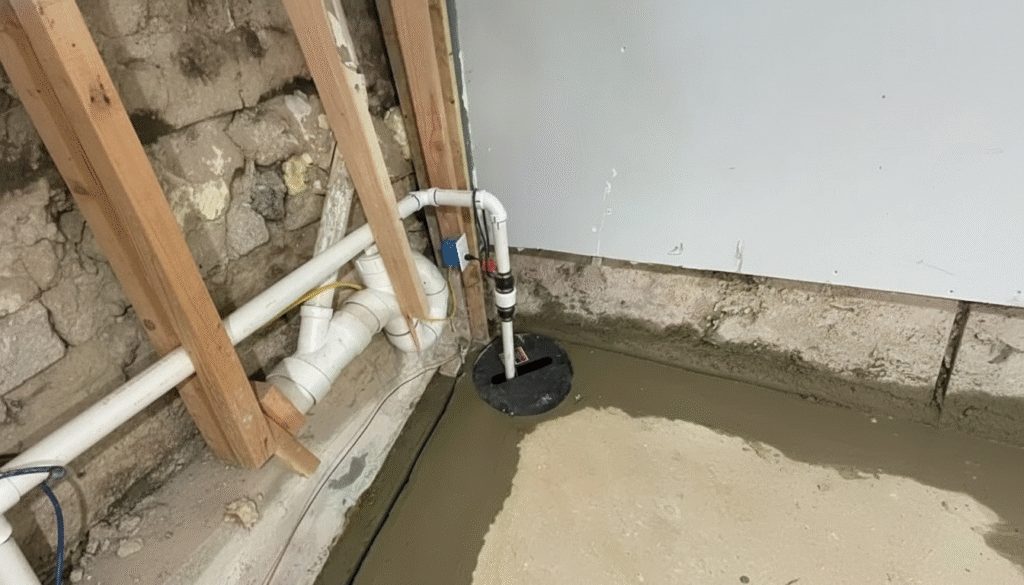
The backstop for water that makes it inside. A sump pump collects groundwater in a basin and pumps it out automatically, keeping your crawl space or basement dry.
Learn moreA sump pump is the last line of defense for water that makes it inside. In Charlotte, the red clay holds rain against the house and pushes it in at the lowest point, usually a corner of the crawl space or basement that stays damp or floods after a hard storm. A sump pump collects that water in a basin dug into the low spot and pumps it out and away from the foundation, on its own, every time it rises.
It earns its keep in the older, lower-lying homes around Sedgefield and Madison Park, where water has somewhere to collect and nowhere fast to go.
The right setup depends on how much water you get. Most homes need a single sump pump in a sealed basin, tied into an interior drain that feeds it. Where the water table runs high or a finished basement is on the line, we add a battery backup so it keeps running through a storm outage, which is exactly when the power tends to fail. We size the pump to the water, set the float so it can't short-cycle and burn itself out, and run the discharge line far enough from the house that it doesn't just soak back down to the basin. A pump is only as good as its upkeep, so we show you how to test it. A free inspection tells you whether you need a pump at all, or just better drainage outside to keep the water from getting there in the first place.
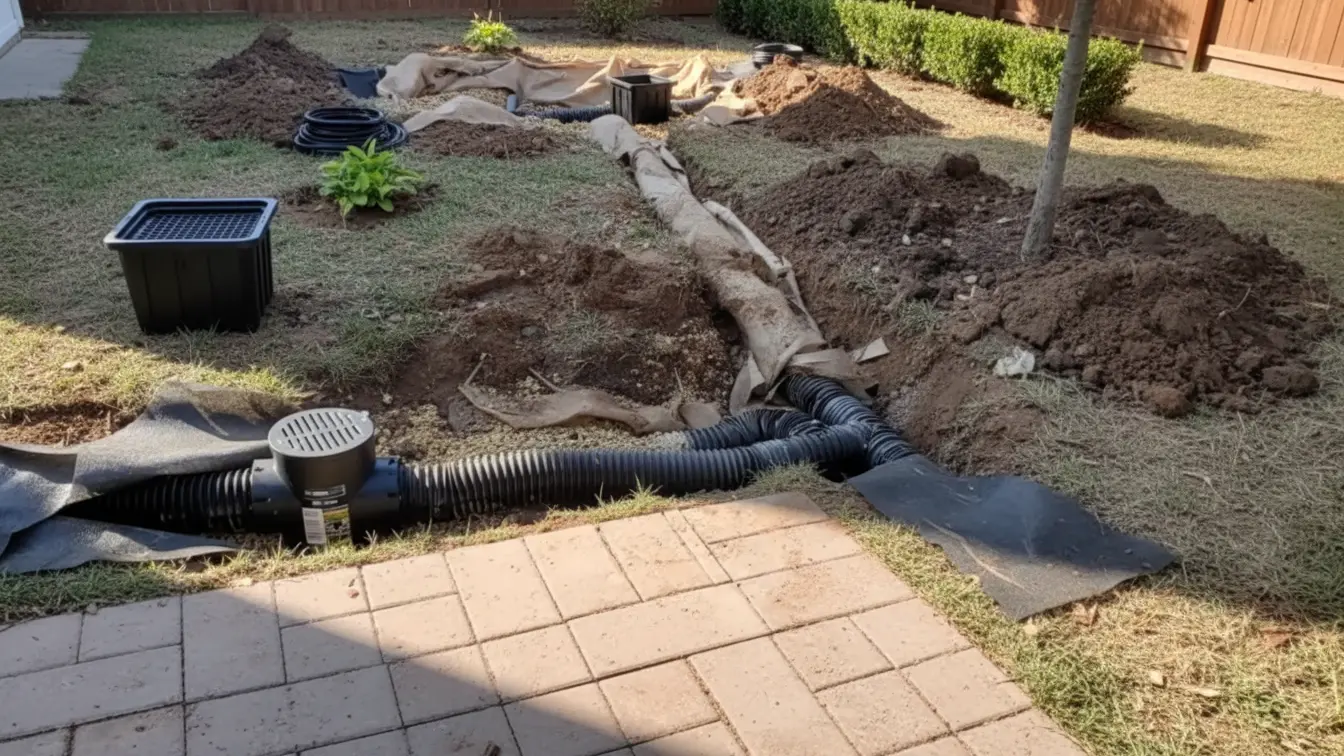
Redirects the water that collects around your foundation after a hard rain, carrying it away from the house before it can saturate the soil and cause problems.
Learn moreCharlotte gets better than forty inches of rain a year, and the clay it lands on doesn't drain, it holds. So water pools against the foundation, soaks the ground it sits on, and works its way into the crawl space or basement. You'll see it as a soggy yard, mulch washed across the drive, or water standing at the foundation after the rain stops. A french drain gives that water an easier path: a gravel trench with a perforated pipe that catches it and carries it downhill, away from the house.
It's a common fix on the bigger, tree-shaded lots around Foxcroft and Cotswold, where runoff has a long way to travel and low spots hold it against the house.
Where the drain goes depends on where the water is. A lot of the time the real trouble is on the surface, and french drain installation is only half of it: we also regrade the soil to slope away from the house and add downspout extensions so the gutters aren't dumping at the footing. For water already getting inside, an interior drain around the crawl or basement floor catches it and routes it to a sump pump. Bad yard drainage that pools out in the lawn gets its own trench to daylight. The trench itself matters, cut to a real slope and wrapped in fabric so the clay doesn't silt it up. A free inspection sorts out whether you need a full drain or just better grading and gutters, and we'll tell you if the cheaper fix will do it.
Queen Foundation Repair is a local foundation and crawl space company, and around Charlotte that second part matters as much as the first. Most homes here sit over a crawl space rather than a basement, so a lot of what we do is settling and moisture work, under the newer builds out in Ballantyne and the old streetcar bungalows in Dilworth and Elizabeth alike. Whatever the house, we run on one rule: tell the homeowner the truth, then fix it right the first time.
It always starts with a free, no-pressure inspection. Half the time the honest answer is that a crack is cosmetic and you can leave it alone, and we'll tell you that and save you the money. When a foundation really has settled or a crawl space has gone bad, we handle it with proven methods and back it with a written scope and a transferable warranty. That straight-talk is how our reviews have held near five stars across close to fifty Charlotte homeowners, with no scare tactics and no upsells you didn't ask for.
A foundation problem always feels scarier than it turns out to be, until someone who actually knows Charlotte's houses walks you through it. That's the part we care about most: a straight look, a clear plan, and a repair that holds. Whatever your home is dealing with, Queen Foundation Repair takes care of it across Charlotte, and it always starts the same way, with a free inspection and an honest answer.
Get your free inspection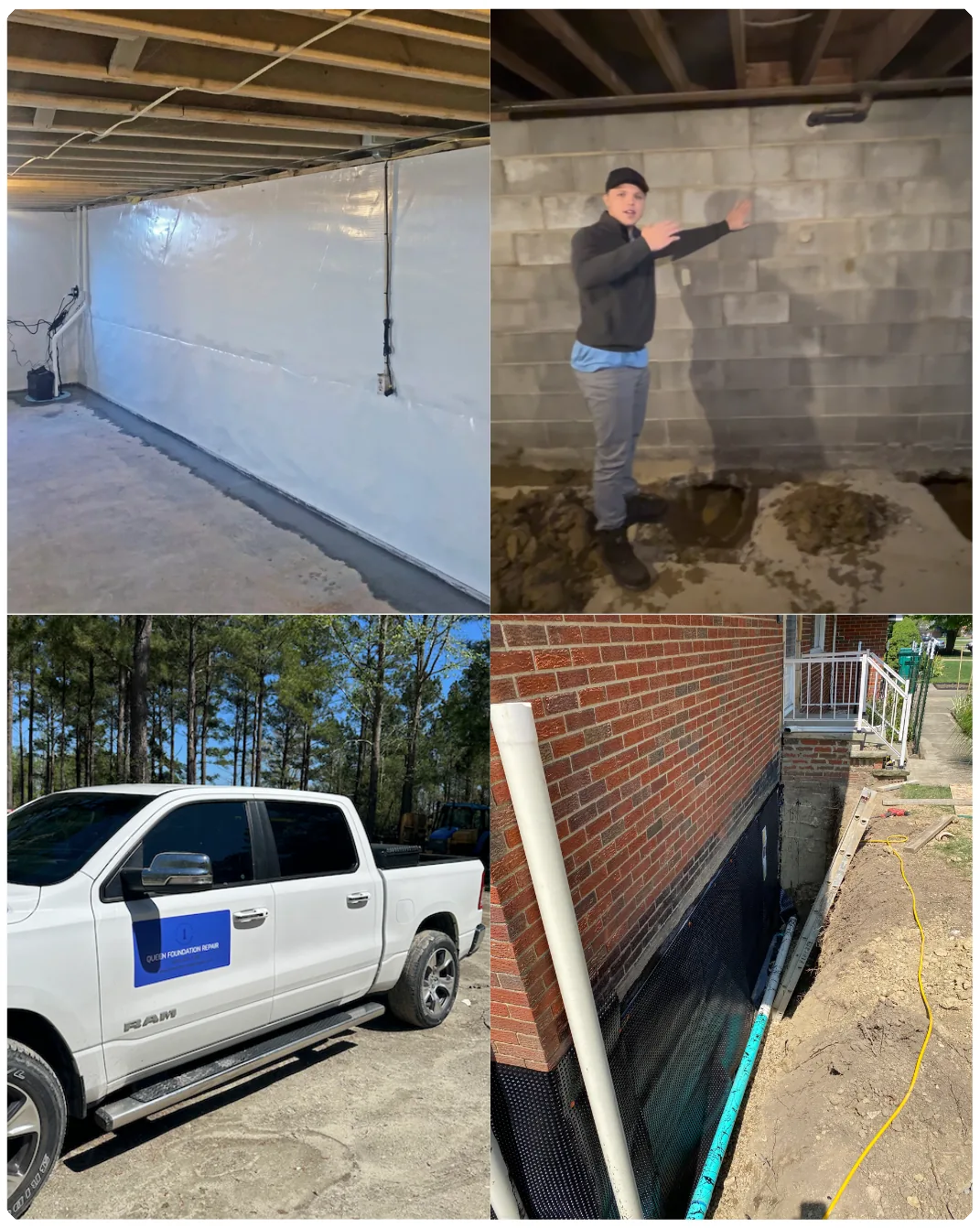
Why Choose Us
We come out, find what's actually wrong, and give you a straight answer, whether that's a real repair or a crack you can safely leave alone.
Every repair comes with a written, transferable warranty, so it holds for good and follows the house if you ever sell it.
Fully licensed and insured in North Carolina, so everyone working under your home is covered and the job is done to state code.
A clear quote for exactly what the job needs and nothing it doesn't. You see the number before anyone starts, with no surprises after.
We get out quickly and turn the estimate around fast, because a settling foundation isn't something you want to sit on.
We're under Charlotte homes every day, from Ballantyne to Dilworth, so we know how differently a newer build and an old bungalow move on this clay.
From the first call to a warranty that outlasts you, here's exactly how a job goes. No pressure, no surprises, and a straight answer at every step.
Common Questions
Most Charlotte homes sit over a crawl space on red clay, and that shapes what people ask us. Here are the most common, from Plaza Midwood to Piper Glen: what it costs, whether you can wait, and what insurance covers.
Signs & When to Worry
The signs we get called about most are doors and windows that stick or won't latch, cracks that step up through brick or run across drywall, floors that slope or feel bouncy, and a crawl space that's damp or musty. One on its own usually isn't much. It's when a few show up together that they point to the foundation moving underneath. Gaps opening around window trim, or where the ceiling meets the wall, are worth a look too. None of it fixes itself, and the earlier you catch it, the smaller the repair.
Not every crack is a problem. Thin hairline cracks in drywall are usually just the house settling or concrete curing, and they're cosmetic. What gets our attention is the shape and the width. Cracks that step up diagonally through brick or block, cracks wider than about a quarter inch, or ones that keep growing month to month usually mean the foundation's still moving. Horizontal cracks in a basement or crawl space wall are the serious ones, since that's pressure pushing from outside. If you can watch a crack change, it's worth having someone look.
Honestly, it depends on what's going on, and a good inspection should tell you straight. Foundation problems don't heal on their own. The soil that's moving keeps moving, so a small settlement crack today is usually a bigger one and a pricier fix a couple years down the road. Catching it early is almost always cheaper than waiting. That said, not everything is an emergency. Some cosmetic cracks can be watched, and we'll tell you when something genuinely can sit for a season. What we won't do is scare you into a repair you don't need. If it's structural, though, waiting rarely saves money, and it can turn a manageable job into a major one, especially if water's getting in and softening the ground further. A free inspection is the honest way to find out which camp you're in before you spend a dollar.
Repairs & Methods
It depends on what's moving and why, but the core of it is getting the house back onto something stable. Where a foundation has settled, we drive steel piers down through the soft clay until they hit firm ground or bedrock, then transfer the weight of the house onto them. That stops the sinking, and in a lot of cases we can lift the foundation back toward level. Bowing walls, cracks, and drainage each have their own repair. The first step is always figuring out the actual cause, not just patching what you can see.
Both are steel piers that reach past the clay to stable ground, they just get there differently. Push piers are driven straight down using the weight of the house, so they work well under heavier homes and full foundations. Helical piers screw into the ground like a giant anchor, which suits lighter structures, room additions, and porches. On most Charlotte homes we'll use whichever the soil and the load call for, and sometimes both on the same house. The inspection is where we figure out which one your situation actually needs.
Done right, it lasts. The reason piers work is that they don't rest in the same clay that moved in the first place, they reach down to soil or rock that doesn't shift with the seasons, so the part of the house they carry stays put. Most quality pier systems come with a warranty precisely because they're built to be permanent. Where people run into trouble is when the real cause never gets addressed. If water keeps pooling against the foundation and softening the ground, or a drainage problem gets ignored, a house can keep having issues no matter what was installed. That's why we don't just prop things up and leave. We look at grading, gutters, and where the water goes, and we fix the cause along with the symptom. Handle both, and you shouldn't be dealing with the same corner again a few years down the road.
Crawl Space & Water
Sometimes, and even when it isn't, it's worth dealing with. A damp, musty crawl space usually points to a moisture problem, water getting in through the vents, the ground, or bad drainage. On its own that's a mold and air-quality issue, since much of the air upstairs starts down there. But left alone, that moisture rots the wooden beams and posts holding your floors up, and then it does become structural. So a wet crawl space is worth a look either way. We'll tell you if it's a moisture fix, a support repair, or both.
Good question, because they overlap. A vapor barrier is the plastic liner itself; encapsulation is the full system. The basic job is that liner over the dirt floor, and for a fairly dry crawl space it's often enough. Encapsulation runs a heavier liner up the walls too, seals the seams and vents, and adds a dehumidifier so the space stays dry year-round. So it's less either/or than how far you need to go. Standing water and high humidity are where the full system earns its keep. We won't push it on a crawl space that only needs the barrier.
It stops mold from coming back, which is the part that matters. Mold needs moisture to grow, so once the space is sealed and a dehumidifier keeps the humidity down, it loses the conditions it depends on. What sealing doesn't do is erase mold that's already there. If there's active growth or rot, that gets cleaned up or the damaged wood replaced first, then we encapsulate so it doesn't return. Done in that order, a dry, sealed crawl space stays that way. We'll tell you honestly if there's remediation to handle before we seal.
Cost & Financing
That's the first thing everyone asks, and anyone who quotes you a firm price over the phone is guessing. Foundation repair covers everything from sealing a single crack to lifting a whole settled corner on piers, so the range is huge. Nationally, a minor crack repair might run a few hundred dollars, while a full pier job climbs into the thousands, and what drives it is how many piers you need, how deep they go to reach stable ground, and whether there's drainage to fix too. Charlotte's clay makes settlement common here, so piers come up a lot, but plenty of the cracks we get called about turn out cosmetic and need nothing structural at all. We'd rather tell you that than sell you a repair. That's the whole reason the inspection is free: you get a real number in writing, for your actual house, before you spend a dollar.
Usually not, but it depends on the cause, and that catches a lot of people off guard. Most standard homeowners policies specifically exclude 'earth movement,' which covers settling, soil shrinking and swelling, and the natural shifting that Charlotte's clay is famous for. Since that's the most common reason foundations move here, a lot of settlement repairs aren't covered. Where insurance often does step in is when a sudden, covered event caused the damage. A plumbing line bursting under the slab and washing out the soil is the classic example. So it comes down to what your policy says and what actually caused the problem. It's worth reading your policy or calling your agent before you assume either way. When we inspect, we'll tell you honestly what we think caused it, which is the piece your insurer will want to know, but we can't promise how they'll rule on a claim.
Yes. Foundation work is a big-ticket repair, and almost nobody plans for it, so financing is usually available to spread the cost out instead of paying it all up front. The right option depends on the job and what you qualify for, so we'll go over what's available when we come out, with no obligation to use it. Plenty of homeowners also find part of the work is smaller than they feared once they get a real quote. Either way, cost shouldn't be the reason you put off finding out what's actually wrong.
Process & Timeline
Most repairs are faster than people expect. A typical pier job on one settled section often takes a couple days, and even a fuller job usually runs under a week. Crawl space encapsulation is generally a day or two. What changes it is how many piers go in, how deep they reach, and access under the house. In most cases you can stay home while we work, since the crew works outside or in the crawl space, not your living room. We'll give you a realistic timeline with the quote, not a vague window.
Usually a permit, sometimes an engineer. Structural work like installing piers typically requires a permit, and we handle pulling it so it's not on you. An engineer isn't needed for every repair, but some bigger structural jobs call for a licensed structural engineer to assess the house or sign off on the plan. If yours is one of them, we'll tell you straight and help you coordinate it, rather than pretend it's not necessary. Plenty of smaller repairs need neither. The inspection is where we sort out exactly what your job requires.
Not really, and waiting for a season usually costs you more than it saves. We work year-round, and modern methods aren't weather-dependent the way people assume. Seasonal swings are just when a lot of folks first notice trouble: Charlotte's clay shrinks in a dry summer and swells when the rain returns, and that movement is what makes doors stick or cracks open up. Whenever you spot it, that's the time to look, because a small issue in spring is cheaper than the same one after another dry, cracked summer.
Trust, Warranty & Local
The repairs come with a written warranty, and yes, it transfers to the next owner, which matters more than people realize. Two things are usually covered: the workmanship, meaning our installation, and the pier products themselves, which often carry a long manufacturer's warranty because they're steel driven to stable ground. If a covered section were ever to settle again, it gets corrected under that warranty. The transferable part is a real selling point when you list the house. Instead of a buyer seeing 'foundation repair' and getting nervous, you hand them paperwork showing the work was done right and is still guaranteed. We give you everything in writing at the start, so you know exactly what's covered and for how long, not a vague promise you can't hold anyone to later.
Yes, you can, but you'll have to disclose it, and how you handle it changes what it sells for. You've got two paths. Sell as-is and expect buyers to negotiate hard, since foundation problems make people nervous and lenders cautious. Or repair it first and hand buyers a transferable warranty that turns a scary unknown into a solved problem. Which makes sense depends on the repair and your timeline. If you're selling, the smart move is a free inspection, so you know what you're dealing with before you price it or field a lowball offer.
It comes down to the ground itself. Charlotte sits on Piedmont red clay, and clay is the troublemaker: it swells when it's wet and shrinks when it's dry, so the soil under your foundation never sits still. Over years, that push-and-pull works foundations loose and lets them settle unevenly. Newer neighborhoods add another wrinkle, since lots are often graded with cut-and-fill, and fill dirt that wasn't compacted well keeps settling for years. None of it means your house is doomed. It just means Charlotte homes are worth watching, and worth fixing right when they move.
AREAS WE SERVE
From the tree-lined streets of Myers Park to the bungalows of Plaza Midwood and the newer subdivisions out toward Providence, we help homeowners across Charlotte fix settling foundations, damp crawl spaces, and the drainage problems our red clay is famous for. Wherever you are in the metro, a free inspection is one call away.
ZIP Codes We Serve
Ready to Get Started?
No obligation, fast and easy.
We appreciate you reaching out.
One of our team members will be with you shortly.