A corner of the house that has settled, a crack that keeps getting wider, a porch pulling away from the wall. From Forest Lake over to Alberta we handle foundation repair, crawl space encapsulation and crawl space repair, and the inspection is free.
Get Your Free Inspection
We appreciate you reaching out.
One of our team members will be with you shortly.





WHAT TO LOOK FOR
Tuscaloosa sits at the top of the Black Belt, and the clay here does not sit still. It takes on water and swells, gives it up and shrinks back, and a house sitting on it goes with it. What that looks like from inside is on these six cards.
The ground under it moved
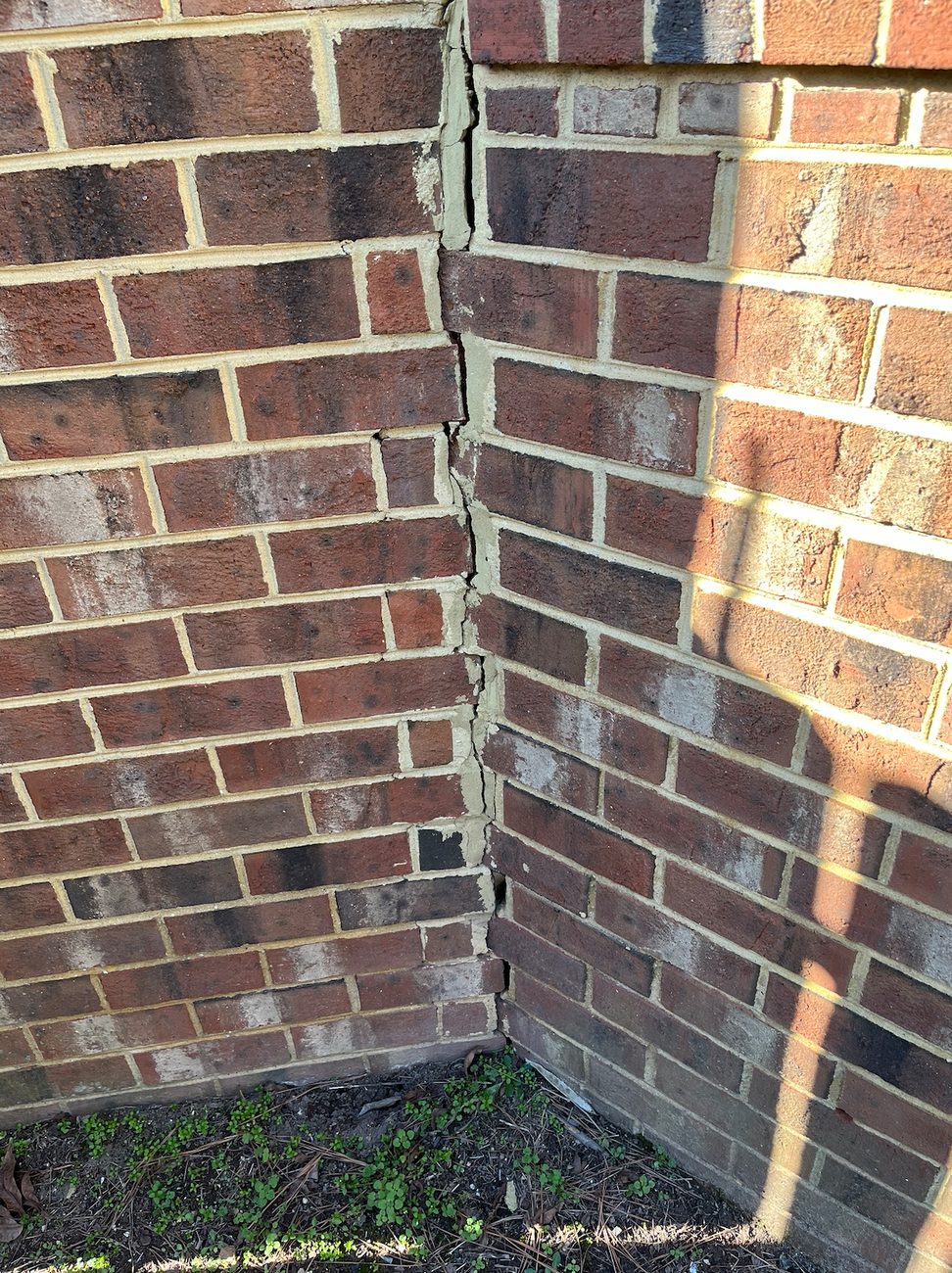
Cracking in the brick that is worst at one end of the house. That corner is riding ground that has given up its water and shrunk away underneath.
It has not finished
The width matters less than the direction. A crack you could once cover with a thumb and now cannot is telling you the movement is still going.
The opening changed shape
You lean on it to shut it, or it swings on its own. The frame is no longer square, because the ground under that side moved.
It sits on its own footing
A gap opening between the porch slab and the wall of the house. They sit on separate footings, so they part company when the ground under one shrinks.
Wet ground stays wet
Standing water or dark joists after a wet spell. It drains slowly here, so what gets under there tends to sit rather than soak away.
The frame is being pulled
A gap opening where the trim meets the ceiling or the wall, usually on one side only. The framing is following the part of the house that moved.
People come to us expecting the worst, and most of the time the job is smaller than they feared. That is not reassurance, it is arithmetic: the ground moves a house at one corner long before it moves all of it, and a corner is a cheaper thing to put right than a house. What decides your number is how long it has been going on. Finding out what you are actually looking at costs nothing.
Brick cracking at one end of the house, a porch that has pulled away from the wall, a crawl space you would rather not think about. Those are the calls that come in from around Tuscaloosa. Tap any service to see what the work involves.
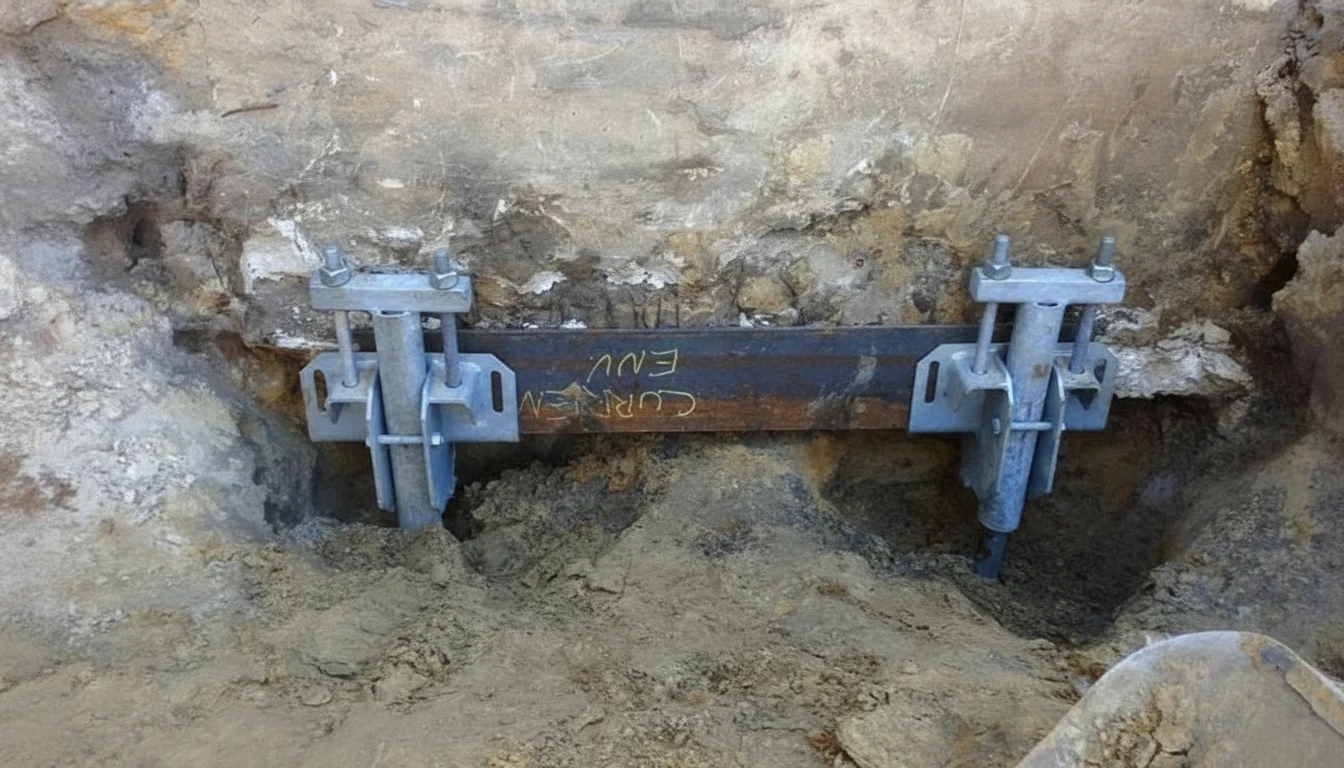
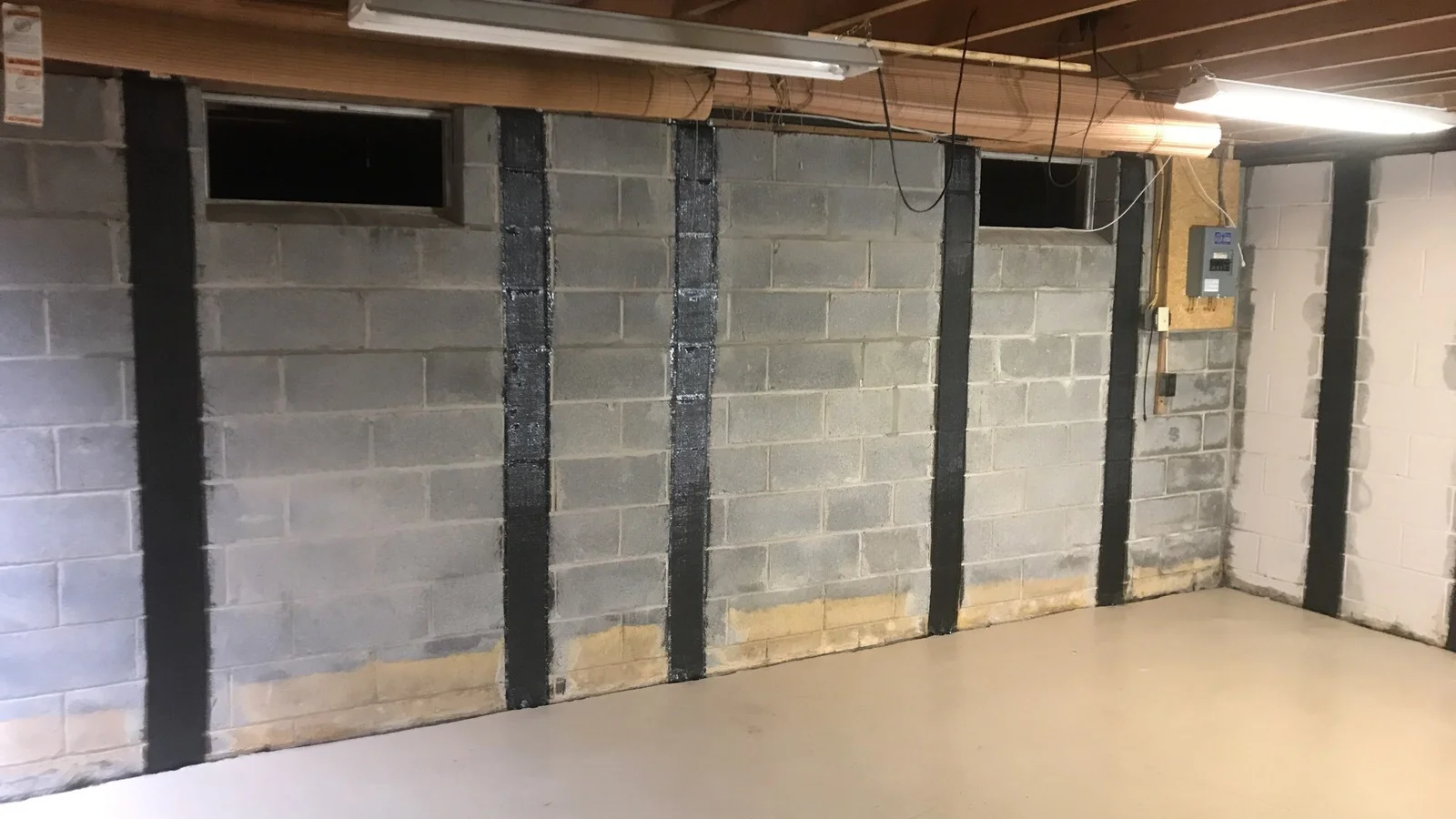
Puts the load onto ground that holds steady, so the corner that dropped stops taking the rest of the house with it.
Learn moreThe ground gives way at one corner long before it gives way under a whole house. In Forest Lake that is usually how it turns up: brick cracking at one end, a door on that side that has stopped shutting, and the other end of the house perfectly fine.
Foundation repair takes the load off the layer that keeps changing. Piers go down past the active layer to material that holds steady, and brackets transfer the weight of the house onto them. From there it is brought back toward level in stages rather than in one lift, watched as it goes, so brick and plaster come with it instead of tearing. The pier count comes from what the ground gives up while the work is happening, not from a figure written down beforehand.
It does not stop the ground moving. It takes the house out of the argument, which is why the drainage and the gutters get looked at in the same visit. In Alberta that has meant piers along one wall and grading along another. The inspection is free.
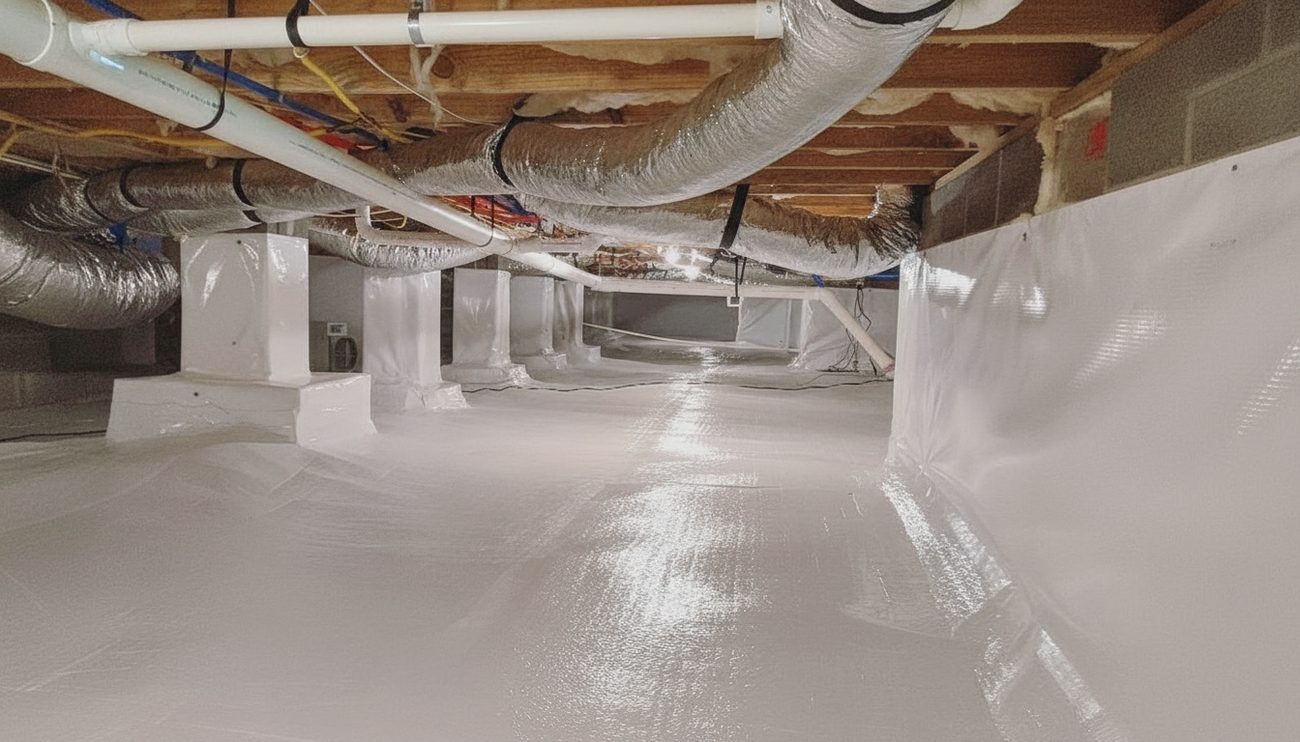
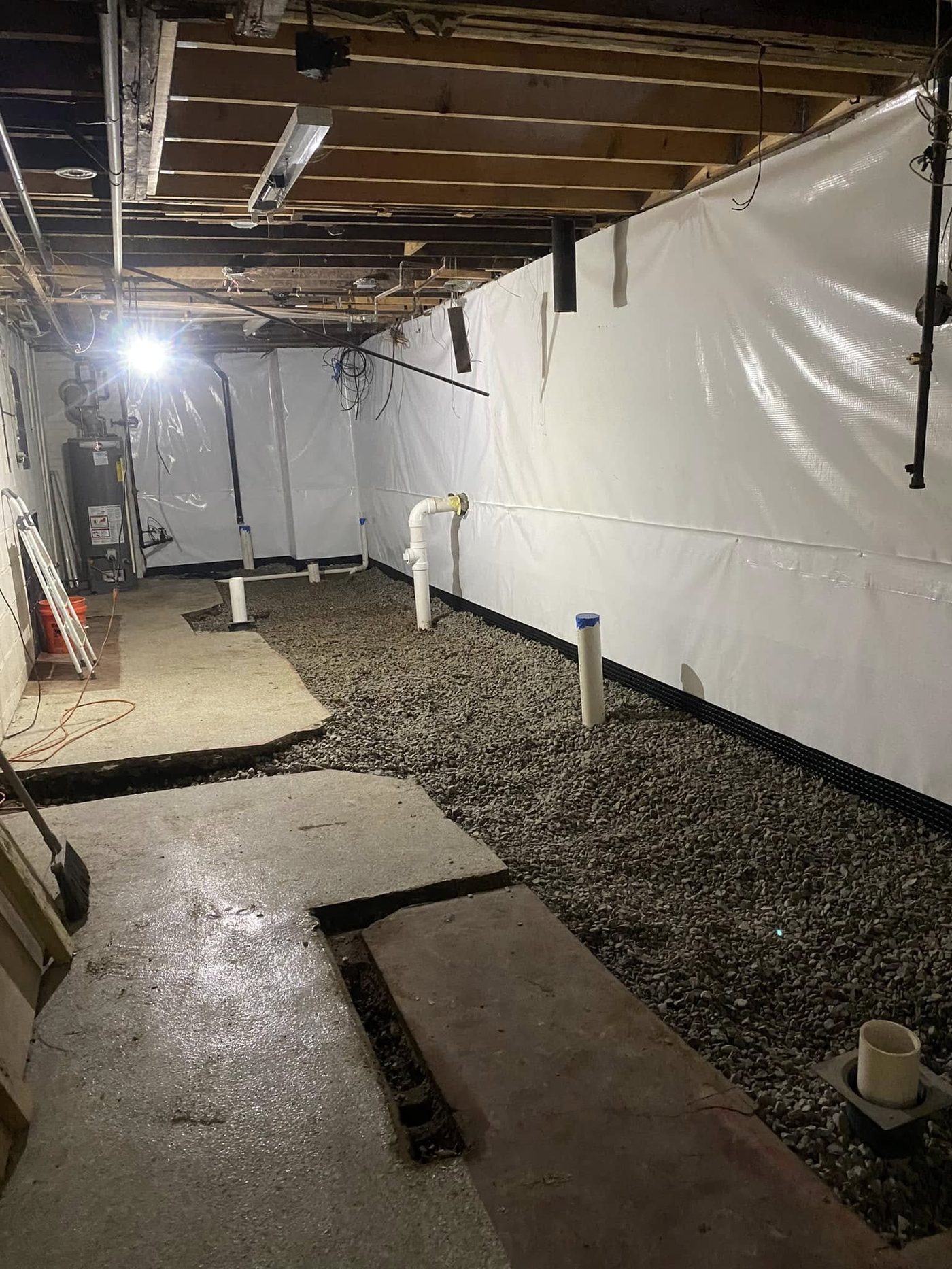
Seals the crawl space off from the bare ground, so the damp and the smell stop working their way up into the house.
Learn moreUnder a crawl-space house the floor is separated from bare earth by nothing but air, and air moves upward. In The Highlands that is why a hallway can smell of the crawl space in a house nobody has been under for years, and why the smell gets worse in the wet part of the year.
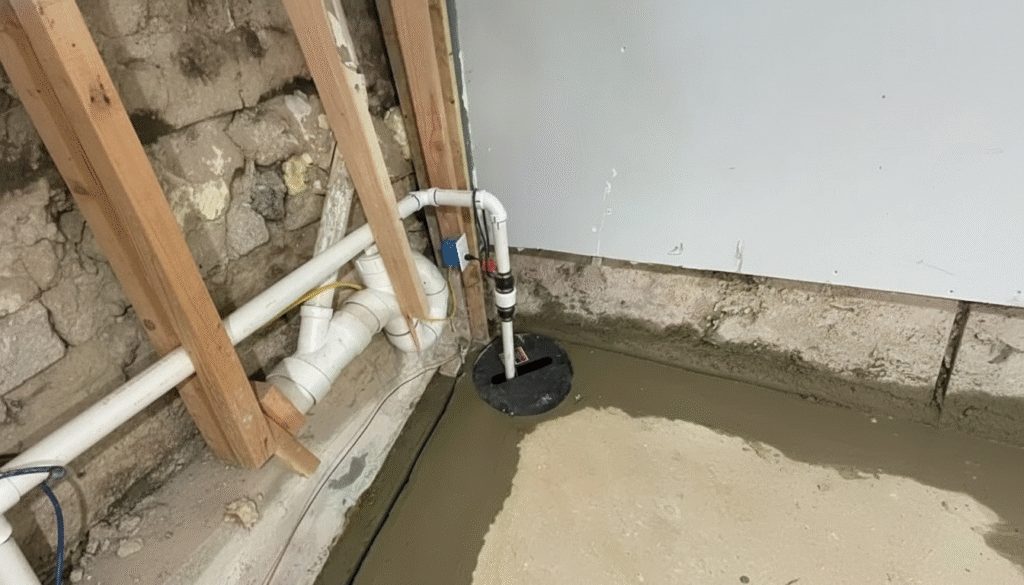
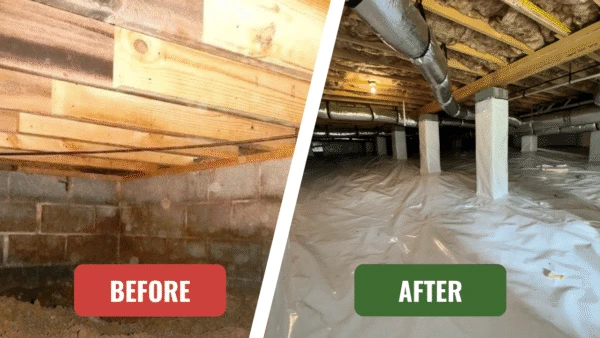
Encapsulation closes that path. A heavy liner goes across the ground and up the walls, sealed at the seams and fastened rather than tucked under, and the vents get closed so outside air stops cycling through. Where the ground is genuinely wet, a drain and a pump go in before any of that, because sealing over standing water only hides it. A dehumidifier holds the space afterwards, sized to the volume rather than guessed from the square footage.
It is not insulation and it does not lift anything. What it does is stop the crawl space feeding damp into the rooms above it, and it turns a space nobody goes into something you can actually store things in. In Forest Lake the drain went in first and the liner second. Having yours looked at costs nothing.
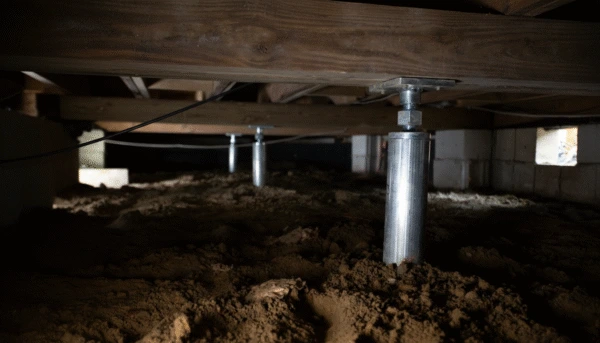
Rebuilds the piers and beams under the floor when the ground beneath them has moved and the support has gone.
Learn moreNothing under a house should be sealed up while it is still moving, and that is the order this work has to happen in. In older Caplewood and Original City places the piers were often set straight onto the ground, and ground that swells and shrinks does not leave a pier where it found it.
Crawl space repair works upward from the ground. Failed piers get rebuilt on footings taken below the active layer instead of dropped on bare ground. Adjustable steel columns go in where a beam has sagged, and they are brought up over days rather than jacked in one go, because the floor above has to travel with them. Sill plates and joist ends that have been sitting in damp get cut back to sound wood and replaced before anything closes in.
Drainage belongs in the same conversation, because a rebuilt pier standing in wet ground is a repair with a clock on it. In Alberta we have done the posts and the drainage inside the same week, because splitting them across two visits usually costs more. Someone will say which order yours needs, at no cost.
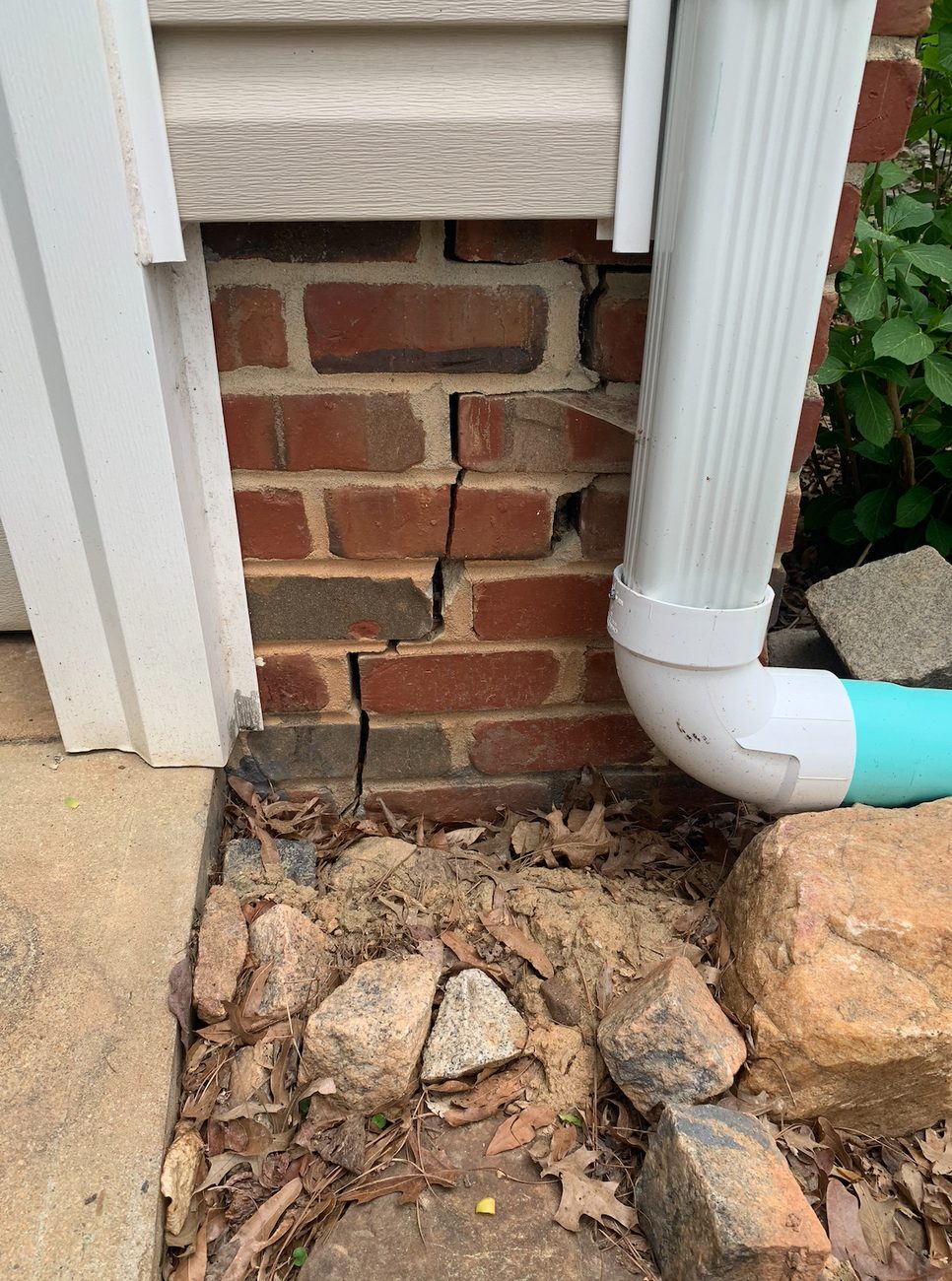
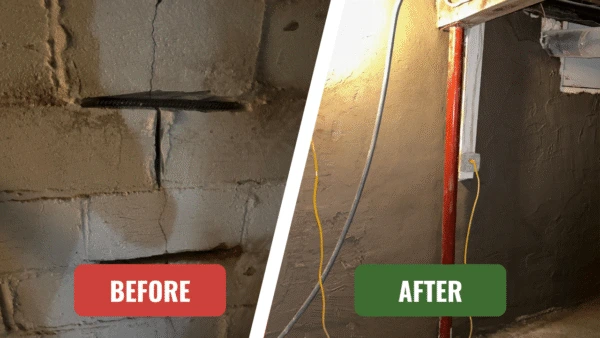
Closes the cracks that are still doing something, treats the reason they opened, and leaves the ones that have sat unchanged for years.
Learn moreNot every crack is a problem, and here the difference is direction rather than width. A thin vertical line in a poured wall in West End is usually shrinkage left over from curing. A crack that is wider at one end than the other, or wider than it was this time last year, is something else entirely.
Crack repair treats the second kind. Resin is injected under pressure so the fill carries right through to the outside face, leaving no void where water can sit and work at it. Where the two sides of a crack are still moving against each other, carbon or steel goes across it so they stop. On a wall that has not finished moving, injection on its own is a repair that fails, so what is causing the movement gets dealt with first.
That order is the part people skip, and it is why some injections fail inside a year. In Cedar Crest we have stabilized first and injected months later, deliberately and with the reason explained. If yours is cosmetic we will say so rather than sell you a repair.
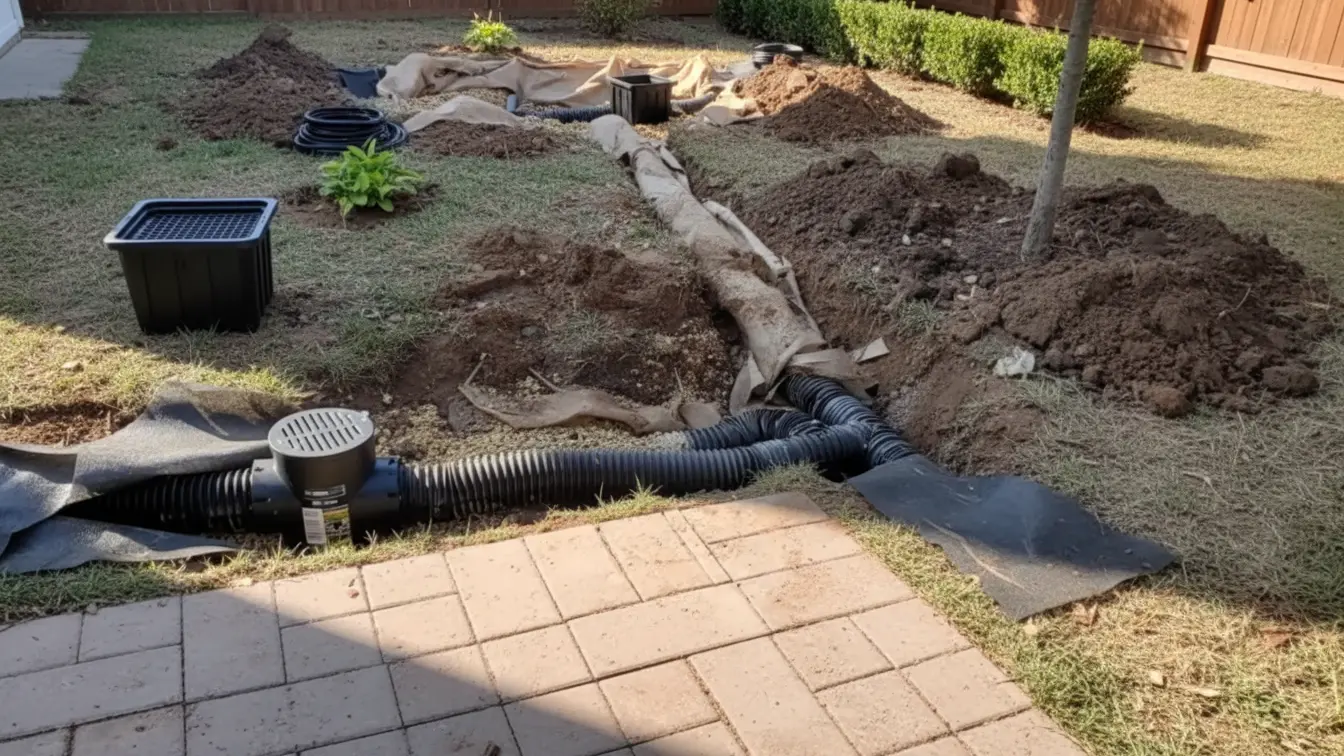
Takes the water away from the footing so the ground around it stops swinging between saturated and bone dry, which is what moves the house.
Learn moreGround only moves when its moisture changes, so the aim here is not a dry yard, it is an even one. A Skyland Park house that takes roof water at one corner every storm and nothing at all at the other end has effectively built itself a moving corner, and it will keep moving.
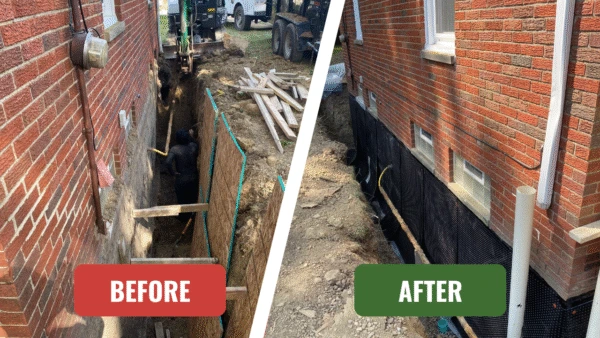
A french drain intercepts that water before it reaches the footing. A trench goes in on the uphill side, perforated pipe is wrapped so fine material cannot silt it up, and it is bedded in washed stone laid to whatever fall the site allows. It runs to a discharge point well clear of the house, with cleanouts at the ends so it can be flushed rather than dug up again in ten years. Where there is no fall to work with, a pump does the last part.
It will not lift a corner that has already dropped, and it is not a substitute for a gutter that overflows in the same spot every storm. In Alberta the downspouts turned out to be most of it, and we said so rather than selling the trench.
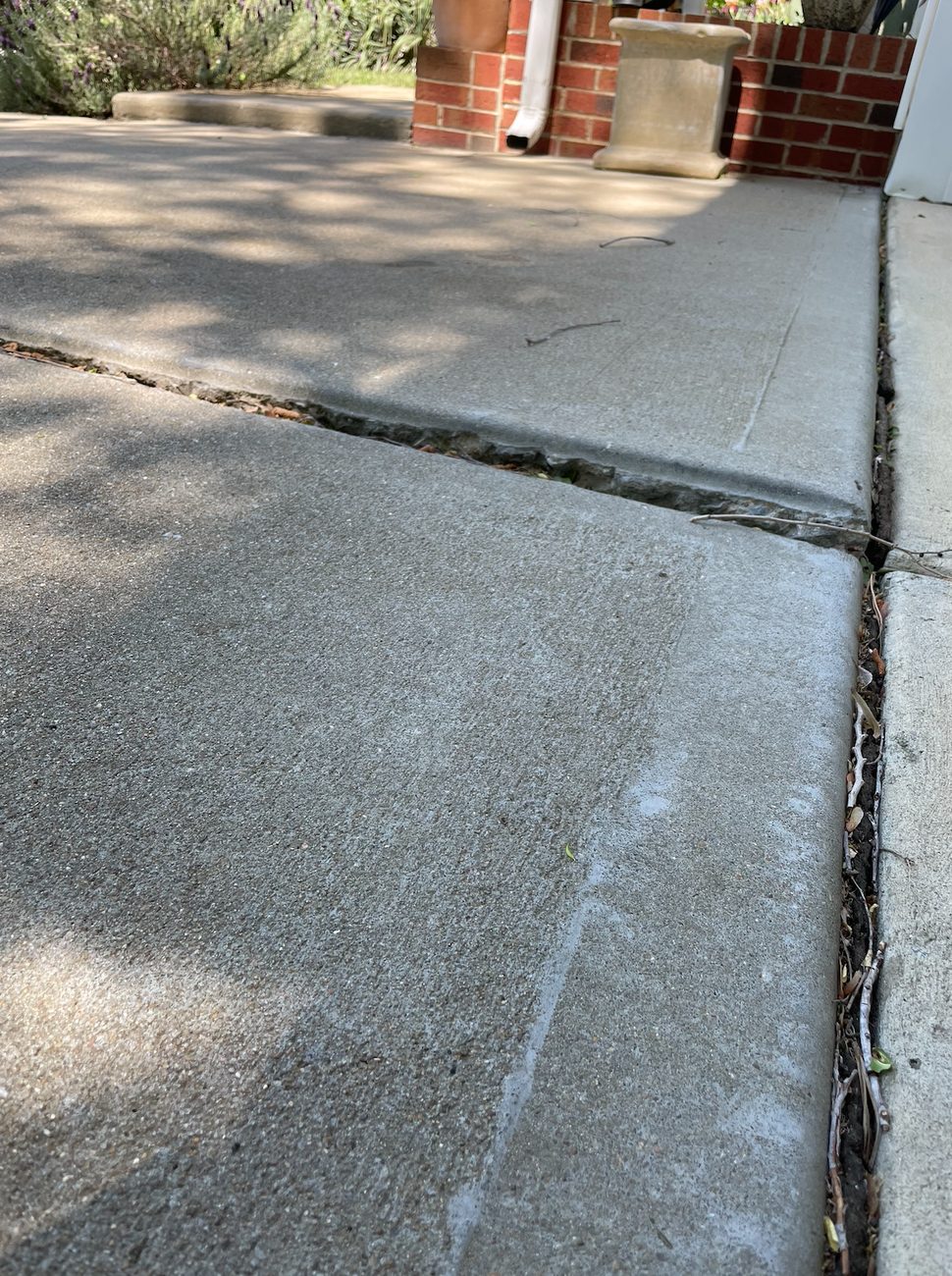
Lifts a sunken porch, step or slab by filling the space that opened under it rather than tearing it out.
Learn moreA porch pulling away from the house is the one that frightens people most, and in Caplewood it is the commonest call of the lot, because it looks like a demolition job. It usually is not. The porch sits on its own footing, separate from the house, and when the ground under that footing shrinks the porch goes down while the house stays exactly where it was.
Leveling fills the space underneath instead of replacing the concrete. Small holes are cored through the slab and material is pumped in until the void is full and the slab lifts back to where it started. Polyurethane foam is the lighter option and sets in minutes, which matters on a porch you need to use; a cement-based slurry costs less and suits a heavier slab that is not going anywhere. The holes get patched and the surface can be walked on the same day.
It will not hold up a slab that is still being undermined, so whatever is moving the ground underneath gets dealt with first or the slab comes back down. In The Highlands that was a downspout and nothing more. We come out and look before anyone quotes.
Queen Foundation Repair handles the two things that go wrong under a Tuscaloosa house: ground that changes volume with its moisture, and water that keeps arriving in the same spot. We are a leading provider of foundation work across Tuscaloosa, covering foundation repair, crawl space encapsulation, crawl space repair and foundation crack repair.
Most of what we get called to started small. A hairline in the brick somebody had been watching for two summers, a porch step that dropped half an inch, a door that only sticks part of the year. Left alone those get more expensive, because what is underneath carries on doing what it does.
So we look before we quote. From Forest Lake across to Alberta, someone comes out, goes over the property and under the house, and tells you plainly what is happening and what putting it right involves. The price is in writing before work starts. If it is cosmetic, we will say so rather than sell you a repair you do not need.
Movement on this ground builds up quietly rather than arriving all at once, which is why catching it early costs so much less than waiting. You can see everything Queen Foundation Repair does across Alabama. Licensed and insured, the warranty moves with the house if you sell, and the estimate is free.
Get your free inspection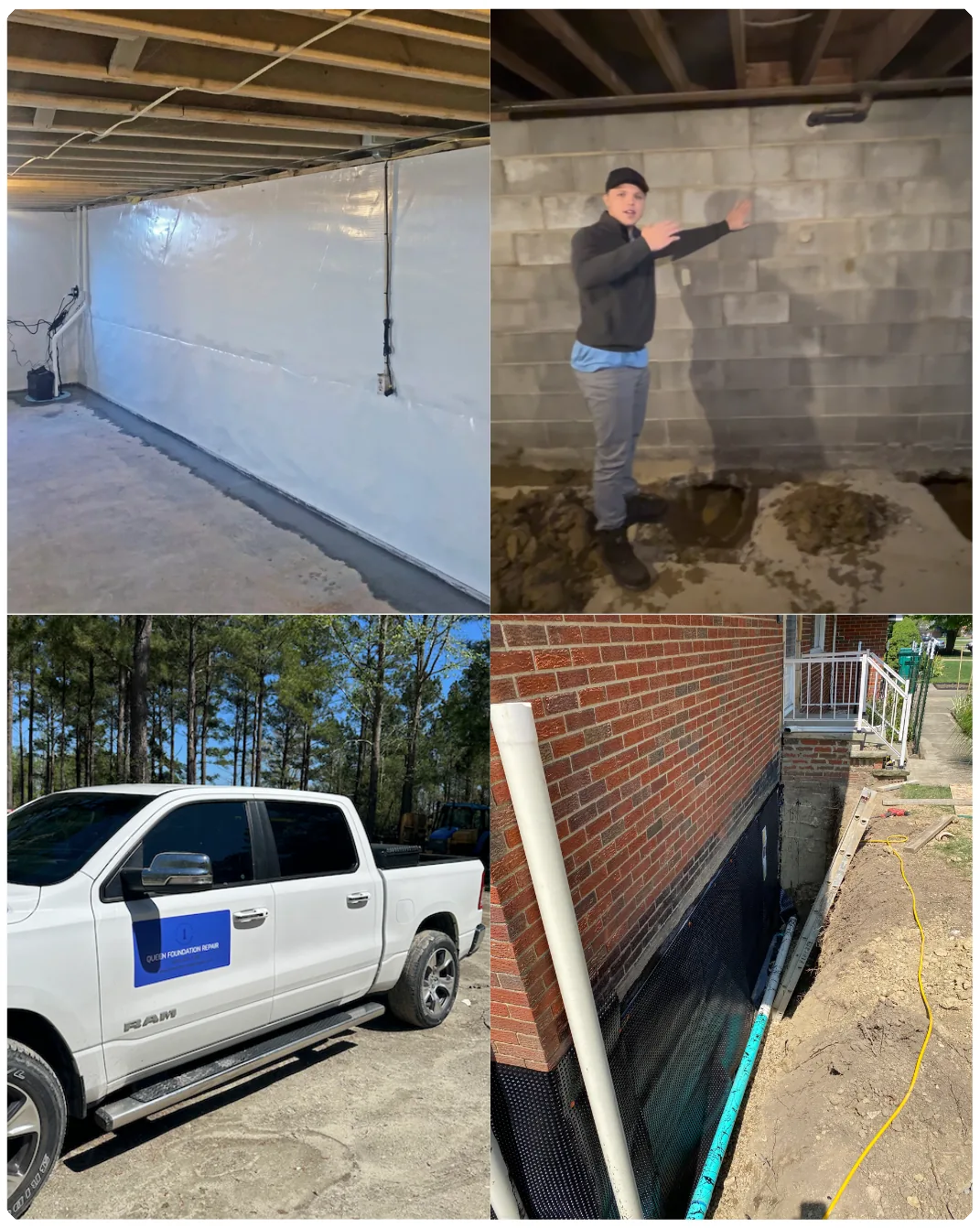
WHAT YOU GET
We pick up quickly and get out to the property fast, so you're not waiting weeks to learn what's wrong and what it costs.
No charge for us to come out, work out what's happening, and lay out what the fix involves. You know where you stand before deciding.
Licensed, with full liability and workers' comp cover, so the work meets code and your property is protected if anything goes wrong.
Every repair carries a written warranty that passes to the next owner, so it protects the value of the house if you sell.
A clear written price before anything starts. No vague ballpark, and nothing new appearing once a crew is already on the job.
From the older places around Forest Lake to the newer builds out toward North River, we are under these houses every week.

COMMON QUESTIONS
The questions people actually ask when we are stood in the yard in Tuscaloosa, from Forest Lake over to Alberta, answered the same way we answer them there. If yours is not here, ask on the day.
What It Costs
There is no single figure and anyone who gives you one over the phone is guessing. Crack work on a poured wall usually runs in the hundreds. Rebuilding piers under a crawl space lands in the low thousands, depending on how many have gone. Piers under a settled corner cost more again, because that is a dig and the count depends on how much house is being carried. What decides your number is how long it has been moving, so the inspection comes first and it is free.
It is priced on the square footage and on what has to happen before the liner goes down. A straightforward encapsulation of an average Tuscaloosa crawl space is usually a few thousand dollars. If the ground is wet enough to need a drain and a pump first, that adds to it, and a dehumidifier sized for the space is a separate line. Anyone quoting without going under the house is pricing the square footage and nothing else, which is how the number changes later.
The question is whether it is still moving. Something that shifted years ago and has stayed put since is often cosmetic. Something still going will cost more every year you leave it, and it will come up when you sell. An inspection tells you which one you have, and that part costs nothing.
The Clay Under the House
It takes on water and swells, then gives it up and shrinks back. A foundation sitting on that gets lifted slightly and set back down, over and over. Because the moisture is never even across a lot, one corner moves more than the rest, which is why damage shows at one end rather than everywhere.
One that reaches past the layer that keeps changing, or one stiff enough not to care. Piers taken down to steady material are the usual answer on a repair. On new build it is a thicker, reinforced slab or a deeper footing. Nobody re-founds an existing house; the practical fix is getting the load onto something that holds still.
Because the moisture swing is bigger in some years. A long dry spell followed by heavy rain moves it far more than a steady year does, and a house that sat quiet for a decade can shift noticeably in one. That is also why people often notice the damage suddenly, even though it has been building.
Cracks
Most are not. A thin vertical line in a poured wall is usually shrinkage left from curing and will sit there for decades. The ones that matter are wider at one end, or wider than they were last year, or letting water through after rain.
Resin injected under pressure, so the fill carries through to the outside face and leaves no void where water can sit. If the two sides are still moving against each other, carbon or steel goes across the crack as well. On a wall that has not finished moving, injection alone is a repair with a short life.
Almost always, yes. Pier work happens outside or under the floor and most people stay put throughout. You will hear it, and there may be a day where access matters more than comfort, but very few foundation repairs require anyone to move out.
The Crawl Space
There are real ones and you should hear them before you spend. It costs more than a vapor barrier laid loose on the ground. It does not fix structure, so a sagging floor still needs the piers dealt with separately. If it is done without addressing standing water first, you have sealed a wet space and made it worse. And a sealed crawl space usually wants a dehumidifier running, which is a small ongoing cost. Done properly it is worth it; done as a liner and nothing else it is money wasted.
No. A crawl space that is genuinely dry, with no standing water and no mold on the joists, may only need the vents managed and the gutters put right. Encapsulation earns its cost where moisture is actually reaching the house. We will tell you which one you have.
Usually more than one reason at once: surface water arriving because the grading or the downspouts send it at the house, ground that holds what it takes on rather than draining it away, and humid air condensing on cool surfaces under the floor. Fixing one and leaving the others rarely works.
What the Work Involves
Crack injection is usually a morning. Pier work under one corner is commonly two to four days, depending on the count and the access. Rebuilding crawl space supports runs longer. You get a number before anyone starts, and if it changes you will hear why.
For interior and crawl space work, no. Piers on the outside do mean digging along the affected side, and exterior drainage means a trench. The ground gets put back. Anyone quoting the job should tell you up front which of those it involves.
Yes, in writing, and the warranty transfers to the next owner if you sell. That matters here, because a buyer's inspector will find the repair either way and the paperwork is what turns it from a worry into a solved problem.
Insurance and Selling
Usually not. Settlement and earth movement are standard exclusions on a homeowners policy, and this kind of movement sits squarely in that. What can be covered is sudden accidental damage, a burst supply line washing out ground under a footing being the usual example. Read your policy rather than assume either way.
Alabama is a caveat emptor state, which means the buyer carries most of the duty to investigate and there is no standard seller disclosure form. That does not make it open season. If you are asked a direct question you have to answer it honestly, and you cannot actively conceal a known defect. In practice a documented repair with a transferable warranty sells a house better than an undisclosed crack a buyer's inspector finds on the walk-through.
In this market, yes. A lot of the housing here is rental or investor-owned and has changed hands more than once, and the movement is slow enough that a cosmetic patch can hide it for a season. An inspection before you commit costs nothing and tells you what you are taking on.
WHERE WE WORK
We cover the whole Tuscaloosa area, not just the addresses close to downtown. That takes in the older places through Forest Lake, the newer subdivisions out toward North River, and everything from Alberta out to the county line when somebody needs us there. If a house needs looking at, we come and look at it.
ZIP CODES WE COVER
Ready to Get Started?
No obligation, fast and easy.
We appreciate you reaching out.
One of our team members will be with you shortly.