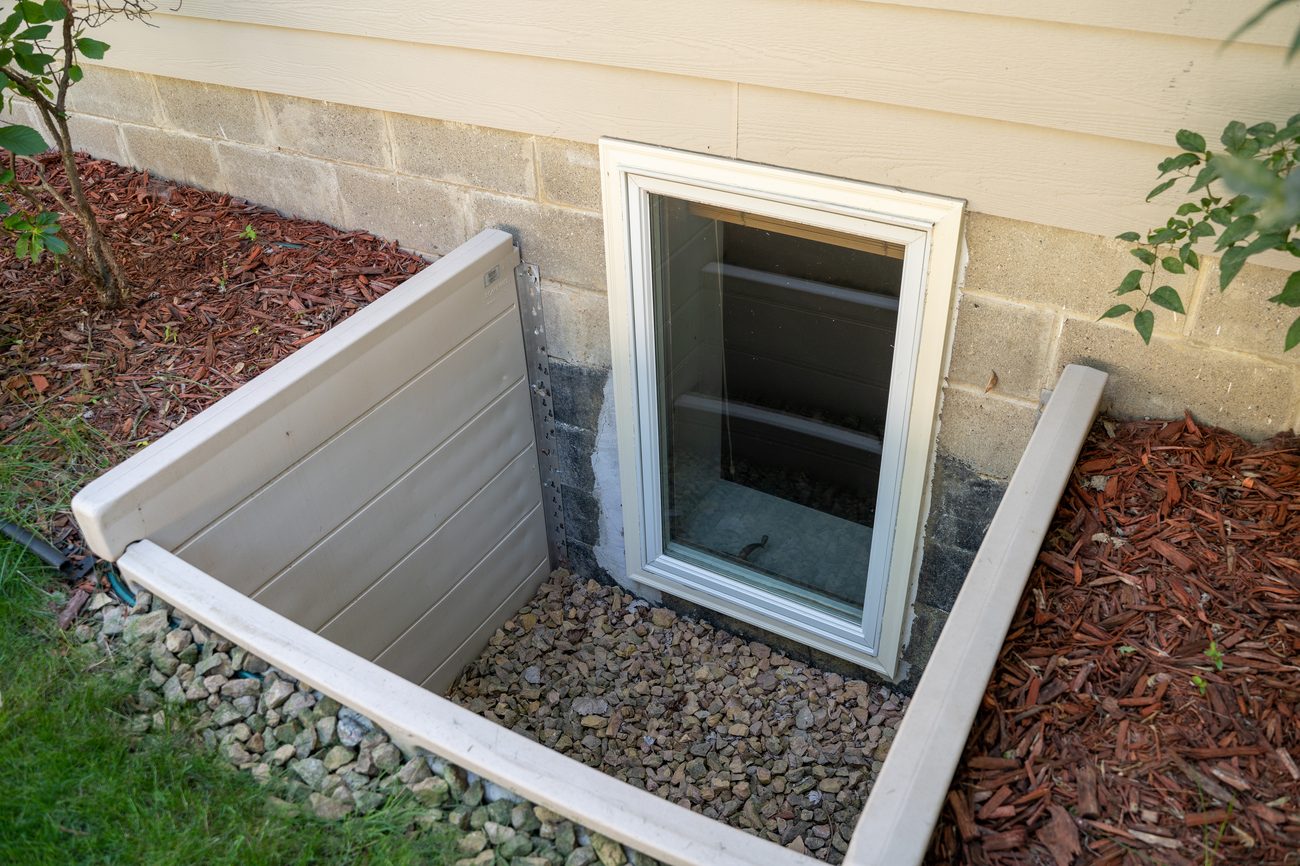
A basement wall that has started to come in, water across the floor after every storm, a crack that leaks whenever it rains. From German Village over to Clintonville we handle basement waterproofing, foundation repair and french drain installation, and the inspection is free.
Get Your Free Inspection
We appreciate you reaching out.
One of our team members will be with you shortly.





WHAT TO LOOK FOR
Almost every house in Columbus has a full basement, which means a tall wall sitting in ground that holds water instead of draining it. Some walls take that for eighty years and never move. Others start to give. These are the ones people call us about.
The ground behind it is pushing
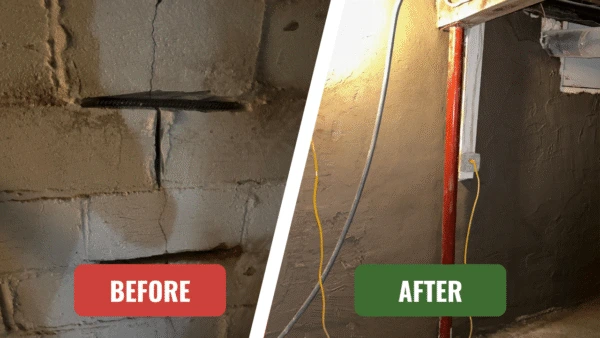
One course sitting further in than the rows above and below, or a wall that is no longer flat. Wet ground pushes on block until something gives.
The ground could not take it
Water across the floor, or a wet line along the bottom of the wall the morning after. Ground that holds rain sends it at the wall instead.
Water found the shortest way in
A crack that stays dry for weeks then runs during a storm, or one with a stain under it. Once water is using it, it keeps using it.
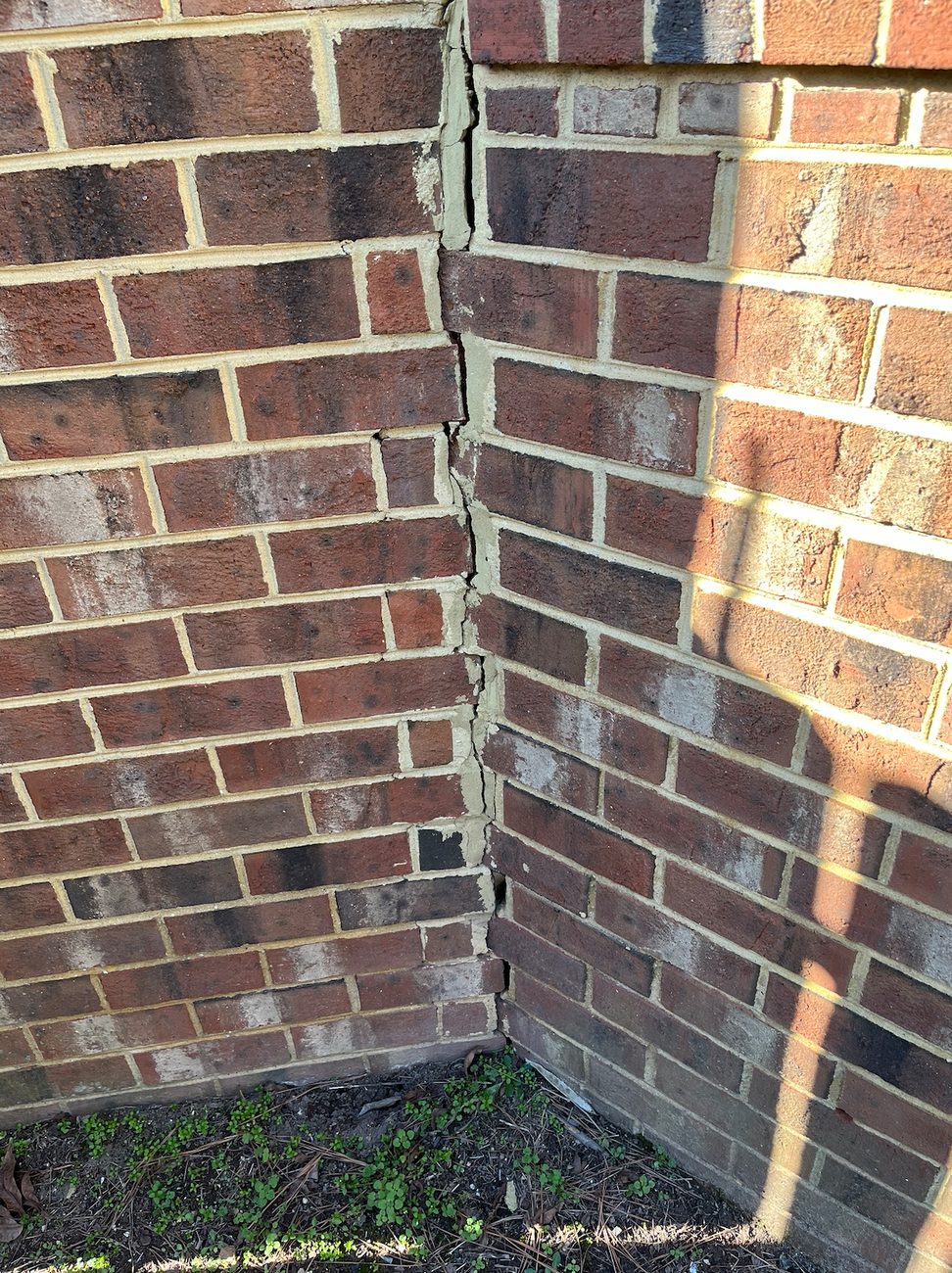
It is being pushed sideways
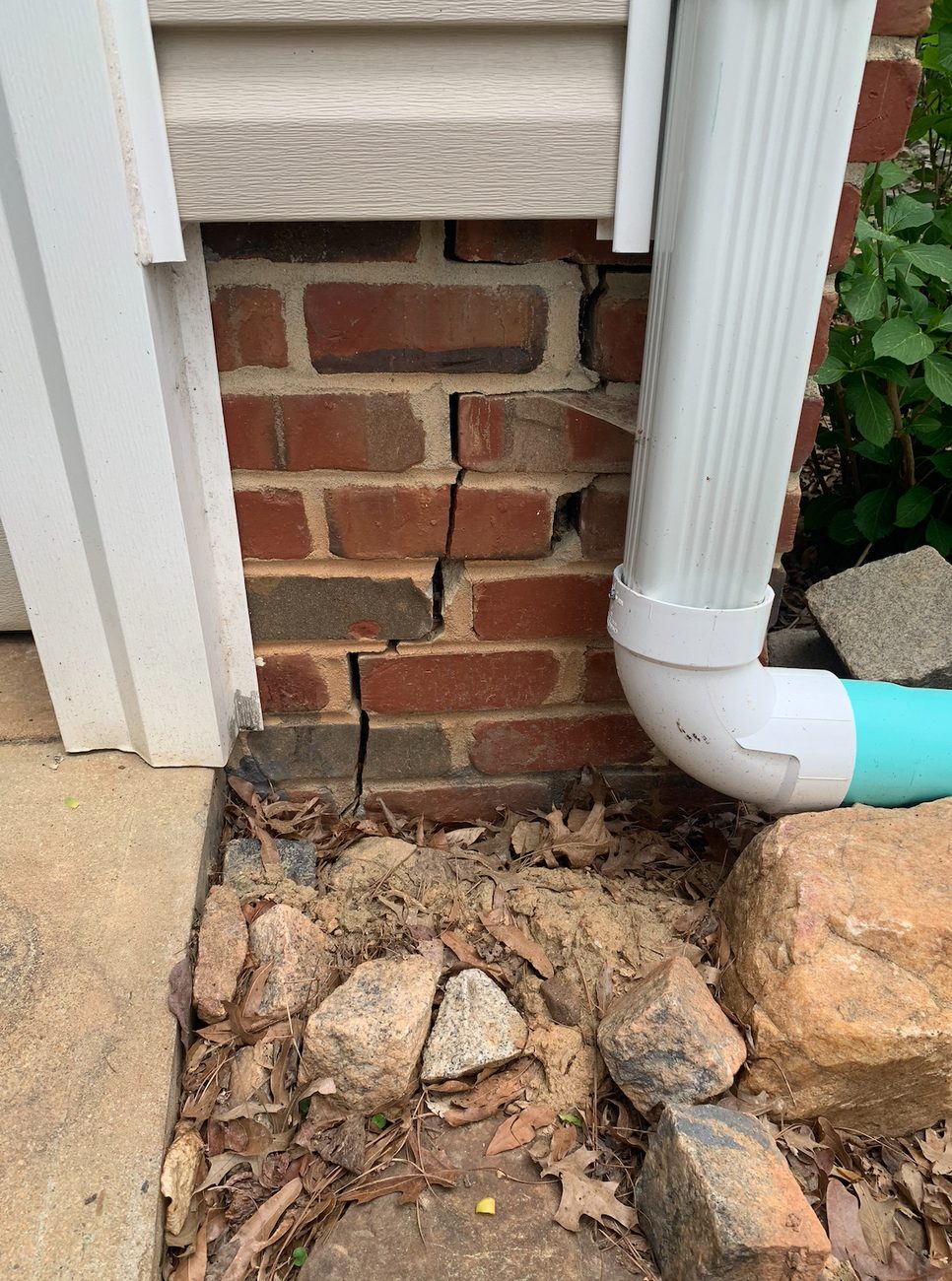
Cracks that climb the mortar joints in steps instead of running straight down, sometimes on two walls at once. That pattern comes from a push, not a drop.
It is being asked to do too much
A pump cycling every few minutes in ordinary weather, or one that runs for days after rain. Either way more water is arriving than it was sized for.
The bottom has slid in
A line opening where the wall meets the slab, or a sill plate no longer sitting square. Push the top of a wall and the base moves first.
Some people have one of these. Others have three or four at once. A wall coming in, a stair-step crack and a gap at the floor line usually point the same way, which is ground pushing from the side. Water after a storm can mean a sump that has stopped keeping up, or a wall that was never waterproofed. Whichever ones you have, someone comes out, tells you what they mean, and gives you what you need to decide.
From a wall that has started to come in, to water across the floor after a storm, to a sump that will not stop, these are the calls we get across Columbus. Tap any of them to see what the work actually involves.
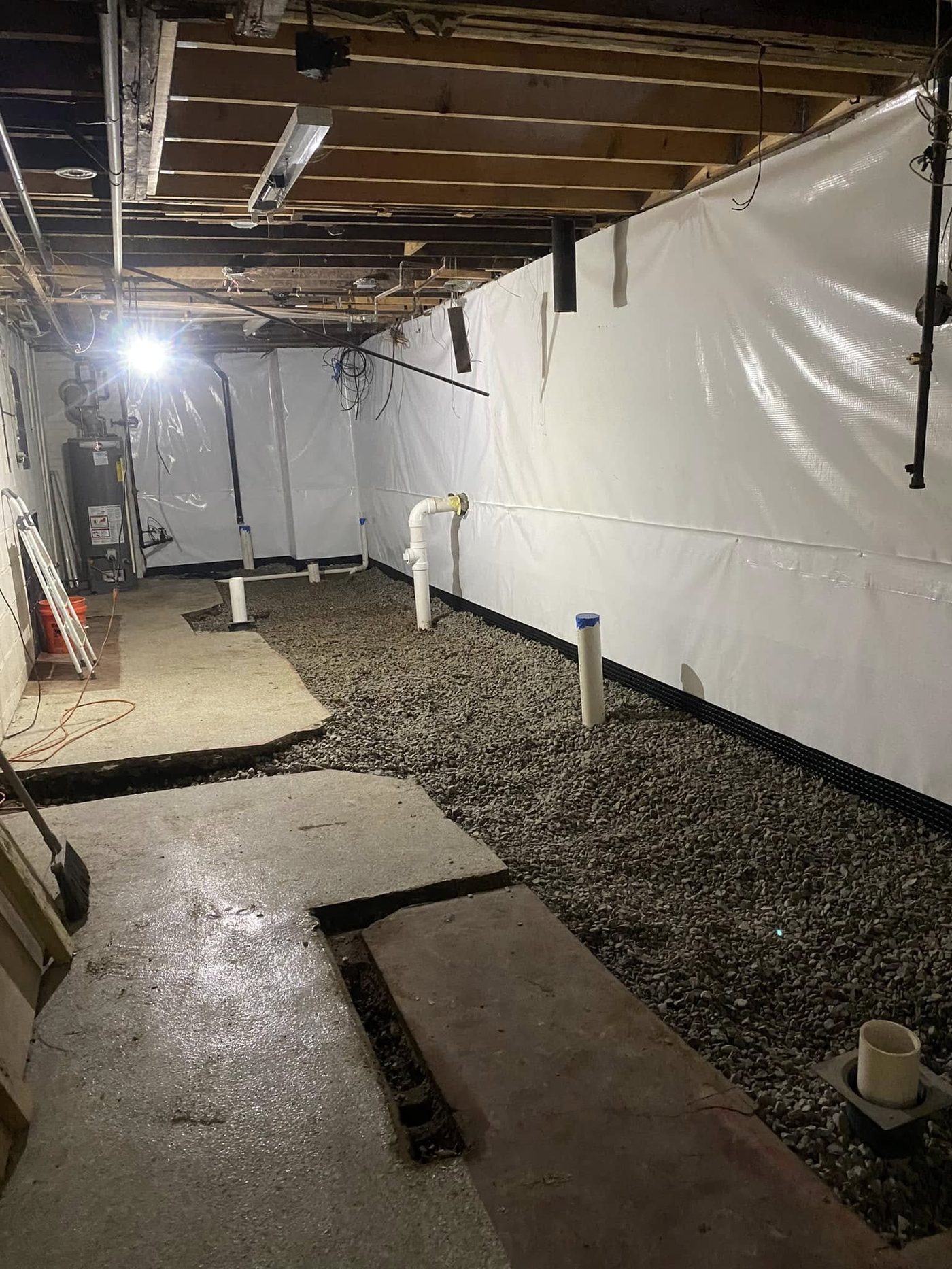
Stops the water that comes across the floor after a storm and the wet line along the bottom of the wall, by giving it somewhere else to go.
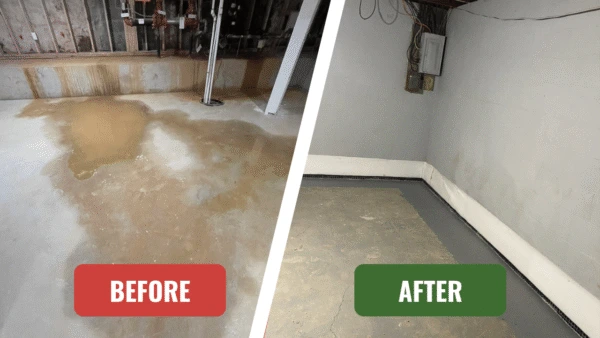
Learn moreThe morning after a hard storm there is a wet line along the bottom of the wall in a Clintonville basement, or an inch of water across the floor by the stairs. It was dry all last year, which is why people assume something broke. Usually nothing broke. The ground outside took longer than normal to let go of the rain, and the wall was the easiest way out.
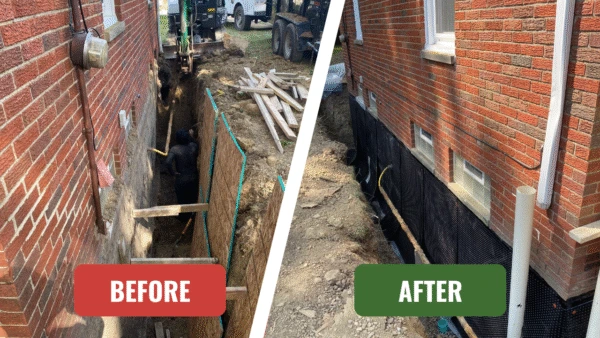
The work starts outside, because outside is where it is cheapest. Downspouts get run well clear of the house and the grade gets corrected so roof water is not being poured against the wall. Inside, a drain at the footing collects whatever still comes through and carries it to a pump instead of across the floor. On a wall that is genuinely passing water, and where there is room to dig, a membrane goes on the outside face. Most houses here need one or two of those, not all four.
What we will not do is paint the inside of the wall and call it waterproofing. That treats the surface while the water keeps working behind it. In German Village the grading was the whole job. The inspection is free.
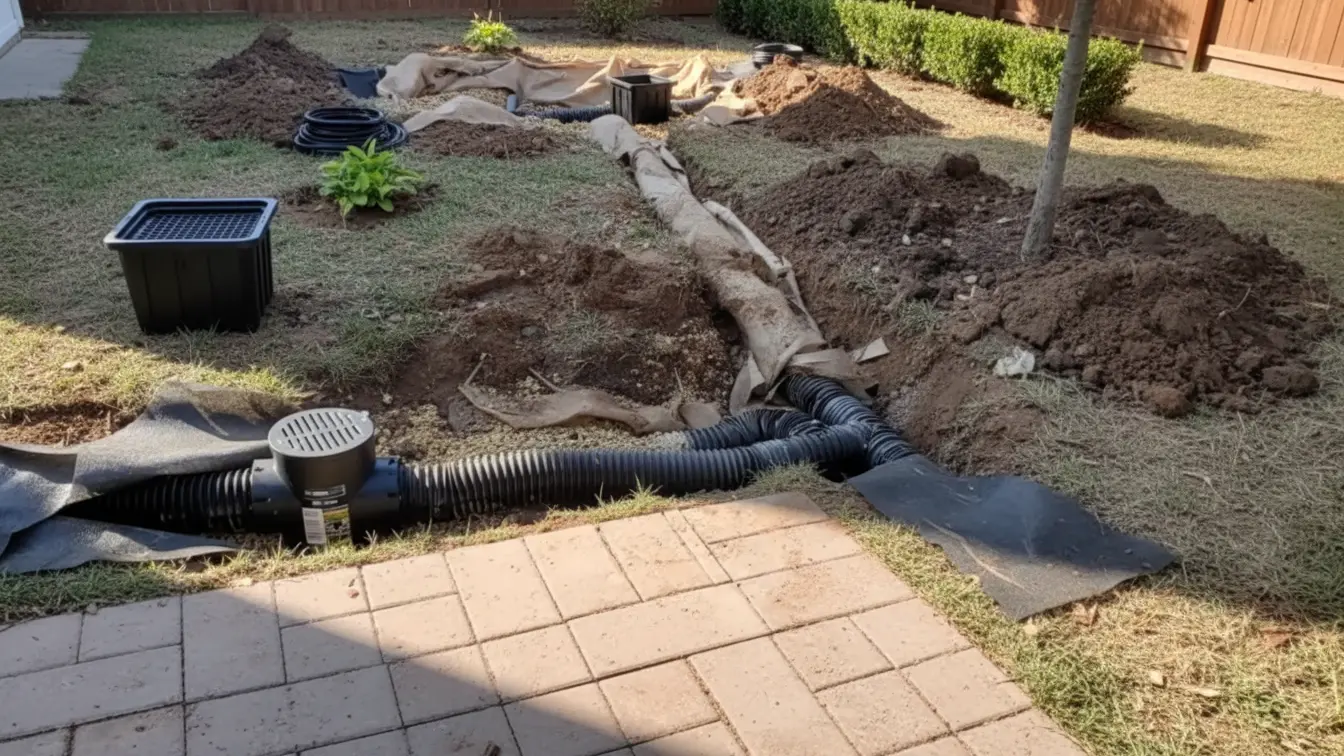
Catches the water moving through the yard toward the house and takes it somewhere else before it ever reaches the wall.
Learn moreA yard that stays soft for days after everyone else's has dried out is telling you something. In a lot of Columbus the soil is heavy enough that rain does not soak away, it sits, and the low corner of the yard is usually the wall of your house. People notice the squelch before they notice the basement.
A french drain gives that water a route it prefers. A trench is cut where the water is actually travelling, perforated pipe goes in wrapped so fine soil cannot silt it up, and it beds in washed stone laid to a fall. Where the yard is flat, and much of Northland is, the fall has to be built rather than found, so the depth at each end is worked out before anything is dug. Cleanouts go in so it can be flushed later instead of excavated again.
It will not fix a wall that is already moving, and anyone telling you it will is selling you the wrong job. In Clintonville the downspouts were most of it. Having someone look costs nothing.
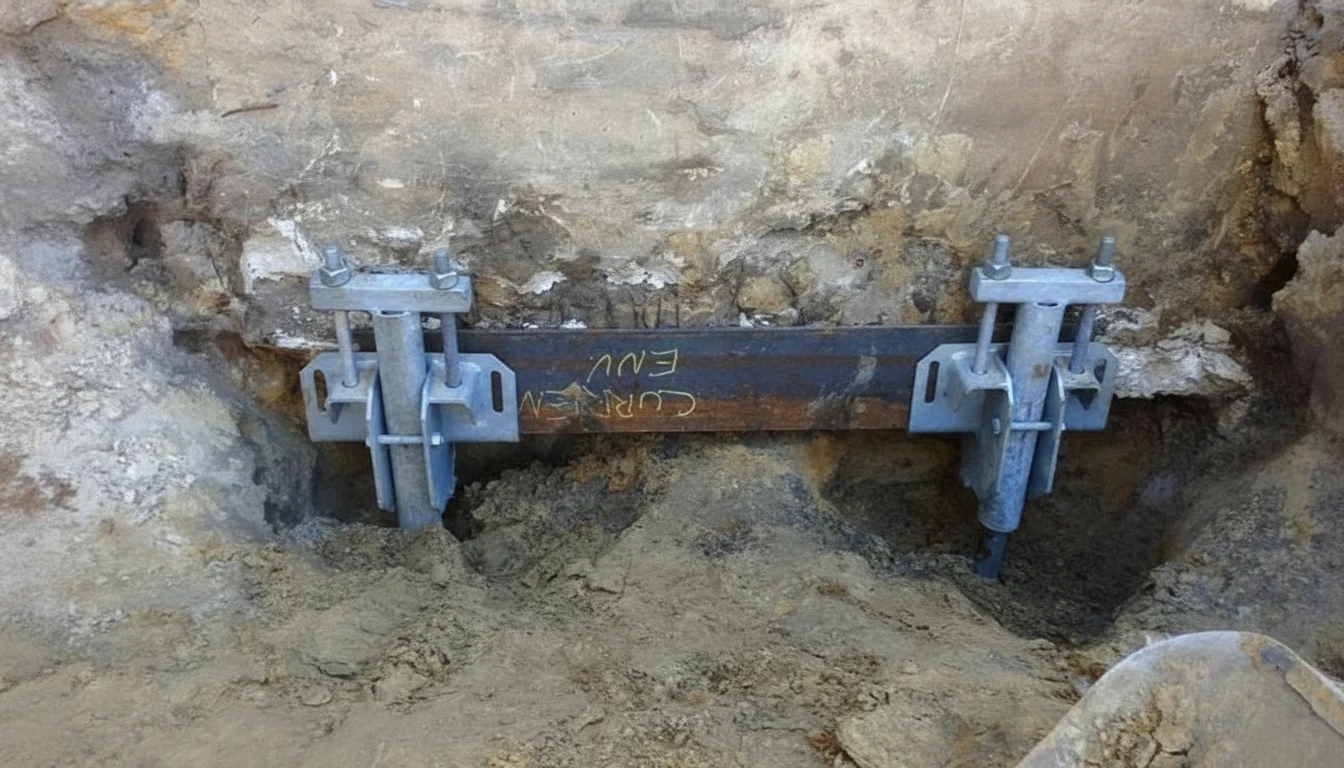
Puts a footing that has settled back onto ground that will hold it, and stops the sticking doors and cracks upstairs from getting worse.
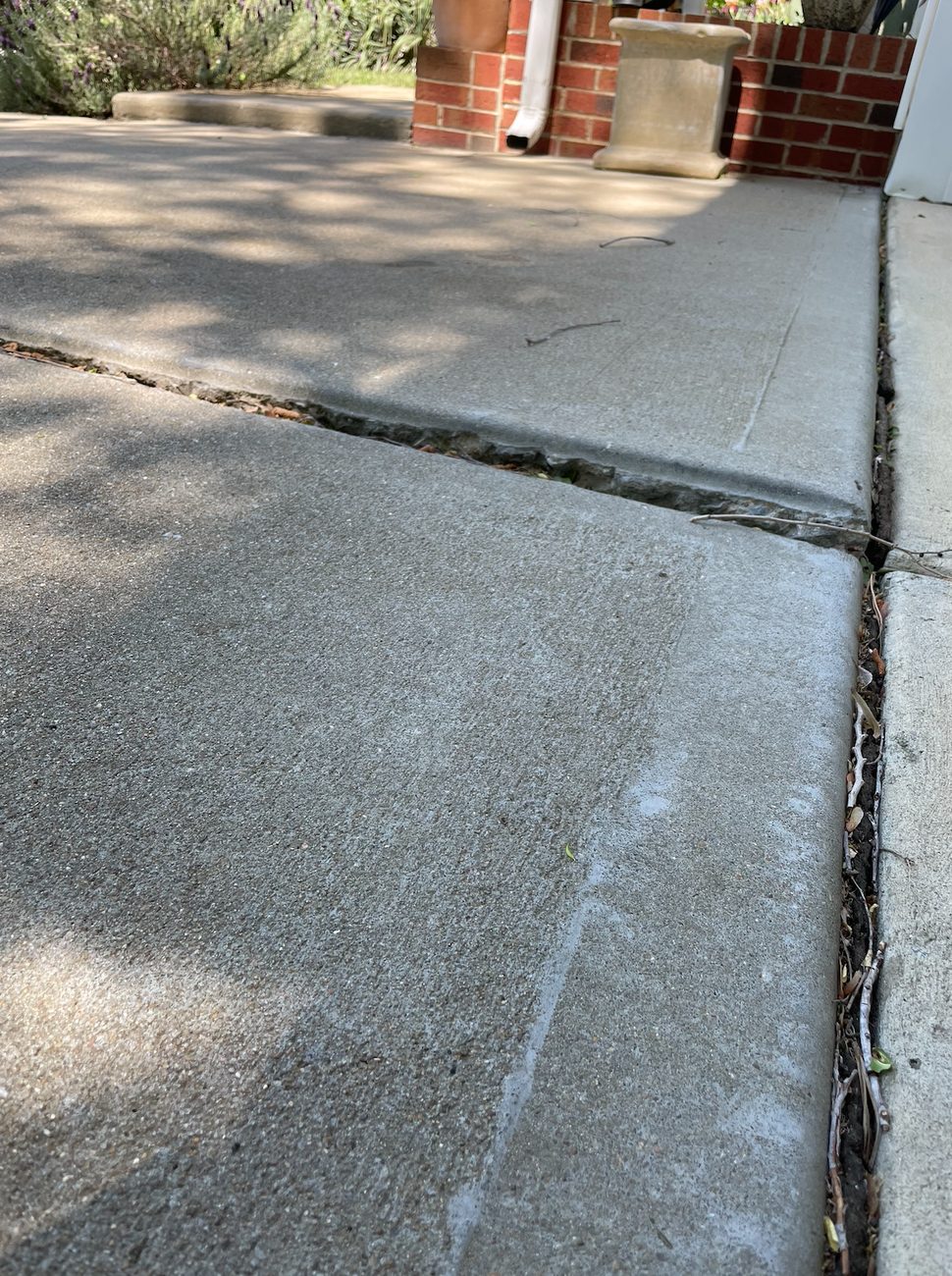
Learn moreColumbus is a wall city more than a footing city, but footings do settle here, usually at one corner or along an addition somebody put on later. It shows upstairs first: a door that stopped latching, a crack running out of a window corner, a floor gone off level in one room. Around Clintonville it is usually the addition, not the original house.
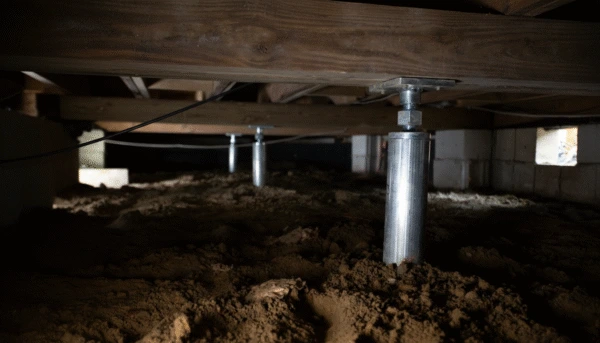
Underpinning is the usual answer: supports go down until they reach ground that will carry the load, and brackets transfer the weight of the house onto them. Where the house can come back up, the lift is done in stages over a couple of days and watched as it goes, so old plaster and brick travel with it rather than tearing. Where it cannot, the house gets held where it is, which is often the right call on an older property. Slabjacking, a rebuilt footing or a new support beam are the answer on plenty of houses instead.
Not every crack means a pier. A poured wall shrinks as it cures and hairlines from that turn up in most basements. In Franklinton we said exactly that and left. Someone comes out and looks before anyone quotes.
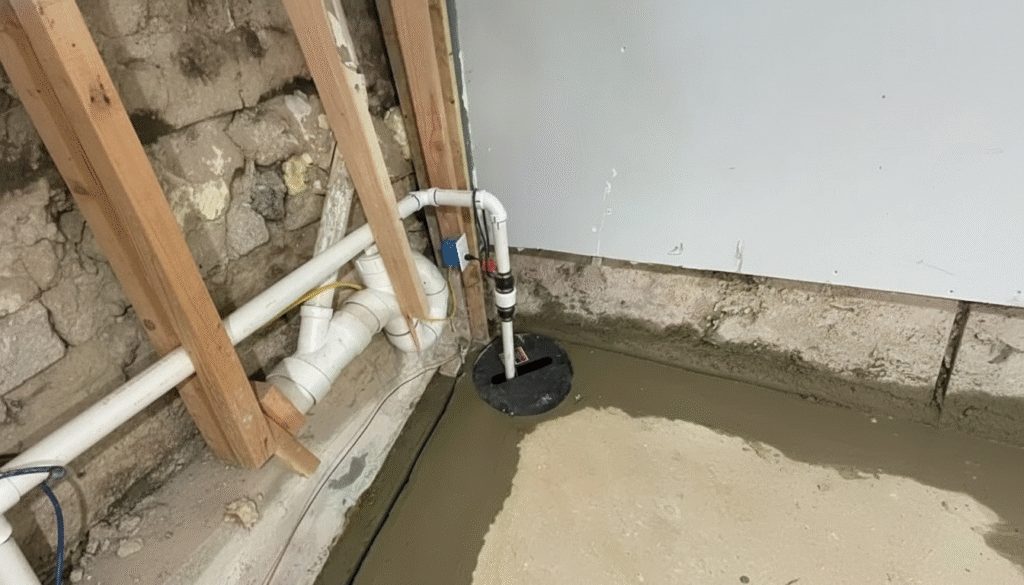
Gets the water a drain has collected up and out of the house, and keeps doing it when the storm takes the power with it.
Learn moreA pump that runs every few minutes in ordinary weather is not a pump problem, it is a volume problem, and replacing it with the same size buys you a year. Around Franklinton the water table sits close enough that pits fill without any rain at all, so what matters is how much the pump can move and what happens when the power goes.
The pit gets cut at the low point and lined so the surrounding ground cannot wash into it. The pump sits on a solid base rather than in silt, and the discharge runs well away from the house so what leaves does not come straight back. A check valve stops the pipe draining back into the pit every cycle. A sealed lid keeps the damp in the pit instead of the room, and a battery backup covers the storms that take the power out, which are the same storms that fill it.
Where a pump is cycling because a gutter is dumping at the corner, we say so and fix the gutter. In Clintonville that has been the answer more than once. We will check yours for nothing.
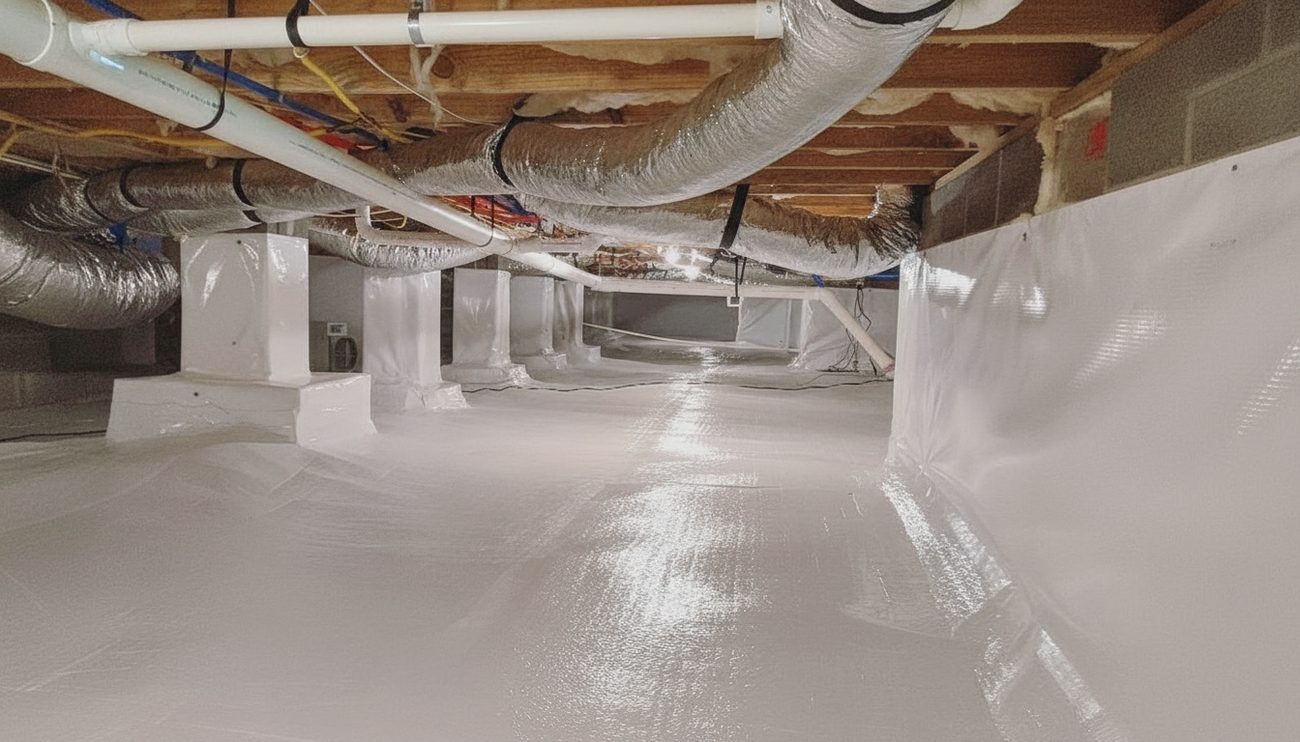
Seals a crawl space off from the damp ground under it, so the moisture stops coming up through the floor into the house.
Learn moreMost of German Village has a basement, and so does most of Columbus, so when a crawl space turns up it is usually under a rear addition, and it is usually the part of the house nobody has been under in twenty years. What people notice is upstairs: a floor that feels cold, a smell in the hall that comes and goes, a room that never quite dries out.
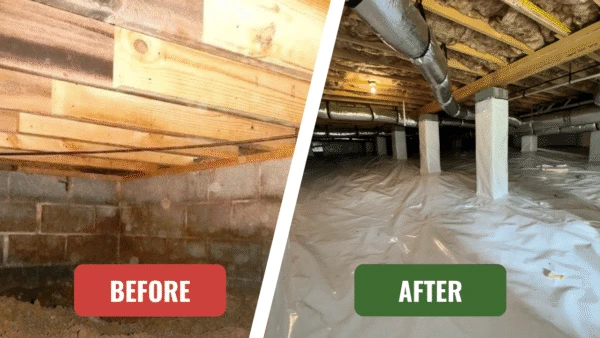
Encapsulation closes the path between that ground and your house. A heavy liner goes across the ground and up the walls, sealed at the seams and fastened rather than tucked, and the vents get closed so outside air stops cycling damp through the space. Where the ground is genuinely wet a drain and a pump go in first, because sealing over standing water only hides it. A dehumidifier holds the space afterwards, sized to the volume rather than guessed at.
It is not insulation and it will not lift a sagging floor. Those are separate jobs and we will tell you which one you actually need. In Olde Towne East the drain went in first. Having it looked at costs nothing.
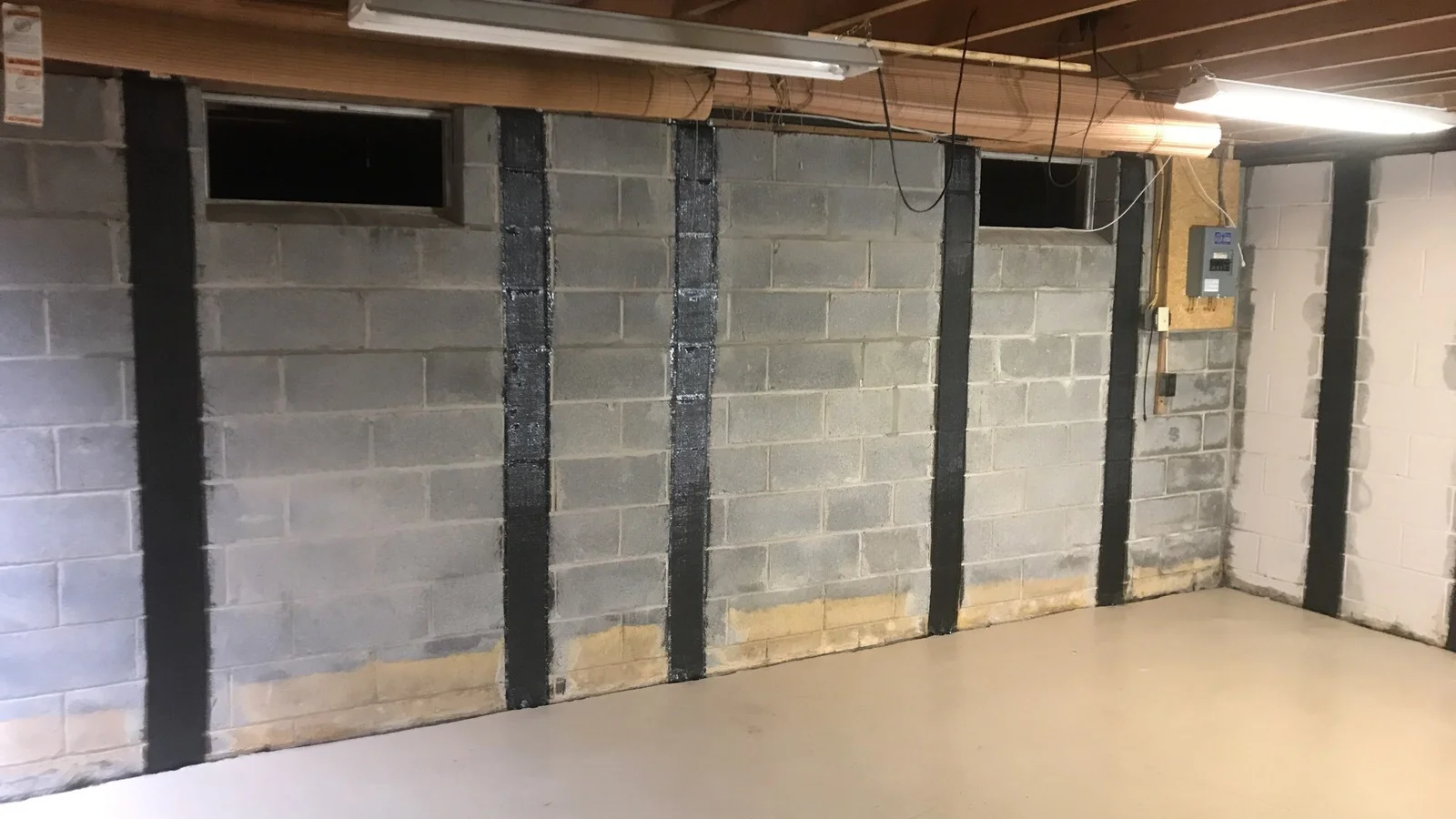
Stops a wall that has started to come inward, and deals with the wet ground behind it that is doing the pushing.
Learn moreThis is the repair Columbus asks about more than any other, and there is a reason for it. The ground here is a heavy clay till that holds water instead of draining it, and a full basement means a tall wall with that stacked against it. Push on block long enough and it moves along a mortar joint. In a Clintonville basement the wall with the most wet ground behind it is the one that goes.
How far it has come in decides the repair. Carbon fiber straps suit a wall that has moved a little and bond to the face so it cannot carry on. Steel braces take a wall that has moved further, and wall anchors set out in the yard can pull it back over a season rather than only holding it where it is. A wall past all three gets rebuilt in sections. Nobody should be quoting any of that from a photograph.
A poured wall behaves differently from block: it tends to crack rather than bend, and that changes the answer. Drainage goes in alongside whichever it is, because the push does not stop on its own. In German Village both went in the same week.
Queen Foundation Repair covers basement waterproofing, french drain installation, foundation repair and sump pump installation across Columbus. Those sit under one roof because here they are usually the same call. Water in the ground is what leans on a basement wall, so whoever is looking at the wall should be looking at the water as well.
Most people wait a while before they call, and that is not unreasonable. A wall that has looked the same for three years does not feel urgent, and plenty of them never move again. What changes is the size of the job: the further a wall comes in, the more it takes to hold it, and the ground behind it carries on regardless.
So we look before we quote. From German Village across to Clintonville, someone comes out, walks around the outside of the house and down into the basement, and tells you plainly what is happening and what putting it right involves. The price is in writing before work starts. If it is cosmetic, we will say so rather than sell you a repair you do not need.
You can see everything Queen Foundation Repair does across Ohio. Licensed and insured, the warranty moves with the house if you sell, and the written estimate is yours to keep whether you use us or not.
Get your free inspection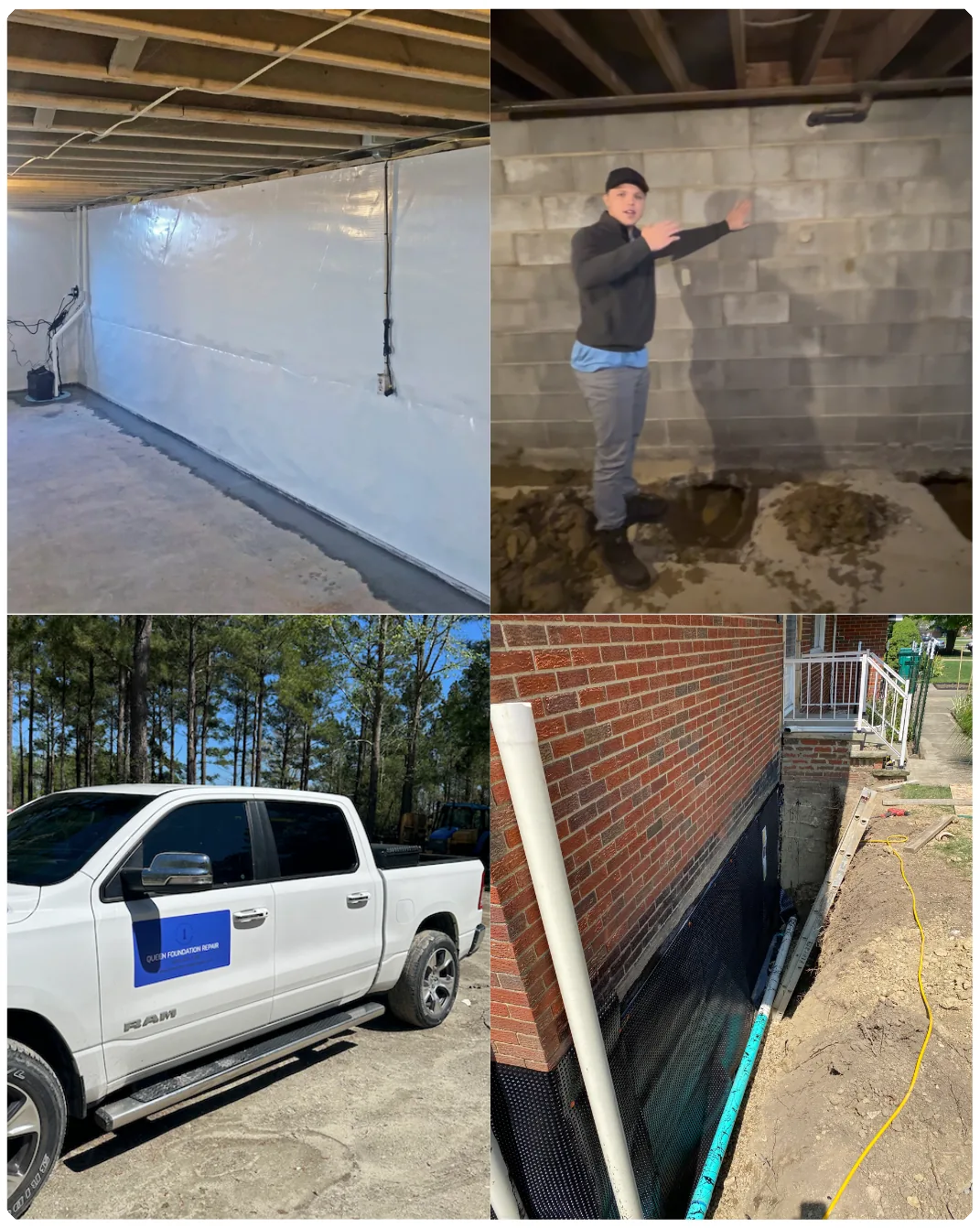
WHAT YOU GET
We pick up quickly and get out to the property fast, so you're not waiting weeks to learn what's wrong and what it costs.
No charge for us to come out, work out what's happening, and lay out what the fix involves. You know where you stand before deciding.
Licensed, with full liability and workers' comp cover, so the work meets code and your property is protected if anything goes wrong.
Every repair carries a written warranty that passes to the next owner, so it protects the value of the house if you sell.
A clear written price before anything starts. No vague ballpark, and nothing new appearing once a crew is already on the job.
From the older basements around German Village to the newer builds out past Northland, we are down these basements every week.
COMMON QUESTIONS
What it costs, what to do about a wall that has started to come in, why a floor gets wet with nothing leaking, and what insurance will and will not cover. These are the ones we get asked in Columbus.
What It Costs
It depends on how much of the perimeter needs doing and whether the work is inside, outside or both. Interior drainage with a pump is the commonest job here and usually runs into the low thousands, priced by the linear foot of wall. Exterior excavation and membrane costs considerably more because it is a dig. Grading and downspout work is often a few hundred and sometimes fixes the whole problem on its own. Nobody can price it honestly without seeing which of those you need, which is why the visit comes first.
Crack injection on a poured wall is usually in the hundreds. Carbon straps or braces on a bowing wall land in the low thousands depending on how many go in. Piers under a settled footing cost more again because that is excavation, and the count depends on how much house is being carried. The number is set by how far it has gone and how much of the house is affected, not by the square footage of the property or by anything anyone can tell you over the phone.
If the water is coming back every storm, yes, and it gets cheaper the sooner it is done because water that keeps arriving works on the wall and the floor while you wait. If it happened once in a decade during a record storm, that is a different conversation and we will say so.
A Wall That Is Bowing
Carbon fiber straps are the cheaper route and suit a wall that has moved a little, usually a few hundred dollars per strap with several needed across the wall. Steel braces or wall anchors cost more and are what a wall that has moved further needs; anchors can also pull it back over time rather than only holding it. Rebuilding a section is the top of the range and nobody quotes that sight unseen. The measurement decides which band you are in, and taking it costs nothing.
Yes, and in most cases without rebuilding it. The wall gets braced so it cannot move further, and the water in the ground behind it gets dealt with in the same plan, or the pressure simply comes back next wet season. Left long enough a wall does reach the point where rebuilding is the only honest answer.
It is not a reason to walk away by itself, but it is a reason to get a number before you commit. Find out how far it has moved and whether the drainage was ever addressed, then price the repair as part of what the house costs. Plenty of Columbus houses have had it done and are fine.
Water in the Basement
Because it is coming up rather than in. When the ground outside is saturated, water is under pressure beneath the slab and it works through the concrete and the joint where the floor meets the wall. There is nothing dripping to find, which is why people look for a leak and cannot see one.
Either more water is reaching the pit than used to, or the pump is undersized, or the discharge is running somewhere that lets it come straight back. All three are common here. A pump that never rests is also a pump that will fail sooner, so it is worth finding out which one it is.
Exterior deals with the water before it reaches the wall, which is better in principle and costs more because it means digging. Interior drainage manages what gets through and is what most Columbus basements actually get. Which one is right depends on the wall and the access.
Cracks
Most are not. A thin vertical line in a poured wall is usually shrinkage from curing. Here what matters more than width is whether it is letting water through, because a wet crack is a route and the water behind it is under pressure.
It depends whether it is still moving. Something that shifted years ago and stayed put is often cosmetic. Something still going costs more every year it is left, and it will come up when you sell. An inspection tells you which one you have.
Usually yes. Resin injected under pressure fills the crack right through to the outside face, so there is no void left for water to sit in. Outside excavation is for a wall that is failing rather than one that is cracked, or where a membrane is going on anyway.
What the Work Involves
Interior drainage on one wall is commonly a day or two. A full perimeter with a pump runs longer. Exterior excavation depends on the weather as much as the work. You get a number before anyone starts, and if it changes you hear why.
Not for interior drainage or crack injection, which happen from inside the basement. Exterior waterproofing and french drains do mean digging along the affected side, and the ground gets put back. Anyone quoting should tell you up front which of those it involves.
Generally yes, and it is issued locally rather than by the state. Columbus and the surrounding municipalities each run their own building department. It matters more than people expect, because an unpermitted finished basement is something a buyer's lender can raise later.
Insurance and Selling
Almost never. Waterproofing is treated as maintenance and groundwater seepage is a standard exclusion. What can be covered is sudden accidental discharge, a burst pipe for example, and sewer or drain backup is usually an endorsement you have to have bought beforehand.
Usually not. Settlement and earth movement are standard exclusions on a homeowners policy. The covered path is sudden accidental damage, such as a burst supply line washing ground out from under a footing. Read the policy rather than assume either way.
Ohio requires a Residential Property Disclosure Form, and known foundation or water problems belong on it, along with repairs you have had done. Selling as-is does not remove the duty to answer honestly about what you know. In practice a documented repair with a transferable warranty sells better than a wet basement a buyer's inspector finds for themselves.
WHERE WE WORK
We cover Franklin County and the whole Greater Columbus area, not just the addresses close to downtown. Older basements and newer builds, the odd crawl space under a back addition, and plenty of houses where the fix turns out to be a downspout. If a house needs looking at, someone comes out and looks at it.
ZIP CODES WE COVER
Ready to Get Started?
No obligation, fast and easy.
We appreciate you reaching out.
One of our team members will be with you shortly.