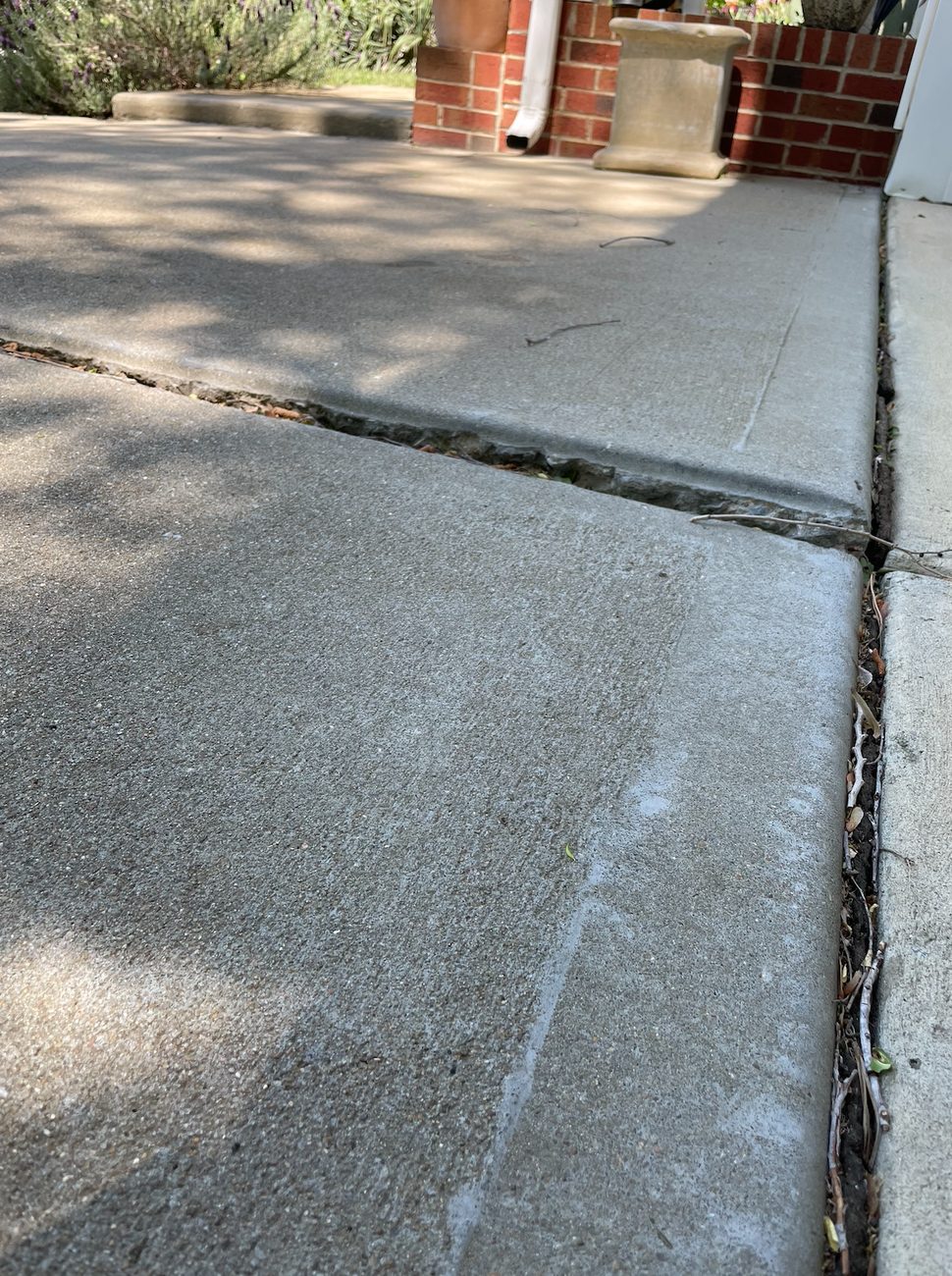
Sagging floors, sticking doors, a crawl space that stays damp after heavy rain? A lot of Columbia homes sit on crawl spaces, from Shandon to Rosewood. We handle crawl space encapsulation, french drains, and foundation repair, starting with a free inspection.
Get Your Free Inspection
We appreciate you reaching out.
One of our team members will be with you shortly.





Warning Signs
Foundation and crawl space trouble rarely shows up at once. It starts as small things you live with, then they spread. Across Columbia's homes, the signs range from wall cracks and sticking doors to a crawl space that stays damp after the rain. These are the ones to catch early.
Cracks in the Brick or Drywall
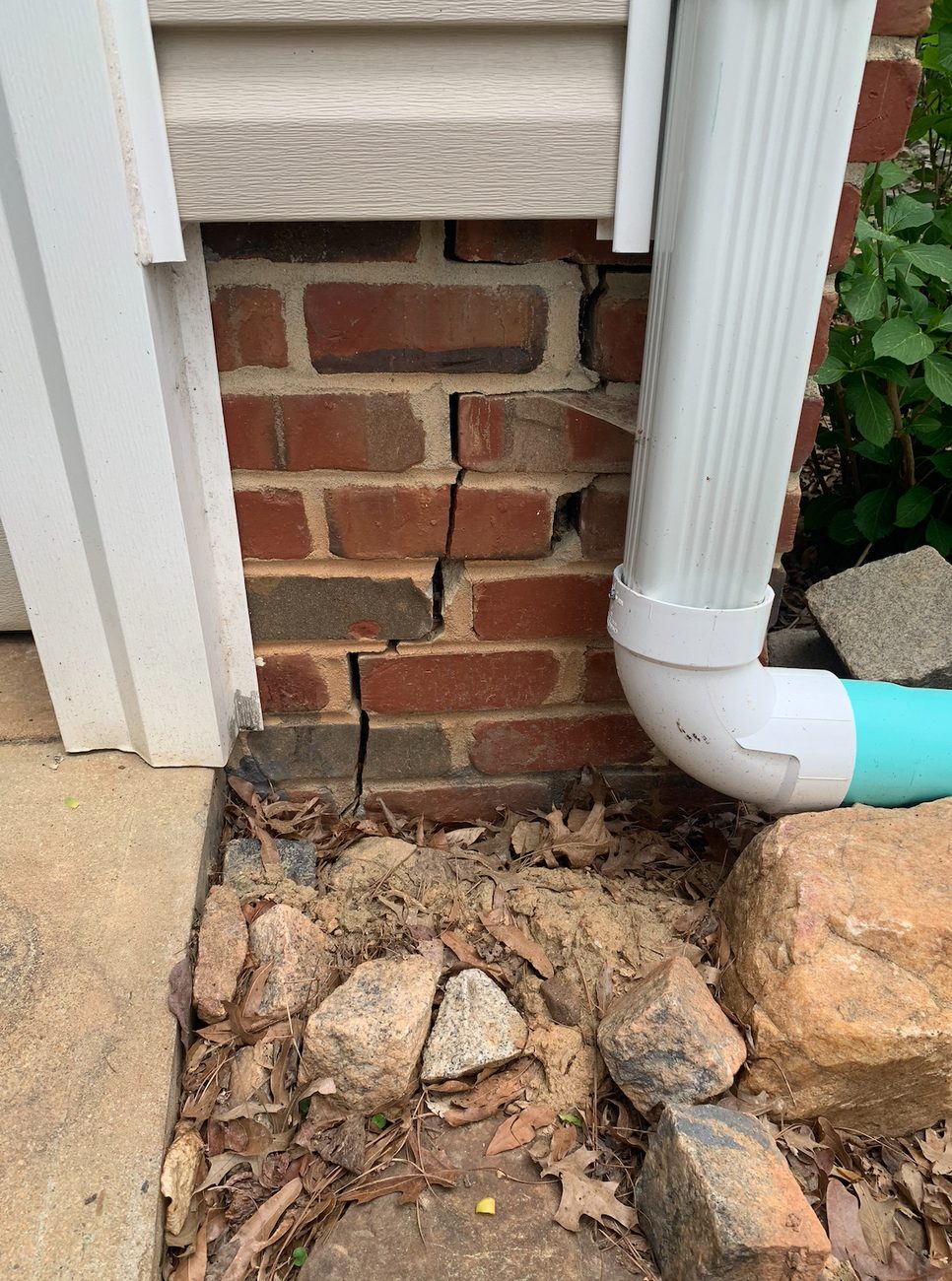
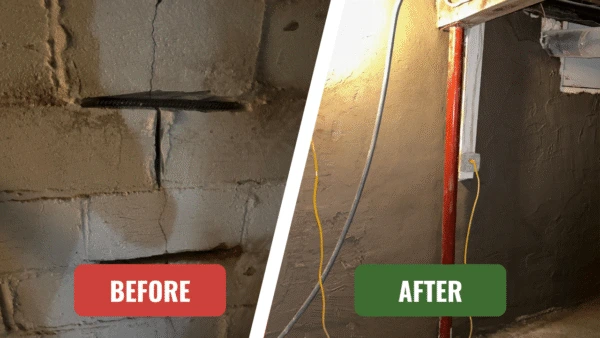
Zigzag cracks working up the brick, hairline splits across the drywall, all slowly getting wider. The ground under the footing is giving way and the wall follows it.
Sticking Doors and Windows
A door that drags and won't latch, a window that sticks, new gaps at the trim corner. As the floor drops, the frame twists out of square.
Sagging or Bouncy Floors
A floor that dips toward one corner, or springs underfoot as you cross the room. Down in the crawl space, the piers are settling into soft, damp ground.
A Wet, Musty Crawl Space
Lift the crawl space hatch and a sour, musty smell pours out, mold dark across the joists. Damp air collects under the floor and works its way up.
Standing Water After a Storm
After a hard rain, water gathers in the same low spot or pools beneath the house. With no way to drain, it soaks in around the footing.
Water Stains on the Lower Walls
Rusty streaks bleeding down the block, powdery white lines, or a wall that stays damp. Wherever water keeps seeping through, rot and mold aren't far behind.
A crack or two doesn't mean the house is coming down. Thin lines in the drywall are usually cosmetic, the kind any home picks up as it settles. The question is whether they're spreading. Brick separating in a stair-step, a door that quit latching, floors that keep tilting, or a crawl space that never dries out, those point to a real problem below. When they keep getting worse, have someone look. We'll give you an honest read on it.
A foundation that has settled off level, a crawl space that stays wet and sour, water against the house days after a storm. Those are the calls we take across Columbia, and each one begins with a free look to trace where the water starts.
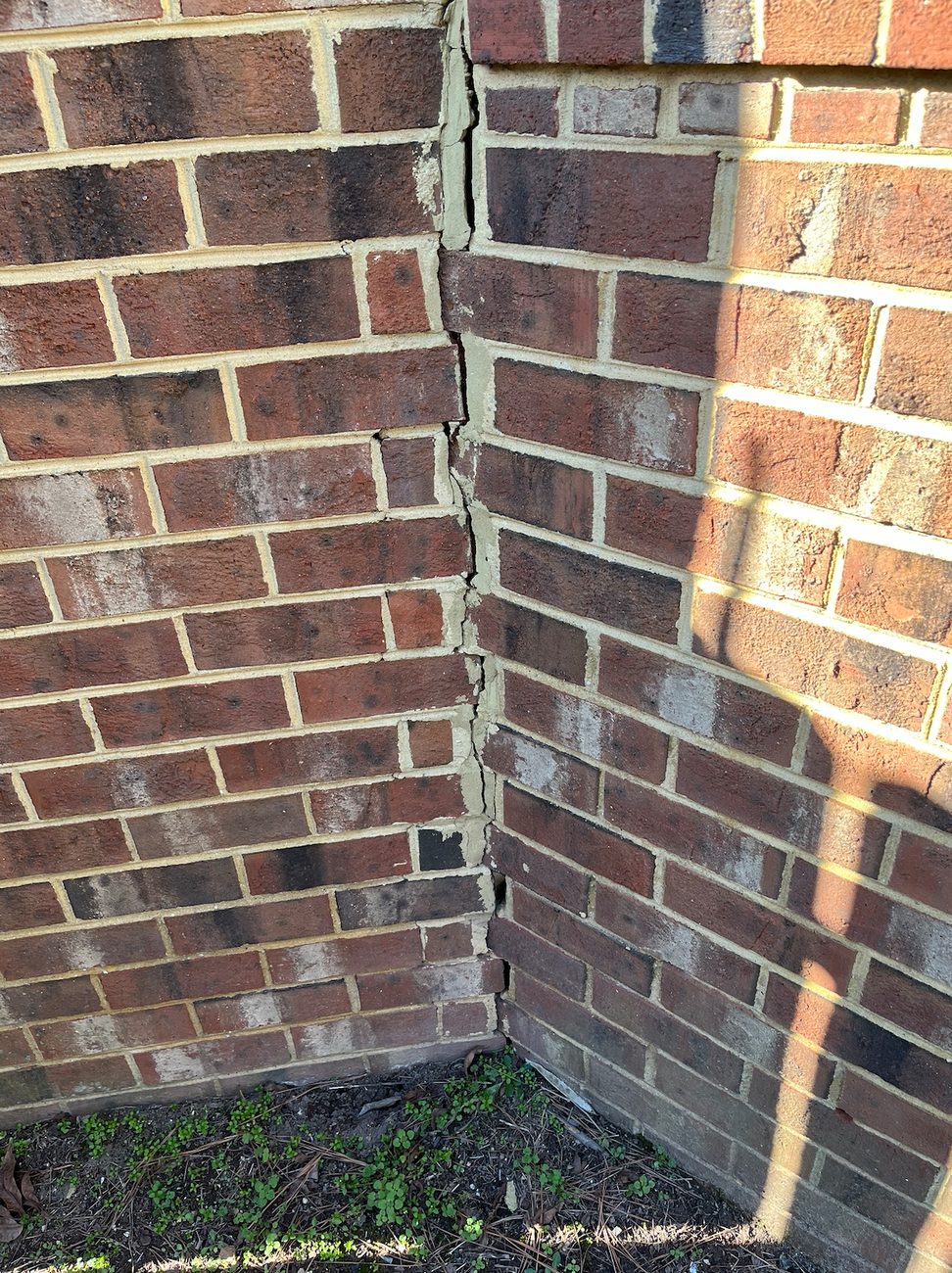
We seal the cracks marching up the brick, ease the doors that jam, and bring a sloping floor back level by setting the foundation on ground that finally holds.
Learn moreDoors that won't latch, cracks climbing the brick, a floor that tips toward the center of the room. The question you're really asking is simple: is this serious, or can it sit? Around Columbia the answer usually comes back to water and sandy soil, the loose ground washing out from under the footings while a high water table and poor drainage keep the dirt soft, until one corner of the house drops.
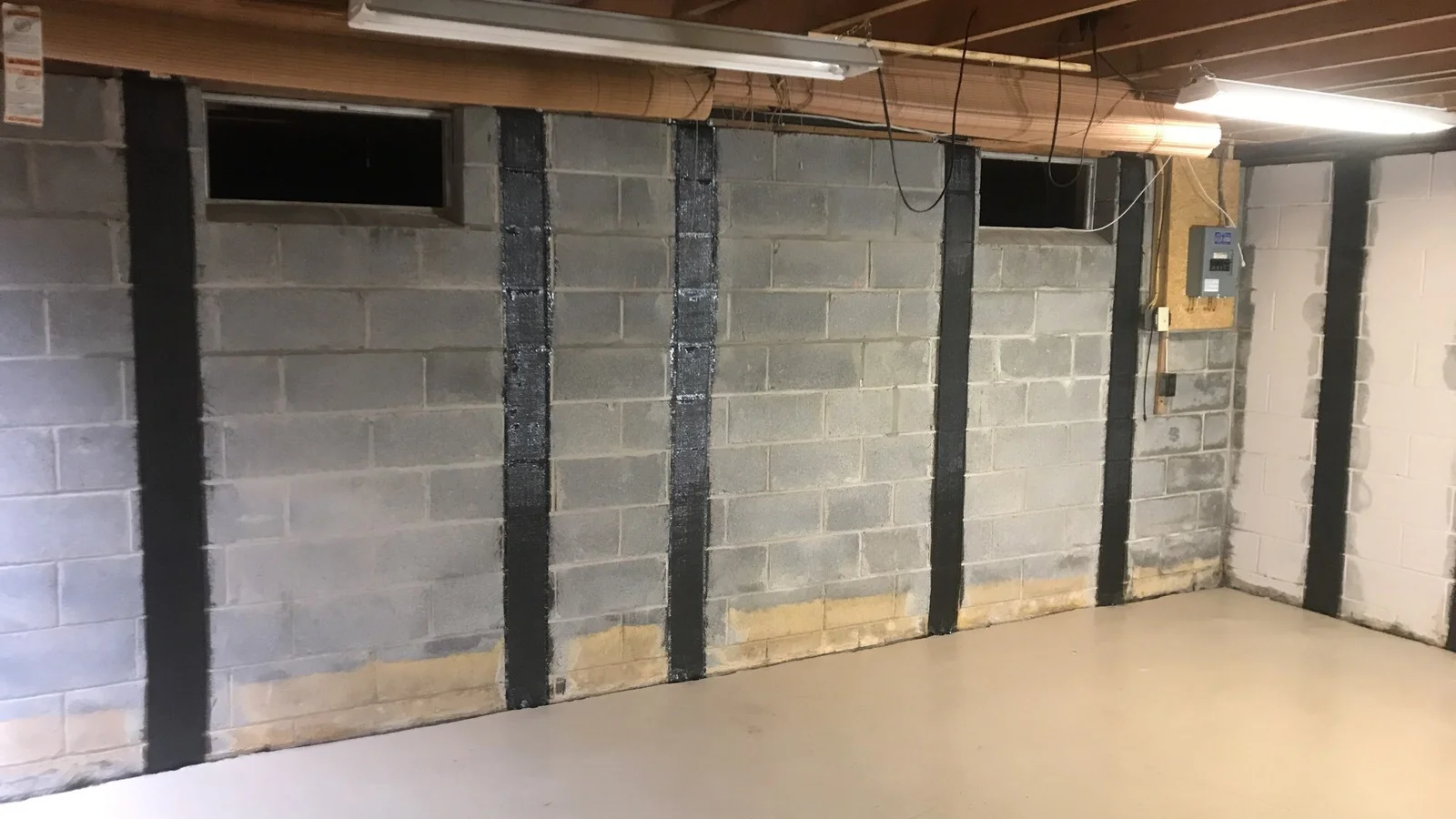
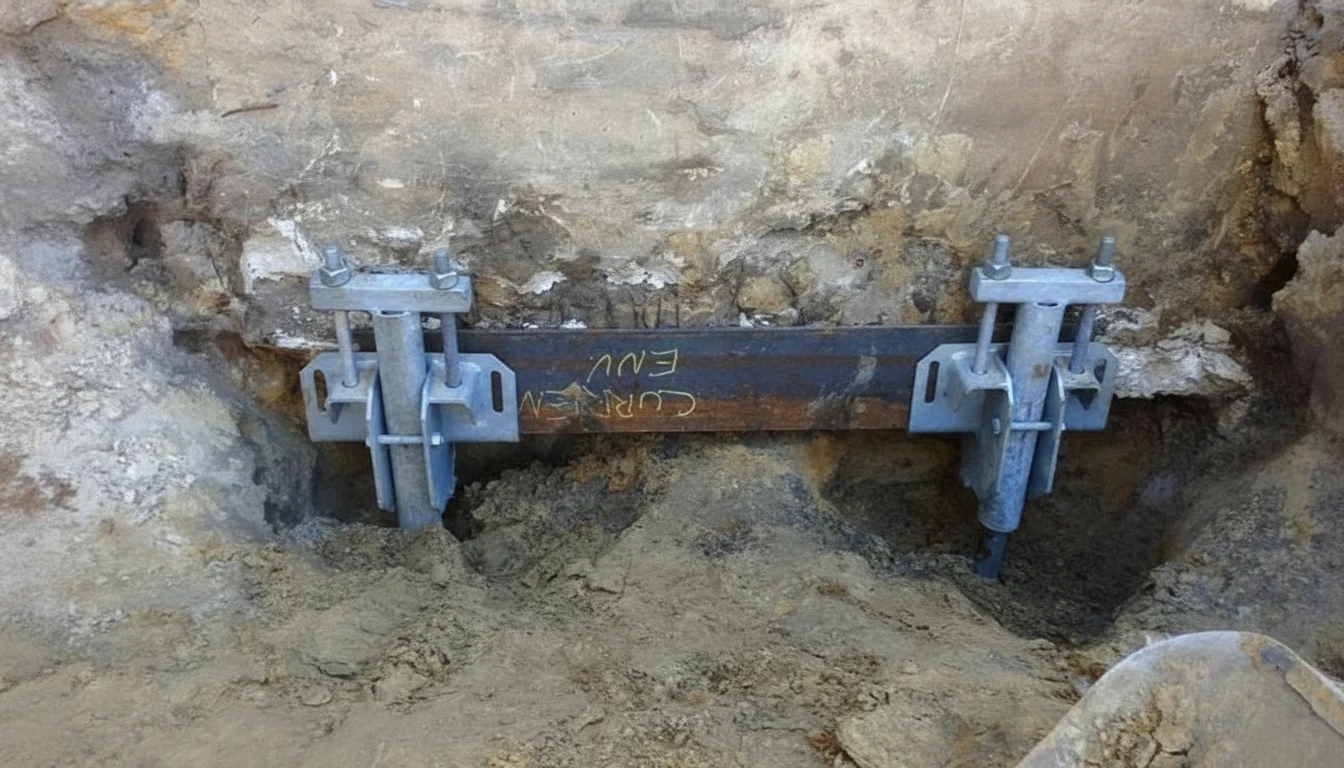
What we do about it depends on what's moving and how far. To raise a settling foundation, we drive steel push piers or helical piers down through the loose sand to ground that carries the load, then bring the house back toward level. Helical piers suit tight access or weaker soil; push piers borrow the weight of the house to reach deeper. Under a floor that sags, we prop the crawl space back up and sister the joists that failed. Once the movement stops, we seal the block so water quits coming through. We don't run one fix across every house, we match the method to what the ground is doing.
A hairline that hasn't budged in years is often nothing, and we'll say so before you spend a dime. We work on homes throughout Columbia, from the older streets of Heathwood to the additions around Wales Garden. It all starts with a free inspection and an honest call on whether the house needs the work, or doesn't.
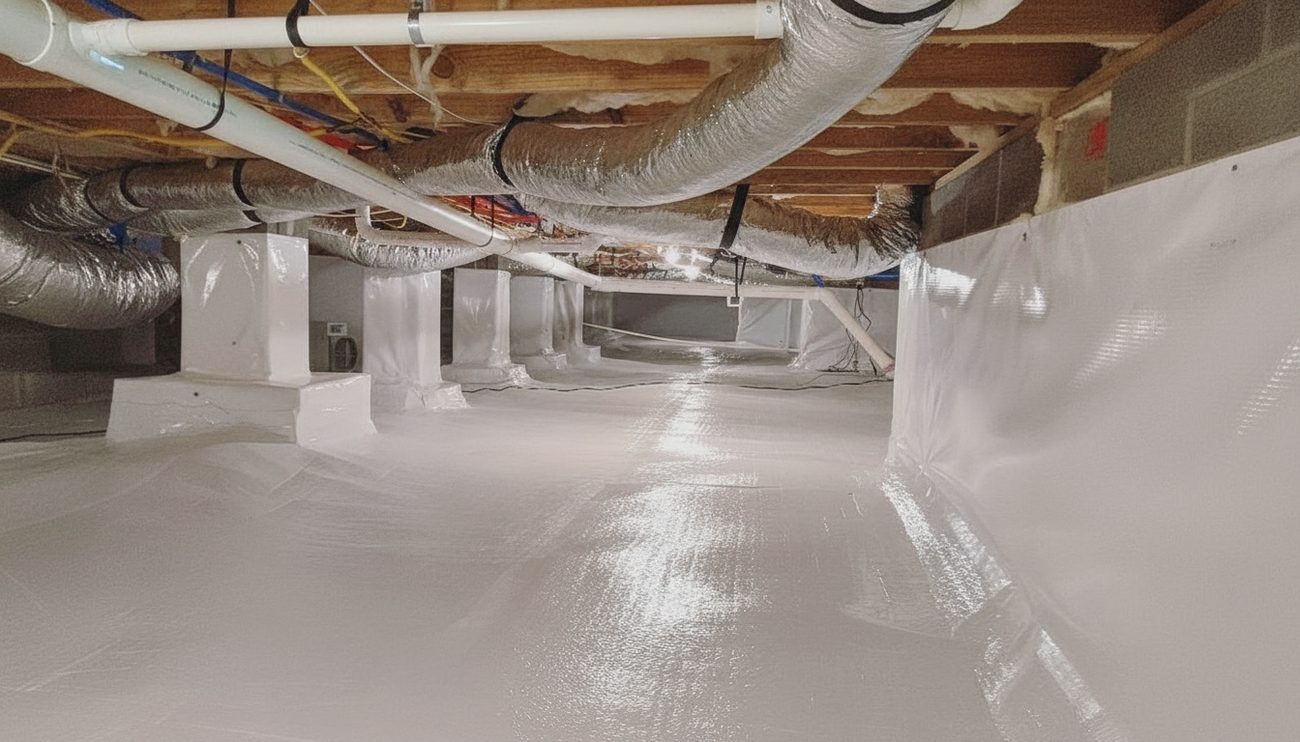
We choke off the muggy, sour air climbing out of the crawl space, cutting it off from the damp earth and outdoor humidity so the rooms overhead stay dry.
Learn moreA sour smell that drifts up into the house on humid days, insulation sagging off the joists, a wet sheen on the dirt that never fully dries. A vented crawl space in Columbia is built to pull outside air in, and through a Midlands summer that means warm, wet air settling on cool framing, ground moisture wicking up from sandy soil, and a water table that runs high near the rivers.
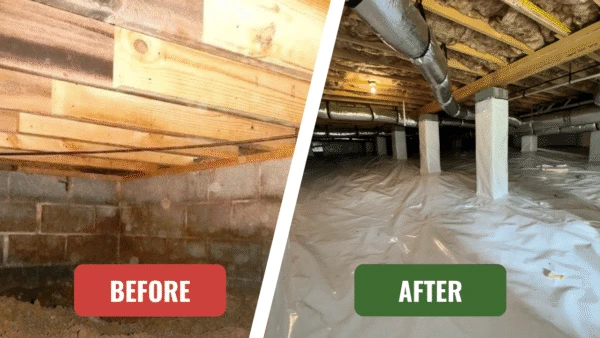
Encapsulation closes all of that off. We cap the vents, wrap the floor and walls in a thick liner sealed and taped along every seam, and bond it to the foundation so the damp ground and outdoor air stay shut out. Where water actually pushes in, we set a drain and a sump pump under the liner to carry it off, and a dehumidifier holds the humidity down through the summer. If a crawl space is barely damp, a liner and better drainage may cover it, and we'll say so rather than push the full build.
Once it's sealed, the musty smell leaves the house, the mold stops spreading, and the wood floors overhead quit swelling with moisture. The air upstairs feels less heavy in July, and the space stops feeding damp into the rooms above. We encapsulate crawl spaces across Columbia, from the bungalows around Melrose Heights to the homes near Five Points. It opens with a free inspection and a plain read on what the crawl space actually calls for.
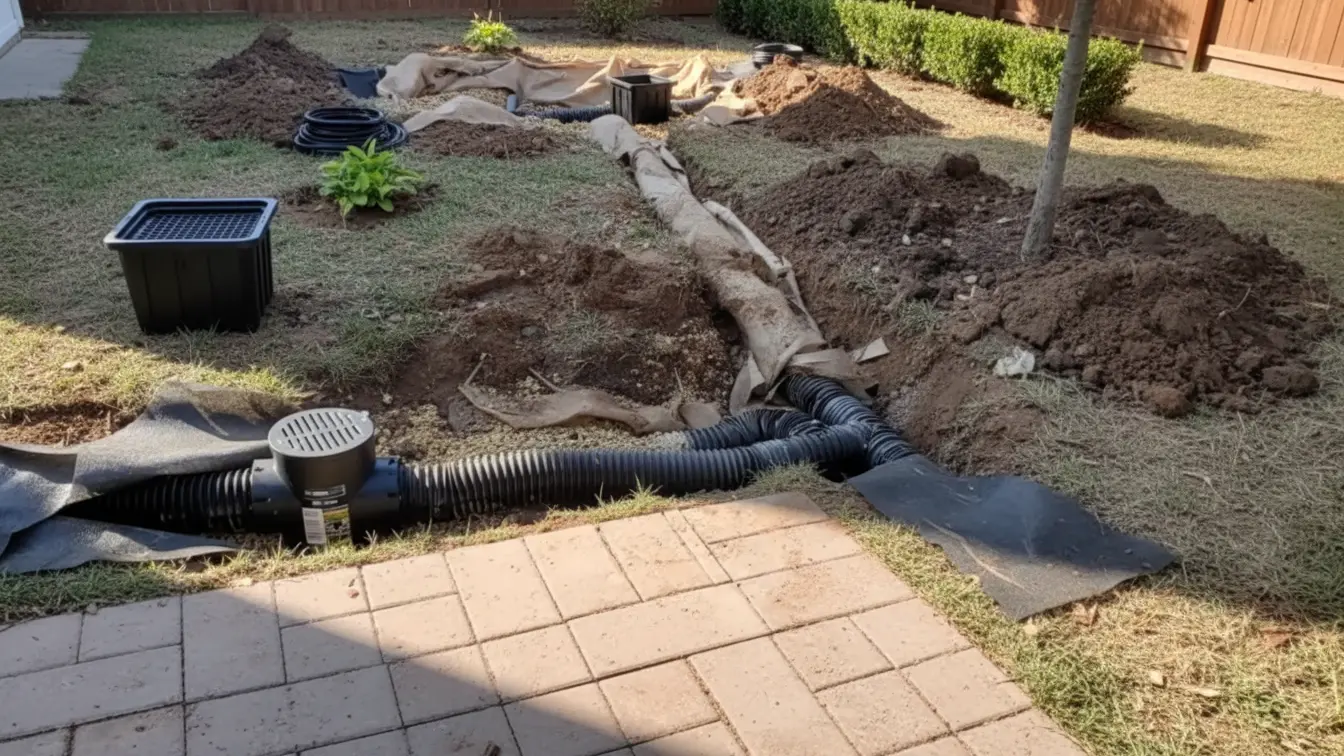
When water stands against your foundation and your yard stays soggy, a french drain collects it in a gravel trench and carries it off before it gets under the house.
Learn moreWater pools right up against the foundation after every storm. The yard stays soft and soggy for days. Sometimes the crawl space floods and takes forever to dry out. A lot of this comes down to poor surface drainage, roof runoff dumping next to the house, and Columbia's loose sandy ground that soaks up water and holds it against the footing.
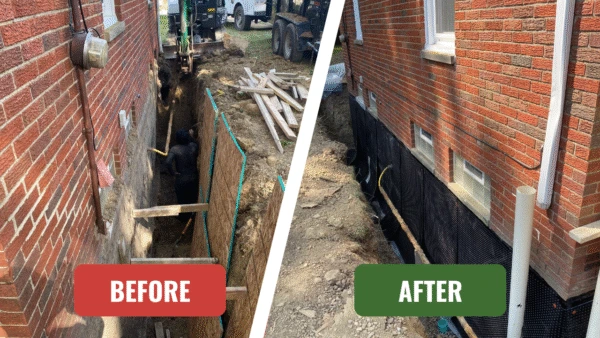
There's no single trench we dig on every house, we look at where the water's actually getting in and match the method to it. A perforated pipe set in a gravel trench does the collecting. We can run it outside along the footing, or inside under the slab when the water comes up through the floor. Most of the time it discharges by gravity to a lower spot in the yard. When there's no low spot to drain to, we tie it into a sump pump that lifts the water out. We usually pair the drain with regrading the soil away from the house and adding downspout extensions. This is the step that makes pier work and wall repairs actually hold.
Sometimes you don't need a trench at all. If it's really just a downspout dumping in the wrong place or dirt sloping toward the house, we'll tell you that and save you the dig. We install french drains all over Columbia, including the older blocks of Elmwood Park. We handle soggy-yard jobs over in Earlewood. Reach out and we'll come look for free.
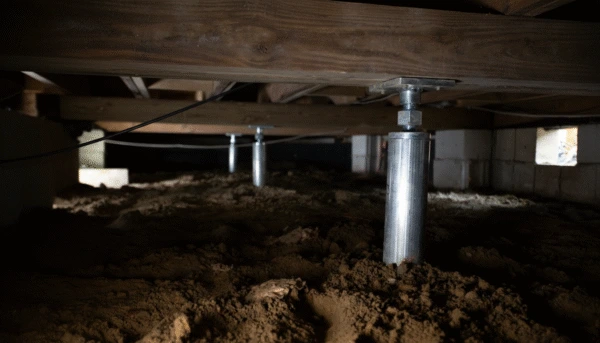
When your floors sag or bounce and a door upstairs quits latching, crawl space repair puts steel support back under the joists and brings the floor back to level.
Learn moreThe floors slope or dip toward the middle of a room. You hit a soft, bouncy spot that gives a little when you walk over it. Upstairs a door won't latch anymore because the frame shifted. Down in the crawl space, damp air from an older vented setup and sandy soil washing out from under the supports is usually what started it.
We don't run one fixed rebuild on every crawl space, we match the repair to what's actually failing under there. Sometimes it's new steel posts or adjustable jacks set on fresh concrete footings to carry the load again. If a joist has rotted, we'll sister a new board alongside it or replace it outright. A sagging main girder can be swapped for a sound one. Once the support is solid, we lift the floor back toward level slowly, a bit at a time, so nothing cracks. Where the sandy base has washed away, we stabilize it first. And we deal with the moisture that caused the rot in the first place, otherwise the whole thing just happens again in a few years.
Plenty of times this is one sistered joist and a couple of posts, not a full rebuild, and we'll say so when that's the case. We do crawl space work across Columbia, including the older bungalows around Rosewood. We see the same dipping floors over in Kilbourne Park. Call us and we'll crawl under and take a look for free.
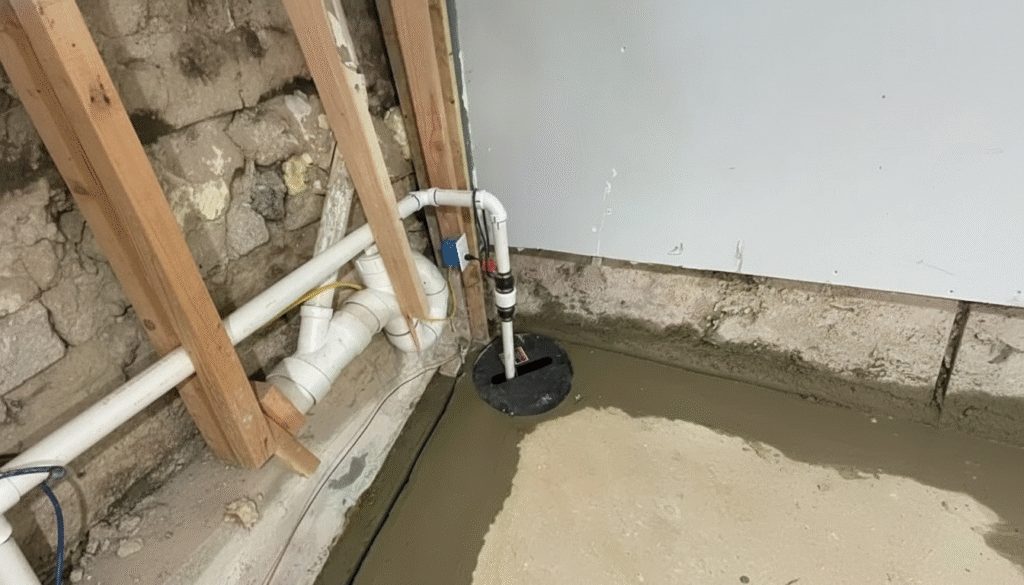
When one low corner keeps pooling water and never dries out, a sump pump sits in a pit and pushes that water out on its own before it spreads.
Learn moreWater keeps collecting in the same low corner every time it rains. There's one spot down low that never dries out. Or the old pump you've got runs nonstop and still can't keep up, or it finally quit on you. With Columbia's high water table where the rivers meet, water finds the low point and sits there until something moves it.
A sump pump isn't the same setup in every house, we size and place it around where your water actually collects. We start by digging a pit at the lowest point of the floor, where gravity pulls the water anyway. A pump sits in that pit on a float switch, so it kicks on by itself when the water rises and shuts off when it drops. The discharge line carries that water well away from the foundation, not right back beside it. It connects up to the perimeter drain that feeds the pit. Since a storm is usually what knocks the power out, we can add a battery backup that keeps it running through an outage. It's the backstop for whatever the drainage collects.
Here's the honest part. If the real problem is bad grading or a downspout dumping by the house, a pump just hides it instead of fixing it, and we'll point that out. We put in sump pumps across Columbia, including the historic blocks of Arsenal Hill. We handle the same wet corners over around The Vista. Give us a call and the inspection's free.
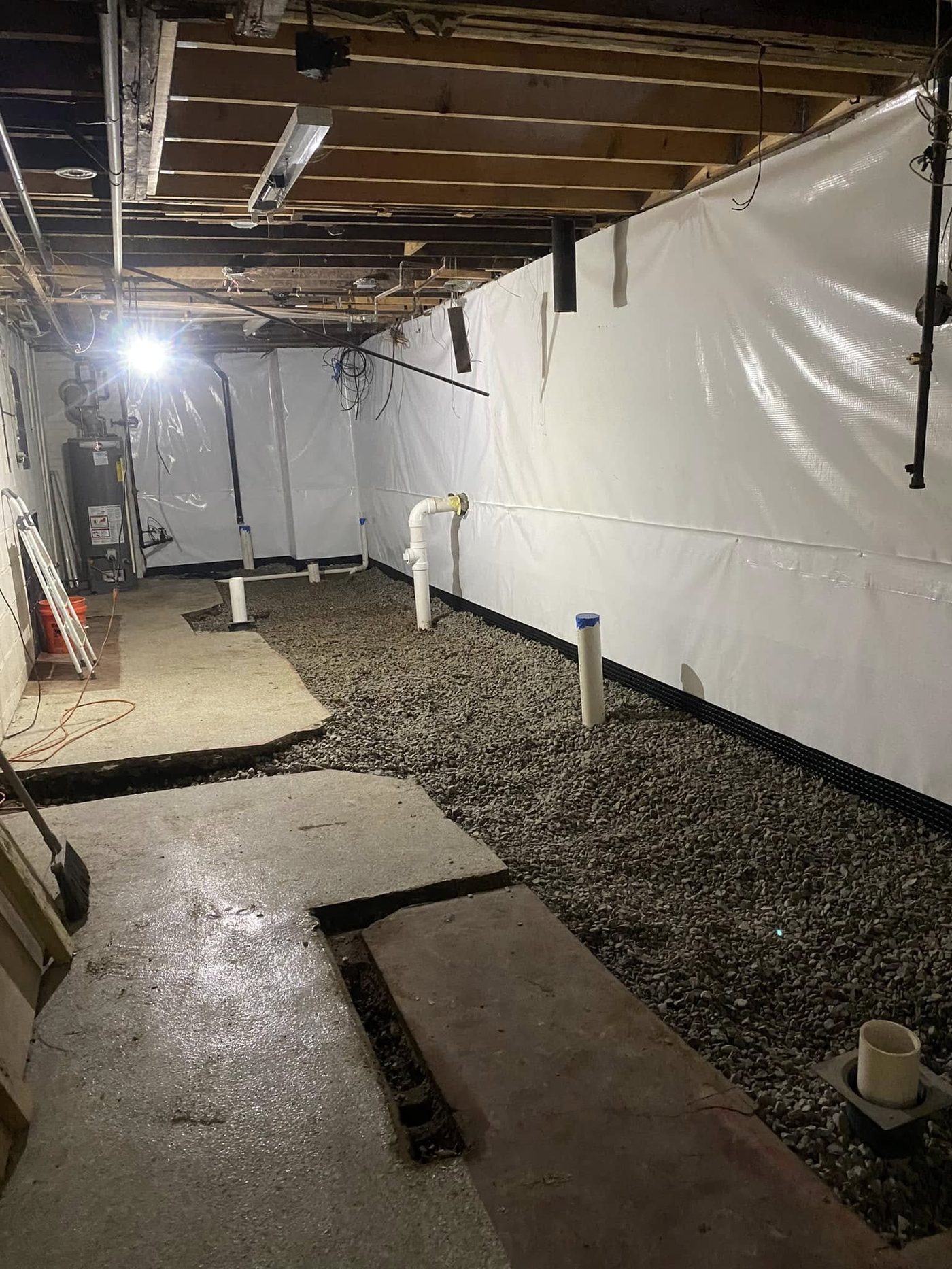
When a musty smell hangs around and water creeps across the floor after a hard rain, below-grade waterproofing dries the space out and keeps the moisture from coming back.
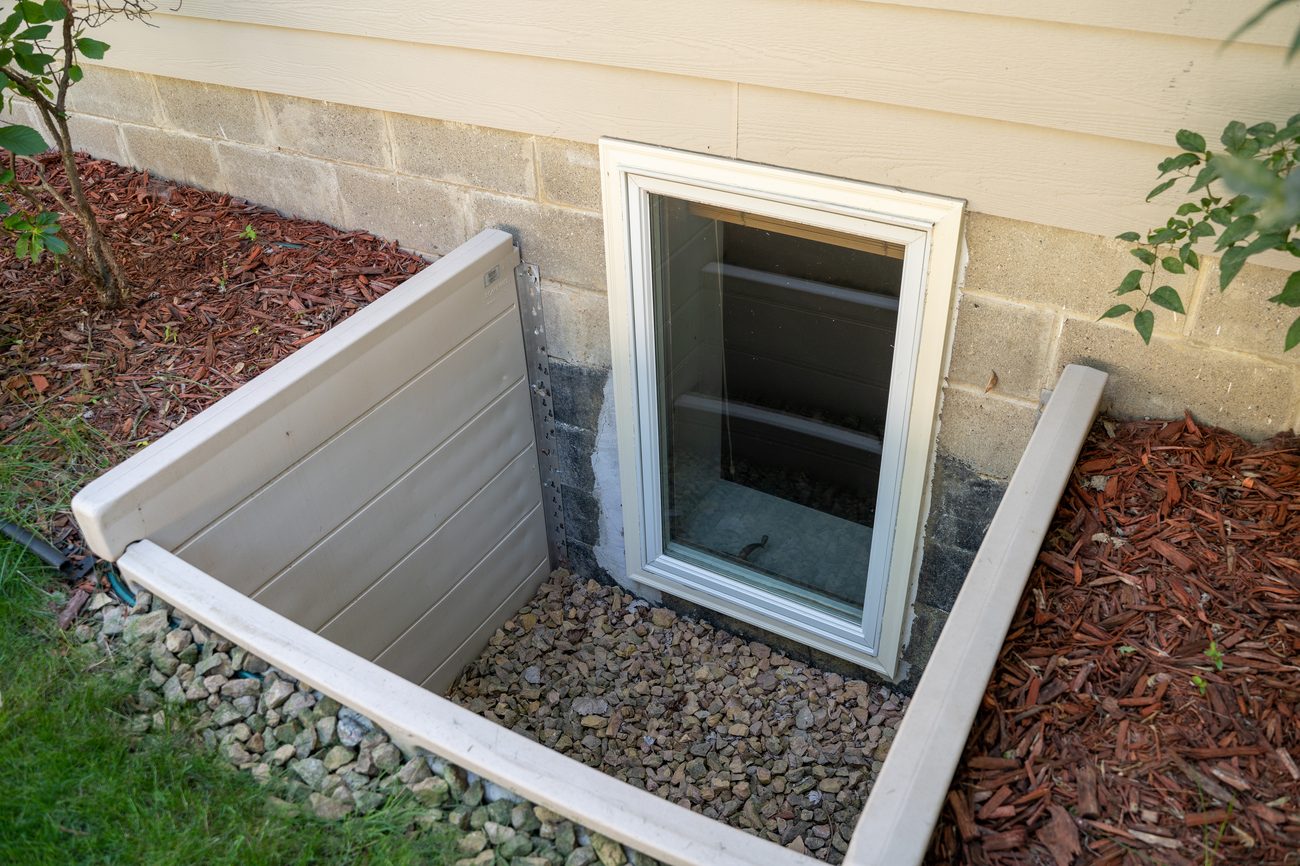
Learn moreYou catch a musty, damp smell every time you go down there. The walls feel wet and there's a chalky white film on them. After a good rain, water creeps in across the floor. Columbia doesn't have many true basements, so this is usually a sunken crawl or a below-grade room sitting low against that high water table, with runoff feeding right into it.
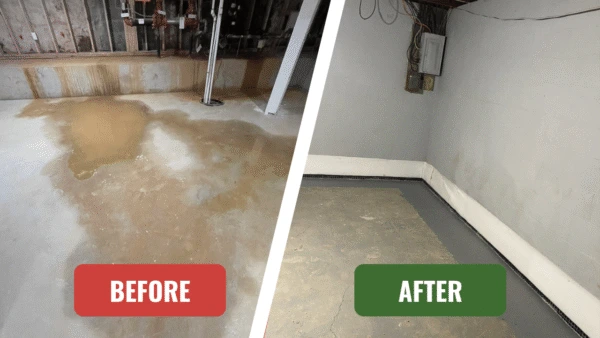
There's no single waterproofing package we sell every house, we work from wherever the water's actually getting in. A lot of the time we start outside, regrading the soil to slope away from the house and running downspout extensions to move roof water off. If that's not enough, we put an interior perimeter drain under the slab and tie it into a sump pump that carries the water out. Cracks the water is coming through get sealed. And for walls that stay damp rather than actively leaking, we add a vapor barrier to hold the moisture back. Which of those you need depends on how bad it is and where it starts, so we look first and then build the fix around that.
Sometimes better grading and a couple of downspout extensions handle the whole thing, and you don't need a full interior drain at all. If that's your situation, we'll tell you straight. We do below-grade waterproofing across Columbia, including the older homes in Shandon. We get the same damp-floor calls over in Olympia. Reach out for a free inspection.
Queen Foundation Repair takes care of foundations, crawl spaces, and drainage for Columbia homeowners. Nearly everything we run into here traces back to water. The Midlands sit on loose, sandy ground, and with the water table high where the rivers meet, that sand keeps washing out from under footings and leaving crawl spaces damp. So most of the work is moving water away from the house and drying things out before anything settles.
Our work runs from crawl space encapsulation and french drains to foundation piering, sump pumps, and lifting the sunken concrete on driveways and walkways. What people call us about is a crawl space gone damp and musty, a yard that holds water long after the rain, floors starting to dip in the middle, doors that won't shut clean, and cracks climbing the brickwork.
We're under houses all over Columbia, from the older streets of Shandon, Rosewood, and Wales Garden to the newer places out around Elmwood Park and Earlewood. It always begins with a free inspection, where we get under the house and walk the foundation to see how the water is moving.
Get your free inspection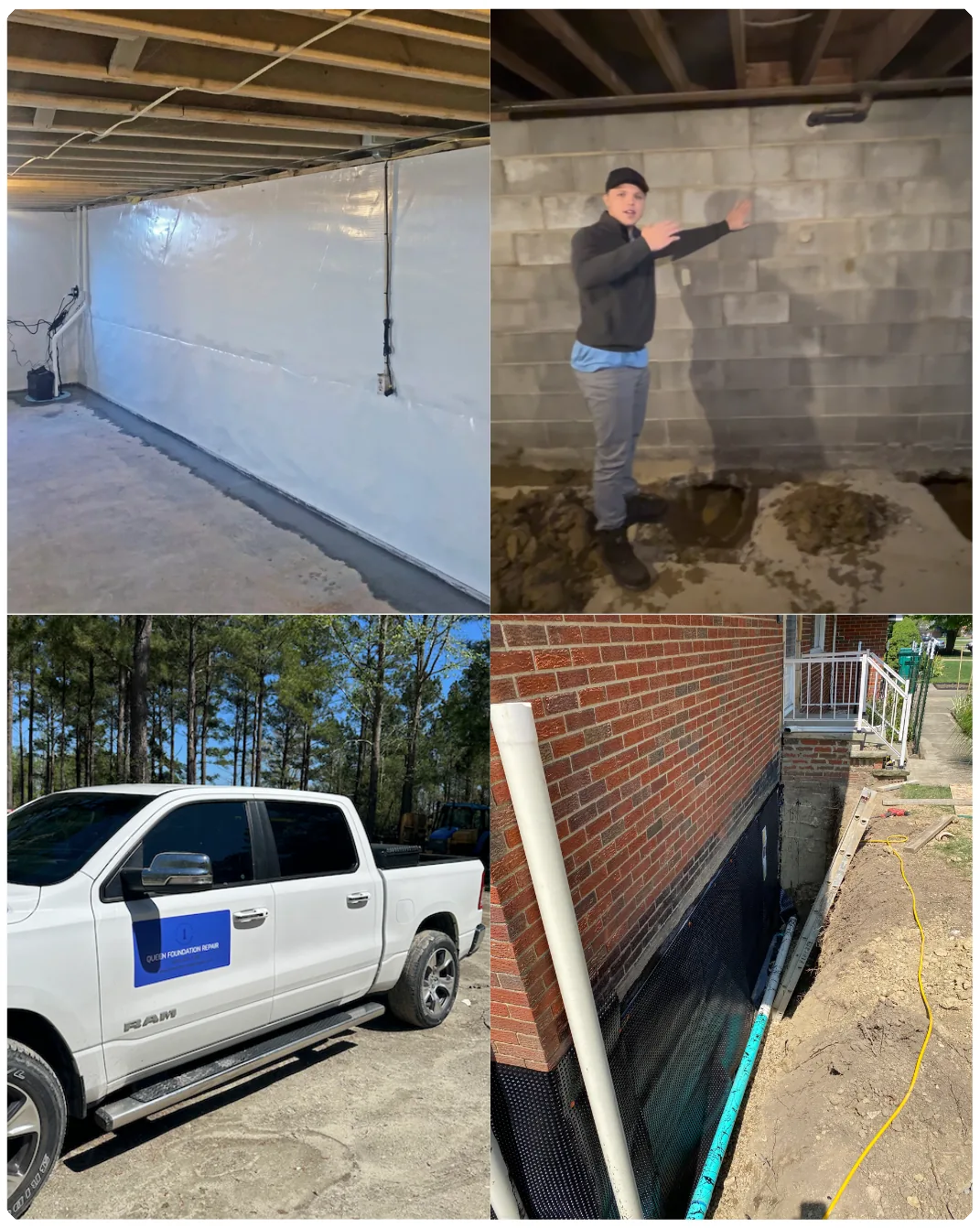
WHAT YOU GET
We answer fast and get out to the house quickly, so you're not sitting for weeks just to find out what's wrong and what it'll cost.
No charge to have us come out, find what's going on, and lay out what the fix takes. You know where you stand before spending a dollar.
Licensed, with full liability and workers' comp coverage, so the work is done to code and your property is protected if anything goes sideways.
The repair comes with a written warranty that transfers to the next owner, so it protects your home's value if you ever sell.
A clear, written price upfront before anything starts, no vague ballpark and no surprise add-ons once the work is underway.
We handle all structural and waterproofing services across Columbia, where most trouble comes back to sandy soil and a high water table, from older crawl spaces in Shandon to newer builds in The Vista.
Here's the way a job runs, from your first call out to us to the last walkthrough.
FREQUENTLY ASKED
The questions Columbia homeowners actually put to us, from the older streets of Rosewood to the newer builds around Elmwood Park: what a crack really means, what a repair runs, whether your insurance chips in, and how long solid work holds up.
Signs & When to Worry
Your house usually tells you before you fully realize it. Watch for cracks working through the drywall or brick, doors and windows that jam or stop latching, floors that tilt or feel spongy when you cross a room, a musty smell rising out of the crawl space, and fresh gaps where the trim pulls off the wall. Any one of those might be nothing, or it might be an early sign of something moving underneath. The only way to know for sure is a free inspection, and that one is on us.
Honestly, plenty of cracks are nothing. Thin hairlines that have sat unchanged for years are usually cosmetic, the kind that come from concrete curing or a house settling in the way they all do. Those we will tell you to leave be. The ones worth a real look are a different animal: stair-step cracks marching up brick or block, cracks that run flat across a wall, anything that has opened past a pencil's width, cracks that seep in a hard rain, and any crack that keeps spreading over the months. Those can flag actual movement below. The catch is you often cannot tell one from the other in a photo or a quick glance. That is what the free inspection settles. We measure it, look at what sits behind it, and if it is only cosmetic, we say so straight.
Almost never, and it's usually not the emergency people picture. Foundation trouble here moves slowly, a house settling an inch over years, not caving in overnight. What you actually risk by leaving it is the slow stuff turning expensive: floors dropping further, doors and windows racking out of square, cracks widening, and a crawl space staying wet long enough to rot the framing. The house doesn't fall down, but the repair bill climbs the longer it sits. That's the real reason to look early, not fear of a collapse.
Repairs & Methods
We go under the problem and reach something solid. For a sinking foundation, that usually means driving steel piers, either push piers or helical piers, down through the loose sand until they hit firm, load-bearing ground. Then we use those piers to lift the house back toward level as far as it will safely go. The type of pier depends on the load it has to carry. And because water started the problem, we pair the piers with drainage so it doesn't restart.
They can, and around here they're the biggest reason a house moves. Columbia sits right on the Fall Line, in the sandy Sandhills and Midlands. The ground under most houses here is loose sand, not the expansive clay some companies like to blame. That heavy clay is a Lowcountry and coastal problem, not a Columbia one. What actually moves houses here is water. Sand washes out from under footings when drainage is bad, leaving voids the foundation drops into. On top of that, we've got a high water table, especially where the Broad and Saluda rivers meet to form the Congaree. Add poor grading and older vented crawl spaces that never dry out, and the water just keeps at it. So we chase the water down first. Fix what the water is doing, and the repair actually holds.
Because the ground gives way unevenly, and around here that's almost always water and sand. When drainage sends runoff toward one side of the house, or the loose sand under a corner washes out, that part of the footing drops while the rest stays put. Additions, porches, and rooms built later are the usual suspects, since they often sit on shallower footings than the main house. The fix is to reach firm ground under just that corner with piers and cut off the water feeding the washout, not to jack the whole house.
Crawl Spaces & Water
It's not a gimmick, but it isn't for every crawl space either. When the space is genuinely damp, it earns its keep: it shuts down the musty smell, keeps mold from spreading, and stops wood rot before it eats into your joists and subfloor. The floors above quit pulling in moisture too, so they feel more solid. If your crawl space is only lightly damp, though, a vapor barrier and some better drainage might handle it for a lot less. We look first and tell you straight which one you actually need.
Fair question, because it isn't free of downsides. The real one is cost: a full encapsulation is a bigger upfront spend than a simple vapor barrier, so on a crawl space that's only lightly damp it can be more than you need. Done cheaply, without fixing where water actually gets in, moisture can still get trapped behind the liner, which is worse than an open vented crawl. And a sealed space usually wants a dehumidifier running, which adds a little to the power bill. Done right, on a space that genuinely stays wet, it pays back by stopping mold, rot, and the musty air that rises into the house. Done wrong, or sold on a dry crawl that never needed it, it's money spent for little gain. That's why we look first and tell you honestly whether yours is a candidate.
After a hard rain it's usually at its worst, and here's why. A wet, musty crawl space comes from a few things stacking up: an older vented design that lets outside air in, our humid Midlands summers, a high water table that climbs when it rains, and poor drainage pooling runoff under the house. Warm damp air settles in and never dries. The smell is the warning, and behind it comes mold, wood rot, and sagging floors. Sealing and drying the space stops it.
Cost & Insurance
There's no honest way to give you one price without seeing the house, so here are national ballparks instead. A minor crack repair might run anywhere from a few hundred dollars up to around $1,500. Larger settlement work with piers commonly lands in the several-thousand to $10,000-plus range, depending on how many piers you need and how deep they have to go. Crawl space encapsulation often runs somewhere around $5,000 to $15,000. A french drain tends to fall in the $1,500 to $6,000 range. Every one of those is a national average, not a Columbia quote, and your house could sit above or below it for reasons a photo won't show. The only number that actually means anything comes from a free on-site inspection and a written estimate. Once we agree on the plan and the work starts, that price is the price. No surprises.
Most of the time, no, whether it's State Farm or another carrier, and that surprises a lot of folks. A typical policy is written for sudden, accidental damage, a burst pipe or a limb through the roof. The gradual things it tends to leave out are settling, ground that shifts, drainage trouble, and plain aging. And gradual is exactly the bucket most foundation and crawl space trouble falls into. There is the odd exception, say a covered pipe leak that set off the damage, where a claim might land. Whether your insurer says yes is between you and them, and not a thing we can promise you. What we can do is put in writing exactly what we found and what drove it. That is the file you would hand an adjuster if you decide to go that way, and having it in writing gives you the best shot.
Two things worth knowing before you file. The 80% rule is a general coverage idea: most policies expect you to insure your home to at least 80 percent of its replacement cost, and if you're under that, the insurer can pay a smaller share of a covered claim. It rarely decides a foundation claim, though, because foundation settling is usually excluded from the start. As for talking to an adjuster, keep it factual and don't speculate. If you aren't sure when or how the damage started, say that rather than guessing, and let the documentation carry it. What we hand you is a written report of exactly what we found and what caused it, which is the record an adjuster actually needs. We can't argue the claim for you, but that paperwork gives you the straightest shot.
The Process
The actual work usually goes faster than folks expect. A crack repair or a single-section pier job is often done in a day or two. Bigger structural jobs with a full row of piers usually wrap within a week. Encapsulation typically takes a couple of days. What adds time isn't the labor, it's the front end: the inspection, writing up a solid plan, and pulling any permit the job calls for. When we hand you the estimate, we'll give you a realistic schedule to go with it.
Honestly, any time. Foundation and crawl space work happens under the house and around the footing, so it isn't weather-dependent the way a roof job is. Some folks like to catch drainage problems before the wet season so the yard isn't soaked when we dig, and a badly settling foundation shouldn't wait for a better month regardless. The one thing that can move a start date is ground that's frozen or flooded, which is rare here in the Midlands. So the best time is usually whenever you first notice the problem, before it grows.
Almost always, yes. The bulk of this work happens outside the walls or in the crawl space beneath you, so your day carries on while the crew is there. Expect some noise, and a bit of vibration during the pier work, but that is about the size of the disruption. Once in a while a job is the exception where sticking around is not practical. If yours turns out to be one of those, you will hear it from us well in advance, so you can plan around it.
Trust & Warranty
Yes, it does. The repair comes with a written warranty, and that warranty transfers to the next owner if you sell the house. That's a bigger deal than it sounds. When a buyer sees that the foundation was repaired, and that the repair carries a warranty they get to keep, it takes a scary unknown off the table. Foundation work is one of the things buyers worry about most, so a documented, warrantied fix actually protects the home's value instead of dragging it down. Practically speaking, hang on to everything as a set: the inspection report, the estimate, and the warranty itself. Keep them together in one folder. When it's time to sell, or even years down the road if a question ever comes up, having that paperwork in one place makes the whole thing simple.
Absolutely, and it's often easier than selling a house with problems nobody ever dealt with. A documented repair that comes with a transferable warranty tells a buyer the issue was found and handled right, not painted over. In most cases you'll disclose the work when you sell, and that's fine, because the paperwork actually works in your favor here. It answers the buyer's questions before they even ask them. Keep the report, the estimate, and the warranty together in one folder so it's all ready when you list.
Look for one that goes after the cause, not just the crack. Around Columbia the cause is water working on sandy soil, so a good company diagnoses that and tells you how they'll deal with it. Beyond that, watch for a few things: a written scope and price, no high-pressure sales push, and a transferable warranty standing behind the work. Get the diagnosis in writing first. And be wary of two red flags, anybody selling the exact same fix on every house, and anybody pushing the expansive-clay scare, because that story fits the coast, not Columbia.
AREAS WE SERVE
From the tree-lined blocks of Heathwood and Shandon to the newer riverfront lofts in The Vista, we work with homeowners all over Columbia and the wider Midlands on foundations that have settled, crawl spaces gone damp, and yards that hold water long after the rain. No matter where you are in the metro, the first look is free.
ZIP Codes We Serve
Ready to Get Started?
No obligation, fast and easy.
We appreciate you reaching out.
One of our team members will be with you shortly.