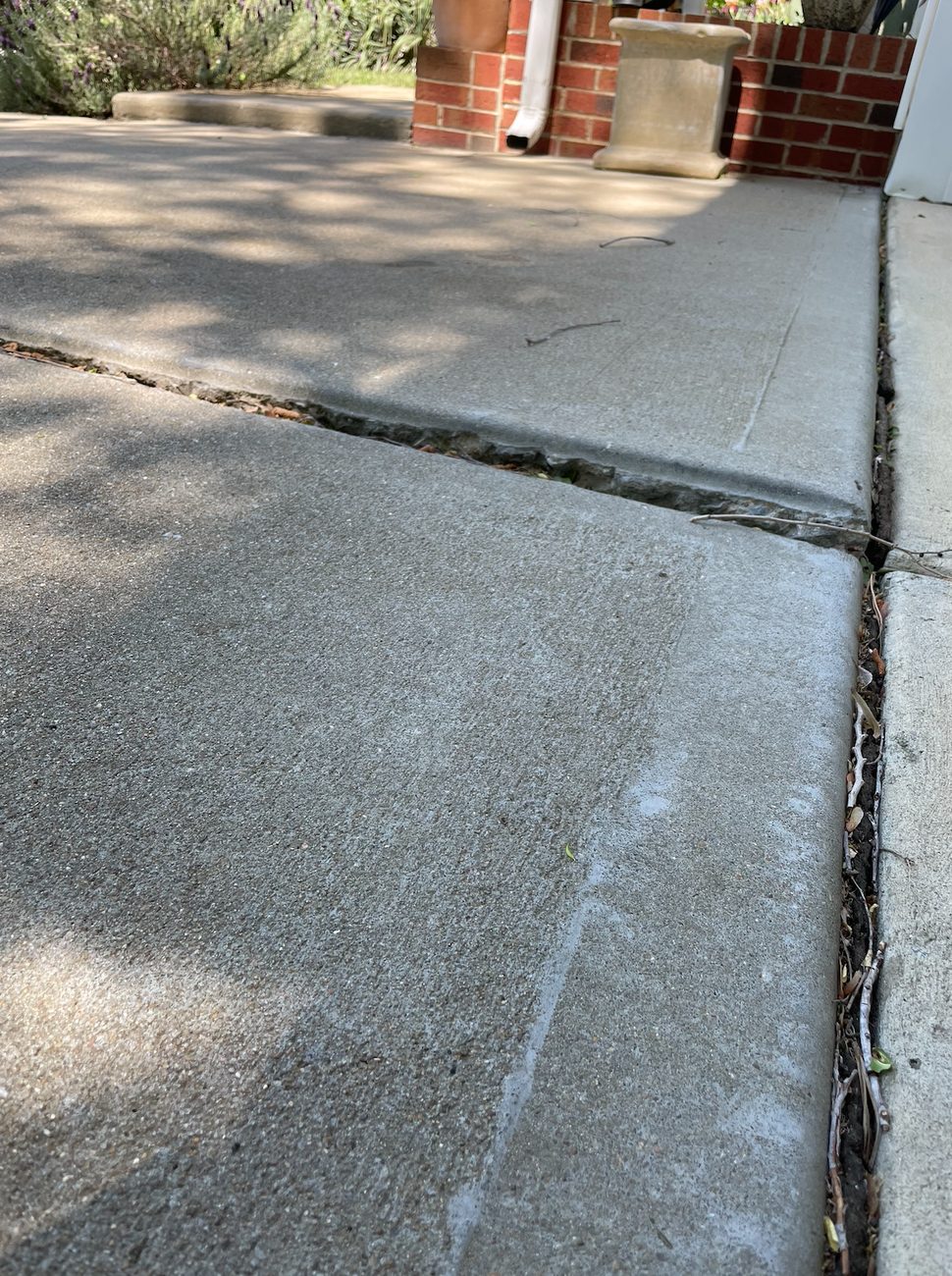
A brick wall that's stair-stepping, a door that won't latch, a crawl space that turns damp every time it rains? Those are the calls we take across Concord, from Historic Downtown out to Christenbury. We handle foundation repair, crawl space encapsulation, crawl space repair, and french drain installation. The first inspection is free, no pressure.
Get Your Free Inspection
We appreciate you reaching out.
One of our team members will be with you shortly.





COMMON WARNING SIGNS
Foundation trouble rarely shows up all at once. It starts as little things you get used to, a crack here, a sticking door there, a crawl space that never quite dries out. Around Concord, almost all of it traces back to one thing: water finding its way where it shouldn't. Most foundation problems in a Concord home start there. Waterproofing the home is where the repair really begins. A dry home is a stable home.
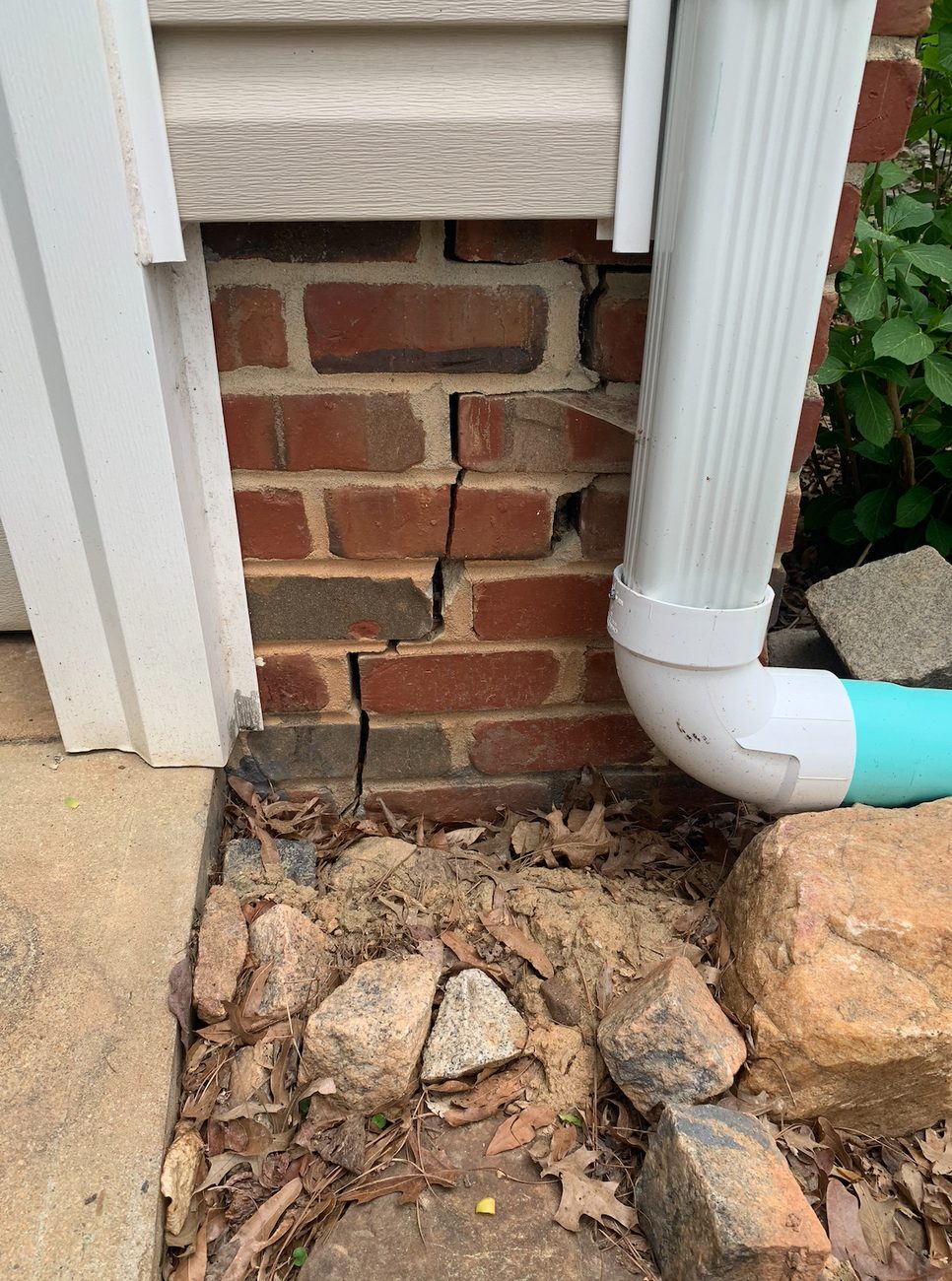
Stair-Step Cracks Up the Brick
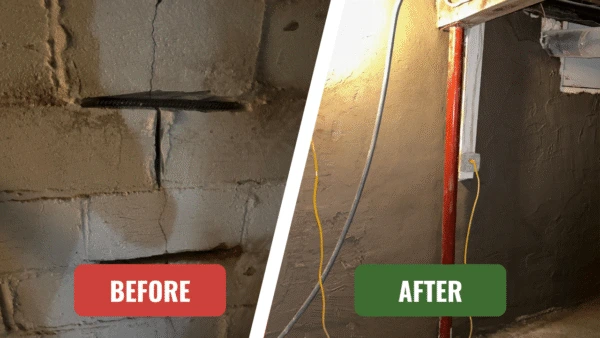
Cracks that stair-step up the brick, or a gap at a corner. The soil under that footing washed out and the corner dropped. Left alone, it widens. Settlement repair and foundation repair are the same job at that point. Helical piers or a push pier carry the home back to level.
Doors and Windows That Stick
A door that won't latch, a window that sticks. The foundation shifted the opening out of square as moisture moved the ground below, and it worsens. Drainage solutions and basement waterproofing stop it from coming back.
A Floor That Dips or Bounces
Floors that slope toward one wall, or feel springy underfoot. Damp air and standing water have rotted the crawl-space beams below, and the wood is starting to give. That is a mold and moisture problem before it is a framing problem.
A Crawl Space That Won't Dry Out
A musty smell drifting up, or damp that never clears. The open crawl space traps humid air and slow-draining clay holds the water, feeding mold and rot. Basement waterproofing plus crawl space encapsulation dries the home out. That combination handles the mold and the basement together. Mold stops growing once the moisture is gone.
Water Pooling Under the House
Standing water or wet soil under the house after a storm. The lot isn't shedding runoff, so it pools against the footings, eroding the soil beneath. Our foundation contractors size the waterproofing and the foundation repair together. Concrete footings, drainage, and basement work all get quoted as one. No surprise services later.
A Wall Crack That Leaks
A crack that weeps after heavy rain, or a wall stained with water lines. Water pushes from outside, and the pressure widens the crack and the leak worsens. Waterproofing solutions handle the pressure, not just the surface.
Most of these turn out fixable, and plenty of the cracks are just cosmetic, the normal settling any Concord home does over the years. The ones worth acting on are the ones that keep moving: brick stepping wider each season, a floor sinking a little more, a crawl space that won't dry out no matter what. If you're not sure which you're looking at, a free inspection makes it clear, usually pointing to a smaller repair than you'd feared. Many foundation problems turn out to be moisture problems. Waterproofing services fix those far cheaper than foundation repair does. We say so before you spend on the bigger repair.
From a corner that's settled and stair-stepped the brick to a crawl space that never dries and a driveway slab that's sunk at the seam, we handle the full range of foundation, crawl-space, and drainage work Concord homes need. Foundation repair services and basement waterproofing come from one crew. Your home gets one schedule, not three. Foundation repair, waterproofing, and concrete finish together.
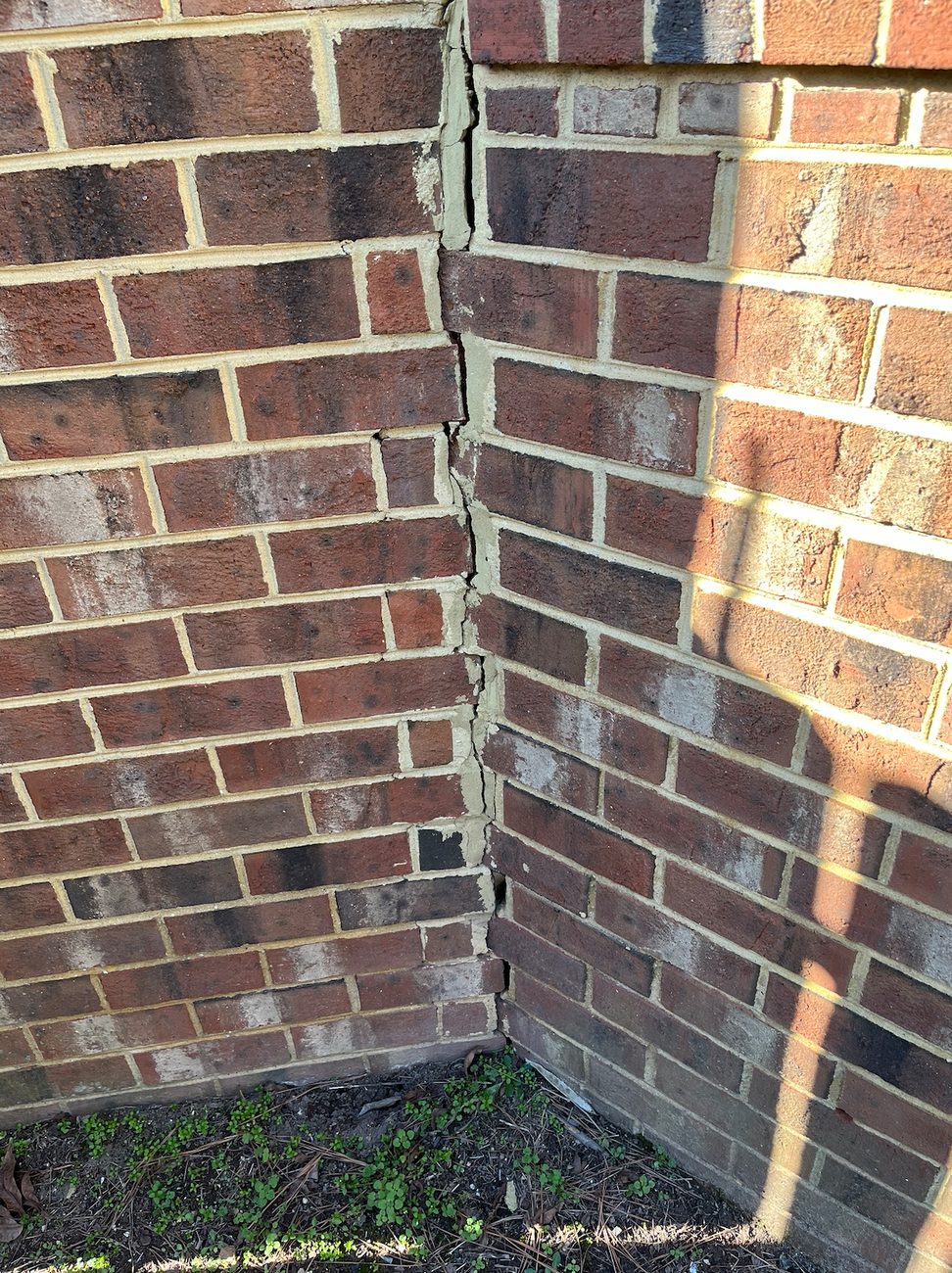
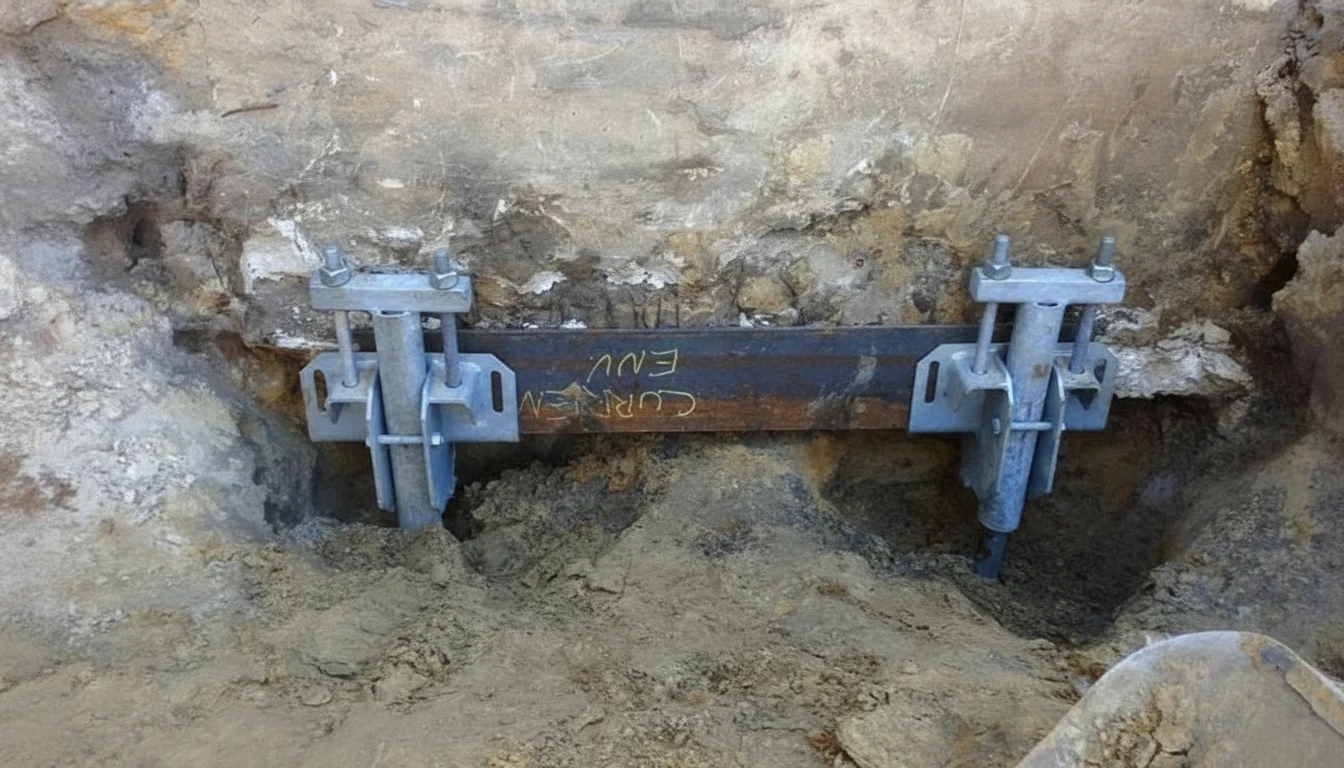
When a corner settles and the cracks start climbing the brick, we get the foundation back onto solid ground and hold it there for the long haul. Helical piers are the foundation repair that carries a heavy home. Push pier solutions suit a lighter home on shallow footings.
Learn moreA door that scrapes its frame, cracks marching up the brick in a stair-step, a floor that leans toward one side of the room. The question everyone asks first is fair: does this need fixing now, or can it ride a while? In Concord the answer usually starts with water, runoff carrying the soil out from beneath the footings and collecting against the house until a corner drops out of level. Concrete work and foundation repair often run together on a slab home.
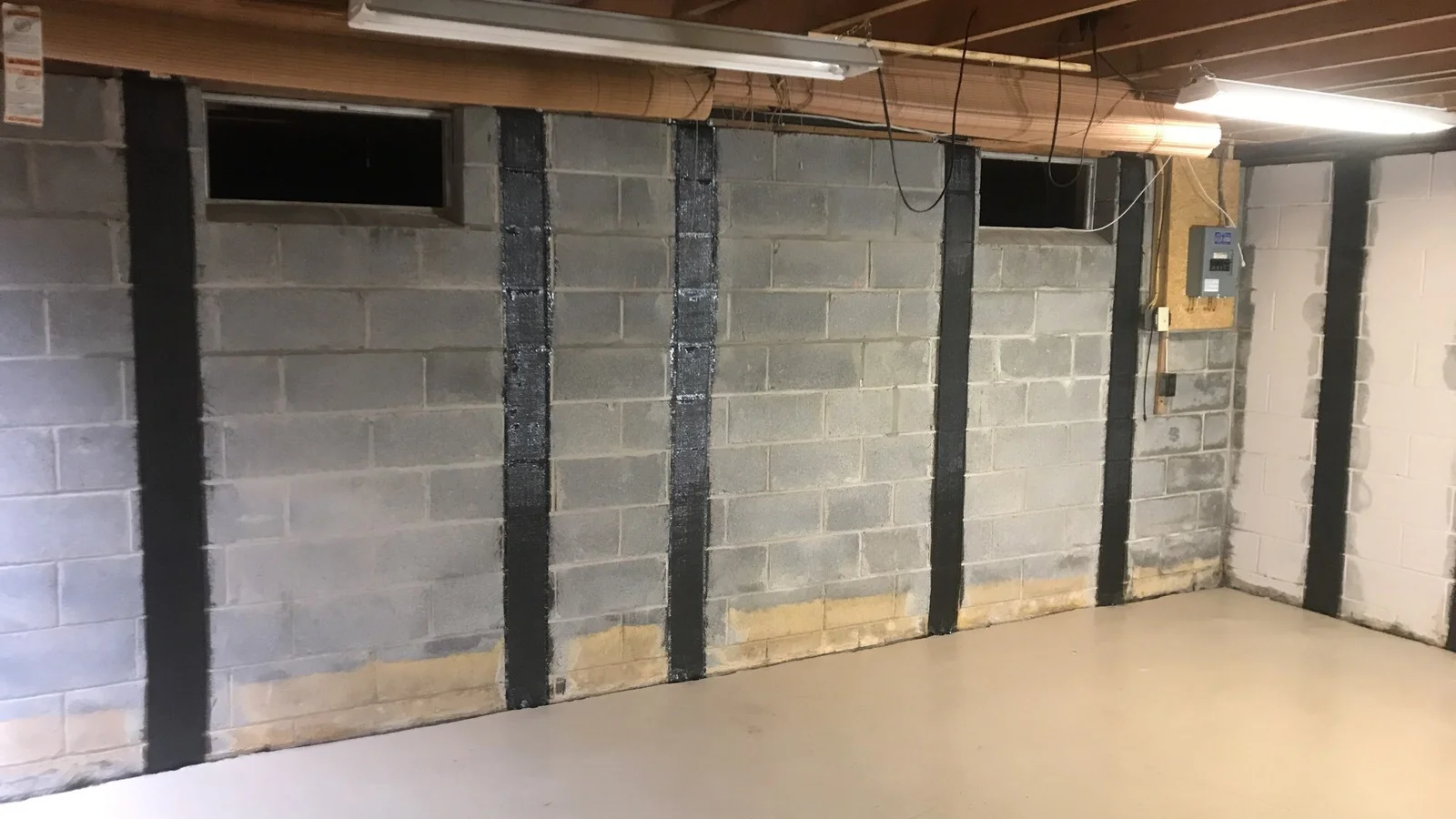
What we do about it turns on which part is moving and how far. When a section has settled, we set steel piers beneath it, either driven push piers that borrow the home's weight to reach firm ground or helical piers turned in like anchors where the soil is soft or the access is tight, and raise the corner back toward level. A crawl space with sagging floors gets steel supports and new joists where the old ones rotted. Sealing the cracks comes last, only after the movement has stopped so it holds. If a wall has bowed inward from the pressure, we brace it with carbon-fiber straps or steel anchors in the same visit. We fit the method to the house, never the house to a method.
Plenty of cracks are harmless, and if yours is one of them we'll say so and let you keep your money. We take care of homes right across Concord, from the older streets of Historic Downtown to the newer lots around Cox Mill. The starting point is a free, unhurried inspection and an honest read on what the house actually needs. We quote foundation solutions and moisture solutions on one sheet. No basement services get added after the fact. The solutions list is fixed before we start.
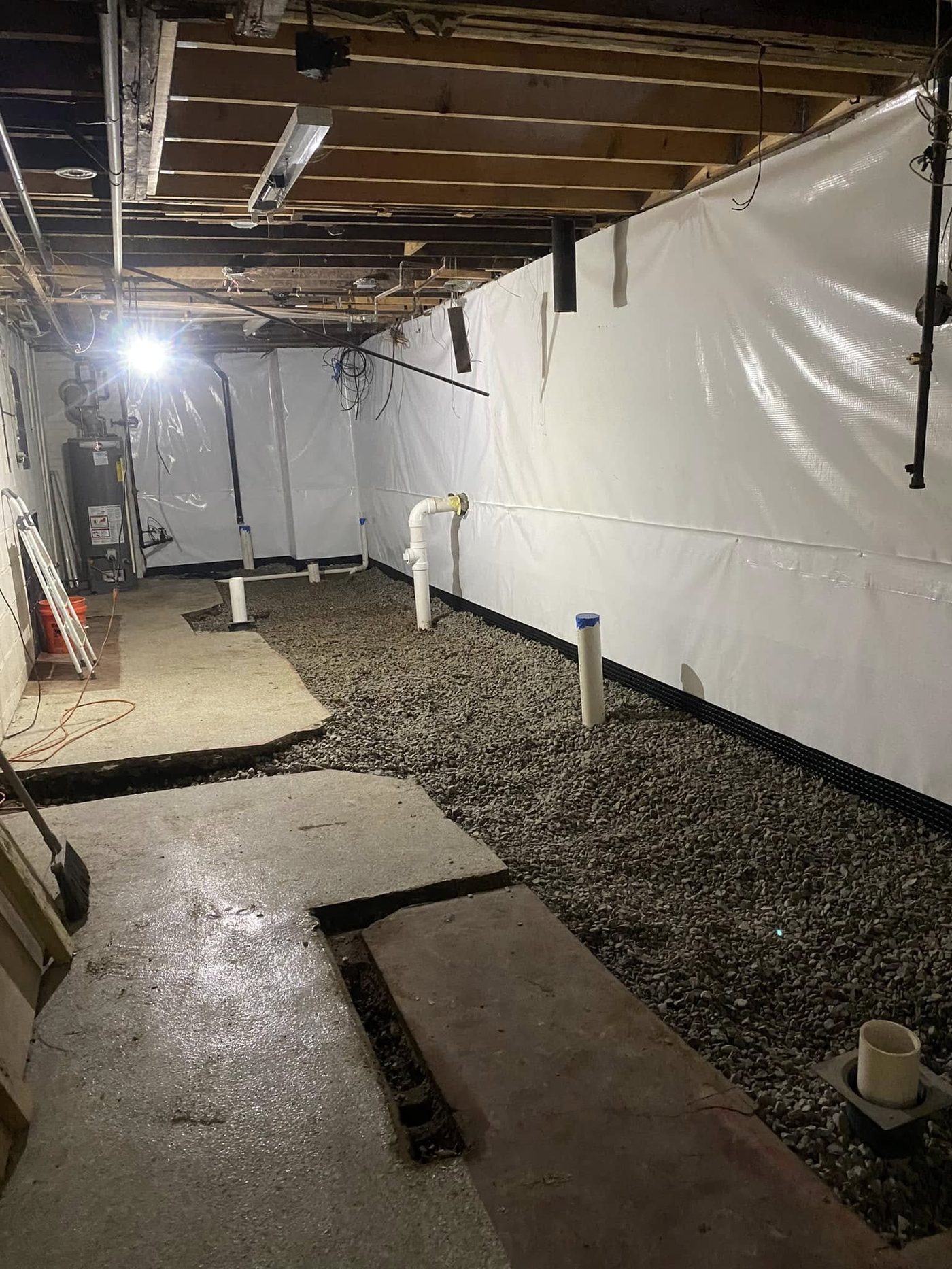
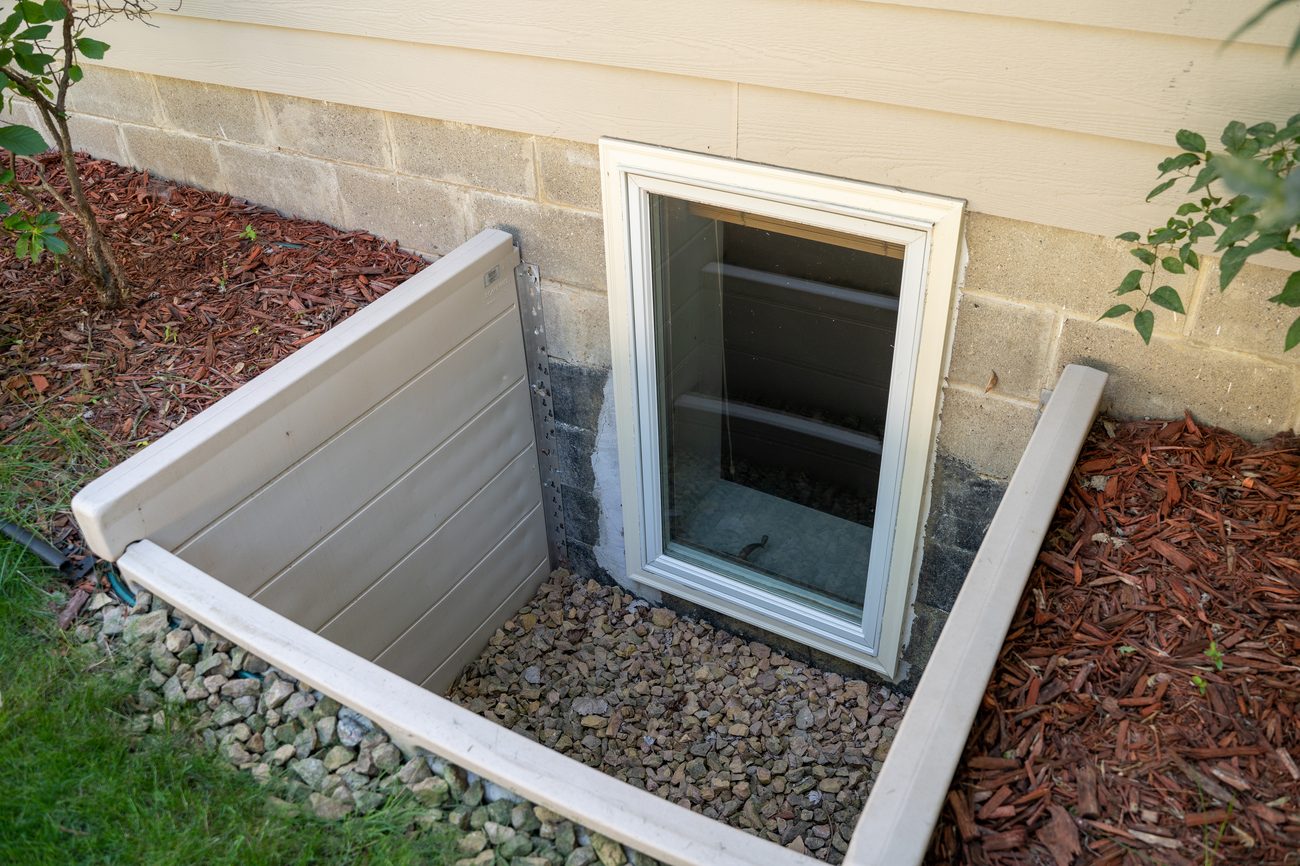
If you've got a basement or a below-grade room taking on water, we find where it's getting in and stop it, whether that's outside grading or a full interior drain. Either way the basement waterproofing is part of the foundation repair.
Learn moreDamp walls, a musty smell, a puddle at the base of the wall after a heavy rain. Below-grade spaces are rare in the Concord area, but the ones that exist take the brunt of the water our slow-draining clay holds against the house. The question is always the same: where is it getting in, and how do we keep it out? Concrete, drainage, and waterproofing services all answer that question. A dry basement is the point of every one of those solutions. Everything else in the home follows from that.
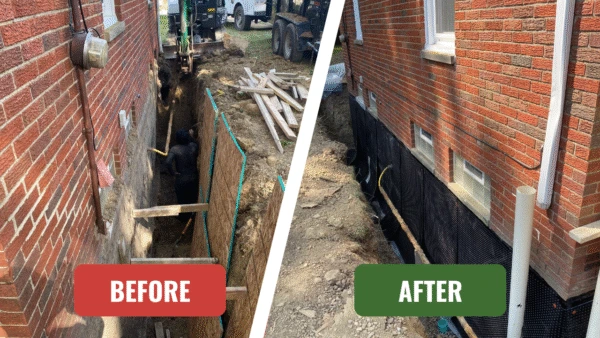
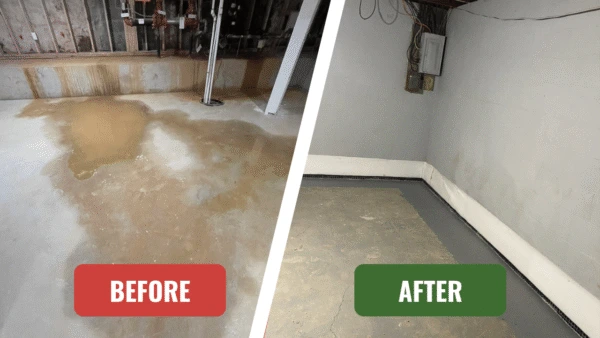
We match the fix to how the water is arriving. When it's surface water, we start outside, correcting the grading and gutters so runoff sheds away from the wall instead of soaking down beside it. When it's pushing through the wall itself, we install an interior perimeter drain that catches the water at the footing and carries it to a sump pump that pushes it back out and away. Bowing or cracked walls get sealed and braced so the water has no path in. We also seal and coat the walls, lay a vapor barrier so humidity and musty air stop coming through the block, and set a dehumidifier that keeps the finished space dry through our worst summers. Done in the right order, outside first, the space stays dry through the wettest season.
We won't sell you an interior system when the real problem is a downspout dumping against the foundation. We handle homes across Concord, from Skyland to Coddle Creek, and it starts with a free inspection that tells you exactly where the water's coming from and what it takes to stop it. Home foundation problems almost always trace back to moisture. Fix the waterproofing and the foundation repair holds. Skip it and the same problems return.
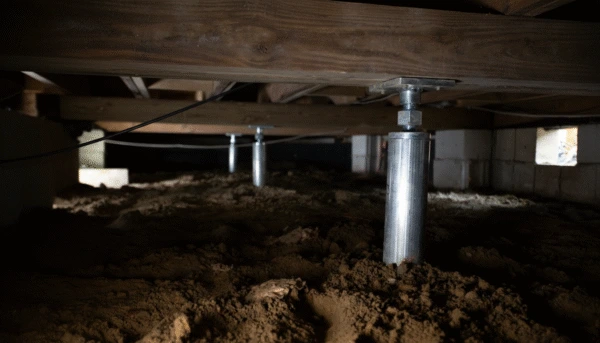
Sagging floors and rotted beams under the house get shored back up and the damaged wood replaced, so the floor above sits solid again. Structural work and basement waterproofing finish in the same visit.
Learn moreA floor that dips toward the center of a room or feels springy when you walk it usually means the crawl space below has taken on water. Concord's slow-draining clay keeps the ground under the house damp, and over time that moisture rots the wood beams and posts holding your floors up. Once they soften, the floor starts to give. Encapsulation solutions keep the mold and the moisture out of your home. The basement and the concrete both last longer for it.
We get under the house and rebuild the support. Girders and joists that have rotted or split get sistered or replaced, and we set adjustable steel jacks on proper concrete footings to carry the load and bring the floor back toward level. Where the ground itself has failed, we firm up the base the posts sit on. Any subfloor, insulation, or girders the water has ruined come out and get replaced, and we lay a vapor barrier over the ground so the fresh wood isn't sitting in the same moisture that rotted the last. Then we deal with why it happened, drying the space out and moving the water away, because new wood in a wet crawl space just rots again. The repair and the moisture fix go together.
We fix the cause, not just the symptom, so you're not back under there in two years. We work throughout Concord, from Gibson Village to the newer streets around Moss Creek, and a free inspection down in the crawl tells you what's actually failing and what it takes to set it right. A push pier or helical piers, plus the waterproofing the home needs. Those are the foundation solutions that actually hold. Both carry the home, and both come with waterproofing.
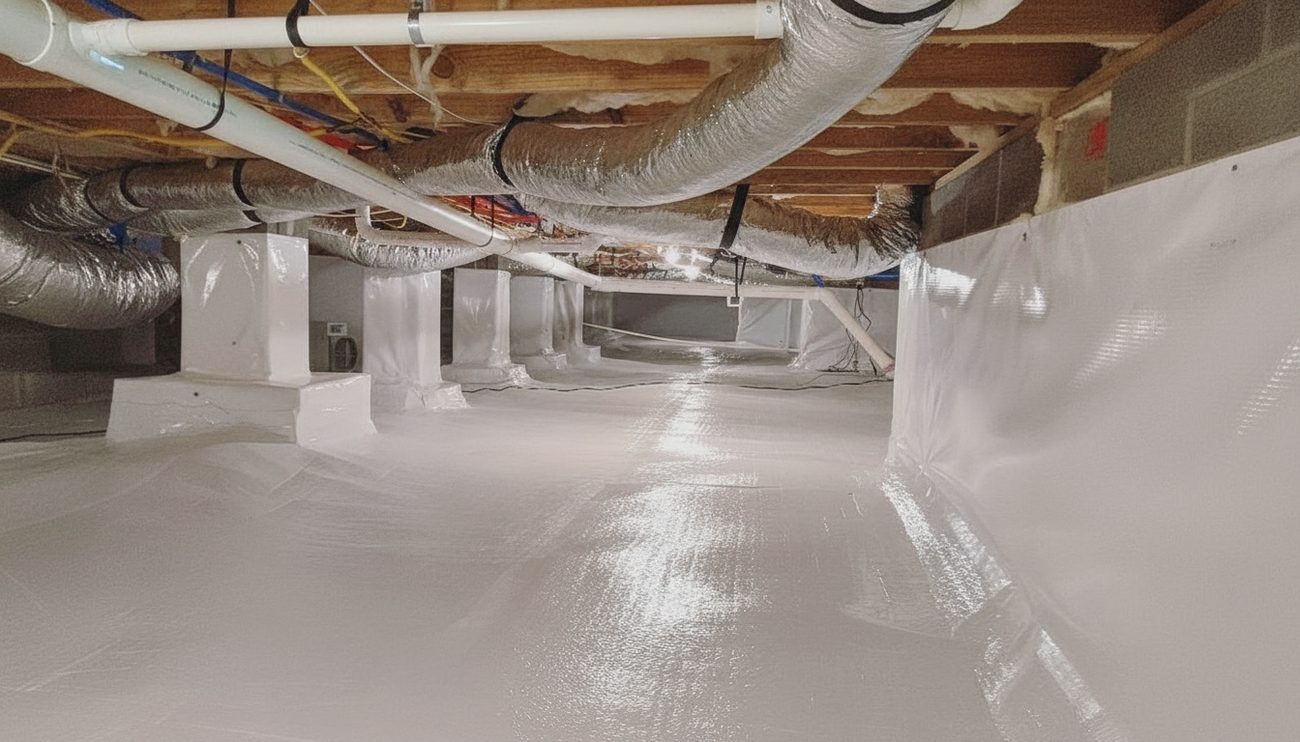
A wet, vented crawl space gets sealed off and dried out with a heavy liner and dehumidifier, so the damp stops feeding mold and rot below your floors. Those moisture solutions protect the concrete and the framing above.
Learn moreThat musty smell drifting up into the house, floors that feel cold and damp, maybe mold starting on the joists. Most older Concord homes sit over an open, vented crawl space, and through our humid summers the warm outdoor air drifts in and meets the cool ground, and leaves everything under the house wet. Left open, it feeds mold, rot, and higher power bills. Sealing the home is the cheapest of all the foundation repair services. Waterproofing first, basement work second, concrete last.
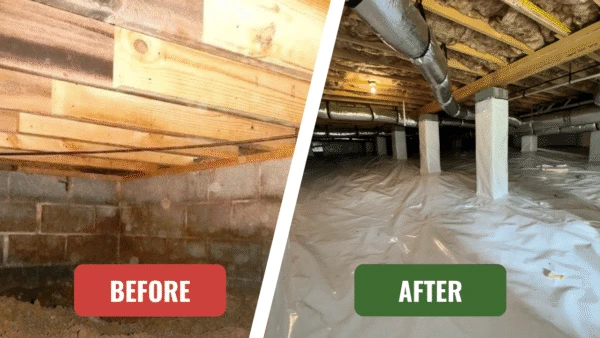
Encapsulation seals the space off from the ground and the outside air. We cover the floor and walls in a heavy, puncture-resistant vapor barrier, seal it at the seams and piers, close off the foundation vents, and add a dehumidifier to hold the space dry year-round. The one rule we don't break: we fix the drainage and any standing water first, because sealing a liner over active water traps the exact problem you're trying to solve. Done in the right order, the space stays dry, the wood stops rotting, and the floors above feel warmer. We seal every seam, run the liner up the foundation walls and around each pier, insulate the rim where the cold gets in, and size the dehumidifier to the square footage so it holds the whole space, not just the middle.
It's a real investment, so we only recommend it when your crawl is genuinely wet, not because it's on a menu. We handle homes across Concord, from Wilshire to Christenbury, and a free inspection tells you plainly whether your crawl space really needs it.
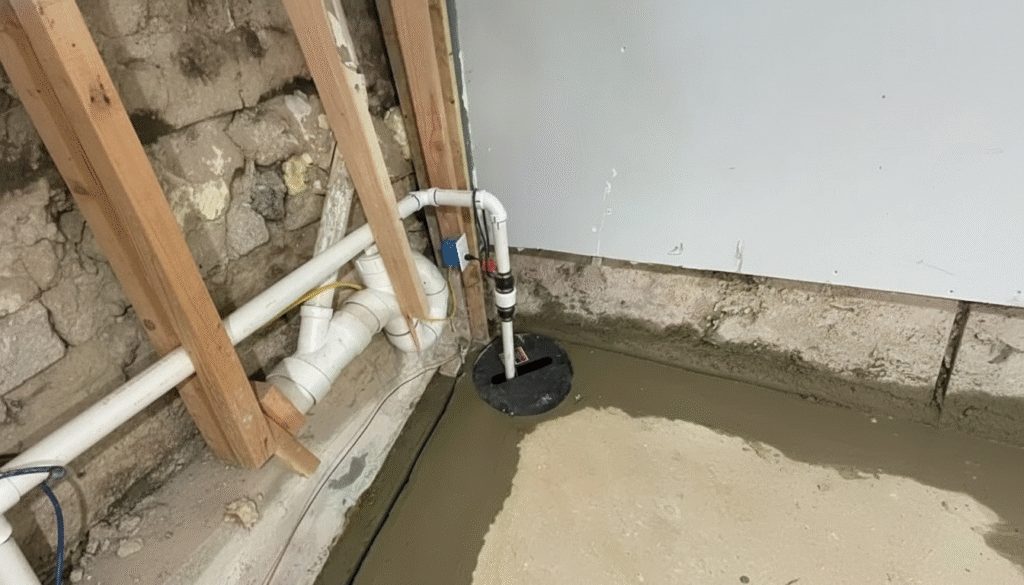
When water keeps collecting under the house, a sump pump at the low point catches it and pumps it out and away before it can do damage.
Learn moreStanding water in the crawl space or basement after every hard rain, a floor drain that backs up, ground that never quite dries out below the house. When groundwater keeps finding its way in faster than it can drain off, it needs somewhere to go, and a sump pump is what actively gets it out instead of letting it sit against the framing and footings.
We set a sump basin at the lowest point where it collects, usually tied into an interior perimeter drain that feeds it. The pump switches on automatically as the level rises and sends it through a discharge line well away from the foundation, where it can't just seep back in. For homes that flood in the worst storms or lose power during them, we add a battery backup so the pump keeps running when you need it most. We size the pump to how much water your house actually takes on, not a one-size box. We run the discharge line far enough out that it can't circle back, and add a check valve so it never drains back into the pit.
A sump pump is often the piece that makes a drainage system actually work, and just as often it's paired with a French drain to catch the water first. We install them across Concord, from Brookwood to Rocky River, starting with a free inspection that shows where the water's collecting and what it takes to keep it out.
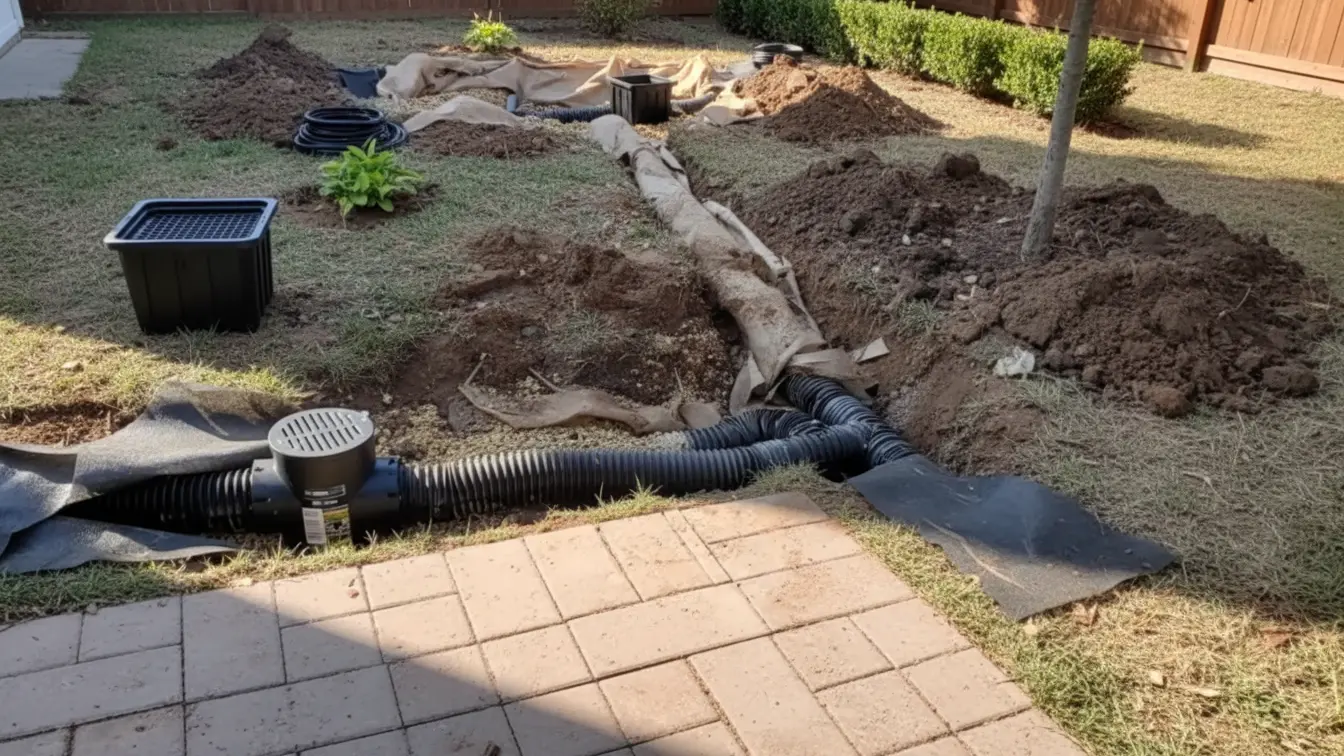
A yard or crawl space that stays wet gets a French drain that catches the water in the ground and carries it away before it reaches the foundation.
Learn moreA yard that stays soggy long after the rain, runoff pooling against the house, a crawl space that's wet no matter what you do. Concord's Cecil clay drains slowly, so instead of soaking away, it sits at the surface and runs toward the lowest point, which is too often your foundation. A French drain gives it a faster path somewhere else.
It's a channel of gravel and perforated pipe set into the ground to catch water before it reaches the house and carry it off to a lower outlet. Where the yard is the problem, we run it across the slope that feeds the foundation; where the crawl space stays wet, an interior version rings the footing and ties into a sump pump. The details are what make it last: the right depth, a real slope so it actually drains, filter fabric so the clay doesn't clog it, and a clean discharge point that carries the water fully away. Cut corners on any of those and it holds water instead of moving it. We also regrade the ground above the drain so the surface sheds toward it, and tie the outlet into a pop-up or a sump so it clears fully away from the house.
We size and place it to your actual drainage problem, not a template, and often pair it with regrading so the ground helps instead of fights. We install them across Concord, from Cannonville to Weddington Hills, and a free inspection maps where the water's going and how to redirect it.
Queen Foundation Repair is a local foundation, crawl-space, and drainage company serving Concord and Cabarrus County. We cover the full range a home here tends to need: crawl space encapsulation and crawl space repair, french drain installation, foundation repair, and concrete leveling. Keeping all of it under one roof matters, because around here a house rarely has just one problem, a damp crawl space, poor drainage, and a settling corner tend to show up together.
The difference is in how we approach it. We find what's actually driving the problem before we quote a fix, and around Concord that's almost always water, not the expansive clay most companies blame. When drainage is the real answer, we tell you, even though it costs a fraction of piering. Every job starts with a free inspection and an itemized quote in writing before any work begins, the repair is licensed, insured, and carries a warranty that transfers to the next owner, and when a crack turns out cosmetic, we say so.
We work on homes all across Concord, from the older places around Historic Downtown and Gibson Village to the newer builds out toward Christenbury and Cox Mill. Wherever yours is, it starts with a free, no-pressure look and a clear read on what your house really needs.
Get your free inspection
WHAT YOU GET
We answer fast and get out to the house quickly, so you're not sitting for weeks just to find out what's wrong and what it'll cost.
No charge to have us come out, find what's going on, and lay out what the fix takes. You know where you stand before spending a dollar.
Licensed, with full liability and workers' comp coverage, so the work is done to code and your property is protected if anything goes sideways.
The repair comes with a written warranty that transfers to the next owner, so it protects your home's value if you ever sell.
A clear, written price upfront before anything starts, no vague ballpark and no surprise add-ons once the work is underway.
We handle all structural and waterproofing services across Concord, where poor drainage and a high water table cause most of it, from older crawl spaces in Cannonville to newer slab builds around Moss Creek.
Here's what to expect, from the day you call to the day we hand it back.
COMMON QUESTIONS
Straight answers to what Concord homeowners ask most, from folks in Wilshire to the newer streets in Afton Village: what repairs cost, whether insurance helps, if you can wait, and how long the fix really holds up.
Signs & Severity
The early signs are usually small and easy to write off. You might notice a door or window that suddenly sticks, a hairline crack creeping up the drywall near a frame, or floors that feel a little uneven when you cross a room. Outside, look for cracks in the brick or a gap opening where a porch or step meets the house. In a crawl space, damp soil, a musty smell, or beads of moisture on the framing are all worth noticing. Any one of these alone may be nothing. Several showing up together, or one that keeps getting worse month to month, is the point to have someone look. Catching it early almost always means a smaller, cheaper fix than waiting until the damage spreads, and the inspection is free, so there's no cost to finding out where you stand.
It depends on the crack. Fine, hairline cracks in the mortar are common and often just cosmetic, the kind of thing an older Concord home settles into over decades. What's worth a closer look is a stair-step crack wider than about a quarter inch, one where the wall is bowing outward, or cracks that keep growing. Those can point to real movement in the foundation underneath. The only real way to know is to have it measured and checked for active movement. We'll tell you straight if it's nothing, and plenty of the time, it is.
That musty smell is moisture getting in and not leaving. After a hard rain, runoff that isn't carried away from the house finds its way under the floor, and a crawl space with poor airflow holds onto it. Grading that slopes toward the home, gutters emptying at the foundation, or a missing vapor barrier all feed the problem. Left alone, the damp settles into the wood framing and invites mold and rot. Drying it out usually means redirecting that runoff outside and sealing the space so the moisture can't keep coming back.
Repairs & Methods
It depends on why the foundation moved, which is why we look before we prescribe anything. When a section has genuinely settled, steel piers are the usual answer: they're driven down past the soil that failed until they reach stable ground or bedrock, and the weight of the house transfers onto them. Push piers and helical piers both do this, and which one fits comes down to the load and the soil. But piers aren't always the answer. A good share of what looks like foundation failure in Concord is really a moisture problem, and the honest repair there is drainage, a french drain, and better grading to stop the ground from washing out to begin with. Sometimes it's a mix of both. We match the method to the actual cause, because underpinning a house without addressing the water just means it settles again later.
Yes, but only if you fix what's feeding it. Mold grows because the crawl space stays damp, so wiping or spraying it without drying the space out just means it returns. The real fix is removing the moisture source: correcting drainage outside, sealing the space, and adding a dehumidifier so the air stays dry year-round. Once the humidity is under control, the mold has nothing left to live on. We'll also check whether the framing took any damage while it was wet, since badly rotted wood sometimes needs more than a cleaning.
Not yet, and any company that says otherwise is skipping a step. Encapsulation seals the space to keep ground moisture out, but it isn't built to hold back active, standing water. Seal over a crawl space that still floods and you just trap the water against your framing and hide the real problem. The right order is to stop the water first, with drainage, a sump pump, or regrading, whatever the source calls for, and then encapsulate once the space stays dry on its own. Done in that order, the encapsulation actually holds up.
Crawl Space & Water
For a lot of Concord homes, it genuinely is, though not for every one. When a crawl space stays damp, encapsulation pays off in ways you feel: it protects the wood framing your floors rest on, cuts the musty air and mold, and often makes the rooms above feel warmer and less drafty. It can trim energy bills too, since your HVAC isn't fighting humid air pushing up from below. That said, it isn't cheap, and it's only worth doing when moisture is a real, ongoing problem, not because someone knocked on your door selling it. If your crawl space is already dry and well-drained, you may not need it at all. The free inspection is where you find out honestly whether the moisture in your particular home justifies the cost.
There are a few worth knowing. It's a real investment up front, usually more than a simple vapor barrier. It works best paired with a dehumidifier, which adds a little to your power bill and needs occasional upkeep. And if drainage problems outside aren't handled first, sealing the space can mask water that's still getting in. Done right, on a crawl space that actually needs it and after the water is controlled, the downsides are minor next to what you save on framing repairs and air quality. Done wrong or oversold, it's just money spent on the wrong fix.
A quality encapsulation is built to last, and the heavy liner used on the floor and walls typically carries a long manufacturer warranty measured in decades. The dehumidifier is the part with a shorter life, usually running many years before it needs replacing, like any appliance. What cuts an encapsulation's life short is skipping the prep: sealing over unresolved water, using a thin liner, or cutting corners on the seams. Installed properly on a dry space, it should protect your crawl space for the long haul with very little attention from you.
Cost & Insurance
There's no flat rate for this, so be wary of anyone who names a figure before seeing your house. What you'll pay comes down to three things: how widespread the trouble is, what's causing it, and the repair method that actually fits. To set rough expectations, sealing a single crack might run a few hundred dollars, setting piers beneath one settled corner usually lands in the low thousands, and a whole-structure job paired with drainage work goes up from there. Here's what tends to surprise Concord homeowners: plenty of the scary-looking cracks and sloping floors turn out to be a drainage or crawl space issue that costs far less to correct than a full structural repair, and some cracks need nothing done at all. The inspection is free, and it ends with a written, itemized price built around your specific house, so you're deciding with real figures rather than a guess.
It varies with the size of the crawl space, how wet it is, and what has to happen before the liner goes in. A straightforward job in a smaller, already-dry space sits at the lower end; a large crawl space that first needs drainage, a sump pump, or rot repair runs higher. The liner, the dehumidifier, and any water control factor in. Because those pieces differ house to house, a real number comes from an on-site look, not a phone estimate. You get it itemized in writing after the free inspection, so you see exactly what you're paying for.
Most of the time, no, and it catches homeowners off guard. Think about what a policy is built for: sudden, unexpected damage, a burst pipe, a fallen tree, storm impact. Foundation and crawl space trouble is the opposite of sudden. It builds slowly out of settling, shifting soil, poor drainage, and moisture across many seasons, and that gradual kind of damage is exactly what the fine print leaves out. A foundation that has eased downward over a decade rarely qualifies. The exceptions are narrow, usually where a clearly covered event, say a pipe that suddenly bursts, is the direct cause, so it's always smart to read your own policy or ask your agent straight. We won't pretend to know how your carrier will rule, but we will document what we found and the cause behind it, the exact record you'd need if you choose to file.
Process & Timeline
Truthfully, there's no bad season for it. We handle foundation and crawl space work year-round in Concord, and we don't wait on the weather to start. If anything, the drier stretches make crawl space and drainage work a little easier, but crews handle these repairs through winter and summer alike. The bigger mistake is putting it off to wait for perfect weather, because an active foundation or drainage problem keeps getting worse in the meantime. If you're seeing signs now, the best time to have it looked at is now, while the fix is still small.
Almost always, yes, you stay right where you are. The bulk of foundation and crawl space work takes place outside the home or down in the crawl space, so daily life carries on while the crew does its thing. Piering, drainage, and sealing a crawl space seldom reach into your living areas, apart from some daytime noise. The one exception is a larger structural job, where clearing out of a room for a short stretch can make things go smoother, and we'll flag that when we quote it. For the everyday repair, packing a bag simply isn't part of it.
Most jobs move faster than people expect. A typical crawl space or drainage repair often wraps in a day or two once it's scheduled, and many pier jobs finish within a few days. Bigger structural work with several problems takes longer, but you'll have a clear timeline in your written estimate before anything begins. Scheduling depends on the season and how booked we are, so the honest answer for your job comes with the quote. Either way, we keep you updated on progress from the first day through the last.
Trust, Warranty & Local
We do, and the piece that really counts is whether it travels with the house. Solid foundation and crawl space work should carry a written warranty, and on the structural repairs, that coverage generally passes to whoever buys the home next. That's a bigger deal than it sounds, because a repaired foundation with transferable coverage stops reading as a scary line on an inspection report and starts working in your favor: proof the problem was handled right, and protection the buyer inherits. Handing it over is usually straightforward, a bit of paperwork and sometimes a modest fee, sorted during the sale. The smart move is to pin down the real language before a crew ever starts, what it covers, for how many years, and whether it transfers. We lay all of that out in the written estimate, so nothing rides on memory or a handshake down the road.
You can, and people do it all the time, but how you handle it makes a real difference. An unaddressed foundation problem usually surfaces in the buyer's inspection and either scares them off or turns into a price negotiation. Getting it repaired first, with a transferable warranty in hand, flips that around: you're handing the next owner a documented fix and coverage instead of a question mark. If you'd rather sell as-is, expect to disclose it and price accordingly. Either way, a free inspection tells you what you're actually dealing with before you list.
It comes down to the ground underneath them. Concord sits on red Cecil clay in the Rocky River basin, and that clay drains slowly. After a rain, water lingers at the surface and pools against footings, and crawl spaces stay damp long after the sky clears. Over time that standing moisture softens and washes out the soil the house rests on, and the foundation follows it down. It's less about the clay swelling and more about drainage and a high water table, which is why the real fix here so often starts with moving water away from the house.
AREAS WE SERVE
We serve the entire Concord metro, not just the city limits, from the older homes near Historic Downtown to the newer subdivisions past Christenbury and out across Cabarrus County. Whatever the house is doing, a settling corner, a damp crawl space, or a yard that won't drain, we'll come take a look. The inspection is free.
ZIP Codes We Serve
Ready to Get Started?
No obligation, fast and easy.
We appreciate you reaching out.
One of our team members will be with you shortly.