When your crawl space won't dry out, your floors start to dip, or a stair-step crack climbs the brick, it's almost always water working on Rock Hill's slow-draining clay. We do crawl space encapsulation, french drain installation, foundation repair, and basement waterproofing, from Oakland Avenue out to Riverwalk. Free inspection, straight answers, no pressure.
Get Your Free Inspection
We appreciate you reaching out.
One of our team members will be with you shortly.





Warning Signs
Foundation trouble in Rock Hill rarely announces itself. It starts as little things you get used to, a door that drags in its frame, a damp smell drifting up from under the floor, and it grows from there. Most of it comes down to poor drainage and the ground staying wet under the house, and the signs run from cracks climbing the brick to a crawl space that never quite dries out. Each one points back to the same foundation problems, and each has a different foundation repair.
Stair-Step Cracks Up the Brick
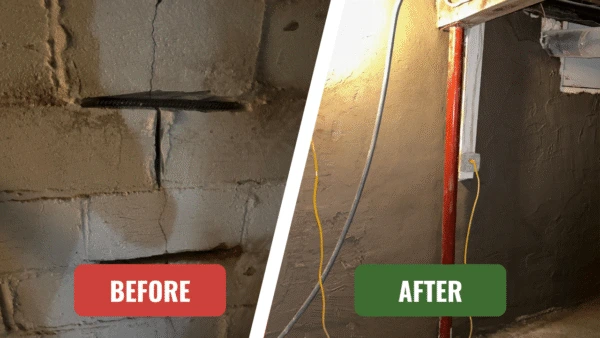
Cracks that climb the brick in a staircase pattern and keep widening a little every year. That corner has settled, usually where water has washed the soil out from under the footing. Foundation repair here usually means underpinning, not cosmetic patching of the foundation walls.
Doors and Windows Gone Crooked
A door that suddenly won't latch, a window that sticks or slides open on its own. As one side of the house settles lower than the other, the frames pull out of square. A foundation repair service call starts with measuring how far the foundation has moved.
A Floor That Dips or Bounces
One room tilts toward a corner, or the middle gives a little when you walk across it. The supports under the crawl have started sinking into ground that stays damp and soft. Damp ground under a concrete slab causes most foundation problems we see in South Carolina.
A Crawl Space That Won't Dry Out
That damp, musty smell every time you lift the hatch, sometimes mold creeping over the joists. Near the Catawba the water table runs high and the Cecil clay drains slowly, so the crawl never fully dries out. Our foundation repair service covers the footings, the foundation walls, and the concrete piers.
Water Pooling Under the House
After a storm it collects in the same low spot, in the yard or right under the floor. Slow-draining clay and a poorly graded lot leave the runoff nowhere to go but against your footings. Water against the foundation is what starts most foundation damage in older construction.
A Wall Crack That Leaks
A crack that stays dry until a hard rain, then weeps along the seam. Water takes the easy path through the block, and sealing it without fixing the grading outside just sends it somewhere else. A free evaluation tells you whether the foundation needs piles or just better drainage.
None of this means your house is coming down. Plenty of hairline cracks are just plaster and paint, and a little settling is normal in any Piedmont home. What you're watching for is movement that keeps going: a crawl that never dries, cracks that spread month to month, a floor that keeps dropping. If you're unsure which kind you've got, a free look tells you, and more often than not the fix is smaller than you'd guess. A foundation specialists visit costs nothing and the quote lists every foundation repair line by line.
A crawl space that won't dry out. Water pooling under the house after a storm. A settled corner that's opened a crack in the brick. Those are the calls we run across Rock Hill, and nearly all of them start the same way: poor drainage and a water table that keeps the ground wet. Our foundation specialists check the concrete, the foundation walls, and the soil before quoting any foundation repair.
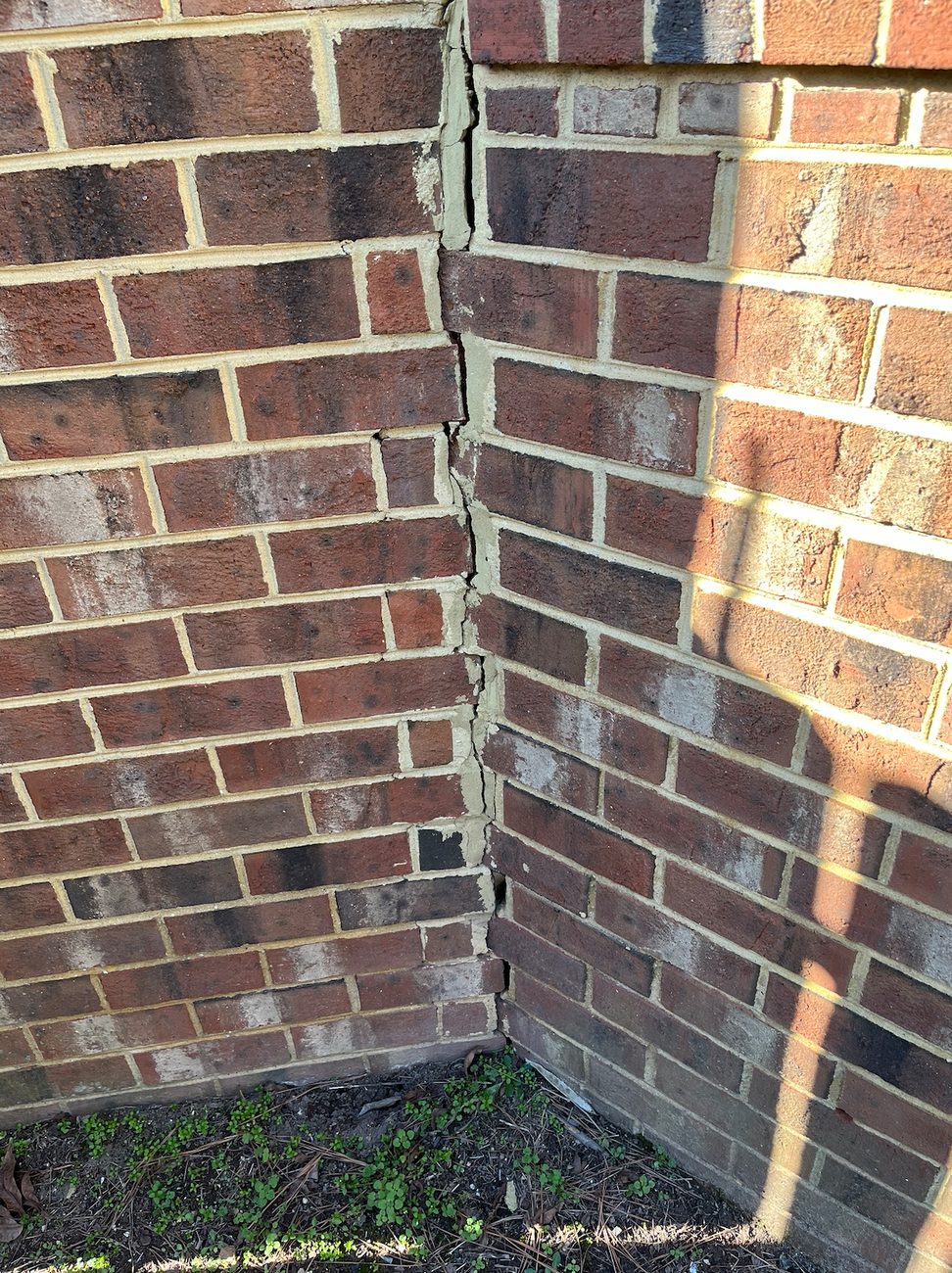
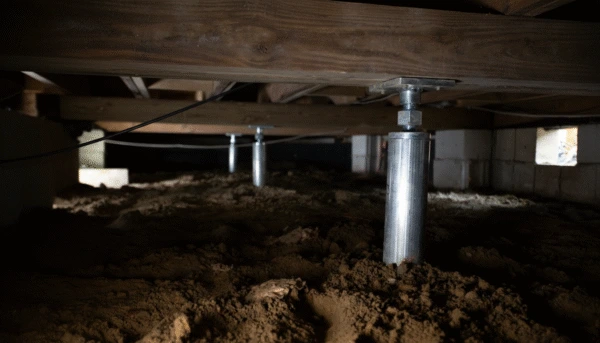
Stair-step cracks in the brick, doors that stick, or a floor that dips toward one corner mean the foundation is moving, and piers driven to stable ground stop the settling. Piers stop settling, and a wall anchor stops foundation walls from bowing inward.
Learn moreIt usually shows up as a crack climbing the brick in a stair-step, a door that suddenly won't latch, or a gap opening where the baseboard pulls away from the floor in one room. Around Old Town, a lot of these homes sit on ground where water has been working underneath for years, slowly washing the soil out from under the footings until there's an empty pocket and nothing holding that section up. Up on the graded lots near Mount Gallant, the fill dirt they packed in to level the slope was never tight to begin with, so over time one corner just keeps easing down.
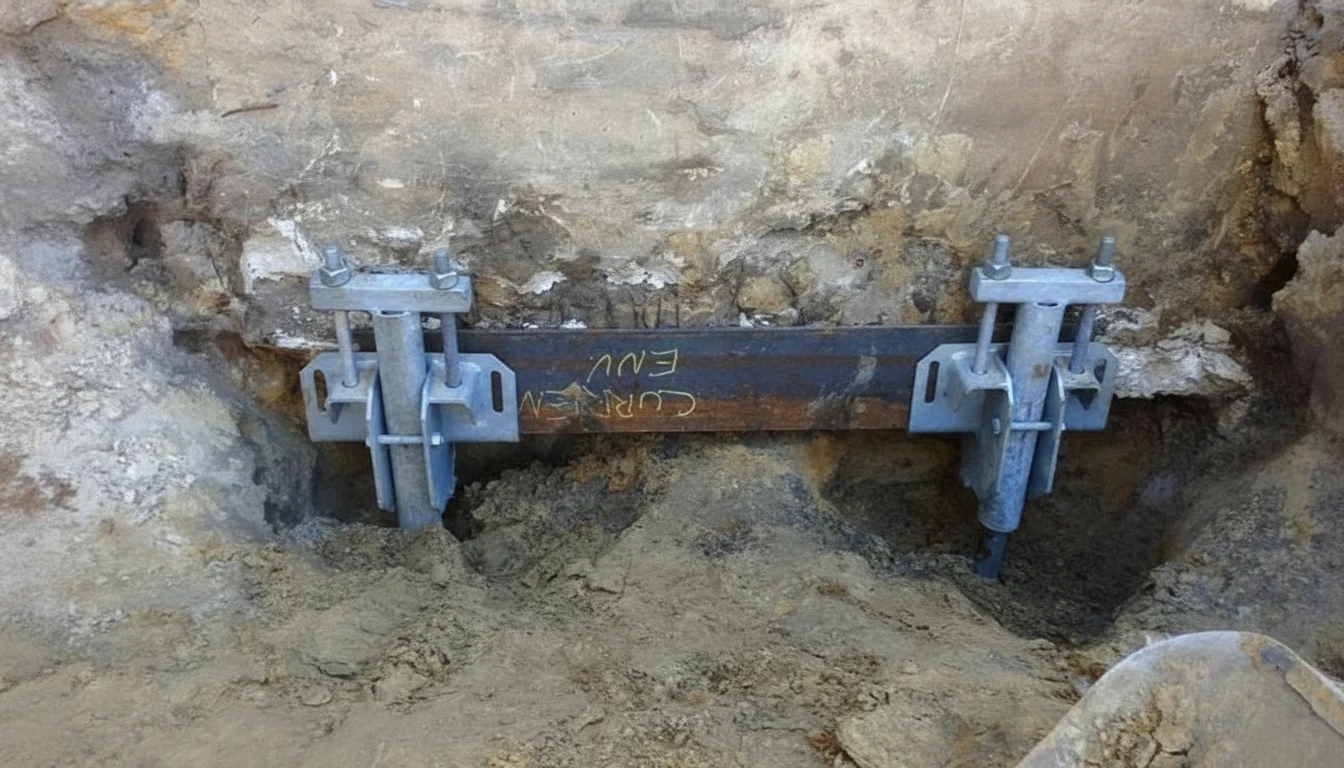
We stabilize the house from below. We drive steel piers down past the loose, washed-out soil until they reach ground firm enough to carry the weight, then transfer the house onto them and lift the settled part back toward where it belongs. If the crack you're looking at is thin and hasn't budged in years, that's often just the house settling once and done, and we'll tell you it doesn't need piers instead of selling you a system. That is the foundation service homeowners keep leaving reviews about.
Once the piers are set, the doors swing and latch again, the cracks close down and stop growing, and the floors quit sloping toward the low side. Start with a free inspection and a plain answer on whether what you've got is cosmetic or something the foundation truly needs handled. We give you a written quote and the cost of the foundation repair before any work starts.
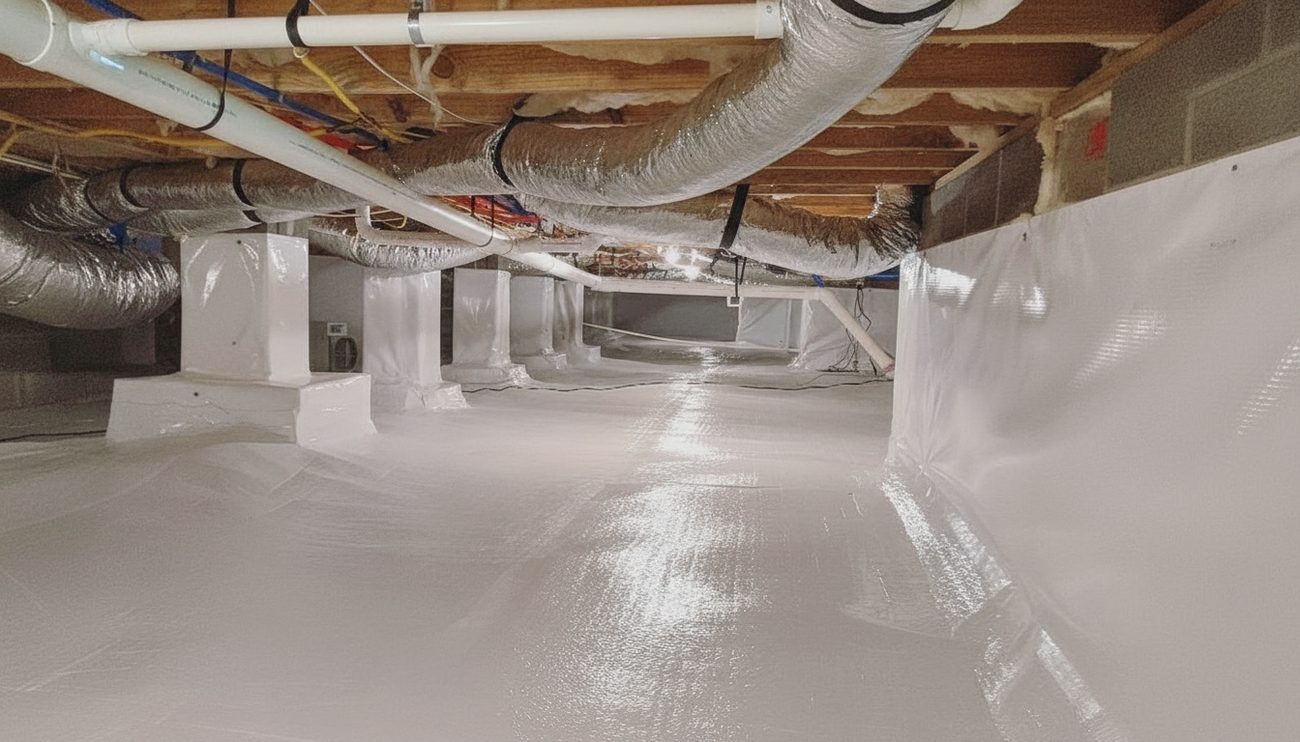
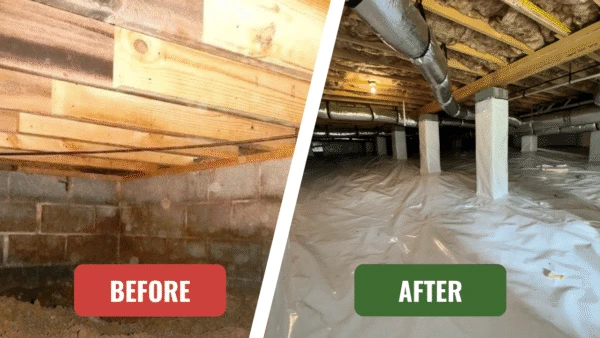
Musty air, cupping hardwoods, and a crawl space that stays damp weeks after rain point to moisture below, and sealing it off with a vapor barrier and dehumidifier fixes it. That is a crawlspace solutions job, not a foundation repair job, and the cost reflects it.
Learn moreYou notice it first in the summer: the air coming out of the vents smells faintly like a pond, the floors over the crawl space feel cold and a little spongy, and if you open the hatch there's water sitting on the plastic or a wet shine across the dirt. Out here in India Hook, that crawl space sits close to the Catawba, and the water table stays high enough that the ground under your home never really dries out. Damp air drifts in through the foundation vents, settles on the cool wood, and the dirt keeps feeding moisture up from below all season.
Sealing the space off is how we stop it. We close the vents, cover the floor and run heavy liner up the walls, overlapping every seam and fastening it tight to the block so the wet earth and outside air stay out. If groundwater is actually pushing in, we set a low spot with a pump and a drain under the liner first, then let a dehumidifier hold the air dry once everything is closed up. Sealed crawlspace solutions protect the concrete piers and the foundation walls above them.
Some crawl spaces near Riverwalk only need the liner and a little better drainage, and if that's your situation we'll tell you plainly instead of talking you into more. Once it's done the smell clears out of the house, the wood overhead stops soaking up damp, and the floors firm back up. It all starts with a free look and an honest read on what yours actually needs. Read the reviews from homeowners who had the same foundation problems.
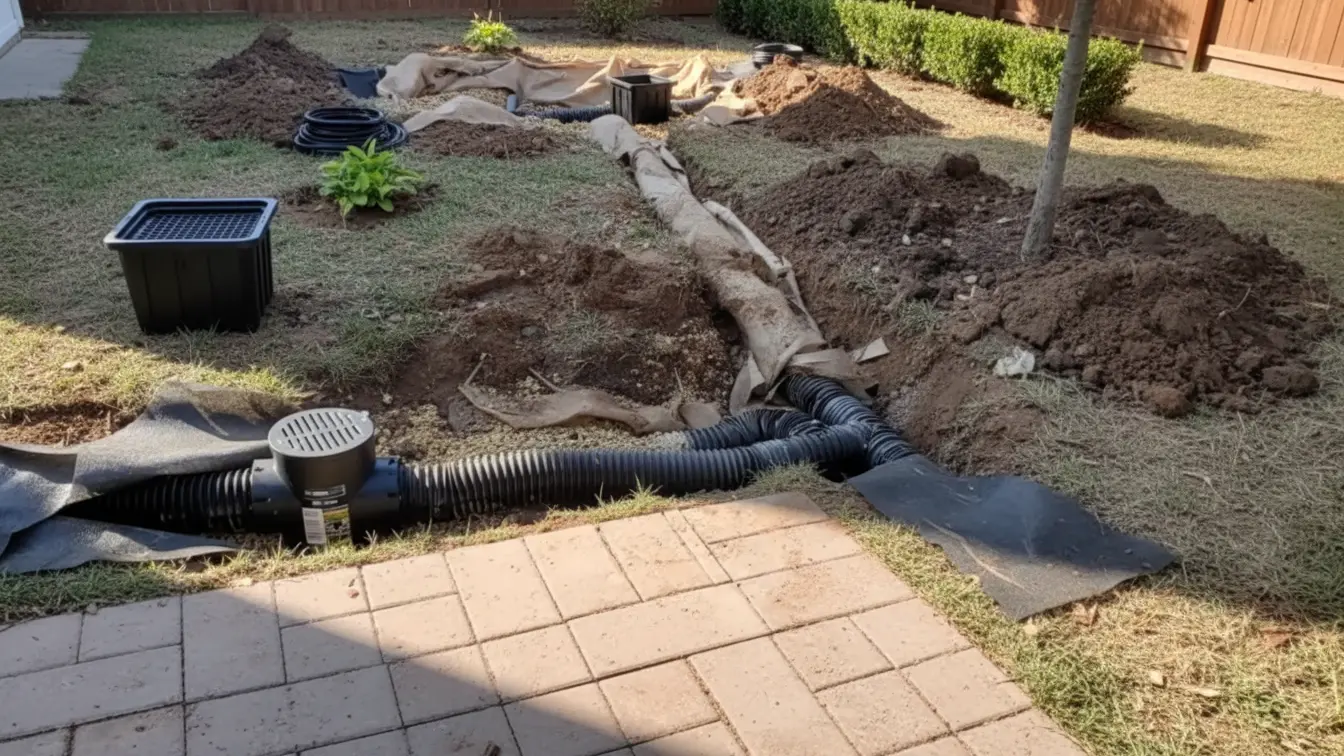
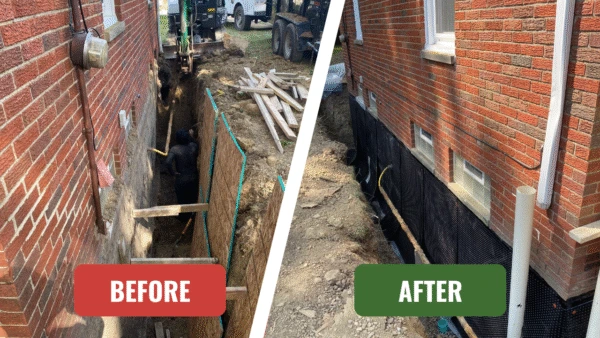
Water pooling against the foundation, a soggy yard, or a crawl space that stays wet calls for a French drain that intercepts groundwater and moves it away from the house. Standing water beside the foundation walls is what drives most foundation repair calls here.
Learn moreAfter a heavy rain you can walk the yard and find the same strip that stays soggy for days, water standing along the foundation, maybe a dark wet line where it's been seeping against the wall. On the older lots around Oakland Avenue, the red clay under the grass barely lets rain through, so instead of soaking away it backs up and leans on your footings until it finds a way in. On the rolling ground over toward Winthrop Heights, that runoff slides straight down toward the low corner of the house and just sits there.
A French drain gives that runoff an easier path than through your foundation. We cut a trench along the trouble side, bed a perforated pipe in clean gravel, wrap the whole thing in fabric so the clay and silt can't clog it, and pitch it so everything runs off to daylight or a pump well away from the house. If the real problem turns out to be a downspout dumping right at the wall or ground that slopes back toward you, we'll point that out and fix the cheap thing first before anyone starts digging. Most foundation problems here start with water, not with the concrete itself.
Once the drain is in, the soggy stretch dries out, the wet stops collecting where the foundation meets the dirt, and the wall quits taking on that steady dampness after every storm. Take a look with us for free and we'll tell you straight whether you need the full drain or something simpler. Either way the foundation service call and the evaluation are free.
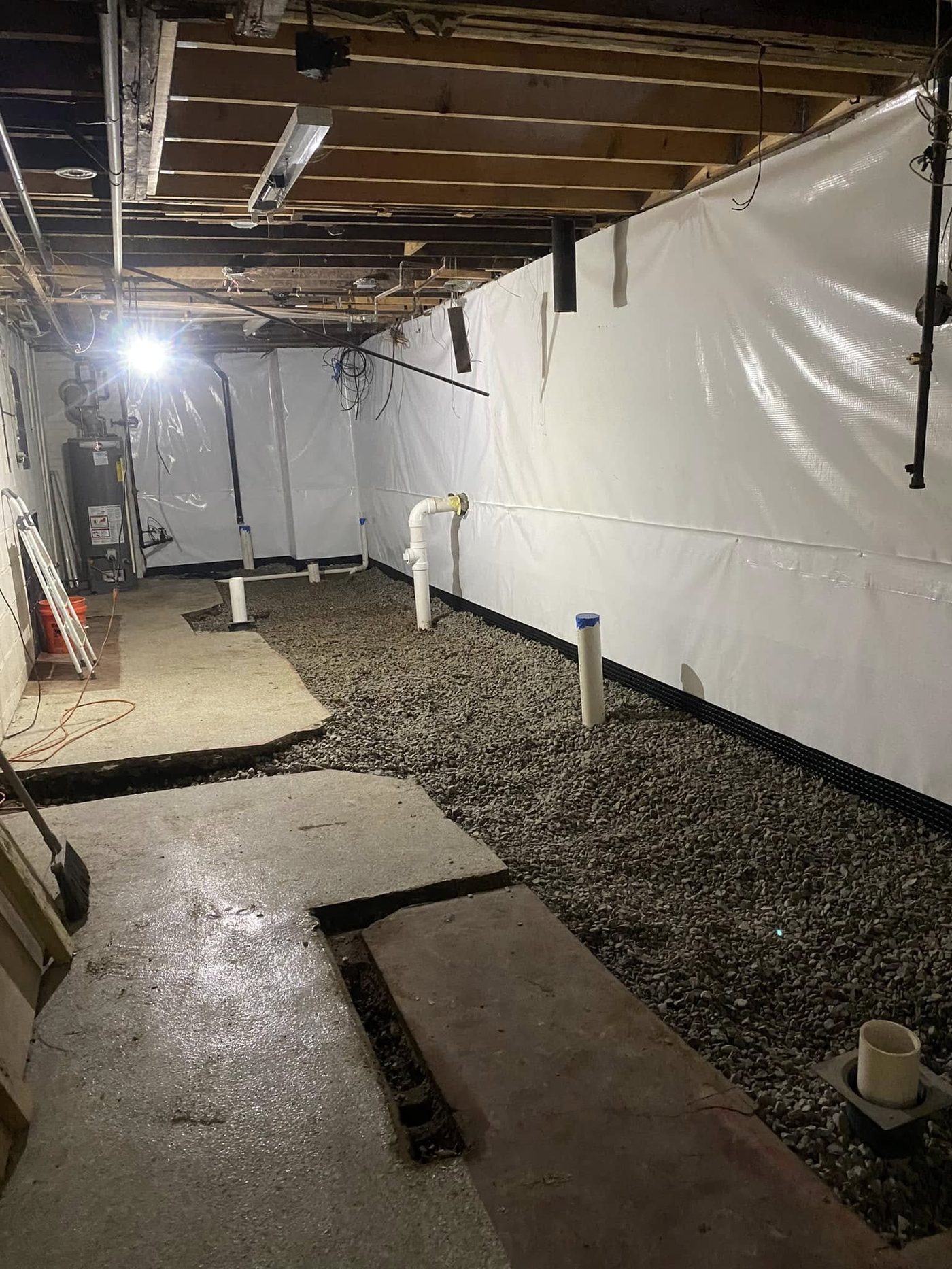
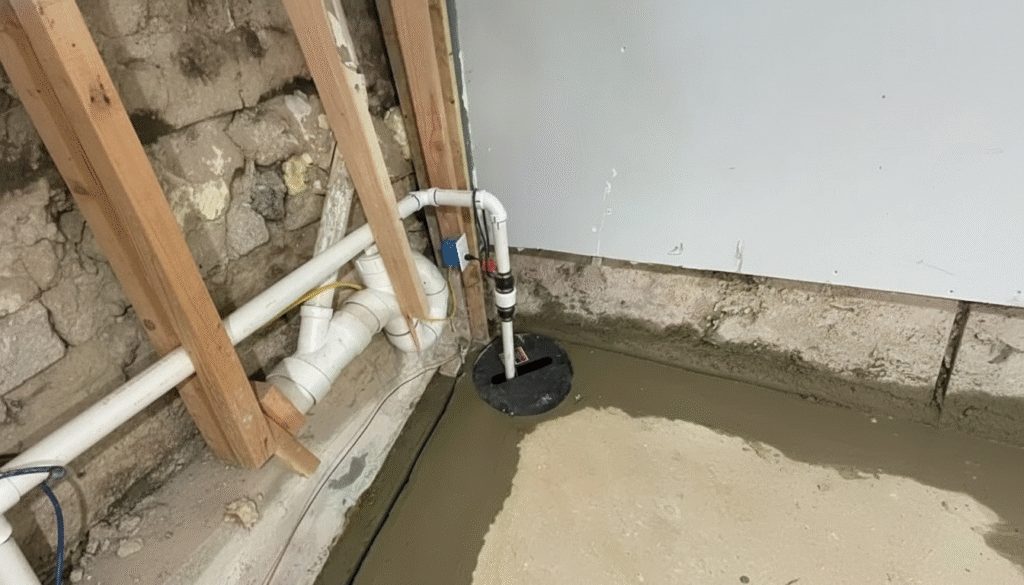
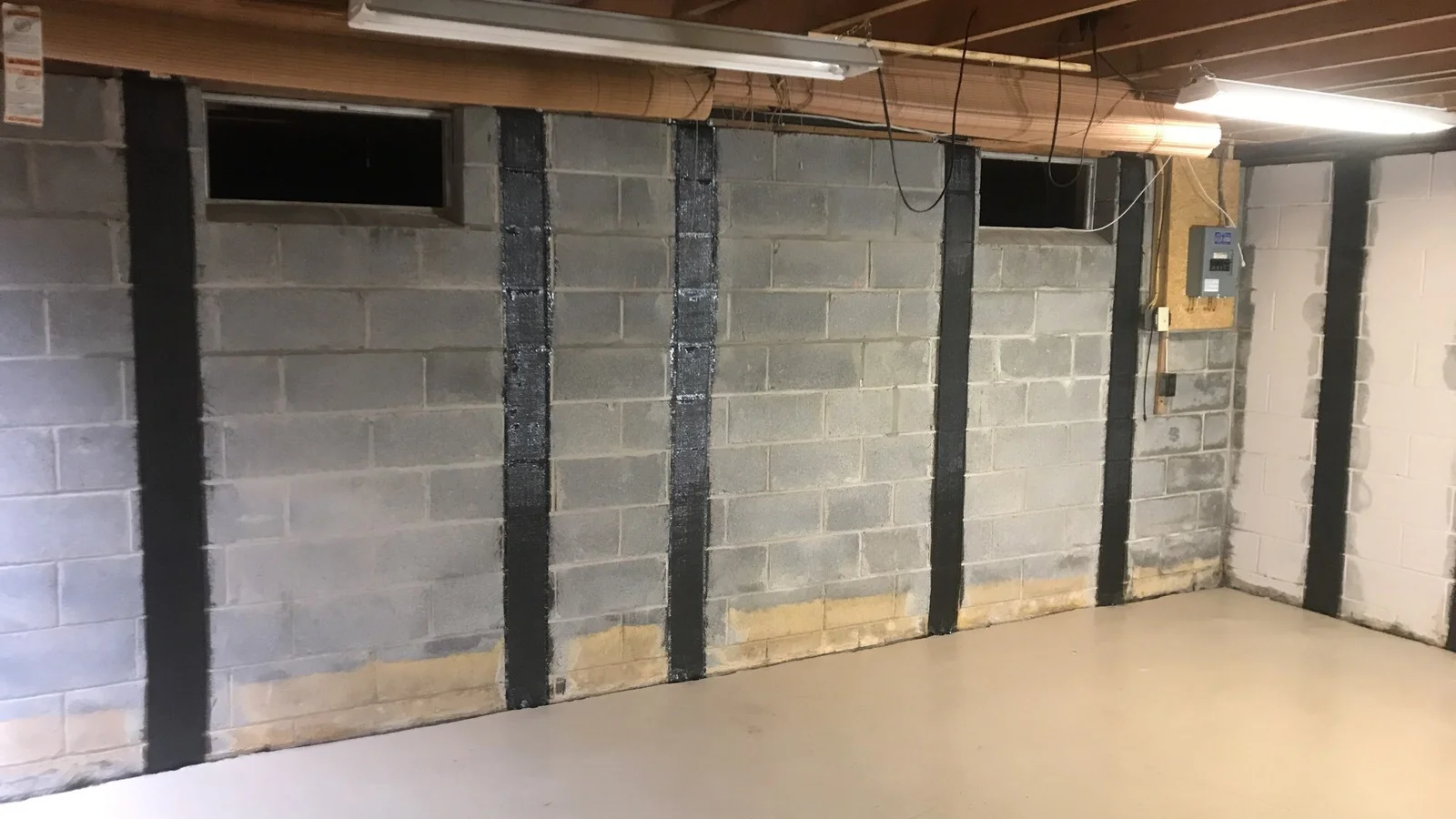
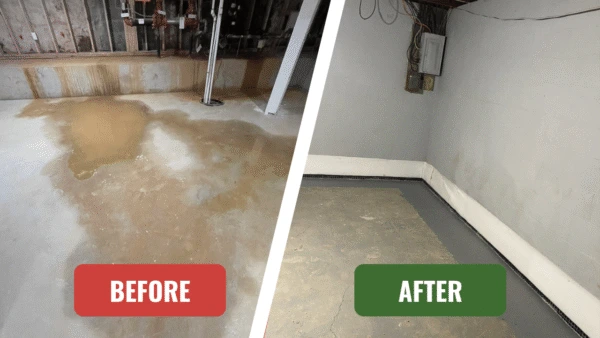
Damp walls, a musty daylight basement, and standing water after a hard rain get handled with interior drains, a sump pump, and proper grading that keeps groundwater outside. Good drainage keeps the concrete dry and prevents structural cracks in the foundation walls.
Learn moreA damp line along the bottom of the wall on your walk-out level, a little seepage in the low corner after a hard rain, that closed-up smell in the finished room downstairs. Full basements are rare in Rock Hill, so if you have a daylight or walk-out level cut into a slope, moisture is almost always the reason it gives you trouble. The ground here drains slowly and holds rain against the foundation, and on the low side toward the Catawba it stays wet long after the storm has passed. Wet ground moves, and moving ground is what causes foundation damage to the walls.
That seepage finds the joint where the floor meets the wall and any crack in between. We handle it by moving the moisture instead of fighting it, running an interior drain along the footing that carries seepage to a sump pit, then pumping it out and away from the house, and sealing the wall cracks that let it through. If your level is mostly dry and only weeps in one spot, we would rather fix that one spot than talk you into a system you do not need. Our foundation repair service quotes the cost per section, never as one lump.
Once it has a path out, the floor stays dry, the smell clears, and you can finish that room without second-guessing it. We waterproof the walk-out and daylight levels around India Hook and down through Riverwalk, and it starts with a free look and an honest read on what is actually going on. Our foundation repair service in South Carolina starts with a free evaluation, not a sales pitch.
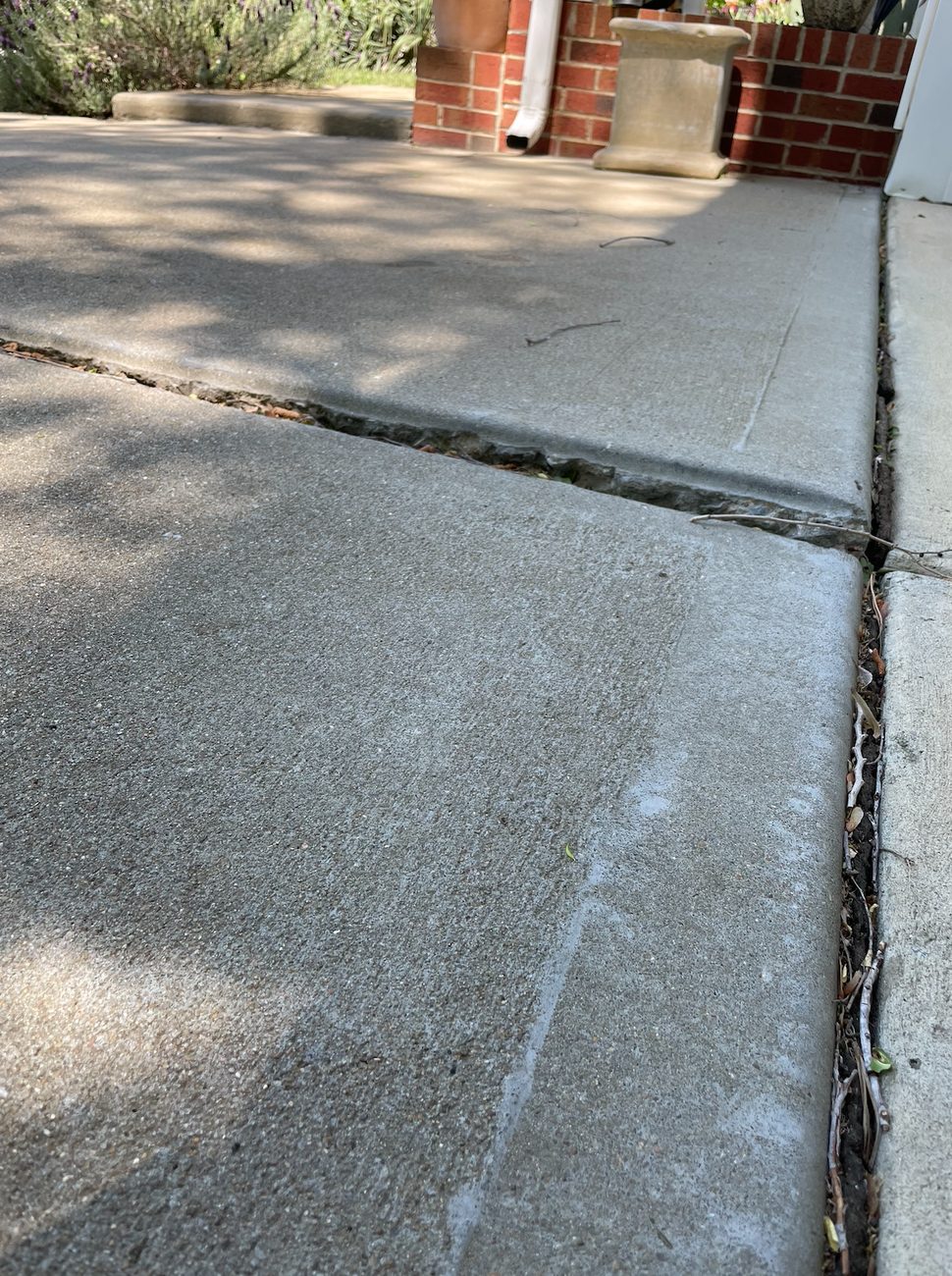
Sunken driveway slabs, a garage floor that's dropped at one corner, and patios pitching toward the house get lifted back level with polyurethane foam or mudjacking, no tear-out required. Concrete lifting and concrete leveling both raise the slab without touching the foundation.
Learn moreA driveway slab that has dropped at the seam so you catch your toe on it, a garage floor tilting back toward the house, a patio that has pulled away from the door and collects a puddle every time it rains. Concrete does not sink on its own. Underneath these slabs the fill has either washed out or was never packed tight to begin with, and on Rock Hill's rolling lots a lot of yards sit on cut-and-fill that keeps settling for years after the house goes up. New construction fill under a concrete slab is a common source of foundation problems.
Runoff makes it worse, working down under the slab and carrying the fine soil away until there is an open pocket and the slab has nothing left to rest on. We lift it back by drilling small ports through the concrete and pumping a dense material underneath that fills those voids and floats the slab up to where it belongs. If a slab is broken into too many pieces to come up as one, we will tell you it is past lifting and better replaced, instead of taking your money to raise something that will not hold.
Most of the time it comes right back level and you keep the concrete you already have. We raise driveways, garage floors, and patios from Mount Gallant over to the newer streets around Waterford, starting with a free inspection and a clear answer on whether lifting will hold. Expert foundation repair means telling you when concrete lifting will not hold.
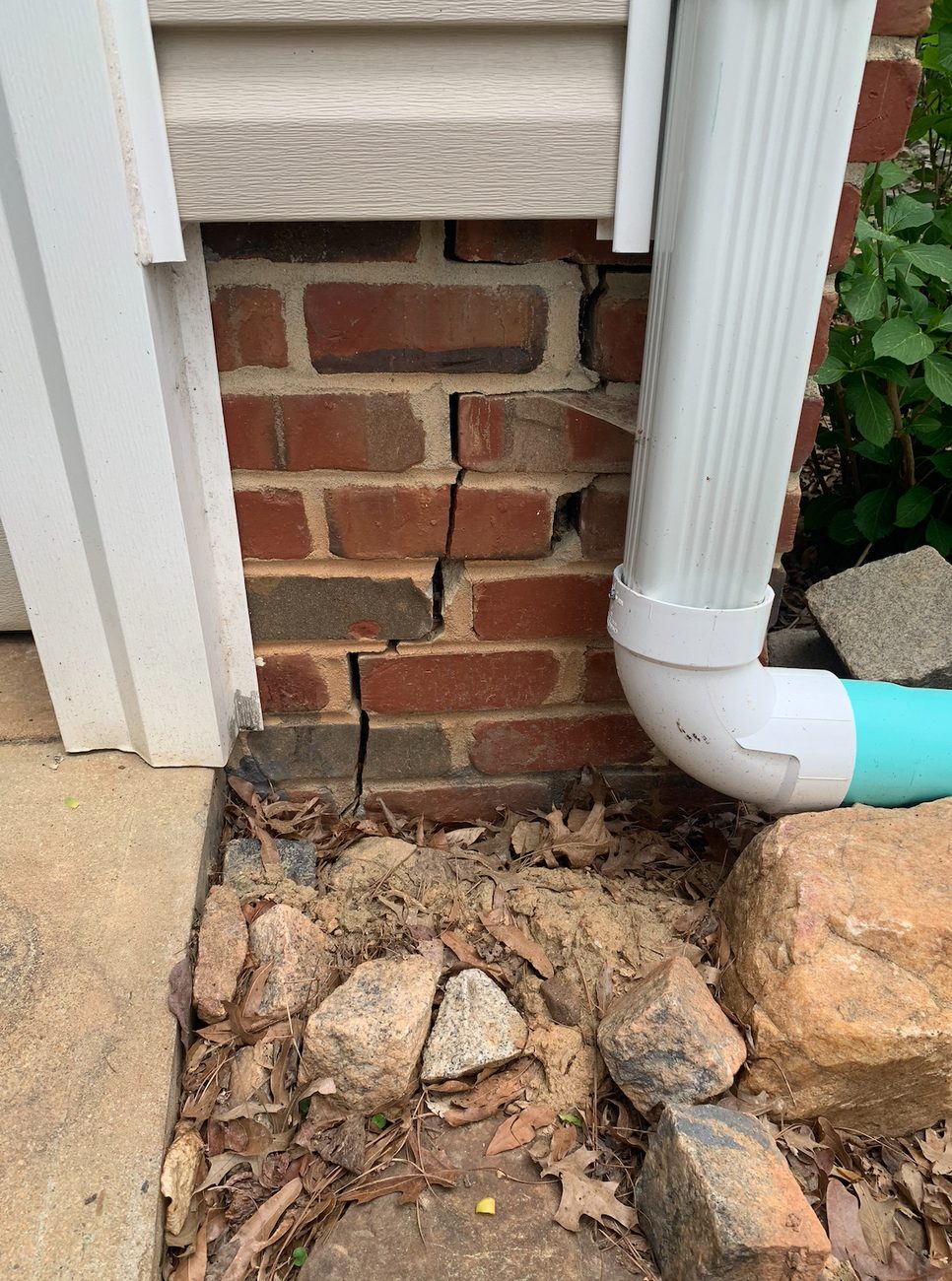
Stair-step cracks in the brick, a crack creeping up a foundation wall, and gaps that keep widening get sealed when cosmetic or reinforced with straps, anchors, or piers when structural. Foundation repairs on bowing walls use anchors, and foundation repairs on settling use piers.
Learn moreA stair-step crack climbing the block by the corner of the house, a hairline running up the drywall over a doorway, a gap opening along the garage where the brick meets the foundation. Not every crack means the same thing, and the first job is telling the ones that are only cosmetic from the ones that are telling you the footing has moved. Around Rock Hill that movement almost always starts underground. A foundation repair that ignores the water underneath will not hold.
The clay here drains slowly and holds moisture against the footing, and seepage carries the soil off into voids, and a foundation that loses support on one side settles until the wall cracks to relieve the strain. We start by reading which kind you have, then match the fix to what caused it, sealing and stabilizing a crack that is just letting damp through, or dealing with the settlement underneath first when the footing itself has dropped so the repair actually holds. If a crack turns out to be ordinary shrinkage in the concrete and nothing is moving, we will say so and leave it alone rather than sell you a repair.
Fixed the right way, the crack stays closed, the wall stays dry, and it quits moving on you. We repair foundation cracks on the older homes around Oakland Avenue and up through Winthrop Heights, and it begins with a free look and a straight take on what that crack is actually doing. Structural cracks in foundation walls need anchors, and hairline concrete cracks usually need nothing.
The crack on your wall is rarely the real problem. It is usually a sign that something under the house has shifted, and around Rock Hill that something is almost always water with nowhere to drain. Queen Foundation Repair handles the foundation, crawl space, and drainage side of things, and our approach is to track down where the water is getting in before we touch the crack. Patch the surface without fixing the cause and you will see it again next season.
We take on the full range around here: crawl space encapsulation, french drains and yard drainage, foundation piers, bowing wall repair, basement waterproofing, and lifting the sunken concrete on a driveway or garage floor. People usually call about one of a few things: a crawl space that smells damp, water pooling in the yard, a floor gone soft or slanted, a door that will not shut, or cracks stepping up the brick.
We cover the whole city, the older parts around Aragon and Boyd Hill and the newer subdivisions out by Manchester and Waterford alike. There is no charge to come look. We spend time under the house and outside, tell you plainly whether it is cosmetic or worth fixing, and leave a written price before anything gets scheduled.
Get your free inspection
WHAT YOU GET
We answer fast and get out to the house quickly, so you're not sitting for weeks just to find out what's wrong and what it'll cost.
No charge to have us come out, find what's going on, and lay out what the fix takes. You know where you stand before spending a dollar.
Licensed, with full liability and workers' comp coverage, so the work is done to code and your property is protected if anything goes sideways.
The repair comes with a written warranty that transfers to the next owner, so it protects your home's value if you ever sell.
A clear, written price upfront before anything starts, no vague ballpark and no surprise add-ons once the work is underway.
Around Rock Hill the trouble usually starts with drainage and moisture, and we handle the whole range of it, from drying out the crawl spaces under the older homes to shoring up the newer builds that have started to settle near the river.
Here's what the whole thing looks like, start to finish, with no guesswork in the middle.
FREQUENTLY ASKED
These are the questions Rock Hill homeowners raise most, from a 1950s ranch near Winthrop Heights to a new build out by Manchester: plain answers on reading a crack, what a repair tends to run, where insurance really stands, and how long the work holds up.
Signs & When to Worry
Usually it shows up in small, easy-to-miss ways first. A door that suddenly sticks, a hairline crack creeping up the drywall, a gap opening where the baseboard meets the floor, brick that's started to step-crack, or a floor that dips toward one side of a room. Down in the crawl space it might be a damp, earthy smell or standing water after a storm. Any one of those can be harmless, but two or three together are worth a look, and the free inspection is how you know for sure.
Stair-step cracks are the ones worth paying attention to, though not every one spells trouble. When mortar joints crack in a diagonal, stepping pattern up a brick or block wall, it usually means one part of the house has moved more than another, and that movement is what you want diagnosed. Hairline stepping under a quarter-inch that hasn't changed in years is often just old settling. What raises a flag is a crack wider than about a quarter-inch, one that's clearly grown since you first noticed it, or brick that's bulging or pulling away from the frame. The honest truth is you can't judge severity from the width alone; it's the pattern, the trend, and what's happening under the house that tell the story. We measure it, watch for the warning signs, and put in writing whether it needs real work or just an eye kept on it.
Because most homes here sit over an open, vented crawl space, and that design pulls humid Carolina air in all summer. When that warm, wet air meets the cooler ground and block, it condenses, and everything under the house stays damp. Add Rock Hill's slow-draining red clay, which holds rainwater at the surface instead of letting it soak in, and a hard storm can push moisture or even standing water into the crawl. The musty smell is the early warning; left alone, the damp brings mold, wood rot, and soft floors overhead.
Repairs & Methods
Piers are the usual answer for a section that's genuinely sunk, but they aren't the only tool. The idea is to get the settled part of the house back onto ground that won't move, then hold it there. For that we use steel piers, either pushed in hydraulically or screwed down like a giant anchor, driven past the loose or washed-out soil until they hit firm strata, and the home's weight shifts onto them. Sunken concrete, a walkway or a slab floor, can often be lifted with injected foam instead, which is quicker and less invasive. A bowing block wall calls for something different again, like wall anchors or carbon-fiber straps. Which one fits depends on how far things have moved and what's underneath, and the inspection is what settles that before anyone quotes a fix.
Yes, and it's one of the more common repairs we handle, since so many older homes here were built on block. A cracked block wall can be sealed and reinforced, a bowing one can be pulled back and braced with wall anchors or carbon-fiber straps, and a block foundation that's settled can be lifted onto piers just like a poured one. The key is matching the fix to why the block is failing, whether that's outside water pressure or movement below. Repaired properly, block holds up every bit as well as concrete.
Not yet, and any crew that says otherwise is skipping a step. Sealing a liner over active water traps the very problem you're trying to solve and can make the rot and mold worse. The right order is to stop the water first: fix the grading and gutters, add a French drain or sump pump where it's needed, and get the space genuinely dry. Once the water's handled and the wood has dried out, then encapsulation seals it up for good. Do it in that order and it lasts; do it backwards and you'll pay twice.
Crawl Spaces & Water
For a lot of homes around here, it genuinely is, but only when the moisture is a real problem and not just something a salesman flagged. A sealed, dried crawl space protects the wood your floors rest on, cuts the musty air and mold, and often makes the rooms above feel warmer and less bouncy. Some folks even notice it on the power bill, since the HVAC isn't fighting damp air. It's a real investment, worth doing when your crawl is actually wet and skippable when it isn't. The inspection tells you honestly which one you are.
A good encapsulation is built to last. The heavy liner sealing the floor and walls is usually warrantied for fifteen to twenty years and often outlasts that, and the sealed vents and seams don't wear out. The one part that gets serviced is the dehumidifier, which runs like any appliance and may need attention down the line. The single biggest factor in how long it all holds is whether the drainage was fixed first. Seal a space that still takes on water and it won't last; seal a dry one and it keeps for decades.
Depth depends on what you're draining, but most French drains run about eighteen inches to a couple of feet down, deep enough to catch water before it reaches the footing and sloped so it actually carries away. The downsides are worth knowing: they can slowly clog with silt or roots over the years, they need a real outlet to drain to or they just hold water, and putting one in means digging up part of the yard. Done right, with the correct slope and a clean outlet, it's one of the most reliable ways to keep water off a foundation.
Cost & Financing
The truthful answer is that it depends on what's actually wrong, so any number quoted before someone looks at your house is a guess. It moves with how much of the foundation shifted, what's behind it, and the method the repair needs. For a rough national picture, a lone crack seal might be a few hundred dollars, a pier or two under a dropped corner sits in the low thousands, and a large job pairing piers with drainage climbs into five figures. For most Rock Hill homeowners, the reassuring reality is that what looks alarming is often a crawl-space or drainage problem priced well below their worst fear, and a fair share of cracks call for nothing structural. The free inspection exists for exactly that reason: an honest, line-by-line figure on paper, built around your own house, before you commit to anything.
This one swings widely too, so treat any range as a ballpark. Nationally, a basic vapor-barrier job on a small, dry crawl can start in the low thousands, while a full encapsulation with a heavy liner, sealed vents, drainage, and a dehumidifier on a larger or wetter space runs a good deal higher. What moves the number is the square footage, how much water has to be handled first, and whether drainage is part of the job. We measure your actual crawl and put the real figure in writing, so you're never working off a guess.
Usually not, and plenty of homeowners are caught off guard by it, so it pays to know going in. A standard policy is built for sudden accidents, a burst pipe, a tree through the roof, the abrupt stuff. The gradual causes are the ones it leaves out, settling, shifting soil, drainage, ordinary aging, and those happen to be behind most foundation and crawl-space trouble. A house that eased downward over a decade is generally the homeowner's bill, not the insurer's. Exceptions do exist, mainly when a covered event, a pipe suddenly letting go beneath the slab, is the actual trigger, so give your policy a read or your agent a call. We won't pretend to know what your carrier signs off on, but we will write up precisely what we found and why, and that record is what a claim would rest on.
The Process
Truthfully, any season works. This kind of work runs year-round here, and the crews are far less weather-dependent than people assume, since most of it happens under or beside the house. A dry stretch can make excavation a little easier, and a long dry spell is often when settlement cracks show themselves most, but there's no season you have to wait for. The real point is not to put it off for perfect weather, because a small problem left through another wet season usually becomes a bigger, costlier one.
In nearly every case, yes. Most of the work happens outside or down in the crawl space, so you can carry on with your day while the crew works. During pier work you might hear some knocking or feel a little vibration, and there may be a stretch where it's simplest to stay out of one room, but actually moving out is rarely necessary. If your job turns out to be the unusual one that calls for it, we'll tell you well ahead so you can plan instead of get surprised.
The actual repair is usually faster than people expect. A crack seal or a single-corner pier is frequently a one or two day job, and even a larger structural fix is commonly done inside a week. A crawl-space encapsulation usually takes a couple of days. What stretches things is the front end: scheduling the inspection, writing the plan, and waiting on any permit the county needs before work starts. When we hand you the estimate, we include a realistic start-to-finish timeline so there are no surprises.
Trust & Warranty
Solid foundation work is backed by a written warranty, and on the repairs that count it follows the house to the next owner, which matters more than it first appears. When a warranty transfers, selling later means the coverage passes to your buyer, so an old foundation fix is a plus on the inspection instead of a red flag. It signals the issue was dealt with correctly and the new owner is covered from day one. Moving it over is normally straightforward, a brief form and occasionally a modest fee at closing. The thing to nail down is the fine print up front: what the warranty covers, how many years it lasts, and whether it travels with the property. We put all of that in your written estimate, so nothing is left to guesswork later on.
You can, and you've got two honest paths. Sell as-is and expect buyers and their inspectors to price the risk in, which usually costs you more than the repair would have. Or have the work done, get it documented with a transferable warranty, and sell a house where the problem is visibly solved. A folder with the inspection report, the itemized repair, and the warranty answers a buyer's biggest worry before they raise it. South Carolina expects you to disclose known issues either way, so proof the fix was done right works squarely in your favor.
It comes down to water, not the clay itself pushing on your house, which is the story you'll hear from crews that haven't looked closely. Rock Hill sits on red Cecil clay over deep, weathered rock, right in the Catawba River basin. That clay drains slowly, so rain pools against footings and lingers in crawl spaces instead of soaking away. Over time that water does the damage a few ways: it washes the finer soil out from under a footing and leaves a void, it keeps a crawl space damp enough to rot the wood, and through a long dry spell the ground gives up moisture and a corner drops a hair. On the rolling lots where builders cut and filled to make a pad, poorly packed fill settles unevenly too. Handle the water and the drainage, and the repair actually holds.
AREAS WE SERVE
From the older homes around Marion Street and Sunset Park to the new builds toward Mount Gallant, we handle foundations, damp crawl spaces, and drainage that won't move rain off the lot for homeowners across Rock Hill, and out toward Fort Mill and Tega Cay. The first inspection is always free.
ZIP Codes We Serve
Ready to Get Started?
No obligation, fast and easy.
We appreciate you reaching out.
One of our team members will be with you shortly.