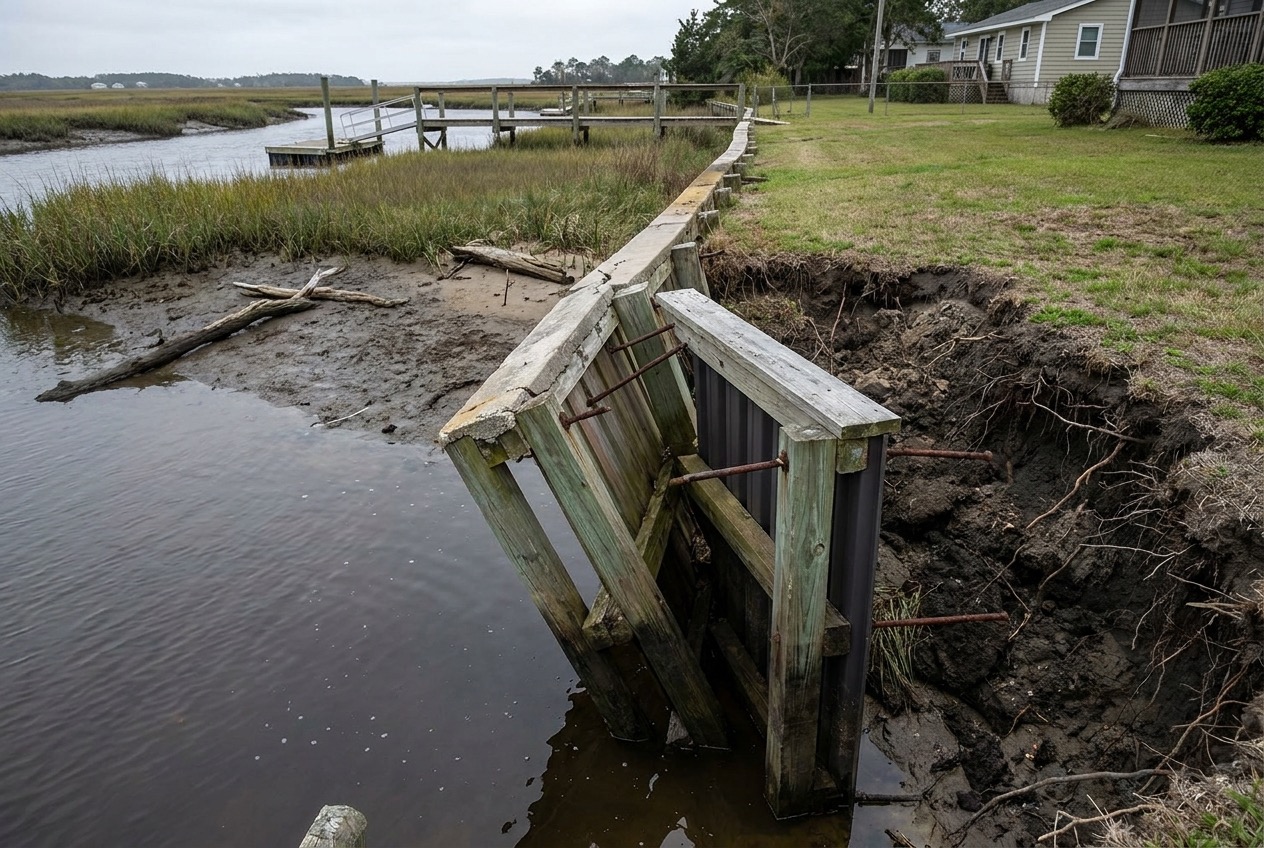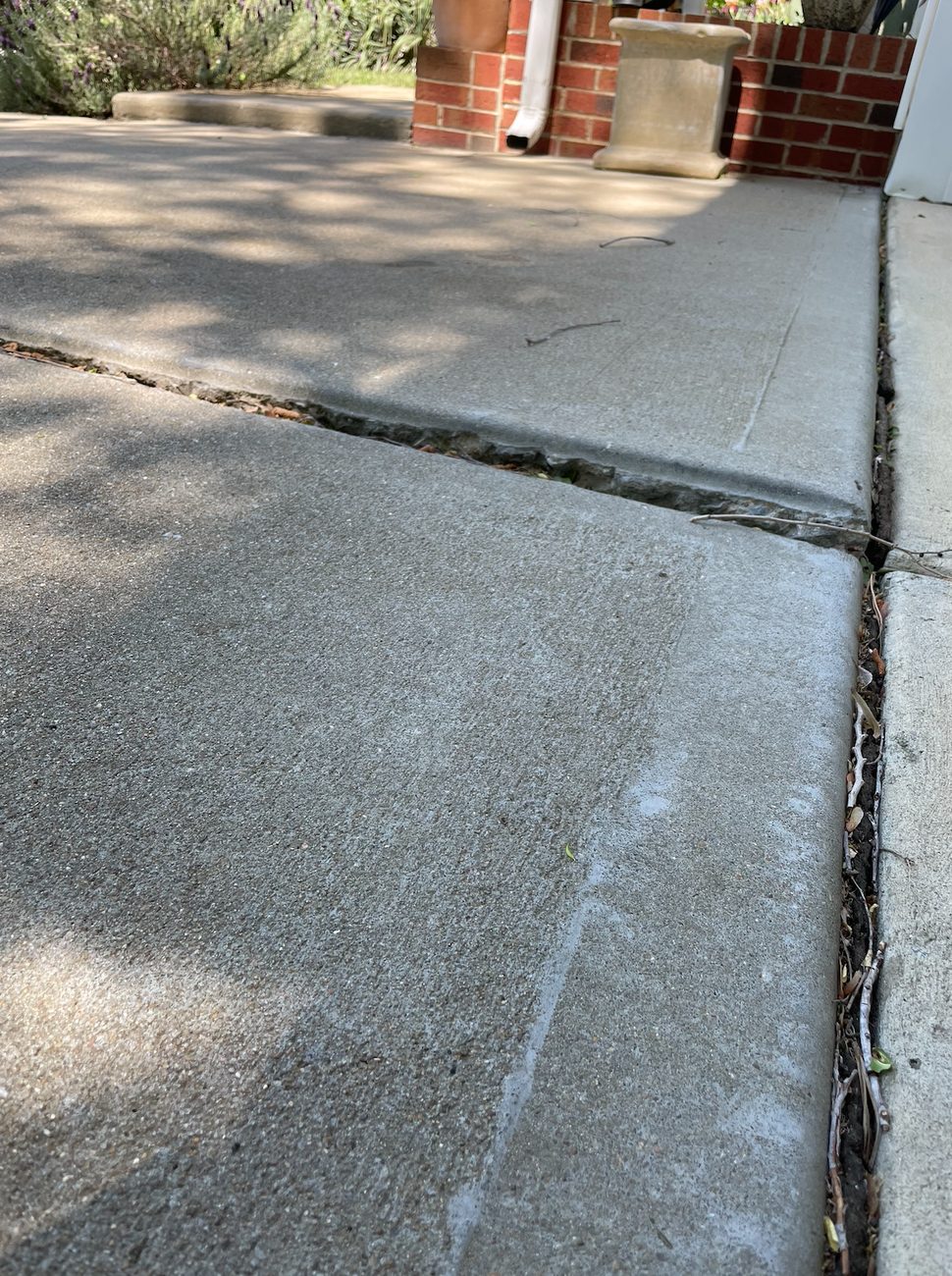
Doors that stick, cracks creeping in, a crawl space that never dries, standing water after every storm, none of it gets better on its own down here. From the older homes near Forest Hills to the newer builds out toward Landfall, our work is foundation repair, crawl space encapsulation, and foundation waterproofing, chasing every problem back to the soft, wet coastal ground behind it. It all begins with a free inspection.
Get Your Free Inspection
We appreciate you reaching out.
One of our team members will be with you shortly.





Know What You're Looking At
Crawl space and foundation trouble almost always shows up in small ways first, long before anything looks serious. On the coast, with the water table close and the air this thick, most of it traces back to moisture or to soft soil moving. Here is what to watch for.
The footing has moved
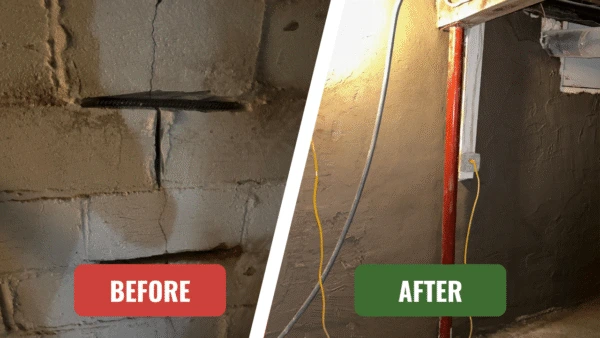
Stair-step cracks in the block, a crack creeping across the slab, or one that leaks after a storm usually mean the footing has moved and needs stabilizing.
Support giving way below
A floor that tilts, gives underfoot, or has one corner riding lower than the rest is usually the supports beneath it losing their footing in the damp crawl space.
Moisture with nowhere to go
A musty smell drifting upstairs, condensation under the house, or standing water after rain usually mean the crawl space needs sealing and drying.
The ground won't drain
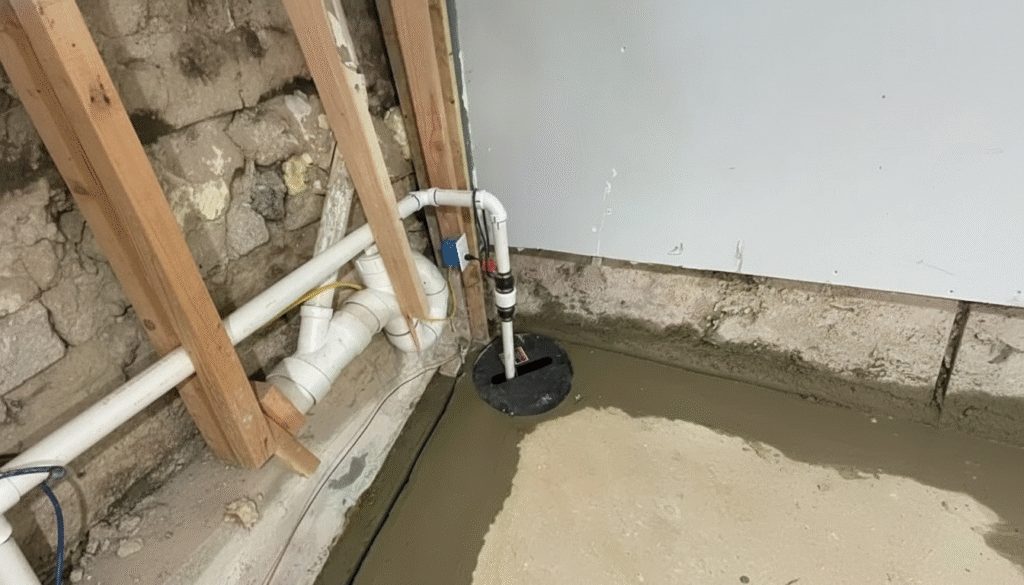
Water pooling under the house after a storm usually means the ground isn't draining, and points to a french drain and sump before it rots the floor above.
Crawl space air rising
Cold, clammy floors and sticky air the AC can't beat usually mean crawl space moisture is rising into the house, which encapsulation fixes.
Frames pulled out of square
When a door suddenly won't catch or a window jams for no clear reason, the foundation has usually shifted just enough to twist the frame.
Under a coastal house the ground is rarely bone dry, so damp on its own is not the signal. What matters is whether it drains away or sits. Water still under the house days after rain is doing work on the framing above it, and sticky air upstairs is usually that same water arriving by another route. Somebody can tell you which in one visit, and the visit is free.
Coastal ground gives a house plenty of ways to shift and to hold water, and we cover the whole span of it, from a settling foundation to a soaked crawl space to a wall the water keeps pushing on. Every fix here is lasting and warranty-backed, never a patch over the symptom. Tap any service to see how we handle it.
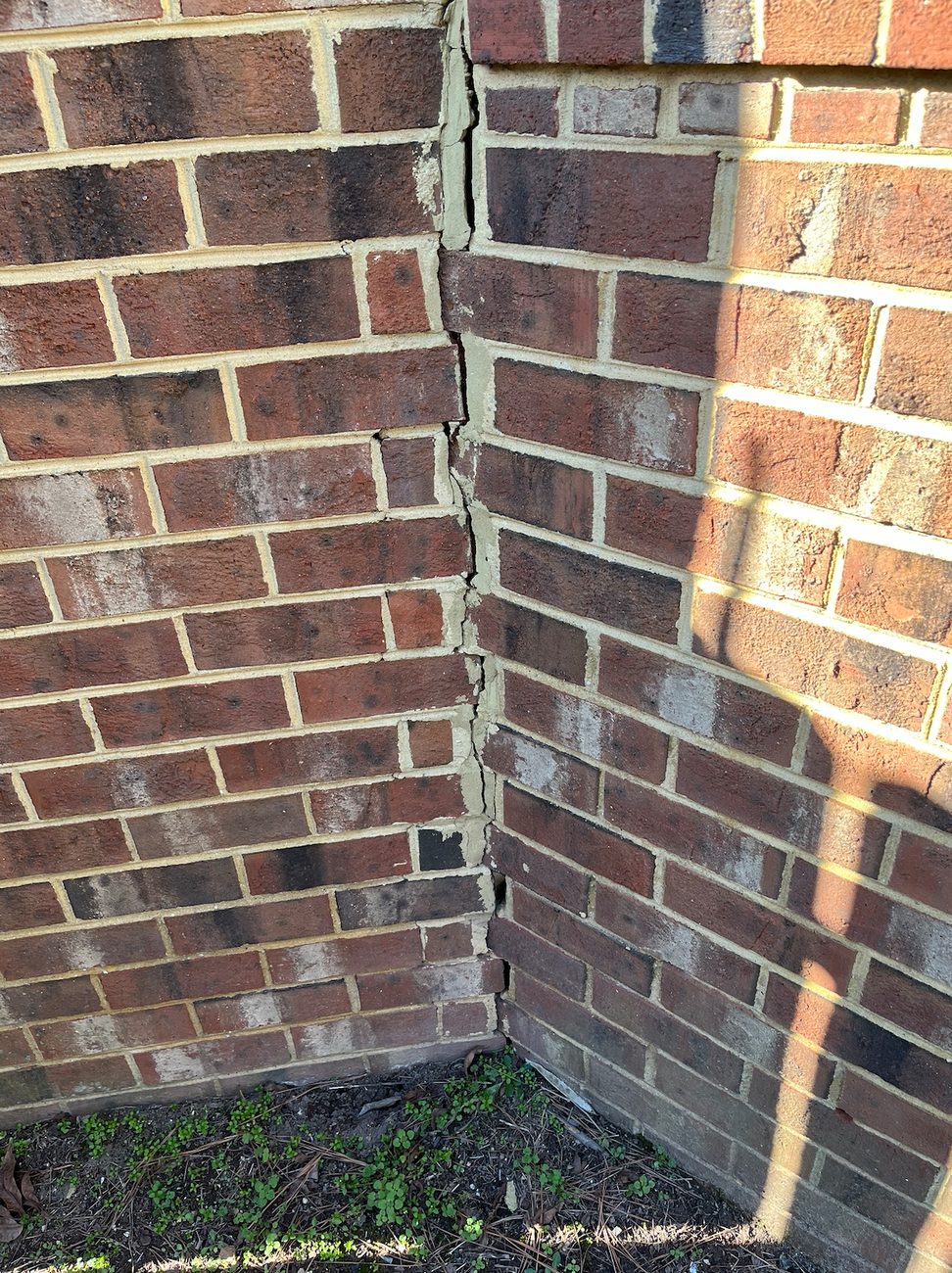
Closes the stair-step cracks, levels the sloping floors, and frees the sticking doors and windows, by lifting a settled foundation back onto solid ground.
Learn moreMost Wilmington homes sit on loose, sandy soil with the water table close to the surface, and sand only holds a footing as long as it stays put. A hard rain can wash it out from under one corner, or weeks of wet ground can soften it, and that part of the house settles. You usually catch it upstairs first: a door that won't latch, a new crack in the drywall, uneven floors that slope to one side. We see it in the older homes around Forest Hills and the newer builds toward Landfall alike.
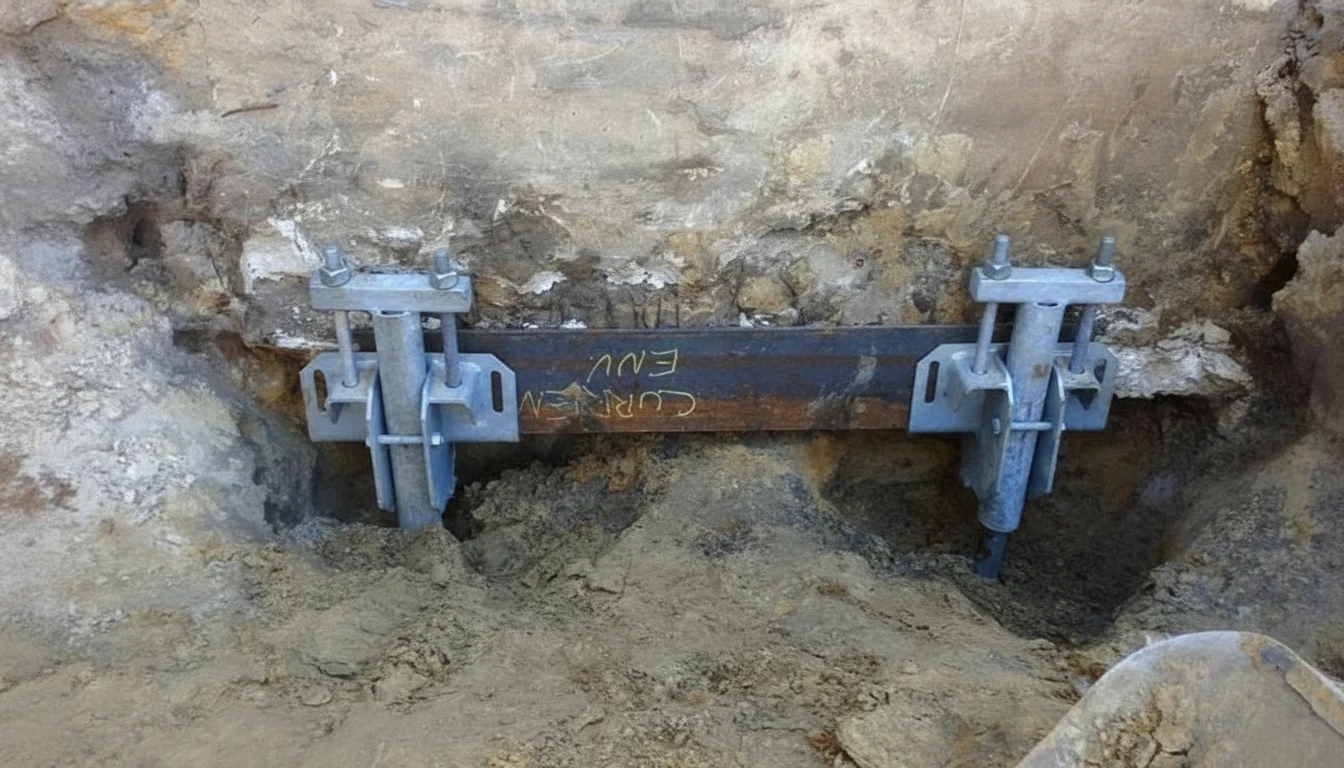
Since the soil is the problem, the fix goes under it. We move the house's load off the sand and onto firmer ground below, using steel piers that underpin the house down to a solid layer. The type and depth depend on the house and how far it has dropped, but the result is the same: the house rides on the piers, not the shifting sand, and we lift it back toward level where we can. That is what foundation repair on the Wilmington coast comes down to.
Once the load is on the piers, the settling stops. The doors close again, the floors come back toward level, and the cracks stop growing because nothing under the house is moving. That is the difference between fixing it and patching it, since a sealed crack over loose sand just opens back up. A cracked foundation gets the same read before anyone seals anything.
It starts with a free inspection and a straight answer on whether the house is really settling or the crack is only cosmetic. You get the scope and the warranty in writing before any work begins. The estimate is free either way.
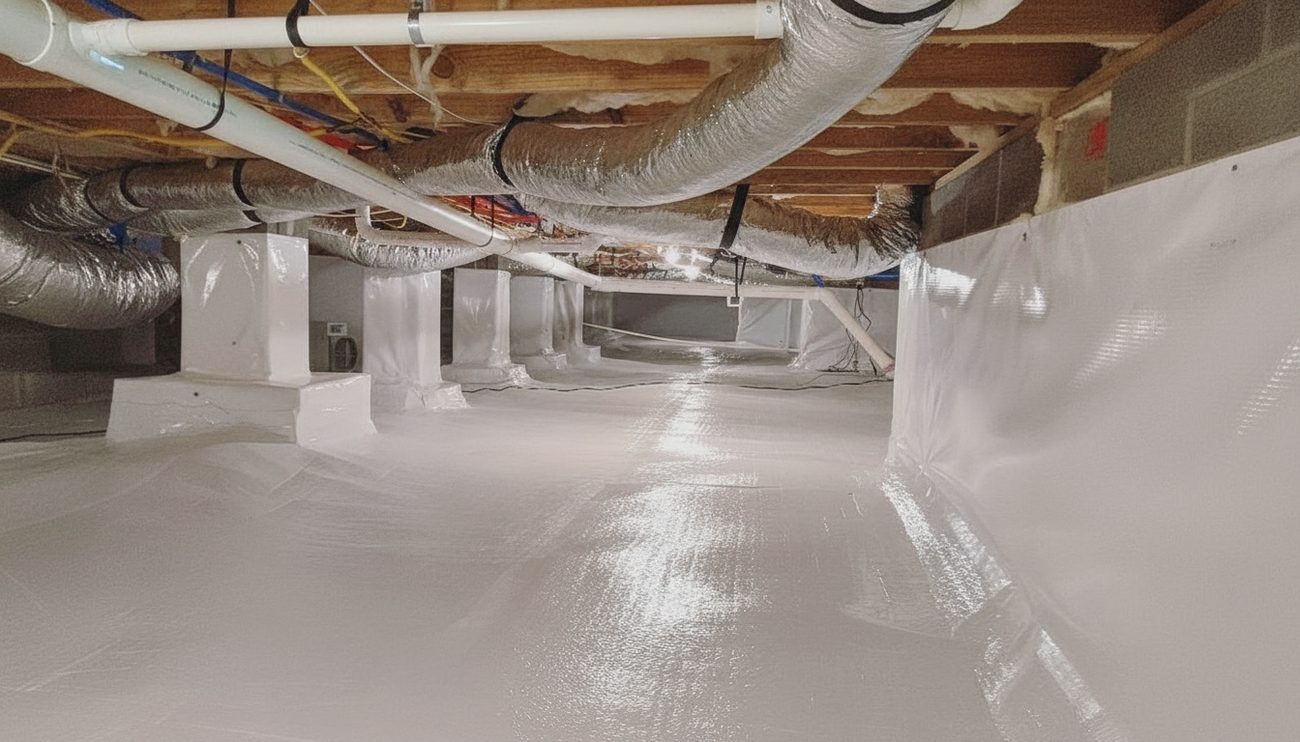
Seals a damp, vented crawl space off from the wet ground and humid coastal air, so the moisture, mold, and musty smell under the house finally stop.
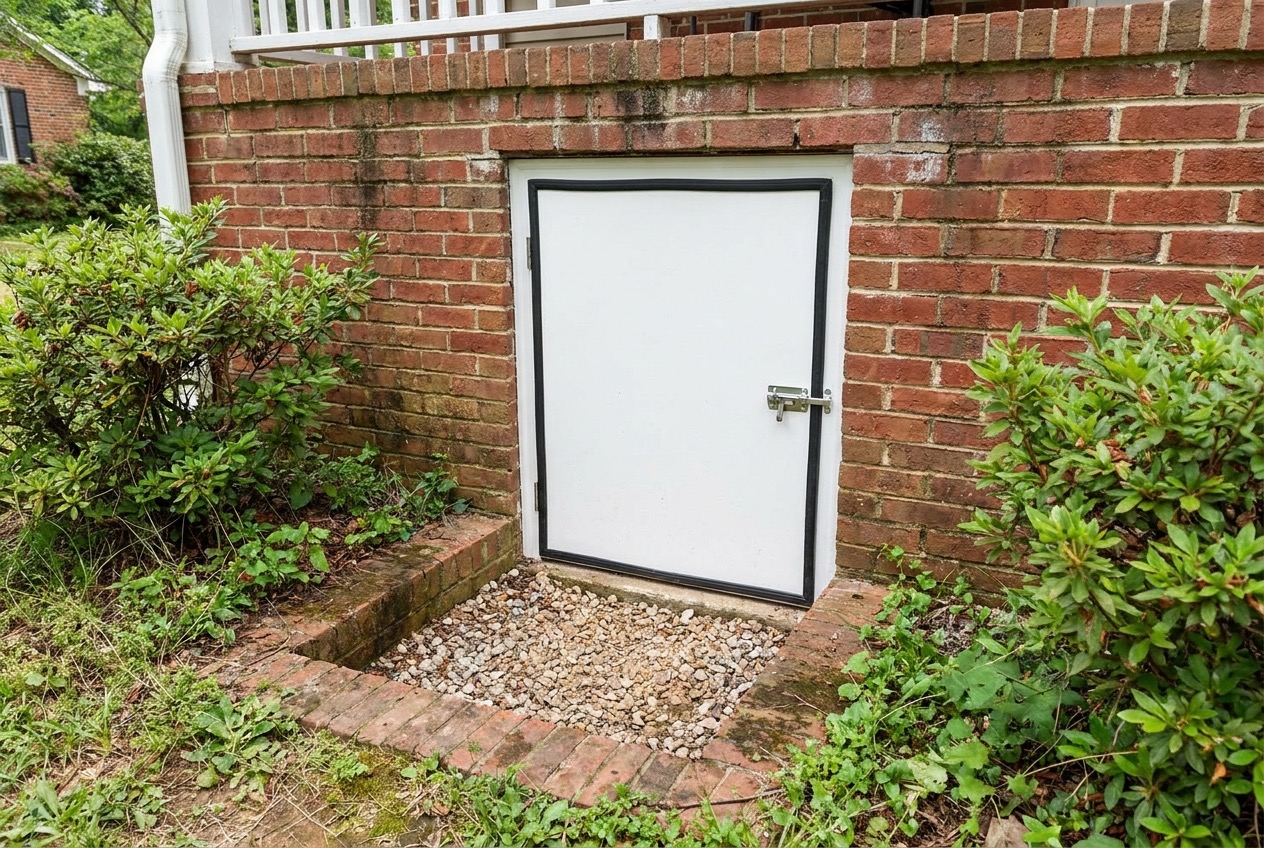
Learn moreIt usually starts with your nose: a musty smell that drifts up into the hallway, or floors that feel cold and clammy no matter how hard the AC runs. Under the house, a vented crawl space on the coast is a moisture trap. Wilmington's humid air pours in through the vents, meets the cool ground, and condenses, and with the water table this close the dirt below never really dries. Whether it's a 1950s home in Sunset Park or a newer place out toward Ogden, the same damp air is rotting joists and feeding mold. Encapsulation is the fix most Wilmington homes need.
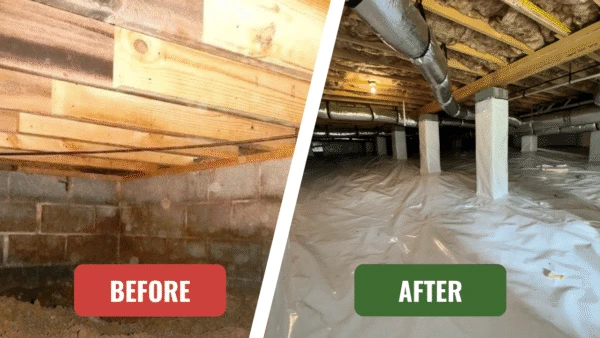
Encapsulation seals the space off from the wet ground and the outside air, instead of trying to vent its way out of a problem the venting created. First we deal with any standing water and grade the floor, then we line the ground and walls with a heavy crawl space liner, the moisture barrier that seals the dirt off, seal the vents and the seams, and add a dehumidifier sized to the space. If there's drainage or a structural issue underneath, that gets handled before it's closed up.
Once it's sealed and dried, the difference shows upstairs: the musty smell clears, the floors stop feeling clammy, the humidity drops, and the joists and subfloor stop taking on the moisture that was quietly aging them. It's the fix that finally makes the whole house feel dry, not just the crawl space.
It always starts with a free inspection so you can see exactly what the space needs, and nothing gets sealed up until the scope and warranty are in your hands.
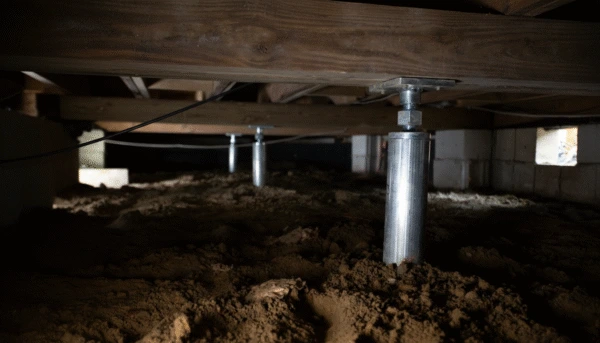
Rebuilds the structure under a sagging or bouncy floor, from rotted joists to settled supports, so the rooms above sit solid again. Those are the solutions that hold on soft coastal ground.
Learn moreA sagging floor that bounces in the middle of a room, dips toward one side, or feels soft underfoot is almost always a sign of trouble below. In an older Wilmington home the supports under the floor were often marginal to begin with, and years of crawl space moisture off the coast finish the job, rotting the wood and letting the piers sink into softened ground. Whether it's a cottage in Carolina Place or a ranch out near Myrtle Grove, the floor loses its level from underneath.
So we go under the house and find what's actually failing. Sometimes it's floor joists and girders that have taken on so much moisture they no longer carry their load. Sometimes it's the support columns, sitting on footings that were never deep enough, slowly sinking into the sandy soil. We map where the floor has dropped and trace each low spot back to the support that let it happen, so the fix hits the cause and not just the dip. Foundation repair done that way lasts.
Then we rebuild it right: sister or replace the rotted wood, set adjustable steel support jacks on proper footings, and bring the floor back toward level in careful stages so nothing cracks upstairs. Done with moisture control, the bounce is gone, the floor is solid, and it stays that way instead of starting the same clock over. Homeowners in Wilmington NC get the same approach on every job.
We begin with a free look under the house to find what's actually failing, and you'll have the plan and the warranty in writing before any wood gets replaced.
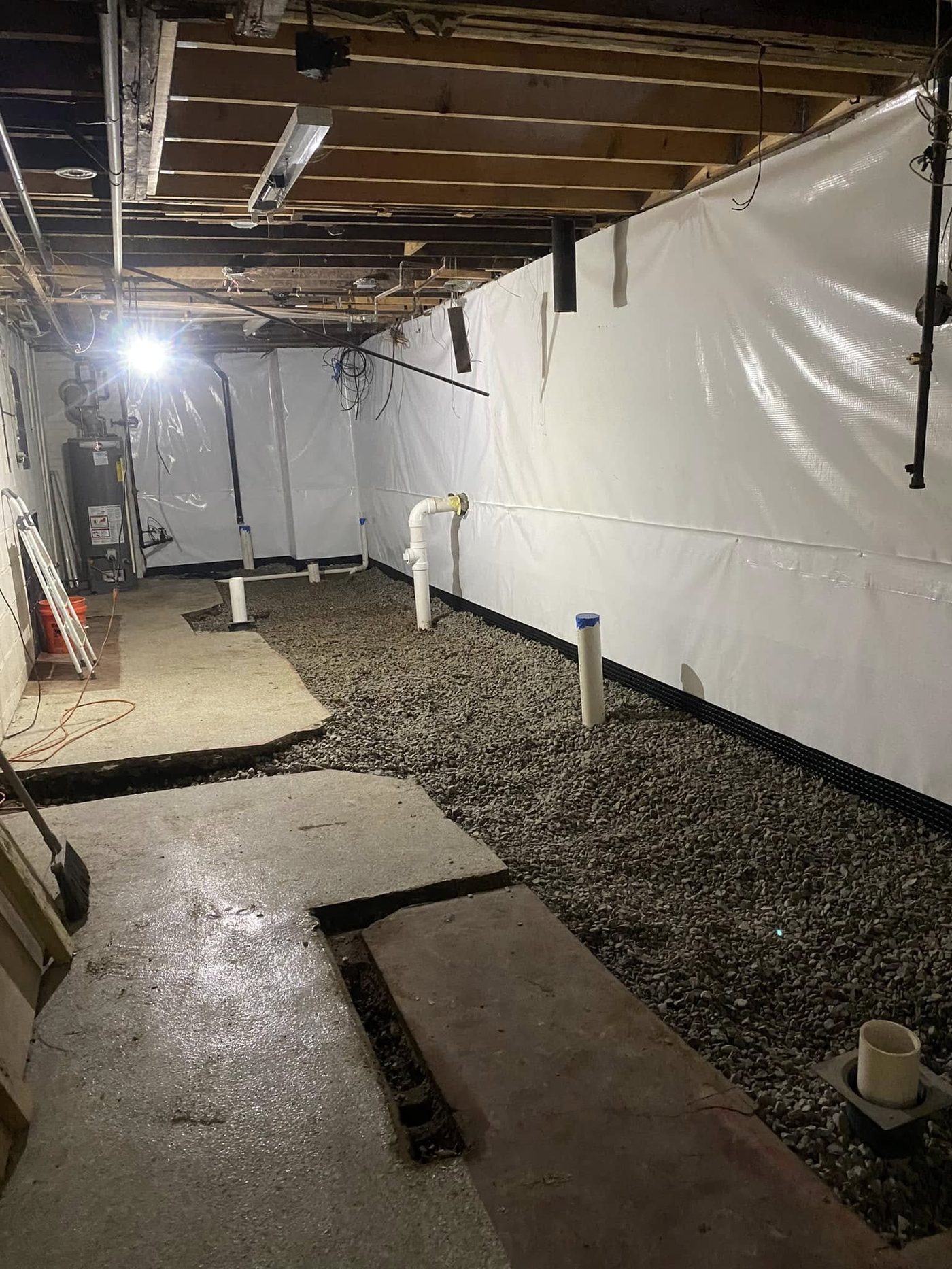
When water pushes through the foundation wall or pools against it after every storm, this stops it at the source and keeps the space below dry.
Learn moreWhen water keeps finding its way through a foundation wall, or the space below the house stays damp no matter what you do, it isn't going to fix itself. On the coast, with the water table close to the surface and storms driving water at the house, the pressure finds every crack, cold joint, and porous spot in the foundation. Whether it's an older home in Carolina Place or a low-lying lot out toward Masonboro, the water is looking for the easiest way in.
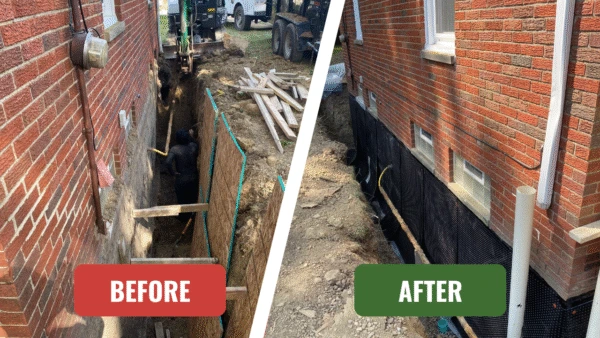
Waterproofing a foundation on the coast is about stopping the water at the source and giving what's left a controlled way out. Depending on how it's getting in, that's sealing and coating the exterior wall, an interior drainage channel that collects seepage and routes it to a sump, and grading and downspouts outside so the water never reaches the wall in the first place. Most homes need some of each, and guessing wrong is how people pay twice. Good foundation contractors tell you which one you need.
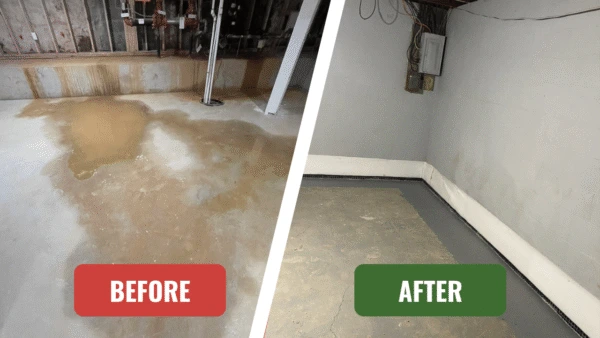
Done as a system, the wall stays dry, the musty smell clears, and the space below stops taking on water every time it storms. It's the difference between chasing leaks one spot at a time and actually keeping the water out.
We start with a free inspection to pin down every way the water is getting in, and the scope and warranty are yours in writing before the work begins.
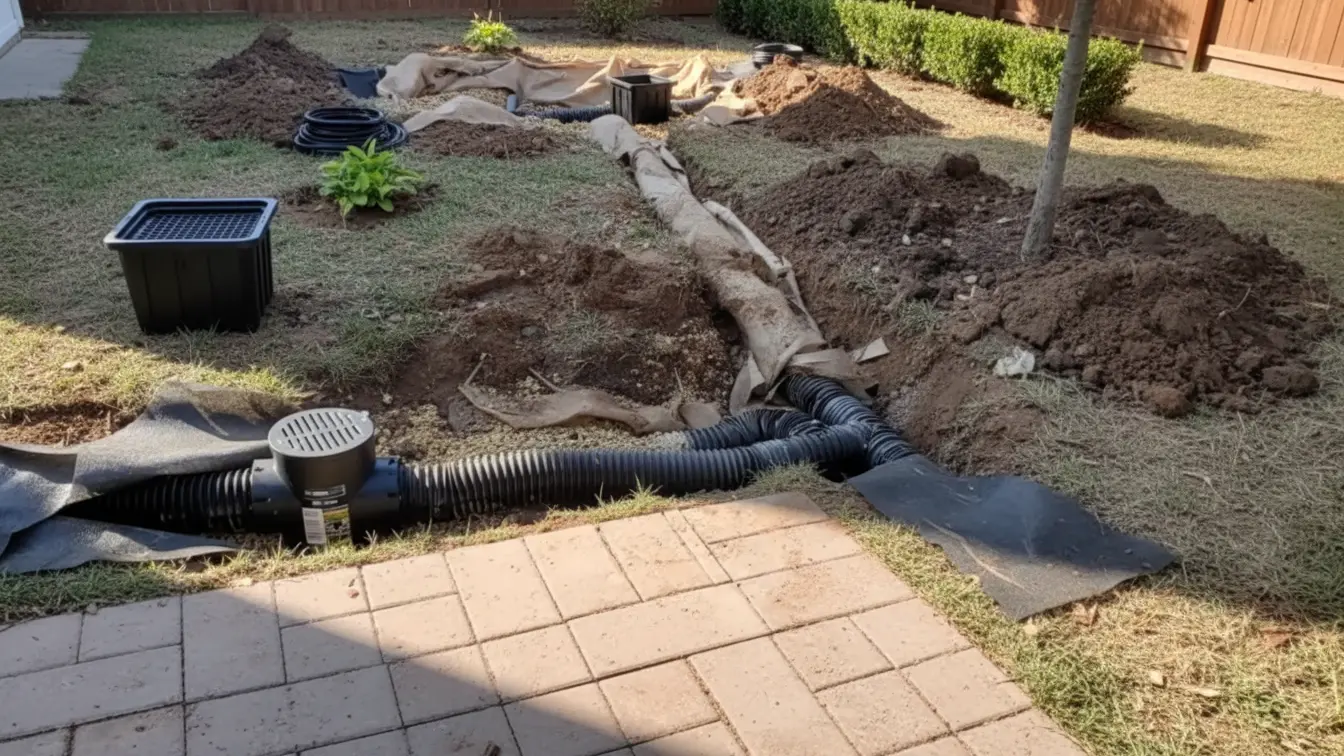
Catches the water that collects around and under your foundation and carries it away, before it can undermine footings or flood the crawl space.
Learn moreAfter a hard Wilmington rain, water that pools against the house or sits in the yard for days is doing quiet damage. On sandy coastal soil with a high water table, runoff and groundwater collect around the foundation and under the house, and saturated ground is what floods crawl spaces, pushes on walls, and undermines footings. Whether it's a low lot near Mayfaire or a wooded one out toward Middle Sound, the water has nowhere to go until you give it somewhere.
A french drain does exactly that. We dig a trench along the path the water actually takes, which we work out by watching the grade and where it collects after a storm, and lay a perforated pipe in gravel wrapped in filter fabric so it won't silt up and quit in a few years. The water drops into the pipe and runs downhill to daylight, a dry well, or a sump, away from the house. Drainage solutions like these keep water off the footings.
We run them as a footing drain outside along the foundation, inside under the crawl space, or as a yard drain out in a soggy stretch, depending on where the water is coming from. Once it's in, the pooling stops, the crawl space stays dry through the next storm, and the ground around the foundation quits holding water against it. That is standard work for us across Wilmington NC.
First we come out at no charge and trace where the water is really coming from, then you get the plan and the warranty in writing before we break ground.
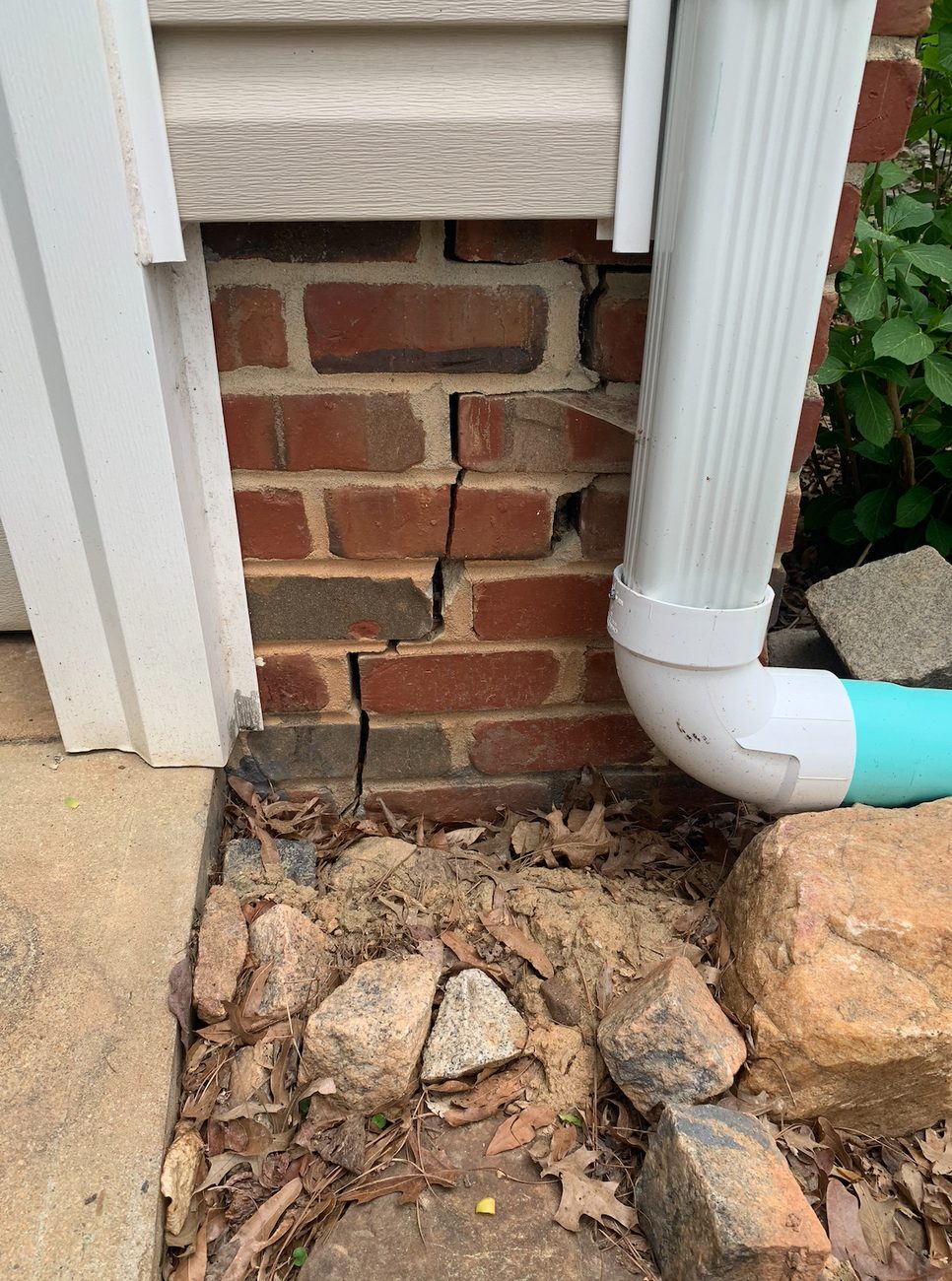
Sorts the cracks that matter from the ones that do not, then seals or reinforces the ones that do so they stop spreading and letting water in.
Learn moreNot every crack is a problem, and an honest look will tell you which is which. A thin hairline is often just concrete curing. What matters is a crack wider than a quarter inch, a wall crack that steps diagonally through the block, or one that lets water in after a storm, because on Wilmington's shifting sandy soil those are the ones that keep moving. Whether it shows up in a slab in Ardmore or a block wall in Pine Valley, a crack that grows between the wet season and the dry one has something behind it.
So we read it before we quote it. We measure the width, note the direction and where it's worst, and when there's any doubt we mark it and watch whether it grows before ever calling it structural. A crack that only leaks gets one kind of fix; a crack that's moving needs another, and telling them apart is most of the job. A foundation crack that moves gets a different fix than one that sits still.
The repair matches the crack. A leaking crack gets sealed from the inside with a flexible polyurethane injection that fills the full depth and keeps water out. A dry structural crack gets epoxy to bond it, plus carbon fiber or steel to hold the wall, and often piering underneath to stop the movement that caused it. Either way the crack stops spreading and the water stops coming in. Foundation repair here has to account for the water table.
It opens with a free inspection and a straight call on cosmetic versus structural, with the scope and warranty spelled out before we seal a single crack.
Queen Foundation Repair is built on a simple idea: tell Wilmington homeowners the truth about their foundation, and do the work right the first time. We have spent years on the coast, under the older bungalows around Forest Hills and the newer builds out toward Landfall, and we have learned that most people don't need the scariest, most expensive fix. They need someone honest enough to tell them what is actually wrong.
That is why we lead with a free inspection and no sales pressure. If the house truly needs piers, we show you the evidence and talk you through the why. If a crack is only cosmetic, we tell you and let you keep your money. When there is real work to do, from foundation repair and crawl space encapsulation to foundation waterproofing and drainage, you get a written scope, a fair price, and a warranty that transfers to the next owner. That is what people want from foundation contractors.
A foundation problem is stressful, and the hardest part is usually knowing who to trust with it. Our whole approach is built to earn that trust: a straight answer, a plan in plain English, and work we stand behind in writing. That is the reputation we are building across Wilmington, one honest inspection at a time. That reputation gets built house by house in Wilmington.
Get your free inspection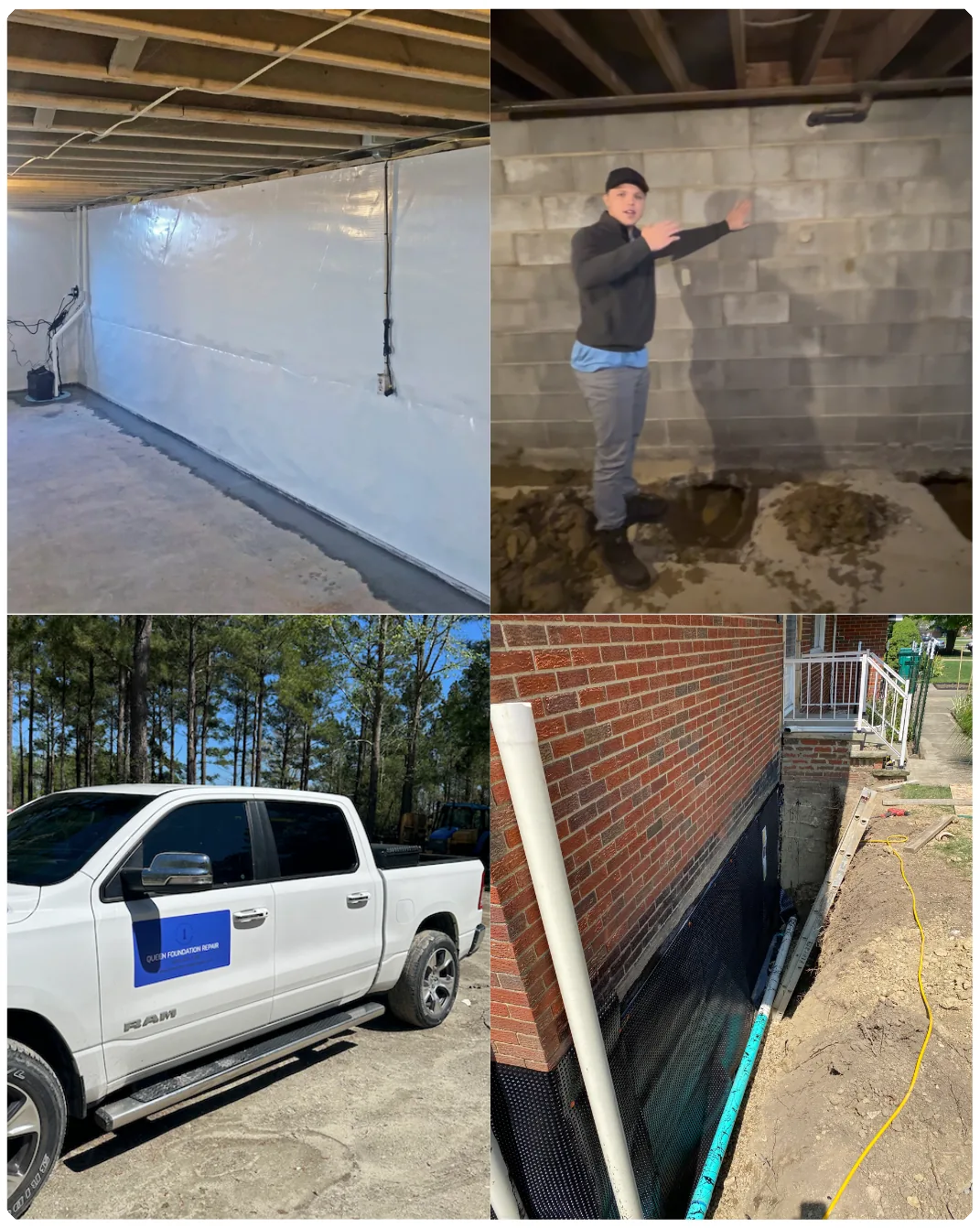
What You Get
We get out for the inspection quickly, usually within a day or two, and once the work is scheduled we don't drag it out.
Every inspection is free, and if what you have is cosmetic and doesn't need a repair, we tell you that and go. No fee, no pressure.
The repair is backed in writing, and the warranty follows the house to the next owner, so the work still counts when you sell.
Fully licensed and insured for foundation and crawl space work in North Carolina, so the work on your home is covered and accountable.
A written price up front for exactly what the job needs, with nothing padded on later once the work has already started.
We work Wilmington and the coast every week, so we know how sandy soil and a high water table actually move water and shift foundations here.
Every step is spelled out before it happens, so you always know what we are doing and why. No pressure to decide on the spot, and no work you do not actually need.
Questions Wilmington Homeowners Ask
The things people ask us most, answered the way we would explain them at your kitchen table.
Getting Started
Often you can't tell for certain from the surface, which is why the inspection matters. Still, a few signs are worth taking seriously: doors that suddenly stick, cracks wider than a quarter inch, floors that slope, or a gap opening where a wall meets the ceiling. One on its own may be nothing. Several together, especially if they're getting worse over a season, usually mean the foundation is moving on the soft coastal soil and it's time to have someone measure it.
On the coast the ones we hear about most are cracks in the slab or block, doors and windows that no longer latch, and floors that feel uneven or bouncy. Underneath, a damp crawl space, a musty smell drifting upstairs, and water standing under the house after a storm are just as common. None of these prove a problem on their own, but together they're the house telling you the ground beneath it has been moving or holding water.
For a real structural problem it's worth it, and waiting almost always costs more. Foundation issues don't heal on their own; the movement continues, the cracks widen, and a repair that might have been a few piers becomes a much bigger job. Unaddressed foundation or moisture damage is also one of the first things that scares off buyers and lowers appraisals when you sell. The flip side is that we'll tell you honestly when something is cosmetic and not worth spending on, so worth it means fixing only what needs it. A house foundation that is still sound does not need work.
Repairs & Methods
We stabilize it from below with piers. Steel push piers or helical piers are driven or screwed down through the loose, sandy soil until they reach a layer firm enough to carry the weight of the house. Then we transfer the load onto the piers and, where it's safe, lift the settled section back toward level. It holds because the piers bypass the soft surface soil entirely and rest on something that won't keep shifting with the water table and the storms. Leveling a home on the coast means anchoring below the soft layer.
Both reach firmer soil, but they get there differently. Push piers are hydraulically driven straight down using the weight of the house, which suits heavier structures. Helical piers are screwed in like a giant screw and do best on lighter loads, additions, and porches, which is a lot of what we see on the coast. The right choice depends on your soil, the load, and how the house is built, which we work out during the inspection rather than deciding ahead of time. Both, installed right, are permanent.
Yes. Block foundation and crawl space walls are very common in Wilmington, and they're absolutely repairable. A block wall that's cracking or bowing from soil and water pressure can be reinforced with carbon fiber straps or steel beams, and a settling block foundation gets stabilized with piers the same way a poured one does. The key is matching the method to what the wall is actually doing, so we read the crack pattern and the movement before recommending anything at all.
Crawl Space & Moisture
If your crawl space is damp, musty, or vented to the outside, then almost certainly yes, and on the coast most of them are. Encapsulation stops the moisture that rots joists, feeds mold, and drifts up into the house, and it usually pays for itself in lower humidity, better air, and floors that stop feeling cold and clammy. The one case where we might hold off is a crawl space that's already dry and tight, where a simpler vapor barrier may be enough.
In a Wilmington crawl space, usually yes, and it's what makes encapsulation actually work. Sealing the space off from the wet ground and outside air removes most of the moisture, but the coast is humid enough that a little always finds its way in, and a dehumidifier sized to the space keeps it from building back up. Without one, a sealed crawl space can still creep back toward damp. With one, the humidity stays controlled year round and the space stays dry.
They're different levels of the same idea. A vapor barrier is a plastic sheet over the dirt that slows moisture rising from the ground, and for a dry crawl space it can be enough on its own. Full encapsulation seals the floor and the walls, closes the vents, and adds a dehumidifier, so it controls both the ground moisture and the humid coastal air. On Wilmington's high water table, the full system is usually what actually keeps a crawl space dry through the summer. Those solutions run year round, not just in storm season.
Cost & Value
It varies more than people want to hear, because a couple of piers under one corner is a very different job from stabilizing a whole side of the house. Nationally, most foundation repairs land somewhere between about $5,000 and $15,000, with minor crack repairs running well under that and major structural jobs running more. The real drivers are how many piers you need, how deep they have to go through the sandy soil to reach firm ground, and whether drainage or waterproofing is part of it. The depth to solid ground is the biggest swing, and there's no way to know it without measuring. That's exactly why we don't quote over the phone. We measure your home and give you a written price with no obligation.
For a typical Wilmington crawl space, a full encapsulation usually runs somewhere in the range of about $5,000 to $15,000, depending on the size of the space, how much standing water or structural work it needs first, and whether a dehumidifier and drainage are part of the package. A simple vapor barrier over the dirt costs far less; a large crawl space that needs water management, new supports, and a sealed system sits at the higher end. The big national brands often quote at the very top of that range, which is why it pays to get more than one number before you commit. We measure the space, price only what it needs, and put it in writing at no cost.
Usually not, and it's worth understanding why before you file. Standard homeowners policies cover sudden, accidental events, so if a burst pipe or another covered incident damages your foundation, there may be coverage. But the most common causes here, soil movement, settling, and water pressure over time, are treated as maintenance and are typically excluded. Every policy is different, so it's always worth calling your insurer and asking about your situation. If coverage is a possibility, our written inspection report documenting the cause and the repair can help you make the case. And even when a policy won't pay for the repair itself, it may cover resulting damage like ruined flooring, so it is worth asking either way.
Water & Drainage
Because on the coast the water has plenty of ways in and few ways out. The water table sits close to the surface, so the ground under the house stays damp, and a vented crawl space pulls in humid air that condenses on the cool surfaces below. Add storm runoff that collects under a low house, and the space rarely gets a chance to dry. Adding more vents usually makes it worse. The real fix is to seal the space off, control the humidity, and give any water that does collect a drained path out.
They solve related problems at different points. Encapsulation seals a crawl space off from ground moisture and humid air so it stays dry. Foundation waterproofing stops water from pushing through or pooling against the foundation wall, using exterior sealing and interior drainage. A French drain handles the water in the ground and the yard, intercepting it and carrying it away before it reaches the house. Many coastal homes need some combination, and the inspection is where we figure out which ones your house actually calls for.
It depends on the length, the depth, and whether it runs inside under the crawl space or outside in the yard. As a rough guide, most exterior French drains run somewhere between about $30 and $70 per linear foot, so a typical run lands in the low thousands, while a full interior perimeter drain tied to a sump costs more. The real price comes down to how far the water has to travel and what's in the way. We measure the run and put the number in writing, at no cost.
Process & Local
Most residential jobs run somewhere between two and five days, depending on the size of the house and how many piers or how much drainage and crawl space work the fix calls for. And in almost every case, yes, you can stay home the whole time. Foundation and crawl space work happens outside or below the living space, so most families notice little more than some noise and equipment while the crew works. We give you a realistic timeline in the written scope before we start, and we keep you posted as it goes.
Honestly, the best time is when you notice the problem, because waiting almost always lets it get worse and more expensive. That said, the coast has its patterns. A wet, stormy stretch drives water into crawl spaces and against foundations, so problems tend to show up then, and a dry spell can open cracks wider. The work itself we do year round, since piering, encapsulation, and drainage aren't weather-dependent the way exterior projects are. So there's no real reason to wait for a season.
It comes down to what Wilmington is built on. The coast is soft, sandy soil sitting on a high water table, close to the Cape Fear River and the Intracoastal, so the ground holds water and shifts more easily than the firmer clay inland. That soft, wet ground lets foundations settle when the soil washes out from under a footing, and it keeps crawl spaces damp because the moisture below never really has anywhere to go. Add the storms that saturate everything a few times a year, and you get the two problems we see most: settling foundations and wet crawl spaces. It's not that homes here are built poorly; the ground just gives them more to deal with. Foundation repair in Wilmington NC is about the soil more than the build.
Where We Work
From the bungalows near Forest Hills to the older homes around downtown and the newer builds out toward Landfall, we help homeowners across Wilmington fix settling foundations, damp crawl spaces, and water that won't drain. Wherever you are in and around the coast, a free inspection is one call away.
ZIP codes we serve across the greater Wilmington area:
Ready to Get Started?
No obligation, fast and easy.
We appreciate you reaching out.
One of our team members will be with you shortly.