Water across the basement floor after a hard rain, a crack in the wall that keeps getting wider, a musty smell under the house. From Buckhead to Morningside, we handle basement waterproofing, foundation repair and crawl space encapsulation, and the inspection is free.
Get Your Free Inspection
We appreciate you reaching out.
One of our team members will be with you shortly.





WHAT TO LOOK FOR
Atlanta sits on a ridge, so most of what we see starts with rain that lands on your own lot and the ones above it. Some of it is settlement instead. Either way it shows up as a wet basement, a cracked wall, or a crawl space that never dries. Each one has its own set of solutions.
It found a way in
After a hard rain it spreads out from the wall or comes up at the joint where the floor meets the block. The path is already there. Foundation repair starts by tracing it.
The wall is taking load
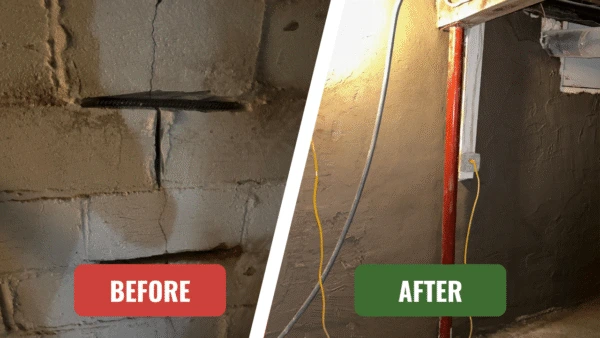
A line that runs sideways along the block and then turns down at one end. Hairline is common here. Wide enough to see through is not. Crack repair depends on which kind you have.
Pressure from outside
One course of block has pushed further in than the ones above and below. That is wet ground behind a buried wall, and it is the urgent one. Foundation walls under that load need support.
It starts under the floor
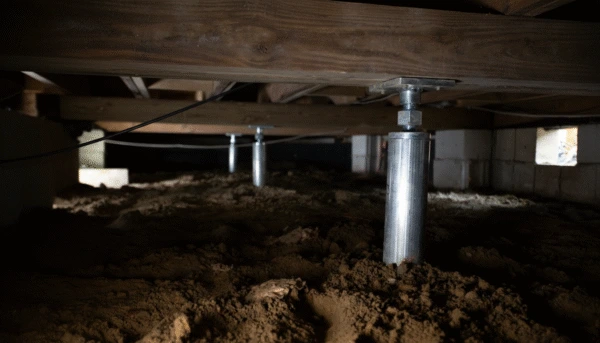
Damp dirt in the crawl space feeds mold on the joists, and that air moves up into the house. You smell it before you see anything. Moisture below the floor is the usual source.
One corner has dropped
The crack follows the mortar joints up the brick in a staircase. It means part of the footing has moved down further than the rest of it. Settlement issues show up in the framing first.
The water has nowhere to go
A downspout emptying at the corner, or a low spot that holds water for days after a storm. That is the water that ends up inside. Grading and drainage solutions handle most of it.
Water that comes back with every storm is the one to move on. A patch of damp that dries out and stays dry is doing no harm; water that returns has found a route and is not going to give it up. A wall pushed in along one course sits in the same category, and so does a crack that is wider this year than last. The repair only grows while you wait, and looking at it costs you nothing. Waiting turns small issues into big ones.
A wall pushed in along one course, water back at the basement floor after every storm, a door that stopped closing right. Those are the calls we get across Atlanta. Tap any service to see what putting it right involves. Every one of these issues has a fix that lasts.
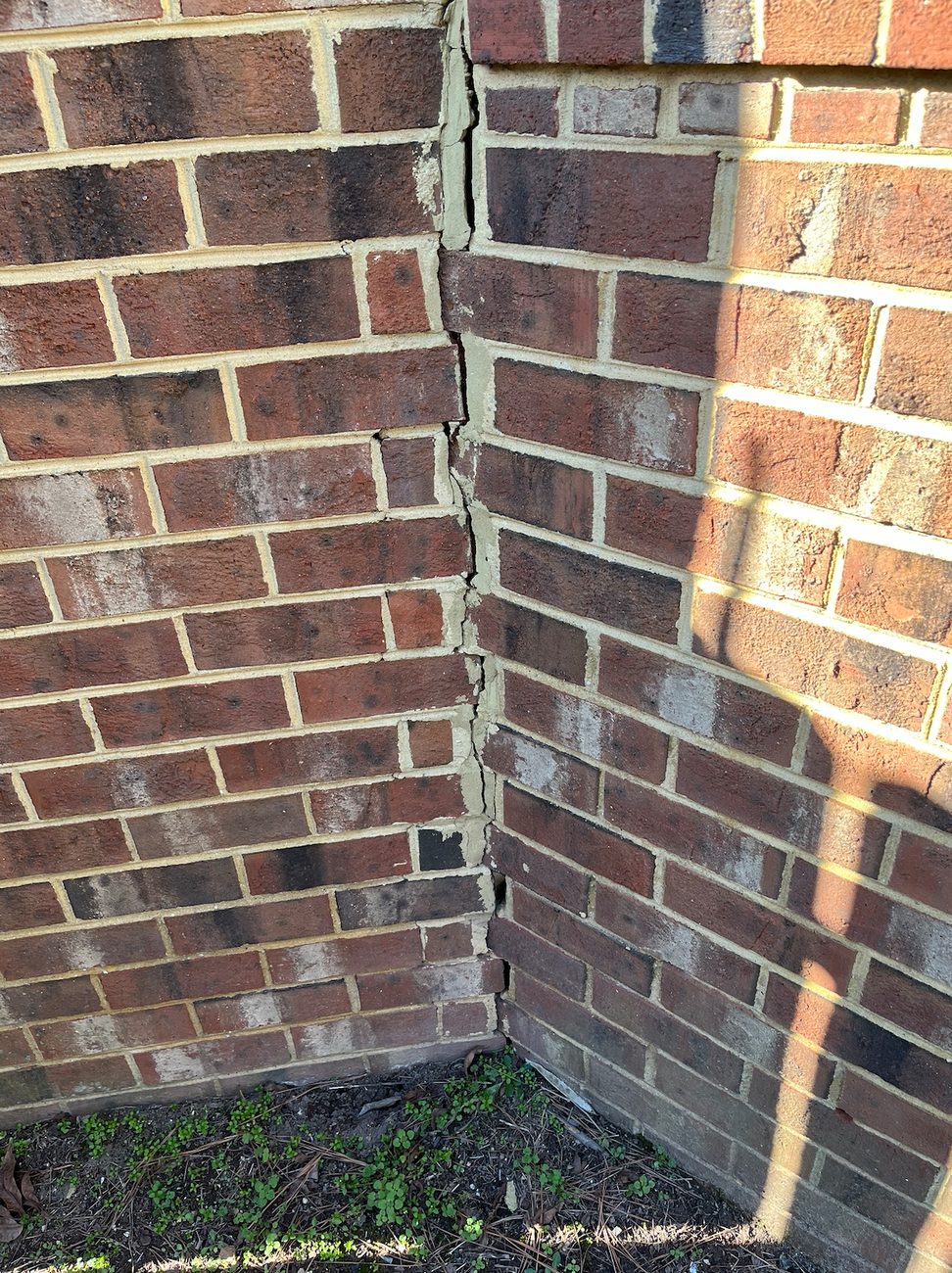
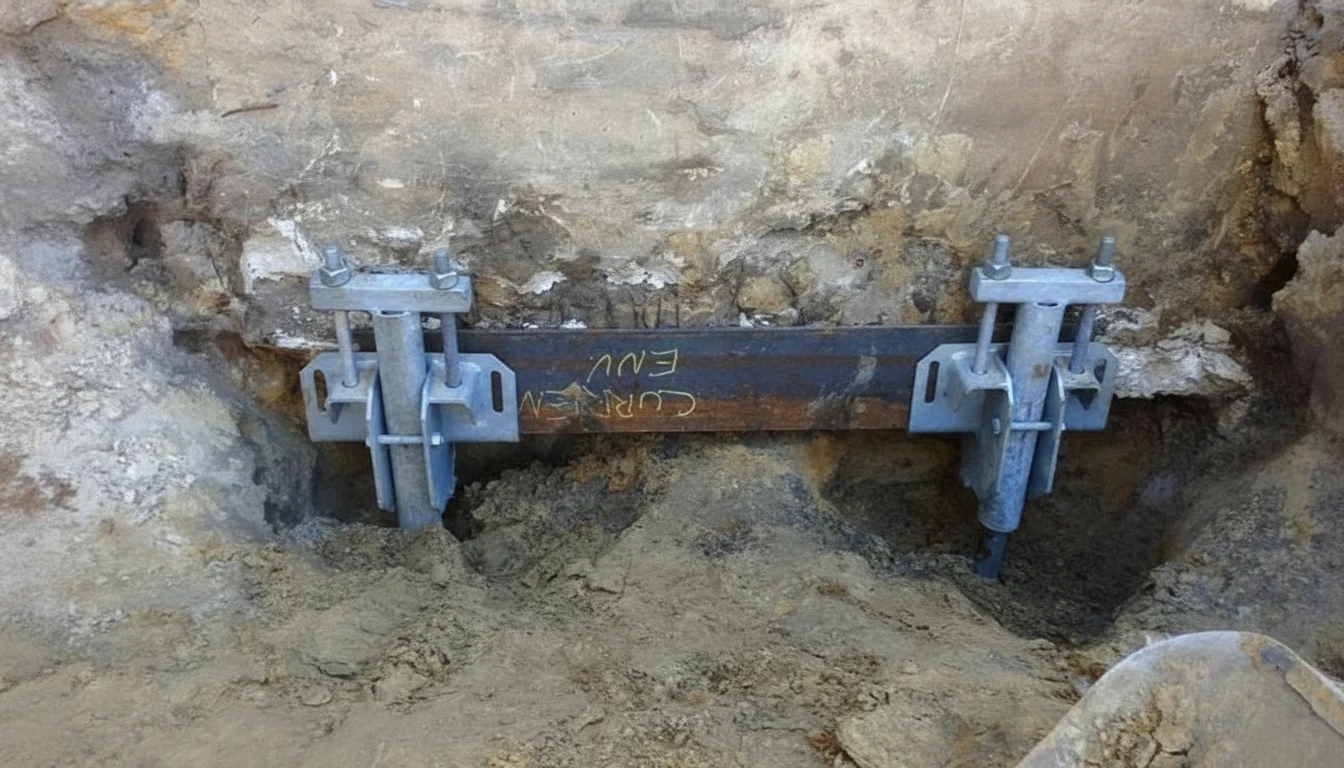
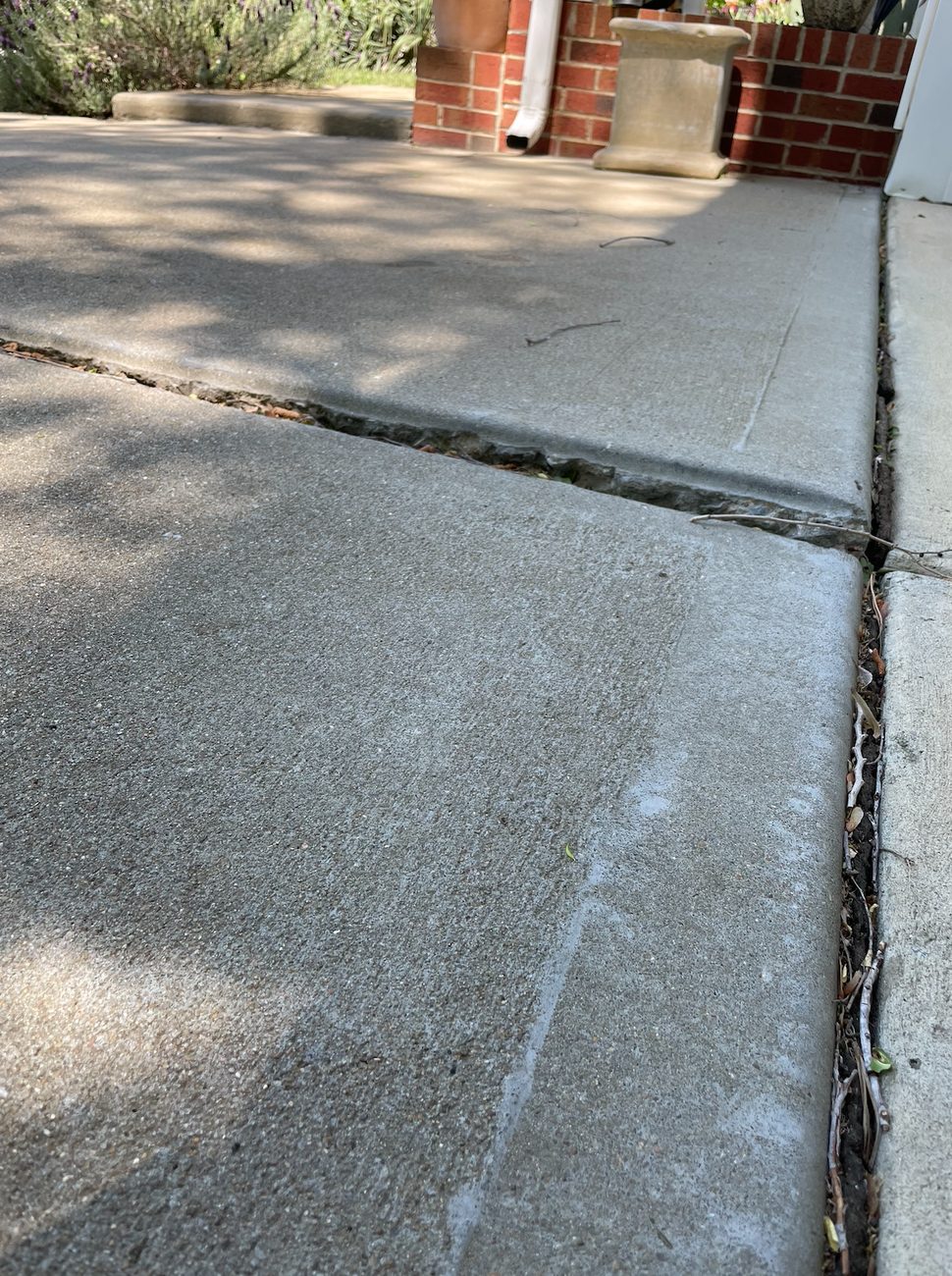
Stops a settling house from dropping any further, brings it back toward level, and closes the cracks the movement opened up. Concrete piers carry the load from there.
Learn moreThe part of the house that dropped is usually the part with the worst drainage above it. In Buckhead that is often a back corner below a slope, where years of runoff have carried the soft ground out from under a footing and left it spanning air. That is when foundation repair turns structural.
Foundation repair here starts with finding where the support stopped. Underpinning is the usual answer: the footing is carried down to ground that will hold it, and the weight comes off the ground that moved. Where the settlement is shallow and sitting on old fill, grouting under the footing can be enough on its own. From there the house is brought back toward level slowly, so the framing and the drywall come with it instead of tearing. Foundation settlement repair is measured work rather than a single lift. Professional crews measure before they lift.
What none of it does is fix the reason the ground left. If the water that washed it out still arrives in the same place, it goes to work on the next stretch of footing along. That is why the grading and the downspouts get looked at in the same visit. In Morningside that has meant underpinning down one side and drainage work along the other. The inspection is free. Both are proven solutions.
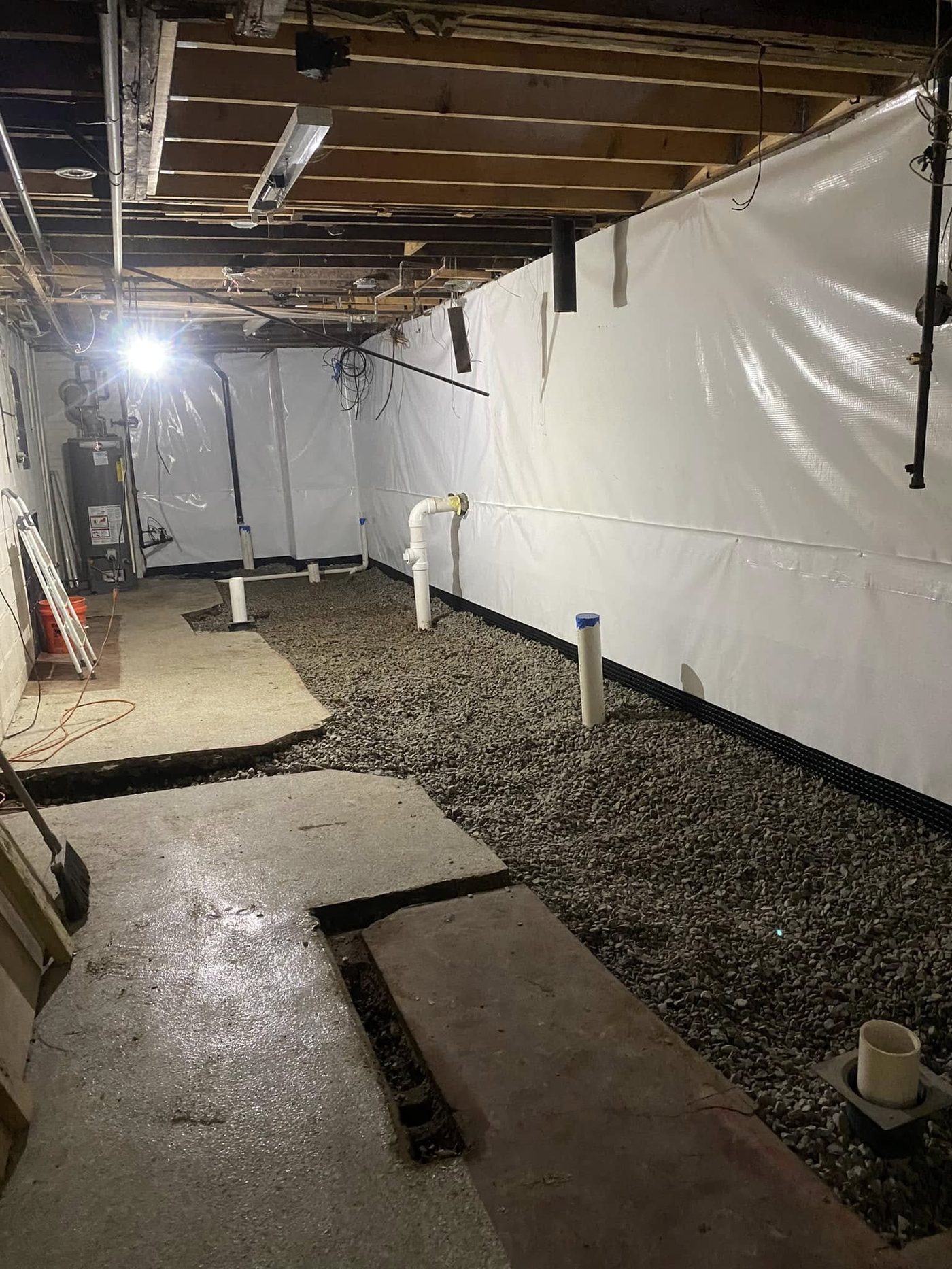
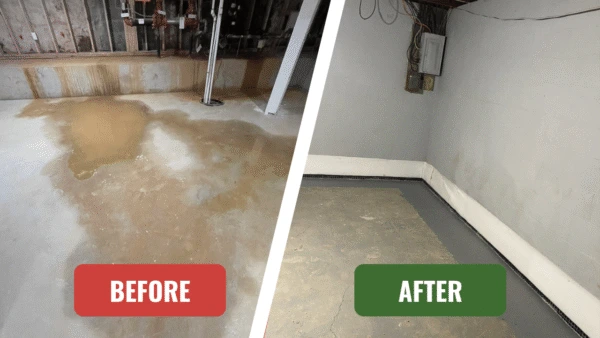
Keeps water off the basement floor, by catching it inside the wall and sending it to a pump before it ever reaches the room. Interior waterproofing works the same way.
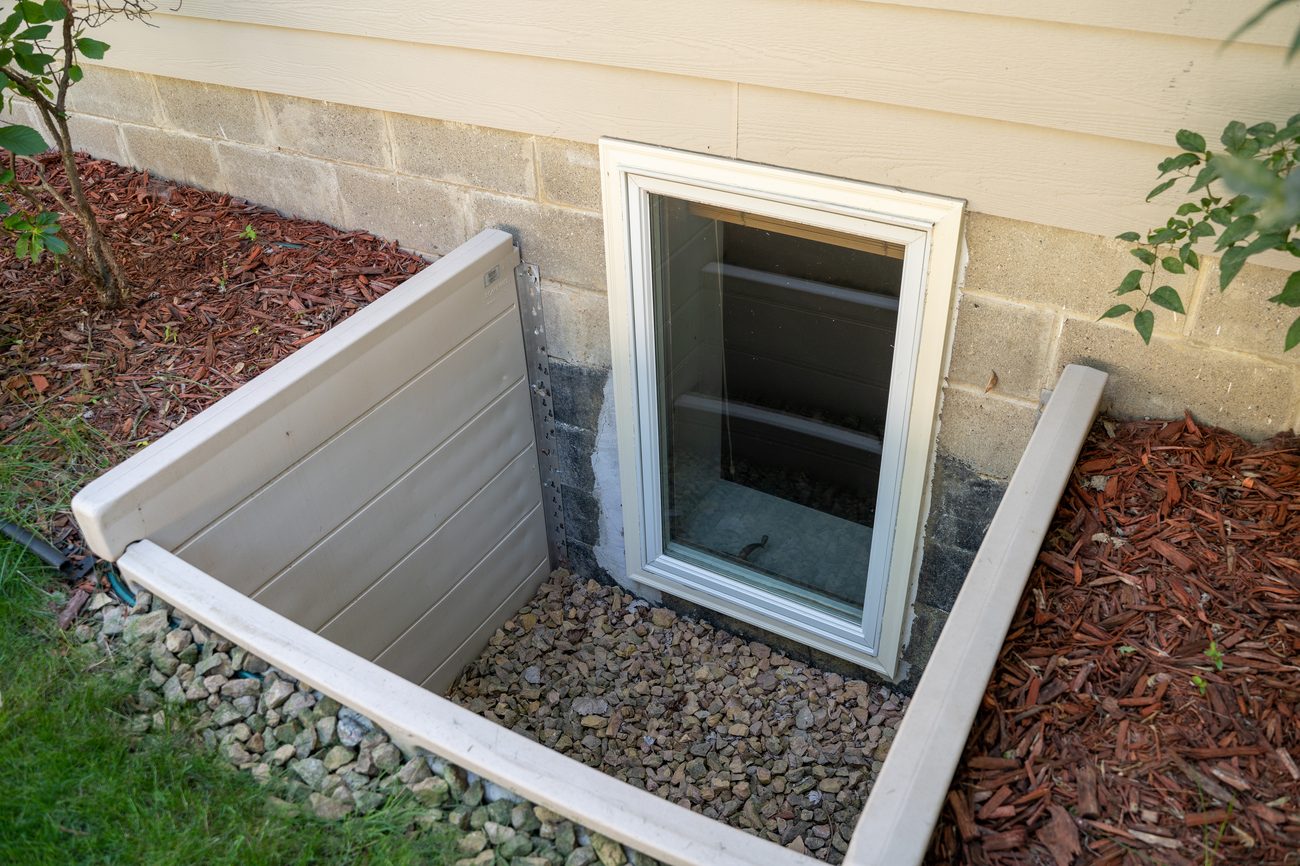
Learn moreOn a Virginia-Highland lot cut into a hillside, the buried side of the basement is holding back saturated ground every time a storm comes through. Block was never built to stand up to that indefinitely, and the water finds the joint between the wall and the floor first. Sealing that joint solves most moisture issues.
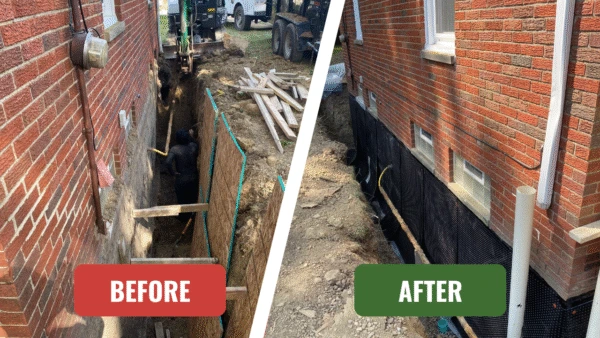
Basement waterproofing works by giving the water somewhere better to go. A channel is cut at the base of the wall, drain tile is laid in stone below the slab, and everything ties into a pit where a pump lifts it out and away from the house. The wall stops being the last line of defense. Interior basement drainage handles what has already worked its way through, which is why it suits block walls that are weeping rather than cracked. Where the wall itself is the leak, the outside face gets dug out and a membrane goes on so water never reaches the block. Exterior waterproofing is the more permanent of the two solutions.
It will not straighten a wall that has already moved, and it does not replace fixing a downspout that empties at the corner. Those are separate jobs and we will say so. In Ansley Park the whole answer was outside the house. Someone will tell you that at no charge. We work across GA the same way.
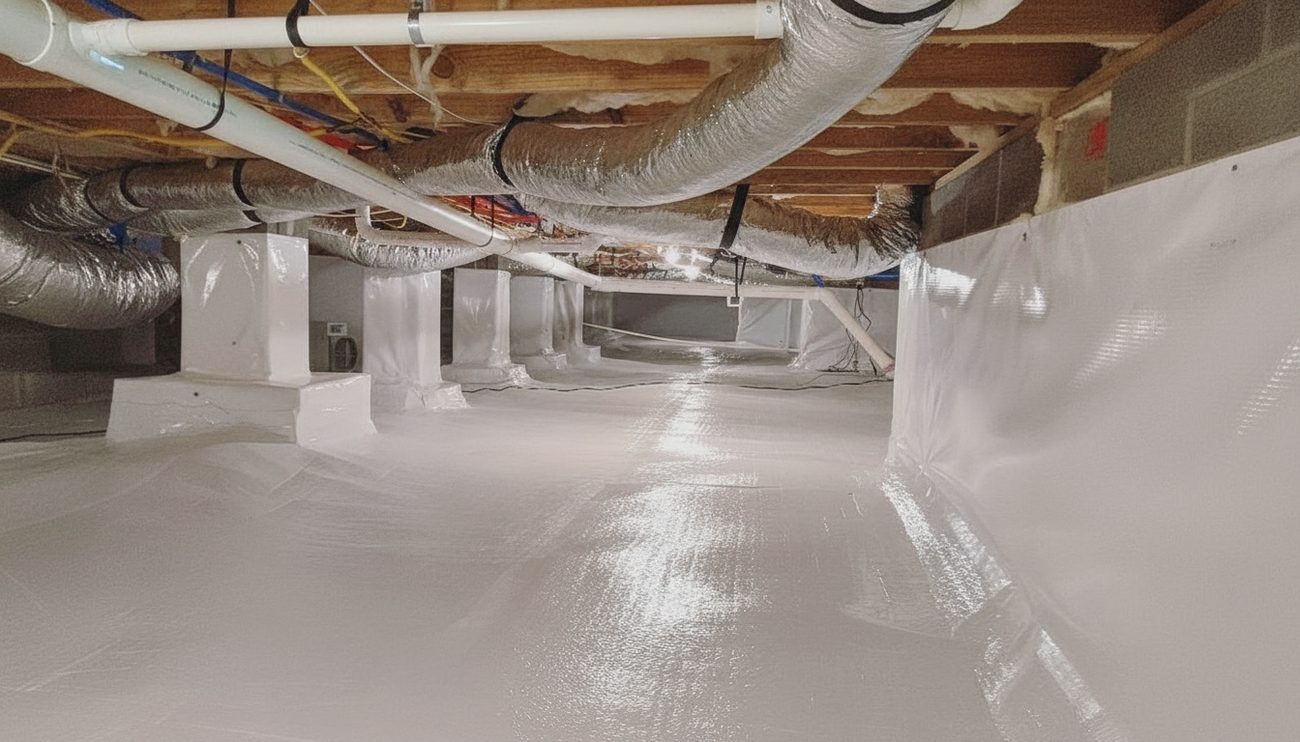
Dries out the space under the house and holds it there, so the damp and the smell stop working their way up into the rooms above. A sealed floor keeps those issues out of the home.
Learn moreOpen dirt under a house gives off moisture all day long. In Grant Park, where a lot of the housing stock predates air conditioning, the crawl space was built with vents on the assumption that outside air would dry it out. In a Georgia summer that humid air comes in, hits cool surfaces and condenses on the joists instead. Controlling moisture is cheaper than replacing wood.
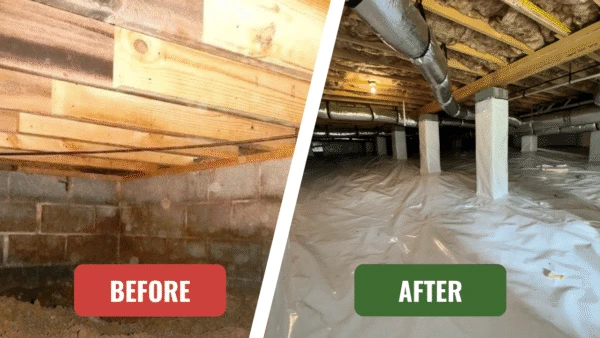
Crawl space encapsulation closes that loop. A heavy liner goes over the ground and up the piers and walls, sealed at the seams so the ground is no longer part of the room. The vents get closed, the rim gets insulated, and a dehumidifier holds the space at a level where mold has nothing to work with. Crawl space moisture control is what keeps it that way after the liner is down. A liner alone is not the system; the seal at the top of the wall is what keeps outside air out. Those two solutions work together, not separately.
It does not fix sagging floors on its own, and it will not stop groundwater running through the space. Standing water gets drained first. In Kirkwood that meant a drain line before the liner. Somebody comes out and works out the order, free of charge. Every home is scoped on its own.
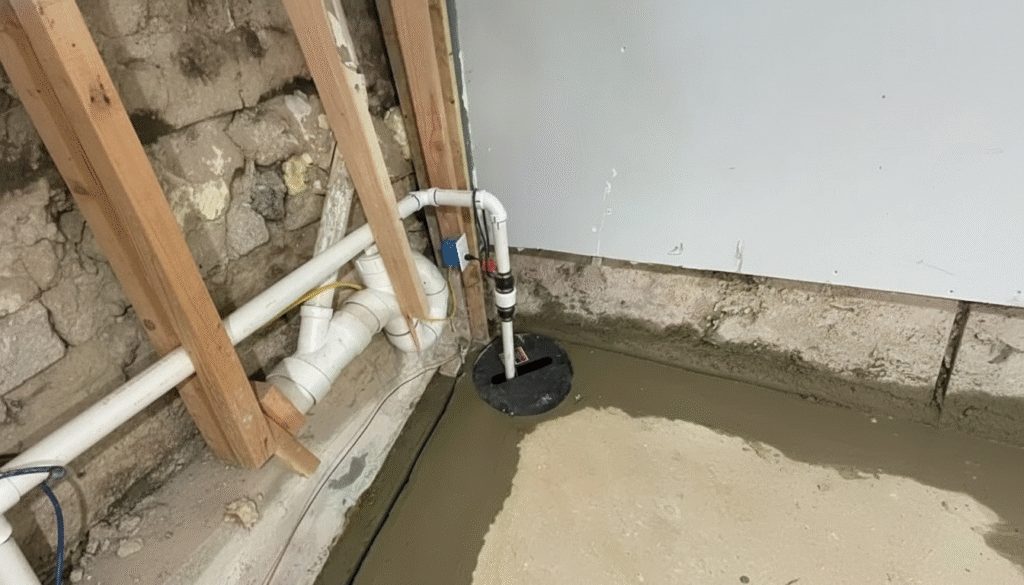
A pit set at the low point with a pump that moves water out of the basement automatically, plus a backup for when the power goes. A pump handles water the walls let through.
Learn moreDrainage only helps if the water it collects has somewhere to go. On the flatter lots around Ormewood Park there is no downhill exit to daylight, so everything the perimeter drain gathers has to be lifted mechanically or it simply pools under the slab. Slab repair comes after the water has somewhere to go.
A sump pump installation puts a sealed pit at the low corner, tied into the drain tile, with a pump sized to the volume the house actually sees rather than the smallest one that fits. The discharge line runs well away from the foundation, because a pump that empties beside the wall is just recirculating the problem. A sealed lid holds the humidity down and a check valve stops what was pumped out running back in. Two pumps in the same pit is common on houses that have flooded before, so a single failure does not put water on the floor again. That is what separates real solutions from patches.
The failure people meet is a pump that works fine until the storm knocks the power out, which is the exact hour it was needed. A battery backup covers that. In Candler Park most calls are a pump that has simply worn out. We will check yours for nothing. Pump issues are easy to miss.
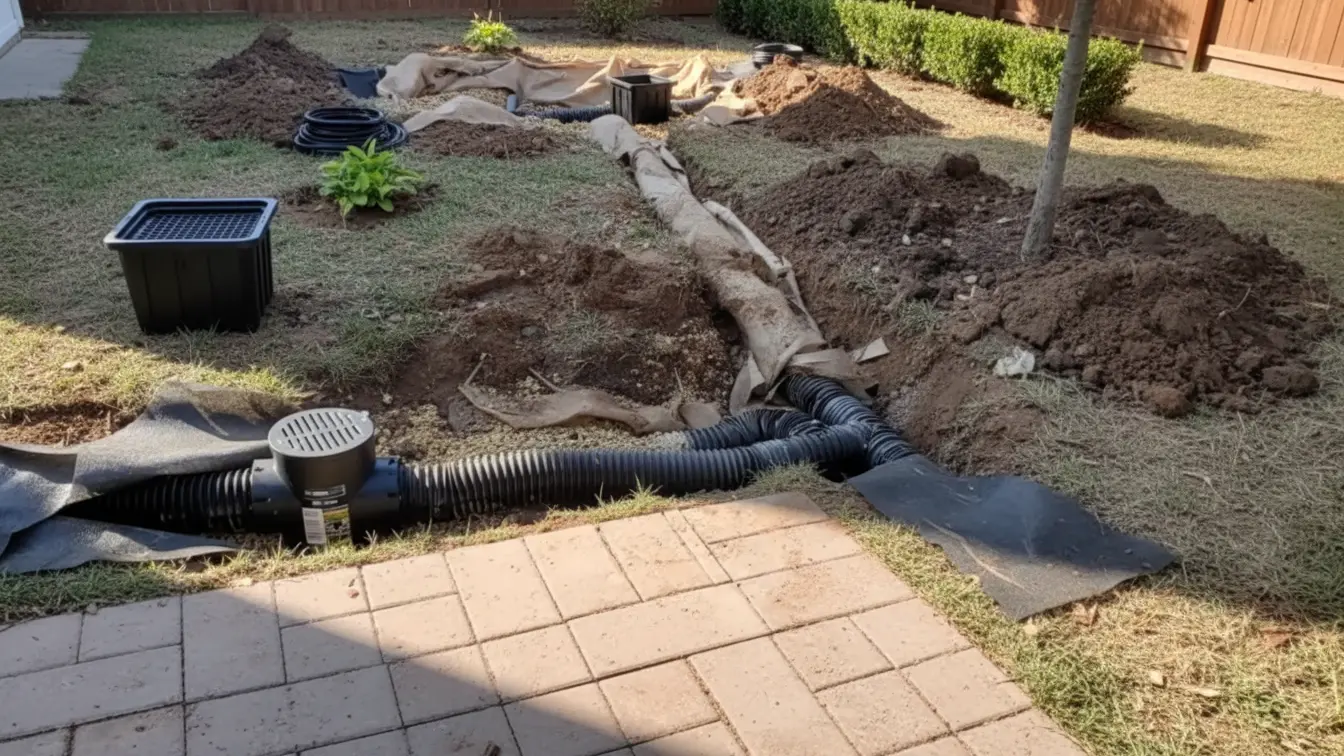
Sends the water crossing your yard somewhere else, so it stops arriving at the foundation every time a storm comes through. Concrete work outside carries water away.
Learn moreAtlanta sits high, so most yards are shedding water toward something. In Chastain Park the something is frequently the back of the house, because the lot falls that way and the roofs and drives above it deliver more volume than the ground can take in. Drainage issues start above ground more often than below.
A french drain installation is a trench, a bed of washed stone, and perforated pipe wrapped so the dirt does not clog it, set on a fall that keeps the water moving. It picks up what is travelling through the top of the ground and routes it out to daylight or a pop-up well clear of the house. Exterior yard drainage is the cheapest place to solve a water problem, because it is the furthest upstream you can get. Where the fall is shallow the trench gets deeper as it runs, because a pipe that flattens out will hold water and silt instead of moving it. Professional grading fixes what gutters cannot.
A drain will not dry out a basement that is taking water through the wall itself, and it does nothing about a downspout dumping inside the trench line. Both get sorted together. In Collier Hills the regrading mattered as much as the pipe. The visit to work out which you need costs nothing. Concrete and drainage often pair up.
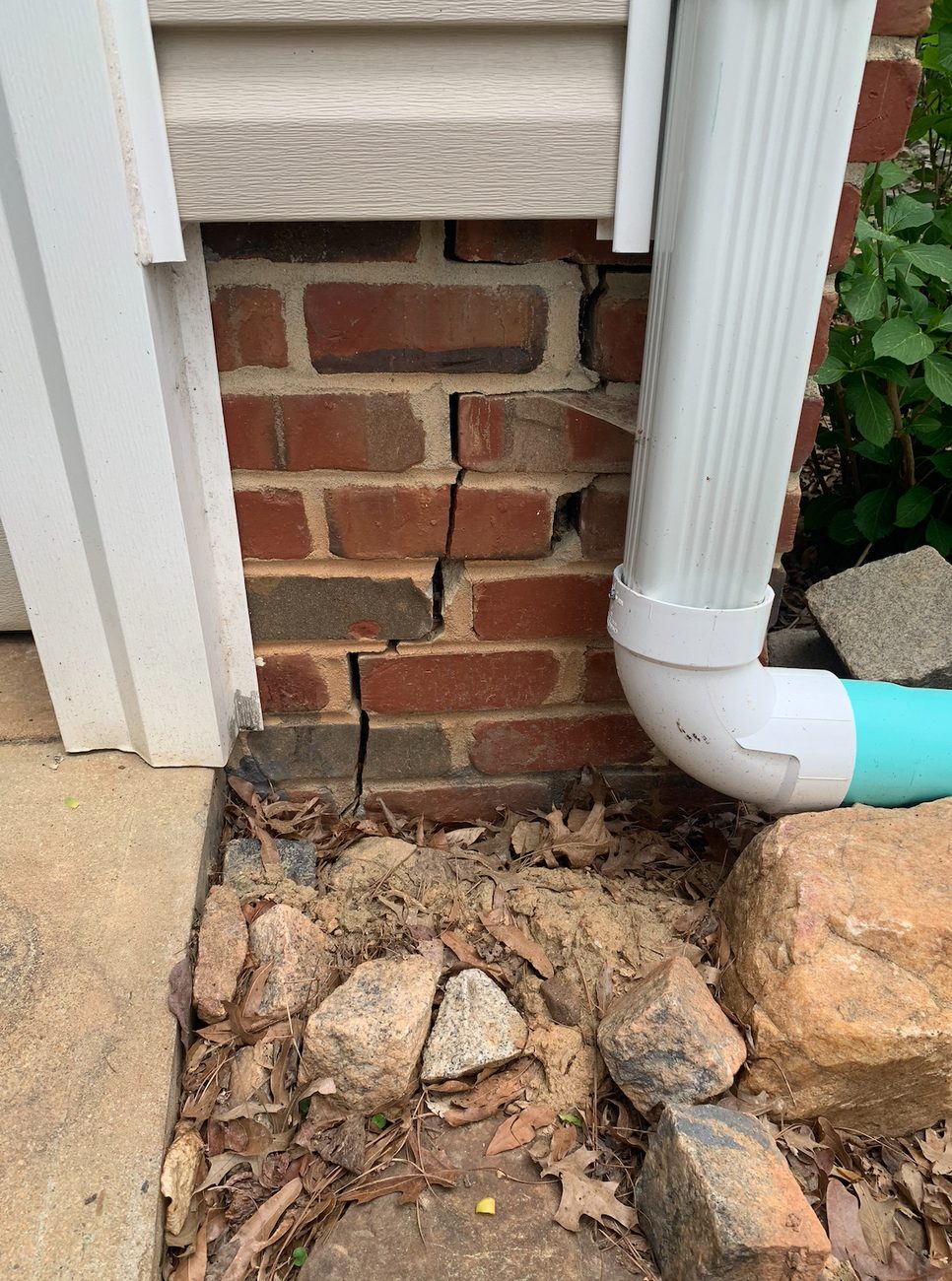
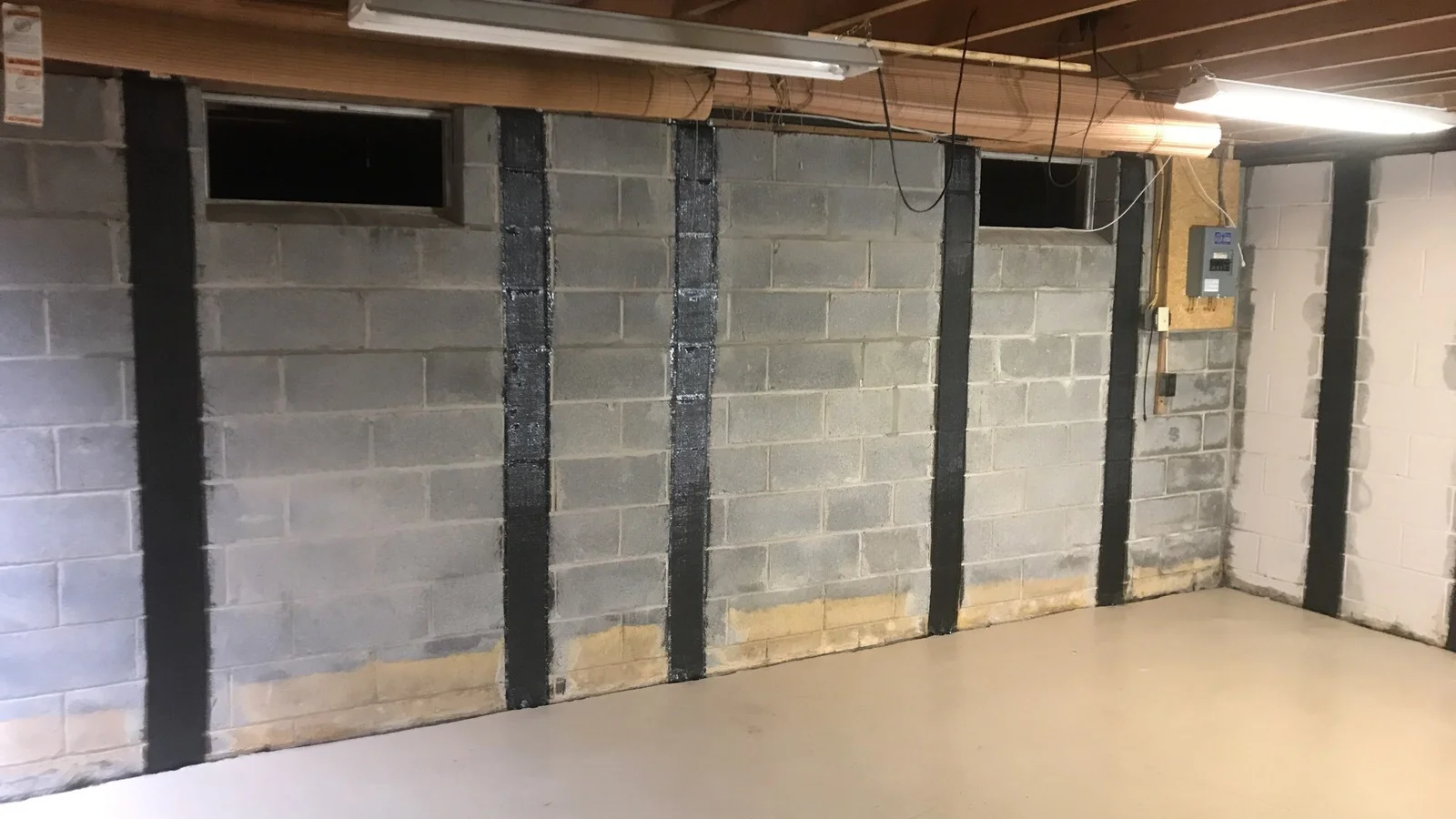
Cracks in poured walls injected and sealed all the way through, and block walls closed and reinforced so they stop opening again. A cracked foundation tells you which it is.
Learn moreA thin vertical line in a poured wall in Peachtree Hills is usually shrinkage left over from the concrete curing. It weeps after a storm and it stains the paint, but it is not going anywhere, and treating it as structural is how people pay for work they never needed. Honest solutions cost less in the end.
Foundation crack repair treats those by injecting resin under pressure so the material fills the crack front to back and bonds the two faces, rather than sitting in the first half inch like a patch does. Block walls are different: the crack follows the joints, so the fix is closing it and adding reinforcement across it so the wall stops flexing. Basement wall crack repair on block is about restraint more than filler. On a leaking crack the injection is taken from the inside face right through to the soil side, so there is no gap left for water to sit in and freeze. Concrete fills what the soil gave up.
What injection cannot do is hold a wall that is still being pushed, or close a crack that keeps widening because the footing under it is dropping. Those need the movement stopped first. In East Atlanta we have turned down crack work for exactly that reason. The inspection is free.
Queen Foundation Repair handles the two things that go wrong under an Atlanta house: water arriving where it should not, and ground that has moved out from under a footing. We are a leading provider of foundation work across the city, covering foundation repair, basement waterproofing, crawl space encapsulation and french drain installation.
Most of what we get called to started small. A damp patch at the bottom of a basement wall that dried and came back, a crack in the block you could once cover with a thumb, a smell in the hallway that turns up after a storm. Left alone those get dearer, because the water behind them keeps arriving. Waterproofing has to come first.
So we look before we quote. From Buckhead across to Morningside, someone comes out, goes over the property inside and underneath, and tells you plainly what is happening and what putting it right involves. The price is in writing before work starts. If it is cosmetic, we will say so rather than sell you a repair you do not need. Commercial work runs the same way.
A lot of the houses here are cut into a slope, so one basement wall holds back a hillside while the other opens onto the yard. You can see everything Queen Foundation Repair does across Georgia. Licensed and insured, the warranty moves with the house if you sell, and the estimate is free.
Get your free inspection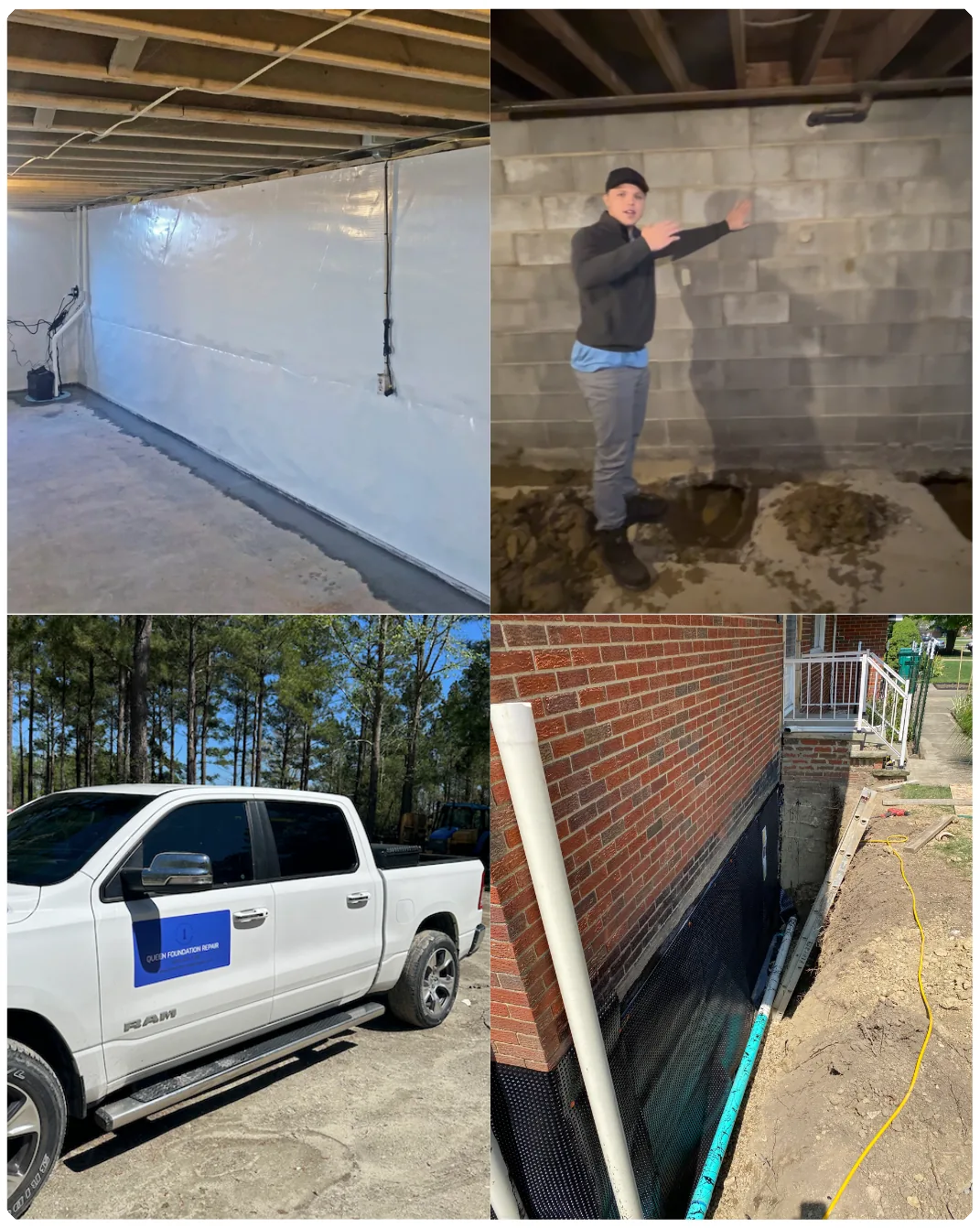
WHAT YOU GET
We pick up quickly and get out to the property fast, so you're not waiting weeks to learn what's wrong and what it costs.
No charge for us to come out, work out what's happening, and lay out what the fix involves. You know where you stand before deciding. Every home gets a written number.
Licensed, with full liability and workers' comp cover, so the work meets code and your property is protected if anything goes wrong. That covers every home we work on.
Every repair carries a written warranty that passes to the next owner, so it protects the value of the house if you sell.
A clear written price before anything starts. No vague ballpark, and nothing new appearing once a crew is already on the job.
From the hillside basements around Buckhead to the old crawl spaces in Grant Park, we are under these houses every week.
COMMON QUESTIONS
The questions we get asked most in Atlanta, from Buckhead down to Grant Park, and the honest answers. Prices are ranges because the real number depends on what is found. Pricing across GA follows the same logic.
What It Costs
It depends on what is actually wrong. A single crack injected in a poured wall is usually a few hundred dollars. Underpinning a settled corner runs into the low thousands, and a whole side of a house more than that. The honest answer is that nobody can price it from a phone call, which is why somebody comes out and looks first and puts the number in writing before any work starts. Two houses on the same street can differ by a factor of five depending on how far the movement has gone. Costs across GA sit in a similar range.
Most Atlanta crawl spaces land somewhere between about four and twelve thousand dollars, and the size of the footprint drives it more than anything else. A dehumidifier adds to that. If there is standing water down there, drainage has to go in first, and that is a separate line rather than something hidden inside the encapsulation price. Older houses in the intown neighborhoods often need debris cleared and a few joists dealt with before a liner can go down, and that shows up as its own line rather than a surprise at the end. You see what each of the solutions costs.
Interior drainage is generally priced by the running foot of wall, so a single wet wall costs a fraction of doing the full perimeter. Digging the outside face is the more expensive route and is only worth it when the wall itself is the leak. You get told which one your house needs. Both are real issues with real solutions.
Is It Worth Doing
If something is still moving, yes, because the bill grows with it. A crack injected now costs a fraction of the underpinning it turns into if the corner keeps dropping. But plenty of what we look at is not moving at all. The test we use is whether it has changed: wider than last year means it is live and worth dealing with, unchanged through several wet seasons means it is history rather than a problem. A home with documented work sells easier.
It is if the space is genuinely wet, because the damp is feeding rot in the joists and pushing humid air up into the rooms above. It is not worth it as a precaution on a crawl space that is already dry. We would rather tell you that than sell you a liner you do not need. The thing most people underestimate is that a good share of the air in the house comes up from that space, so it is a comfort and air quality decision as much as a structural one. Concrete floors handle it differently.
You can seal a hairline crack in a poured wall with a kit and it may well hold, particularly if it is shrinkage from the concrete curing rather than movement. What a kit cannot do is fill the crack through its full depth or tell you whether the wall is still moving. If it reopens, that is your answer.
How Long It Lasts
Underpinning is meant to be permanent, because the load ends up on ground that does not move. The part that fails is usually the drainage around it, so a repair holds for as long as the water is kept away from the footing. That is why the grading gets looked at in the same visit. Small moisture issues get caught early that way.
The liner itself lasts decades. The dehumidifier is the part with a service life, and it needs the filter changed and a look at it once a year like any appliance. Left alone entirely, a system will drift out of condition, so it is worth a check each year. Small issues stay small that way.
Every repair carries a written warranty, and it transfers to the next owner if you sell the house. That matters more than it sounds, because a buyer's inspector will find the repair and the paperwork is what turns it from a red flag into a solved problem. Buyers across GA ask for that paperwork.
Insurance
Usually not. A standard policy excludes earth movement and gradual water, which covers most of what causes foundation trouble here. What does get covered is sudden accidental discharge, so a pipe that bursts under the slab has a real claim path. It is worth reading your own policy rather than assuming either way. Policies differ by carrier across GA.
Not as a rule. Insurers treat it as maintenance rather than damage, because the moisture built up over years instead of arriving in one event. If a burst supply line flooded the crawl space, the water damage from that may be claimable even though the encapsulation itself is not.
Groundwater and seepage through a wall are excluded on a standard policy. A sewer or drain backup is often available as an add-on and is worth having. Surface flooding needs separate flood cover entirely. Georgia has no state program that fills these gaps, so the policy you hold is the whole answer.
Why It Happens in Atlanta
This is the one thing almost everyone in this market gets wrong. The red clay here is the Cecil series, and the USDA rates it as clay that barely moves when it gets wet. It does not puff up and shove a wall. What it does is hold water and drain slowly, so rain sits against the foundation instead of soaking away. The damage is water, not swelling, and it matters because the two problems have completely different fixes. Telling them apart is most of foundation repair.
Because Atlanta is built on a ridge and everything drains away from it, so nothing here floods from a river rising. What arrives at your wall is the rain that landed on your roof, your drive and the lots above you, all at once. The ground cannot take it that fast, so it runs downhill and stacks up against whatever is buried. It also explains why fixing a downspout sometimes solves the whole thing, and why a dry spell can make a real problem look like it has gone away. Real solutions do not hide anything.
Most houses on the hilly north side are cut into a slope, which means one wall is holding back a hillside while the opposite wall opens onto the yard. Water moving downhill only ever reaches the buried side. That is why the fix is usually aimed at one wall rather than the whole perimeter. Foundation repair scoped that way costs less.
Practical Questions
Some of it genuinely stays put for years and costs you nothing. Water is the part that does not wait, because a wet crawl space keeps working on the joists and a wet basement keeps working on the block. If you are unsure which you have, that is exactly what a free inspection is for. Every home gets the same read.
Any of it, honestly. Georgia winters are mild enough that work does not stop, and the ground rarely freezes deep enough to matter. Long wet spells make drainage work messier but do not prevent it. Waiting for perfect conditions costs more than working in imperfect ones. Good solutions account for that.
Where the work requires one, yes. Structural repairs and cutting an opening in a foundation wall are permitted through the city or the county, depending on which side of the line the house sits. Underpinning and drainage often are not. You get told which applies before anything starts. No surprises once solutions are agreed.
WHERE WE WORK
We cover the whole Atlanta area, not just the addresses inside the city line. That takes in the hillside basements around Buckhead and Morningside, the older crawl spaces east of downtown, and streets like Virginia-Highland in between. It runs out past the perimeter wherever a house needs looking at. We cover the metro and out into GA.
ZIP CODES WE COVER
Ready to Get Started?
No obligation, fast and easy.
We appreciate you reaching out.
One of our team members will be with you shortly.