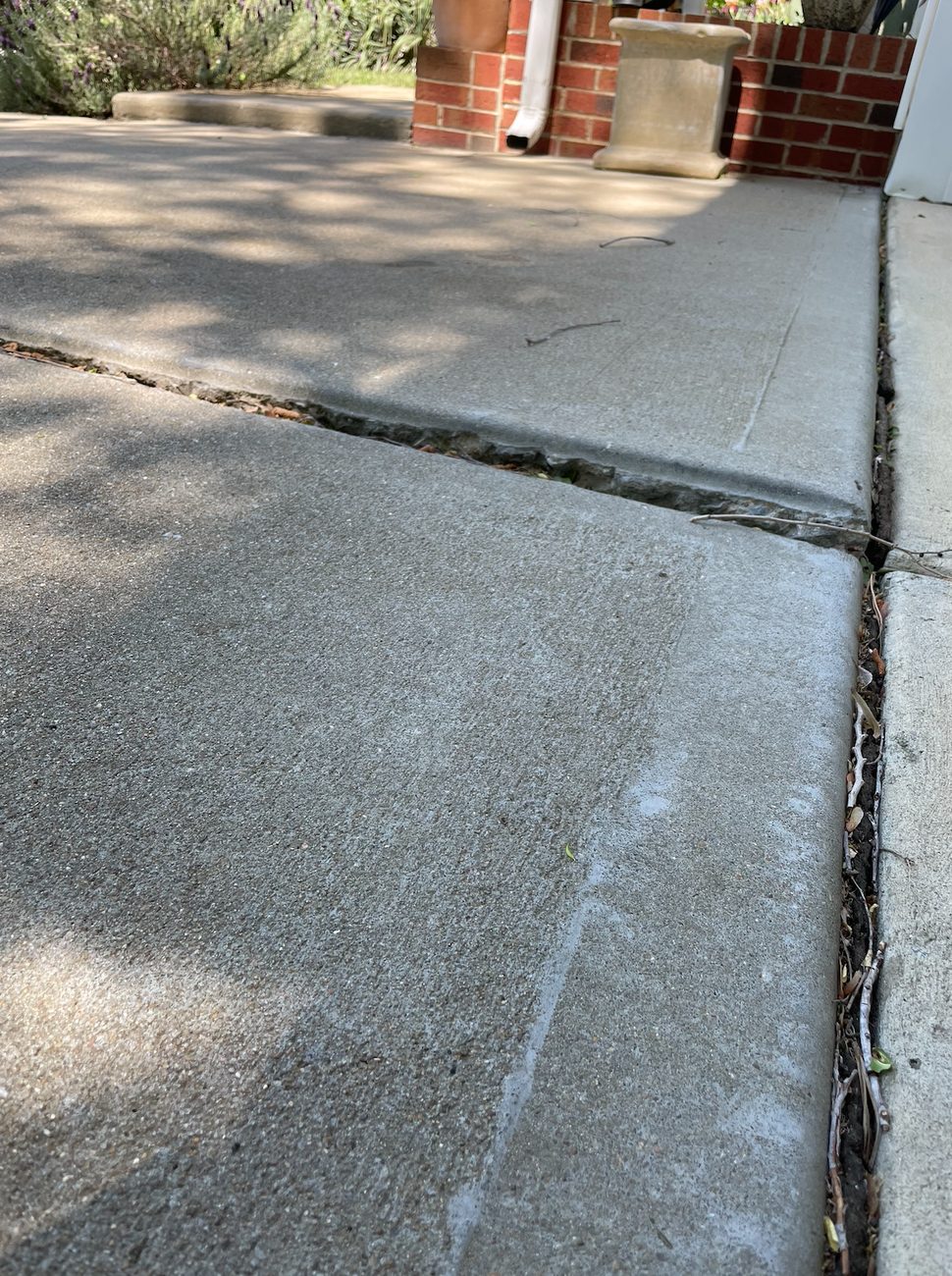
Floors that sink a little when you step on them, a smell that comes up from the crawl space, water across the basement floor after a hard rain. We handle foundation repair, crawl space encapsulation and basement waterproofing for homes from Grandin Village to Raleigh Court. The inspection is free.
Get Your Free Inspection
We appreciate you reaching out.
One of our team members will be with you shortly.





WHAT TO LOOK FOR
Roanoke houses sit over crawl spaces and basements both, so what people call us about splits two ways. Floors and smells from underneath, water and walls from below grade. Here is what comes up most, and what each one usually means.
The support below has let go
A floor only holds its shape while what carries it does. When a post or a beam settles, the floor takes the same line and stays there.
Damp ground, not dirty air
Bare earth under a house releases moisture constantly. It rises through the floor, so the smell shows up in rooms nowhere near the hatch.
It arrives from outside
Water builds in the ground around the house and comes in at the seam where the wall meets the slab. There is rarely one hole to point at.
The ground behind it got heavy
Wet soil weighs more than dry soil, and the wall gives where it is weakest. A level crack halfway up is the usual sign.
Which direction it runs matters
One running sideways means pressure from outside. One running straight up and down is more often the house settling into place.
It has nowhere to drain to
Ground here takes water fast and lets it go slowly. Whatever collects beside the wall ends up under the floor or through it.
Water still sitting against the house days after the rain is the cheapest thing on this list to put right, and often the one causing the others. It means the ground is not taking it away. A wall that has started to lean is further along, because the pressure has already moved something. Worth knowing which stage you are at before you spend anything, and that part costs you nothing.
Roanoke houses split between crawl spaces and basements, so this list covers both. Here is what each job is for, and when it is the one you actually need.
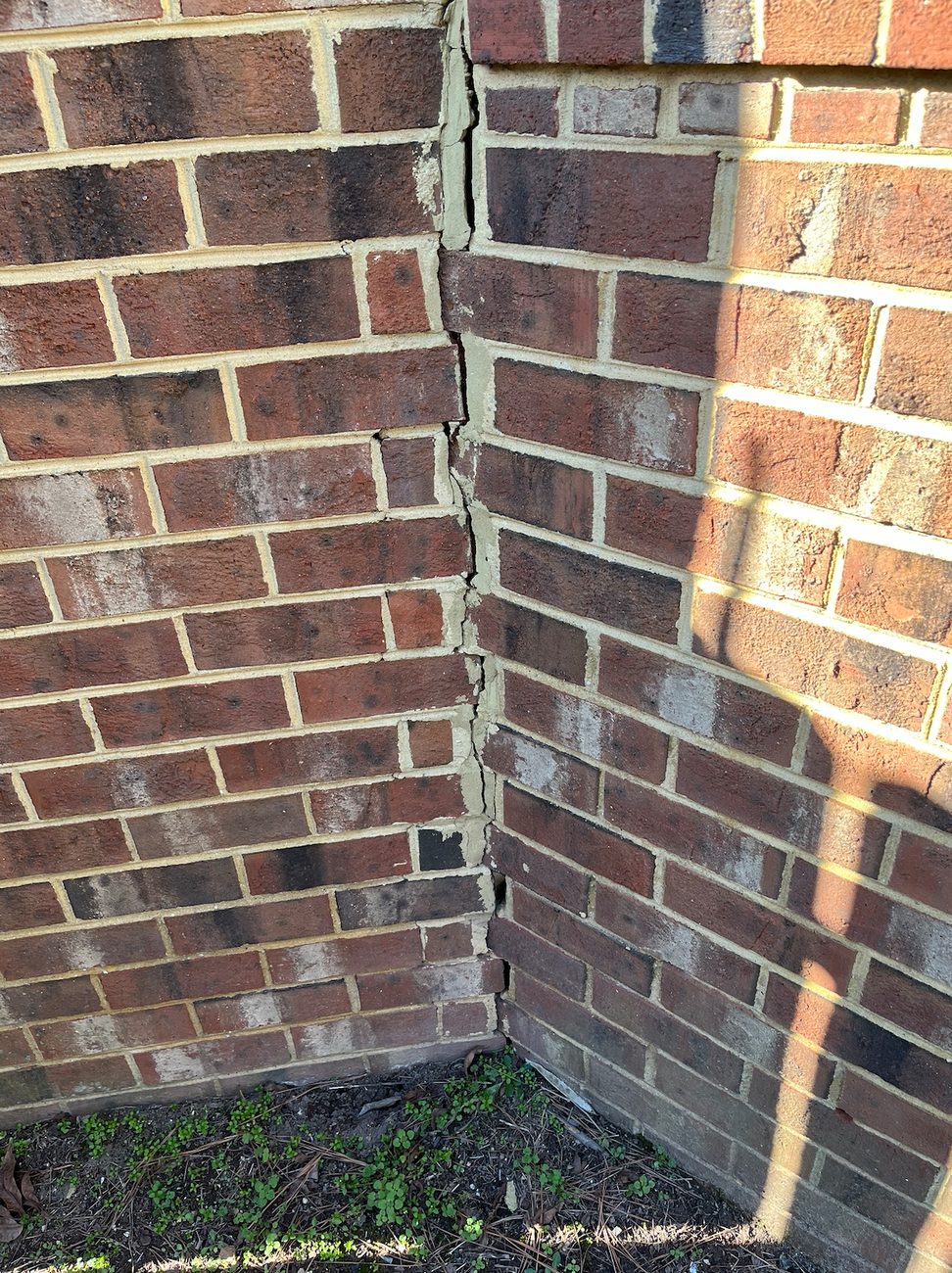
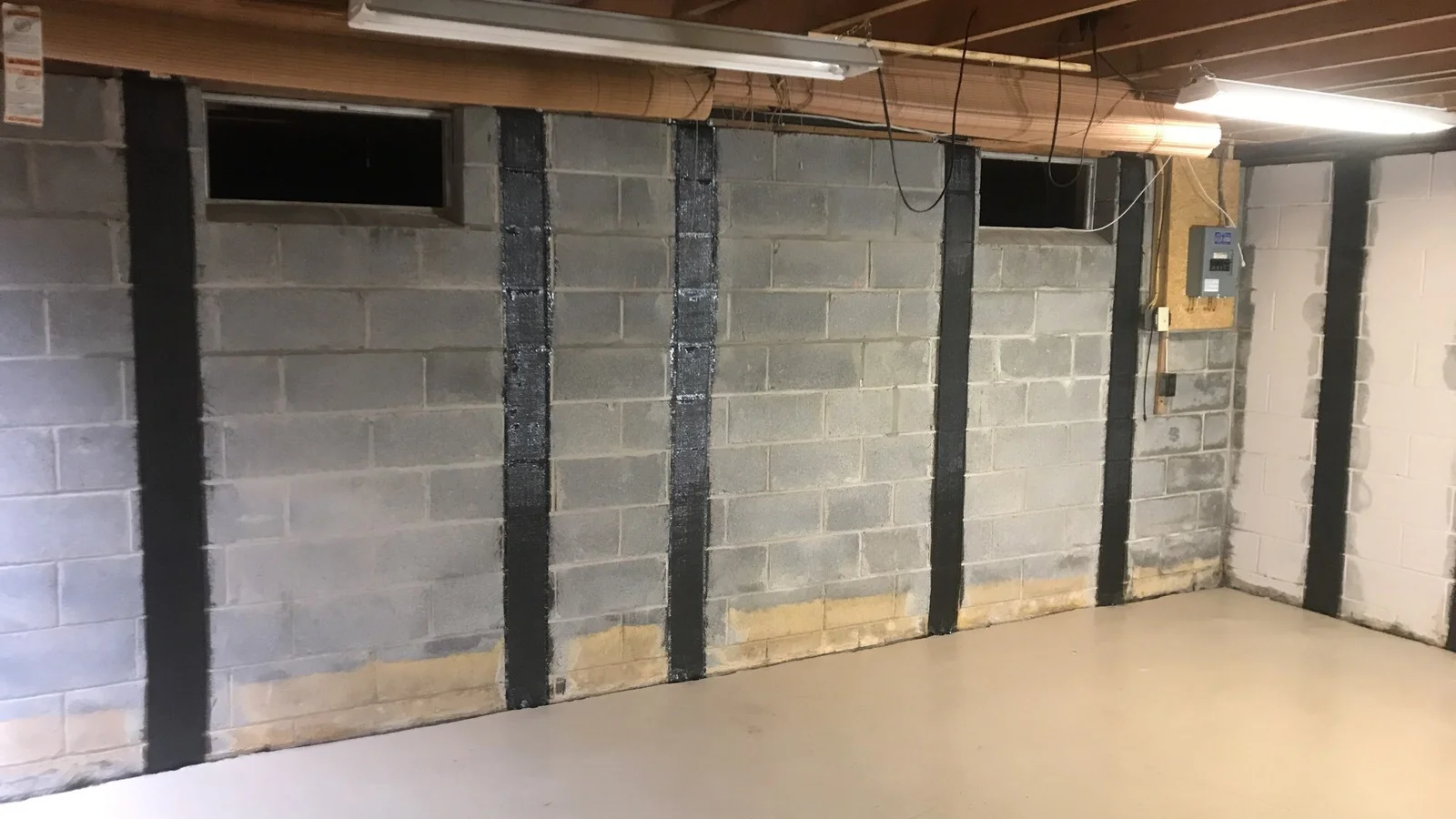
Sorts out the settling behind cracked brick, doors that stop closing and floors that run downhill, by whichever method the house needs.
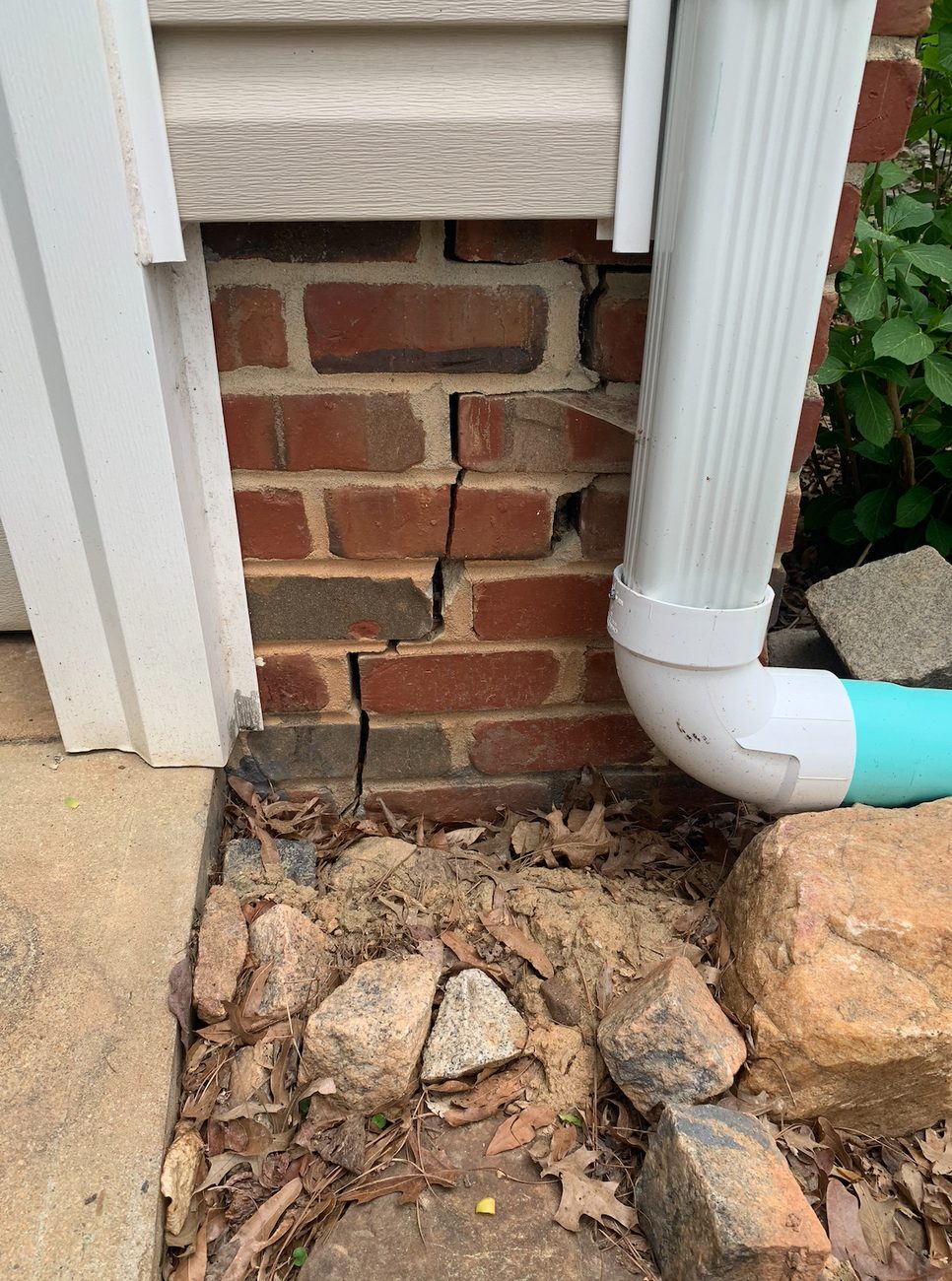
Learn moreThe signs turn up where you live, not where the problem is. A door that has stopped closing cleanly, a line opening between the ceiling and the trim, brick outside cracking on a diagonal. What sits behind all of it is one part of the footing having gone down further than the rest. Around Grandin Village the housing stock is old enough that some of this has been happening quietly for eighty years.
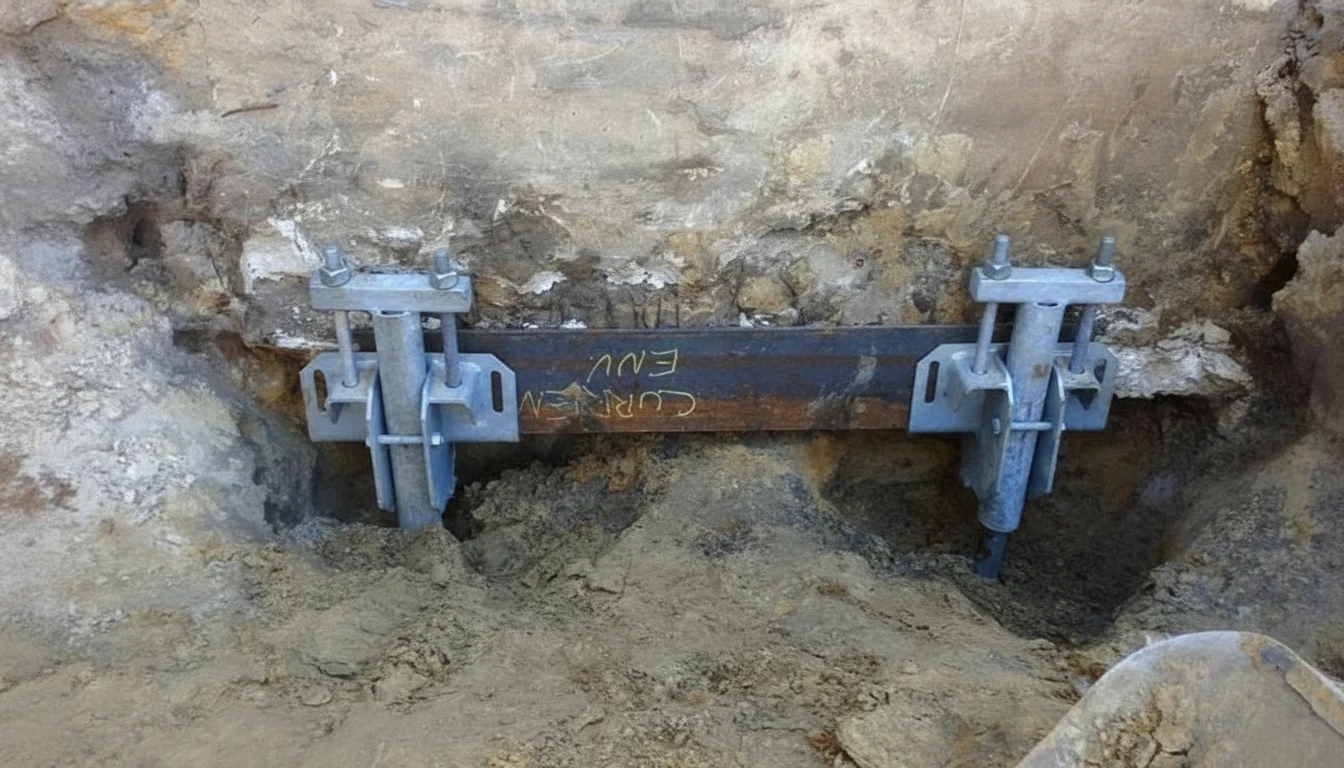
The repair stops the house depending on ground that already proved it would not hold. Support goes down through the soft layer to something that will carry weight, and the footing is handed across to it. Where a wall rather than a footing is the problem, it gets stabilised where it stands. Where the movement finished years ago and only the damage is left, filling and sealing is the entire job. Most houses want one of those three, and working out which is what the visit is for. Where a corner has dropped visibly, some of it can be recovered rather than only held. That goes slowly and across the whole run at once, because lifting one end alone twists the frame.
None of it dries the ground out. If water sitting in the soil is what let the footing drop, that gets handled alongside, or the same thing comes back around. Which is why we look at the slope and the drainage as hard as we look at the wall. Raleigh Court to Wasena, and the visit costs nothing.
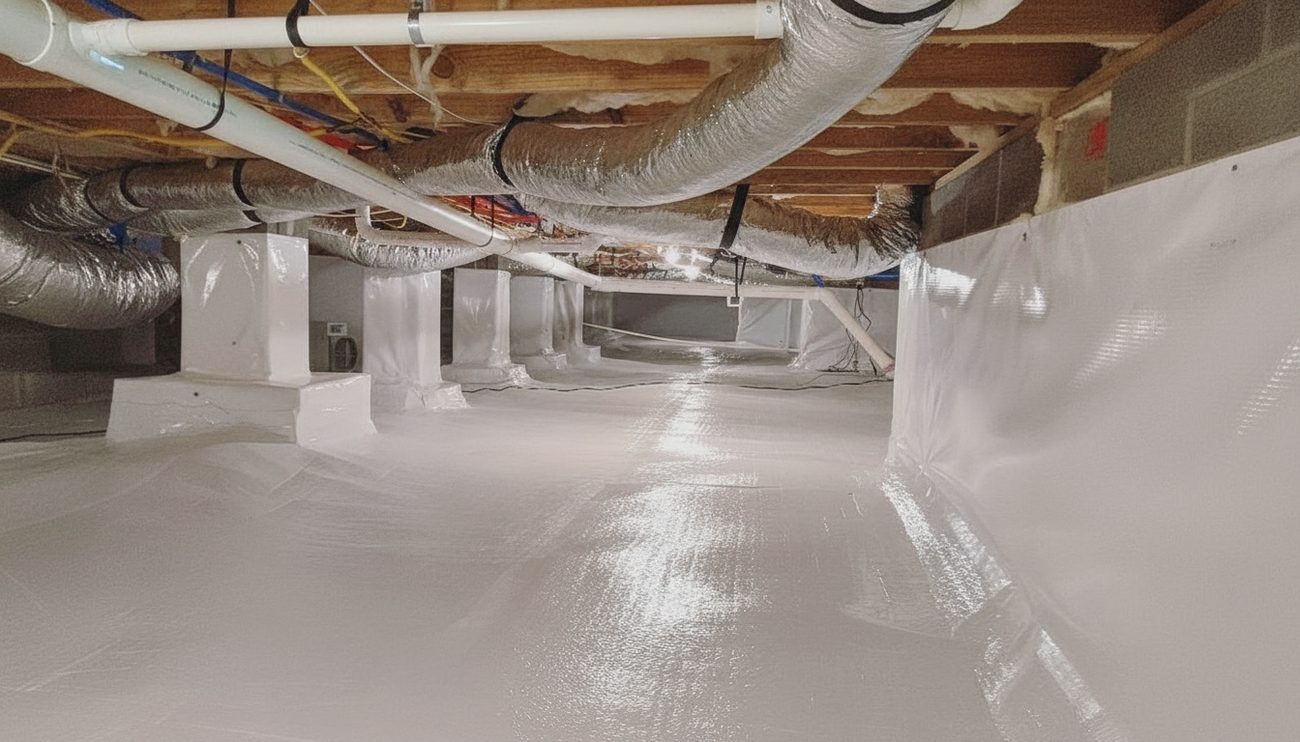
Dries out the space under the house properly, so the musty smell stops and the timber down there stops going soft.
Learn moreThis is the service Roanoke asks about more than any other, and people usually arrive at it sceptical. Fair enough, since half the internet calls it a gimmick. What it actually does is stop bare ground from feeding moisture into the house, which in a valley that drains slowly is a genuine and constant supply. The wood above soaks it up, the smell reaches the rooms overhead, and joists that were fine for decades start to go.
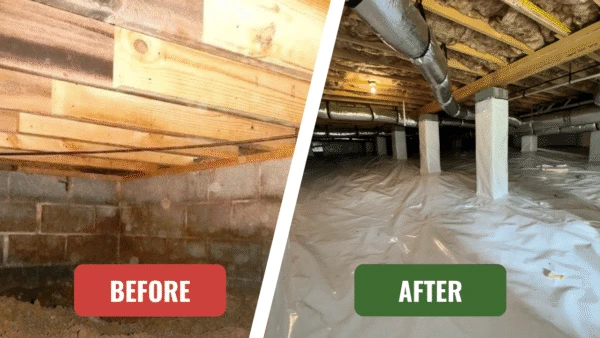
Sealing it means covering the ground completely rather than mostly. A heavy liner goes across the whole floor, up the piers and up the perimeter, taped at every seam and fastened at the top so no open joint is left anywhere. It carries over the footing instead of stopping at its base, because that ledge is where a lot of the damp was slipping through. Vents get closed, since outside air in a Roanoke summer delivers more moisture than it removes, and a dehumidifier sized to the space holds the rest. Where water is actually running under there rather than just sitting damp, drainage and a basin go in beneath the liner first.
It is not structural and it does not pretend to be. A floor already sagging needs new supports as well, and laying a liner over standing water only puts it out of sight. We check both while we are down there, and if your crawl space is genuinely dry we will tell you a barrier alone is enough. Grandin Village to Wasena, the inspection is free.
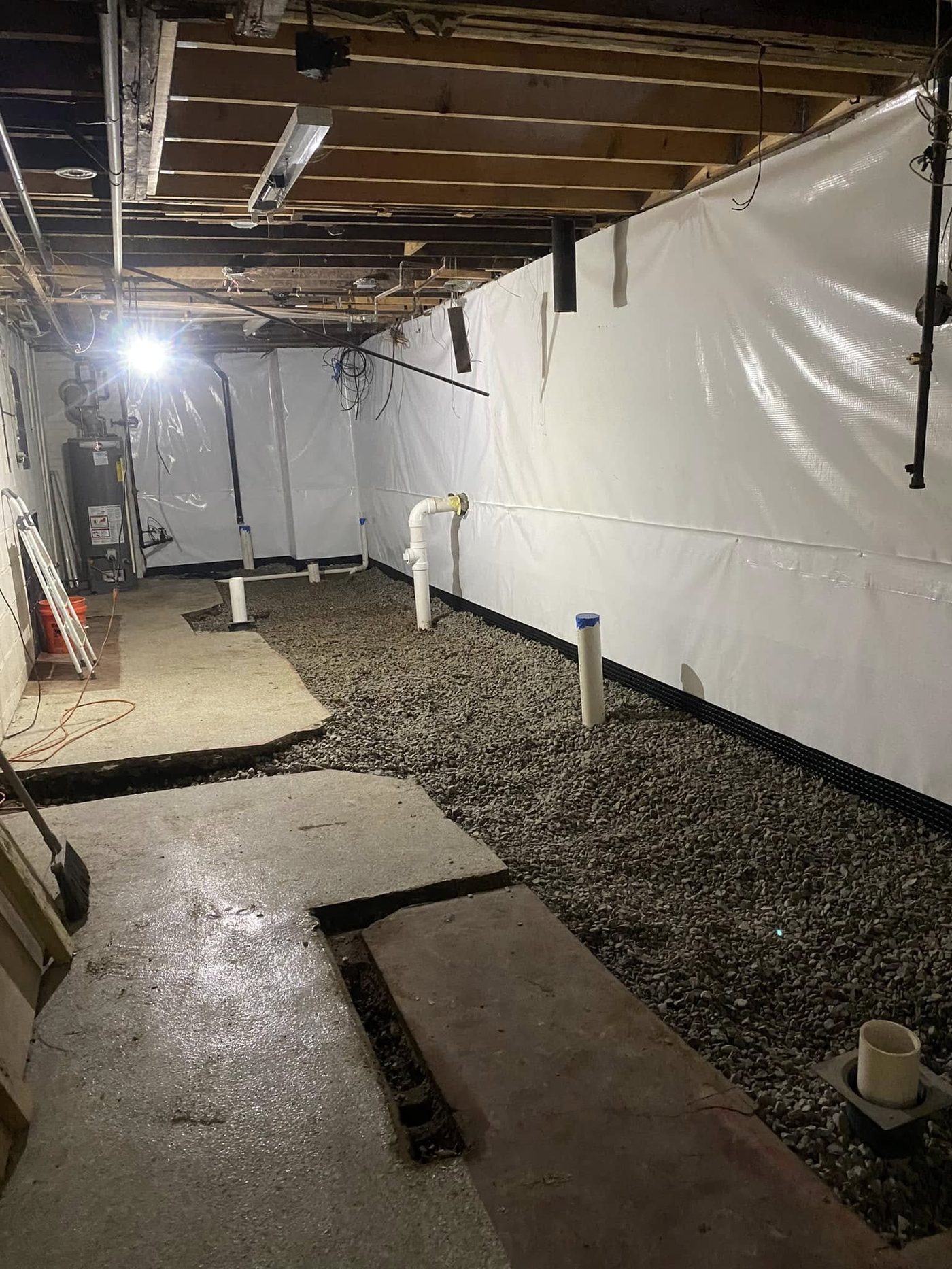
Keeps water off the basement floor for you, instead of mopping up after every storm that comes through the valley.
Learn morePlenty of Roanoke homes do have a basement, and the ones that take water almost never take it through a single hole. Soaked ground outside builds up pressure, works into the joint between wall and slab, and comes through wherever it meets the least resistance. That is why sealing the wet patch you can see moves the problem rather than ending it. In the older streets around Raleigh Court this shows up after any sustained rain.
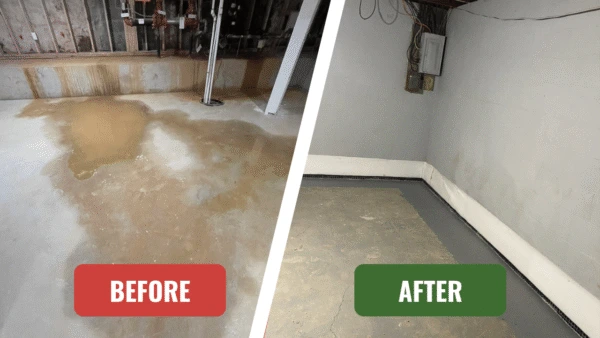
Waterproofing gives that water a route out instead of trying to hold it back. A channel opens along the inside edge of the slab, slotted pipe beds into clean stone below the level of the floor, and it all runs downhill to a basin where a pump throws it clear. Clean stone matters, not the spoil you just dug out, because the fines migrate into the slots and a silted-up drain stops working within a couple of seasons. Sheeting on the wall sends anything weeping through the block down behind it into the same pipe. Concrete goes back over the channel, so once it is done there is nothing to see. Where digging from outside is genuinely better we say so, though on most Roanoke lots it costs more than it saves.
It will not touch a plumbing leak and it will not cure condensation by itself. Damp smell with a dry floor points somewhere else entirely, so say so on the phone, because it changes the recommendation. Wasena to Grandin Village, the inspection costs nothing either way.
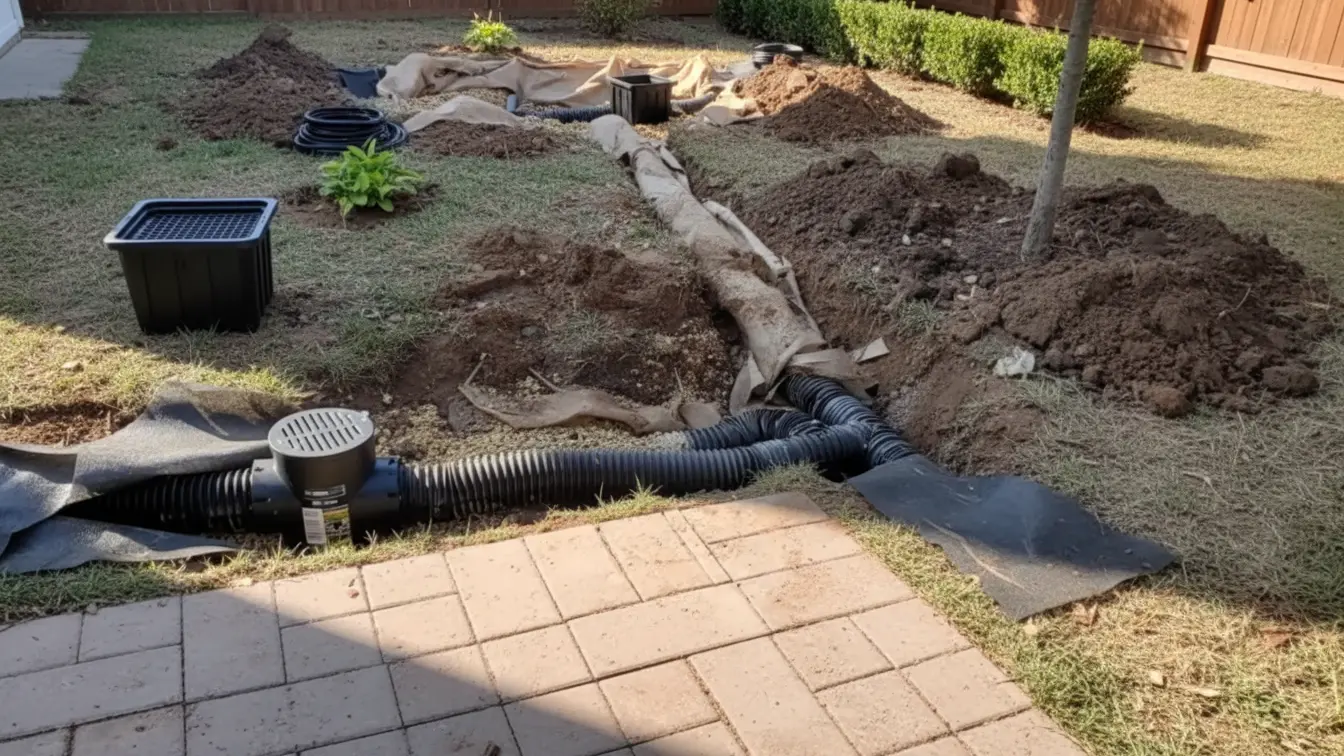
Takes the water that keeps collecting beside the house and carries it off downhill, somewhere it cannot do any harm.
Learn moreRoanoke sits in a bowl, and on a hillside lot the water arriving at your house came from somewhere above it. You see it as a strip of yard that stays soft for days, or ground that never fully dries along one elevation. Where a retaining wall is holding back part of that slope, it is doing drainage work whether it was built to or not, and when one starts leaning the water it was managing goes somewhere new. Around Wasena the grade makes this common.
Dig above the wet ground, line the cut so silt cannot blind it, run perforated pipe on a steady grade, and pack washed stone around the lot. Water moving through the soil meets the stone, drops into the pipe and leaves. Depth beats distance every time. The pipe belongs under the level the water is moving at, which means it follows the land's fall, not the line of your lot. Downspouts dumping at the wall get tied into solid line and carried well clear. Where it empties is as important as where it runs, because a pipe finishing in soaked ground has nowhere to leave anything.
This deals with groundwater and nothing else. Humid air in a crawl space is a separate job, and a failing retaining wall still needs rebuilding, though taking the water off it removes what was pushing. Sometimes regrading is the cheaper answer and we say so. Raleigh Court and anywhere else in Roanoke, priced free.
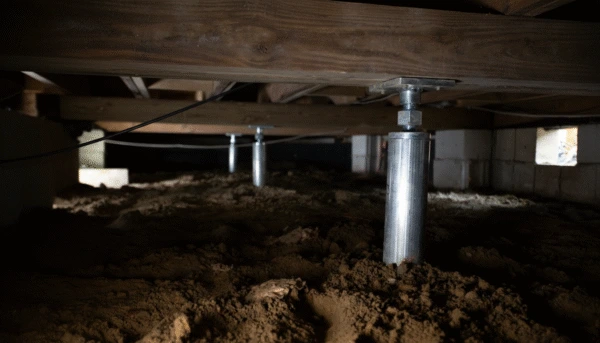
Puts the floor back onto solid support, so the sagging and the bounce stop instead of quietly getting worse every year.
Learn moreWhen a floor feels soft in one spot or slopes toward a wall, what it is telling you about is a few feet below. Individual piers press down into ground that was never firm, main beams lose their run between the points holding them, and joists that have breathed damp air for forty years are not what left the mill. Older sections around Grandin Village show this earlier than anything else does.
The repair rebuilds what carries the floor. Failed piers come out and adjustable steel columns go in on freshly poured footings, so the load sits on concrete rather than on dirt that already moved once. Girders come back up in small stages across several days, because lifting a floor quickly splits plaster and pops tile above it. Weak joists are doubled with fresh timber run beside them, and where an end has gone soft it is trimmed until solid and given something proper to sit on. A beam gone through entirely is replaced rather than jacked. Footings get poured under every new column rather than standing steel on bare earth, because a post on dirt works its way back down and you are here again in two seasons.
Raising a floor does nothing about what weakened it. Leave the ground down there wet and the new timber follows the old timber. We look at both together, and you get told plainly what needs doing now and what will keep. Wasena to Raleigh Court, the inspection is free.
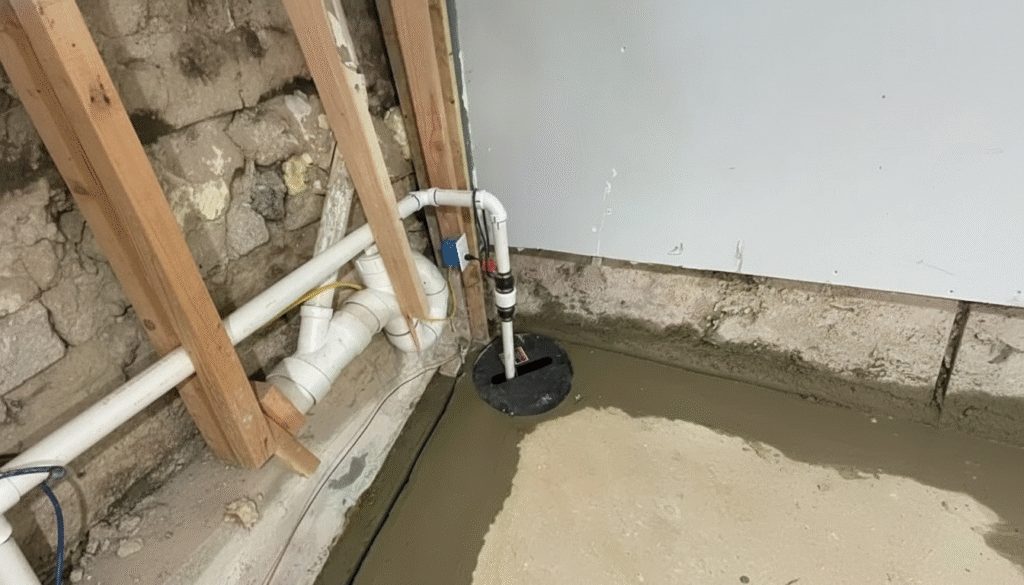
Gets out the water that everything else collected, and keeps running through the storm that would otherwise have flooded you.
Learn moreDrainage collects water and aims it somewhere. The pump is the bit that actually throws it out of the building. Most people meet theirs for the first time on the night it quits, in the middle of the weather it existed for. Age is nearly always the reason. A unit that grinds through every wet Roanoke spring is not a twenty-year proposition, and past seven or eight it is borrowed time.
It belongs wherever the floor drains to. The pit drops into that low spot so the surrounding pipework empties into it, and the pump stands on something firm inside rather than sinking into silt, which kills more of them than wear does. A non-return valve keeps the last liftful from sliding straight back down. Discharge has to finish far enough out that the water is not simply coming back, since ending it near the wall recycles the same water. Battery backup covers the power cut that arrives with the storm, and the float switch is worth choosing rather than accepting, since a tethered one in a narrow pit can snag on the side and never fire. Where a house has already flooded once, a second pump sitting a little higher in the same pit earns its place.
By itself a pump is not waterproofing. With nothing feeding the pit it will sit dry while the far corner floods. It is one component of something larger, and we look at what is already down there before suggesting anything. Wasena to Grandin Village, no charge for the visit.
Queen Foundation Repair is here to help with the structural side and the water side of the same house. We are a leading provider of foundation work across the Roanoke area, handling crawl space encapsulation, foundation repair, basement waterproofing, and french drain installation.
Most of what we look at starts small. A floor that sinks a little when you cross it, a smell coming up from the crawl space, water across the basement floor after a storm. Left alone those get more expensive, because whatever is holding water against the house carries on doing it while you decide.
That is why we look before we quote. Someone comes out, checks the house inside and out, and tells you in plain words what is happening and what it would take to fix. You get the price in writing before anything starts. If what you have is cosmetic, we will say so rather than sell you a repair you do not need.
Most of the houses we work on here sit in a valley that takes water quickly and lets it go slowly, over crawl spaces and basements both. We cover the whole area, from Grandin Village to Raleigh Court, and you can see everything Queen Foundation Repair does across Virginia. We are licensed and insured, the warranty stays with the house if you sell it, and the inspection is free either way. Call us and we will come and look.
Get your free inspection
WHAT YOU GET
We answer fast and get out to the house quickly, so you're not sitting for weeks just to find out what's wrong and what it'll cost.
No charge to have us come out, find what's going on, and lay out what the fix takes. You know where you stand before spending a dollar.
Licensed, with full liability and workers' comp coverage, so the work is done to code and your property is protected if anything goes sideways.
The repair comes with a written warranty that transfers to the next owner, so it protects your home's value if you ever sell.
A clear, written price upfront before anything starts, no vague ballpark and no surprise add-ons once the work is underway.
Roanoke sits in a bowl that takes water fast and drains it slowly, over crawl spaces and basements both. We are in them daily, Grandin Village to Wasena.
Four steps, and nothing happens to your house until you have agreed to a number in writing.
COMMON QUESTIONS
The questions that come up most on Roanoke jobs, answered without the sales pitch. Prices are ranges, and we have flagged where the honest answer is to leave it alone.
Crawl space encapsulation
It gets called one often enough that the question deserves a real answer. It is not, but it is oversold. Sealing the ground under a house genuinely stops a constant supply of moisture, and in a valley that stays damp that supply never lets up. Where it becomes a gimmick is when it is sold to somebody whose crawl space is already dry, or sold as a fix for a floor that is sagging, which it is not. If your space is dry we will tell you a barrier alone is enough, and if the floor has dropped we will tell you that needs supports instead.
Floor area drives it more than any other factor, and that is how most people picture it anyway. A modest space beneath one wing of a house sits at the bottom of the range. A full footprint with drainage and a dehumidifier is several times that. What shifts the number most is whether water is actually running under there, since that has to be dealt with before any liner goes down, and whether there is enough headroom to work in. We measure yours rather than quoting off a rate card.
The liner itself will outlast most of us if it was heavy enough and fastened properly. What needs attention over time is the dehumidifier, which is a machine like any other. Thin plastic laid loose is a different story and tends to tear within a few years of anyone crawling over it.
Vapor barriers and moisture
Over exposed soil, absolutely. Earth releases moisture without pause and the only direction available to it is upward, through the framing and into the house. Covering it cuts that off at the start, and doing so costs a small share of what tired joists cost to replace.
Material tough enough to take somebody's knees on it. The cheap poly sold by the roll rips the first visit a plumber makes, and torn sheeting is barely worth having down. Use reinforced stock, overlap and tape every joint, and fasten it so a season of traffic does not shift it out of position.
Take the moisture away and the odour follows. Scrubbing or fogging the space treats what you can smell rather than what is causing it, so it returns within a season. Realistically that is sheeting over the soil, stopping whatever water is arriving, and a dehumidifier managing the remainder. Dry space, no smell.
Wet basements
Because the water is rising, not leaking. Saturated ground beneath the slab pushes up through the seam at the base of the wall and, given enough pressure, through the concrete as well, which is why there is never a hole to show anyone. It appears after a downpour and takes days to clear. Drainage inside the wall line solves it by handing that water an easier exit than your floor.
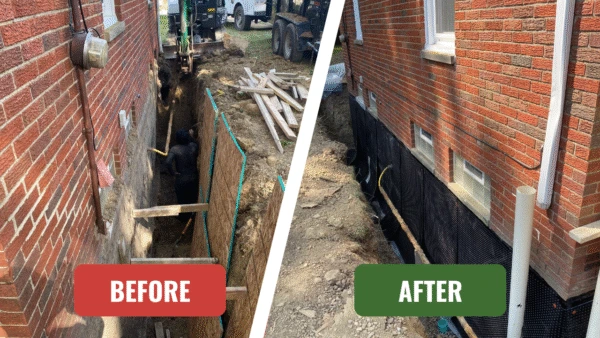
Start outside, because that is usually cheaper. If a downspout is discharging at the wall, or the ground slopes back toward the house, correcting that is the cheapest job on our list, and now and then it is the entire fix. If water is already coming through at the floor joint, interior drainage with a pump is the reliable fix and costs less than excavating the outside of the wall. Exterior waterproofing is the most thorough and the most expensive, and on most Roanoke lots it is not the first thing to reach for.
Yes, though some of the finish has to come off. Interior drainage runs at the base of the wall, so the bottom of the wall covering and the flooring in that strip need lifting. It is disruptive rather than impossible, and it is why we would rather look before anyone starts finishing a basement.
Bowing walls and cracks
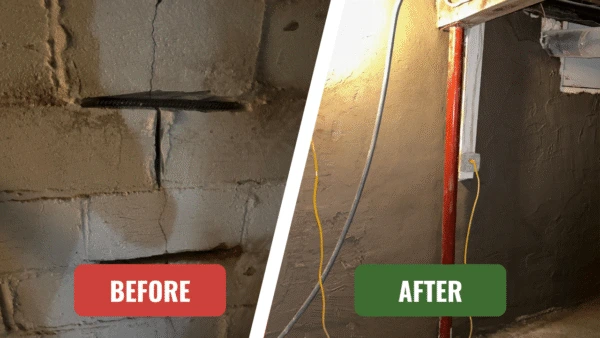
Weight from the soil behind it. Wet ground is heavier than dry ground, and in a valley that holds water for days that load stays on the wall longer. It gives at the middle of its height, which is why the tell is a level crack about halfway up.
Any inward movement is worth measuring rather than ignoring, but small deflection is common and stable in plenty of houses. What matters is whether it is moving. Mark the bulge, note the date, and look again in a few months. Growth is the signal, not the number on its own.
Inside, for most cracks, and it is not a compromise. Injecting resin from inside fills the crack through the full thickness of the wall, which is what actually stops it passing water, and it costs a fraction of digging the outside out. Exterior work earns its keep when the wall needs waterproofing along its whole length anyway, or when it has moved far enough to need straightening. Anyone insisting every crack needs excavation is quoting the expensive option by default.
Retaining walls
Often, depending on what has gone wrong. A wall leaning because water has built up behind it can frequently be saved by fixing the drainage and relieving that pressure. One that has cracked through or lost its footing usually needs rebuilding. On Roanoke's slopes the drainage is nearly always part of the story.
Usually not. Standard policies treat a retaining wall as an outbuilding or an attached structure and then exclude the causes that actually take them down: earth movement, water pressure, gradual deterioration and poor original construction. What might be covered is sudden accidental damage, such as a vehicle striking it. Policies vary more here than people expect, so read yours or ask your agent rather than assuming either way. We can tell you what failed and why, which is what an adjuster will want to know.
A short decorative wall, possibly. Anything holding back real weight is a different job, because the part that matters is invisible: the drainage behind it and what the base is sitting on. Walls rebuilt without both usually lean again within a few seasons.
Sagging floors, cost and timing
They can, and you notice the result the moment you walk on it. What happens underneath is that failed supports come out, new ones go in, and more get added where the span was always too long. A dropped beam is brought back in small increments over several visits rather than jacked in an afternoon, because rushing it cracks the ceiling and lifts tile in the room above. Softened joists get partnered with fresh timber. One caveat: a floor that settled forty years ago rarely returns to dead flat, and steady beats flat.
Wide, and anyone narrowing it before looking is inventing a number. The term covers jobs with almost nothing in common. Filling one crack is a couple of hundred. Putting drainage and a pump around the inside of a basement lands in the low thousands, moving with how much of the perimeter is involved. Holding up a footing on piers is the top end and gets into five figures on a bad one, because you are paying per pier and per foot of depth. Nobody can price that down a phone line.
Anything below the floor or inside the walls carries on regardless of the calendar, so no season needs waiting out. Only the exterior digging cares about weather, and around here that shifts a date rather than a month. Sorting drainage ahead of a wet run beats sorting it in the middle of one.
AREAS WE SERVE
We work the entire Roanoke Valley rather than stopping where the city ends. Crawl space encapsulation, foundation repair, basement waterproofing and french drains, either side of the river and up the hillsides with it. Spot your neighborhood on the list, or one bordering it, and the visit costs you nothing.
Roanoke ZIP Codes We Cover
Ready to Get Started?
No obligation, fast and easy.
We appreciate you reaching out.
One of our team members will be with you shortly.