A floor drain that backs up in heavy rain, an inch of water across the basement floor after a storm, new cracks by the basement window. From Logan Square over to Bridgeport we handle basement waterproofing, foundation repair and sump pump installation, and the inspection is free.
Get Your Free Inspection
We appreciate you reaching out.
One of our team members will be with you shortly.





WHAT TO LOOK FOR
Most of the ground here is heavy clay that will not take a downpour, the land is flat, and the sewer under the street is a hundred years old. Plenty of basements go their whole life without trouble. The ones that do not usually show it like this.
The sewer is full before you are
Water rising out of the floor drain, or a basement toilet bubbling first. When the sewer in the street fills, the lowest drain on it is yours.
The ground gave it nowhere else
An inch across the floor after a storm, or water tracking along a wall. Clay that will not take rain sends it to the lowest opening it finds.
The opening is the weak spot
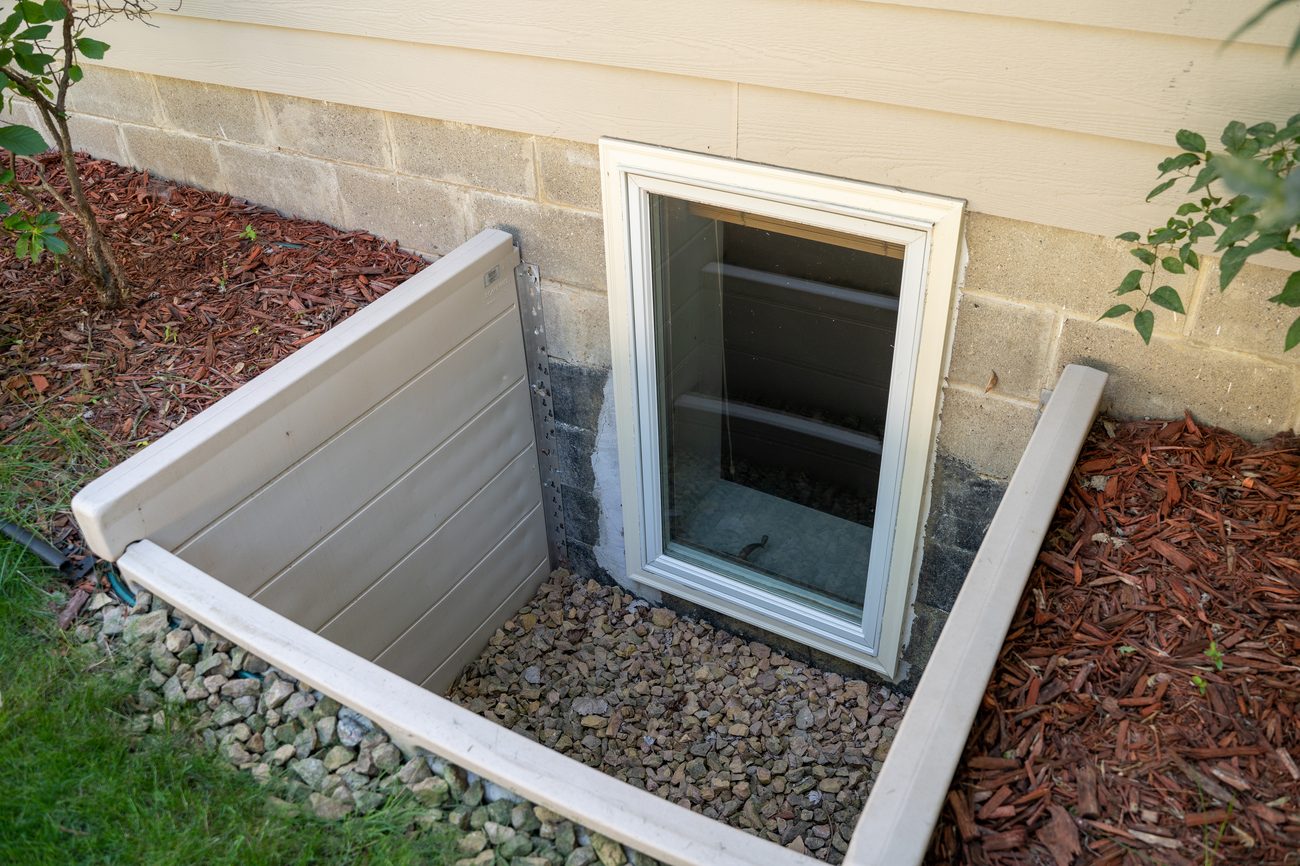
Cracks running out from the corners of a basement window, or one that has widened since spring. Walls give at their openings before they give anywhere else.
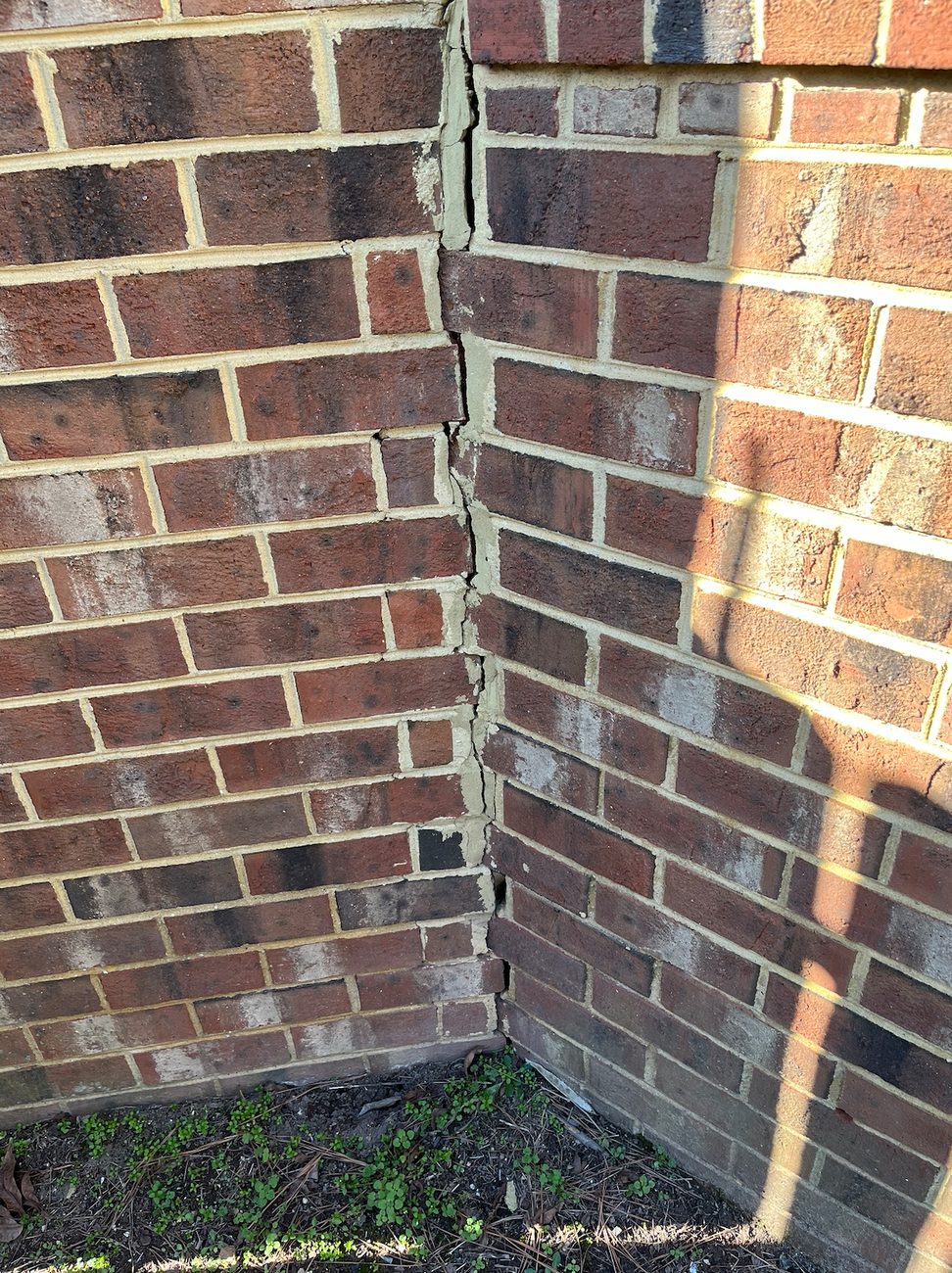
The joints go before the brick
Mortar you can dig out with a screwdriver, usually low down and on the wall that gets the weather. In brick this old the joints fail first.
Wet ground is leaning on it
A wall that is no longer flat, or a course sitting further in than the ones above it. Saturated clay outside pushes sideways with real weight behind it.
It is undersized for this storm
A pump cycling every few minutes, or one running flat out and still losing. On a flat lot water arrives faster than a small pump can move it.
Some houses get one of these. Bungalows that have been here a hundred years often get three at once. A drain backing up and a basement flooding in a storm are usually the sewer, not the walls. Cracks by the window, soft mortar and a wall coming in are the building itself. The two need different work, and sometimes the first one is a plumber rather than us. Someone comes out and tells you which, at no charge.
From a floor drain that backs up every storm, to a wall that has started to come in, to a sump that cannot keep up, these are the calls we get across Chicago. Tap any of them to see what the work actually involves.
Keeps the storm water out of a finished basement, and works out first whether it is coming through the wall or up the drain.
Learn moreA finished basement in Logan Square is somebody's spare room until the June storm that puts an inch through it. What makes this city awkward is that the water has two ways in. It comes through the wall from ground that will not drain, and it comes up the floor drain when the sewer in the street runs out of room. People here usually arrive having already read up on interior systems, which is fair, because that is only half the answer.
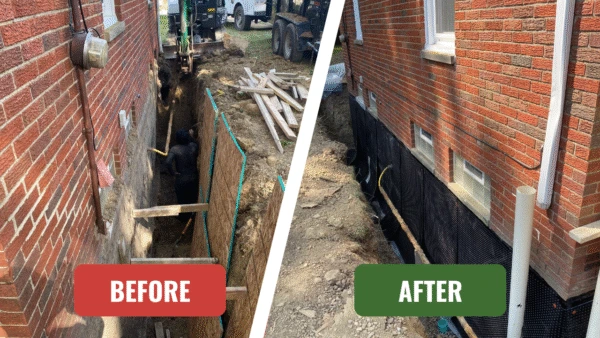
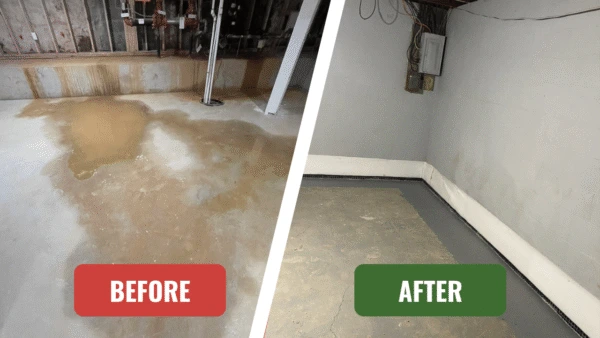
The inside work handles the wall side. A channel at the base of the wall collects what comes through the footing joint and carries it to a pump instead of across the floor. Outside, grading and downspouts get corrected so roof water is not being added to ground that cannot take it. On a wall genuinely passing water, and where a dig is possible on a city lot, a membrane goes on the outside face.
None of that stops a sewer backing up, and we will say so plainly when that is what you have. In Bridgeport it turned out to be the sewer rather than the walls, and saying so cost us the job. The inspection is free.
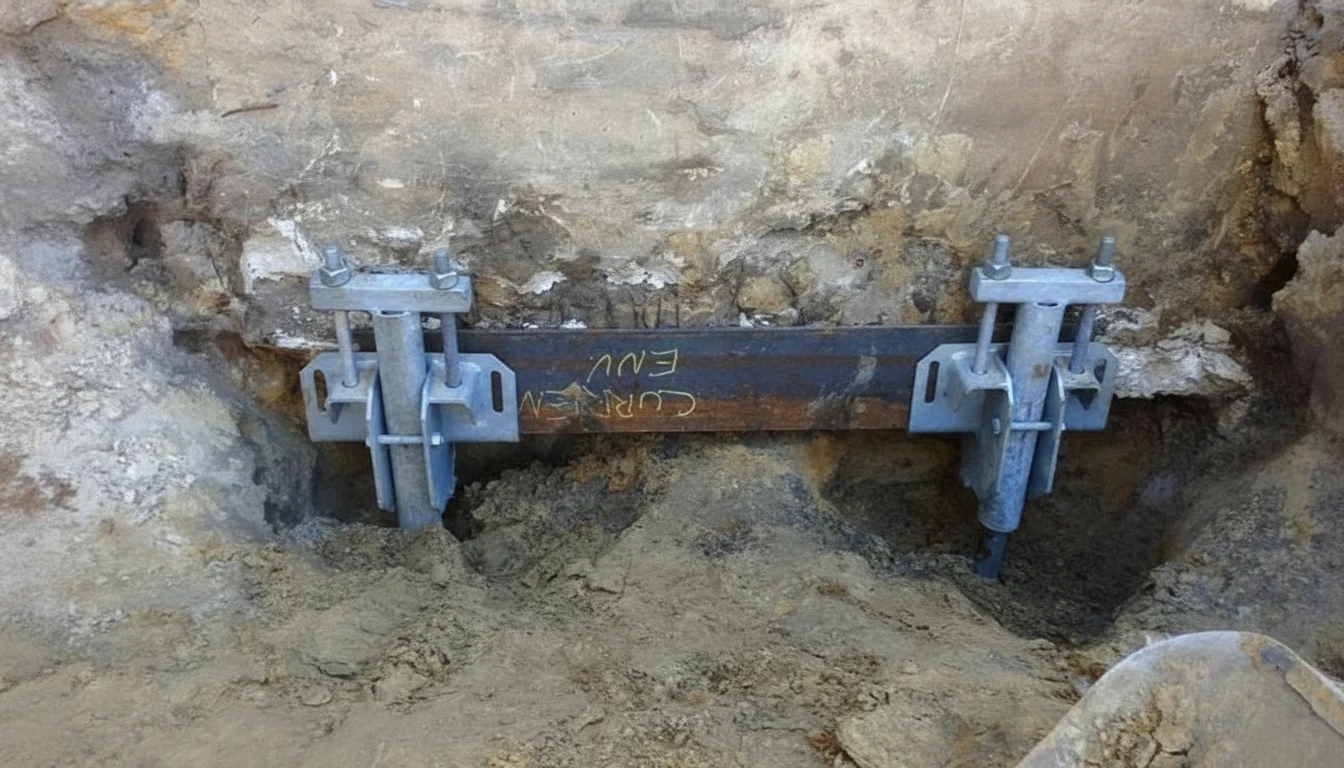
Puts a footing that has dropped back onto ground that will carry it, and stops the cracks and sticking doors upstairs from getting worse.
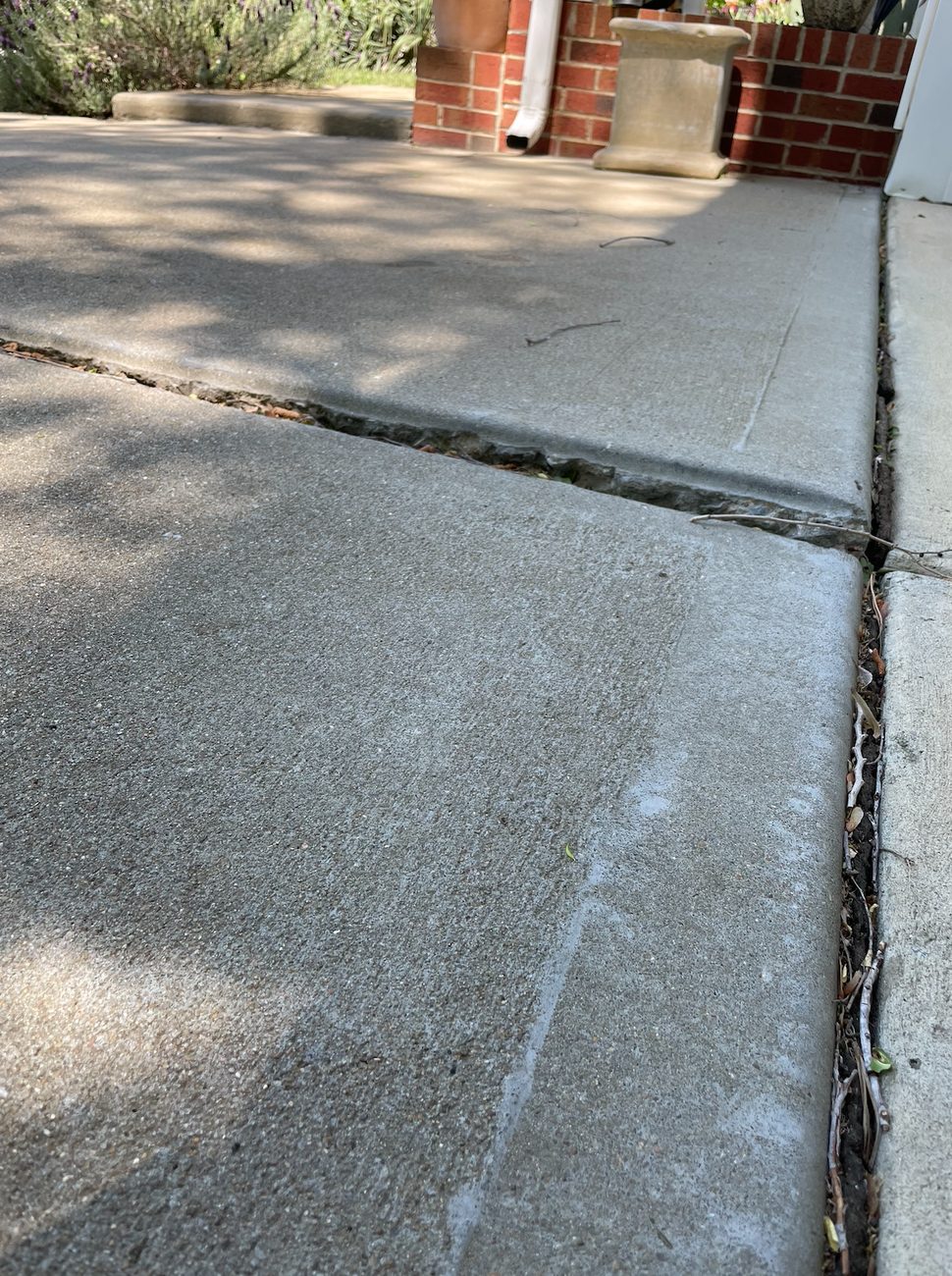
Learn moreChicago houses are old and a good many of them sit on made ground, filled and levelled long before anybody was checking what went into it. A bungalow in Portage Park that has been fine since the 1920s can start moving because a footing has finally found the soft spot underneath it. Upstairs you see it first: a door that stopped latching, a crack out of a window corner, a floor off level in one room.
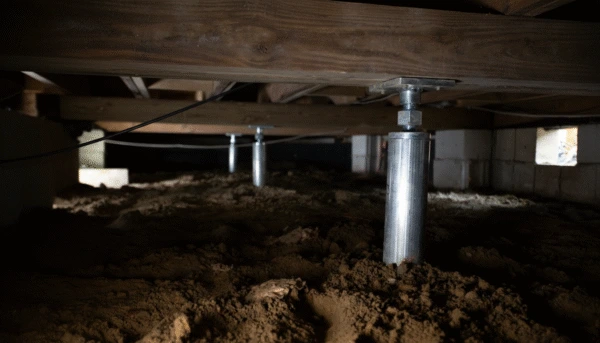
Underpinning is the usual answer. Supports go down until they reach ground that will carry the load, and brackets transfer the weight of the house onto them. Where the house can come back up, the lift happens in stages over a couple of days so old plaster and brick travel with it rather than tearing. Where it cannot, the house gets held where it is. A rebuilt footing, a new support beam or slabjacking are the right answer on plenty of houses instead.
Not every crack means a pier. In a house this age some of them stopped moving before you were born. In Albany Park we said exactly that and left. Someone looks before anyone quotes.
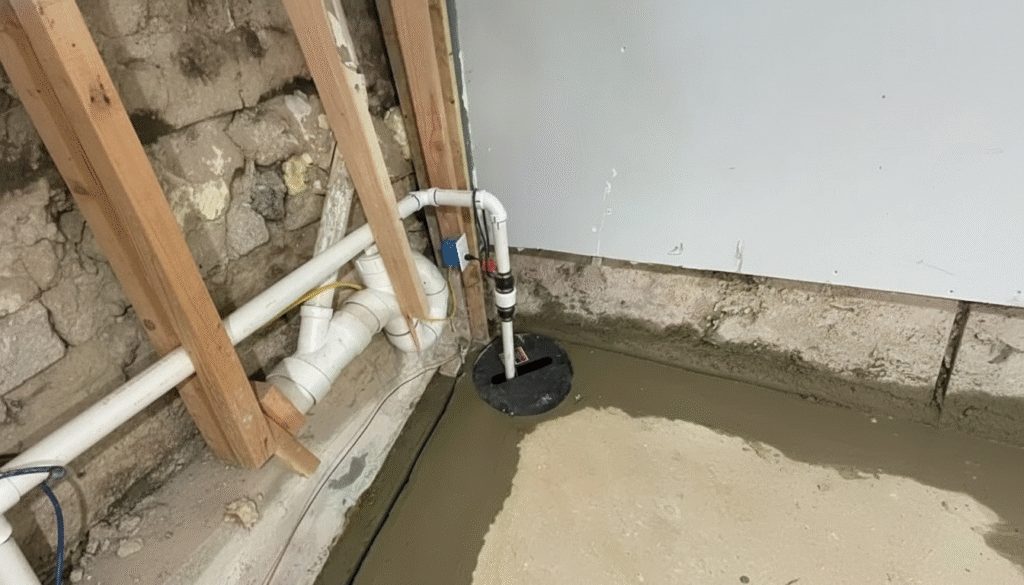
Moves the water a drain collects up and out of the house, and keeps moving it when the storm takes the power with it.
Learn moreThe storms that flood a Logan Square basement are the same storms that take the power out, which is why the pump that has coped for ten years fails on the one night it mattered. On a flat lot the water arrives all at once rather than trickling in, so what counts is how much the pump can move per minute and what happens when the electric goes.
The pit is cut at the low point and lined so the surrounding ground cannot wash into it. The pump sits on a solid base rather than in the silt, and a check valve stops the pipe draining back into the pit on every cycle. The discharge has to run well clear of the house and, on a city lot, not into the neighbor's gangway, which is a genuine constraint here rather than a nicety. A battery backup covers the outage.
Where a pump is cycling because a downspout is dumping at the corner, that is what we will tell you. In Avondale that has been the answer more than once. We will check yours for nothing.
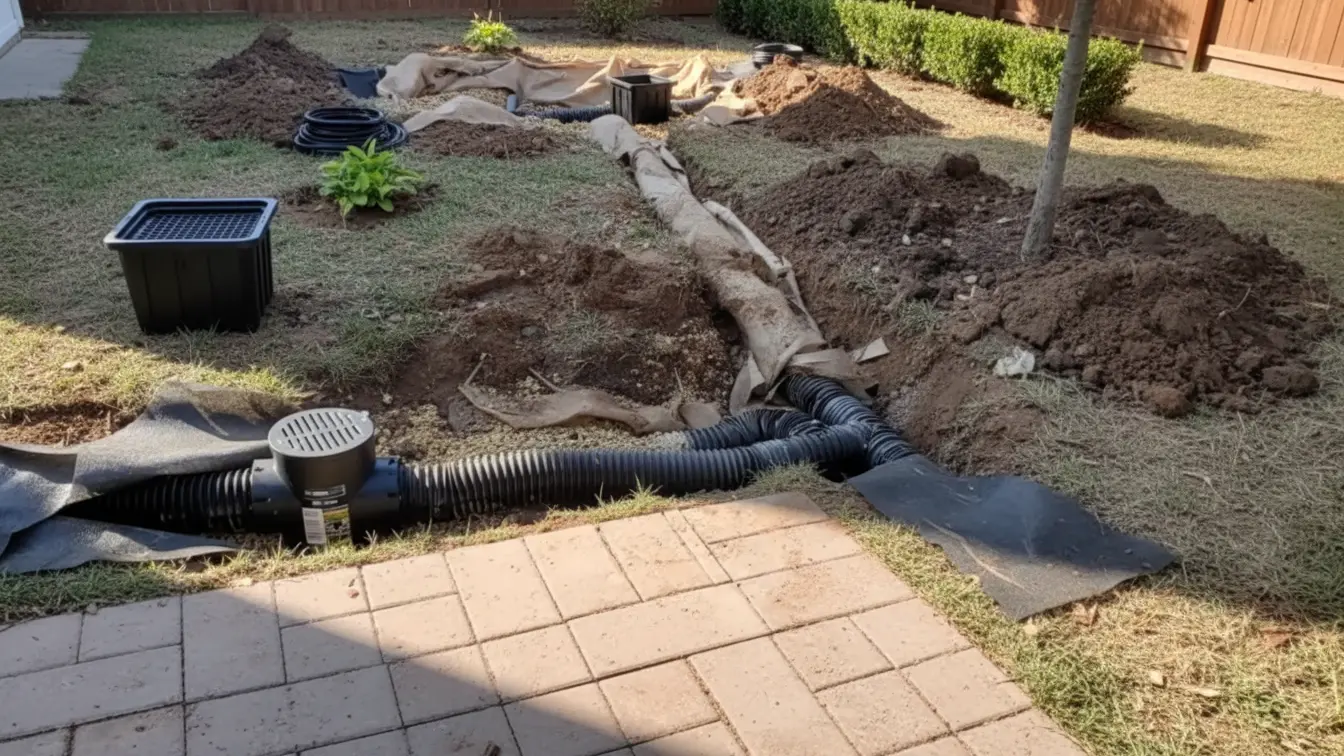
Gives the water sitting in a flat yard somewhere else to go, so it stops finding its way to the house instead.
Learn moreA yard that stays soft for days after everyone else's has dried out is telling you something. Heavy clay will not let the rain soak away, and on ground as flat as this there is nothing to carry it off, so it sits until it finds the lowest opening. On a standard Bridgeport lot that is usually the gangway and then your foundation.
A french drain gives it a route it prefers. A trench is cut where the water is actually travelling, perforated pipe goes in wrapped so fine clay cannot silt it up, and it beds in washed stone laid to a fall. Because there is no natural fall here, that fall gets built, so the depth at each end is worked out before anything is dug. Where it discharges matters just as much, and on a narrow lot the options are limited.
It will not help a basement that floods because the sewer backed up. Those are different problems with different answers. In Portage Park the downspouts were most of it. Having someone look costs nothing.
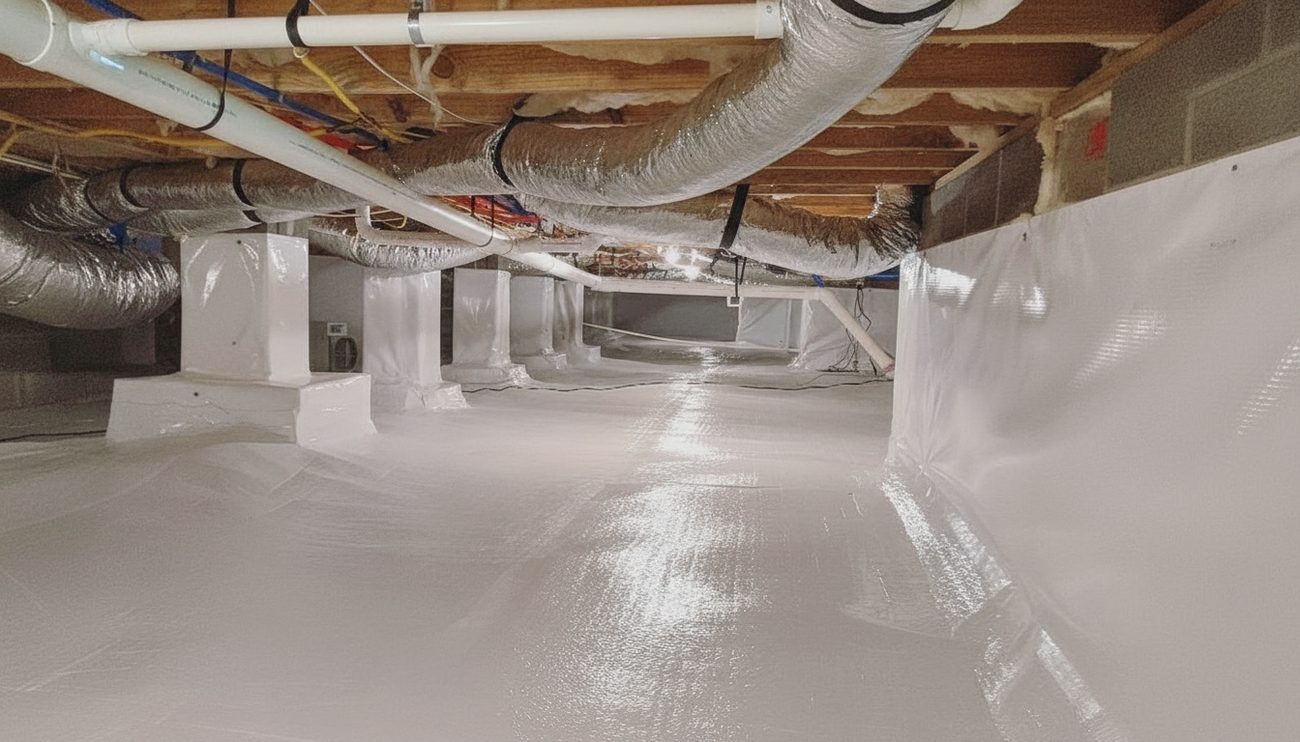
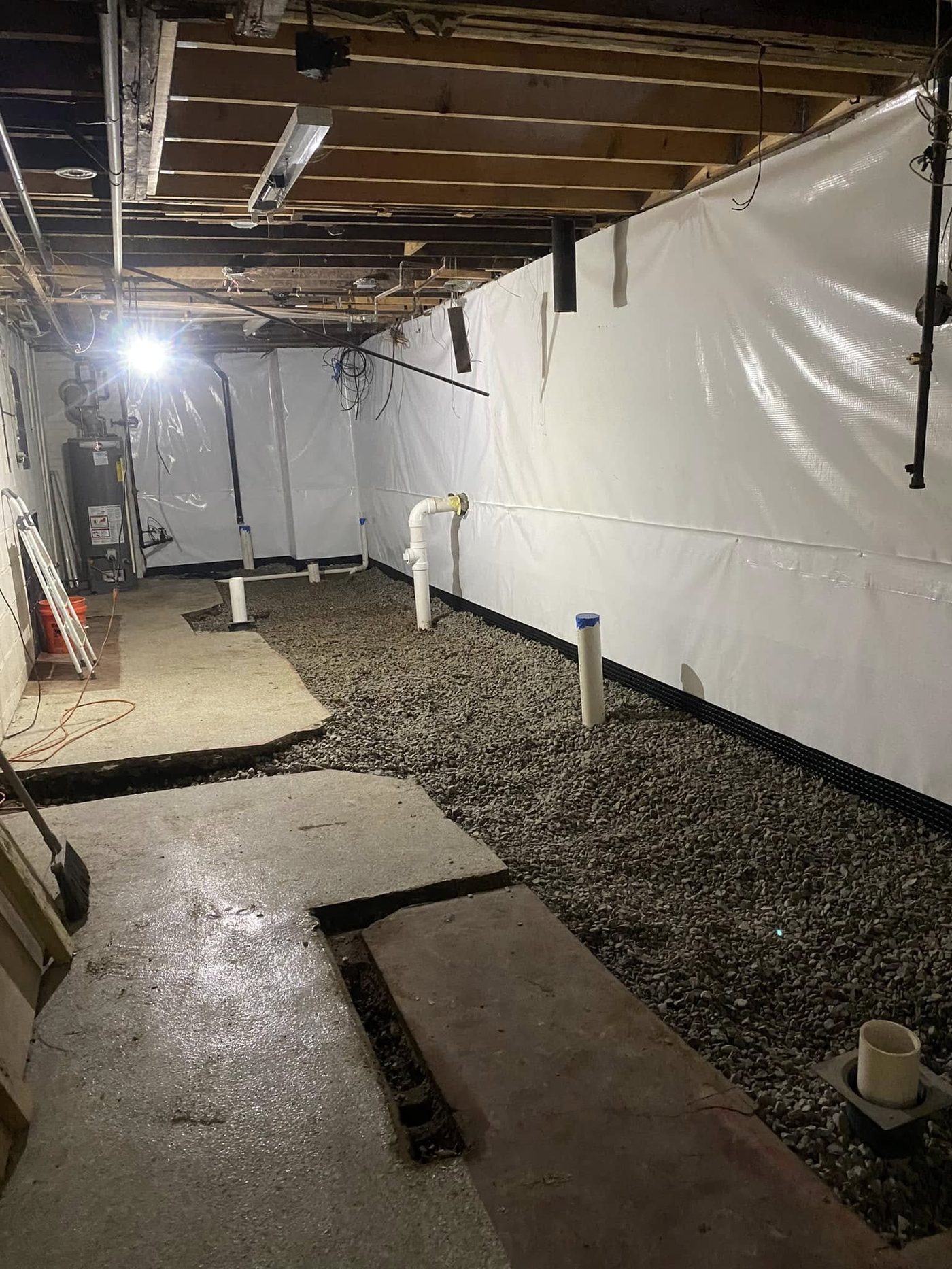
Seals a crawl space off from the damp ground under it, so the smell and the moisture stop coming up into the rooms above.
Learn moreMost of Chicago has a basement, so a crawl space usually turns up under a rear addition, a porch that got enclosed, or one of the older worker cottages in Pilsen and Bridgeport. Nobody has been under there in twenty years and it shows. What people notice is upstairs: a cold floor, a smell in the hall that comes and goes, a back room that never dries out.
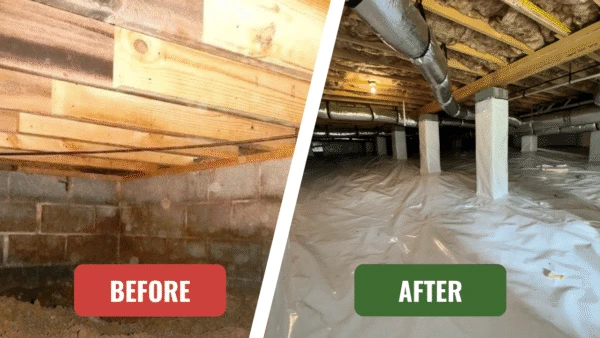
Encapsulation closes the path between that ground and your house. A heavy liner goes across the ground and up the walls, sealed at the seams and fastened rather than tucked, and the vents get closed so outside air stops cycling damp through the space. Where the ground is genuinely wet a drain and a pump go in first, because sealing over standing water only hides it. A dehumidifier holds the space afterwards, sized to the volume.
It is not insulation and it will not lift a sagging floor. Those are separate jobs and we will tell you which one you actually need. In Humboldt Park the drain went in first. Having it looked at costs nothing.
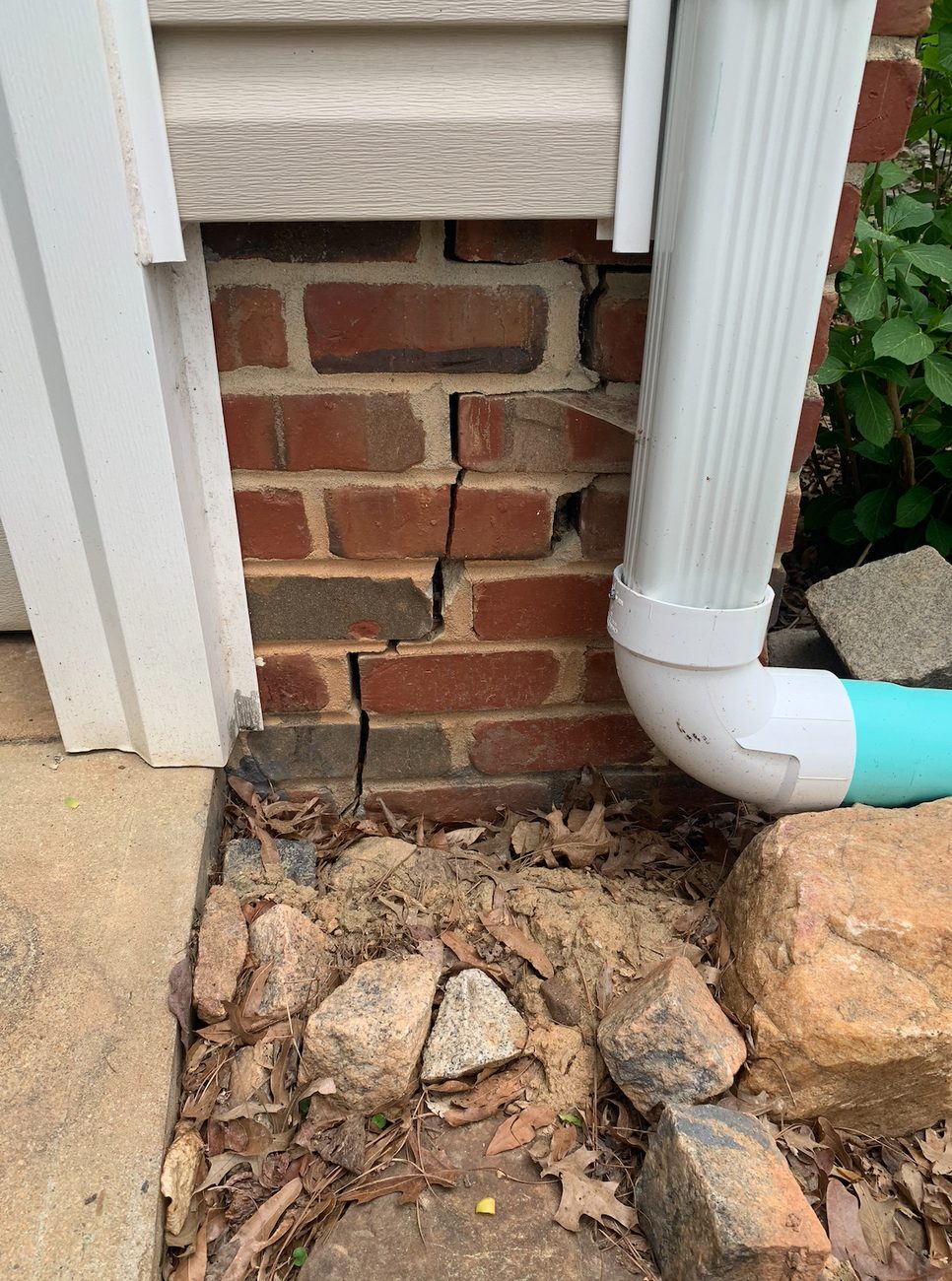
Closes the cracks that are letting water in, and works out first whether the wall behind them has stopped moving.
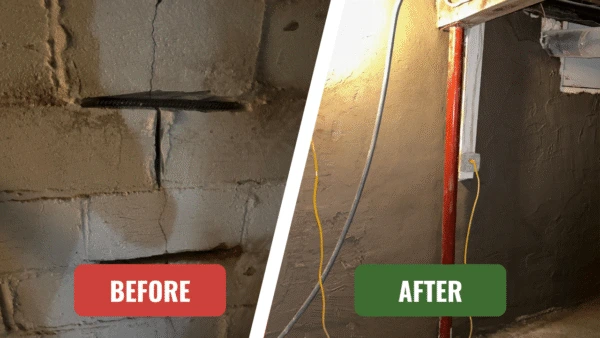
Learn moreNearly every basement from Beverly to Rogers Park has a crack in it somewhere. A poured wall shrinks as it cures and leaves fine vertical lines that have been there since the house went up. What matters is whether the one you are looking at is letting water through, and whether it has changed since you last paid attention to it. A crack you can slide a coin into, or one wider at one end than the other, is a different conversation from a hairline.
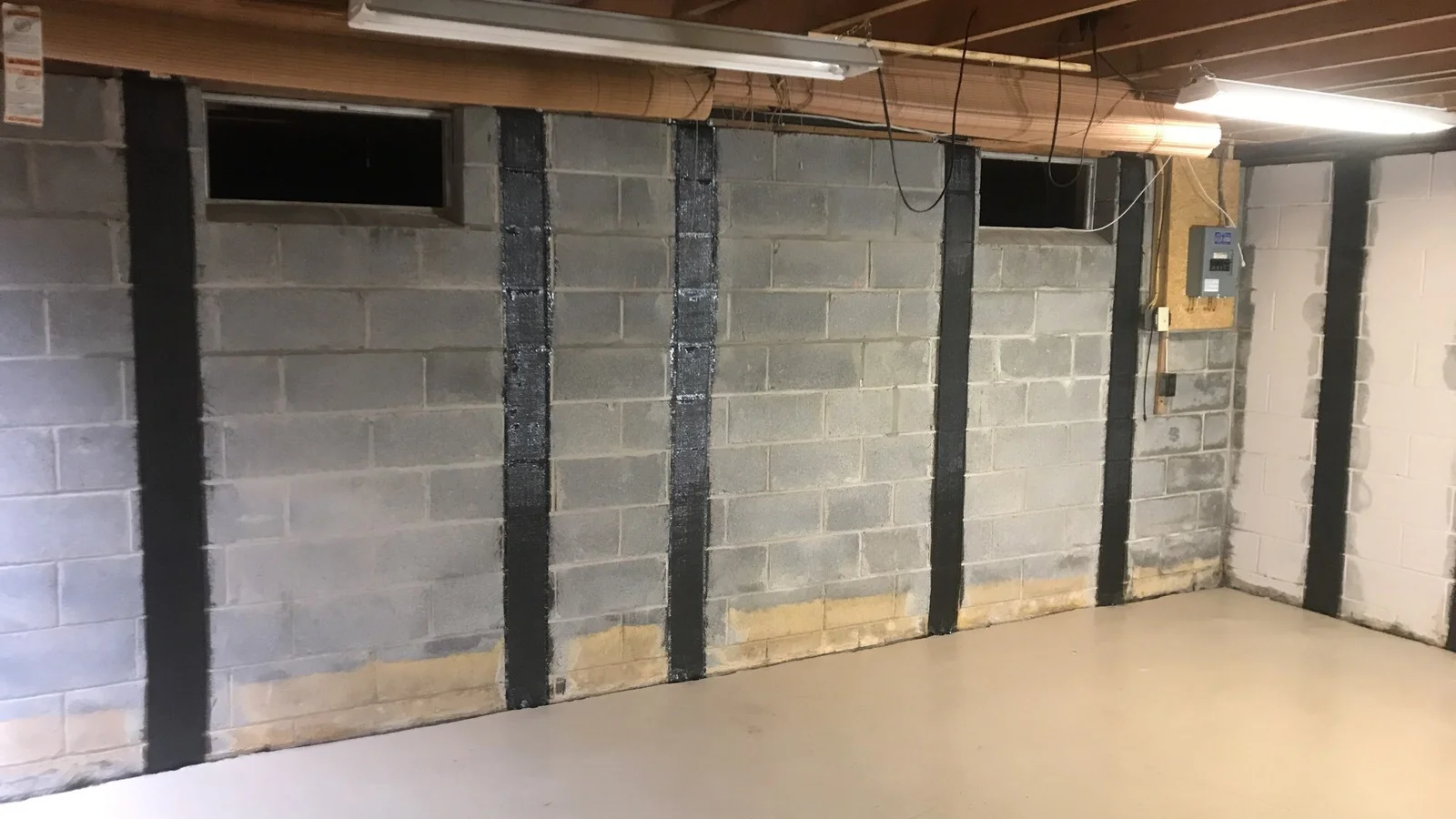
Where the wall has stopped moving, resin injected under pressure fills the crack right through to the outside face so there is no void left for water to sit in. Polyurethane suits a crack that is actively leaking, because it foams and chases the water. Epoxy suits a dry crack that needs its strength back. Where the wall has not stopped, carbon or steel goes across the crack first, and the drainage outside gets dealt with before anything is injected.
That order is the difference between a repair that holds and one that reopens next spring. If yours has sat unchanged for a decade we will tell you to leave it alone.
Queen Foundation Repair handles the thing that goes wrong under most Chicago houses: water that neither the ground nor the sewer has room for, arriving at the lowest point in both. We are a leading provider of foundation work across the city, covering basement waterproofing, foundation repair, sump pump installation and french drain installation.
Most of what we get called to started small. An inch of water in the finished basement one summer, a floor drain that gurgled and then did not, a crack by the window somebody first noticed last year. Left alone those get more expensive, because the next storm is not going to be smaller.
So we look before we quote. From Logan Square across to Bridgeport, someone comes out, goes over the property and down the basement, and tells you plainly what is happening and what putting it right involves. The price is in writing before work starts. If it is cosmetic, we will say so rather than sell you a repair you do not need.
Most of the housing here is bungalows and two-flats with a basement somebody finished later, which is why a wet floor costs more in this city than it sounds like it should. You can see everything Queen Foundation Repair does across Illinois. Licensed and insured, the warranty moves with the house if you sell, and the estimate is free.
Get your free inspection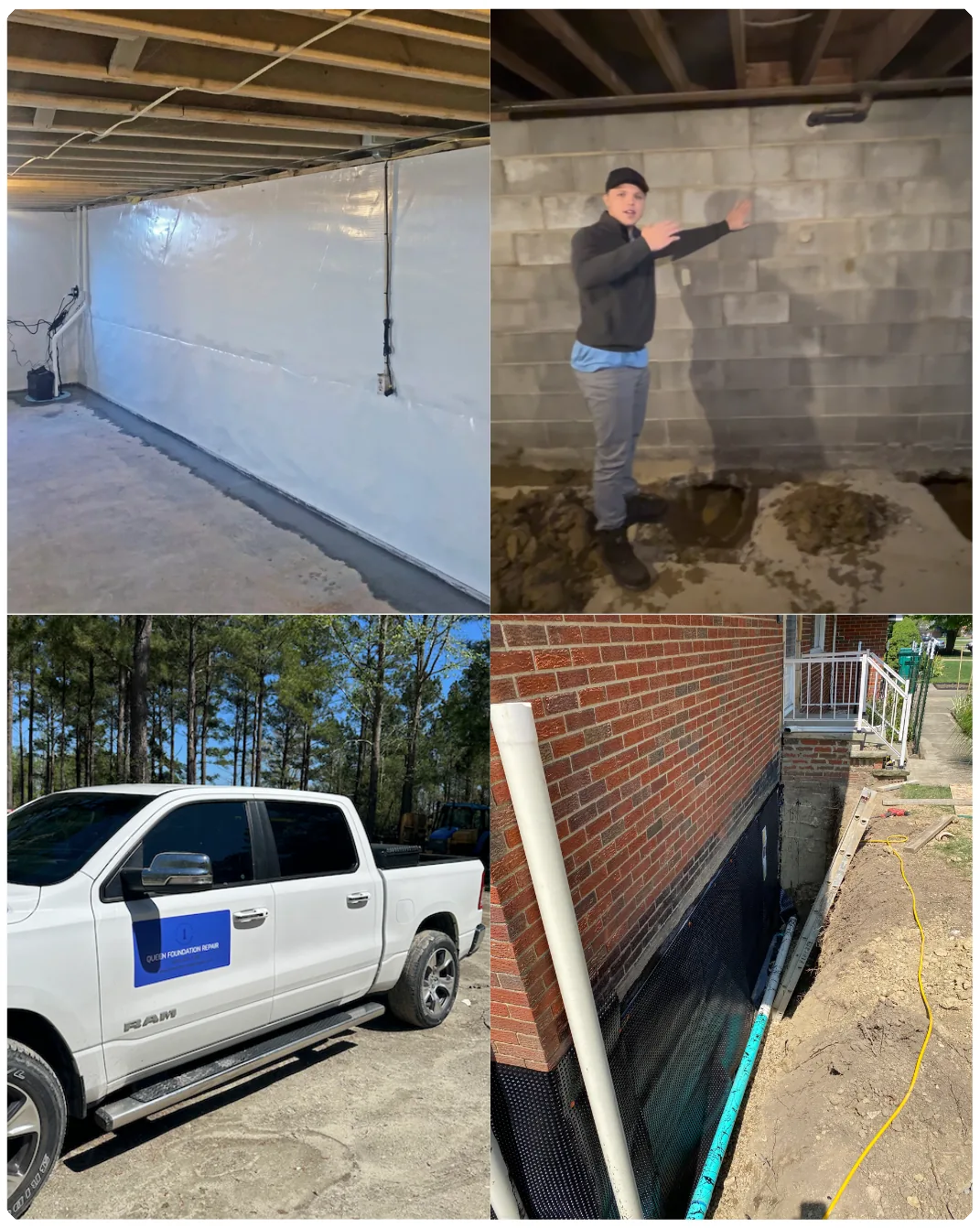
WHAT YOU GET
We pick up quickly and get out to the property fast, so you're not waiting weeks to learn what's wrong and what it costs.
No charge for us to come out, work out what's happening, and lay out what the fix involves. You know where you stand before deciding.
Licensed, with full liability and workers' comp coverage, so the work meets code and your property is protected if anything goes wrong.
Every repair carries a written warranty that passes to the next owner, so it protects the value of the house if you sell.
A clear written price before anything starts. No vague ballpark, and nothing new appearing once a crew is already on the job.
From the bungalows out through Portage Park to the two-flats around Logan Square, we are down these basements every week.
COMMON QUESTIONS
What it costs, why the floor drain backs up when it rains, whether a bowing wall can be fixed, and what insurance will and will not cover. These come up on nearly every Chicago basement we go into.
What It Costs
It depends on how much of the perimeter needs doing and on where the water is actually coming from. Interior drainage with a pump is the commonest job and runs into the low thousands, priced by the linear foot of wall. Exterior excavation and membrane costs considerably more because it is a dig, and on a narrow city lot it is not always possible at all. Grading and downspout work is often a few hundred and sometimes solves it. Nobody can price it honestly without seeing which of those you need.
Crack injection on a poured wall is usually in the hundreds. Bracing a bowing wall lands in the low thousands depending on how many straps or anchors go in. Piers under a settled footing cost more again because that is excavation, and on a tight lot the access affects the price as much as the pier count does. What sets the number is how far it has gone rather than the size of the house.
It depends whether it is still moving. Something that settled decades ago and has stayed put is often cosmetic, and on brick a century old a fair amount of it has. Something still moving costs more every year it is left, and it will come up when you sell.
When the Sewer Backs Up
Because much of the city runs a combined sewer, where storm water and sewage share the same pipe. In a downpour that line fills, and when it does the water pushes back toward the lowest opening on it, which is the drain in your basement. It is not a problem with your foundation at all.
Sometimes, and it is worth reporting either way so there is a record. If the blockage is in the city main the city may take responsibility; if it is in the lateral running from your house to the main, that is generally the homeowner's. Report it, photograph everything, and check whether your policy has backup cover before you assume.
It reroutes your drains so nothing relies on gravity down into the basement, with a pump lifting waste up to the main. It is the most reliable answer to repeat backups and it is a plumbing job rather than a foundation one. If that is what you need, we will say so.
Water in the Basement
Usually because the ground cannot take the water fast enough. The ground absorbs very little, the land is flat so there is nowhere for it to run, and what the ground refuses heads for the lowest opening it can find. Add a sewer that is already full and it arrives from two directions at once.
Either more water is reaching the pit than it used to, or the pump is undersized for a Chicago downpour, or the discharge is putting the water somewhere it can come straight back from. All three are common. A pump that never rests will also fail sooner.
Start outside and above. Gutters that discharge well clear of the house and ground that slopes away are the cheapest work there is, and on a city lot they are often the whole problem. It is only when water is arriving from below or backing up a drain that the expensive options become necessary.
Walls and Cracks
Some are. In old brick and block the ones that matter are the ones that leak in a storm or that are wider at one end than the other. A hairline that has been there for years and stays dry is usually just an old wall being old.
Yes, and usually without rebuilding it. The wall gets braced so it cannot move further, and the water in the ground behind it gets dealt with in the same plan or the pressure simply returns. Left long enough a wall does reach the point where rebuilding is the only honest answer.
Carbon fiber straps are the cheaper route and suit a wall that has moved a little, usually a few hundred dollars per strap with several needed. Steel braces or anchors cost more and suit a wall that has moved further. Rebuilding a section is the top of the range.
What the Work Involves
Interior drainage along one wall is commonly a day or two. A full perimeter with a pump takes longer. Exterior work depends on access, and on a Chicago lot access is often the deciding factor rather than the work itself. You get a number before anyone starts.
Not for interior drainage, crack injection or a sump pit, which all happen from inside. Exterior waterproofing and french drains do mean digging along the affected side, and on a narrow lot that is the part worth discussing first. The ground gets put back.
Pier work is designed to be permanent in the sense that the load is transferred onto ground that does not move, and it carries a transferable warranty. Crack injection and bracing depend on whether the water and the movement behind them were dealt with. That is the part that decides it.
Insurance and Selling
Almost never. Waterproofing is treated as maintenance and seepage is a standard exclusion. Sewer and drain backup is usually a separate endorsement you have to have bought in advance, and in this city it is worth checking whether you have it before the next storm rather than after.
Usually not. Settlement and earth movement are standard exclusions on a homeowners policy. The covered path is sudden accidental damage, such as a burst supply line washing ground out from under a footing. Read your own policy rather than assume.
Illinois uses a Residential Real Property Disclosure Report, and it asks directly about material defects in the basement or foundation and about recurring flooding. Known problems and repairs belong on it. A documented repair with a transferable warranty is easier to sell than a wet basement a buyer's inspector finds themselves.
WHERE WE WORK
We cover Cook County and the whole Chicago area, not just the addresses close to downtown. Bungalows and two-flats, garden units and finished basements, the North Side and the South Side alike. If a house needs looking at, someone comes out and looks at it, wherever it sits.
ZIP CODES WE COVER
Ready to Get Started?
No obligation, fast and easy.
We appreciate you reaching out.
One of our team members will be with you shortly.