Water coming up through the basement floor, a sump pump that never seems to rest, doors that have started sticking on one side of the house. From the Oregon District over to South Park we handle basement waterproofing, french drain installation and sump pump installation, and the inspection is free.
Get Your Free Inspection
We appreciate you reaching out.
One of our team members will be with you shortly.





WHAT TO LOOK FOR
Dayton is built over one of the biggest bodies of groundwater in the country, and in places it sits less than two feet down. A basement here is not keeping rain out so much as sharing space with the water table. These six are what people notice first.
It is rising, not leaking
A wet patch spreading from the middle of the slab, nothing dripping anywhere. The water under the floor is close to the surface and comes up, not in.
It is working against the table
The pit fills again minutes after emptying, and it cycles in dry weather too. That is not storm water it is fighting, it is the groundwater.
One side has gone down
A door you lean on to shut while the ones at the other end are fine. Something under that side has settled and taken the frame with it.
It has been on the list a while
The one you noticed years ago and meant to watch. What counts is whether it has changed since, and whether it is wet after rain.
The ground under it moved
A ball that rolls to one corner, or a chair that rocks. Loose ground under a footing settles at its own pace, and rarely in the middle.
The frame is being pulled apart
A crack running up and out from the top corner of a door frame. Frames go in square, so a corner opening up means something below dropped.
What decides things here is where the water sits, not how much rain fell last week. In a wet year it comes up and the basement gets its first bad summer. In a dry one it drops back and everything seems fine again, which is exactly why people leave it. If it has been in twice now, that is not the weather having a bad run, and it is worth getting somebody down there to look.
A wet patch that comes up through the slab rather than in at the wall, a pump running on and off all day, a crack that only leaks when the river is high. Those are the calls that come in from around Dayton. Tap any service to see what the work involves.
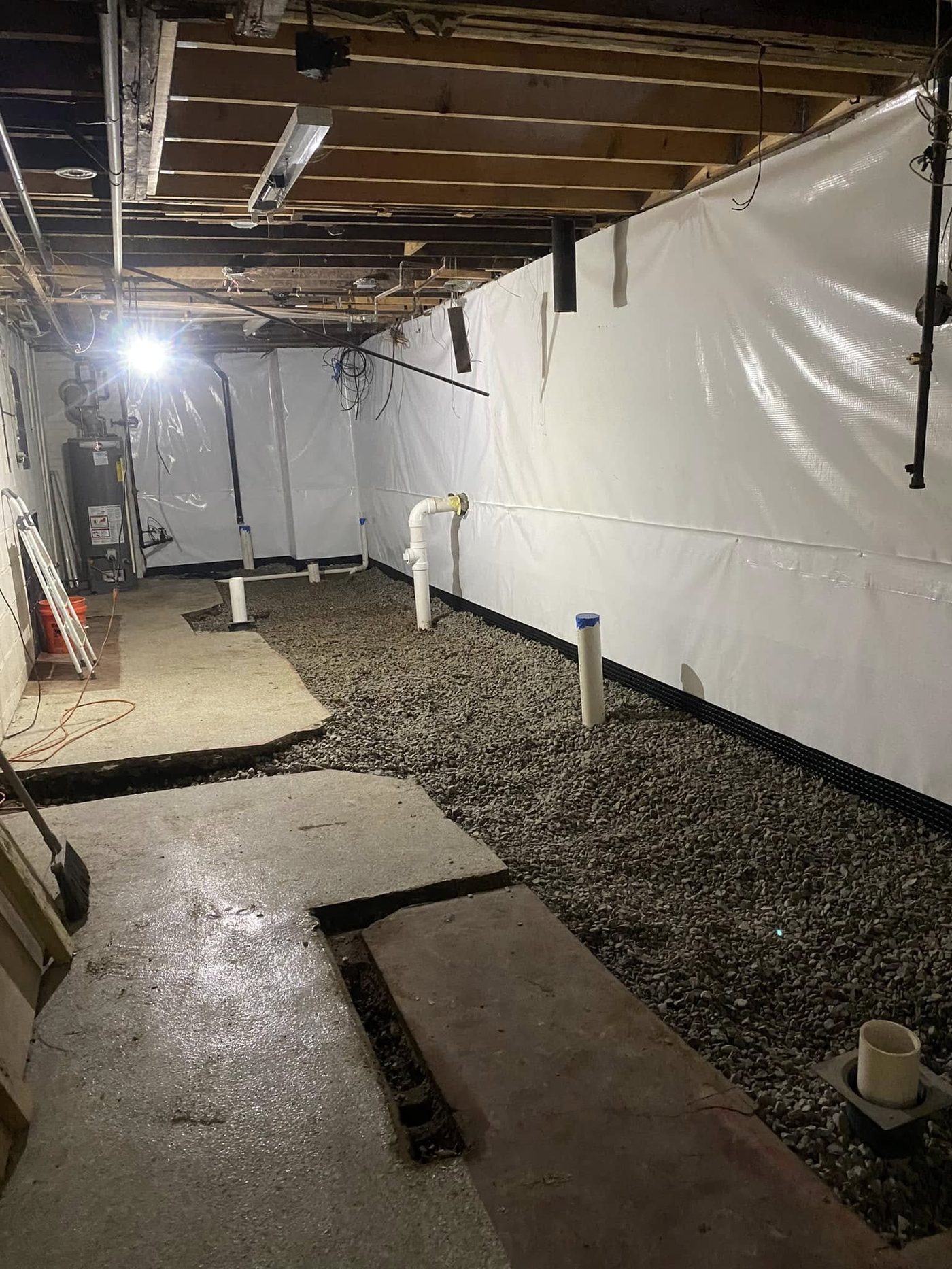
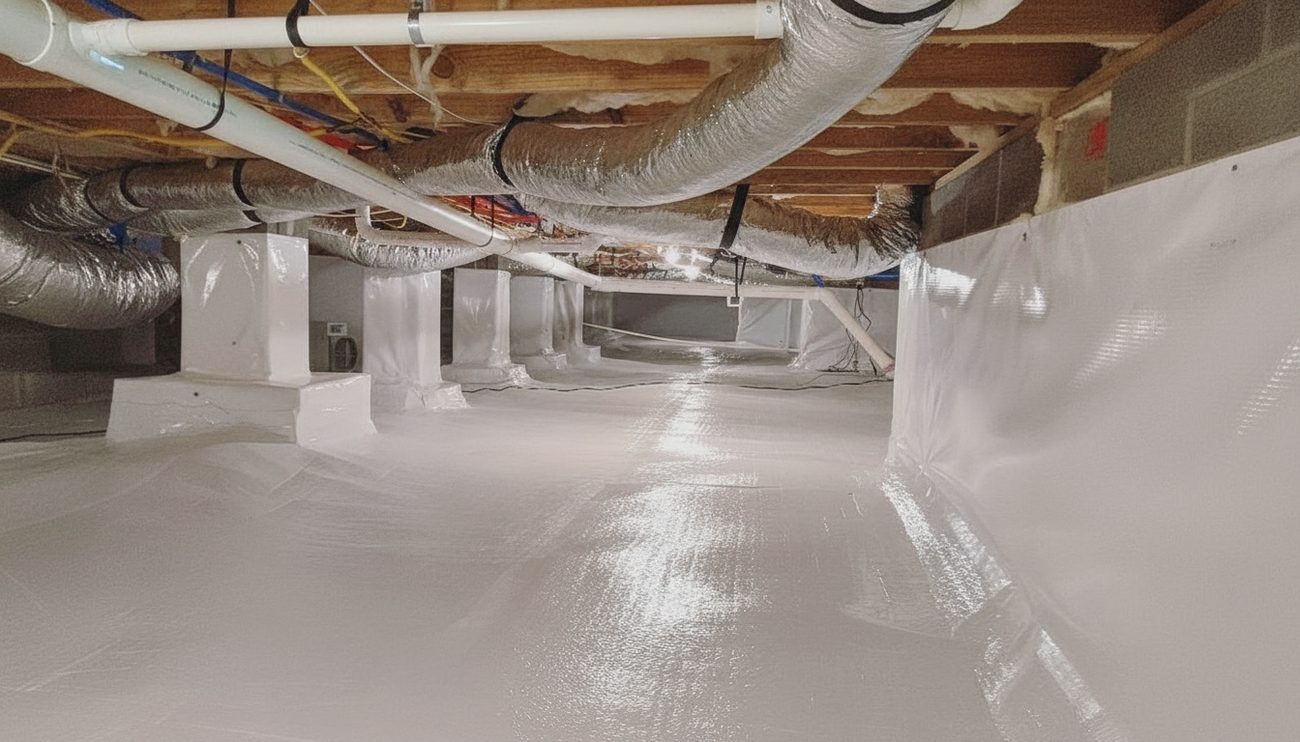
Manages the groundwater that sits close to the surface here, so it stops arriving on the basement floor every wet spell.
Learn moreMost waterproofing advice assumes the job is keeping rain out. In the Oregon District the job is different, because the water is already under the house and it rises. When the table comes up after a wet week it finds the joint where the floor meets the wall, and it finds any crack in the slab on the way.
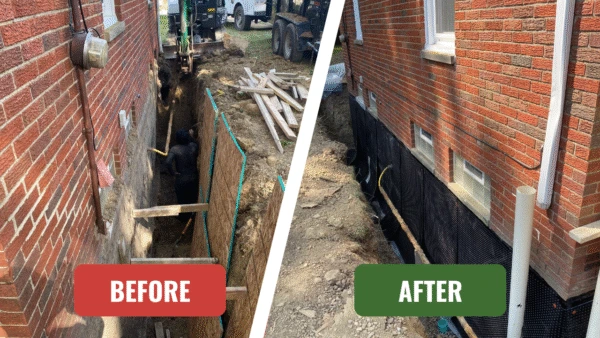
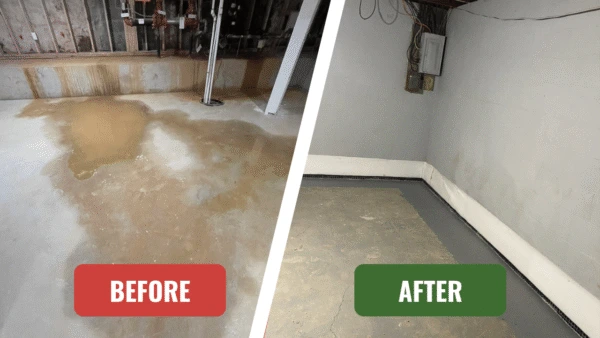
So the work is about managing water rather than blocking it. An interior drain at the footing collects what arrives and carries it to a pump instead of across the floor. The joint where the floor meets the wall gets treated, because that is where it actually comes in. Outside, grading and downspouts get corrected so storm water is not added to a table that is already high. On a wall genuinely passing water a membrane goes on the outside face where the site allows a dig.
Sealer painted on the inside is the thing that fails here, because it treats the surface while the pressure carries on. In South Park the pump and the joint were the whole job. The inspection is free.
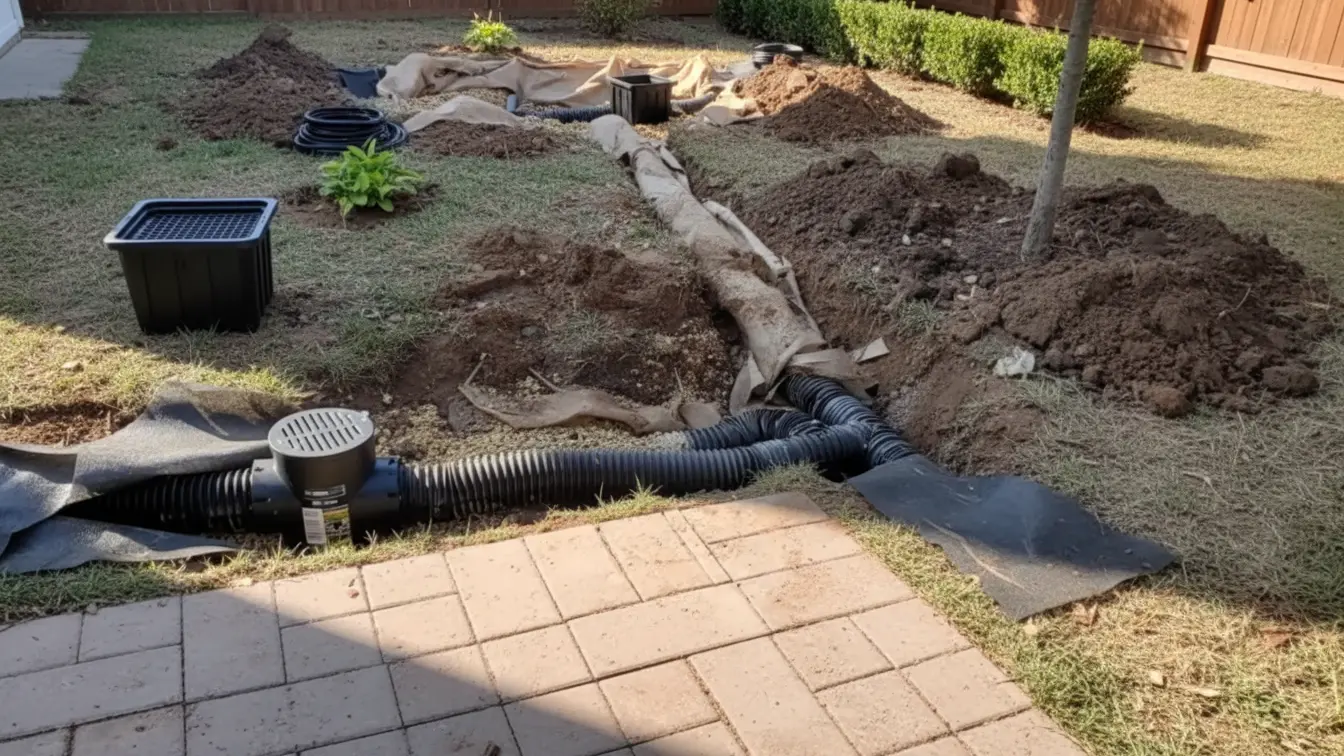
Intercepts the surface water before it can join the groundwater already sitting under the house, and routes it somewhere well clear of the footing.
Learn moreOn ground this permeable, water put down at the house does not sit on top waiting to be dealt with. It goes straight in and joins what is already there. An Old North Dayton lot that takes roof water at one corner is effectively topping up the table right where the footing is.
A french drain gives that water somewhere else to go before it gets the chance. A trench is cut on the uphill side, perforated pipe goes in wrapped so fine sand cannot silt it up, and it beds in washed stone to whatever fall the site allows. It runs to a discharge point well clear of the house, with cleanouts at the ends so it can be flushed rather than dug up in ten years. On a flat lot, a pump does the last part.
It will not lower the water table, and nothing will. What it does is stop you adding to it. In South Park the downspouts turned out to be most of the problem, and we said so rather than selling the trench.
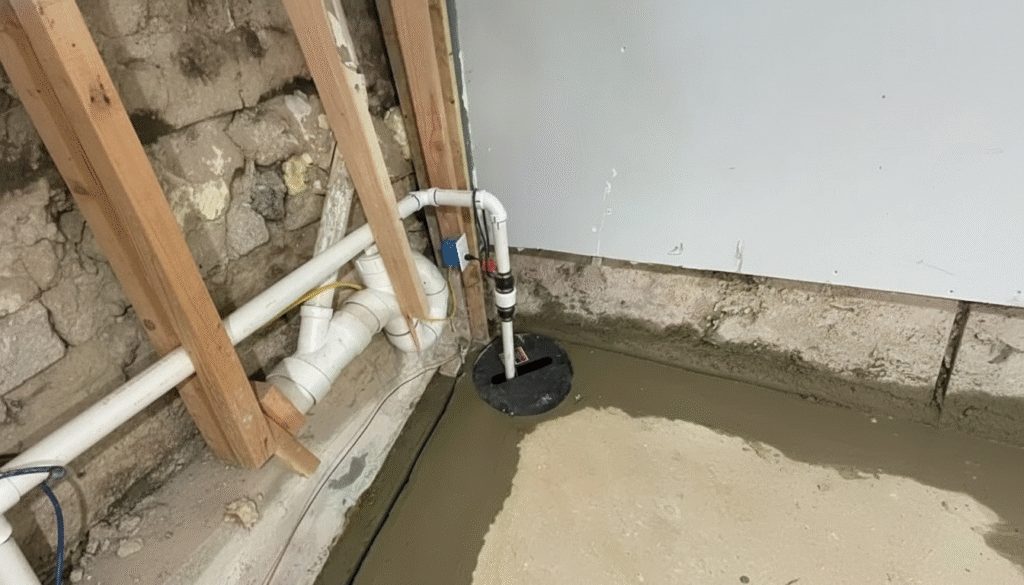
Gets the water out and away from the house, sized for ground that keeps producing it rather than for the occasional storm most pumps are built around.
Learn moreA pump in Belmont does more work than a pump almost anywhere else, because it is not sitting idle waiting for a storm. Groundwater keeps arriving, so the pit keeps filling, and a unit sized for an occasional wet spell will run itself to death inside a couple of years.
A pit is cut at the low point and lined so the surrounding sand cannot wash into it. The pump sits on a solid base rather than in the silt, and the discharge runs well clear of the house with a check valve so what goes out does not come straight back. A sealed lid keeps the humidity in the pit instead of the room. A battery backup earns its keep here more than most places, because a pump that stops for six hours in this ground means water on the floor.
Sizing is the part that gets skipped, and here it is the part that matters. In Grafton Hill most calls turn out to be a pump that was never big enough. We will check yours for nothing.
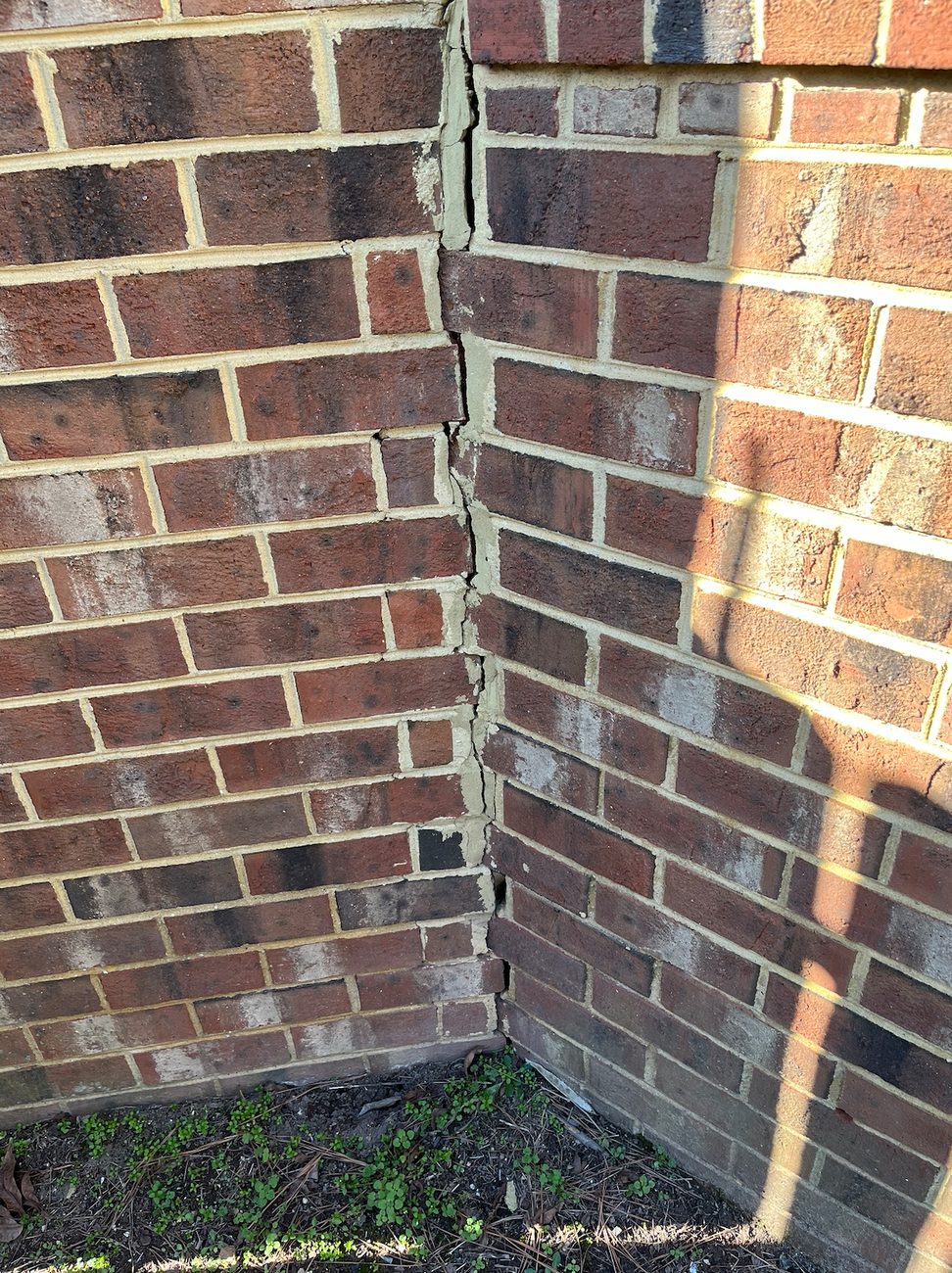
Carries a footing that has settled back onto ground that holds steady, so the doors and the floors above stop following it.
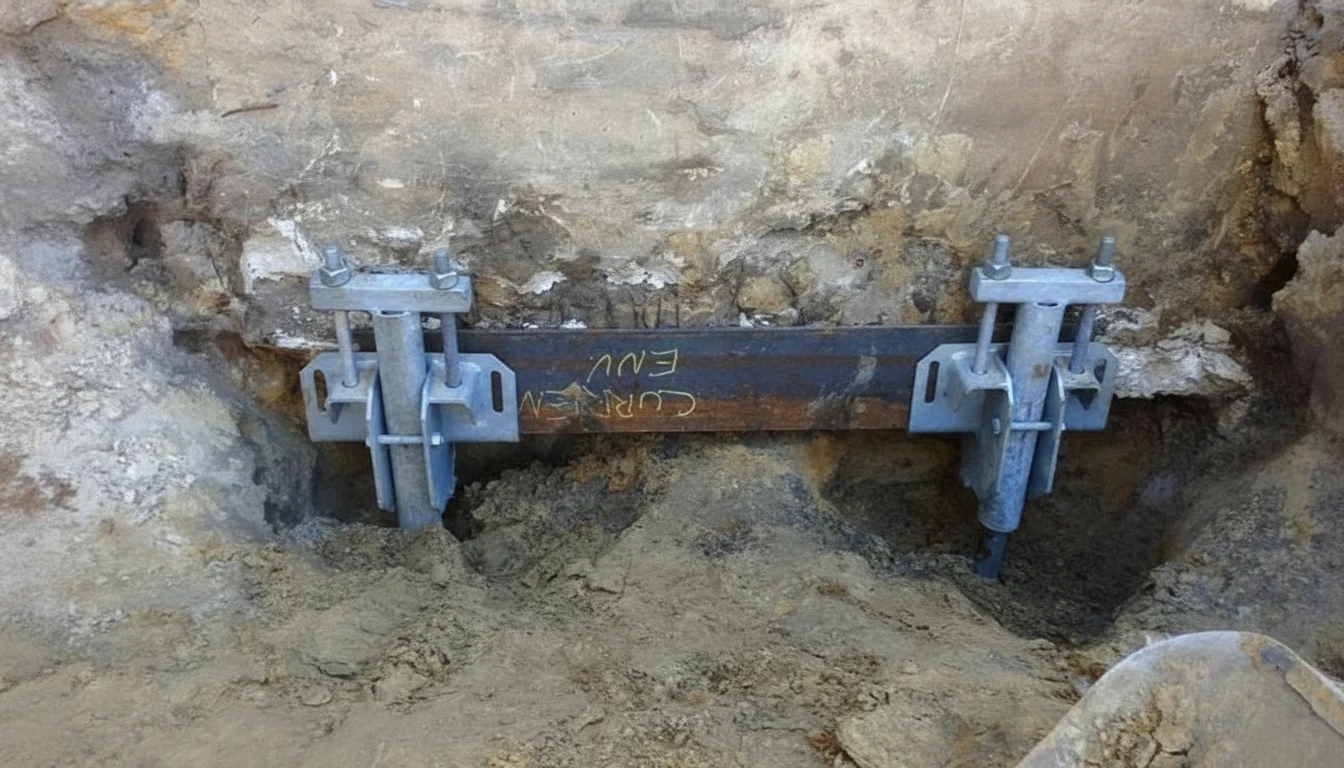
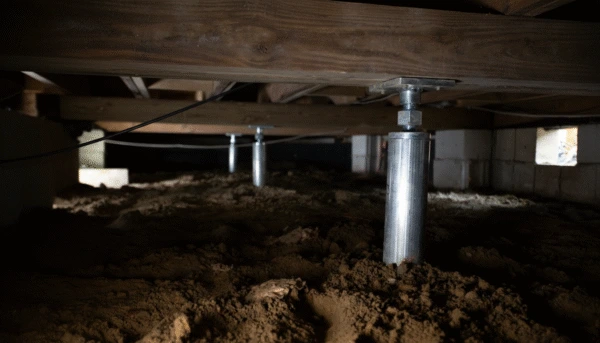
Learn moreSand and gravel carry a house well until water starts moving through them, and then fine material travels with it. In St. Anne's Hill that shows up as one side of a house sitting lower than the other, and doors on that side that have to be leaned on.
Foundation repair moves the load onto something steadier. Piers are driven or turned down until they reach material that will carry the weight, and brackets transfer the house onto them. From there it comes back toward level in stages rather than a single lift, watched as it goes, so plaster and brick travel with it instead of tearing. The pier count comes from what the ground gives up on the day.
It does not stop water moving through the ground, and on ground this permeable that matters more than it would elsewhere, which is why the drainage gets looked at in the same visit rather than left for a second trip. In Belmont that has meant piers along one side and a drain along the other. We come out and look before anyone quotes.
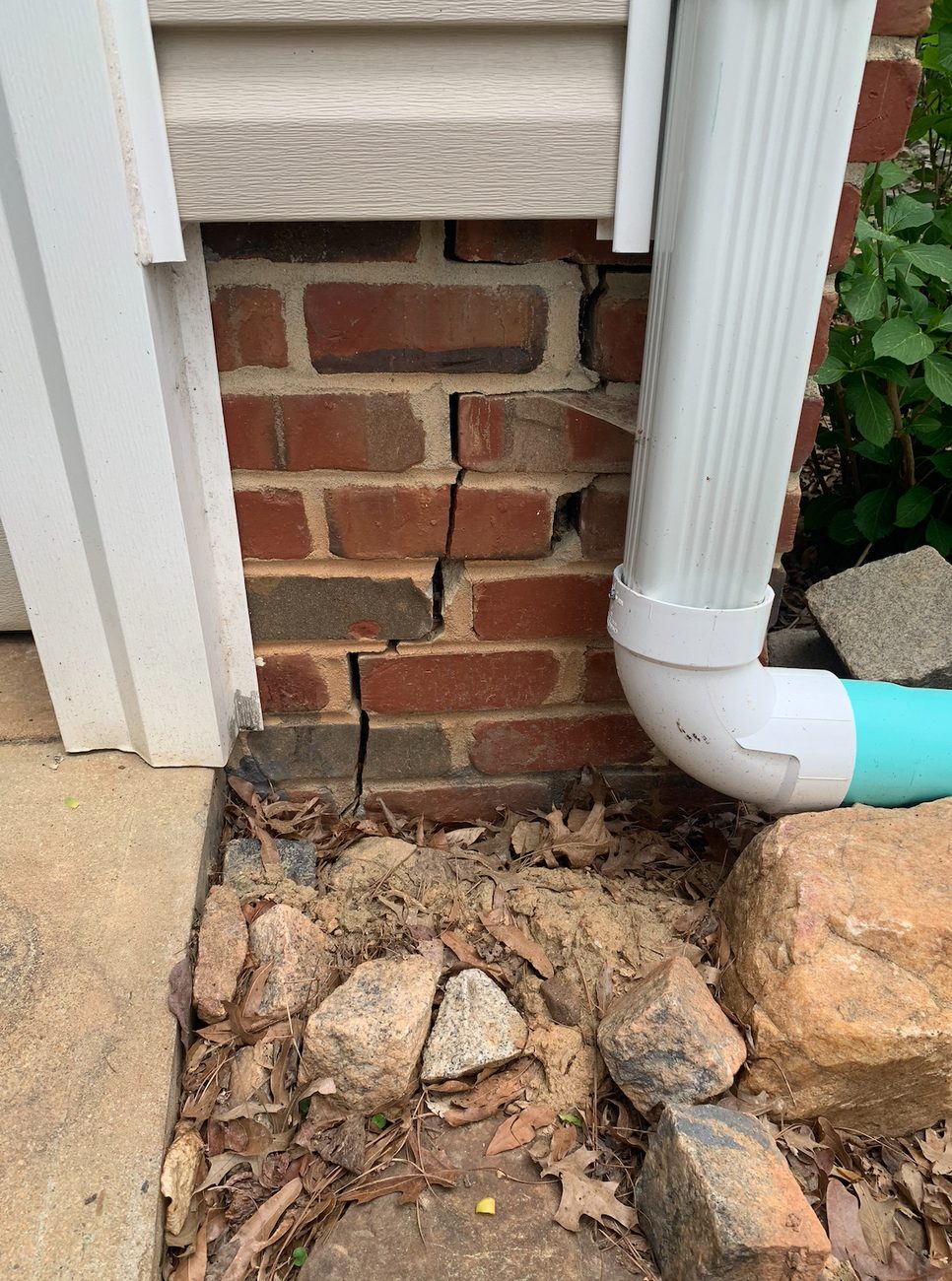
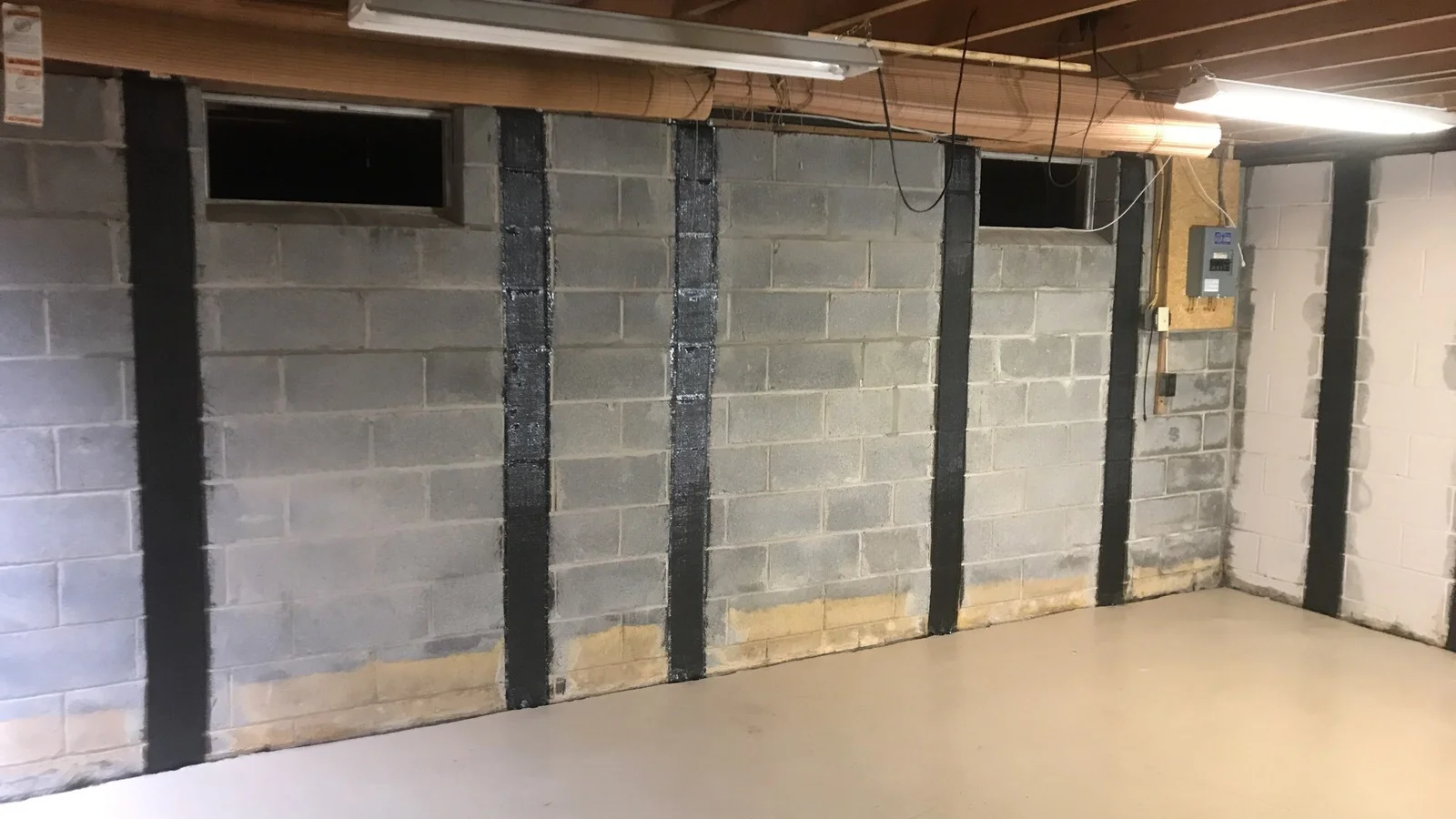
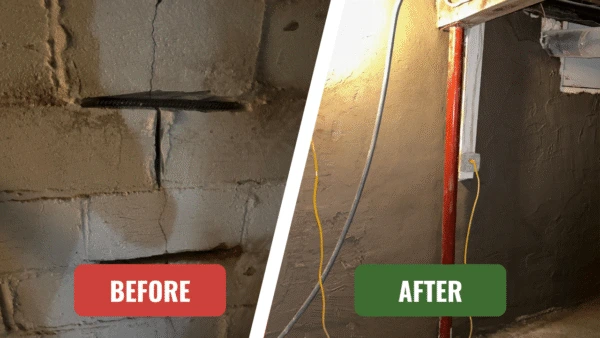
Closes the cracks that are letting water through, treats the reason they opened, and leaves alone the ones that have sat unchanged for years.
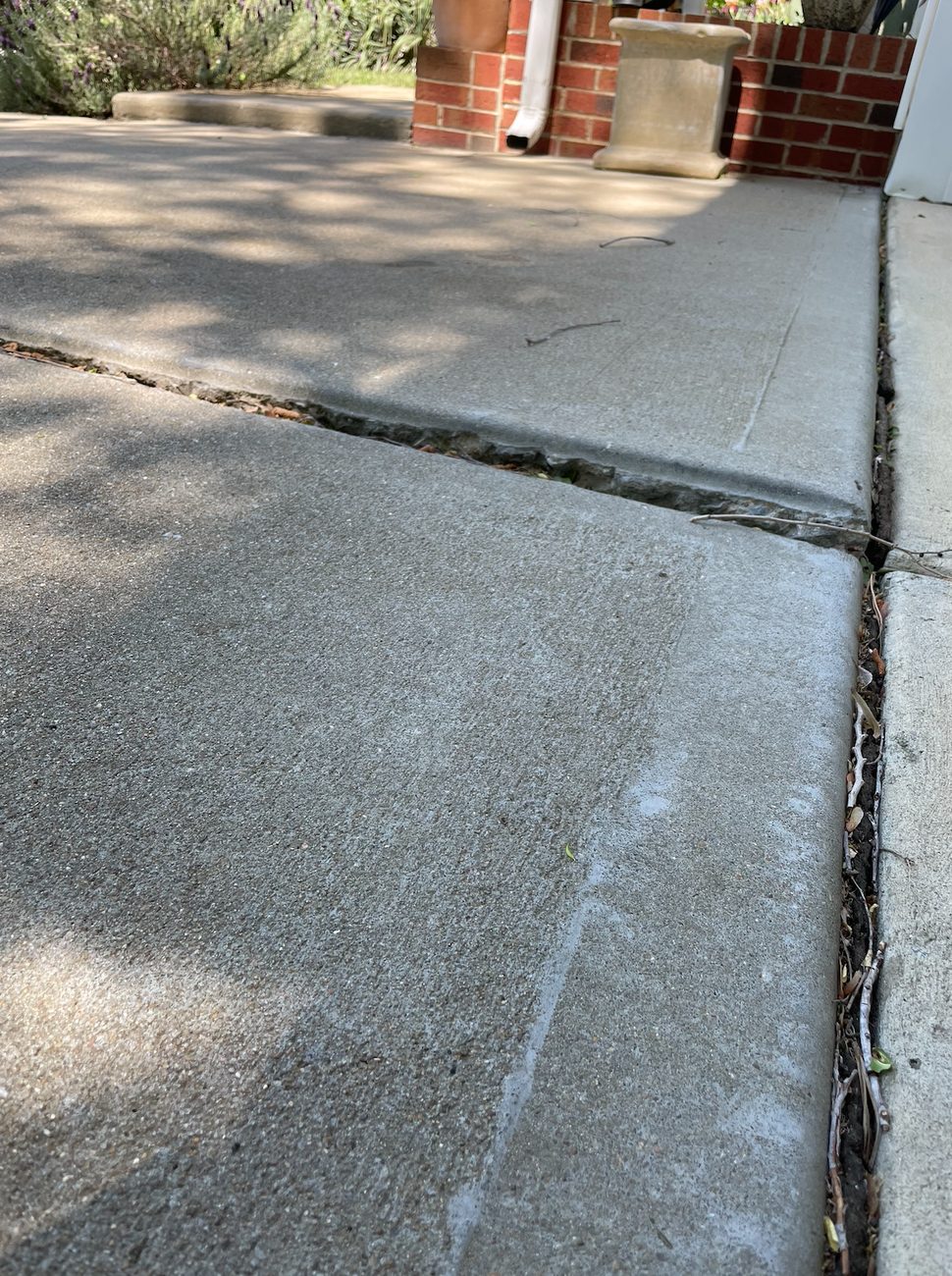
Learn moreIn a dry-ground city a crack can sit for decades doing nothing. Here it is different, because there is water on the other side of the wall most of the year and a crack is a route straight through. In Riverdale that is why most people call about a crack at all.
Repair means injecting resin under pressure so the fill carries right through to the outside face, leaving no void for water to sit in and work at. Where the two sides are still moving against each other, carbon or steel goes across the crack so they stop. On a wall that has not finished moving, injection on its own is a repair with a clock on it, so whatever is causing the movement gets dealt with first.
That order is what people skip, and it is why some injections fail inside a year and the resin gets blamed for it. In St. Anne's Hill we have braced first and injected months afterwards, deliberately. If yours is dry and unchanged we will say so rather than sell you a repair you do not need.
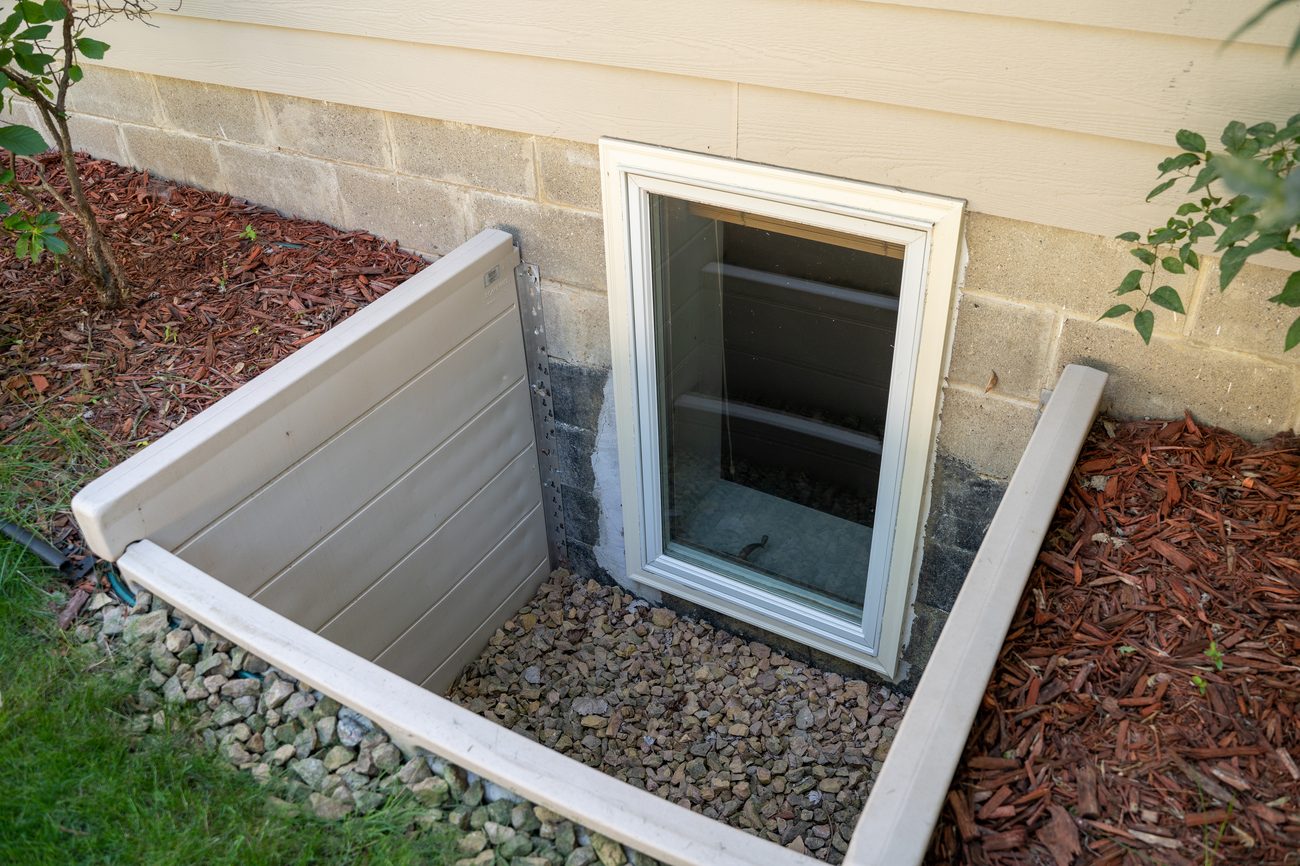
Puts a legal way out of a basement bedroom, carried on a proper header, with a window well that drains instead of filling up and staying full.
Learn moreA finished basement bedroom needs a way out somebody can climb through, and plenty of rooms already in use around Patterson Park do not have one. It surfaces the moment a house is sold or appraised.
The opening is cut and the wall above carried on a header, because a hole in a load-bearing wall without one is how a wall starts moving. A window well goes in outside, and the drainage of that well matters more here than almost anywhere: a well without a gravel base and a route to the drain fills up, and in this ground it stays full. The window has to meet the code for opening size and sill height, and that gets measured on site rather than assumed.
Where the wall is already moving, or the basement already takes water, both of those get handled before anyone cuts a new opening into it. In Five Oaks one window moved a bay along the wall for exactly that reason. Someone will measure the opening and check it against the code before anything is quoted.
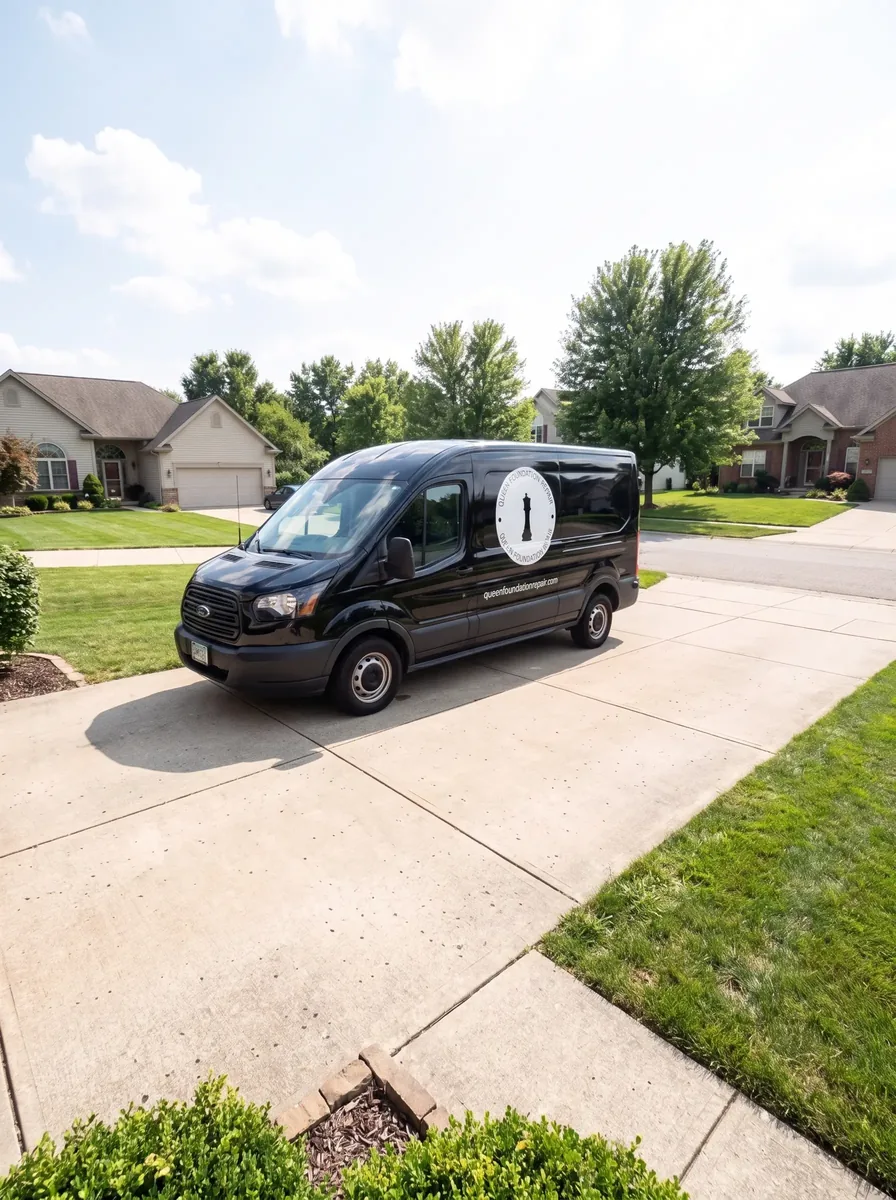
Queen Foundation Repair covers basements and foundations across Dayton, offering basement waterproofing, french drain installation, sump pump installation and foundation repair. Those sit under one roof on purpose. In a city like this one, the person looking at your wet floor and the person looking at your footing want to be the same person.
By the time somebody calls, most people have lived with it for a season or two and decided it was manageable. It usually is, right up until the spring it is not. Waiting is what makes it expensive here, because nothing underneath changes for the better in the meantime.
So we look before we quote. From the Oregon District across to South Park, someone comes out, goes over the property and under the house, and tells you plainly what is happening and what putting it right involves. The price is in writing before work starts. If it is cosmetic, we will say so rather than sell you a repair you do not need.
Water damage builds up quietly rather than arriving all at once, which is why catching it early costs so much less than waiting. You can see everything Queen Foundation Repair does across Ohio. Licensed and insured, the warranty moves with the house if you sell, and the estimate is free.
Get your free inspection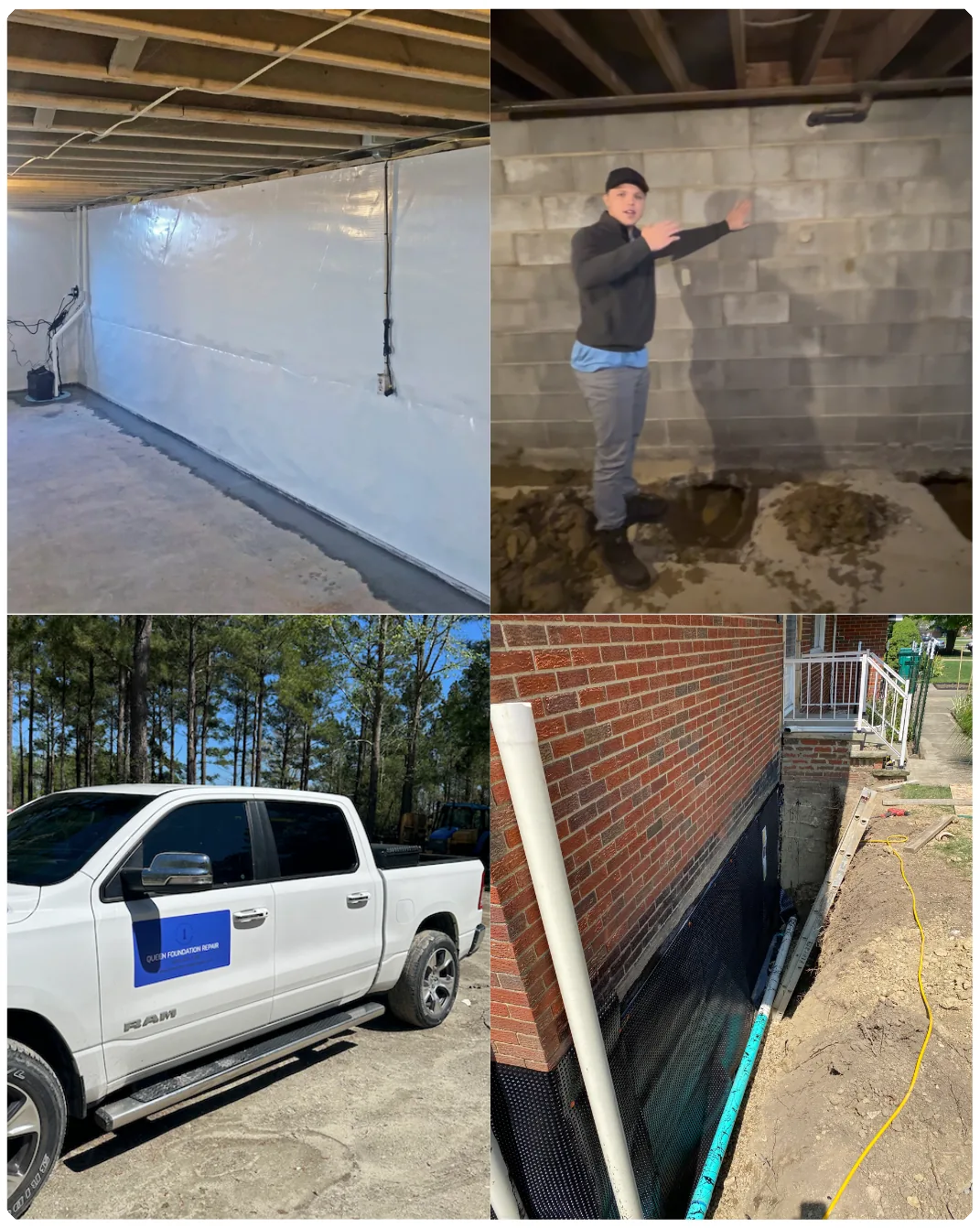
WHAT YOU GET
We pick up quickly and get out to the property fast, so you're not waiting weeks to learn what's wrong and what it costs.
No charge for us to come out, work out what's happening, and lay out what the fix involves. You know where you stand before deciding.
Licensed, with full liability and workers' comp cover, so the work meets code and your property is protected if anything goes wrong.
Every repair carries a written warranty that passes to the next owner, so it protects the value of the house if you sell.
A clear written price before anything starts. No vague ballpark, and nothing new appearing once a crew is already on the job.
From the older basements around the Oregon District to the post-war stock out past Belmont, we are down these basements every week.
COMMON QUESTIONS
The questions that come up on nearly every basement we go into around Dayton, from the Oregon District over to South Park, answered here the way we answer them on the day.
What It Costs
It is priced by how much of the perimeter needs doing and by what the water is doing. Interior drainage with a pump is the commonest job here and runs into the low thousands, costed by the linear foot of wall. Treating the joint where floor meets wall is usually part of it, because that is where water arrives. Exterior excavation costs considerably more because it means a dig, and on a high table a dig is not always practical. Grading and downspout work is sometimes a few hundred and occasionally solves it.
Crack injection on a poured wall is usually in the hundreds. Bracing a wall lands in the low thousands, depending on how many straps or anchors go in. Piers under a settled footing cost more again because that is excavation, and the count depends on how much of the house is being carried rather than on its size. What sets your number is how far it has gone and how long it has been going, which is why anyone quoting over the phone is guessing at it.
In this city, usually yes, because the water is not an occasional visitor. If your basement takes water most wet springs it will keep doing so, and the cost of managing it does not go down while you wait. If it happened once in a decade in a record storm, that is a different answer and we will give it.
The Water Table
Yes, and most of Dayton does. The city sits over a very large body of groundwater and the level moves with the river and the rain. A basement here is not sealed away from that water, it sits near it, so the job is managing what arrives rather than pretending it will not.
You give it a route out rather than trying to hold it back. A drain at the footing collects what comes in and a pump lifts it away, and the joint where floor meets wall gets treated because that is where it appears. Sealing the inside face alone does not work, because the pressure carries on behind it.
Because the water outside is higher than your floor. When the table rises it pushes up under the slab, and it comes through the joint at the wall or any crack in the concrete. There is nothing dripping to find, which is why people look for a leak and cannot see one.
Pumps and Drainage
In Dayton it is often doing exactly what it should. Groundwater keeps arriving, so the pit keeps filling, even in dry weather. What is worth checking is whether the pump is big enough for that duty and whether the discharge is far enough from the house that it is not simply coming back round.
A one-off pump-out after a flood is usually a few hundred, but it treats the event rather than the cause. Installing a pit and pump so it handles itself is the more sensible spend here, and it lands in the high hundreds to low thousands depending on the pump and the discharge run.
Start outside. Gutters that discharge well clear of the house and ground that slopes away are the cheapest work anybody can do and they sometimes fix the problem entirely. It is only when the water is coming from below rather than from the surface that the expensive options become necessary.
Cracks and Settlement
Some are. A thin vertical line in poured concrete is usually shrinkage from curing. Here what matters most is whether it is letting water through, because there is groundwater on the other side of that wall for much of the year and a crack is a route straight in.
Doors that stick on one side of the house and not the other, a floor that slopes, cracks that are wider at one end, and gaps opening where trim meets the wall. Water on its own is a drainage problem rather than a structural one, though the two often arrive together.
It depends whether it is still moving. Something that settled years ago and has stayed put is often cosmetic. Something still going costs more every year it is left, and it will come up when you sell. An inspection tells you which of those you have.
What the Work Involves
Interior drainage along one wall is commonly a day or two. A full perimeter with a pump takes longer. Exterior work depends on the weather and on how workable the ground is, which in this city is not a given. You get a number before anyone starts.
Not for interior drainage, crack injection or a sump pit, which all happen from inside. Exterior waterproofing and french drains do mean digging along the affected side, and the ground gets put back. Anyone quoting should tell you up front which it involves.
Generally yes, and it comes from the local building department rather than the state. Dayton and the surrounding municipalities each run their own. It matters more than people expect, because an unpermitted finished basement can surface later when a house is sold.
Insurance and Selling
Almost never. Waterproofing is treated as maintenance and groundwater seepage is a standard exclusion on a homeowners policy. What can be covered is sudden accidental discharge such as a burst pipe, and sewer or drain backup is usually a separate endorsement you have to have bought already.
Usually not. Settlement and earth movement are standard exclusions on a homeowners policy. The covered path is sudden accidental damage, a burst supply line washing ground out from under a footing being the common example. Read your own policy rather than assume it either way.
Ohio requires a Residential Property Disclosure Form, and known water or foundation problems belong on it along with any repairs you have had done. Selling as-is does not remove the duty to answer honestly about what you know. A documented repair with a transferable warranty sells better than a wet basement a buyer's inspector finds themselves.
WHERE WE WORK
We cover the whole Dayton area, not just the addresses close to downtown. That takes in the older basements through the Oregon District, the post-war stock out toward Belmont, and everything from Old North Dayton across to South Park when somebody needs us there. If a house needs looking at, we come and look at it.
ZIP CODES WE COVER
Ready to Get Started?
No obligation, fast and easy.
We appreciate you reaching out.
One of our team members will be with you shortly.