A damp line along the bottom of the basement wall, chalky white bloom on the block, floors that have started to slope. Basement waterproofing, foundation repair and crawl space work on houses from Rosemont out to Potomac Yard. The inspection costs nothing.
Get Your Free Inspection
We appreciate you reaching out.
One of our team members will be with you shortly.





WHAT WE SEE MOST
Alexandria runs old and new side by side. Rosemont went up around 1954 with basements under most of it, while Potomac Yard is sixty years newer and built to a different standard. This is what we get called about across both.
A damp basement wall
The wall is wet but the floor is dry, so it does not look like a leak. Water is coming through the block itself.
Water on the floor after rain
It shows up in the same spot every heavy rain, then dries and comes back. Where it appears tells us where it is getting in.
Sloping floors
Put a ball down and it rolls to the same corner every time. Something under that floor has dropped since the house was built.
Stair-step cracks
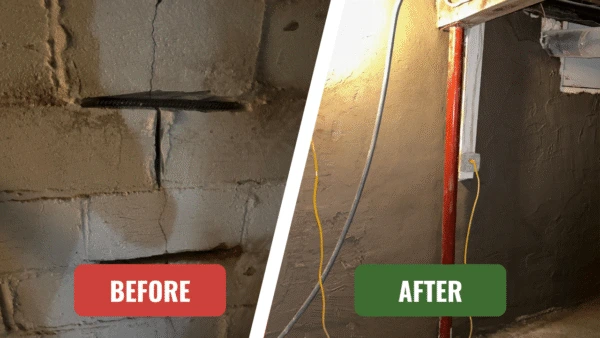
The crack follows the mortar joints in a staircase up the wall. That pattern means one part of the foundation has sunk lower than the rest.
Musty air upstairs
Much of what you breathe up here starts below. Wet ground down there arrives as humidity you cannot air out of the rooms.
Doors that stick
The door used to close fine and now it catches or will not latch. The frame is no longer square because the floor under it has moved.
Some of this you can live with for years. Cracks that have not moved, a bit of damp after a storm that dries on its own. What we would want to see is anything still changing: a wall bowing further in than it was, water arriving in the same corner every time it rains, a floor that is still dropping. Getting it looked at while it is small is the cheap version of this.
From a basement wall that stays damp after every storm, to a floor that has settled out of level, to a crawl space that never dries out, these are the calls we get across Alexandria. Tap any service to see what the work involves and when it is honestly not the fix you need.
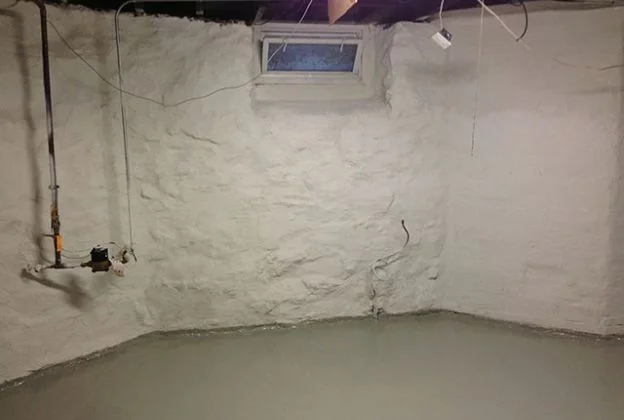
We dry out the basements that stay damp after rain, giving the water an easier way out instead of letting it find the weakest seam in the wall.
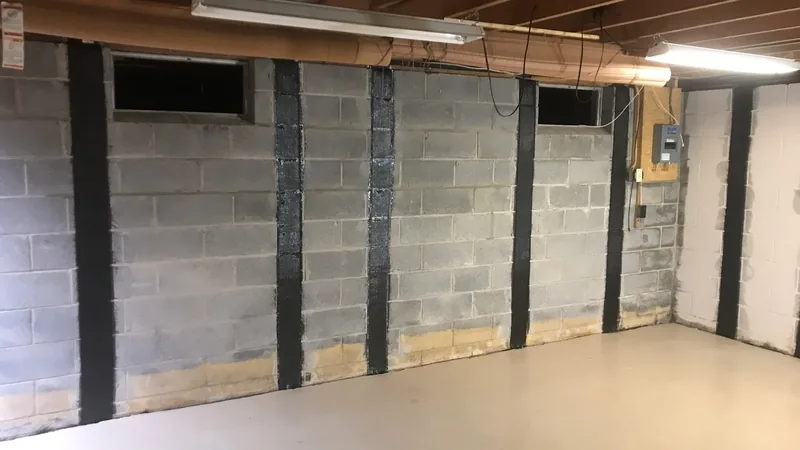
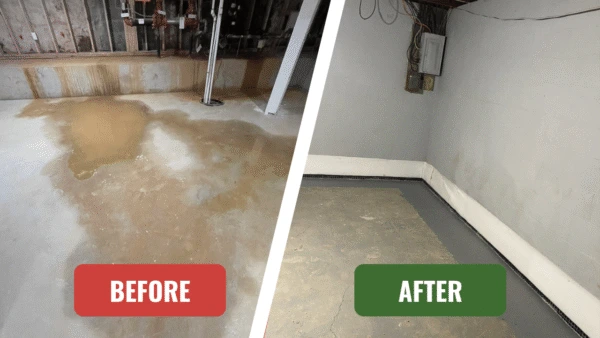
Learn moreA damp line along the bottom of the wall, chalky white bloom on the block, water creeping across the floor after a hard storm. Most of Rosemont was built with a basement under it, and this is what they do when the ground outside holds water. Pressure builds against the wall and it comes in wherever the wall is weakest, which is why patching the spot you can see never holds for long.
Instead of fighting that pressure we give the water somewhere to go. An interior drain goes in around the edge of the floor, perforated pipe bedded in washed stone below the slab, running to a pit where a pump sends it clear of the house. The stone has to be washed, or fine grit works into the pipe and blocks it inside a season.
Not every basement needs all that. Where the yard slopes toward the house, as it does on plenty of Del Ray lots, regrading is a smaller job and sometimes the whole fix. Sealing one active crack can be enough on its own. It does nothing for a burst pipe and will not fix condensation.
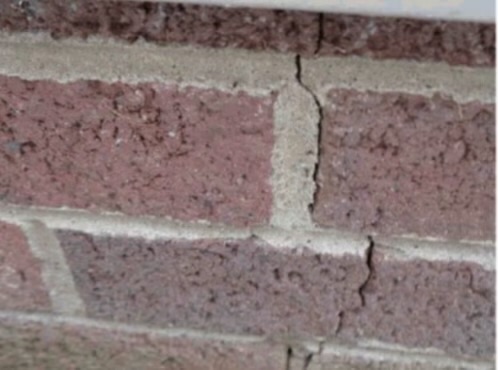
We close up the cracks stepping through the brick, bring sloping floors back toward level, and free the doors that stick, setting a settled foundation back onto ground that holds.
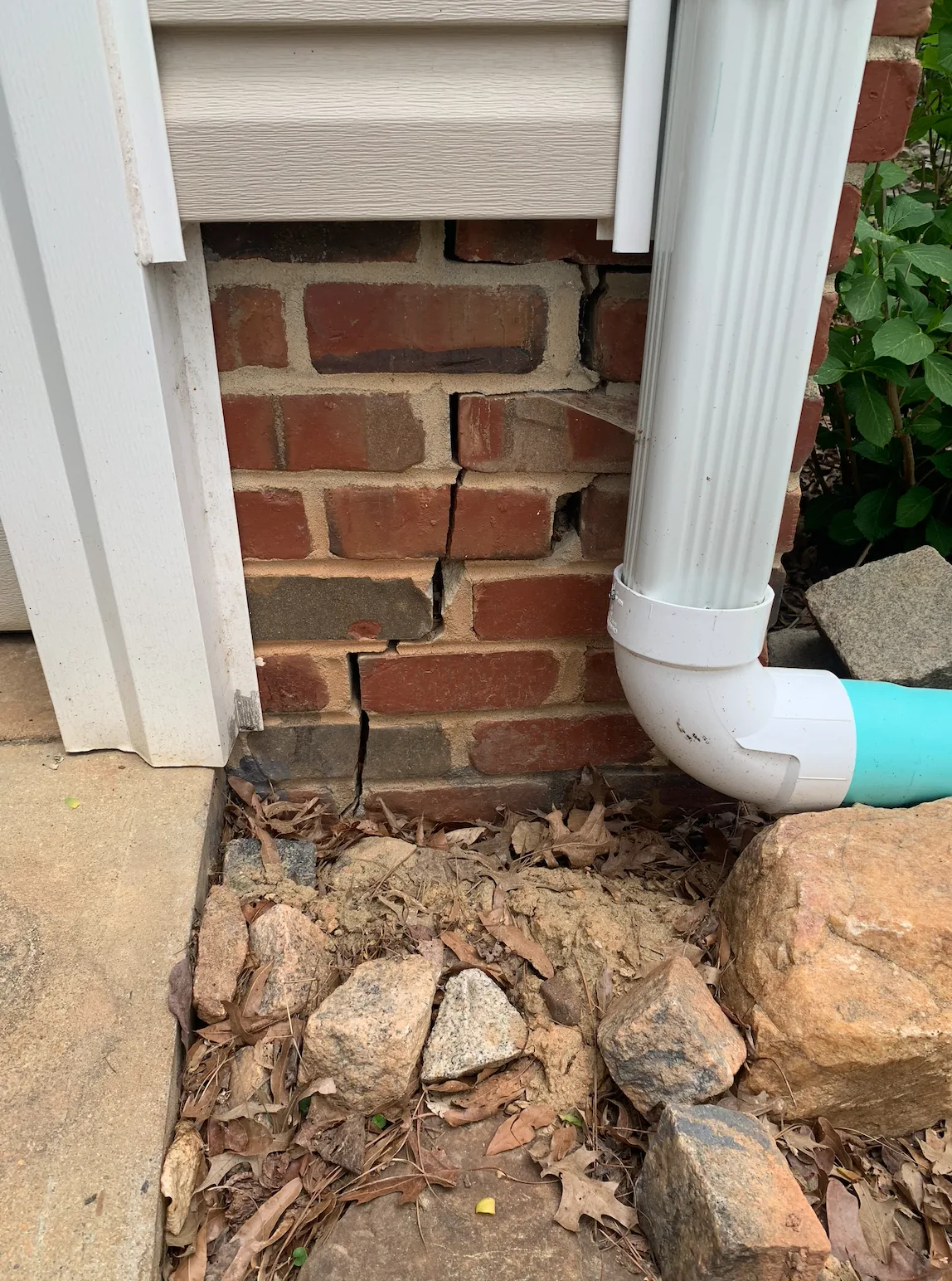
Learn moreA door you have to shoulder shut, a crack above a doorway, brick outside cracked in a stair-step pattern. The question people ask first is whether it is serious or whether it can wait. In Alexandria it usually comes back to one part of the footing sitting lower than the rest, and on the Rosemont houses, which average 1954, a lot of that settling finished decades ago.
How we fix it depends on what moved. If the footing sank, we drive steel piers down to solid ground and move the weight of the house onto them. If a wall is leaning in, we brace it. If the house settled long ago and then stopped, we seal what it left behind and leave the rest alone.
If a corner has dropped enough that you can see it across a doorway, we can usually lift it back, over several days so the plaster upstairs does not crack, which matters more in the older Old Town houses than anywhere else in the city. None of it dries the ground out. If the footing sank because the soil stays wet, we handle that in the same job.
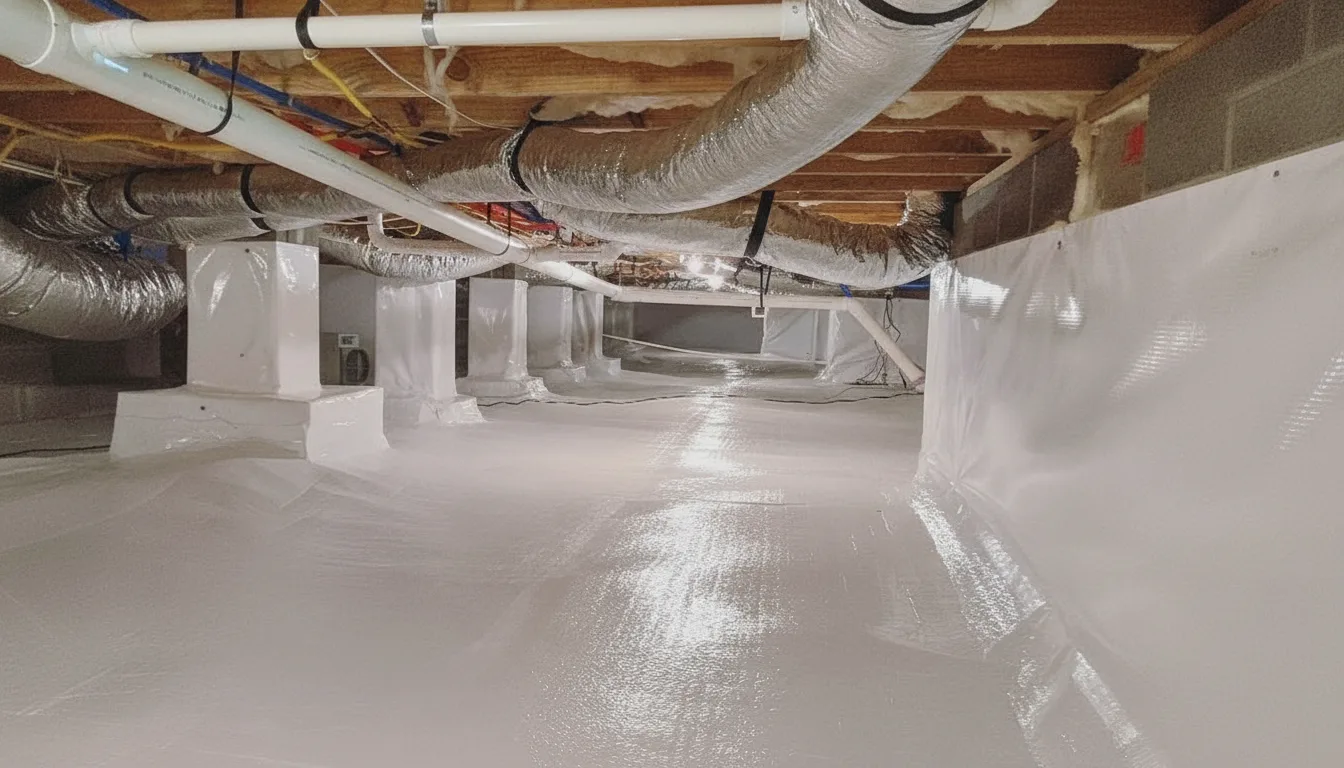
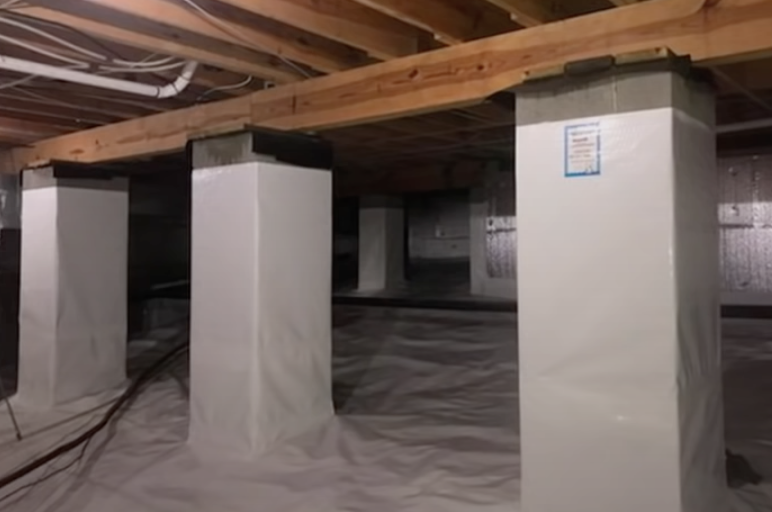
We stop the damp, musty air rising out of the crawl space by sealing the bare ground and the vents off from the house, so the rooms above dry out.
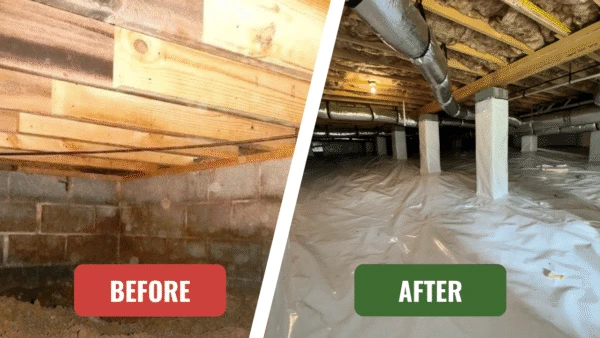
Learn moreA musty smell that meets you at the door, floors that feel cold in January, humidity upstairs that will not come down whatever the thermostat says. All of it starts under the house. Where a Taylor Run home sits over a crawl space rather than a basement, that floor is usually bare dirt, and bare dirt gives off water all day long.
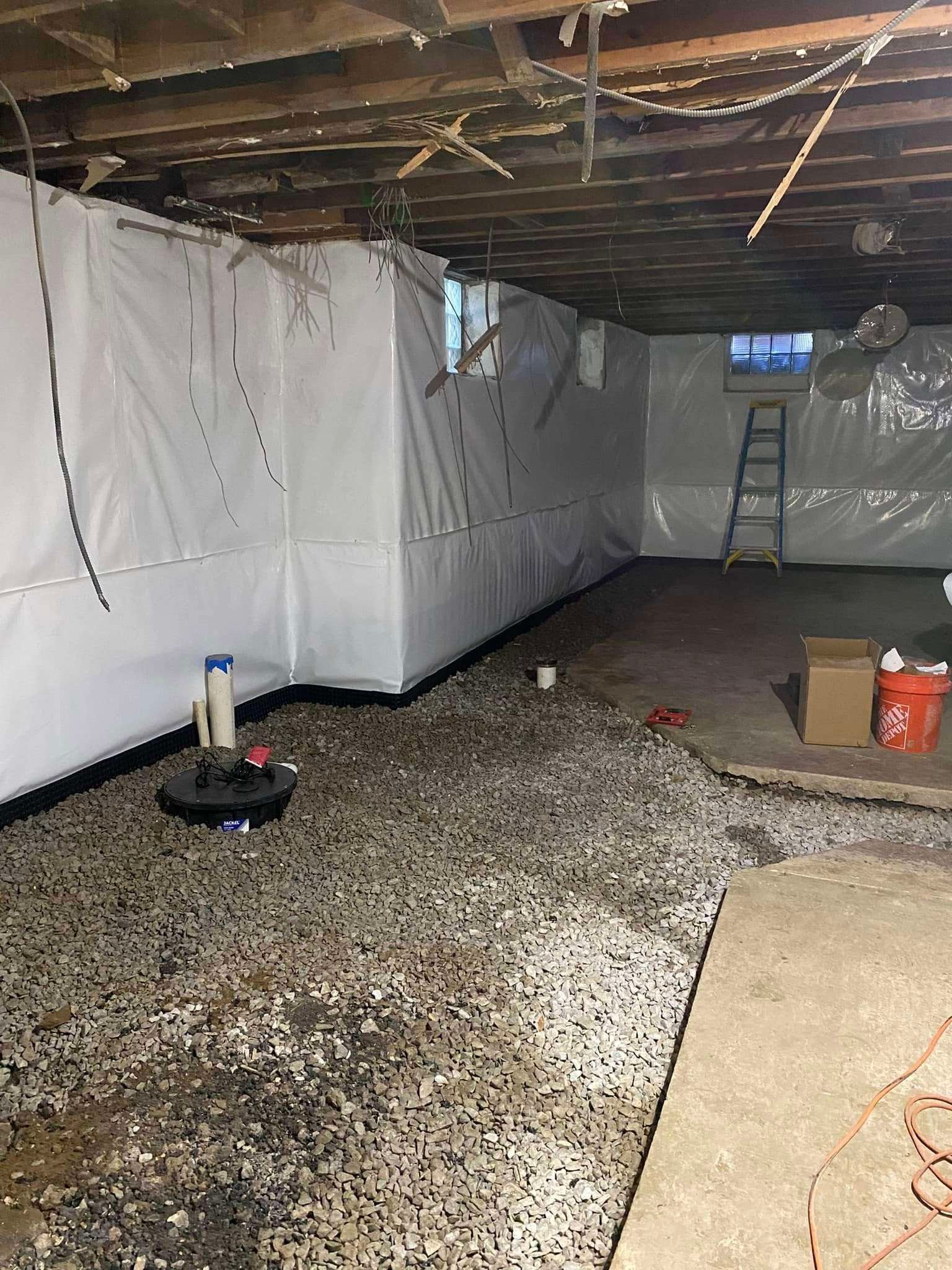
Encapsulation covers that ground. A heavy liner goes over the whole floor, up the piers and up the walls, taped at the seams and run over the top of the footing so nothing gets in behind it. We close the vents, because summer air here carries in more water than it takes out. Then a dehumidifier sized to the space keeps it dry and drains itself.
This is not a structural repair. A floor that has already dropped needs new supports as well, and a liner laid over standing water only hides the water. Where the space has standing water, as it does on the lower Arlandria lots, drainage goes in first, because sealing over water only traps it under the liner. If your crawl space is already dry and covered, a vapor barrier alone will do.
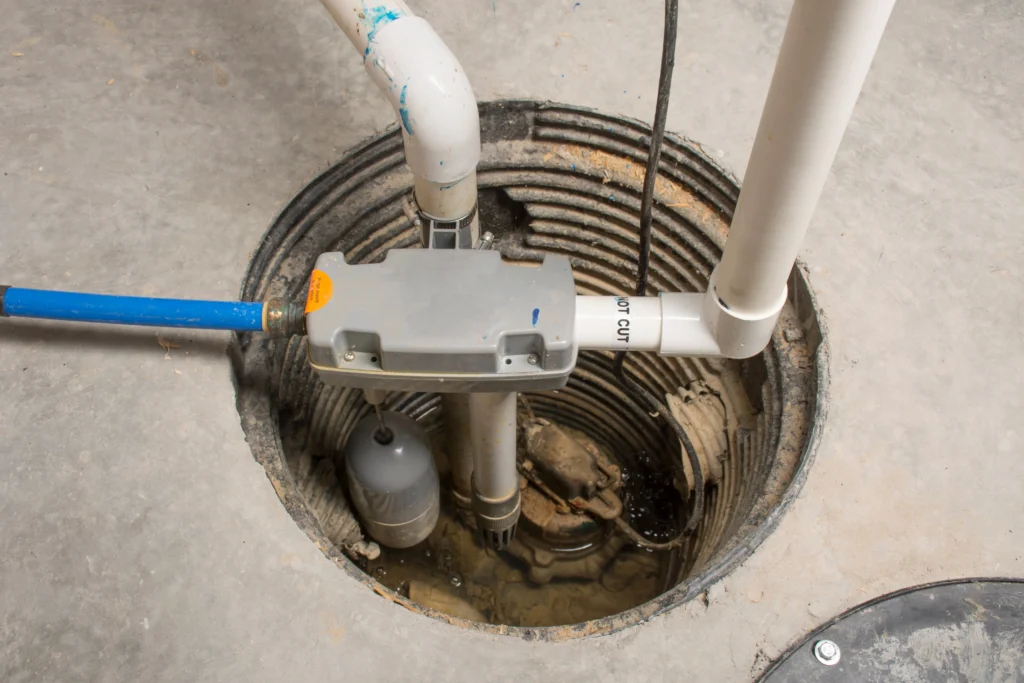
We clear the water collecting under the house with a sump pump set in the low spot, pumping it out on its own before it can pool and sit.
Learn moreWater across the floor after a storm, a pump you can hear running constantly, or one you only find has quit because the basement is already wet. Everything else down there collects water and sends it somewhere. The pump is what gets it out of the house, and most people meet theirs on the night it fails.
In the Rosemont basements the pit goes wherever the floor falls to, so the drain lines run into it. The pump sits on a solid base inside the pit rather than down in the silt, which kills more pumps than hard work does. A check valve stops the last few gallons draining back down the pipe. The outlet has to finish well away from the house.
On its own a pump waterproofs nothing. If nothing drains toward the pit it sits dry while the far corner floods. A battery backup covers the power cut that arrives with the storm, and most units last seven or eight years here. On a Del Ray house that has flooded before, a second pump set higher in the pit earns its place, since it only runs when the first falls behind.
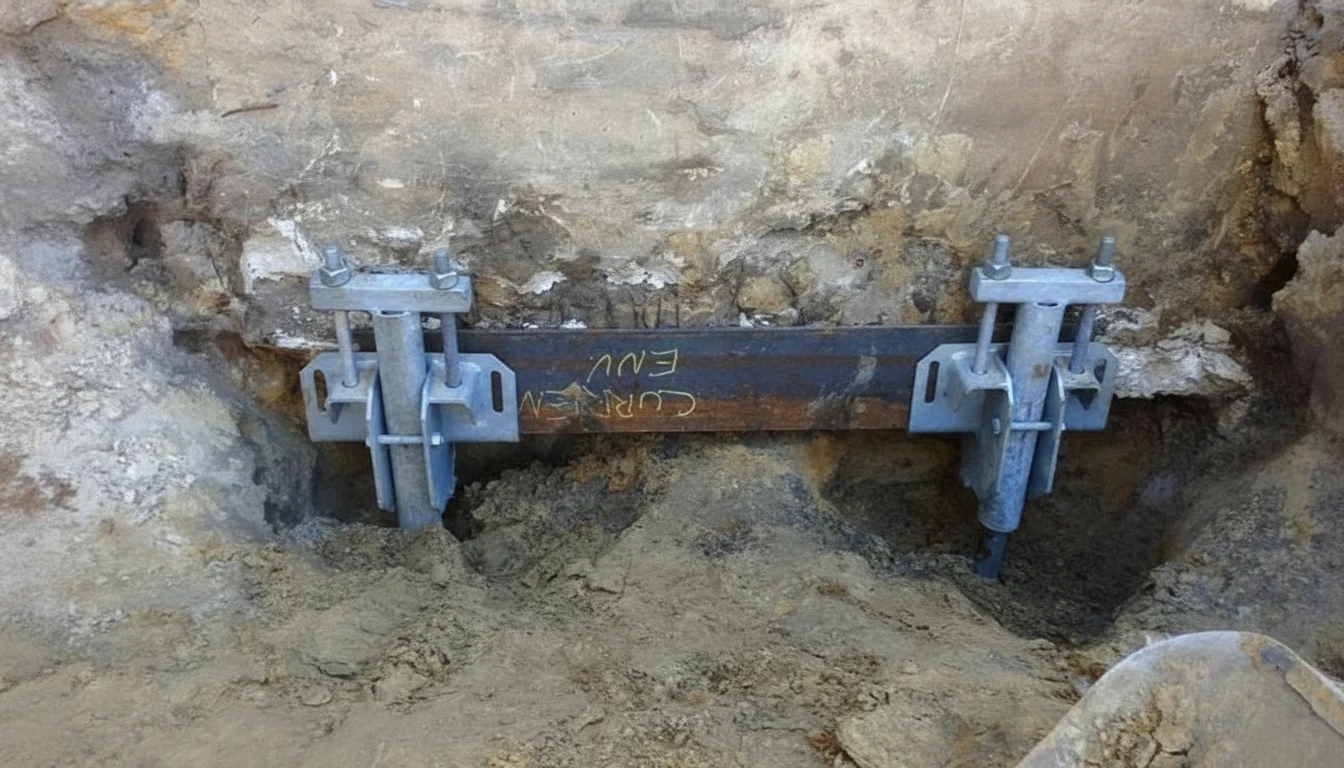
We firm up the floors that sag and bounce overhead by replacing the failing posts, beams and joists underneath, so the rooms sit solid instead of dipping toward the middle.
Learn moreA floor that runs downhill across a room, a spot near the middle that gives when you cross it, doors upstairs that have started catching. Something a few feet below has moved. The posts have pressed into ground that was never compacted, the beam has sagged between them, and joists that have breathed damp air for seventy years are not as strong as they were.
We pull the old posts and set adjustable steel ones on new concrete pads, so the weight rests on concrete instead of dirt. The beam comes back to level a little at a time over several days, because lifting it in one afternoon cracks plaster upstairs. Weak joists get new lumber bolted alongside, soft ends are cut back to solid wood, and anything rotted through gets replaced.
Lifting a floor does nothing about why it dropped. Around Northeast, where the ground holds water, the new lumber ends up like the old lumber if the damp stays. We look at both on the same visit and tell you which part needs doing now and which will keep another year. Access shapes the price as much as the work does, and under the Taylor Run houses it is tight.
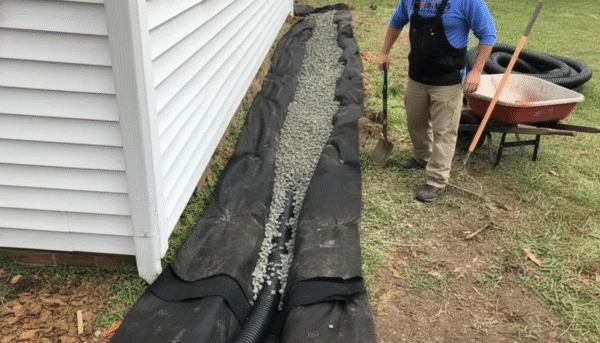
We take on the water that pools against the house with nowhere to drain, laying a french drain that catches it below ground and carries it well clear.
Learn moreA strip of lawn still soft three days after rain, ground along one side of the house that never quite dries, a basement that takes water at the same corner every storm. That is water sitting against the house instead of running away from it. On the flatter Potomac Yard ground it has nowhere obvious to go.
We dig a trench above wherever the water keeps arriving. Filter fabric goes in first so silt cannot block the pipe, then perforated pipe on a steady fall, then washed stone packed around it. The water hits the stone, drops into the pipe and runs off. Depth matters more than length, because the pipe has to sit below the level the water is travelling at.
Where the pipe ends matters too. Emptying into ground that is already wet does nothing. This handles groundwater and nothing else. A crawl space damp from humid air is a different job, and regrading the yard is sometimes the cheaper answer, which we will say when it is. Downspouts emptying at the wall get picked up in solid pipe and carried clear, which on the older Rosemont lots is often the whole job.
Queen Foundation Repair is here to help with the structural side and the water side of the same house. We are a leading provider of foundation work across the Alexandria area, handling basement waterproofing, foundation repair, crawl space encapsulation, and sump pump installation.
Most of what we look at starts small. A damp patch along the bottom of a basement wall, a floor that dips a little when you cross it, cracks working their way up through the brick. Left alone those get more expensive, because whatever is holding water against the house carries on doing it while you decide.
That is why we look before we quote. Someone comes out, checks the house inside and out, and tells you in plain words what is happening and what it would take to fix. You get the price in writing before anything starts. If what you have is cosmetic, we will say so rather than sell you a repair you do not need.
Alexandria runs old and new together: Rosemont dates to the fifties with basements under most of it, while Potomac Yard went up in the last decade. We work both ends of that and everything in between, and you can see everything Queen Foundation Repair does across Virginia. We are licensed and insured, the warranty stays with the house if you sell it, and we do not charge you to come out and look.
Get your free inspection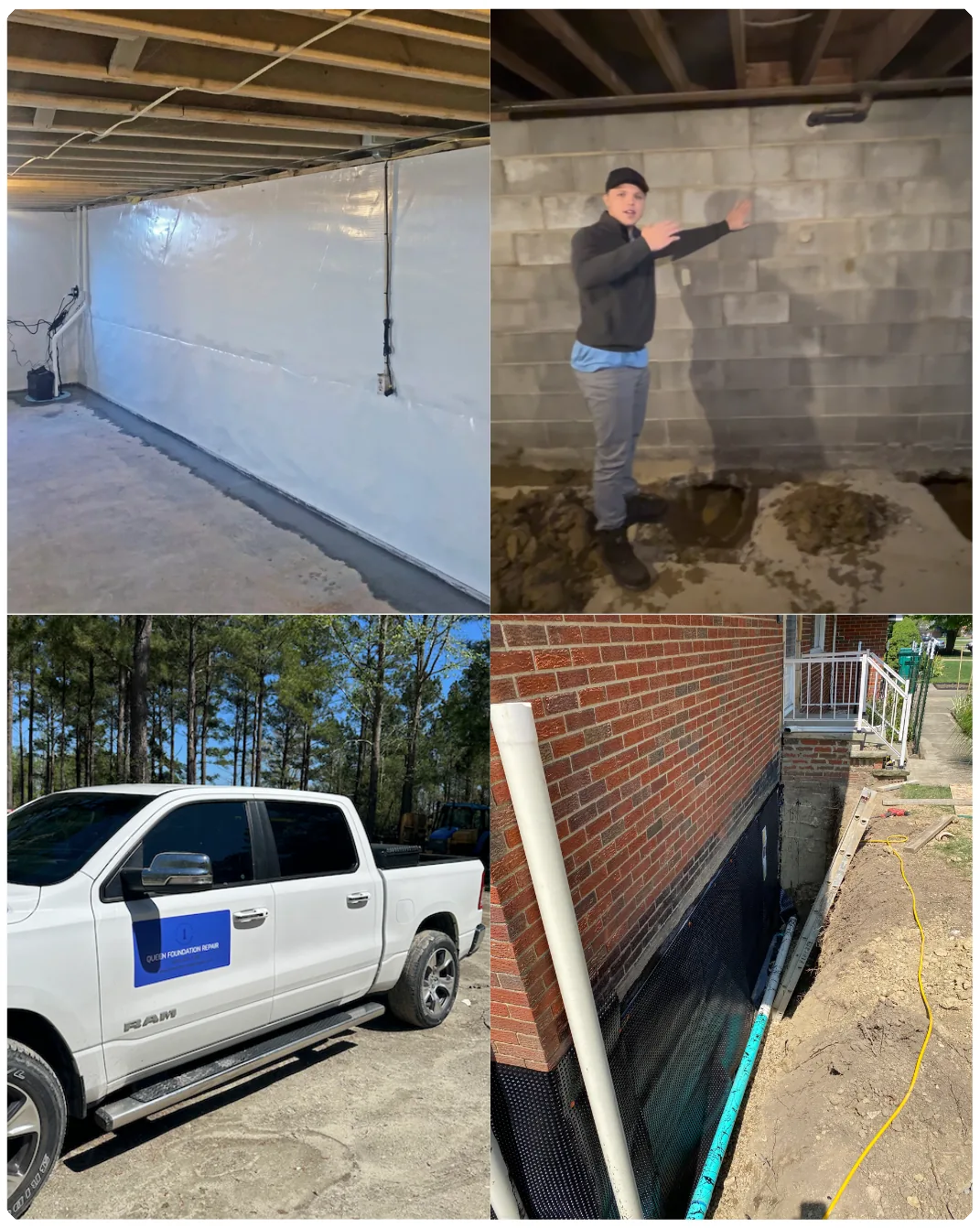
WHAT YOU GET
We answer fast and get out to the house quickly, so you're not sitting for weeks just to find out what's wrong and what it'll cost.
No charge to have us come out, find what's going on, and lay out what the fix takes. You know where you stand before spending a dollar.
Licensed, with full liability and workers' comp coverage, so the work is done to code and your property is protected if anything goes sideways.
The repair comes with a written warranty that transfers to the next owner, so it protects your home's value if you ever sell.
A clear, written price upfront before anything starts, no vague ballpark and no surprise add-ons once the work is underway.
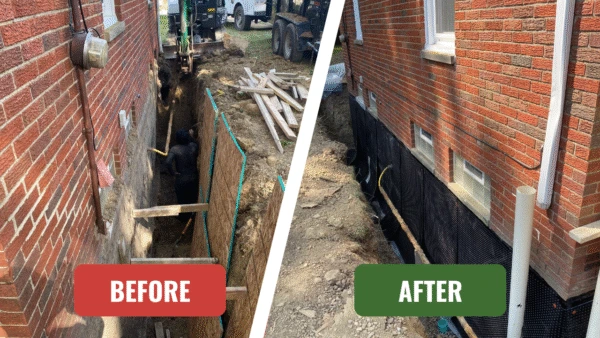
Most older Alexandria homes have an original basement holding back ground that stays wet. We are in them daily, from Rosemont to Northeast.
COMMON QUESTIONS
The questions we get asked most here, answered straight. Waterproofing comes first, because that is what people ask about before anything else, on houses from Rosemont out to Potomac Yard.
Waterproofing Costs
An interior drain with a pump generally runs $5,000 to $12,000 for an average Alexandria basement. The spread comes from how much wall you are opening up and whether a pump and pit go in. Regrading the yard, if that is all it turns out to need, is a fraction of that. Sealing a single active crack can be a few hundred dollars. We measure the run and check where the water is coming from before quoting, and the price goes to you in writing.
Fixing what is putting water there. Extending downspouts well clear of the wall and regrading so the yard falls away from the house costs a few hundred dollars and solves a real share of wet basements. Try that before anything gets excavated.
A 1,000 square foot crawl space usually runs $3,000 to $7,000, at roughly $3 to $7 per square foot installed. A liner over dry ground with decent access is the bottom of that. Drainage, a sump or a dehumidifier moves it up.
Inside or Outside
Inside for most houses here. An interior drain gets the water out from under the slab and costs a fraction of excavating. Outside is the better fix when the wall itself is failing and has to be relieved, but it means digging the full depth of the foundation.
Yes, that is what an interior system is. The trench runs inside along the base of the wall rather than outside around the footing, so nothing in the yard gets opened up. It manages the water instead of keeping it out, which for most Alexandria basements is the practical answer.
The one that matches how the water is getting in. Interior drainage for groundwater under the slab. Regrading and downspouts for surface water. A wall membrane for seepage through block. Anyone who recommends the same system before looking is selling a product, not a fix.
Crawl Spaces and Vapor Barriers
It does when the crawl space is actually driving something upstairs, like a musty smell or humidity you cannot get down. Sealing the ground stops the moisture at its source. It does nothing if the space is already dry and the ground is covered.
It meets the code minimum but it tears the first time somebody crawls over it, and a split liner does close to nothing. We use reinforced stock heavy enough to be walked on. If nobody will ever go under there 6 mil holds, but in practice somebody always does.
Yes. Bare soil gives off water constantly and the only place it can go is up into the house. Covering it is the single cheapest thing you can do down there. Lap it up the walls rather than stopping at the edge, because that joint is where much of the moisture escapes.
Cracks and Movement
Wider than a coin is worth attention. So is any crack running sideways rather than up and down, anything longer than it was last year, and anything letting damp through. A hairline vertical line in poured concrete is usually the concrete curing.
Direction and movement. Vertical hairlines are usually shrinkage. Horizontal cracks mean the wall is being pushed and are the serious ones. Stair-step cracks through mortar mean something below has settled. If it is wider at one end than the other, something is still moving.
Almost always yes. Most cracks are not a safety question, they are a water question and a value question. What matters is whether it is still moving. We mark and measure it so the next reading tells you something instead of leaving you guessing.
Insurance and Timing
Usually not. Standard policies exclude gradual seepage, groundwater and earth movement, which covers most wet basements. What is covered is sudden accidental discharge, so a burst pipe is normally a claim. Sewer backup is an add-on most people do not have. Check your declarations page.
There is no bad season here. Interior work does not depend on the weather at all, so it goes ahead in January the same as June. The practical argument for booking off-season is scheduling, since everyone calls in spring once the wet months have shown them what their basement does.
Most Virginia foundation jobs land somewhere between $2,500 and $12,000. Sealing a crack from the inside is the bottom end and often comes in under $1,000. Carbon fiber straps on a bowing wall run a few thousand. Piers are the expensive end at roughly $1,200 to $2,000 each, and how many you need depends on how much of the house has moved. A whole-house job can pass $20,000, but that is not the typical call here.
Worth It or Not
When the crack is letting water through, yes, because the damage it causes costs more than the repair. When it is a dry hairline that has not changed in years, no. Telling those apart is most of what the visit is for.
Cost up front, and it is not a structural repair. A dry basement with a bowing wall still has a bowing wall. An interior system also means opening a strip of the floor, so a finished basement costs more because the finish has to come off and go back.
A properly installed reinforced liner lasts fifteen to twenty years, longer if nothing punctures it. The dehumidifier is what wears out first, usually somewhere around eight to ten years. Neither is fit and forget, and both want looking at every couple of years.
WHERE WE WORK
We serve the entire Alexandria metro, not just the city limits, working the older brick houses around Rosemont the same as the newer builds out past Potomac Yard and on into Fairfax County. See your neighborhood on the list below, or one bordering it, and the visit costs nothing.
ZIP CODES WE COVER
Ready to Get Started?
No obligation, fast and easy.
We appreciate you reaching out.
One of our team members will be with you shortly.