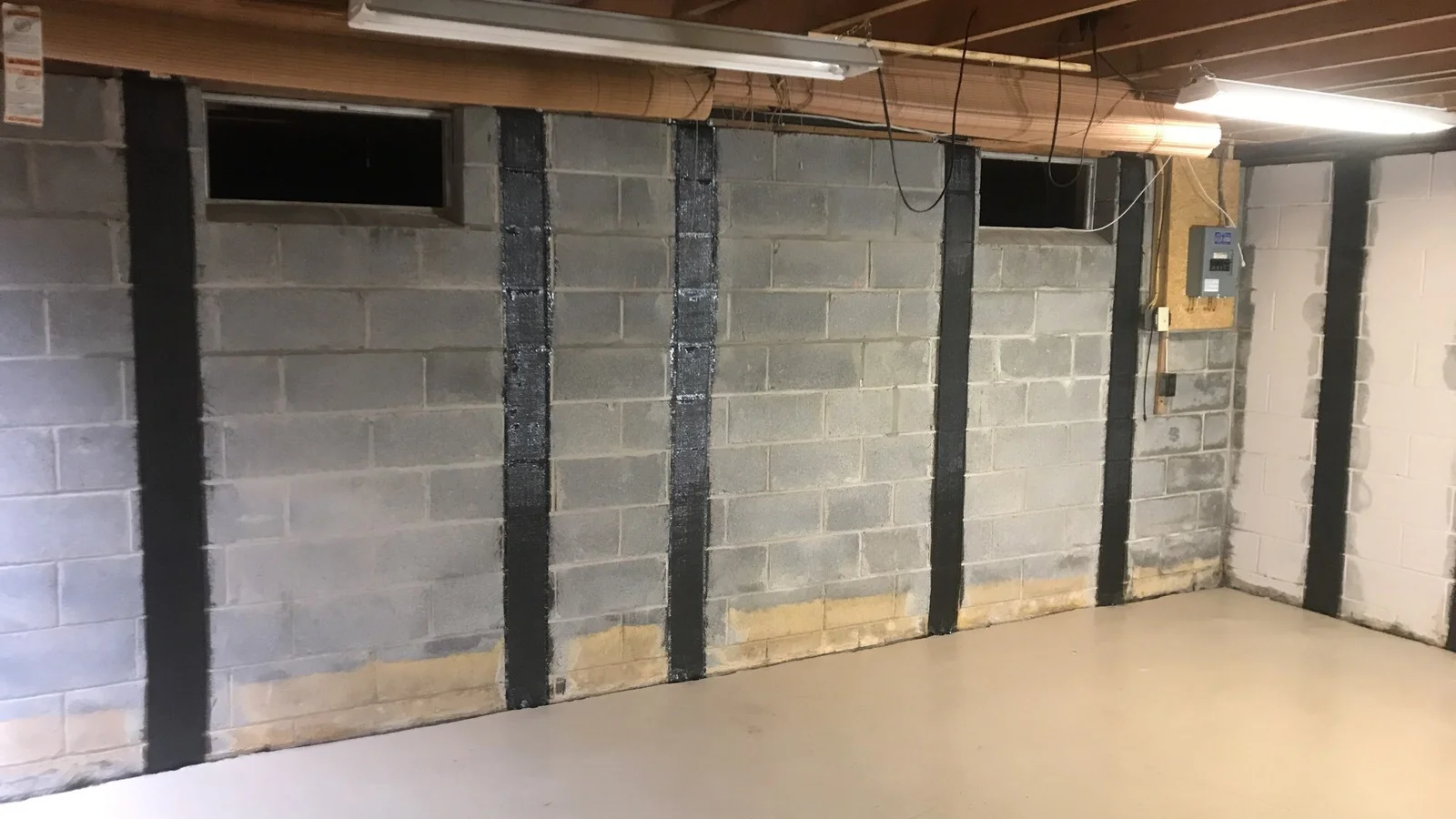
A corner of the house sitting low, a crack over a door, a crawl space that never dries out. We see all three across Huntsville, from Five Points out to Hampton Cove, and we handle crawl space encapsulation, foundation repair and french drain installation. The inspection is free.
Get Your Free Inspection
We appreciate you reaching out.
One of our team members will be with you shortly.





WHAT WE SEE MOST
A lot of Huntsville is younger than people expect, and a newer house shows trouble in its own way. Some of what turns up is the house finding its level. Some of it is not. These are the ones we get called about most often.
The ground under it is open
Bare dirt gives off moisture all day and the vents pull humid summer air into a cool space. You smell it upstairs before you see it.
The fill under it moved
One end of a room sits lower than the other. On a newer house that usually points at the ground underneath rather than the framing.
The opening is being pulled
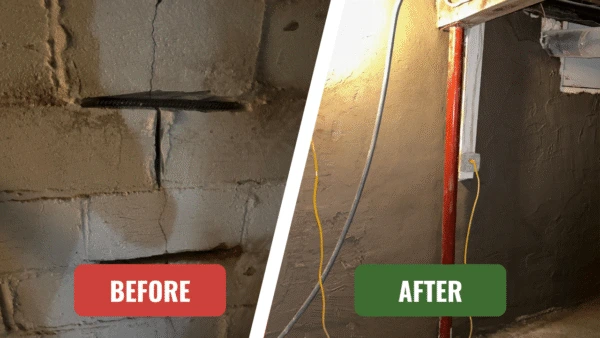
A thin crack running up and away from a door corner means that part of the wall has shifted. Watch whether it reopens after patching.
It has nowhere else to go
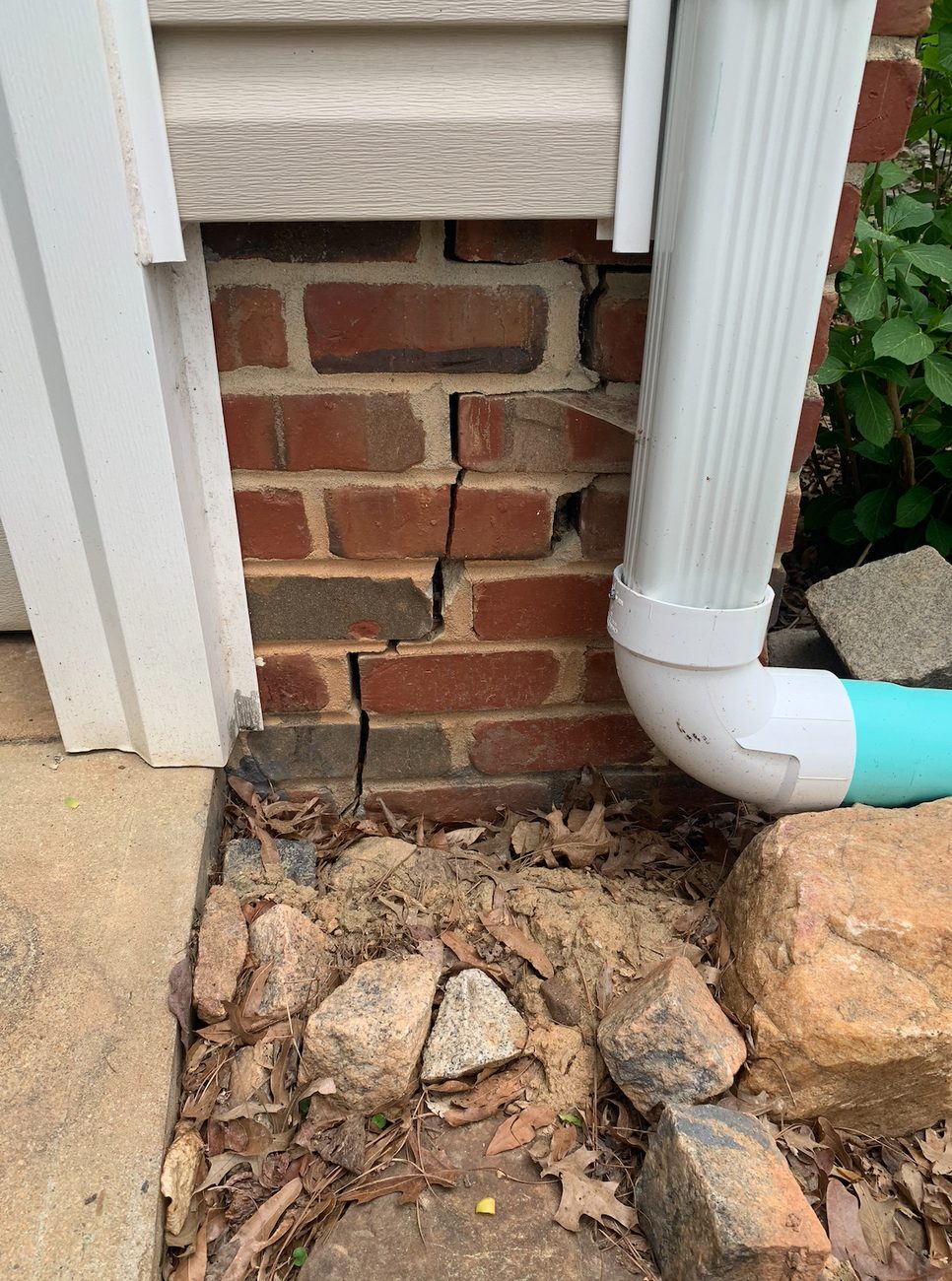
A downspout emptying at the corner leaves standing water right where you least want it. That water works on the ground the footing sits on.
The ground outside is pushing
A wall that has moved inward, or a crack running side to side along one course, means pressure from saturated ground on the high side.
The frame is out of square
The gap down the latch side is wider at one end. Doors and windows stop closing right before most people notice anything else.
Age is the useful question here. A house that has been standing for sixty years has usually done its moving. One that went up fifteen years ago on a graded lot may still be going. Hairline cracks that stay the same width are rarely urgent. A corner that keeps dropping, a crack that reopens after patching, or water standing against the wall after every storm is worth a look. It costs nothing to have someone check.
From a crawl space that never dries out to a corner of a newer house sitting lower than the rest, these are the calls we get across Huntsville. Tap any service to see what the work involves.
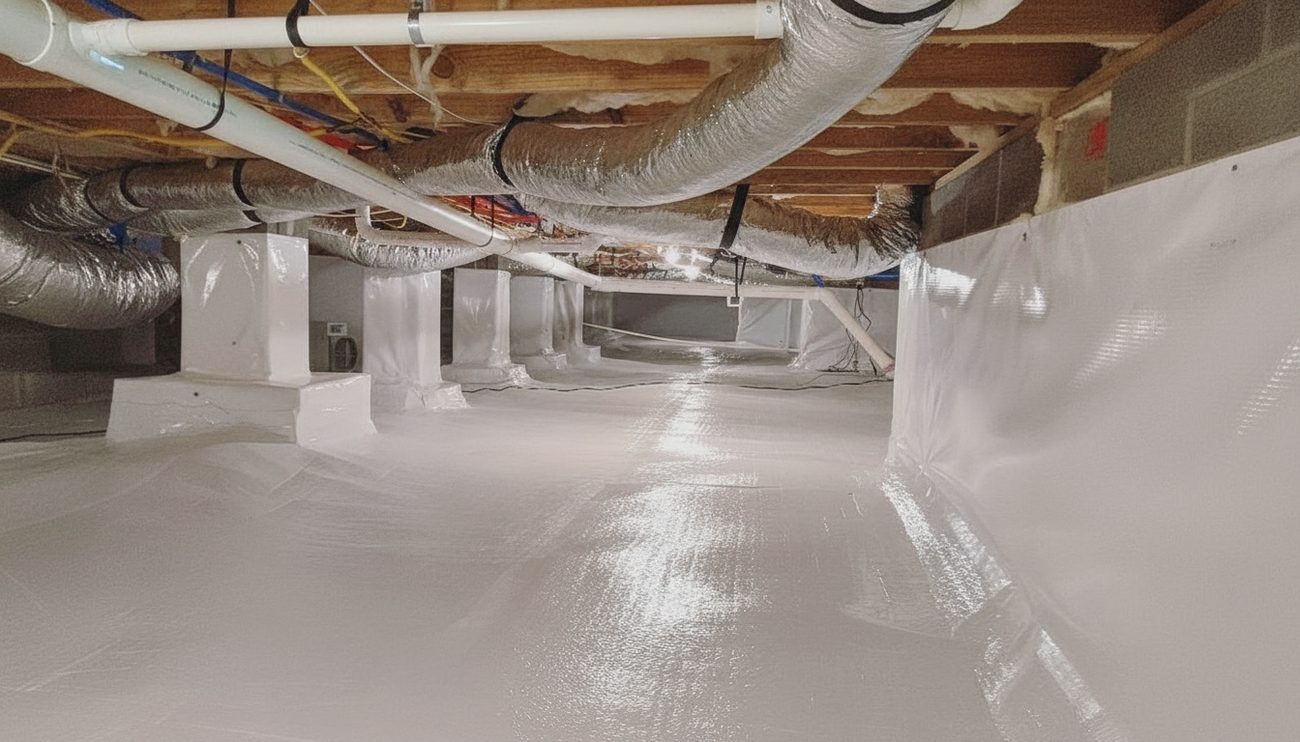
Seals the crawl off from the ground below it, so the damp stops rising into the floor and the smell goes with it.
Learn moreMost houses here sit over a crawl space, and most of those crawls open onto bare dirt. Earth gives off moisture without stopping. The vents were meant to carry it off and mostly do the opposite, drawing humid Alabama air into a cool space where it condenses on the joists. Around Five Points, where the houses are older and the crawls are shallow, that is the usual story behind a smell nobody can locate.
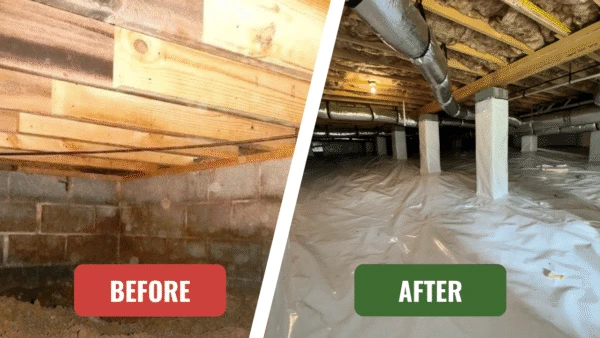
Heavy liner goes down across the whole floor and carries up the piers and the perimeter wall, every seam taped and the top edge sealed. Old foundation vents get closed permanently. Standing water is drained and pumped out before anything gets sealed over it, and a dehumidifier holds the space at a set level afterward.
You notice it upstairs within a few days, in the smell and in floors that stop feeling cold. It will not straighten a floor that has already sagged, and it is not a termite treatment. Down around Lily Flagg, where the ground holds water longer, the drainage has to be sorted first or the liner just covers a puddle.
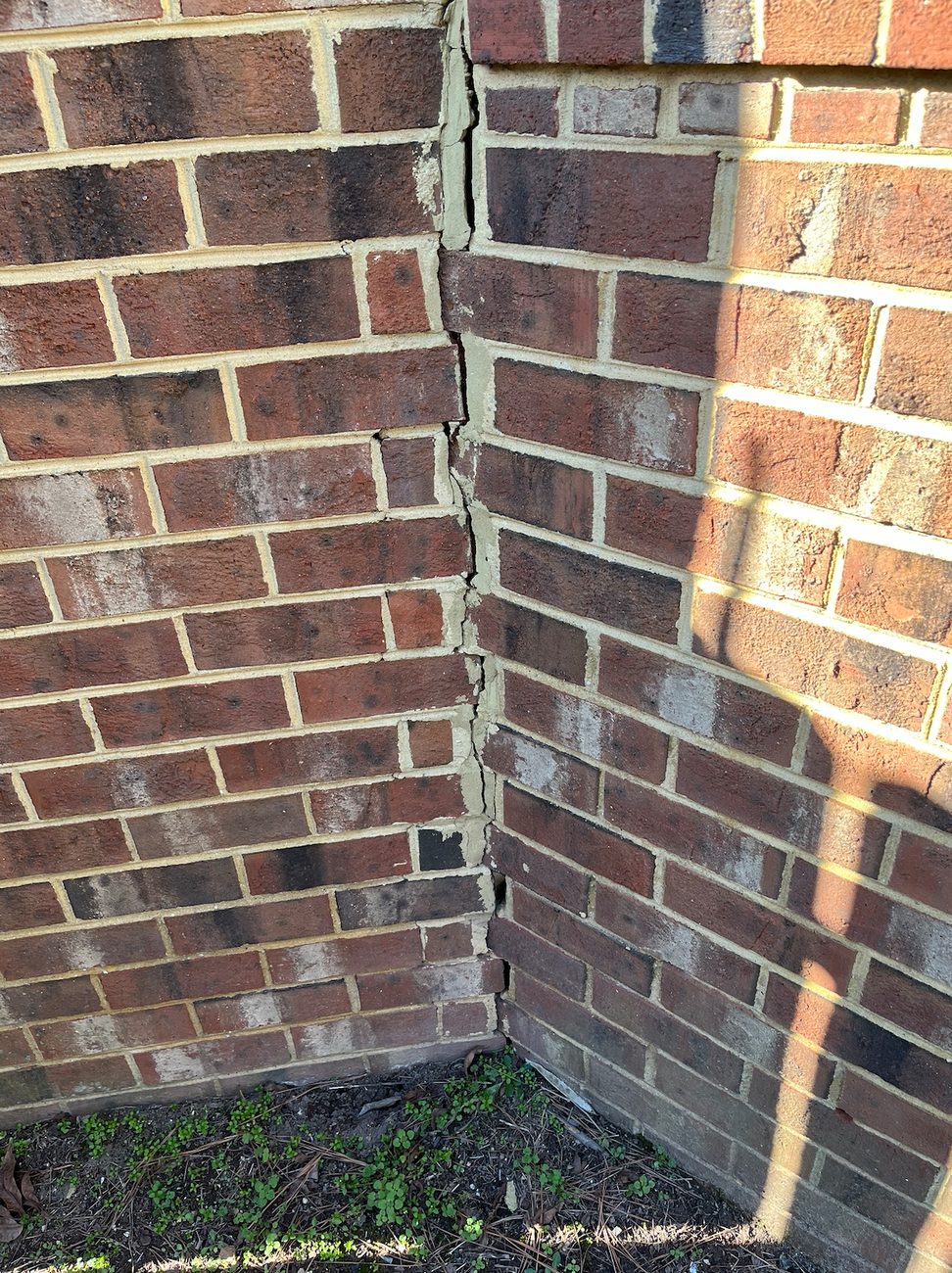
Gets a settled section of the house back up and keeps it there, once we know what stopped carrying it.
Learn moreSettlement here is usually partial. One corner goes and the rest holds, which is what makes the cracks run at an angle and the doors stick in one part of the house only. On a newer property the reason is very often the ground rather than the building: a graded lot, fill brought in to level it, and years of rain working that fill tighter under one side. Out in Hampton Cove, where the subdivisions went up quickly, that is the common thread.
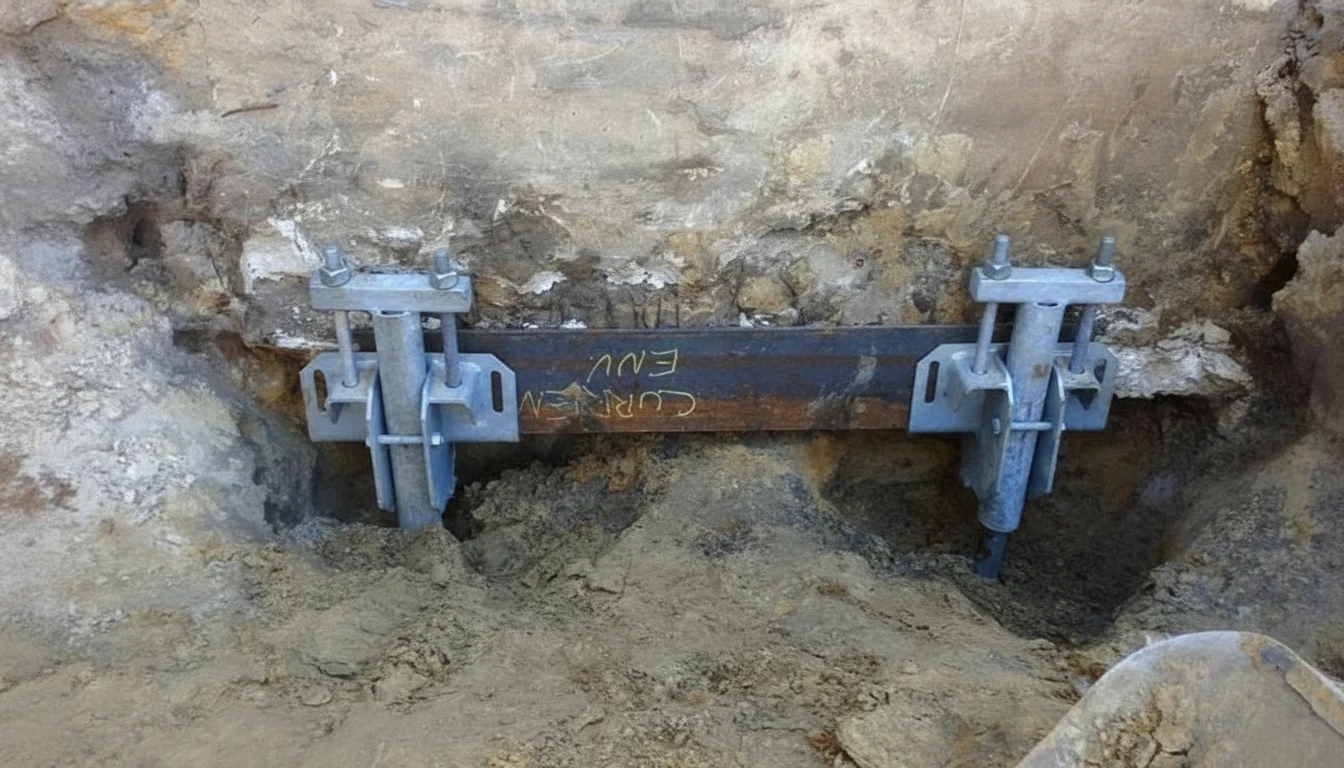
Steel supports are driven down past whatever gave way until they reach material that holds, then loaded to bring the section back toward level. How far it comes back depends on the house. Where water is still arriving, that gets fixed first, or the ground keeps moving under the new supports.
So the first visit is measuring, not quoting. Levels through the rooms, a look underneath, and a walk round the outside to see where the water goes. In Providence the lots are tighter and drainage is more often the answer than piers. It all goes in writing before anyone talks price.
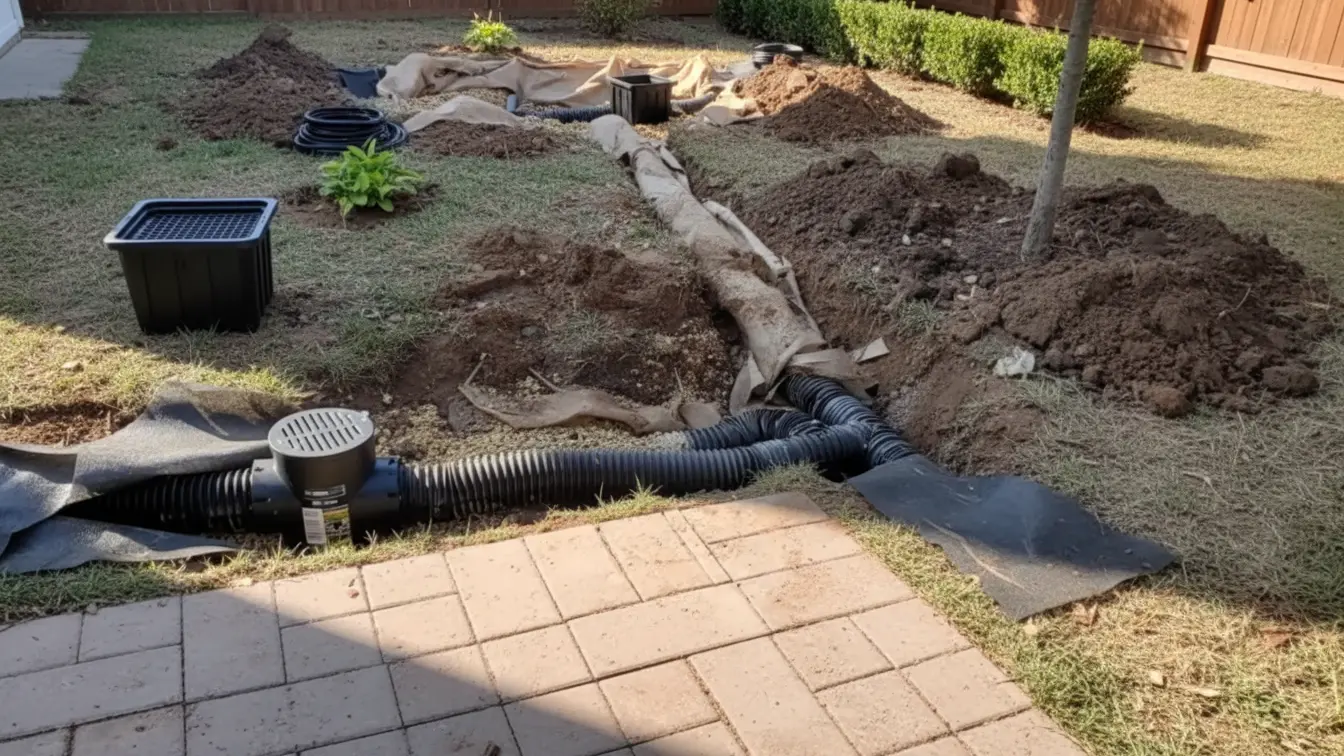
Gives water a path away from the house before it reaches the footing, on a lot that already drains toward you.
Learn moreHuntsville gets a lot of rain and much of it lands on ground that was graded rather than left alone. Water runs off the high side of a lot, crosses the yard and stands against whatever stops it, which is usually a foundation wall. Up at Weatherly Heights, where the ground falls away sharply behind the houses, the volume arriving at the back wall is more than the roof alone would explain.
A trench is opened along the path the water already takes, lined so soil cannot silt the pipe up, and a perforated pipe bedded in washed stone. The fall carries water away without a pump and discharges well clear of the building. Roof leaders get tied in rather than emptying at the corner.
It is the cheapest thing on this list by a wide margin and it solves more than people expect. What it will not do is dry a wall that water is already inside. On the flatter lots around Hampton Cove there is sometimes nowhere downhill to send it, and then it is the wrong answer and we say so.
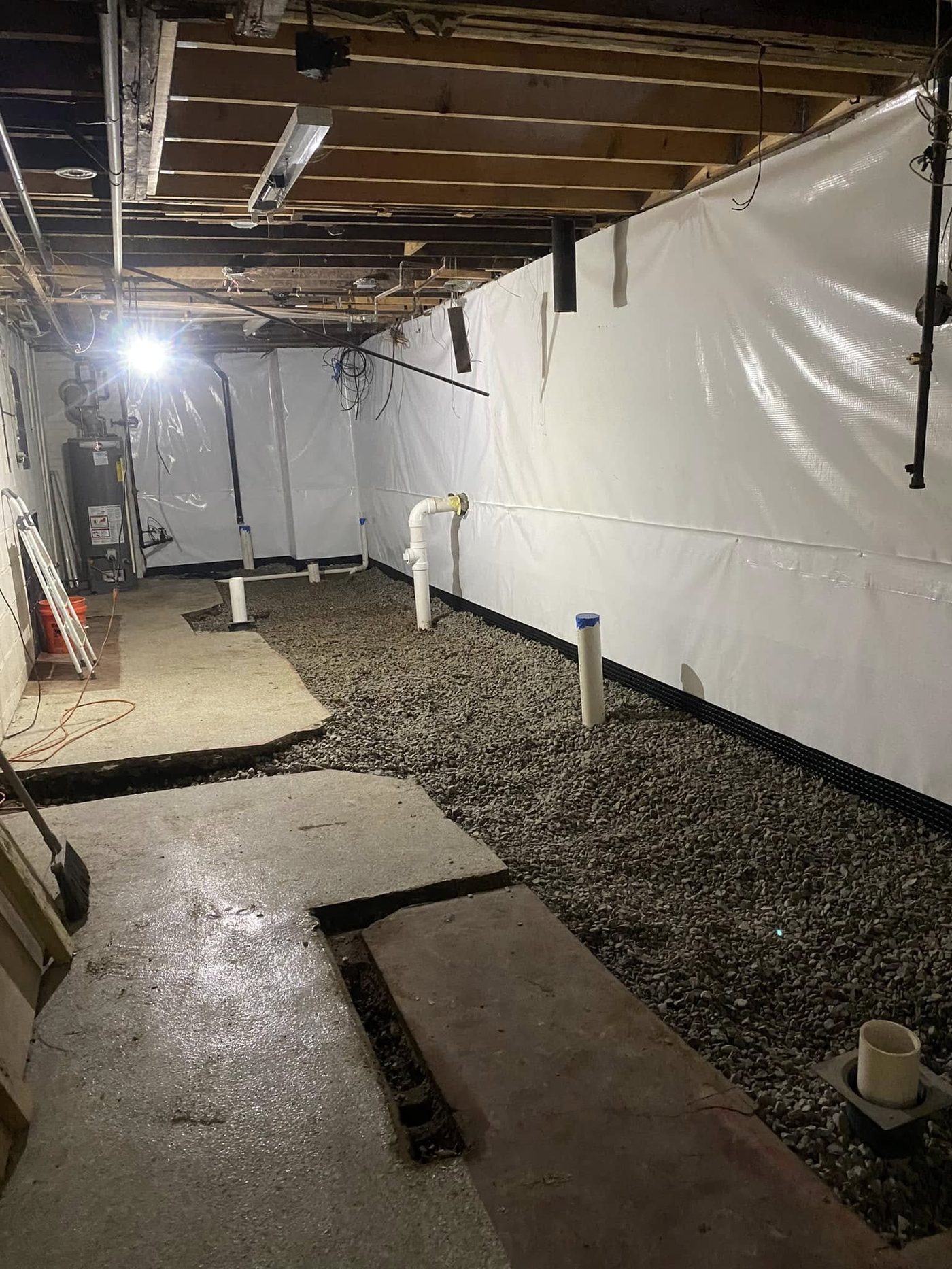
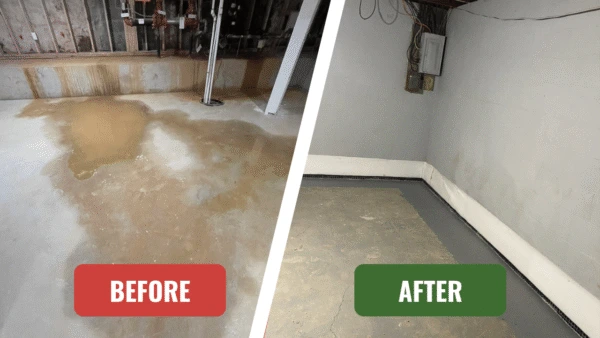
Stops water arriving through a basement wall in the first place, rather than managing it with a shop vac after every heavy storm.
Learn moreBasements are the exception in Huntsville rather than the rule. Where they exist it is generally because the lot was cut into a rise, which means ground sits higher than the floor on at least one side and everything uphill drains toward that wall. Weatherly Heights has more of them than anywhere else in the city, and they take water differently than a basement on flat ground.
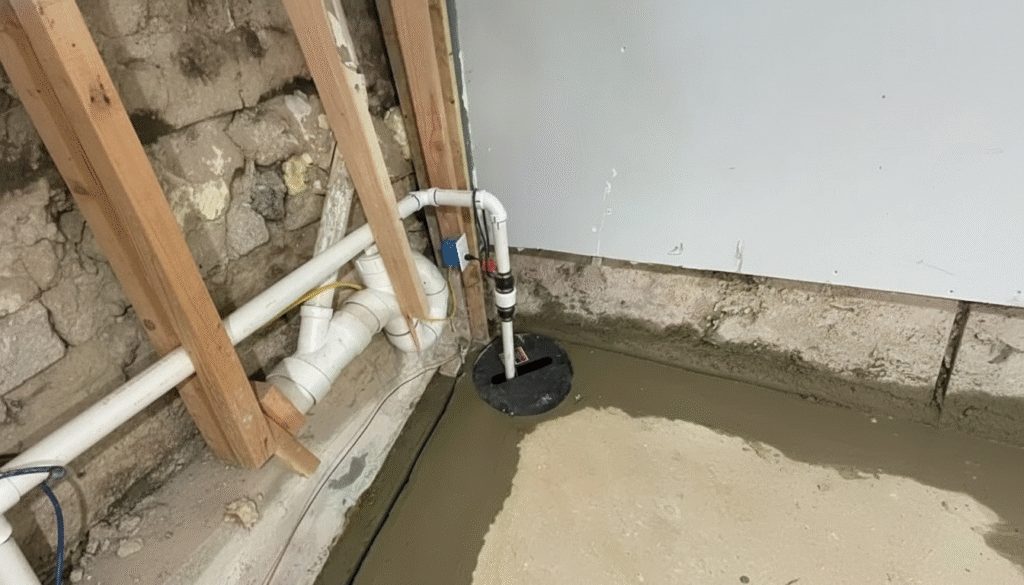
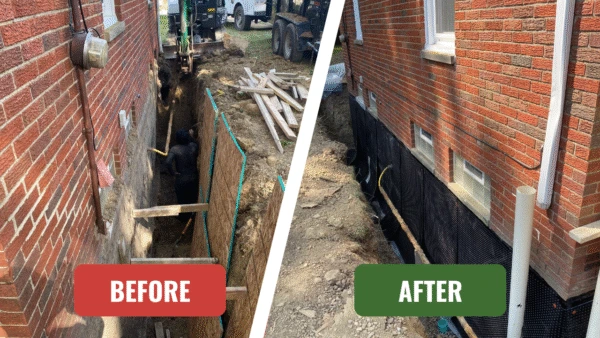
Inside, a channel is cut at the perimeter below the slab, piped to a pit and pumped back out. Outside, the wall is excavated, sealed across its face and given a footing drain so the water never arrives. The exterior version costs several times the interior one and lasts far longer.
Which you get is usually decided by access rather than budget. Around Twickenham the lots are generous enough to bring a machine round the back; plenty of cut lots are not, and on those the honest answer is interior drainage even though everyone knows it is the lesser of the two fixes. Neither one straightens a wall that has already moved, and anyone selling waterproofing as a cure for that is selling you the wrong job.
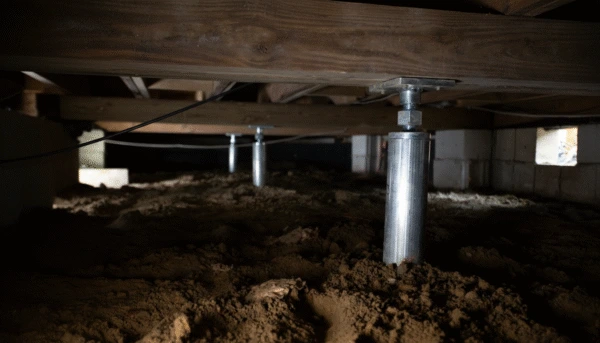
Puts the structure under the floor back to carrying weight, when a post or a joist end has given up.
Learn moreA floor that gives when you walk it, or slopes toward the middle of a room, is reporting on what holds it up rather than on the floor itself. The usual culprits are a joist end that has rotted where it meets the masonry, or a support post that has settled into ground which never had a chance to dry. In Five Points, where a good deal of the stock is from the fifties, both tend to show up together.
Soft ends get sistered or replaced, a sagging beam is picked up onto new posts bearing on proper footings, and any support that has dropped is reset on ground that will carry it. Lifting happens gradually, because a house that has settled into a shape over decades will crack if you rush it.
The repair only holds if the water is solved alongside it. Timber softens because it stays wet, so new wood over an unsolved cause simply repeats this in a few years. Over toward Terry Heights that usually means fixing where the roof water lands before anything else gets touched.
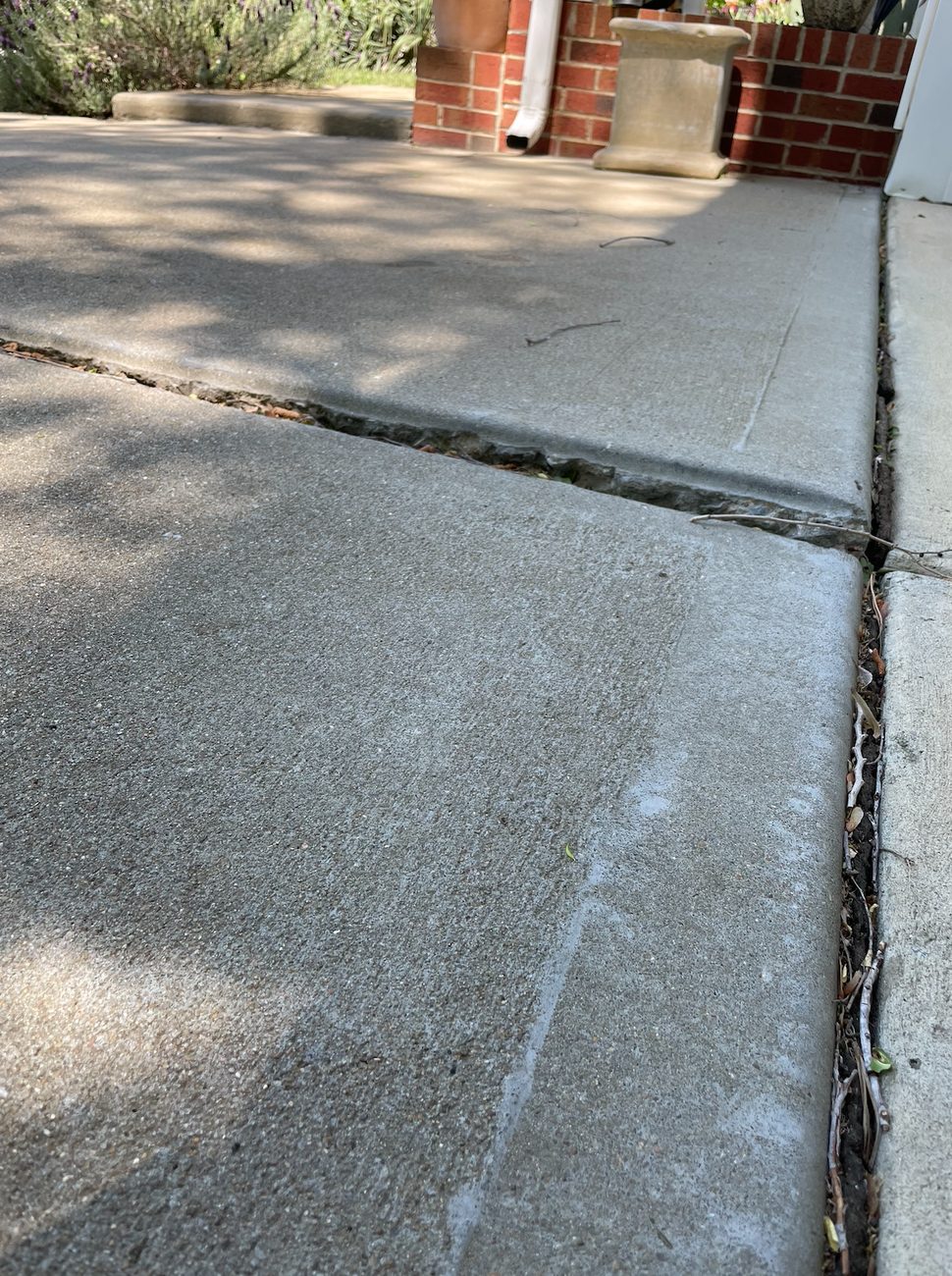
Raises a dropped driveway or walkway slab back up to where it belongs, without breaking the whole thing out and repouring it.
Learn moreA slab drops when whatever held it up moves, and around here that usually means water washing soil out from under an edge, or fill that was never properly compacted finally settling. A great deal of the ground under the newer subdivisions was brought in and levelled rather than dug into, and made ground keeps settling for years after anybody remembers it being placed. Providence sees this on driveways more than most.
Small ports are drilled through the slab and material injected underneath, filling the void and lifting the panel back to grade. It takes foot traffic the same day and a car within hours, which on a driveway is usually what decides it. The ports get patched and the original slab stays put, which is where the saving comes from.
Worth working out why the ground left in the first place, because lifting a slab does not stop whatever moved the soil. If water still runs under there the void reopens. Around Sherwood Park, sorting the drainage while the slab is already up beats paying for a second lift later.
Queen Foundation Repair handles the two things that go wrong under a Huntsville house: damp rising out of the ground underneath it, and ground that has stopped carrying the weight. We are a leading provider of foundation work across the city, covering crawl space encapsulation, foundation repair, french drain installation and basement waterproofing.
Most of what we get called to started small. A smell that turns up in one room, a hairline over a door that came back after painting, a corner of the floor sitting low. Left alone those get dearer, because the water behind them keeps coming.
So we look before we quote. From Five Points out to Hampton Cove, someone comes out, goes over the property inside and underneath, and tells you plainly what is happening and what putting it right involves. The price is in writing before work starts. If it is cosmetic, we will say so rather than sell you a repair you do not need.
A lot of the houses we work on are newer than people assume, which means the answer is usually about the ground rather than the building. You can see everything Queen Foundation Repair does across Alabama. Licensed and insured, and the warranty moves with the house if you sell.
Get your free inspection
WHAT YOU GET
We pick up quickly and get out to the property fast, so you're not waiting weeks to learn what's wrong and what it costs.
No charge for us to come out, work out what's happening, and lay out what the fix involves. You know where you stand before deciding.
Licensed, with full liability and workers' comp cover, so the work meets code and your property is protected if anything goes wrong.
Every repair carries a written warranty that passes to the next owner, so it protects the value of the house if you sell.
A clear written price before anything starts. No vague ballpark, and nothing new appearing once a crew is already on the job.
From the older crawl spaces around Five Points to the newer builds out in Hampton Cove, we are under these houses every week.
COMMON QUESTIONS
What your insurer will and will not pay for, whether encapsulation earns its money, why a newer house is settling at all, and what any of it costs. Same questions in Five Points and Hampton Cove.
Cracks, Cost and Timing
That most foundation work was never going to be covered. Policies pay for sudden accidental damage, a pipe bursting under the slab, and exclude settlement, seepage and ground movement, which is where nearly all of this sits. That is not a trick, it is written in the policy. Alabama also does not require carriers to offer the sinkhole coverage Florida mandates. Read the exclusions before you file, not after, because the wording moves around a good deal between carriers.
Do not guess. If you say the crack has been there for years, or speculate that the ground shifted, you have handed them a reason to call it long-term settlement and decline. Report what you can actually see and when you first noticed it. Anything you are unsure about, say you are unsure. Let the adjuster do the deciding.
Anything that looks gradual. Seepage, settlement, poor drainage and wear are the standard exclusions, and foundation problems usually fall in that bracket because they develop slowly. Sudden events fare better. It is worth photographing damage when you first see it, since a dated photo is the difference between a claim and an argument.
Does Waterproofing Actually Work
Yes, when the right one is done for the right reason. Interior drainage genuinely keeps a basement dry, and exterior sealing genuinely stops water reaching the wall in the first place. What does not work is sealer painted onto the inside of a wall that water is already coming through, and that is most of what gives this trade its reputation. Ask which of the two you are being quoted for, and why that one.
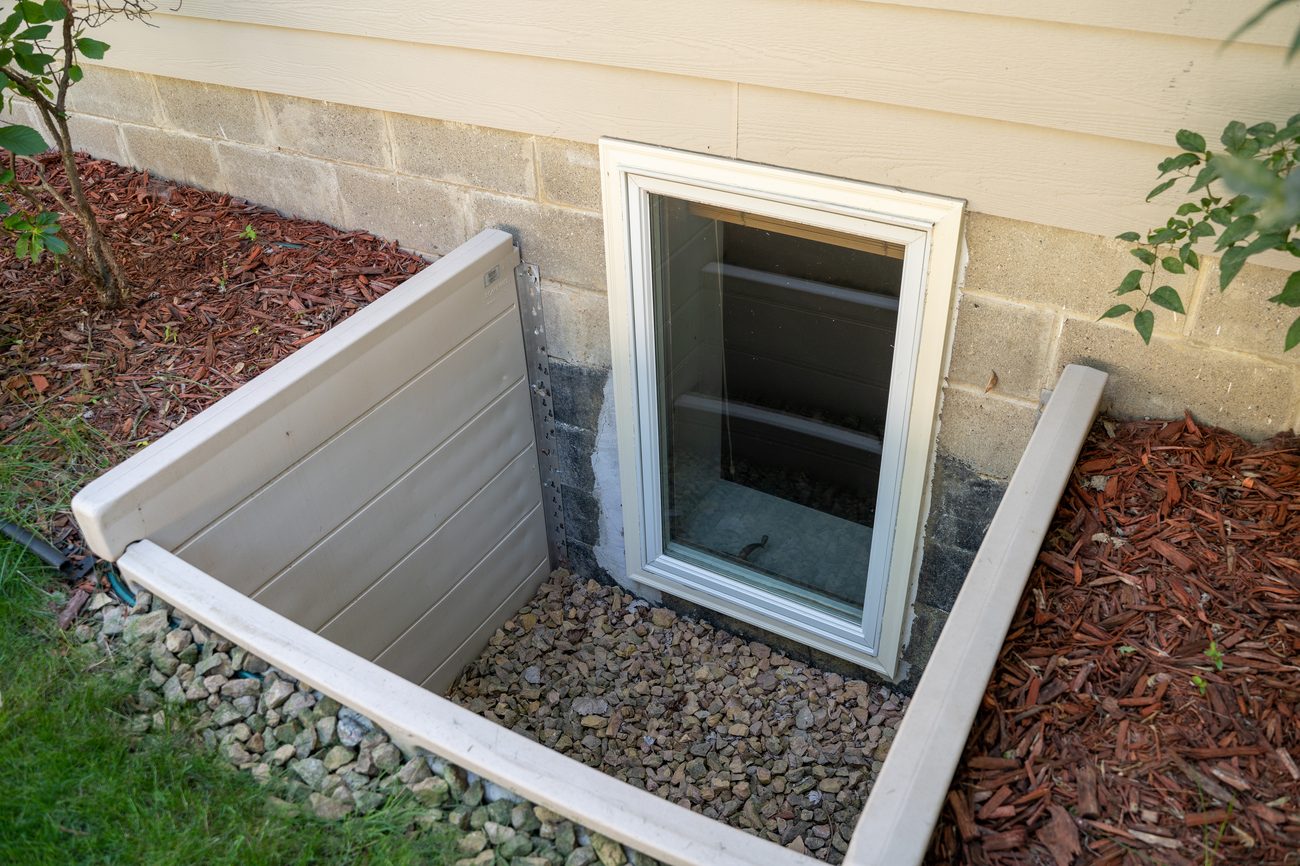
Sealing the inside face and calling it done. Skipping the drain on a window well. Running a discharge line to the corner of the house where the water comes straight back. And the biggest one, finishing a basement over a wall that still takes water, which hides the problem instead of fixing it.
The drainage and the membrane should outlast most of us if they went in properly. The pump is the part with a clock on it, usually eight to twelve years, and the discharge line has to stay clear. Ours carries a written warranty that transfers to whoever buys the house after you.
Inside, Outside and What It Costs
Not as a repair on your own home, in the ordinary case. Where it can matter is a rental property, where it may be treated as an improvement and depreciated over time, or an energy-efficiency angle if a qualifying dehumidifier is part of the job. That is a question for whoever does your return rather than for us. What we can do is give you an itemized invoice showing exactly what went in, which is the thing your accountant will ask for first.
It follows how much wall you are treating and which method the lot will actually allow. Sealing one spot where water is coming through is a few hundred. A full interior drain around the perimeter with a pit and a pump runs into the low thousands. Exterior excavation starts several times higher than that and climbs with depth and with how hard the wall is to reach. You get the number in writing after somebody has stood in the basement and looked at it.
No, because it is prevention rather than damage. Insurers pay to put right something that happened suddenly; they do not pay to stop something happening. The one place it can matter is afterward, when a documented dry crawl helps you argue that later damage was sudden rather than the result of a long-standing damp problem you left alone.
A Newer House
Because the ground it sits on is younger than the house. A great deal of Huntsville went up fast on lots that were cut and filled to make them level, and fill keeps consolidating for years afterward, unevenly, under one corner. An older house on undisturbed ground has usually finished moving. A newer one on made ground often has not.
That depends on the warranty you were given and how long ago you closed, and it is a question for the paperwork rather than for us. Structural coverage sometimes runs longer than the general warranty. We document what we find and put it in writing, which is what you need whoever ends up paying.
Limestone, mostly, and it dissolves. Rainwater is slightly acidic and works down through it over a very long time, opening spaces that soil then settles into. That is why two test holes on the same lot can hit solid rock at completely different depths, and why nobody honest will quote you piers without going out and measuring first.
Crawl Space Encapsulation
For most houses here, yes, because the crawl is the biggest source of moisture in the building and everything above it breathes that air. Done properly it changes the smell, the floors and the humidity upstairs. Done as a liner thrown over wet ground, it is money wasted, and that version is what people are really asking about.
It costs real money up front and the dehumidifier draws power year round, which is a running cost nobody mentions in the quote. Sealing a space that still holds standing water traps the problem rather than solving it, so the drainage has to come first. And it does nothing at all for a floor that has already sagged, which is a separate structural job carrying its own price. Anyone telling you it fixes everything under the house is overselling it.
It moves with the square footage, how much drainage has to go in first, and whether a dehumidifier is included. A small dry crawl is a few thousand. A large one needing a drain, a pump and a unit runs into five figures. The number goes in writing after somebody has actually been under there with a light.
Cracks, Cost and Timing
Inside, for most of them. A crack that is leaking can be injected from the inside and it holds, and it costs a fraction of digging the wall out. Outside becomes the answer when soil pressure is what opened the crack, because sealing it changes nothing while the load is still there.
The range is wide because the jobs are not alike. Sealing one crack is a few hundred. Drainage runs into the low thousands. Piers under a settled corner run well into five figures, since the price follows how many you need and how deep each one has to go before it finds something solid. Around here that depth is genuinely hard to predict until we test it, because the rock underneath rises and falls, which is why a number given over the phone is worth nothing at all.
Almost any of it. Interior work and crawl space work happen year round, since Alabama winters are mild and the temperature under a house barely moves. Exterior digging is the part weather delays, so a long wet spell pushes it. If anything, winter is the quieter season and the scheduling is easier.
WHERE WE WORK
We cover the whole Huntsville area, not only the addresses inside the city limits. That is all of Madison County and the towns around it, out through Madison and Meridianville. Most weeks the work is in the city itself, from Five Points and Twickenham out to Hampton Cove. The neighborhoods and ZIP codes below are where we get called most.
ZIP CODES WE COVER
Ready to Get Started?
No obligation, fast and easy.
We appreciate you reaching out.
One of our team members will be with you shortly.