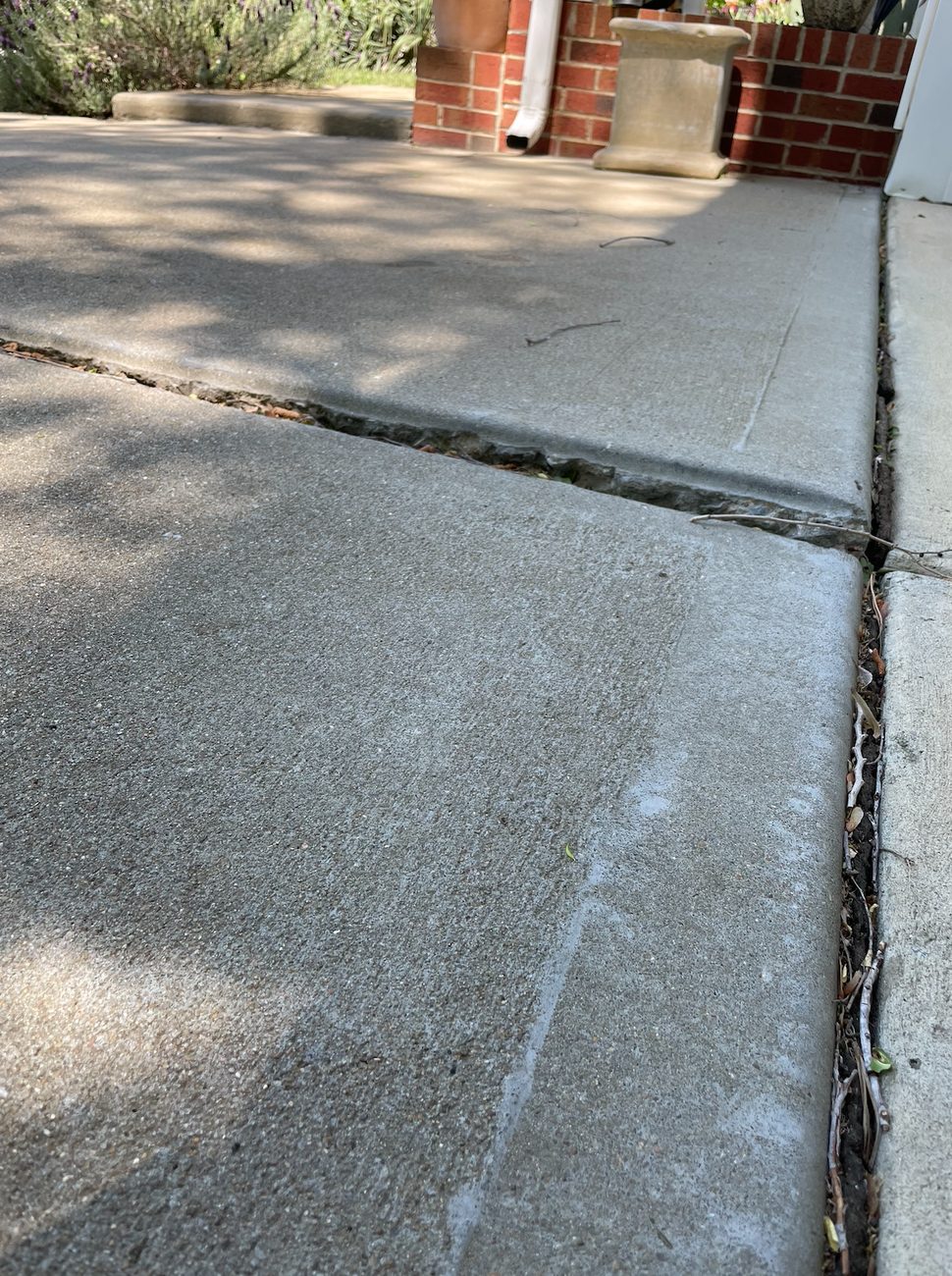
A wet basement every spring, a wall starting to bow, a door out of line? Canton's houses are old, and their basements have carried a lot of winters. From Ridgewood to Whipple Heights, we handle basement waterproofing, french drain installation, and sump pump installation, and the inspection is free.
Get Your Free Inspection
We appreciate you reaching out.
One of our team members will be with you shortly.





COMMON WARNING SIGNS
In a city where four houses in ten were built before 1940, the basement is usually where trouble speaks first. Some homes whisper it in a musty corner, others announce it in a wall. Here are the six signs Canton homeowners call us about most. Each points to a different foundation repair here in Ohio. Professional services for each of them.
Step Cracks in Old Brick
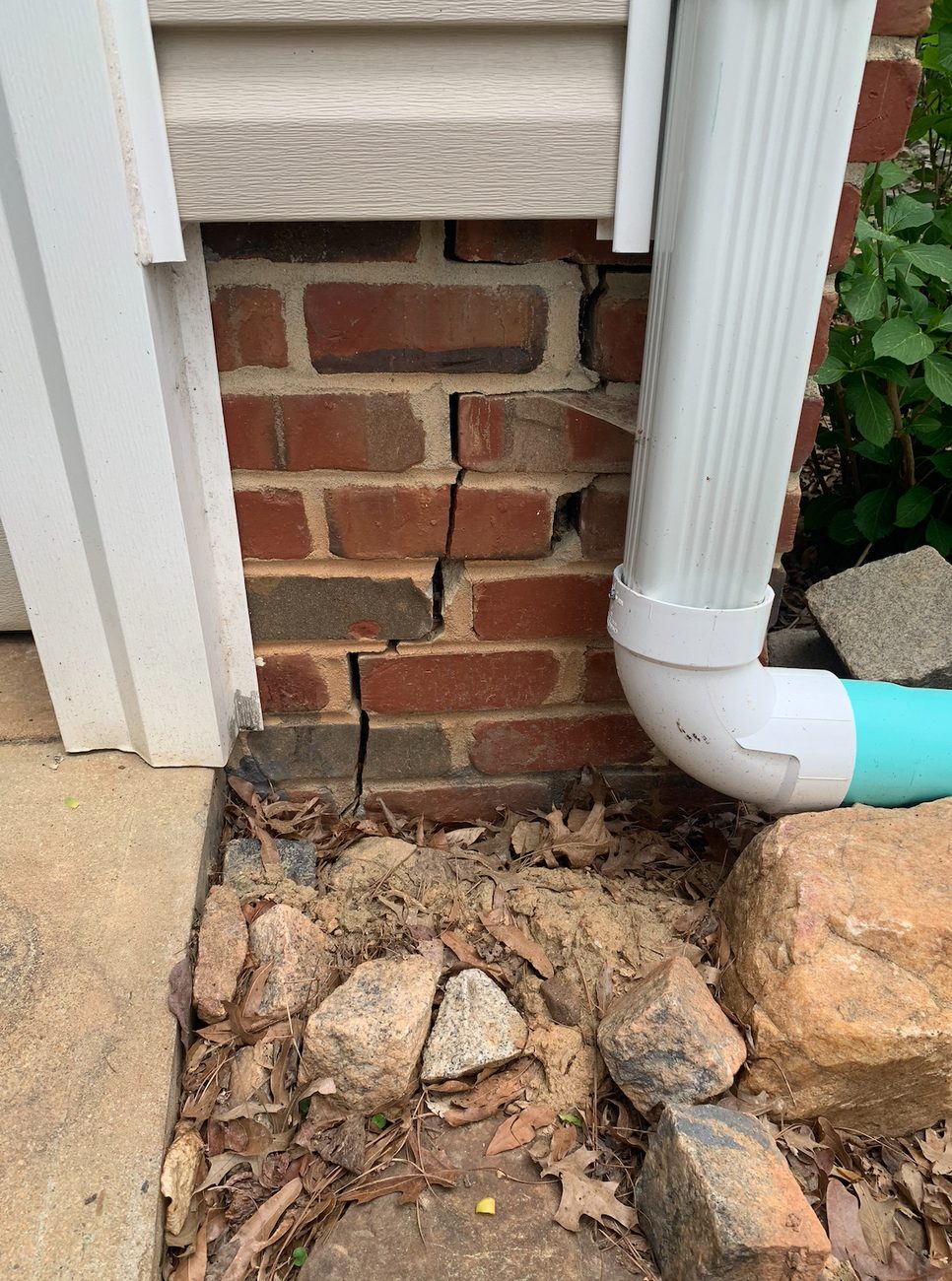
Cracks stepping through mortar joints, or a chimney easing away from the house. Frost and settling have been trading turns underneath, and the masonry keeps the score. Professional foundation repair reads that record before quoting. The foundation tells you what it needs.
Doors That Change With the Seasons
A door that latches in July but not in March, or windows that rack out of square. The frame is riding a foundation that moves with the freeze. Ohio winters test every foundation in the county. Waterproofing has to survive that cycle.
A Floor That Slopes Toward the Middle
A slope you can feel in the hallway, or joists that groan over the basement. Beams from another era are carrying more damp than they were built for. Waterproofing services keep the basement dry through spring. Dry basements protect the foundation above.
White Stains on the Basement Wall
Chalky white streaks on the block, or paint bubbling near the floor. Water is moving through the wall itself and leaving its minerals behind on the way in. That is a waterproofing problem, not a cosmetic one. Professional waterproofing solves it once.
Water Every Spring
A wet floor when the snow melts, or a sump running for days. The ground outside is full, and the basement is the lowest place it knows. Basement waterproofing gives it somewhere else to go. Foundation stabilization handles the rest.
A Wall Bowing Inward
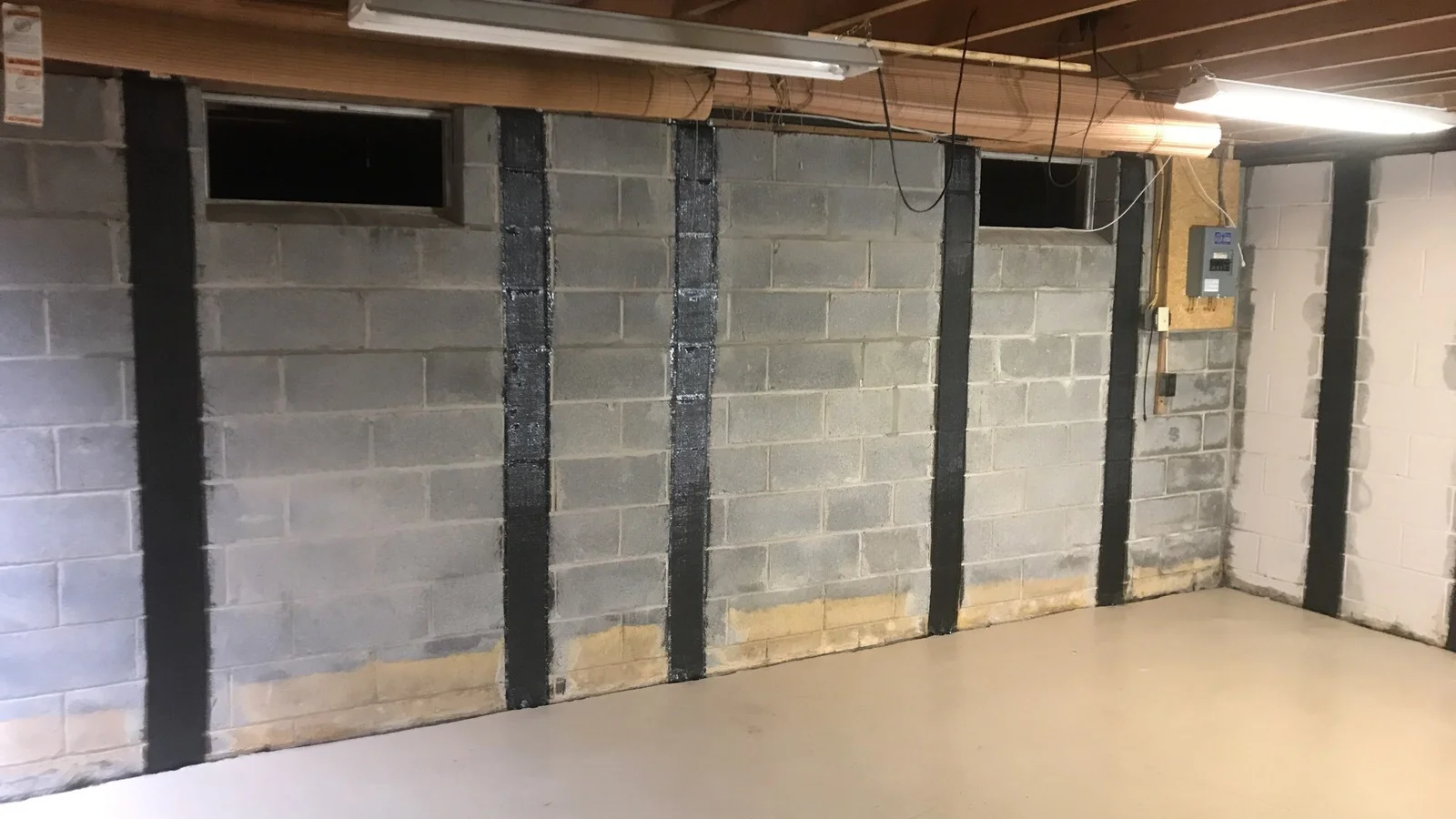
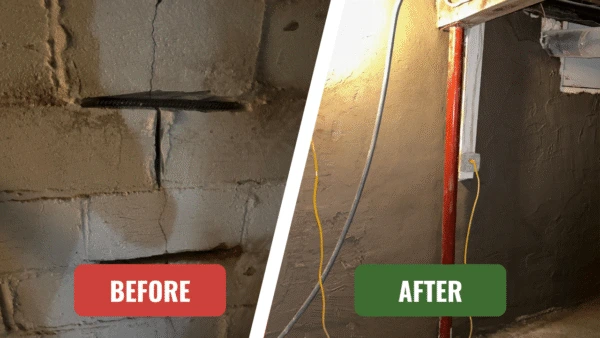
A horizontal crack running the wall's length, or block leaning inward at the middle. Saturated clay is pushing from outside, and block walls bend before they break. Foundation stabilization stops the bowing before it fails. Bowing left alone becomes a rebuild.
Old houses earn a little grace before alarm. A hairline in truly old mortar is usually just age, and one damp week in April isn't a verdict. What matters is direction: a crack that keeps stepping wider, a bow you can measure month over month, water arriving where it never used to, a door that quits a little more each season. The free inspection sorts age from movement, and we'll tell you plainly which one your house is showing. A professional foundation inspection tells you which. Free, in Canton, with no obligation.
Bowed walls, spring water, a slab that's dropped at the garage: the full Canton repair list lives below, and every card expands into the how, the where, and the honest price talk. Every foundation repair line written out first. Professional services, professional pricing.
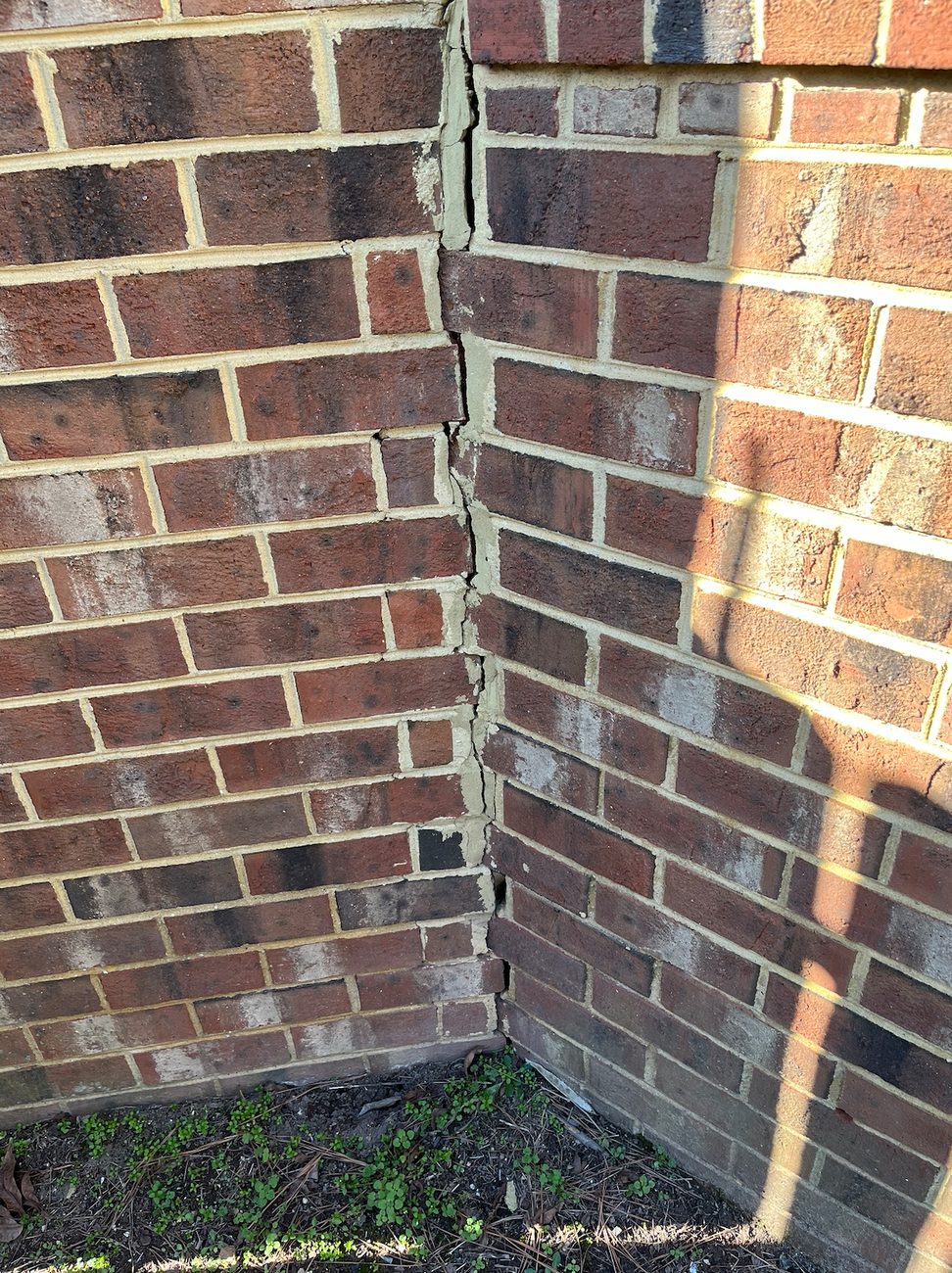
We carry settled foundations down to dependable ground on steel piers, driven below the frost-worked layers, then lift back toward level.
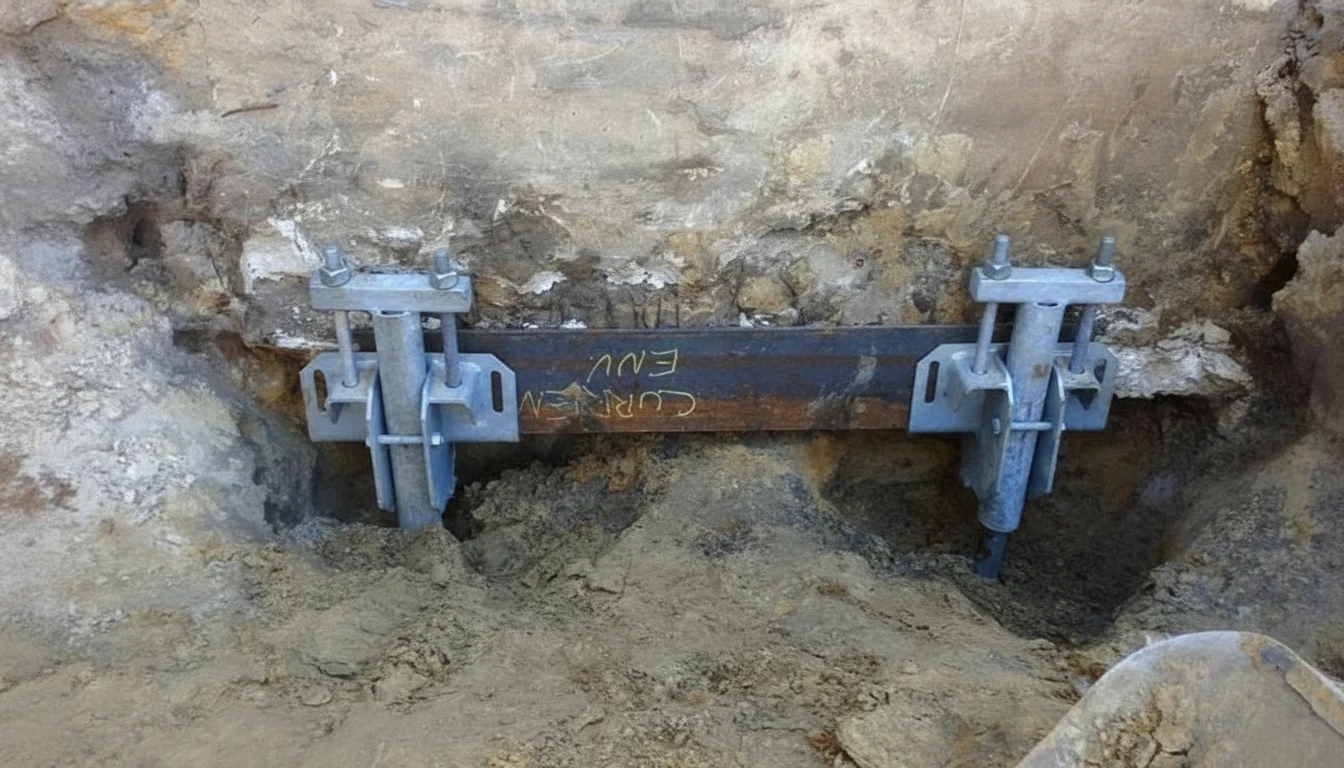
Learn moreA corner of the house that's dropped enough to read from the sidewalk. Step cracks working through decades-old mortar. A porch pulling its own direction. Canton foundations have been trading punches with the frost since before the war, and eventually a footing that's spent decades in freezing and thawing ground starts giving back the inches it was trusted to hold. Foundation piers carry that load properly. Foundation piers reach material that holds.
The repair reaches below the argument. Steel push piers descend in bolted sections beneath the settled footing, pushed past the frost-worked and water-softened layers until the resistance itself says solid ground, the kind that carries load in January and July alike. Then the weight of the house moves onto the piers, and we bring it up toward level as gently as the structure allows, watching doors and finishes as we go. Helical piers handle porches, additions, and lighter corners, turning in with compact equipment that leaves the yard recognizable. Where the perimeter is sound but floors sag over the basement, steel columns and sistered framing do the carrying instead. The older blocks of Harter Heights and Crystal Park have seen every version of this work from us.
Every pier's depth gets recorded as it's driven, so the repair is documented rather than described. And when the real problem turns out to be water pressure rather than bearing, which this city produces plenty of, the honest quote says drainage first, at a fraction of the price of steel. The inspection that decides it costs nothing. Canton foundation repair starts with a free look. Then the foundation work is priced honestly.
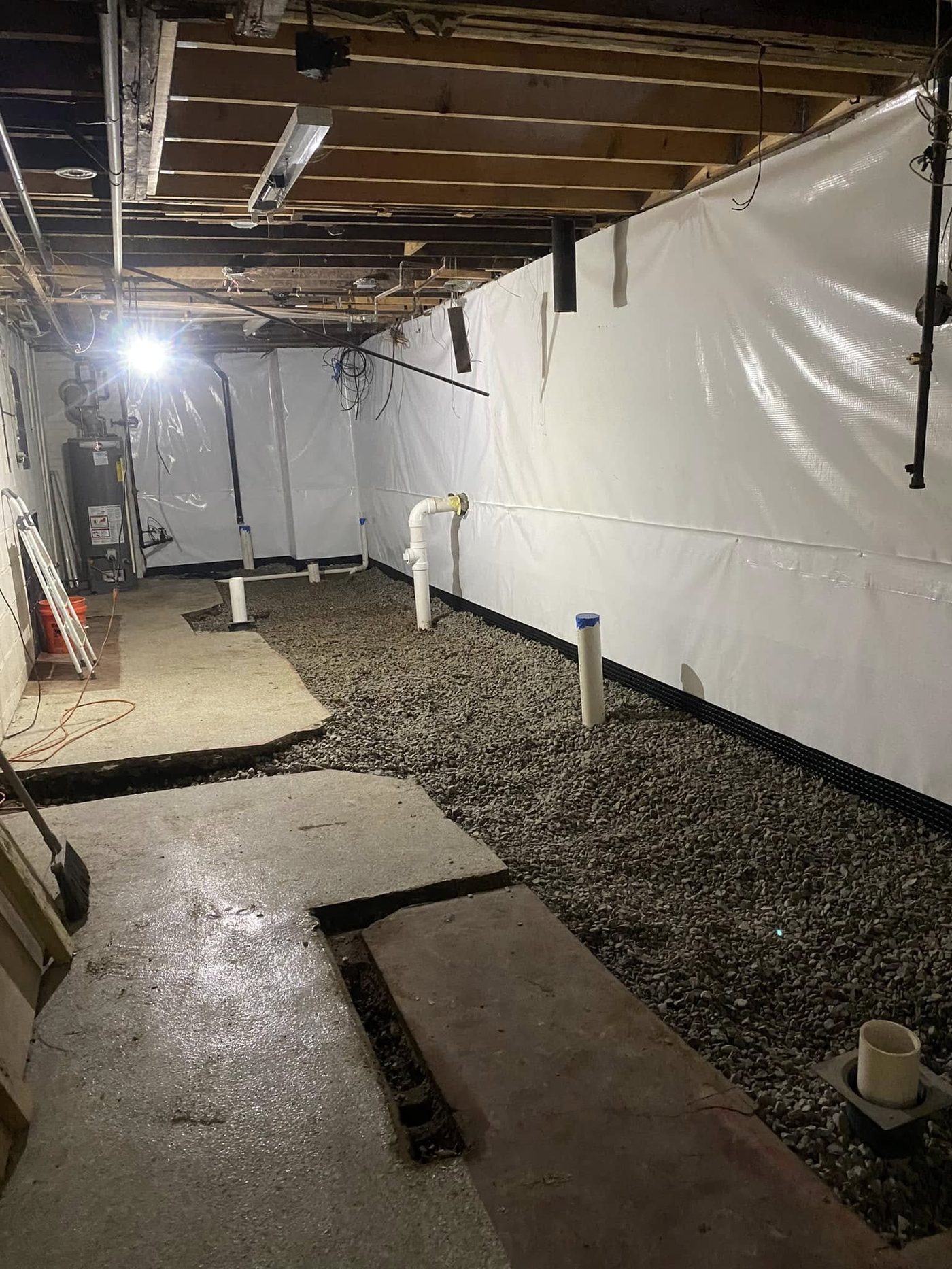
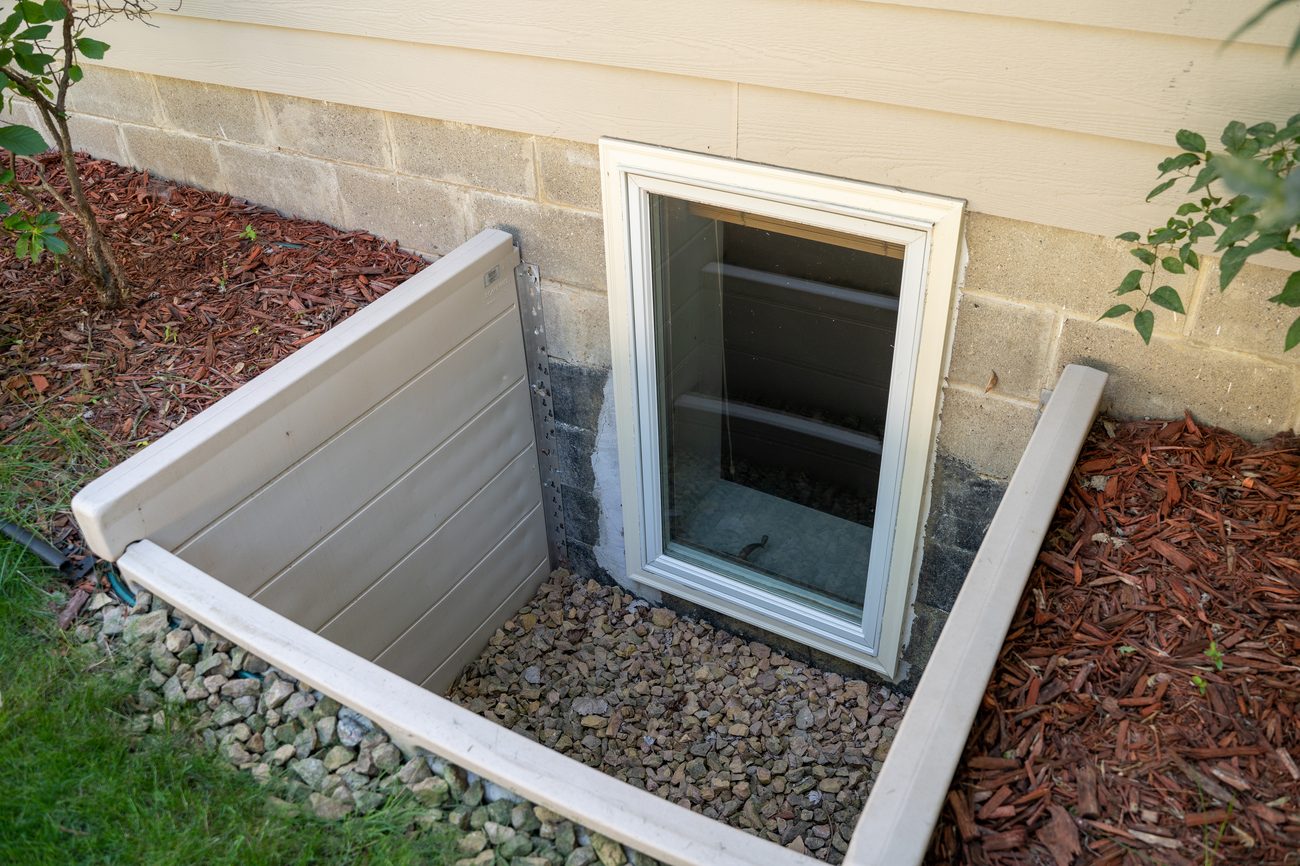
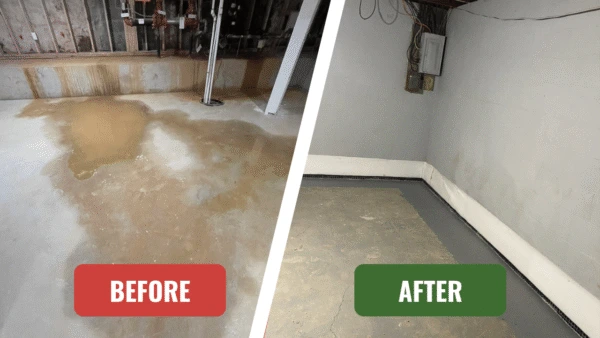
Spring water in a Canton block basement is a solvable problem: we cut off what feeds it outside, drain what still arrives, and dry the rest. Waterproofing services handle both halves. Inside and outside, on one visit.
Learn moreThe spring ritual is older than most of the houses: snow melts, the ground fills, and somewhere between March and May the basement floor grows its puddle. Block walls weep at the mortar lines, the white chalky stains climb a little higher each year, and the sump, if there is one, earns its keep for six straight weeks. Ohio springs are exactly when it matters. Waterproofing earns its keep then.
We attack it in order of cost. Outside first: gutters, downspout extensions, and grading that sends roof water away from the wall instead of banking it there, which alone settles a surprising share of wet basements. For what still gets through, we saw the slab edge and set a perimeter drain channel down at footing level inside, where it catches wall seepage and floor-joint water alike and hands all of it to a sump pump sized for snowmelt season, battery backup included, because March storms and power outages travel together. The discharge releases well away from the wall, so the same water never rejoins the line. Sealed walls and a dehumidifier finish the drying. The century homes of Ridgewood and the postwar streets of Fairmount have both taught us their versions of this fight.
Not every wet basement needs the full system, and the itemized quote shows each piece priced alone so you can see exactly what your water actually requires. And when the entire fix turns out to be a Saturday's worth of downspout extensions, the quote says exactly that; we'd rather earn the next call than pad this one. Professional foundation contractors work that way. Our Ohio crews are all in-house.
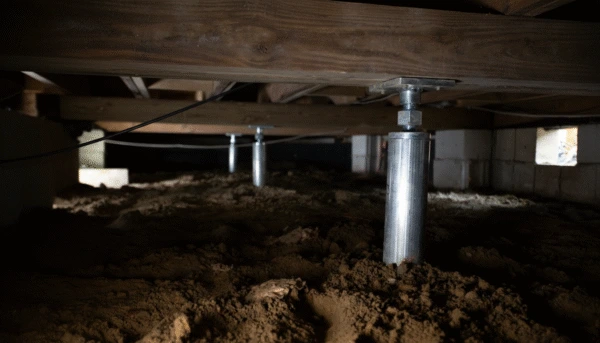
For Canton's crawl-space additions and cottages, we restore the support under sagging floors and replace framing the damp has softened.
Learn moreMost of Canton lives over basements, but the exceptions know who they are: the back addition from the fifties, the lake cottage, the bungalow that skipped the dig. Those floors ride on framing a couple feet above damp ground, and when the space below stays wet, the floor above starts answering for it with bounce, slope, and give. Left alone, the sag spreads joist to joist, the way tired framing always shares its load. Foundation stabilization spreads it back properly. The foundation carries evenly again.
The fix starts at the ground and climbs. We pour proper pads, stand adjustable steel columns on them to relieve posts that have sunk or rotted, weakened joists get a new partner sistered alongside, and any beam past saving comes out whole. Ductwork and plumbing keep their places while we thread the new supports past them, and life upstairs carries on undisturbed. Then the dampness gets addressed, ground cover, drainage, or venting corrections, because fresh lumber suspended over the same wet dirt is just a countdown wearing a repair's clothes. We've done this under the additions around Mount Vernon and the older places near Gambrinus, usually in a day or two.
The floor usually feels worse than the framing actually is. We crawl the full footprint, photograph what's carrying and what's failing, and the estimate prices each failing piece on its own line, so the schedule can split into phases whenever the budget asks for patience. The crawl-through and the written number are free, and the photos are yours either way. Most of these jobs wrap inside a day or two. Most Canton foundation repair is faster than owners expect. Professional crews, predictable timelines.
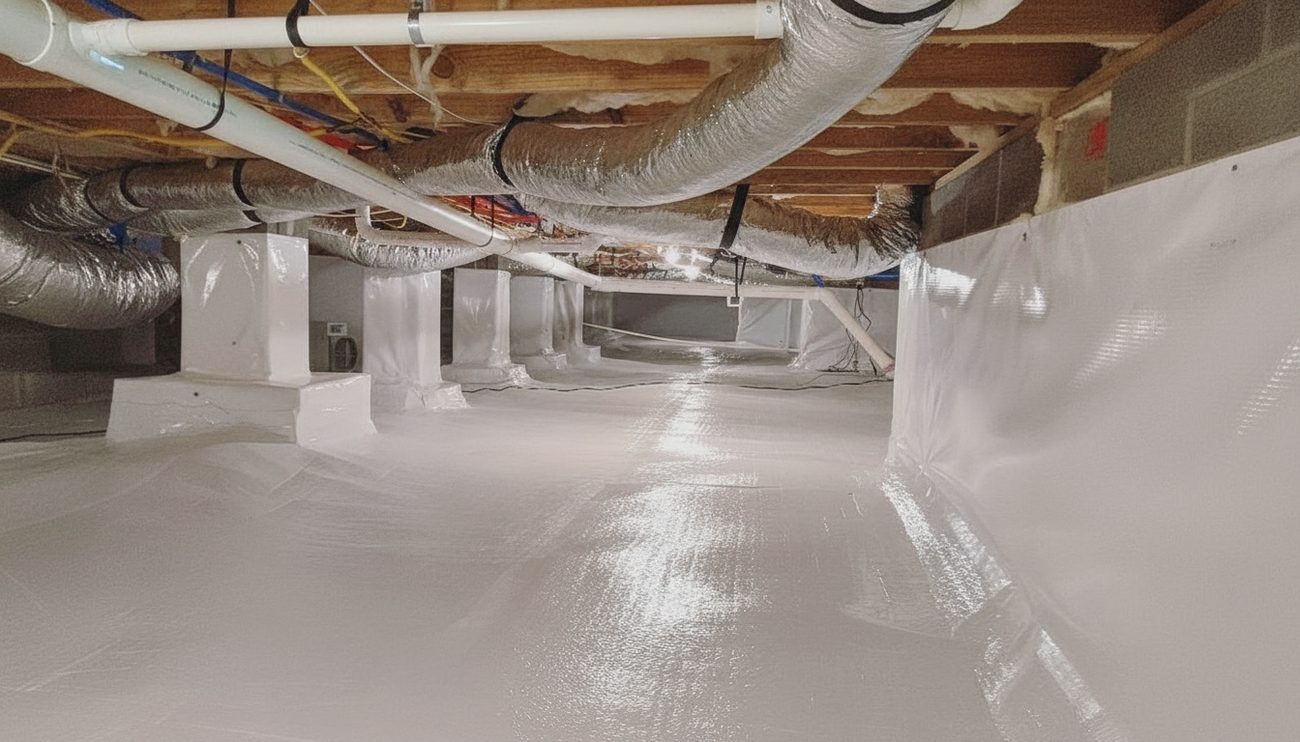
Where a Canton home does sit on a crawl space, we seal the ground, close the vents, and control the moisture that never stops rising. Basement waterproofing is the only lasting answer. Everything else is a patch.
Learn moreA crawl space in this climate gets the worst of both seasons: spring ground that stays saturated for weeks, and summer air that condenses on every cool surface under the floor. The musty smell upstairs, the cupping hardwoods, the insulation hanging in wet sheets, all of it starts in that shallow dark space most owners visit once a decade. In this climate, that cycle never takes a season off. Neither do our waterproofing services. Ohio weather does not wait.
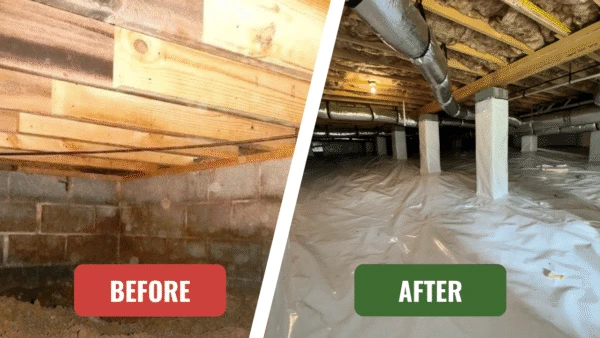
Encapsulation ends the cycle. A heavy liner gets fitted across the earth floor and carried up the block, lapped and taped at every seam, pier, and the access door, until the ground is out of the conversation entirely. The vents close, and a properly sized dehumidifier keeps the air down there at a level the framing stays comfortable in, all four seasons. Floors warm up, the smell fades, and the wood above stops absorbing its slow damage. Done right it also takes load off the furnace and the AC, since the house stops conditioning a damp cave; the utility bill usually notices by the first summer. We've sealed crawls under homes near Westbrook and out toward Edgefield.
Order is everything: standing water leaves first, softened framing gets its repairs, and the liner is the last thing installed, because trapping moisture under plastic beats doing nothing only in the brochure. The free look tells you which of three paths your crawl space actually needs: the full sealed system, a simpler ground barrier, or nothing more than better drainage outside. Whichever it is, the reasoning comes with it. Professional foundation repair explains itself.
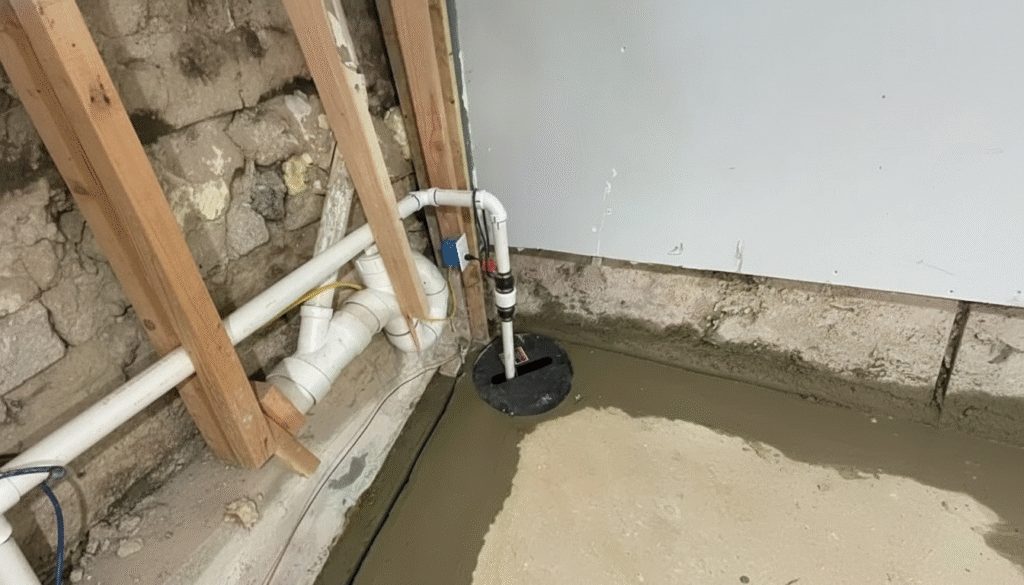
We set a sealed basin at the basement's true low point with a pump sized for snowmelt season, battery backup included, because March happens.
Learn moreSome Canton basements flood on a calendar. The snow that stacked up through February has to go somewhere in March, the ground drinks until it can't, and whatever's left presses through the floor joint of the lowest room in the house. A sump system is how that water gets a better exit than your basement.
The basin goes where the floor itself says it should, at the spot every puddle has been voting for, and we connect whatever drainage serves that corner before sealing the lid, so the basement air stays dry. The discharge line runs to ground that genuinely falls away, with a check valve holding each cycle's gains, and the battery backup is standard practice here rather than an upsell, because the same fronts that melt the snow knock out the power. We test the float, the check valve, and the backup before leaving, and show you the two-minute monthly routine. Most of the water in this end of town is headed for the Nimishillen eventually; the pump just makes sure it doesn't tour your basement first. Market Heights and Colonial Heights keep us busy on these every spring.
A pump handles the water that arrives; paired with the right drainage it cuts down how much arrives at all. We'll walk the path with you, mark the low point, and put the whole system on paper, free, before anything is cut. Most installs finish inside a single day.
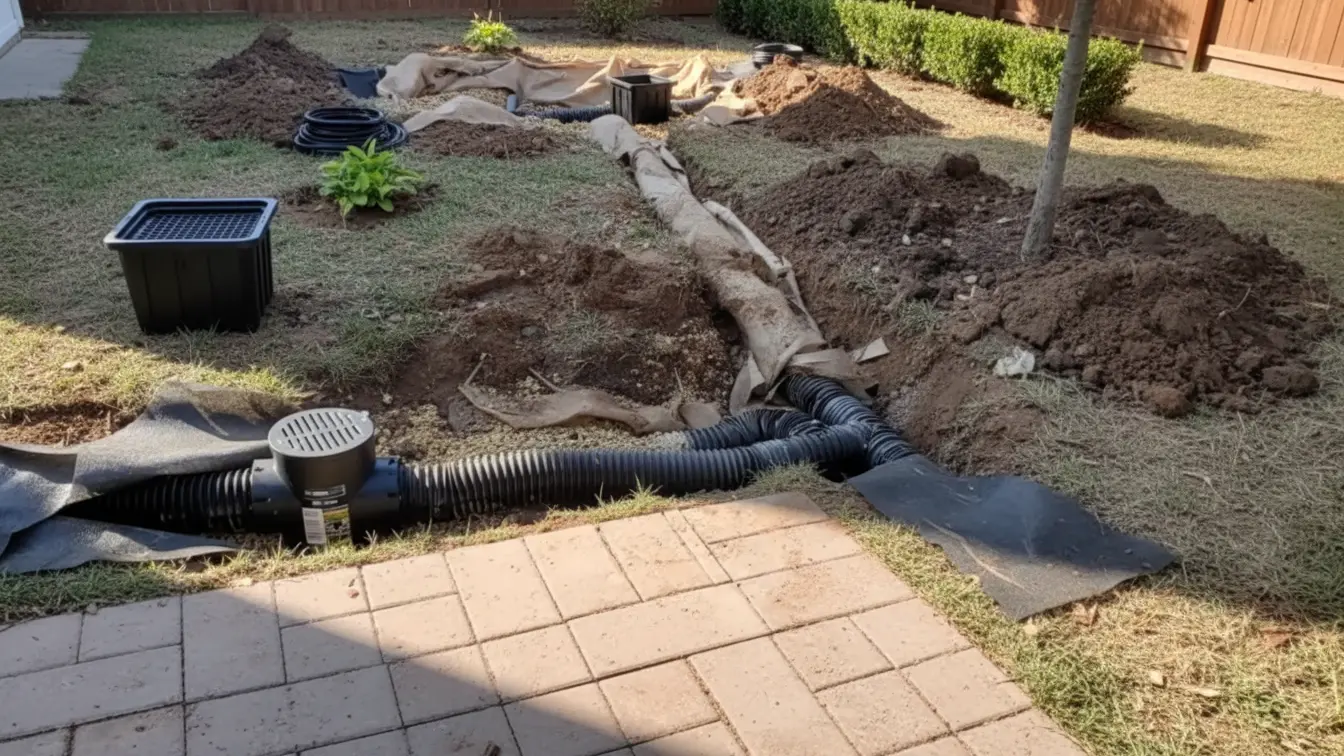
We trench in stone-bedded drain lines that intercept saturated-ground water and walk it away before it reaches the basement walls.
Learn moreWhen the ground is full, water stops asking permission. It stands in the low corner of the yard, works along the foundation, and finds the basement through whatever seam is offered. Clay-heavy soil drains slowly here, and a yard that ponds every thaw is telling you where the next basement problem is coming from. Watch one thaw from the kitchen window and the yard will draw you the map itself.
A french drain intercepts the trip. We trench across the water's path, lay perforated pipe on a bed of washed stone, jacket the assembly in filter fabric so the clay can't silt it shut, and engineer real fall toward an outlet with the capacity to accept everything the line delivers, daylight where the lot allows, a sump where it doesn't. Depth follows the mission: shallow for surface water, footing-deep when the basement is the client. Where the trouble is already inside, the interior version rings the footing below the floor and feeds the pump. Long runs get cleanout access, so ten years from now the line can be rinsed clear without anyone renting a trencher. We've trenched them through yards in Avondale and up the streets of Summit.
The buried details decide whether a drain works for twenty years or three: the fall, the fabric, the outlet. Before a shovel touches grass, you'll hold a drawn plan naming the route, the fall, and where each gallon finishes its trip, free and in writing.
Queen Foundation Repair works on the wet, the settled, and the leaning across Canton: basement waterproofing, french drain installation, concrete leveling, foundation repair, and basement wall repair, one company for the whole chain and one number to call. In houses this age the problems arrive related, and the fixes should too.
We diagnose before we price, and in Canton the diagnosis usually comes back to water and the clay it soaks: saturated ground leaning on old block, frost tightening its grip every winter. Read that wrong and a drainage problem gets billed like a structural one, so the first visit is free, the estimate arrives itemized line by line, and when the smaller fix is the right one, it's the one we recommend. Every repair leaves behind a written warranty, and that coverage rides with the house through any sale.
From the century blocks of Downtown Canton to the streets around Harter Heights, we've been under, beside, and behind these houses enough to respect them. Tell us what yours is doing, and we'll answer with plain findings, an exact figure, and all the time you need to sit with both.
Get your free inspection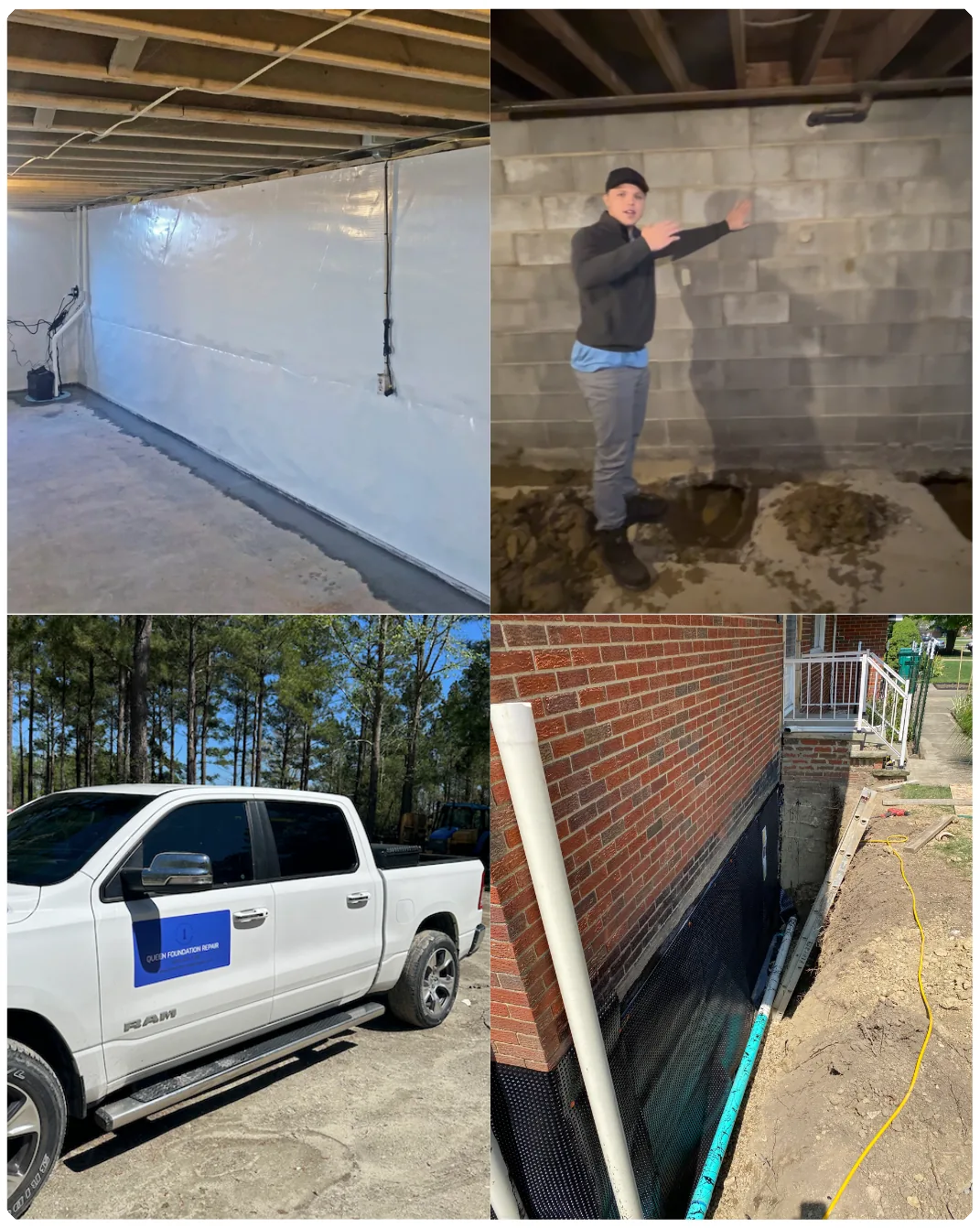
WHAT YOU GET
We answer fast and get out to the house quickly, so you're not sitting for weeks just to find out what's wrong and what it'll cost.
No charge to have us come out, find what's going on, and lay out what the fix takes. You know where you stand before spending a dollar.
Licensed, with full liability and workers' comp coverage, so the work is done to code and your property is protected if anything goes sideways.
The repair comes with a written warranty that transfers to the next owner, so it protects your home's value if you ever sell.
A clear, written price upfront before anything starts, no vague ballpark and no surprise add-ons once the work is underway.
Century homes are our home turf: block basements, clay yards, framing from the twenties. We work on them daily across Canton, from Gambrinus to Westbrook, and the odd problems stopped surprising us years ago.
Four steps from the first ring to the final walkthrough, each one in writing.
STRAIGHT TALK
From Fairmount to Market Heights, Canton homeowners ask us the same honest questions: what a dry basement costs, whether a bowing wall can wait, and what insurance will actually do. The answers below are the ones we give in person.
Signs & Severity
It means the ground outside is winning, slowly. Wet clay swells and shoves, frost adds a shove of its own each winter, and a block wall answers with a horizontal crack, then a lean you can measure. It does not mean the house is condemned: walls with under an inch of movement are routinely stabilized in a day. What it does mean is the wall will not improve on its own, and the total only grows. Measure it, date it, and have it read before the number gets expensive.
It's common, which is different from necessary. Half of Canton shrugs at the March puddle because their parents shrugged at it too. But that water is feeding mold, rusting the furnace's neighborhood, and slowly working on the framing above it, and the fix is well understood: manage the roof water outside, drain what still arrives, and pump it away. Plenty of houses on your street have already gone dry. It's a choice, not a condition of the deed.
After ninety years, a foundation without cracks would be the suspicious thing. Most vertical hairlines in old mortar and concrete are settled history. The ones that earn attention: horizontal cracks along a basement wall, stair-step patterns that keep extending, anything you can slide a coin into, and any crack that stays damp a day after rain. The test is change, so date a photo, check it monthly, and if it's growing, have it measured, and the reading you'll get from us is plain: this kind, this risk, this next step.
Repairs & Methods
The measurement chooses the method, in three tiers. Under about an inch of bow, carbon fiber straps bonded to the block lock the wall exactly where it stands, no digging, finished in a day, invisible under paint. Beyond that, steel columns pinned to the slab and the framing above carry the load from inside. And when the wall should come back toward plumb, earth anchors set in undisturbed yard soil grip it through tie rods and retrieve it gradually, a little each season. Whatever the tier, the pressure that bent the wall gets relieved too, with drainage, grading, or gutter corrections, because bracing a wall while the clay keeps pushing is treating the symptom and billing for both. You'll get the measurement, the tier, and the reasoning in writing, and the wall stops keeping score.
Managing it on both sides, in the right order. Outside: gutters that work, downspouts that discharge far from the wall, grading that slopes away. That alone dries a surprising number of basements. For water that still arrives, an interior perimeter drain at the footing collects it before it reaches the floor and hands it to a sump pump. Coatings and sealants have a role on damp spots, but paint cannot argue with saturated ground; pressure always wins that debate.
Together, genuinely. Brace a wall without relieving the water pressure and the clay keeps pushing against your new repair; fix the drainage alone and a wall that's already moved keeps its lean. So the honest job pairs them: the structural fix holds the wall, and the drainage work removes the force that bent it. Quoted separately, line by line, so you can see what each half costs and why skipping one shortchanges the other.
Basement & Water
In a city where the basement is half the house's usable space, usually yes. A dry basement here returns three ways: the framing and mechanicals above it stop absorbing damage, the space itself becomes storage or living area you already own, and resale improves, because Ohio's disclosure form asks about the basement directly and buyers read wet answers as discounts. Dry square footage below grade is the cheapest addition a Canton house can claim. The honest exceptions: a basement that only dampens in a hundred-year storm, or a house where a few hundred dollars of gutter and grading work would solve what a system would merely manage. We'll sort your basement into its true case from down on the floor itself, not from a brochure, and the smaller answer wins whenever it truly can.
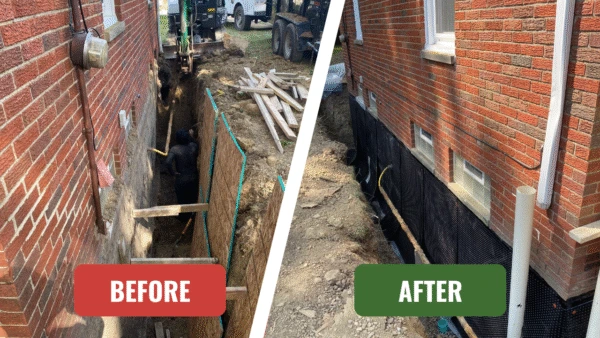
Exterior waterproofing, excavating to the footing and sealing the wall from outside, is the thorough option and the expensive one, and around mature Canton lots it often means sacrificing driveways, porches, or trees planted fifty years ago to the trench. Interior drainage manages the water where it arrives, costs a fraction, and disturbs nothing above ground, which is why it's the working answer for most century homes. Where a wall is actively deteriorating outside, the excavation earns its price. The house, not habit, makes the call.
The drainage channel and stone are passive and essentially permanent once installed over solved grading; freeze-thaw happens outside them, not inside the basement. The moving parts carry the schedules: sump pumps run eight to twelve years, backup batteries three to five, dehumidifiers about the same decade. What actually kills systems early is the thing that was skipped, the outside water management, which is why ours never ships without it. The maintenance rhythm comes printed with the warranty.
Cost & Insurance
Honest brackets, then an exact number after we've seen yours. Gutter, downspout, and grading corrections, the unglamorous fixes that solve more basements than anything, run in the hundreds. An interior perimeter drain with a sump system, the standard answer for a chronic spring basement, commonly lands between three and ten thousand depending on footage and floor conditions. Add wall repairs or full-perimeter work on a large century foundation and projects climb from there. Two Canton-specific notes: block walls sometimes need wall work and water work priced together, and a healthy share of feared waterproofing projects shrink into gutter and grading corrections costing a tenth as much. The free inspection sorts yours before anything is written, and every estimate arrives itemized. No two century foundations price alike, and pretending otherwise is how bad quotes get written.
Carbon fiber stabilization usually prices in the low thousands for a typical wall, steel bracing somewhat above it, and anchor systems that pull a wall back toward plumb above that, with pier underpinning for settled foundations occupying the same serious tier. Crack injection on a stable crack is a few hundred dollars, not thousands. Every one of those numbers moves with inches, footage, and access, which is why we measure first and price to the tape. The measurement costs nothing.
Usually not, and it's better to hear it before the adjuster says it. Policies treat gradual problems, seepage, settling, a wall that's leaned for years, as maintenance, and maintenance is excluded. The exceptions are sudden events: a burst line flooding the basement overnight, a storm the policy names. If you think yours qualifies, photograph everything with dates before cleanup, pull out the policy's water and earth-movement pages, then get your agent on the phone early; the phrase they listen for is sudden and accidental. Our written inspection reports have supported plenty of claims, and we document honestly wherever the evidence lands, including when it lands on maintenance. Three dated photos taken today beat thirty taken after the cleanup crew leaves. Budget for the repair, and let any payout be the surprise.
Process & Timeline
Most of it, comfortably. Basement wall repairs, interior drainage, sump systems, crack injection, all of it happens inside, below the frost, and winter is honestly our steadiest indoor season. What waits for a thaw is the digging: exterior drains, regrading, anchor installation in frozen yards. Footings here sit three feet down and more to stay below the frost for a reason, and we schedule around the same reality. If your basement is wet in January, call in January; the indoor half of the fix doesn't check the forecast.
Yes, almost without exception. The work lives in the basement and the yard, not your kitchen, and families sleep home through wall repairs, drain installs, and pump work every week. Expect some jackhammer hours when the floor edge is opened, dust control at the stairway, and a crew coming and going. We'll flag the loud days ahead so you can plan calls and naps around them, and evenings the site gets squared away.
The look itself runs about an hour, with the written number following inside the same day. Once scheduled, crack injections finish in a morning, wall stabilizations typically in a day, interior drain and sump systems in one to three, and combined wall and water projects usually inside a week. Anchor systems add short return visits over following seasons for their gradual tightening. The quote carries actual calendar dates, and that schedule survives contact with reality far more often than the industry's reputation suggests.
Trust, Warranty & Local
It transfers with the house, automatically, which in Canton is worth real money at sale time: Ohio's disclosure form asks directly about the basement and foundation, and a documented repair with living coverage turns that question from a liability into an answer. On wall work the coverage is specific: carbon fiber and anchor installations are warranted against further movement of the repaired wall, drainage systems on their installed components, crack injection against reopening. The terms print in plain type, the final walkthrough goes through exactly what's covered and what upkeep keeps it that way, and the folder we leave is built to be handed to a future buyer. A covered issue afterward costs one phone call. Keep the folder where the closing papers live, and the coverage minds itself.
You can, Ohio just requires telling the truth about it: the state's disclosure form asks sellers directly about water intrusion and structural movement, before the purchase contract is signed. So the real question is arithmetic. An undisclosed-feeling problem invites the inspector's flashlight and the buyer's worst-case discount, which routinely outruns the repair bill. A fixed wall with paperwork and a transferable warranty sells as a feature; some owners repair before listing, others attach our written quote so the buyer prices certainty instead of fear. Either way the disclosure form gets an answer you're comfortable signing.
Add up what the city is built of. Four in ten houses here went up before 1940, most over block basements that predate modern drainage practice. The ground is clay-heavy and holds its moisture against those walls, winters freeze that wet ground and lean on everything, and the whole city's stormwater funnels toward the Nimishillen through yards and downspouts on its way. None of that makes them bad houses; their basements simply work harder than most in America, and the dry ones got help. The help is well understood, and it starts with a free look.
AREAS WE SERVE
We cover greater Canton and the Stark County communities around it, well beyond the city line. Inside town we work everywhere from the streets near the Pro Football Hall of Fame to the blocks around Fairmount, drying basements, holding walls, and leveling concrete, and the first look is free wherever your house sits.
ZIP Codes We Serve
Ready to Get Started?
No obligation, fast and easy.
We appreciate you reaching out.
One of our team members will be with you shortly.