A crack opening up the basement wall, water along the floor after it rains, mortar you can pull out of a stone wall with a finger. From the South End over to Roslindale we handle foundation repair, basement waterproofing and foundation crack repair, and the inspection is free.
Get Your Free Inspection
We appreciate you reaching out.
One of our team members will be with you shortly.





WHAT TO LOOK FOR
Boston houses are older than anything else we work on, and they fail in the material rather than the ground. Mortar that has given up, stone that has shifted, and in the made-ground neighborhoods, timber that was only ever meant to stay wet.
The wall has moved
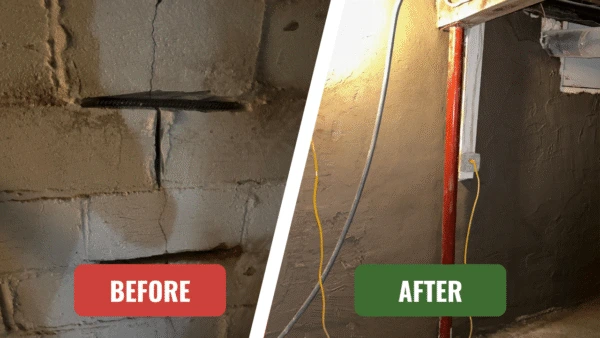
A line running through the block with the face broken away at the edges. Hairline is ordinary. Open enough to lose a coin in is not.
It is getting in low
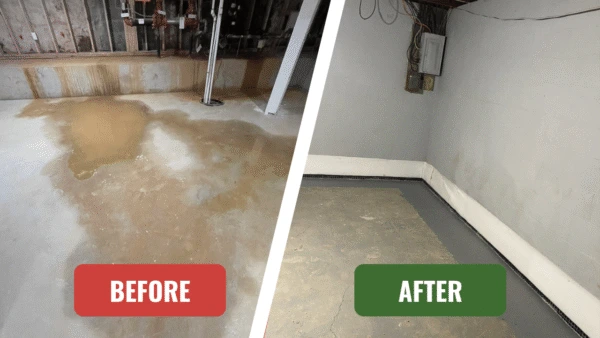
It spreads out from the wall after heavy rain and leaves a tide line behind when it dries. The joint at the floor is usually the way in.
The joints have failed
On an old stone or brick foundation the units outlast the mortar between them. Once the joints go, the wall stops working as one piece.
Ground pressure outside
One course has pushed in further than the ones above and below. That is saturated ground behind a buried wall and it goes first.
The two have separated
The slab and the wall have parted company along the bottom edge. Water uses that seam, and it usually means one of them has settled.
Water is passing through
Brown streaks running down the block from a joint or a window. That is water travelling through the wall and drying on the inside face.
What decides urgency here is not how bad it looks, it is whether the wall is still holding what it was built to hold. Mortar you can pull out by hand is not cosmetic, whatever else looks fine. Water that comes back every storm is not a wet-season quirk. If you are unsure which one you have, someone can come and look and tell you straight, and that visit costs you nothing.
Mortar washing out of an old stone wall, a basement that never dries after a storm, a floor that has dropped away from the baseboard. Those are the calls we get across Boston, and each one below opens up to what the work involves.
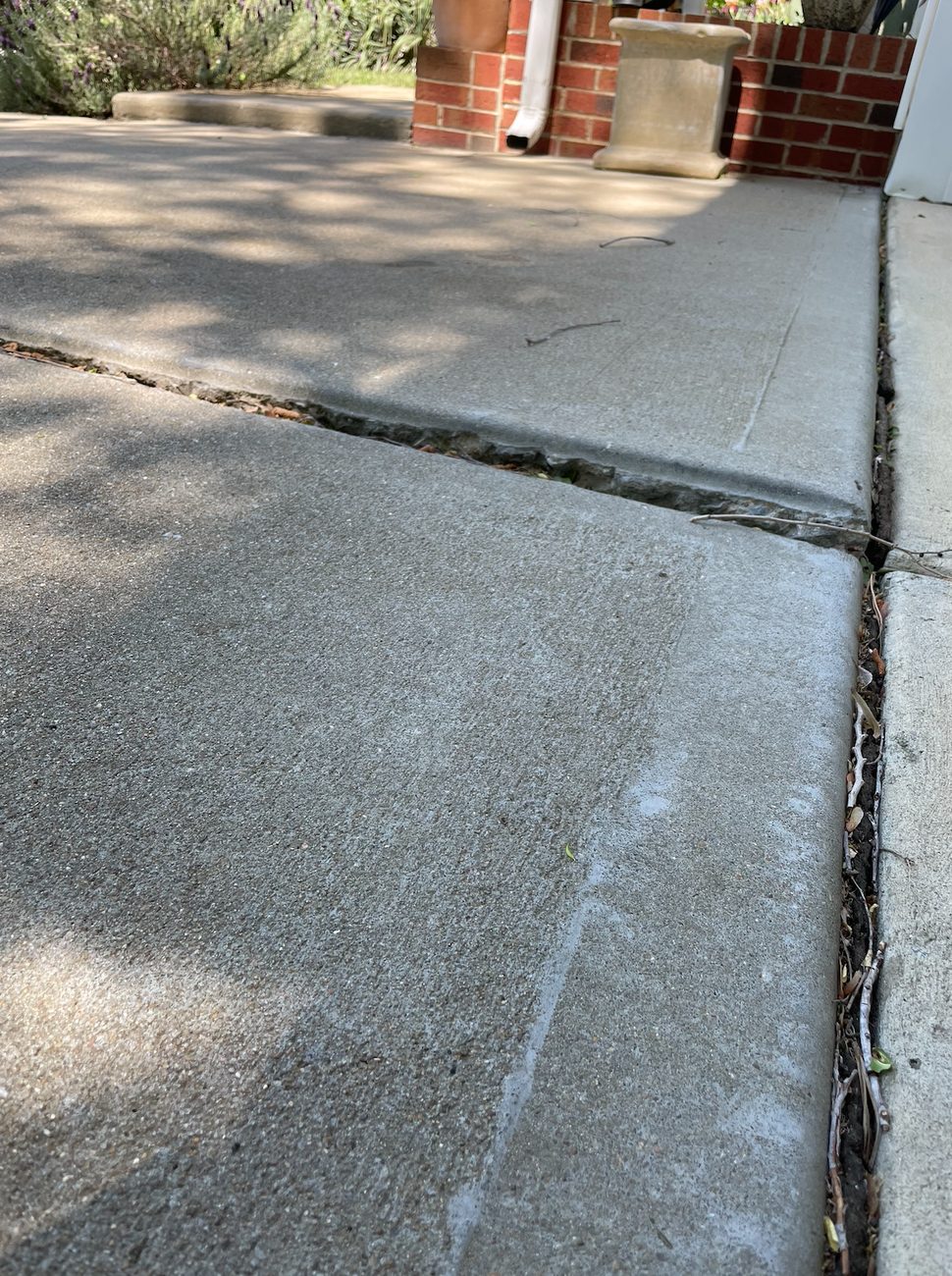
Stops a house that has settled from dropping further, brings it back toward level, and closes the cracks the movement opened up.
Learn moreWhat is under the house decides everything here. In the South End the building may be sitting on timber piles driven into made ground, and those only hold while they stay below the water. Where the water table has dropped and the tops have met air, the piles give and the house comes down with them, unevenly.
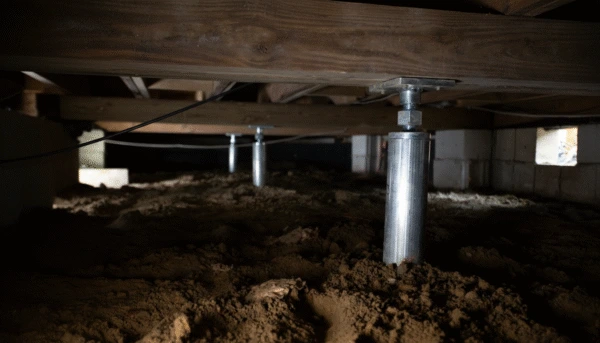
Foundation repair on that kind of building means getting the load onto something permanent. Piles are cut back to sound material and the load transferred, or new support is taken down past the fill to bearing. On a stone foundation on natural ground the answer is usually underpinning: the footing is carried deeper in sections so the wall above is never left unsupported. From there the structure comes back toward level slowly, over days, so old plaster and brick move with it instead of tearing.
None of it is quick and anybody who says otherwise on a house this old is guessing. In Roslindale the survey took longer than the repair. The inspection is free. Old brick and plaster will crack if it is rushed, and putting that right costs more than the extra days.
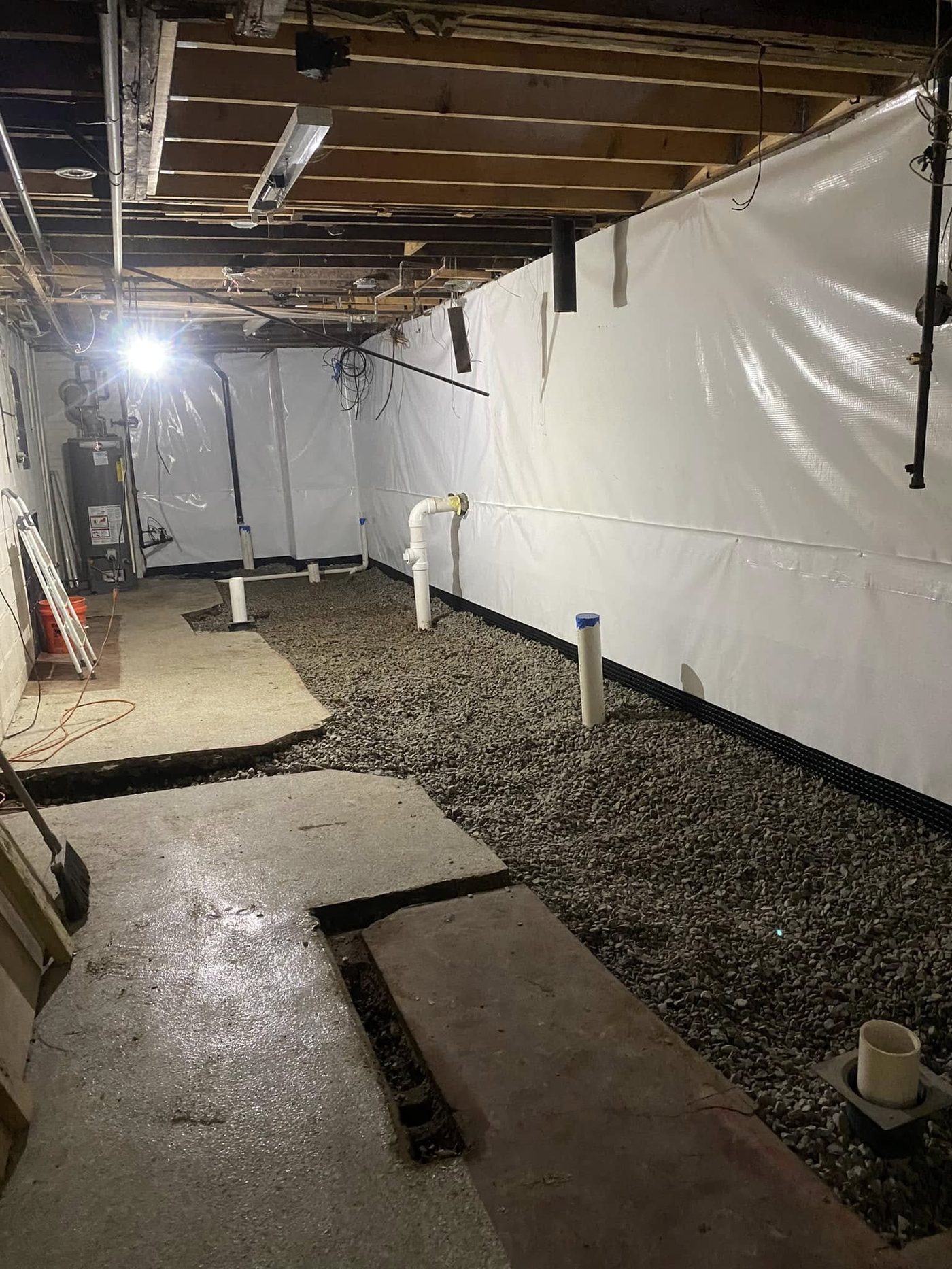
Keeps water off the basement floor by catching it inside the wall and sending it to a pump before it reaches the room.
Learn moreAn old basement was never built to be dry. A stone foundation in Jamaica Plain was laid to hold the house up and keep the frost out, and the mortar between the stones was never a barrier against water sitting in the ground outside it.
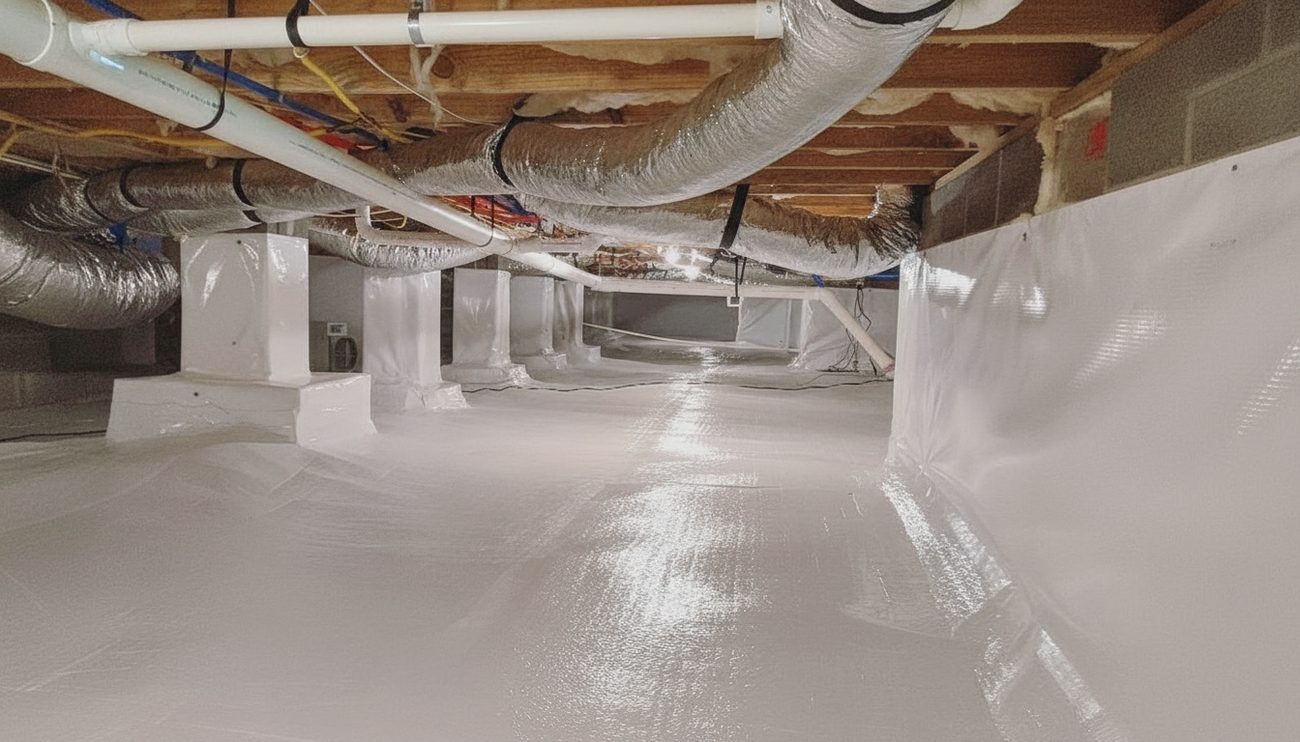
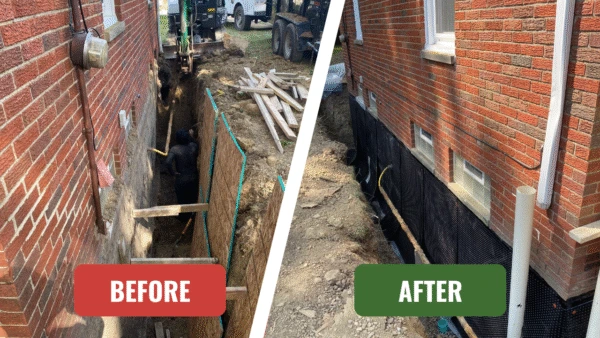
Basement waterproofing gives that water a better route than through your wall. A channel is cut at the base, drain tile is bedded in stone below the slab, and it runs to a pit where a pump lifts it clear of the building. Interior basement drainage suits a rubble or block wall that weeps across its whole face, which is most of what we find here. Where a specific section is the leak, the outside gets dug out and sealed instead, though on a city lot access often decides that for us.
It will not hold up a wall that has moved, and it does not repair mortar that has gone. Those are separate jobs. In the South End the pointing came first, and somebody will tell you that at no charge. Whichever route the house needs, the pit and the discharge line get sized to the water actually arriving, not to a standard.
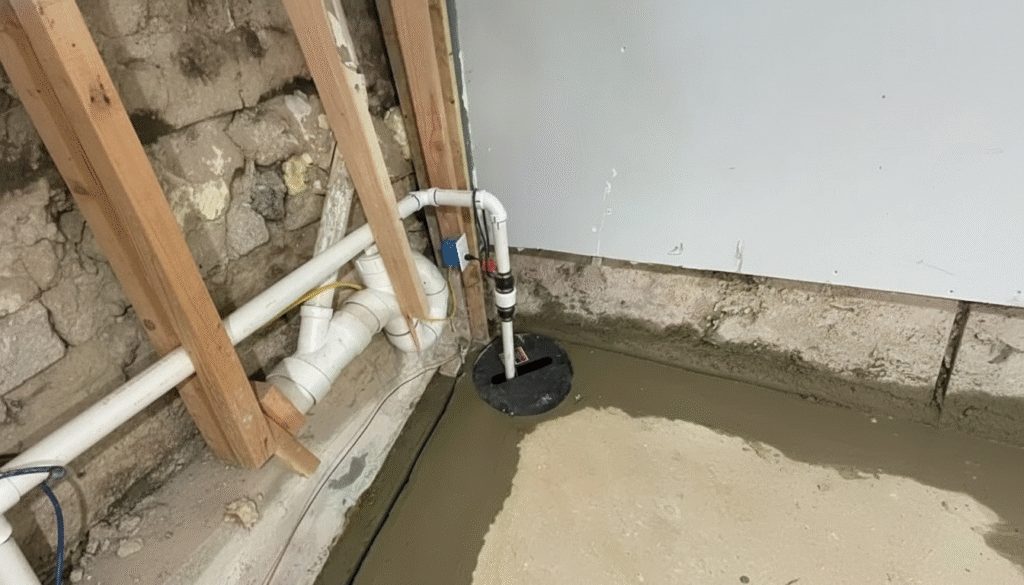
Lifts collected water out of the basement automatically, with a backup so a storm and a power cut do not arrive together.
Learn moreDrainage only helps if the water it gathers can leave. In a Jamaica Plain basement set well below the street there is no downhill exit at all, so everything the perimeter drain collects has to be lifted or it sits under the slab.
A sump pump installation sets a sealed pit at the low corner tied into the drain tile, with a pump sized to the volume the house actually sees rather than the smallest unit that fits. The discharge runs well clear of the foundation, because a pump emptying beside the wall is only recirculating the problem. A sealed lid holds the humidity down, a check valve stops what went out running back in, and on a house that has flooded before two pumps in one pit mean a single failure does not put water on the floor.
The failure people meet is a pump that works fine until the storm takes the power out. A battery backup covers that. In Dorchester most calls are a pump that has simply worn out. We will check yours for nothing.
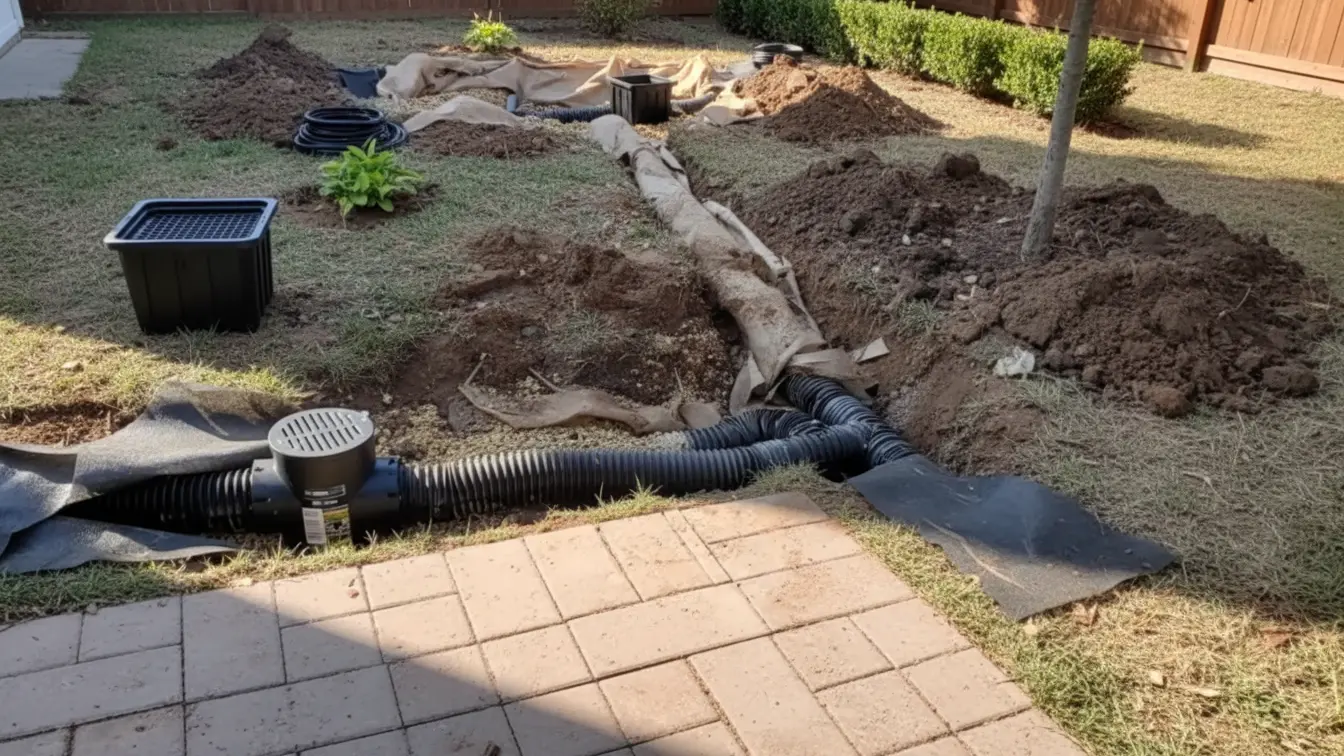
Catches water crossing the ground and routes it somewhere else, so it stops collecting against the foundation after every storm.
Learn moreCity lots leave very little room to work with, and on a street of attached houses in the South End the ground between buildings takes everything off two roofs with nowhere obvious to send it.
A french drain installation is a trench, a bed of washed stone and perforated pipe wrapped so fine material cannot silt it up, laid on whatever fall the site allows. It picks up water travelling through the top of the ground and carries it to daylight or to a basin and pump where there is no outlet. Exterior yard drainage is the cheapest place to fix a water problem because it is the furthest upstream you can reach it. Cleanouts go in at the turns, since a line nobody can flush is a line that gets dug up again. Where the fall is shallow the trench deepens as it runs, since a pipe that flattens out holds water instead of carrying it away.
A drain will not dry a wall that water is passing straight through, and it does nothing about a downspout discharging into the trench line. In Roslindale the gutters mattered as much as the pipe. The visit to work that out is free.
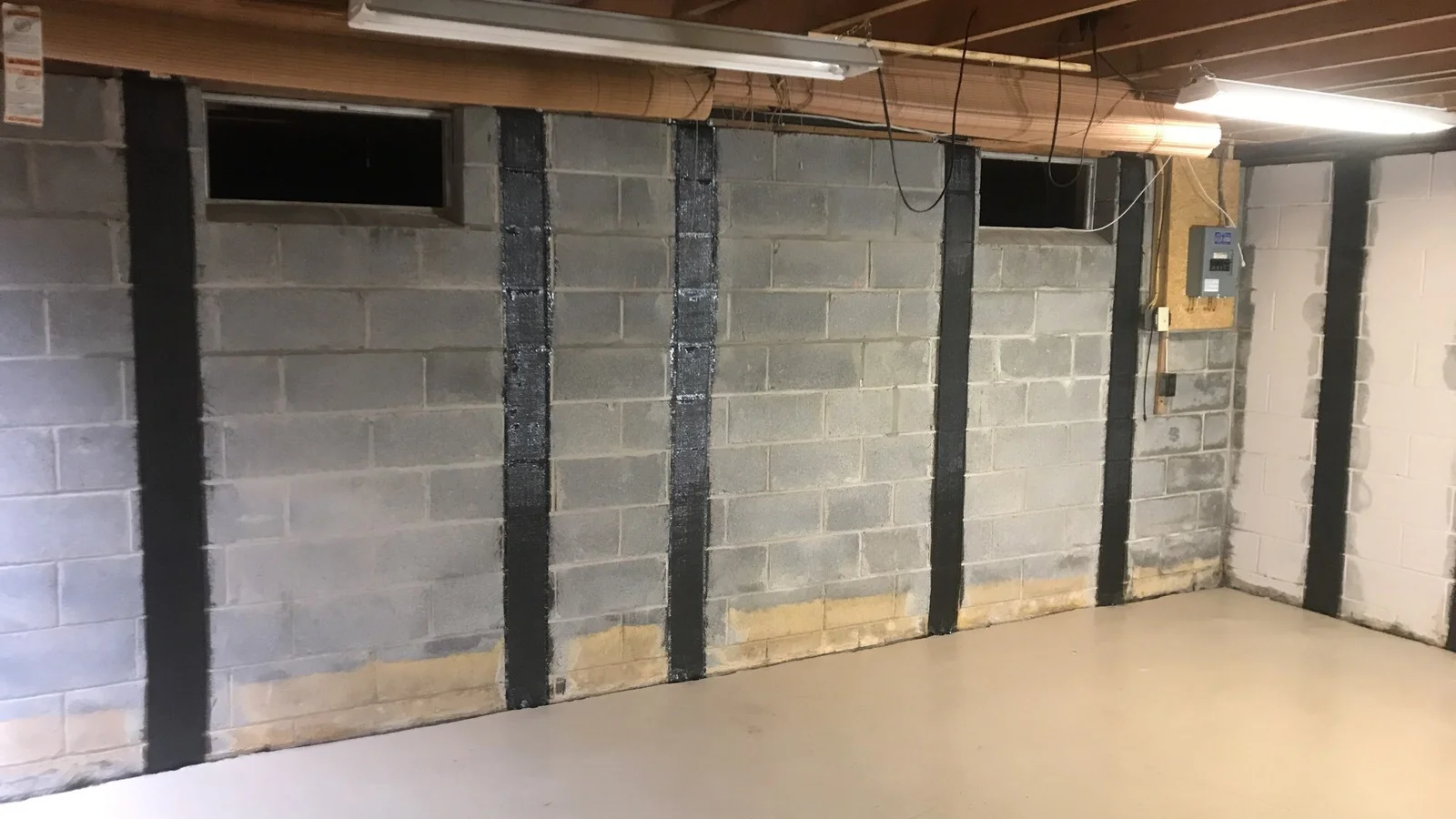
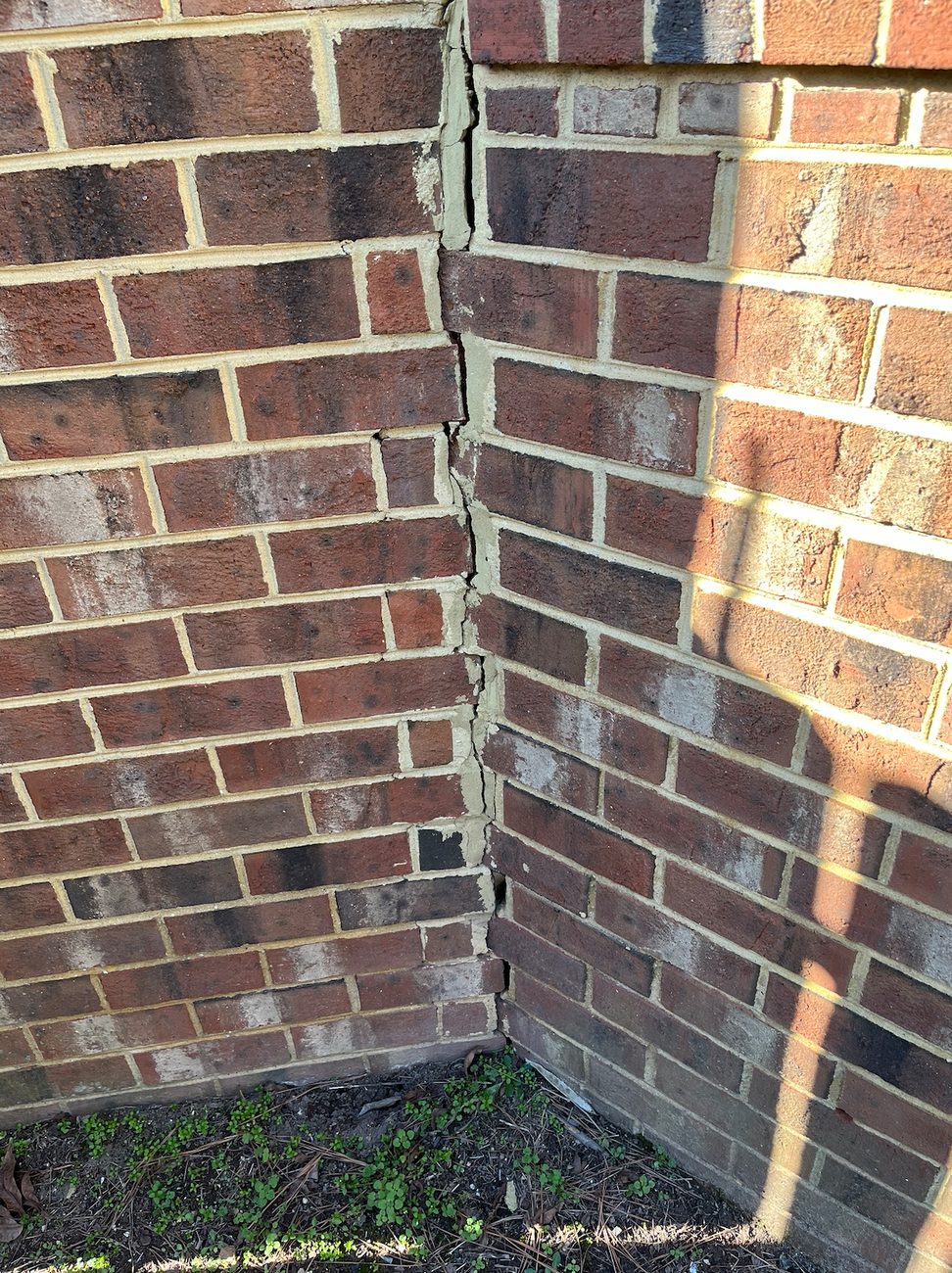
Holds a basement wall that has moved against the load pushing on it, and rebuilds the sections that have come apart.
Learn moreA wall that has come in is carrying more than it was built for, and on a rubble foundation a century old that threshold is lower than people expect. In Dorchester a wall like that has usually been moving slowly for decades before anybody notices the floor above it.
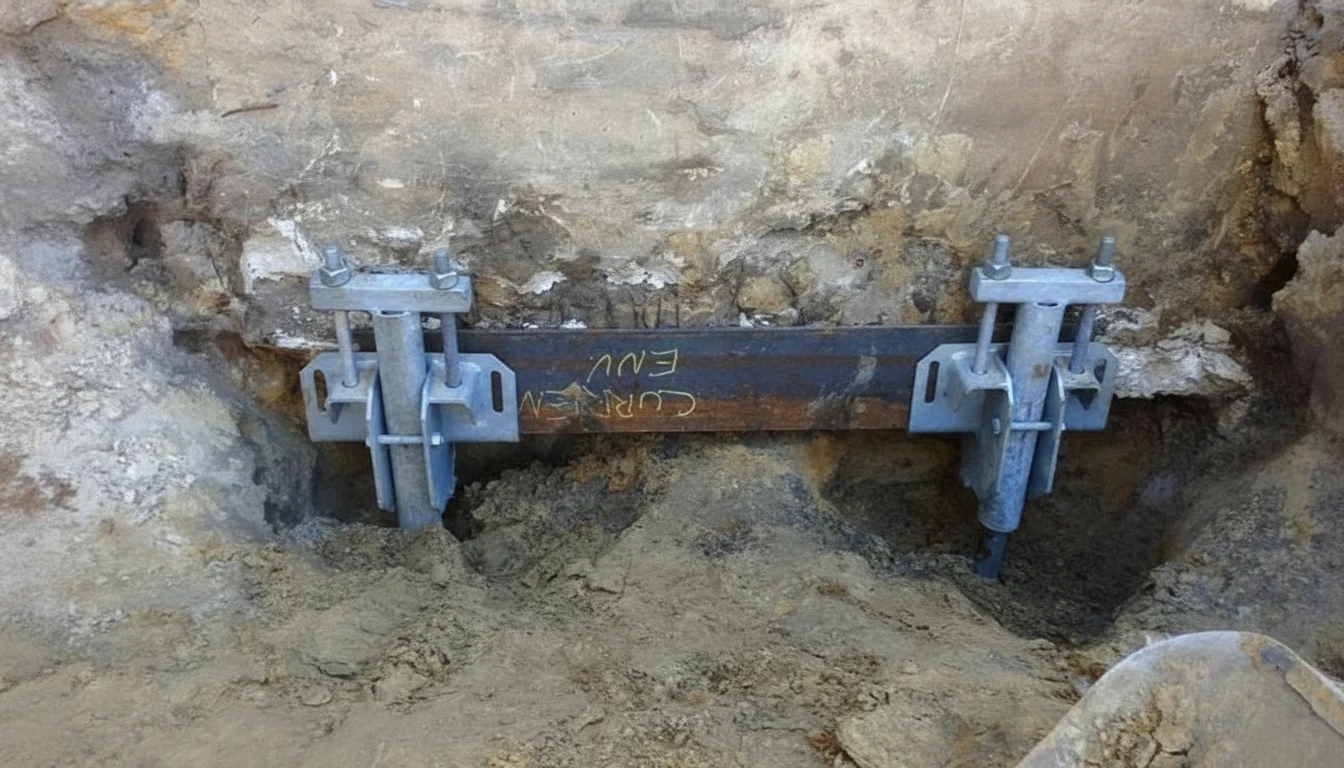
Basement wall repair starts with deciding whether the wall can be held or has to be rebuilt. Carbon fibre straps bonded across the face stop further movement on block and finish flat enough to cover. Steel beams anchored at the footing and the framing do the same on a wall that has gone further. On stone the answer is often different: sections get taken down and relaid properly, because you cannot brace a wall whose mortar has already gone. Which route applies is decided on site, not from a photograph. Straps run from the footing right up to the framing above, because anchoring only at mid-height moves the problem rather than solving it.
Bracing manages the wall honestly, but the water behind it stays until the drainage is dealt with. In Jamaica Plain the two went in together. Having yours looked at costs nothing.
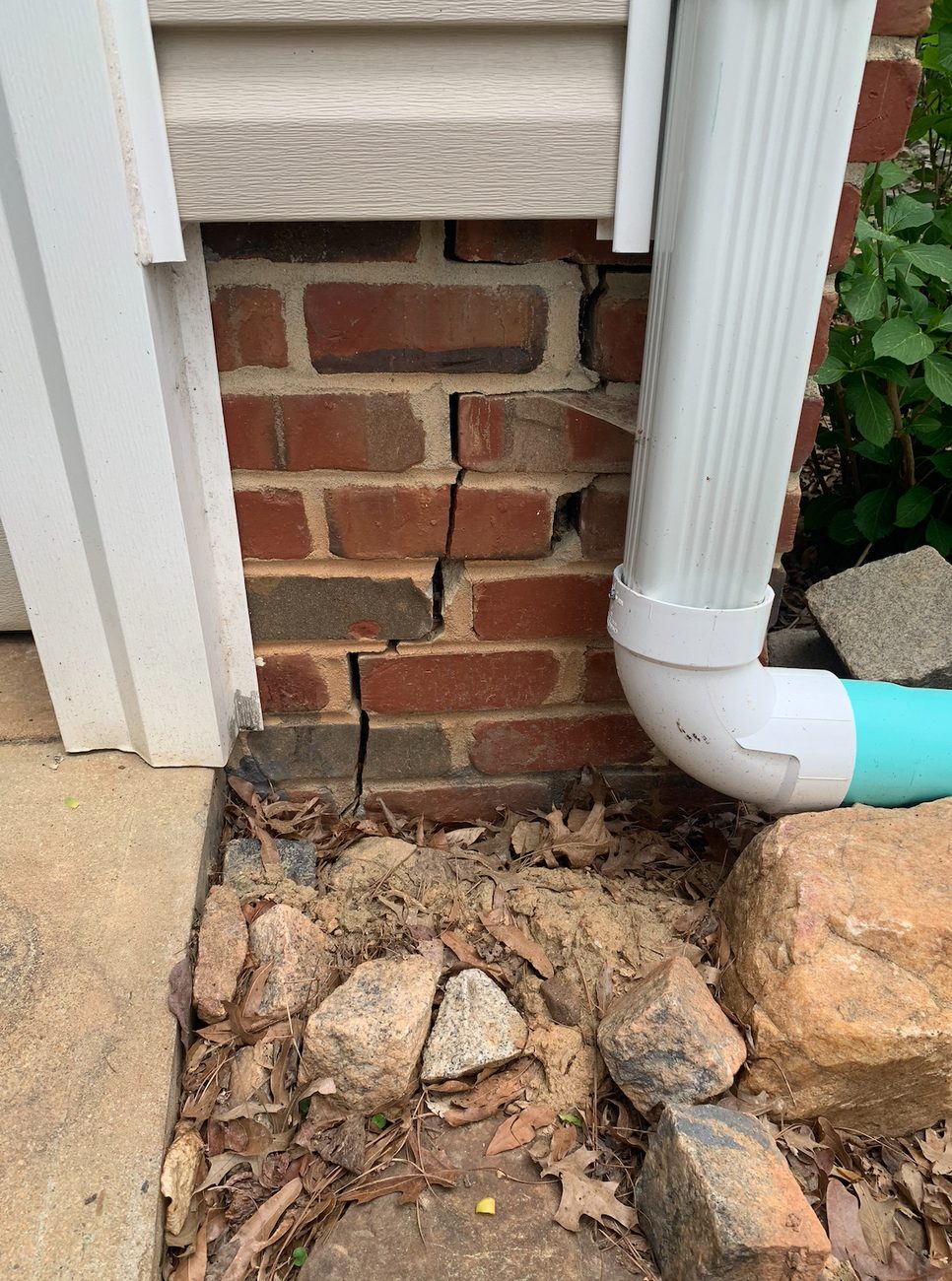
Seals cracks through the full depth of the wall rather than skimming the surface, and reinforces masonry so it stops opening again.
Learn moreCracks are the thing people call about most in this city, and plenty of them are not doing anything. A thin vertical line in a poured wall in Roslindale is usually shrinkage left from the concrete setting, and it can weep for years without moving.
Foundation crack repair treats those by injecting resin under pressure so the material fills the crack front to back and bonds both faces together, rather than sitting in the first half inch the way a surface patch does. Stone and brick behave differently: the crack runs through the joints, so the work is raking out and repointing rather than injecting, and the repair is only as good as the mortar chosen for it. Basement wall crack repair on old masonry is masonry work, not caulking. Modern Portland mortar is harder than old brick and will damage it over time, so the mix matters as much as the workmanship.
What none of it does is hold a wall that is still being pushed or close a crack that keeps widening because what is under it is dropping. In Dorchester we have turned crack work down for exactly that reason.
Queen Foundation Repair handles the two things that go wrong under a Boston house: an old foundation losing the material it was built from, and water finding its way through a wall that was never meant to stop it. We are a leading provider of foundation work across the city, covering foundation repair, basement waterproofing, foundation crack repair and basement wall repair.
Most of what we get called to started small. A crack you could once cover with a thumb, mortar coming out of a joint when you brush it, a damp line along the floor that used to dry out and now does not. Left alone those get dearer, because the water behind them keeps arriving.
So we look before we quote. From the South End over to Roslindale, someone comes out, goes over the property and down the basement, and tells you plainly what is happening and what putting it right involves. The price is in writing before work starts. If it is cosmetic, we will say so rather than sell you a repair you do not need.
The housing here is older than almost anywhere we work, which means stone and brick more often than block, and that changes the repair. You can see everything Queen Foundation Repair does across Massachusetts. Licensed and insured, the warranty moves with the house if you sell, and the estimate is free.
Get your free inspection
WHAT YOU GET
We pick up quickly and get out to the property fast, so you're not waiting weeks to learn what's wrong and what it costs.
No charge for us to come out, work out what's happening, and lay out what the fix involves. You know where you stand before deciding.
Licensed, with full liability and workers' comp cover, so the work meets code and your property is protected if anything goes wrong.
Every repair carries a written warranty that passes to the next owner, so it protects the value of the house if you sell.
A clear written price before anything starts. No vague ballpark, and nothing new appearing once a crew is already on the job.
From the made ground under the South End to the stone cellars in Roslindale, we are down these basements every week.

COMMON QUESTIONS
The questions we get asked most in Boston, from the South End over to Roslindale, and the honest answers to them. Prices are given as ranges, because on a house this old the real number depends on what is found.
What Waterproofing Costs
Interior drainage is priced by the running foot of wall, so one wet wall costs a fraction of doing the whole perimeter. For a typical Boston basement most jobs land somewhere between about five and fifteen thousand dollars once a pit and pump are included. Old stone foundations often need pointing work before or alongside the drainage, and that shows up as its own line rather than hidden inside the waterproofing number. Access matters too, because on a city lot there is often no way to dig the outside of the wall at all.
Honestly, the gutters. A downspout emptying beside the wall delivers more water than most people believe, and redirecting it costs almost nothing. Grading the ground away from the building is next. Neither will fix a wall that water passes straight through, but both are worth doing first and we will tell you if that is all you need.
If you use the space or want to, yes, and it pays for itself the first wet spring. If it is bare storage that takes a little water twice a year, a sump and better gutters may be enough. We would rather say that than sell a full perimeter system to somebody who does not need one.
Repointing a Stone Foundation
It is priced by the area of wall and how far the joints have gone. A single bad section runs in the hundreds; a whole cellar wall runs into the thousands. Old rubble takes longer than coursed stone because no two joints are the same. The one thing that reliably raises the price is leaving it, since once the joints are gone the stones start to move and then it is not pointing work any more.
The failed mortar is raked out to sound material, the joints are cleaned and damped, and new mortar is packed in and finished in layers rather than smeared across the face. It is slow work and it cannot be rushed, because mortar forced in too fast simply falls out again in a few winters.
A lime-based mortar, not modern Portland. This matters more than people expect. Portland is harder than the old brick and stone around it, so instead of the mortar wearing as the sacrificial part, the stone does. On a foundation this old the wrong mix quietly destroys the thing it was meant to protect, and it cannot be undone.
Underpinning
It is the more involved end of foundation work, so it runs well into five figures on most Boston houses. It is done in sections rather than all at once, and often only the failing part needs it. What makes it expensive is waiting, because a footing that keeps dropping takes the wall and the floors with it.
If the footing is still moving, yes, because everything above moves with it and the bill grows the whole time. If the settlement is historic and has not changed in years, no. The test we use is whether it has moved recently, not whether it looks alarming, and on a house this old plenty of alarming things stopped moving decades ago. Take a photograph with a ruler against the crack and look again in six months; that answers it better than any opinion.
No, and we will be blunt about this one. Underpinning means removing ground from beneath a wall holding your house up, in sections, in a set order, with the load carried at every stage. Get the sequence wrong and the wall comes down. It is permitted work here and it is not a job to learn on.
Is It Serious
Cracks that are wider than they were, doors and windows that have started to catch, floors that slope or bounce, and water arriving where it never used to. One of those on its own is often nothing. Several at once, or any one of them changing over a season, is worth a look. The useful test is change over time rather than appearance on the day, because an old house has always looked a bit alarming.
In this city, longer than you would think. Plenty of Boston foundations are well over a century old and structurally fine. What has a shorter life is the mortar holding them together and, on made ground, the timber underneath. The stone is rarely the problem.
A single crack injected runs a few hundred dollars. Repointing a section runs into the low thousands. Underpinning or pile work runs well beyond that. Nobody can price it honestly over the phone, which is why somebody comes and looks first and the number goes in writing before any work starts.
Insurance
Not as a rule. Insurers treat waterproofing as maintenance rather than damage, because the water arrived gradually rather than in one event. If a burst pipe flooded the basement, the damage from that may be claimable even though the waterproofing itself is not.
Usually not. Earth movement and gradual water are both standard exclusions and that covers most of what causes foundation trouble. Sudden accidental discharge is the covered path, so a supply line bursting under the slab has a real claim. Read your own policy rather than assuming.
No, and it is worth knowing before you need to. Pile rot is neither sudden nor accidental, it happens over years as the groundwater drops, so it falls outside every standard policy. Massachusetts has no state program covering it either. On a Back Bay or South End building that is a significant number to carry alone, which is exactly why the groundwater levels get monitored. If you own in one of those neighborhoods it is worth knowing your building's groundwater readings before you need them.
Why It Happens in Boston
Yes, and it is more of the city than people realize. Back Bay was a tidal estuary until it was filled in the 1800s, and the South End and parts of Beacon Hill are made ground too. The buildings put up on that fill stand on untreated wooden piles. Underwater those last indefinitely. If the groundwater drops and the pile tops meet air, they rot, and the building settles. The City set up the Boston Groundwater Trust in 1986 to monitor exactly this.
Because it is lime mortar and it was always the sacrificial part. On an old fieldstone or rubble foundation the stone outlives everybody and the joints between the stones do not. Once they wash out the wall stops acting as one piece, and water walks straight through where the mortar used to be.
Sometimes, and it is a common ask here because so many old cellars have barely six feet of clearance. It means underpinning the walls first so the footings sit below the new floor, then excavating and pouring. It is real structural work rather than digging, and whether it is possible depends on the wall, the neighbors and what is under the slab. On an attached house the party wall usually decides it, so the conversation starts there rather than with the floor.
WHERE WE WORK
We cover the whole Boston area, not just the addresses closest to downtown. That takes in the made ground under the South End and Back Bay, the stone cellars out through Jamaica Plain and Roslindale, and the triple-deckers down in Dorchester. If a house needs looking at, we come and look at it.
ZIP CODES WE COVER
Ready to Get Started?
No obligation, fast and easy.
We appreciate you reaching out.
One of our team members will be with you shortly.