Water getting into an old basement, a crack spreading in the wall. Youngstown’s houses are old, and the basements show it first. We cover basement waterproofing, french drain installation, and sump pump installation across the city, Brier Hill to Kirkmere, and the first look is free.
Get Your Free Inspection
We appreciate you reaching out.
One of our team members will be with you shortly.





Warning Signs
Old houses show their problems quietly. A wet mark low on the basement wall, a door that will not close right, a crack that was not there before. Some of these mean nothing, some are the start of a real problem, and telling the difference early saves money.
Exterior Cracks That Keep Growing
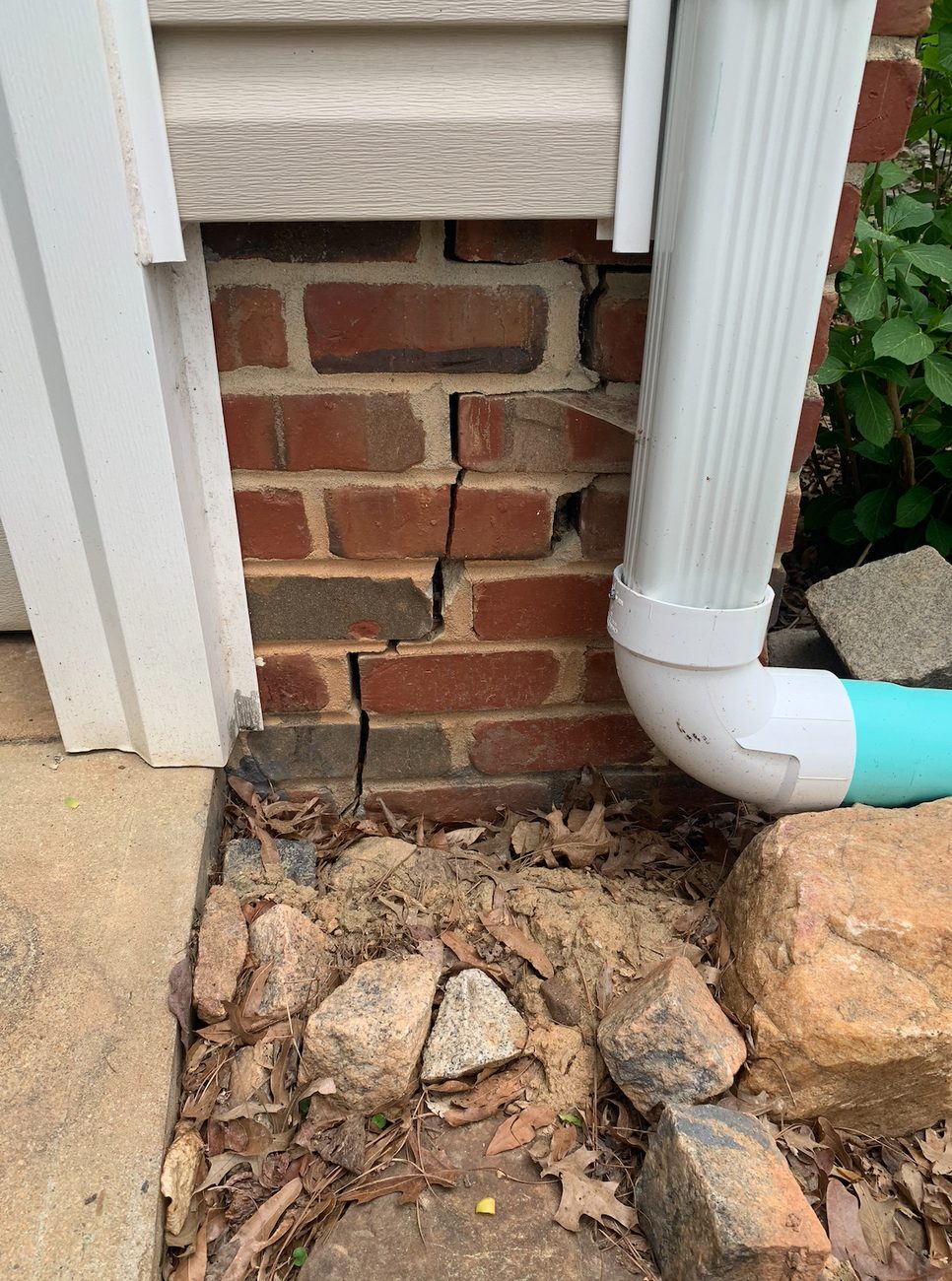
A crack climbing through the brick, or mortar falling out near a corner. The ground under that side of the house has settled, and the crack follows it.
Doors That Quit Closing Right
A door that will not latch, or a gap above the trim. One side of the house has settled lower than the other, and the frames show it first.
Floors Out of Level
A floor that slopes enough to notice, or boards that bounce when someone walks by. The supports underneath have settled or weakened, and the floor moves with them.
Water Marks on the Block Wall
A damp line on the wall after rain, and white powder when it dries. The wall is letting water through, and anything stored near it is at risk.
Puddles That Outstay the Rain
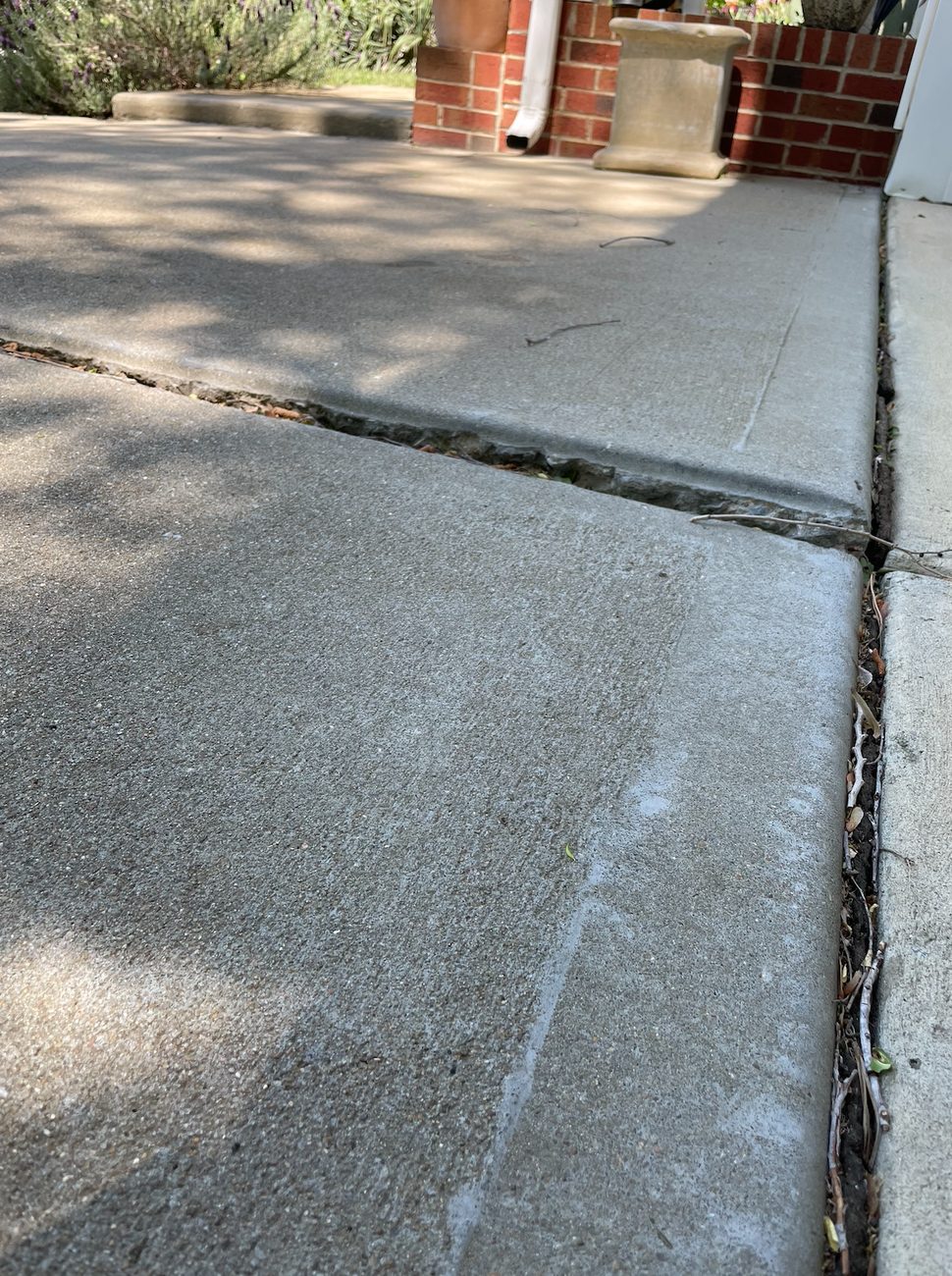
Puddles in the yard that stay after the rain, or a downspout dumping beside the house. That water sits against the foundation and ends up in the basement.
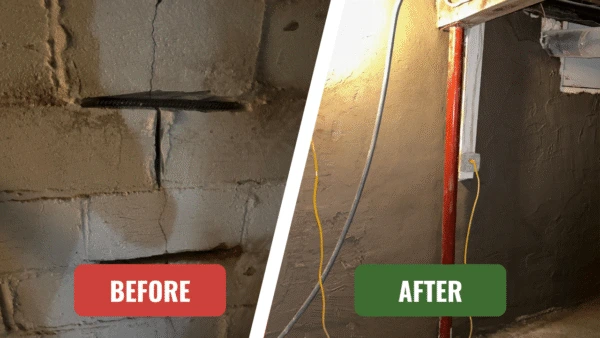
A Long Crack Across the Basement Wall
A sideways crack in the block wall, or a wall with a bulge you can see. Wet ground is pushing against it from outside, and block gives slowly.
Most old houses here have a few of these signs, and many of them stopped mattering years ago. What needs attention is anything that is still changing: a crack that is wider than it was, a wall that leans more than it did, water that keeps showing up in the same spot. If you are not sure whether yours is old news or a real problem, have us look. The inspection is free, and so is the answer.
Most of what we fix here is water in the basement, walls that have started to move, and porches or slabs that have settled. The eleven services below cover it, and the free estimate tells you which ones apply to your house.
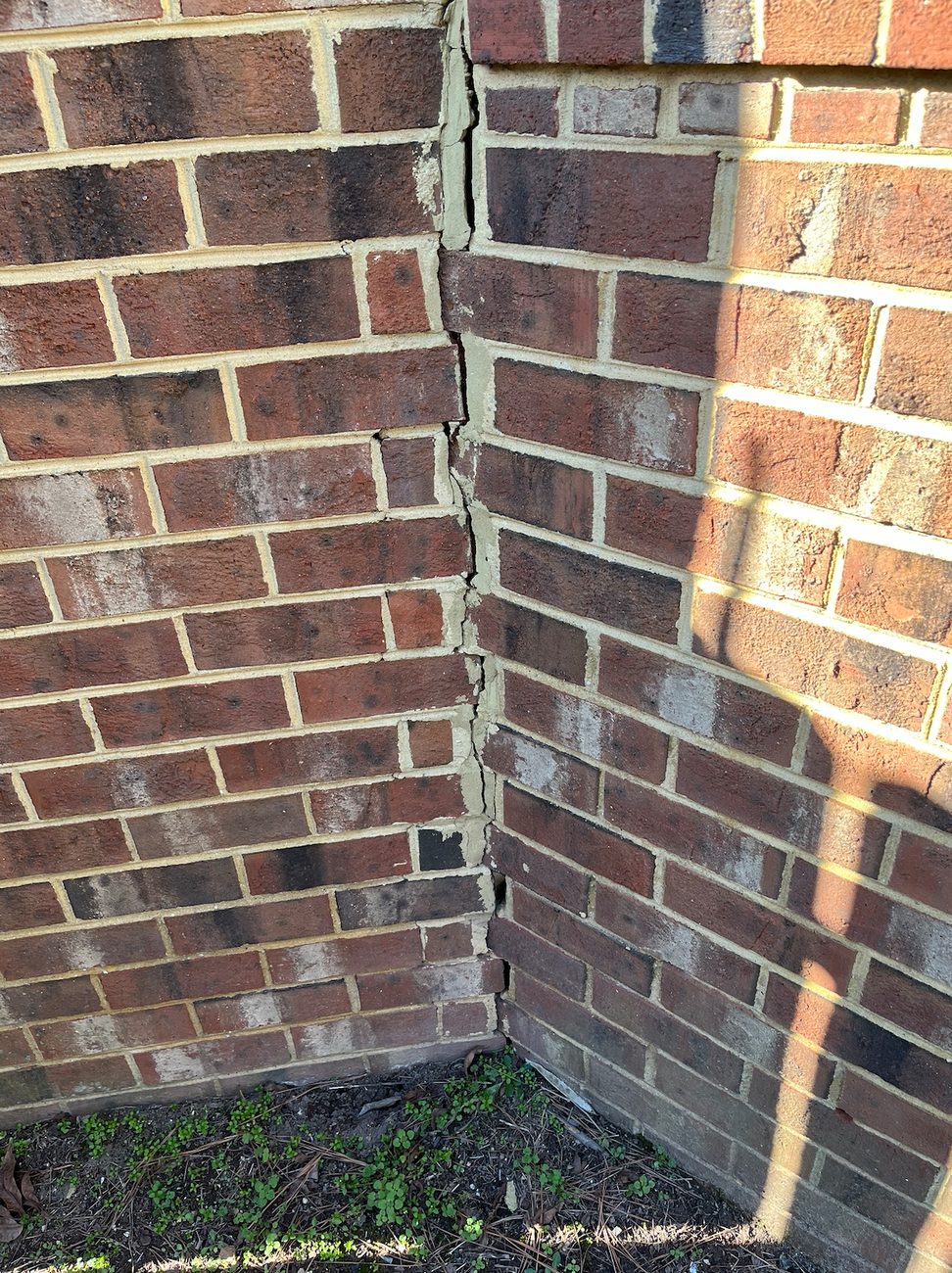
Repairs a settled foundation with steel piers and honest math, so the cracks stop growing and the house stays worth owning.
Learn moreAround here, the question behind most foundation calls is simple: is this house worth fixing? An older house on the South Side has cracks over two doorways and a corner that has clearly dropped, and the family wants to know whether to repair it or walk away. So the first things we bring are a tape measure and a straight answer, because in this market the cost math matters as much as the repair method does.
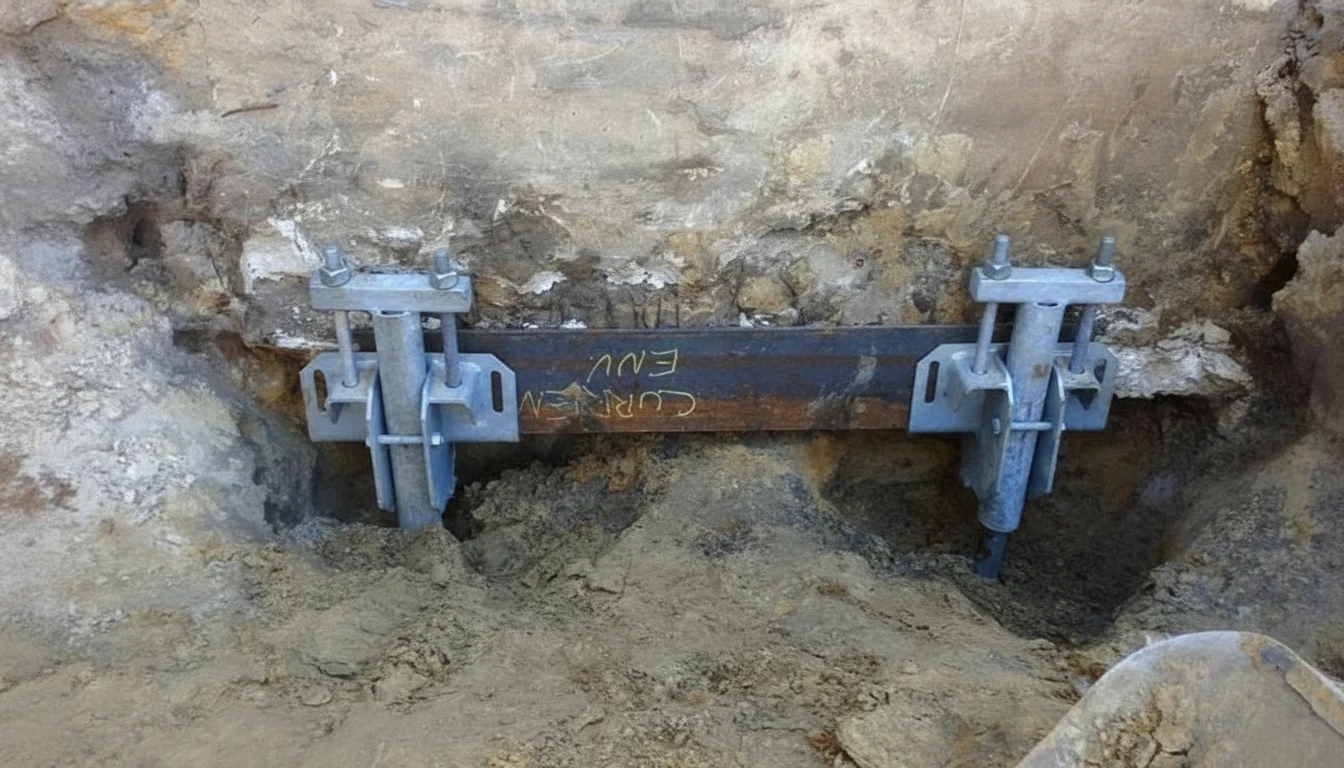
When the math says fix it, the work is proven and standard. A dropped footing gets steel piers driven down to ground that holds, and the house is lifted gently back toward level or held where it sits, whichever the old plaster can handle. Worn block gets repointed, reinforced, or rebuilt in sections. Sagging beams get new posts and footings under them. And when the inspection finds water underneath the settling, which is usual here, the drainage gets fixed in the same scope, because wet ground is what started the problem. We have done every version of this work in Smokey Hollow and up the hill in Oak Hill.
Sometimes the answer is that the movement stopped decades ago and the crack is old damage, not an active problem. That answer costs nothing. When repair work does make sense, the quote lists every pier and every hour, so you can weigh the cost against what the house is worth using real numbers. The decision stays yours, made at your kitchen table, not under pressure.
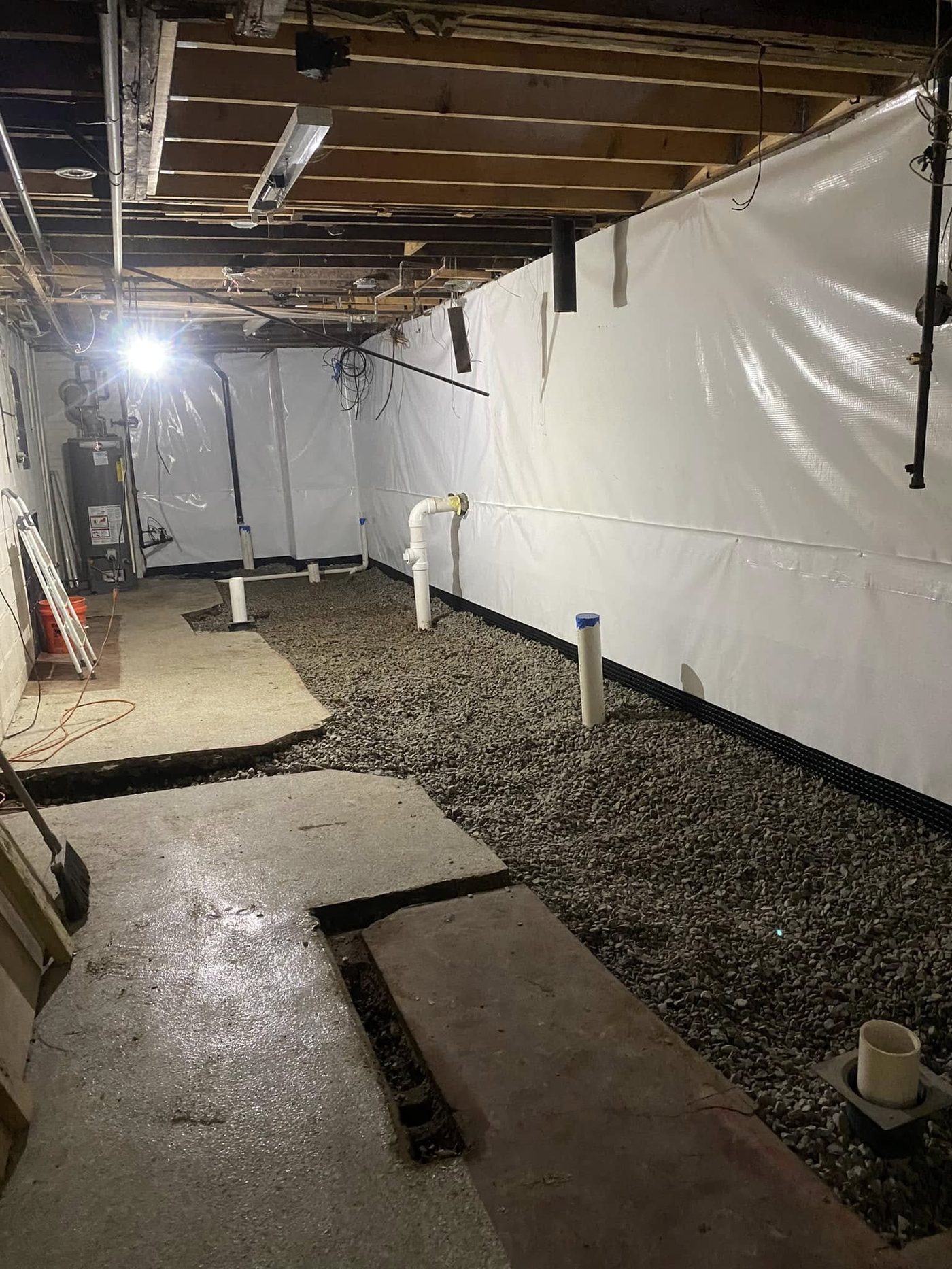
Ends the wet-basement routine with drainage that catches the water at the wall and moves it out, priced to make sense here.
Learn moreThe wet corner was probably wet before you owned the house. Somebody painted the block twice, left a squeegee by the drain, and learned to keep things on skids. Every spring the water line creeps a little higher up the wall. The wall is not ruined. It was built before waterproofing existed as a trade, and the ground outside sends it more water than it can turn away. Fixing that costs less than most people assume.
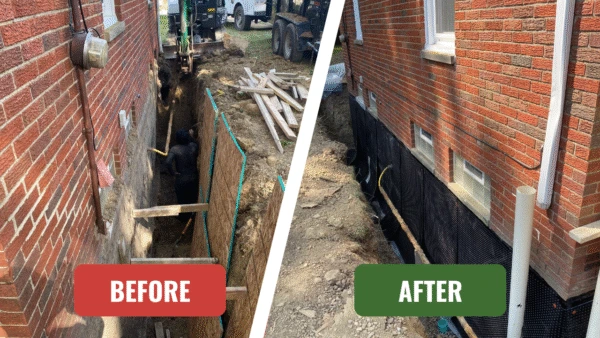
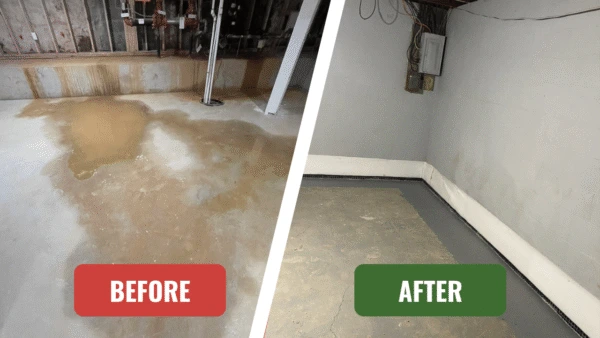
For most block basements, the fix is interior perimeter drainage: a channel beneath the slab edge that intercepts seepage where it enters and delivers it to a sump pump, quietly and permanently, without touching the yard. Walls with heavier damage, or walls already being excavated, can be sealed on the soil side with a membrane and fresh footing drains, which is the bigger job. A single leaking crack in poured concrete needs only injection. The worker houses of Brownlee Woods and the streets of Lansingville usually need the modest version, and we price all the options so the comparison is yours to make.
Before we quote any system, the cheap causes get ruled out first: the downspout aimed at the corner, the grade that slopes toward the house, the gutter that is packed with maple seeds. Fixing those sometimes ends the problem for a few hundred dollars, and we would rather recommend the right fix than the biggest one. Estimates are free and written.
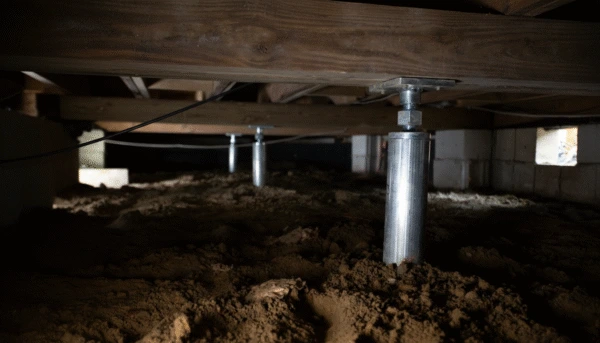
Puts solid steel supports under the sagging addition floor and doubles up the joists that decades of damp ground weakened.
Learn moreThe addition was built for a growing family sixty years ago, and you can feel its age in the floor. There is a low spot by the back door, a shake when the refrigerator kicks on, and cold air rising through the boards in winter. Underneath is a crawl space with a dirt floor and whatever posts the original builder had on hand, and those posts have been sinking into damp ground a little at a time ever since.
The repair replaces improvisation with real support. Steel jack posts on poured concrete pads take the place of the old posts, set snug under the beams and sized for the actual load. Joists that moisture has softened get new lumber fastened alongside them, and a cracked or rolled beam comes out and gets replaced entirely. If the ground below stays wet, a vapor barrier or a small drain goes in while we are already under there, because dry framing over wet earth does not stay dry for long. Whether the crawl space hides under a porch in Newport or an addition in Cottage Grove, most of this work takes a day or two.
If the whole problem is one bad post or one soft joist, that is a small job, and the estimate will say so. One of us crawls under with a flashlight and a level, measures everything, and writes up the fix with must-do and could-do separated, so your budget makes the decision instead of a salesperson.
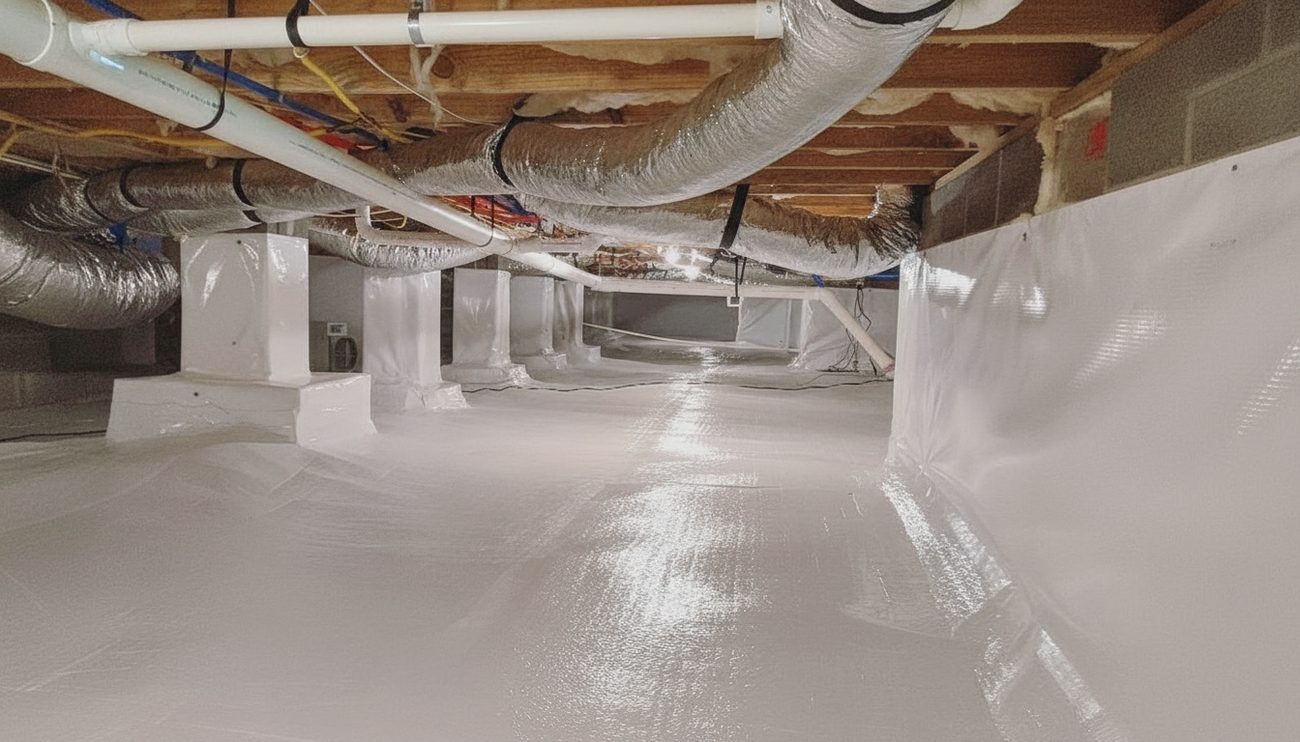
Seals the damp crawl space under the addition with a heavy liner and dry air, ending the musty smell upstairs.
Learn moreThe back room smells damp even during a dry week, and the crawl space under it is the reason. The ground down there is bare dirt. The vents have been open for years. The framing holds enough moisture to grow things it should not. Air moves up through a house, so the rooms above share whatever is growing below, and the floor over the crawl space cups and creaks a little more each year.
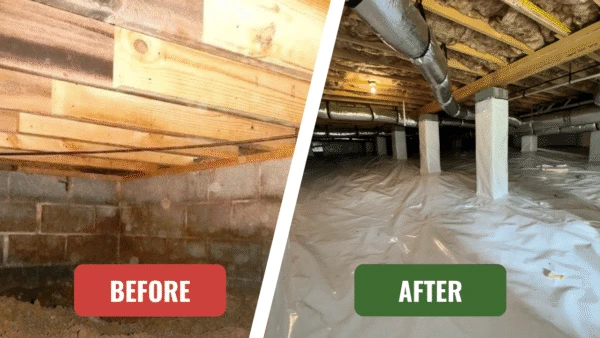
Encapsulation shuts that down. A heavy liner gets fitted over the ground and carried up the block walls, every seam taped, and the vents get closed and sealed. The space quits exchanging air with the outdoors and joins the conditioned house. Where dampness lingers in the readings, a small dehumidifier finishes the job. Where real water shows up after storms, drainage goes in ahead of the liner, since trapping water under plastic is worse than the smell ever was. On the postwar streets of Schenley and Pleasant Grove, the change is usually obvious within a few weeks: the musty smell leaves the house, the floor above settles down, and the winter drafts through the boards stop.
Plenty of crawl spaces need less than the full treatment. A proper ground cover and a corrected downspout solve the mild cases for a fraction of the price, and when the moisture readings support that answer, it goes straight into the write-up. Free inspection, real numbers, and a warranty that stays with the property.
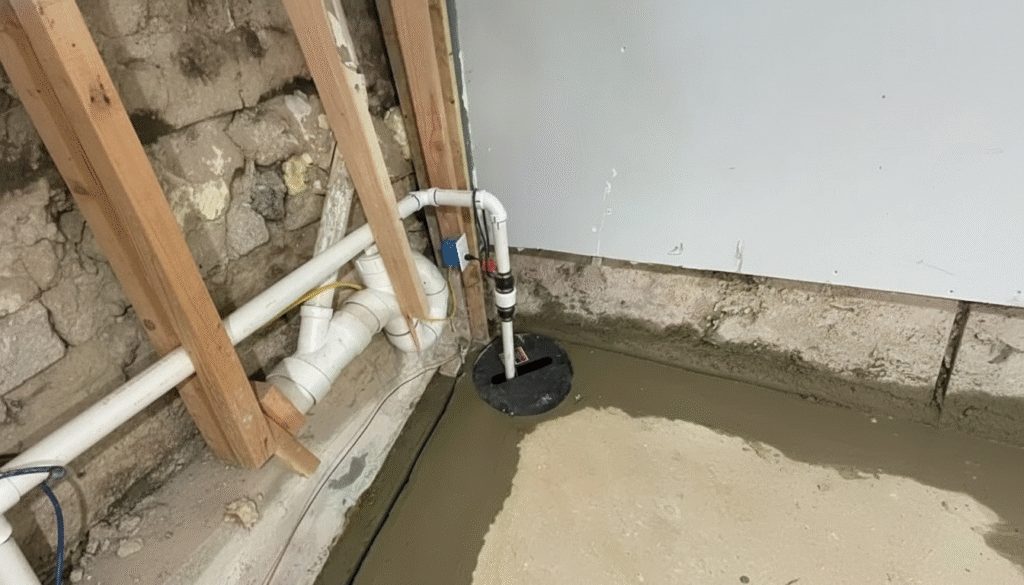
Installs a pump sized for real storms, with a sealed pit, a dependable discharge line, and a battery for outage nights.
Learn moreThe pump in the corner might be older than the water heater, and its whole job happens on the worst night of the year. When heavy rain moves up the valley and the ground stops taking water, everything the yard cannot absorb heads for the lowest floor in the house. A pump that short-cycles, hums without moving water, or trips the breaker is telling you it will not be ready. Half the time, the same storm takes the power out too.
Done right, the installation starts with the pit: it sits at the lowest point of the drainage run, deep enough that the pump rests between cycles, sealed so damp air stays out of the room below. We match the pump to the inflow measured on site, not the label on the box. The discharge line runs far enough out that the same water cannot circle back, a check valve holds the line between cycles, and a battery backup steps in by itself when the power fails. From Lincoln Knolls to Buckeye Plat, most of the pumps we replace were too small on the day they were bought.
If your pump is fine and the real trouble is the drainage feeding it, that is what you will hear, with the smaller fix priced first. The free inspection follows the water along its whole path, and the sizing, scope, and warranty land on paper together. Most swaps take half a day, testing included.
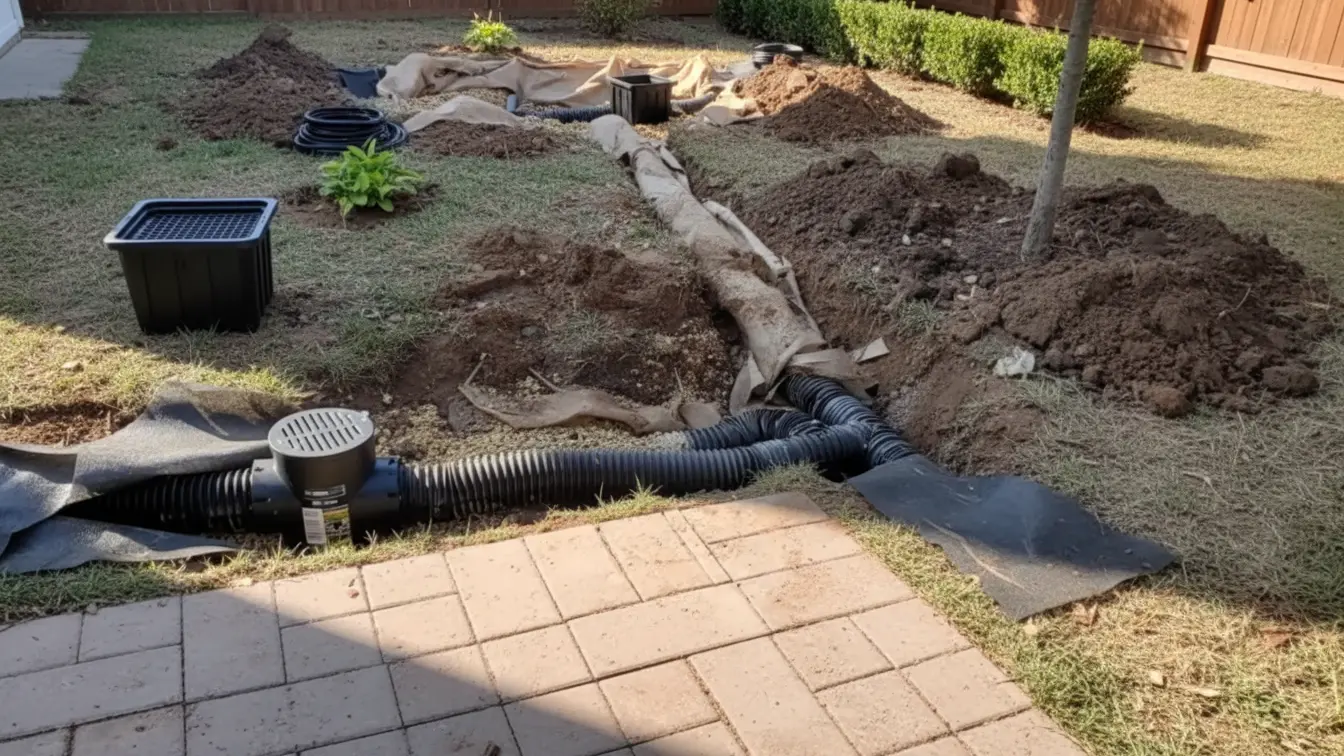
Cuts off the water crossing your yard with buried gravel and pipe, and sends it somewhere it cannot hurt the house.
Learn moreSome yards here stay wet long after a storm has ended. The side strip is soft for days. Moss has taken over the shady corner. The flower bed against the house holds standing water. The lot has collected runoff from the slope since the street was first cut, and every wet stretch delivers the same water to the same low spots, most of them uncomfortably close to the foundation wall.
A french drain interrupts that delivery. We open a trench across the water’s path, bed perforated pipe in graded stone, and grade it so everything drains toward daylight or a dry well. Set high on the lot, the trench catches water before it ever arrives at the house. Set at footing depth, it relieves the soaked ground that presses on the basement wall directly. Buried downspout lines usually join the same job, because the roof sheds more water at its corners than the entire yard takes in. On the slopes around Idora and the blocks of North Heights, one well-placed trench has dried out more than one basement on the same block.
This is straightforward work priced by the foot, often the cheapest line on the estimate, and sometimes the only one the house needs. The trench path, depth, and outlet are all in the written quote, the inspection itself is free, and the grass grows back over the trench within the season.
Queen Foundation Repair covers the Youngstown area. The water side is basement waterproofing, french drain installation, and sump pump installation; the structural side is foundation repair, basement wall repair, crawl space work, helical piers, egress windows, and concrete leveling. Water work comes first here because water is most of what goes wrong. One free inspection covers all of it.
The price comes after the diagnosis, not before. Storms drain toward the river through ground that passes water unevenly, and older basement walls take the worst of it, so we trace the water to its source before pricing the repair. Quotes are written and itemized, and the inspection itself is free. If a repair is not worth doing on your house, we will tell you that too, in plain numbers.
Most of this housing went up when the mills were running, and it was built to last: brick doubles, company houses, Victorians around Wick Park, cottages in Smokey Hollow. We know these houses because we work under them every week. If a crack is cosmetic, that is the whole answer, no charge. The first visit is free, and warranties transfer if you ever sell.
Get your free inspection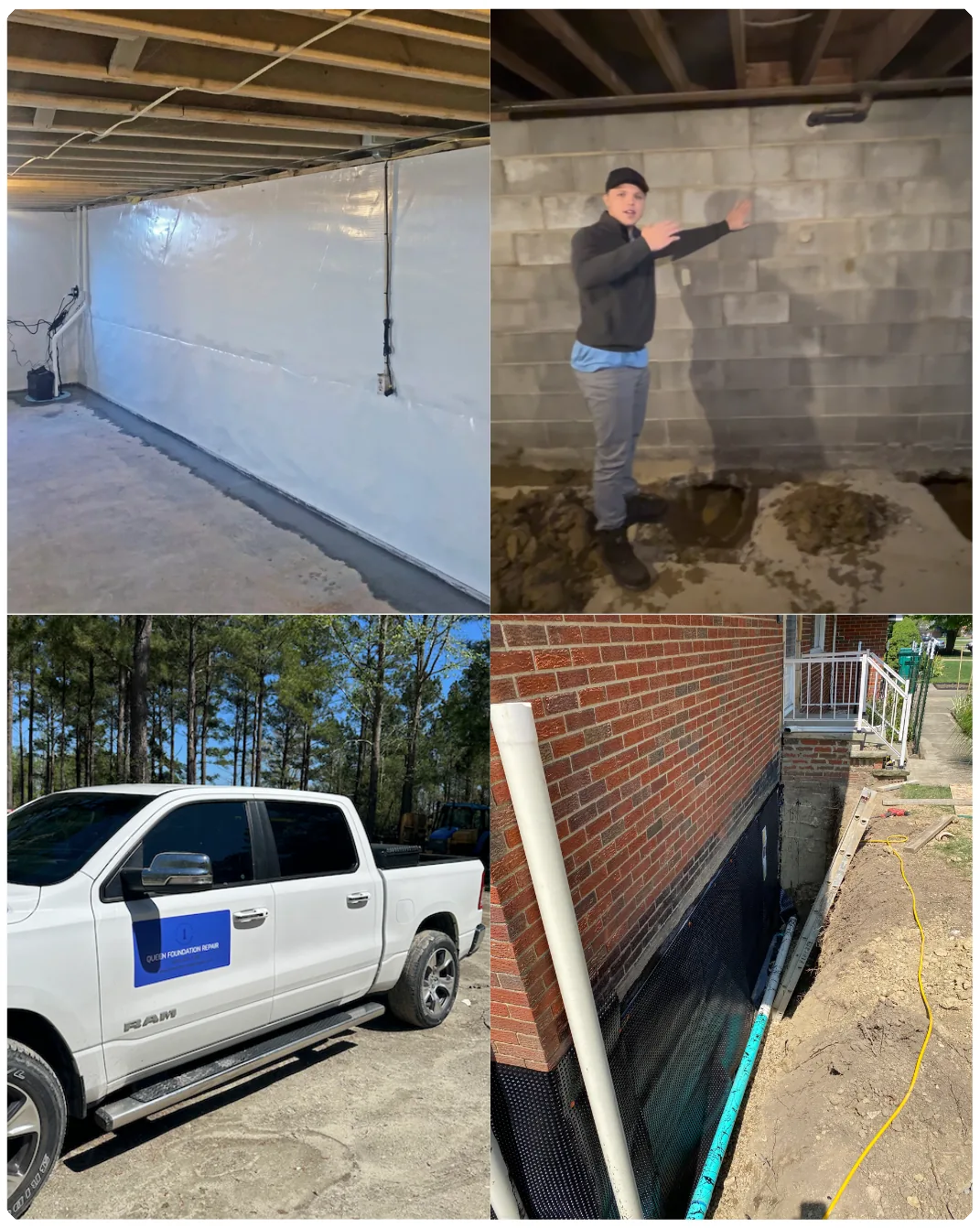
What You Get
We answer fast and get out to the house quickly, so you're not sitting for weeks just to find out what's wrong and what it'll cost.
No charge to have us come out, find what's going on, and lay out what the fix takes. You know where you stand before spending a dollar.
Licensed, with full liability and workers' comp coverage, so the work is done to code and your property is protected if anything goes sideways.
The repair comes with a written warranty that transfers to the next owner, so it protects your home's value if you ever sell.
A clear, written price upfront before anything starts, no vague ballpark and no surprise add-ons once the work is underway.
The valley is full of mill-era doubles, Victorians, and postwar ranches, and we are under them every week. From Idora to Cottage Grove, houses we know well are cheaper to diagnose and repair.
Four steps, no games, and paper at the end of each one.
Asked Around Here
From Crandall Park down to Pleasant Grove the questions repeat: how bad is it, what does it run, is it worth it on this house. Eighteen answers below with the numbers left in.
Signs & Severity
Urgent means anything that is still moving or carrying load. A wall bowed past an inch, a horizontal crack that widens between visits, water arriving in new places or in greater volume, a floor dropping over a failed post: those get more expensive the longer they wait. What can wait: hairline cracks that never change, a damp patch after the biggest storm of the season, white powder on old block, and floors that have been slightly crooked for fifty years. The trap in an old house is assuming everything belongs on the harmless list because most things do. Sorting the two lists is exactly what the free inspection is for, and we do it with a tape measure and a level. You get both lists in writing, urgent and someday, with a number beside each item, and in most houses the someday list is the longer one.
Seepage runs on a scale. At the mild end, a damp patch after heavy rain that dries on its own is a maintenance item, not an emergency. It gets serious as it gains volume or company: puddles instead of patches, water after ordinary rain, or seepage alongside a bulging wall or a horizontal crack, all signs the ground is loading the wall too hard. Block walls fail slowly, then quickly, so the middle of the scale is the time to act. A free inspection with a moisture meter tells you where your wall stands.
Almost every house here has settled. Very few are failing. Settling is old movement: slightly crooked floors, doors trimmed long ago, hairline cracks that were painted over and never came back. Failing is current movement: cracks that grow, gaps opening where the addition meets the house, a corner measurably lower than last year, doors that worked in spring and bind by fall. The difference between the two is movement, and movement can be measured. We mark it, measure it, and if needed measure again a month later, and the answer comes back with numbers attached.
Repairs & Methods
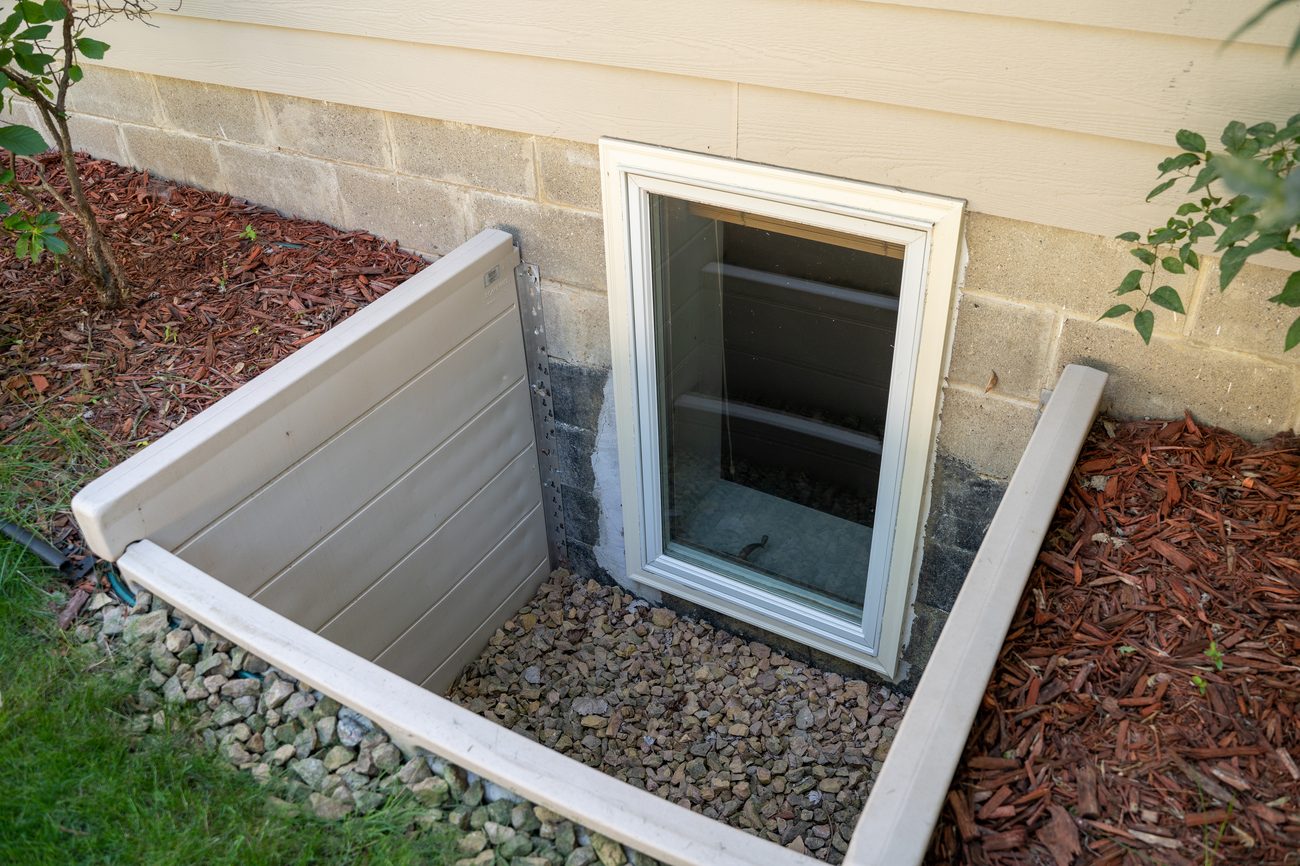
Some of it, genuinely. Extending downspouts, cleaning gutters, regrading the first few feet of soil, and sealing a window well are all fair weekend work, and that list prevents real problems. Patching a dry hairline crack is fine too. Doing it yourself stops paying off at anything structural or under pressure: bowing walls, settling corners, water rising through the slab, cracks that reopen through new sealant. Those need proper equipment and a warranty standing behind the work. Do the cheap list first, and if water still shows up, the job has outgrown the weekend.
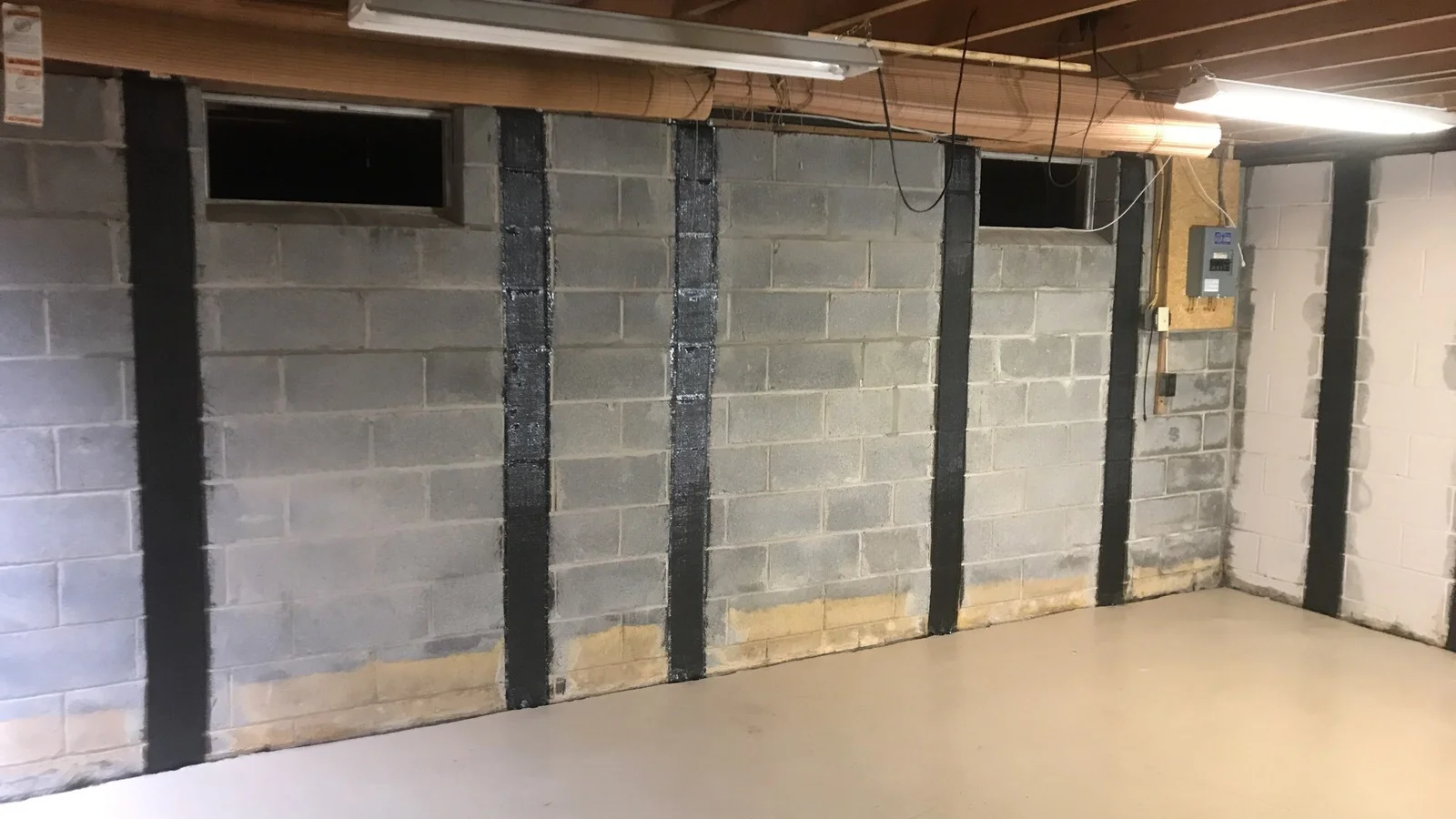
Two jobs in one: stop the pushing, then hold the wall. The pushing comes from soaked ground, so drainage relief, downspouts, grading, and sometimes a curtain drain are part of every honest wall repair. The holding depends on the bow: carbon fiber straps for early movement, steel bracing or yard anchors for more, and a rebuilt section when block has crushed. Early cases are finished in a day. Late cases cost several times as much, which is the whole argument for measuring now. The free inspection produces those measurements and a written plan.
For most block basements here, yes, and it is usually the sensible route. An interior perimeter drain catches water right where it enters the wall and carries it to a sump pump before it reaches the floor, all without excavating a yard that may not survive the digging. What inside-only work cannot do is shield the wall’s outer face from the soil itself, so a badly deteriorating wall, or one being repointed anyway, may justify exterior work. The inspection reads the wall and tells you which side of that line yours is on.
Basement & Water
If water reaches the basement more than rarely, a pump earns its place, and any interior drainage system needs one as its outlet. A decent primary pump lasts about seven to ten years, less if it short-cycles in an undersized pit, longer with clean water and correct sizing. Backup batteries want replacing about every five years. If your pump is a mystery age, test it before the season does: pour in a bucket of water and watch it start, pump down, and shut off cleanly.
The standing water leaves in hours with a pump and a wet vac. The moisture takes longer, because block and concrete release water slowly, so surfaces can read wet for days and the air stays heavy for a week or more. Run fans and a dehumidifier, and trust a moisture meter over your eyes, because storing or finishing over damp readings invites mold. If the basement floods repeatedly, the real fix is drainage rather than a better cleanup routine, and the drainage usually costs less than the third cleanup.
Manage the roof water first. Clean gutters, downspouts extended six feet or more, and splash blocks aimed away from the house intercept the biggest single source of basement water for the price of a hardware run. Next, regrade the soil to fall away from the wall, then seal the obvious entry gaps. That sequence fixes mild cases and shrinks serious ones. When water keeps coming after all of it, the next step is a french drain or an interior system, and at that point you will know it was actually needed.
Cost & Insurance
The honest ranges: sealing one crack runs a few hundred dollars, a full interior drainage system with a sump pump typically prices between $3,000 and $10,000 across the country depending on wall footage, and exterior excavation starts near $10,000 and climbs. What matters about this market: a large share of wet basements here resolve at the low end, with drainage corrections and modest systems, because the houses are small, the walls are short, and the fixes can be precisely targeted. Nobody should price your basement over the phone. The number that counts comes after a free inspection, written out and itemized, with the modest options shown first whenever they are real options. Around here word travels fast between neighbors, and overselling is how a contractor runs out of work in a hurry.
This is the question that matters most here, so here are numbers instead of slogans. A structural repair makes sense when it costs clearly less than the value it protects. On a house worth seventy thousand dollars, a six thousand dollar stabilization that keeps it sellable and insurable is usually an easy call. A forty thousand dollar rebuild may not be, and we will say so. The middle cases get the full picture: what the repair costs, what the house is worth fixed, and what it is worth disclosed but unfixed on Ohio’s seller form, which buyers do read. Sometimes the answer is a smaller scope, stabilize now and monitor the rest. Sometimes the answer is to do nothing and price the house accordingly. The inspection and that conversation are free, and nobody gets talked into repairs their house cannot pay back.
Plan on no. Standard homeowners policies treat seepage, slow foundation movement, and waterproofing itself as maintenance, which is excluded, and flood damage needs its own separate policy. What does get covered is the sudden indoor accident, like a burst pipe or a water heater that lets go, along with much of the damage a covered event causes even when the root repair is not included. Two moves worth making this week: ask your agent whether a sewer backup endorsement is offered, the cheap add-on most Ohio carriers have, and start a folder of dated photos and receipts. That record helps any future claim, supports the disclosure form when you sell, and proves the repair history to a buyer’s inspector. Then put the premium money into prevention, which removes the water instead of paying you back after it arrives.
Process & Timeline
Basement work does not depend on the weather outside. Drainage systems, pumps, wall bracing, and injection all run through the winter, and the schedule is often easier to get on. Exterior excavation is the exception, because the frost here goes too deep for digging until the ground opens up. If the problem appears in January, call in January anyway. The diagnosis and the interior half of most repairs can start right away, and any outside digging gets queued for warmer ground with the price already fixed in writing.
Yes, comfortably. The crew stays in the basement and the yard while daily life continues upstairs. Expect a day or two of honest noise, plastic wherever dust could travel, and a crew path through the nearest door. Water and power pause only briefly if at all, and never without warning. Even a structural lift moves in fractions of an inch, and the most noticeable change is usually a door that starts closing properly again partway through the job. Most customers tell us afterward that it was less disruptive than they expected.
Days, not weeks, in most seasons. In a smaller market we can move quickly, and we treat that as an advantage: calls get returned the same day, a free foundation inspection gets scheduled promptly, and active leaks jump the line. Storm weeks stretch everybody, so if water is actively coming in, say so when you call and we triage accordingly. The written quote follows the visit within a day, which means going from worried to holding a real answer usually takes under a week.
Trust, Warranty & Local
Yes, and without any paperwork on your part, because the registration rides with the property rather than the person. In this market that matters more than most places. Buyers of older valley houses arrive braced for basement surprises, and a documented repair backed by a live, transferable warranty removes the scariest line from their inspection report while defending your asking price. The warranty covers the installed work doing its job, spelled out in plain scope language rather than fine print. Keep it with the deed, hand it to your listing agent when the time comes, and let the paperwork answer the questions before the buyer’s inspector asks them. A repair receipt is good. A warranty that is still active after the closing is better, and between two houses with the same wall, the one with paperwork sells easier.
Ohio law requires sellers to complete the state property disclosure form before the buyer signs, and it asks directly about water intrusion, the basement, and structural condition. Known problems have to be disclosed, and surprises found afterward can turn into legal trouble. The strategic read is simple: an unexplained wet basement on that form invites price cuts and cold feet, while a documented and warrantied repair is a solved problem with proof attached. Fixing the issue before listing usually returns more than the discount you would otherwise end up giving.
Because the city was built down the sides of a river valley, and water has drained through these lots since before the houses were here. Storms drain toward the Mahoning by whatever route sits lowest, through ground that passes water unevenly, and a century of settled grading and tired gutters sends more of it against foundations than the builders planned for. The houses are not defective; the water routes are simply older than the drainage around them. Intercept the route with drainage built for it, and the basement stays dry.
Areas We Serve
We cover the whole Mahoning Valley, both sides of the river and the townships past the city line. From the streets around Mill Creek Park to the East Side, we fix wet basements, aging basement walls, and settling porches, and the free inspection travels anywhere in the metro.
Youngstown ZIP codes we cover:
Ready to Get Started?
No obligation, fast and easy.
We appreciate you reaching out.
One of our team members will be with you shortly.