
Every crack is a doorway for water and damage. We seal it permanently.
I'm Ready For A Free Quote
Thank You For Your Submission!
A team member will be reaching out to you shortly.








Cracks do not fix themselves. They get wider, they let in water, and they get more expensive.
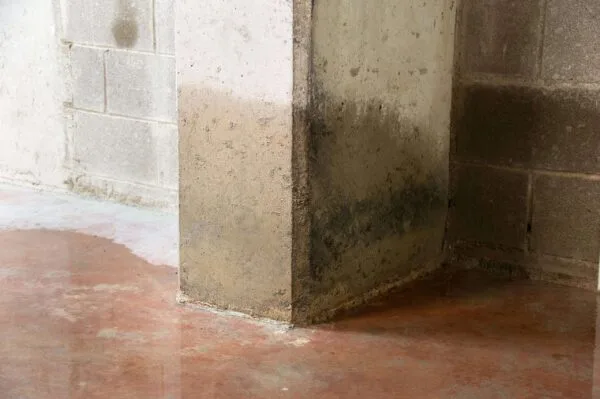
Water on your basement floor after rain usually traces back to a crack in the wall. Even a hairline crack can let water through when the soil outside is saturated. The crack may look small, but it goes all the way through.
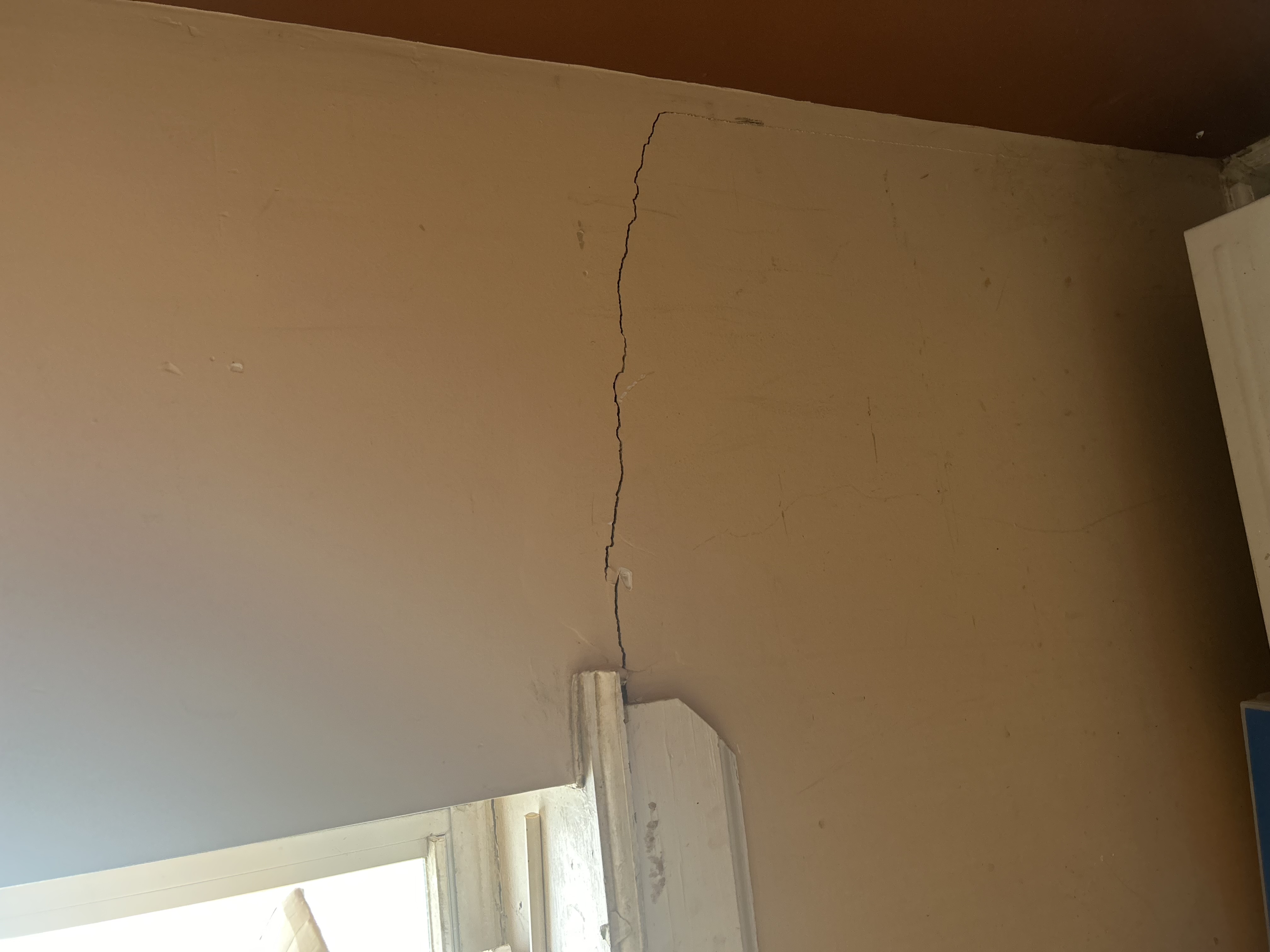
A crack that was thin last year and wider now is still moving. Freeze-thaw cycles and soil pressure force cracks open a little more each season. The longer you wait, the bigger the repair.
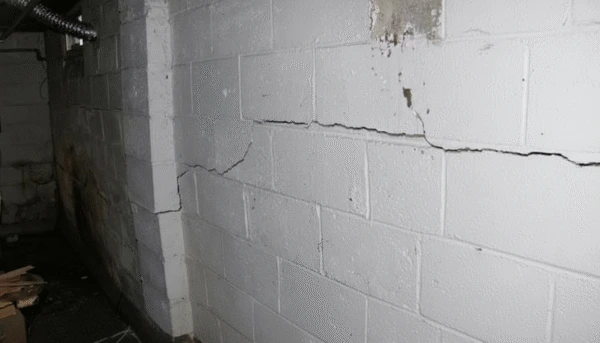
A horizontal crack across your basement wall means the soil outside is pushing inward. This is the most serious type of foundation crack. It means the wall is under constant pressure and starting to give.
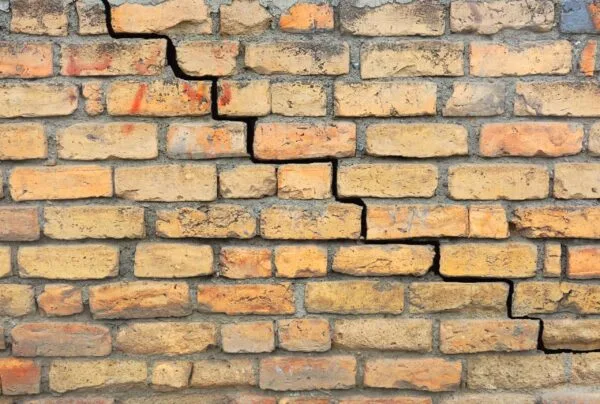
These cracks follow the mortar joints in a zigzag pattern. They signal differential settlement — one part of your foundation is dropping while the rest stays put. Block and brick walls crack along their weakest points first.
Foundation crack repair seals the crack through the full wall thickness — not just the surface. We inject resin through ports mounted along the crack, filling every gap from the inside face to the outside face. The method depends on the crack.
Epoxy is for structural cracks that are dry and stable. The resin cures harder than the concrete around it and restores the wall’s original tensile strength. Once it sets, the crack becomes the strongest point in the wall.
Polyurethane is for cracks that are actively leaking. The resin reacts with water, expands to fill the full depth of the crack, and cures into a flexible, permanent seal. It stays flexible enough to handle minor seasonal movement from freeze-thaw cycles.
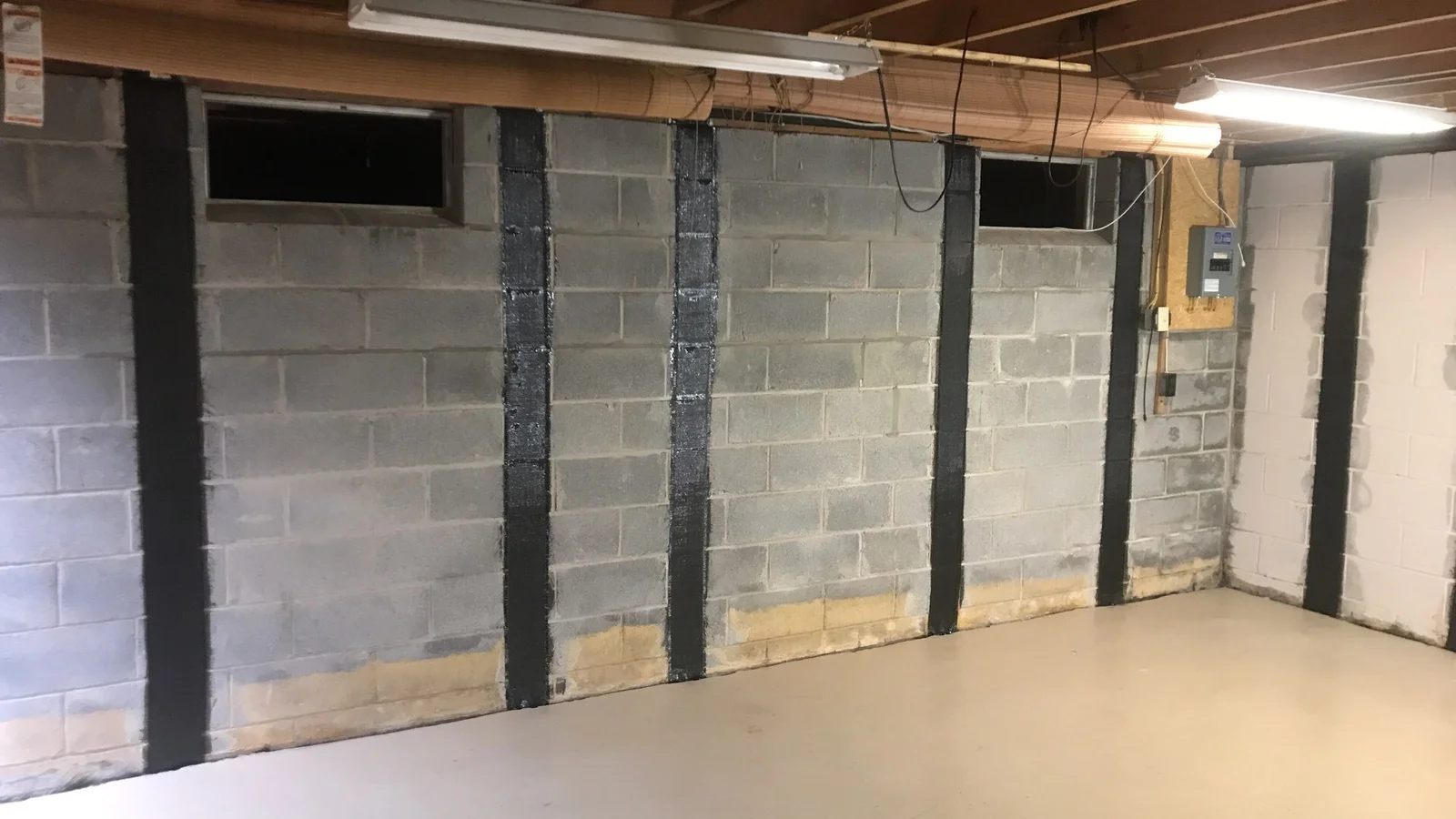
When a crack is caused by soil pressure and the wall has started to move inward, we seal the crack and bond carbon fiber straps over it. The straps are stronger than steel by weight. They lock the wall in place and prevent any further movement. This is the right fix when the crack is a symptom of a wall under pressure — not just a surface problem.
If water is part of the problem, a French drain or sump pump may be needed alongside the crack repair to manage the water source.
Our Process
We measure the crack with a crack gauge, check the direction and width, and determine if it is structural or non-structural. You find out exactly what you are dealing with before any work starts.
Different cracks need different fixes. We match the method to the problem — epoxy for structural bonding, polyurethane for water sealing, carbon fiber if the wall is under pressure. You get a written proposal with a fixed price.

We mount injection ports along the crack, seal the surface between them, and inject resin from the bottom up. The resin fills the crack through the entire wall thickness. Most cracks are sealed in a few hours.
When the repair is done, you get a written warranty covering that specific crack for life. We document the repair with photos and provide paperwork that transfers to the next owner if you sell.
We tell you what you do not need. Not every crack requires professional repair. Hairline cracks from normal concrete curing are usually cosmetic. If your crack does not need work, we say so. You do not pay for repairs that do not matter. When a crack does need attention, we explain the type, the cause, and the specific method that fixes it — so you understand exactly what you are getting and why.
Crack repair is one of the fastest foundation services we do. Most crack injections take a few hours, not days. We show up on time, work clean, and finish the job in a single visit. No excavation. No heavy equipment. No need to leave your home. You can use your basement the same day.
Every crack we inject comes with a lifetime warranty on that specific repair. If the crack leaks again — ever — we come back and fix it at no cost. The warranty is transferable, which means it adds value if you sell. You get a warranty certificate, photo documentation, and peace of mind that the problem is solved for good.
Get My Free Quote
Most single crack injections cost between $250 and $700 depending on the crack length, type, and method. Epoxy injection for structural cracks runs slightly higher than polyurethane for water sealing. If multiple cracks need repair, most companies offer a per-crack discount for three or more. If the crack also requires carbon fiber reinforcement because the wall is bowing, expect $1,500 to $4,000 for injection plus straps on one wall.
It depends on the crack. Epoxy injection restores structural strength — the cured resin bonds harder than the surrounding concrete. Use it for dry, stable, structural cracks where wall strength needs to be restored. Polyurethane injection seals water out — the resin expands, fills the full crack depth, and stays flexible for minor seasonal movement. Use it for leaking cracks or wet cracks where waterproofing is the goal. They are not interchangeable. The wrong one in the wrong situation means the repair will not last.
Surface patches like hydraulic cement and caulk only cover the face of the crack. They do not fill the full wall thickness. Water and pressure find a path around them within months. DIY epoxy kits from the hardware store do not generate enough injection pressure to reach the back of the crack. Professional crack injection uses calibrated low-pressure equipment that fills the crack completely from inside face to outside face. For a crack that is leaking, widening, or potentially structural, a professional repair prevents a small problem from becoming an expensive one.
A single crack injection usually takes one to three hours from start to finish. Multiple cracks on the same wall can be done in a half day. Carbon fiber reinforcement on top of injection adds time — typically a full day for one wall. Epoxy needs 24 to 48 hours to reach full cure strength. Polyurethane cures in hours. Either way, there is no need to leave your home during the work and disruption is minimal.
Direction tells you the most. Horizontal cracks in basement walls almost always mean soil pressure is pushing the wall inward — that is structural and needs professional attention. Stair-step cracks in block or brick signal differential settlement — also structural. Vertical hairline cracks in poured concrete are usually shrinkage from the curing process and are cosmetic unless they are leaking or widening. A crack wider than a quarter inch, a crack that changes size over time, or a crack that lets water through — those need professional assessment regardless of direction.
Queen Foundation Repair provides foundation crack repair services across 41 cities nationwide.