
Your basement walls are under pressure. We stop the damage and lock them in place — for good.
I'm Ready For A Free Quote
Thank You For Your Submission!
A team member will be reaching out to you shortly.








Catch these warning signs early — before a small crack becomes a big problem.
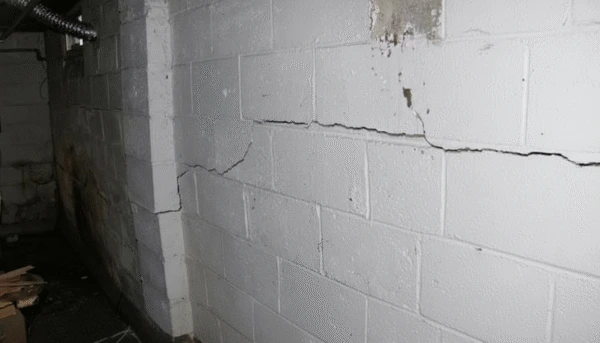
A long crack running sideways across your wall means soil is pushing it inward. This is one of the most common and serious signs of structural wall damage.
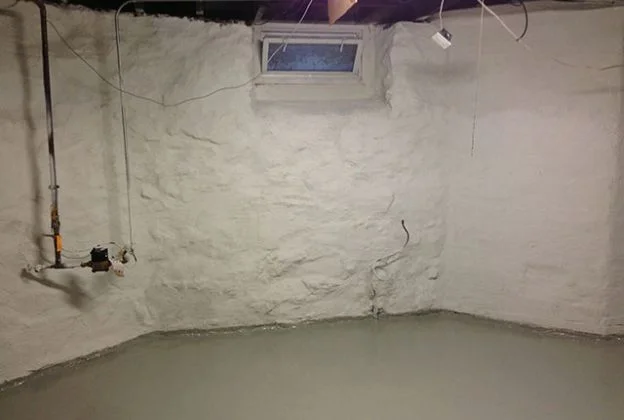
If your basement wall looks curved or leans inward from the top or middle, the soil outside is pushing it out of place. This gets worse every year.
.webp)
Cracks that follow the mortar joints in a stair pattern mean your block wall is shifting. This usually starts near a corner and works its way across.
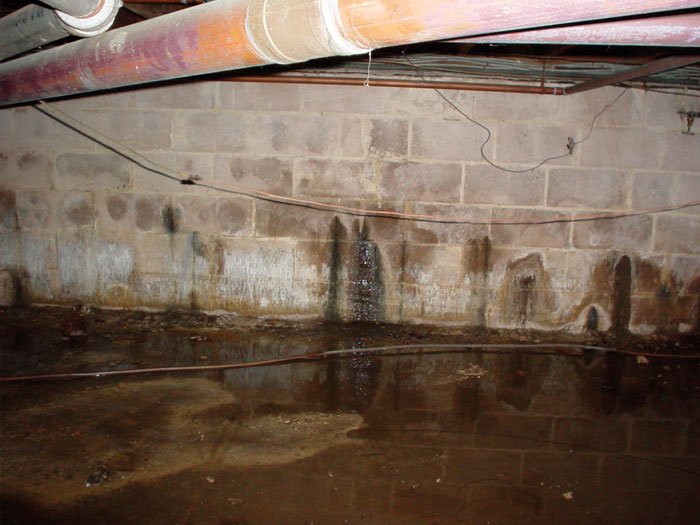
When the surface of your wall is flaking, chipping, or turning to powder, moisture has been breaking it down from the inside. The wall is losing strength.
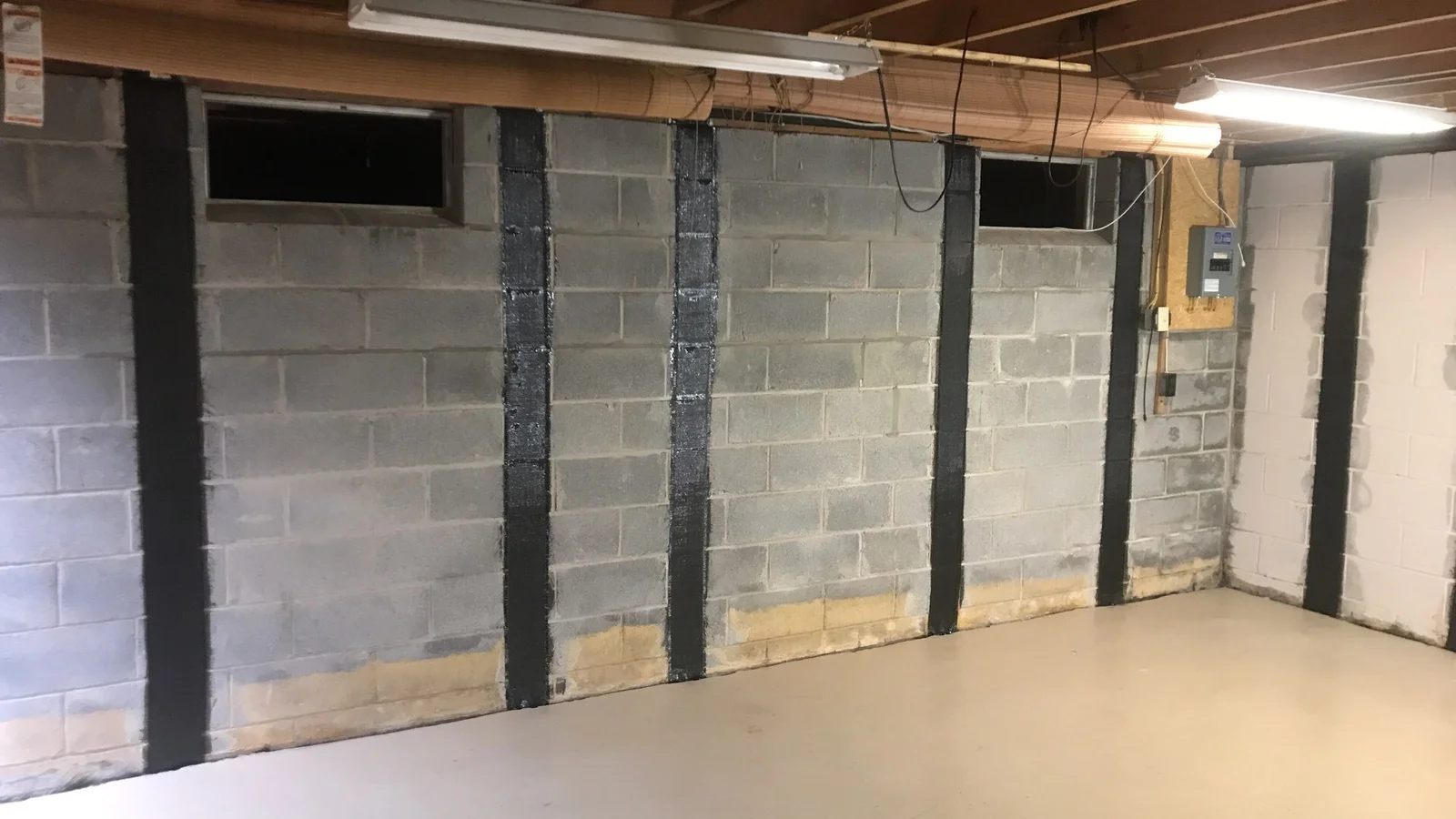
Basement wall repair stops your walls from moving and restores their structural strength. Whether your wall is bowing, cracking, or shearing at the base, the right repair method depends on how far it has moved and what is causing the pressure.
We match the repair to the problem. A wall that has shifted slightly needs a different solution than one that has moved several inches. Every job starts with an accurate measurement of how far your wall has deflected — because that number determines everything.
Carbon fiber straps bond directly to the wall and stop it from bowing further. They are low profile, permanent, and require no excavation. Best for walls with minor to moderate inward movement.
Wall anchors connect a plate on your interior wall to an anchor driven into stable soil outside. They stabilize the wall and can gradually straighten it over time with periodic tightening.
Steel I-beams bolt to the floor and the top of the wall to hold it in place against soil pressure. A strong, proven solution for walls under heavy lateral force.
Our Process
We come to your home, go into the basement, and examine every wall. We check for cracks, bowing, moisture, and any signs of movement. No cost. No pressure.
We measure exactly how far your wall has moved using a level and string line. Those numbers tell us which repair method fits your situation. You get a written report with options.

Our crew installs the recommended system — carbon fiber straps, wall anchors, or steel braces — to stop the wall from moving and hold it permanently in place.
We walk you through everything we did, show you the installed system, and hand you the warranty paperwork. You know exactly what was done and what is covered.
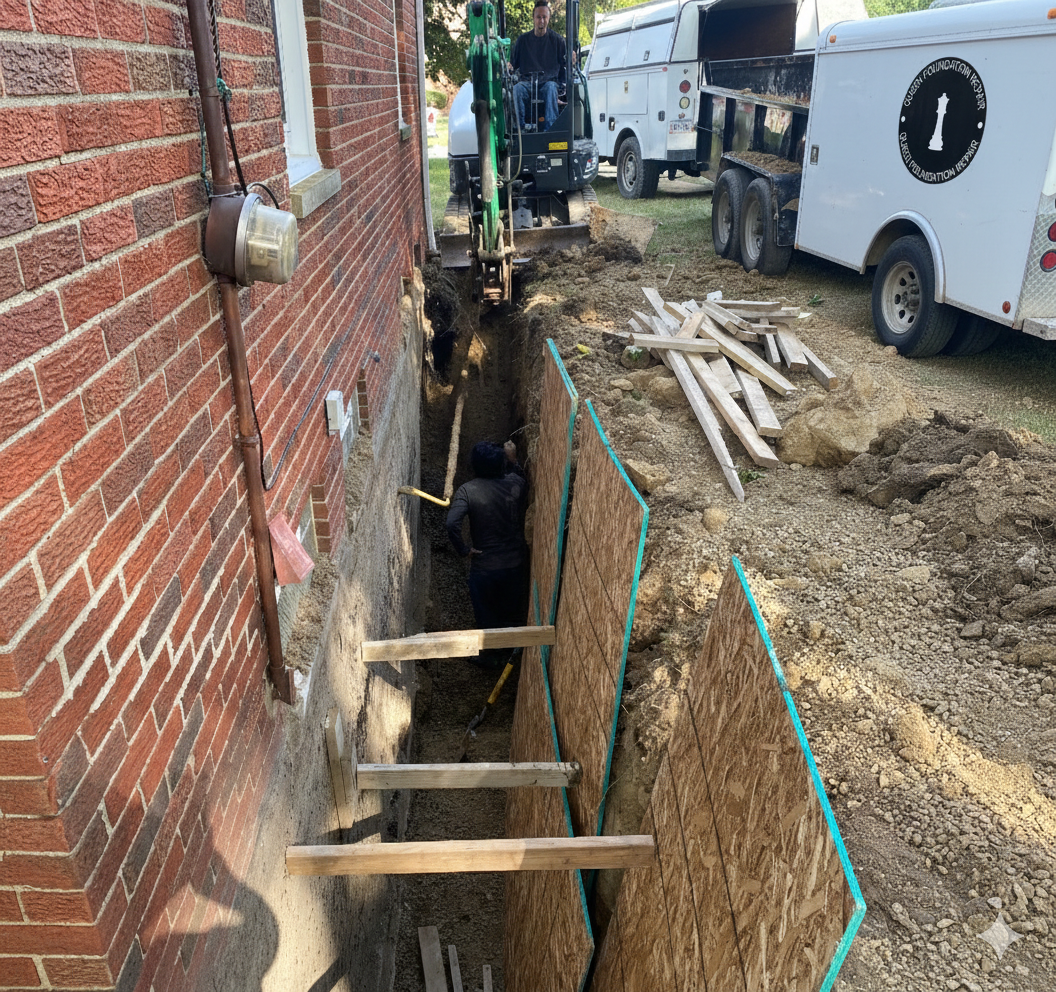
A bowing basement wall is stressful. You found the crack or noticed the wall leaning — and now you need answers. You need someone who will come out, measure the wall, tell you exactly what is happening, and give you honest options. That is how we work. No guessing. No pressure. Just a clear assessment and a written plan you can compare against any other quote.
We do not recommend the most expensive fix when a simpler one will hold. If carbon fiber straps will stabilize your wall, we tell you that — even though wall anchors or excavation cost more. The right repair is the one that matches the damage. We measure the deflection, identify the cause, and build the solution around what your wall actually needs.
Every basement wall repair we complete is backed by a warranty. We stand behind the work because we use engineered products installed to manufacturer specifications. Your home is too important for shortcuts.
Get My Free Quote
The cost depends on how far your wall has moved, the length of the wall, and which repair method is needed. A minor crack repair costs less than stabilizing a wall that has bowed several inches. We provide a free estimate with a written breakdown so you can see exactly what the repair involves. Financing options are available to make the investment manageable.
Yes. A bowing wall can be stabilized and, in many cases, gradually straightened over time. Carbon fiber straps stop the movement. Wall anchors can hold the wall and slowly pull it back toward its original position with periodic adjustments. The key is catching it early — the less the wall has moved, the more options you have and the less the repair costs.
In most cases, no. Homeowners insurance typically does not cover basement wall damage because it is classified as a structural or maintenance issue — not sudden damage from a covered event. Financing is usually the best path for homeowners who need help covering the cost.
The main cause is lateral soil pressure. When the soil around your foundation gets saturated with water, it expands and pushes against the wall. Clay soils are especially aggressive because they swell when wet and shrink when dry. Frost heave in colder climates adds even more force. Poor drainage — clogged gutters, short downspouts, or ground sloping toward the house — makes all of it worse. In many cases, solving the water problem with basement waterproofing or a French drain system is just as important as repairing the wall itself.
It depends on the type of crack. A thin vertical crack in a poured concrete wall may be a normal curing crack. But a horizontal crack in a block wall, stair-step cracking, or any crack on a wall that is bowing — those are structural warning signs. A wall that has moved significantly can compromise the floor joists and bearing walls above it. If you see these signs, get a professional inspection before the damage spreads.
Queen Foundation Repair provides basement wall repair across multiple states. Check your location below to see if we serve your area.