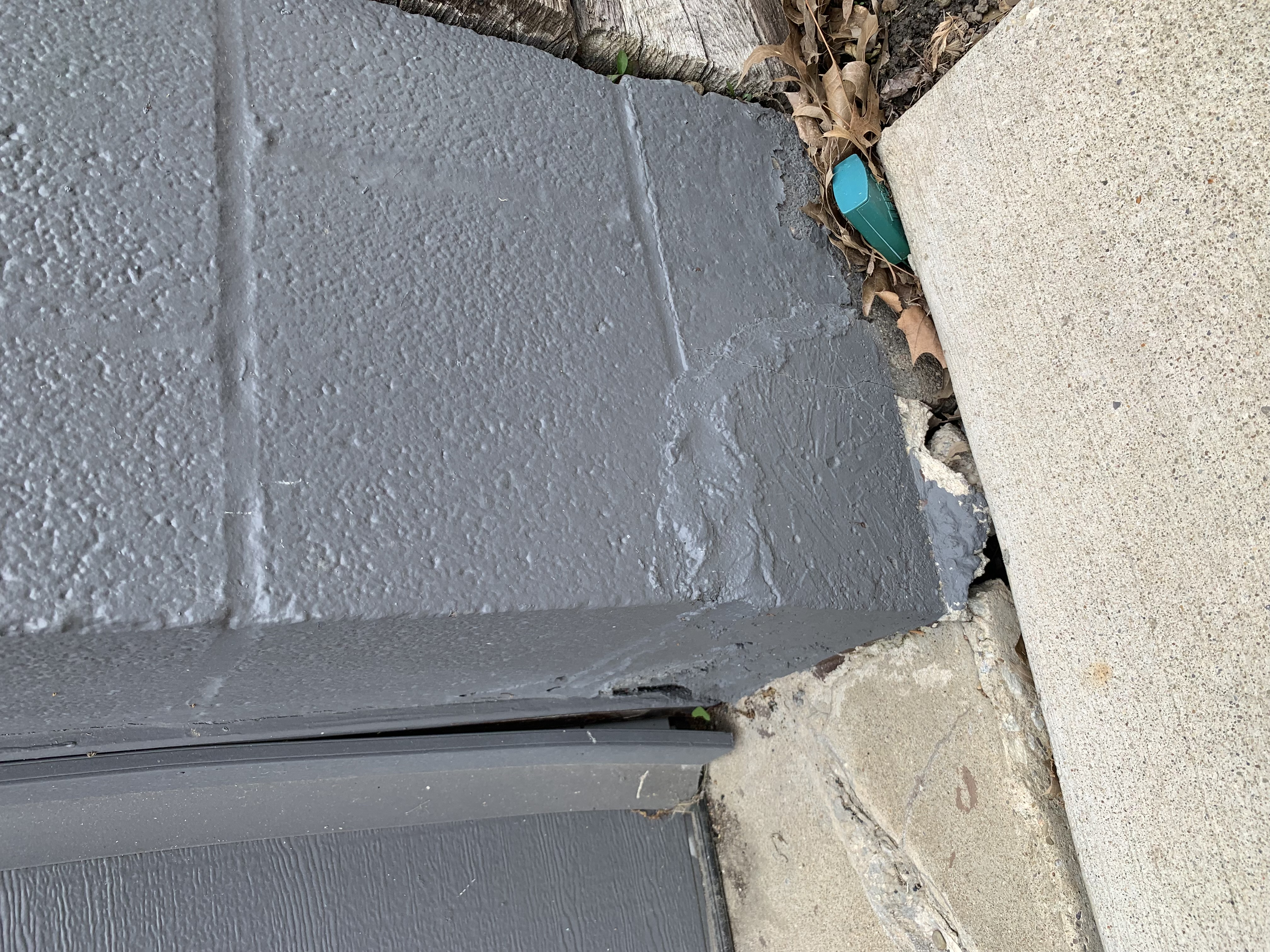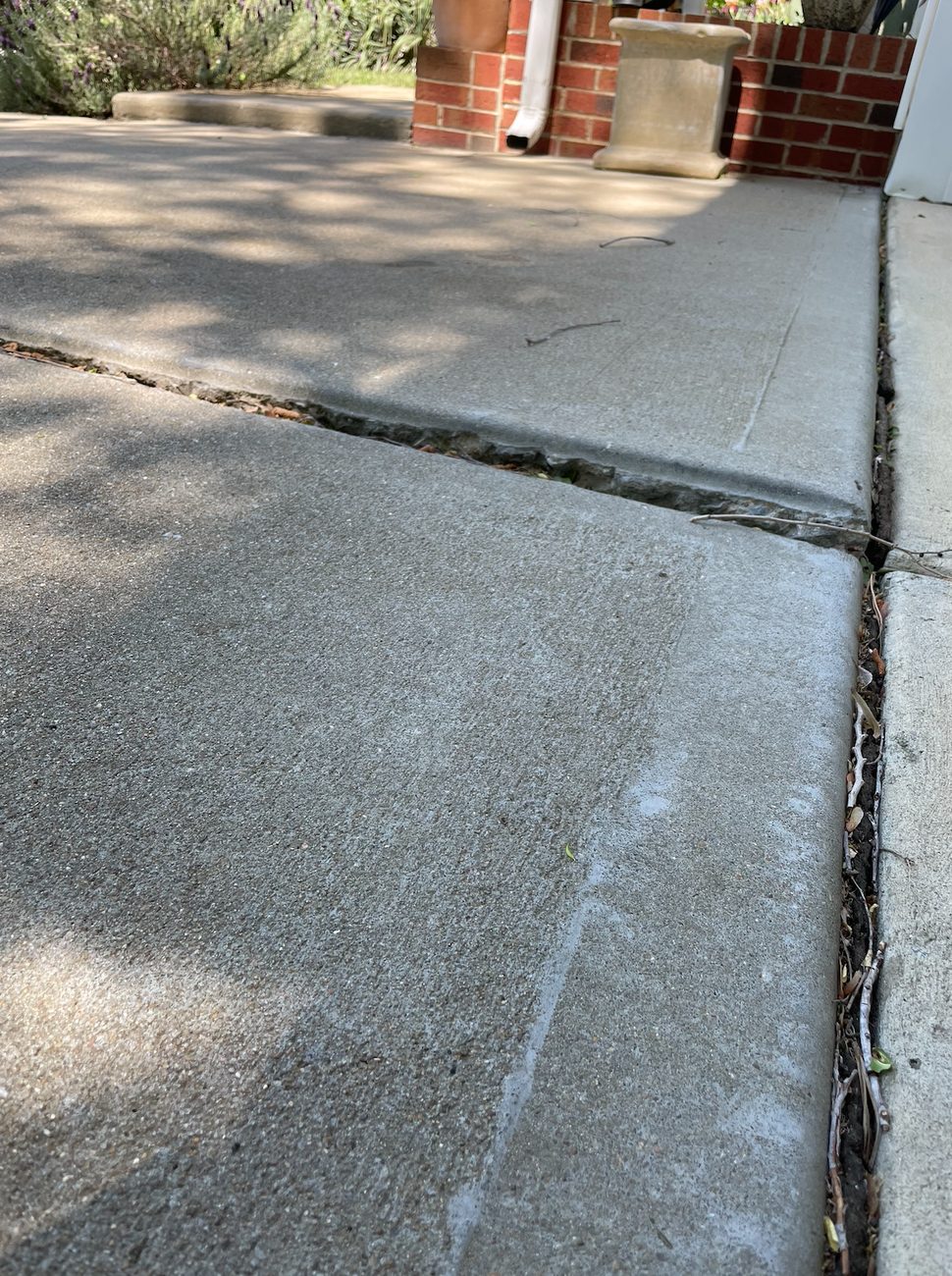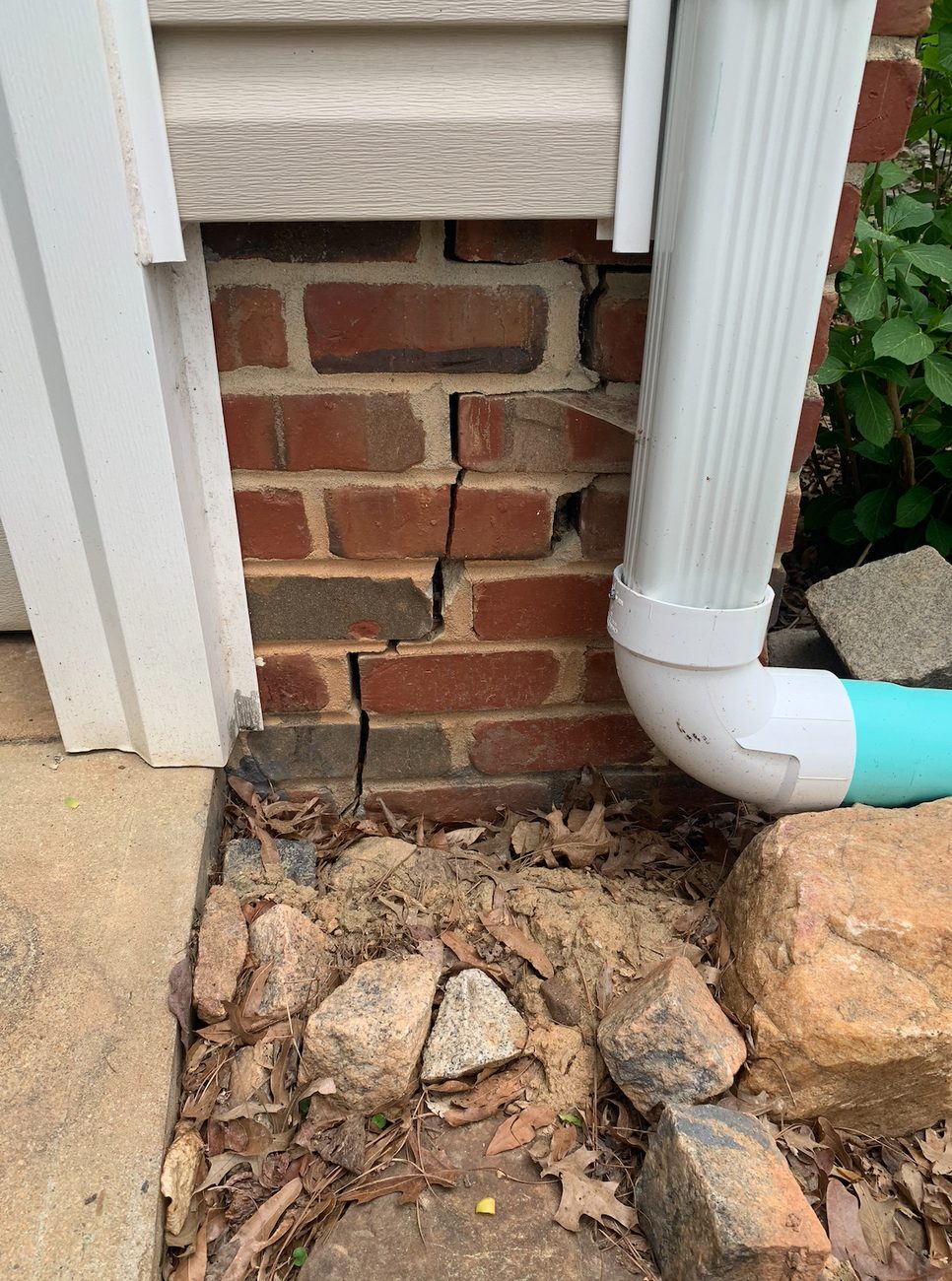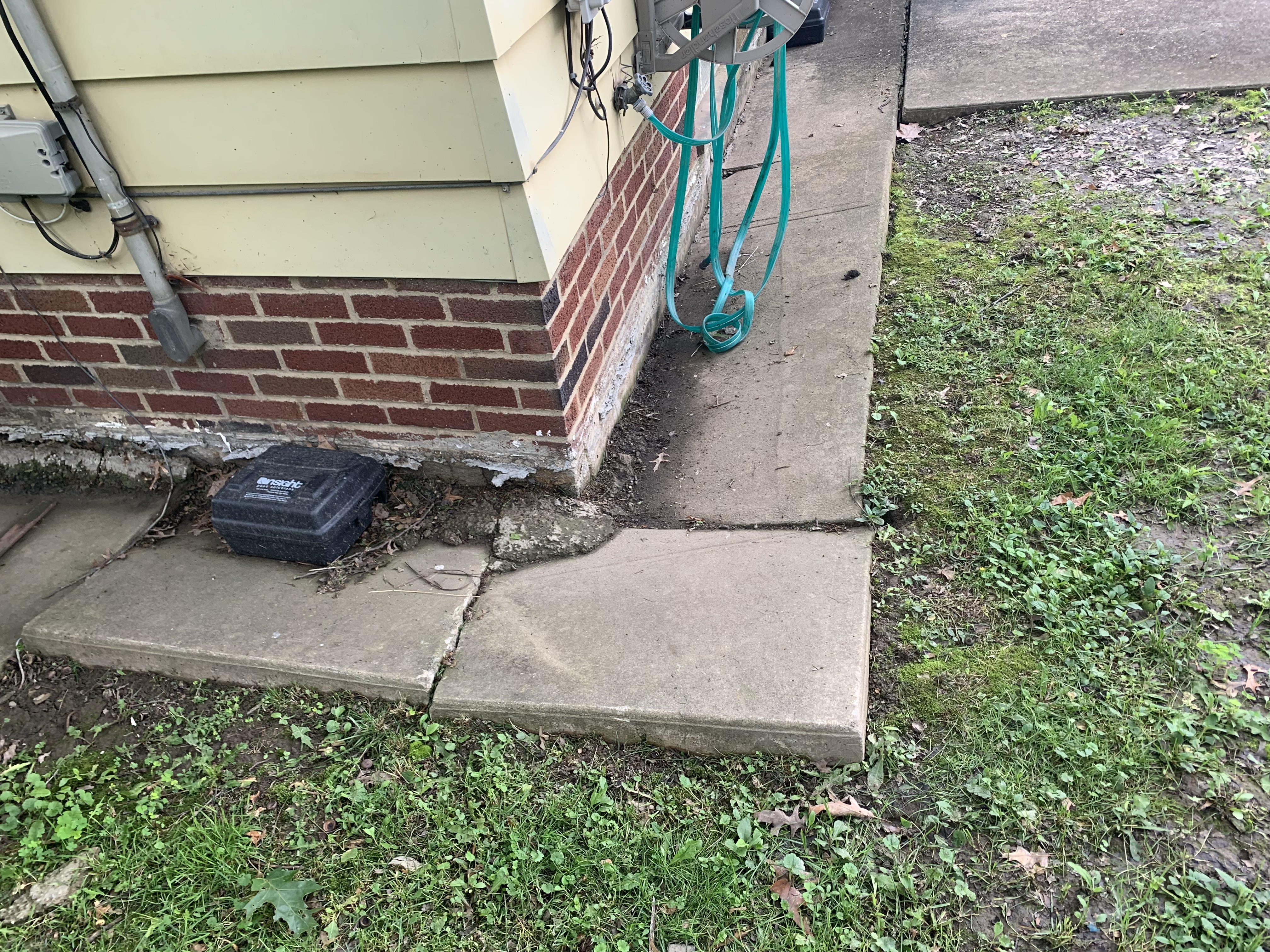
A crack opening across the slab, a floor that gives when you cross it, stucco splitting at the corner of the house. Foundation repair, french drain work and crawl space encapsulation on houses from Murdock out to Harbour Heights. The inspection costs nothing.
Get Your Free Inspection
We appreciate you reaching out.
One of our team members will be with you shortly.





WHAT WE SEE MOST
Port Charlotte is a canal city of slab houses, most of them put up around 1983. The ground is sand over limestone with water never far below it, and when that sand moves the concrete above it moves too. This is what that looks like indoors.
Stucco cracking outside
It shows at a corner or above an opening, stepping down through the wall. That pattern means one part of the footing has gone lower than the rest.
A floor that gives
There is one spot, usually mid room, that moves when you cross it. On a slab that means the ground beneath it stopped carrying the load.
Doors that stick
It closed cleanly for years and now it catches or will not latch at all. The opening is out of square because the floor under it shifted.
Damp at the base of a wall
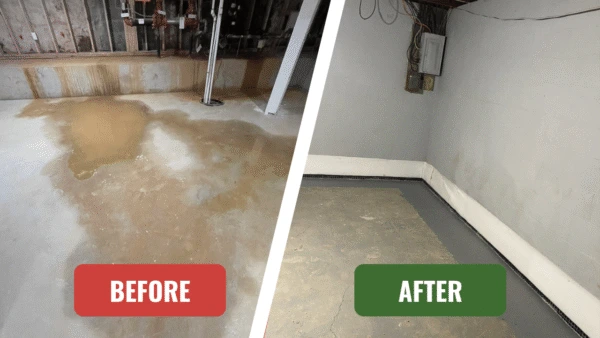
A dark band low down that never fully dries, sometimes with white powder on it. Water is sitting against the foundation instead of draining past.
Water up through the slab
A damp patch on the floor that dries and returns in the same place. The canal water table sits high enough to push up through the concrete.
A gap at the ceiling line
A line opening where the wall meets the ceiling, wider at one end than the other. Something below is pulling the frame out of shape.
Plenty of this can be watched rather than fixed straight away. What moves something up the list is change: a crack that reopens after filling, a floor sitting lower this year than it did last, ground dipping behind the seawall. On the canals the water is working away every day of the year, so what starts out as a hairline crack rarely stays one for very long once the ground beneath it starts moving.
A slab that has cracked, a yard that will not drain, a seawall letting the ground through, a wall that stays damp at the bottom. Those are the calls across Port Charlotte. Tap any service to see what the work involves and when it honestly is not what you need.
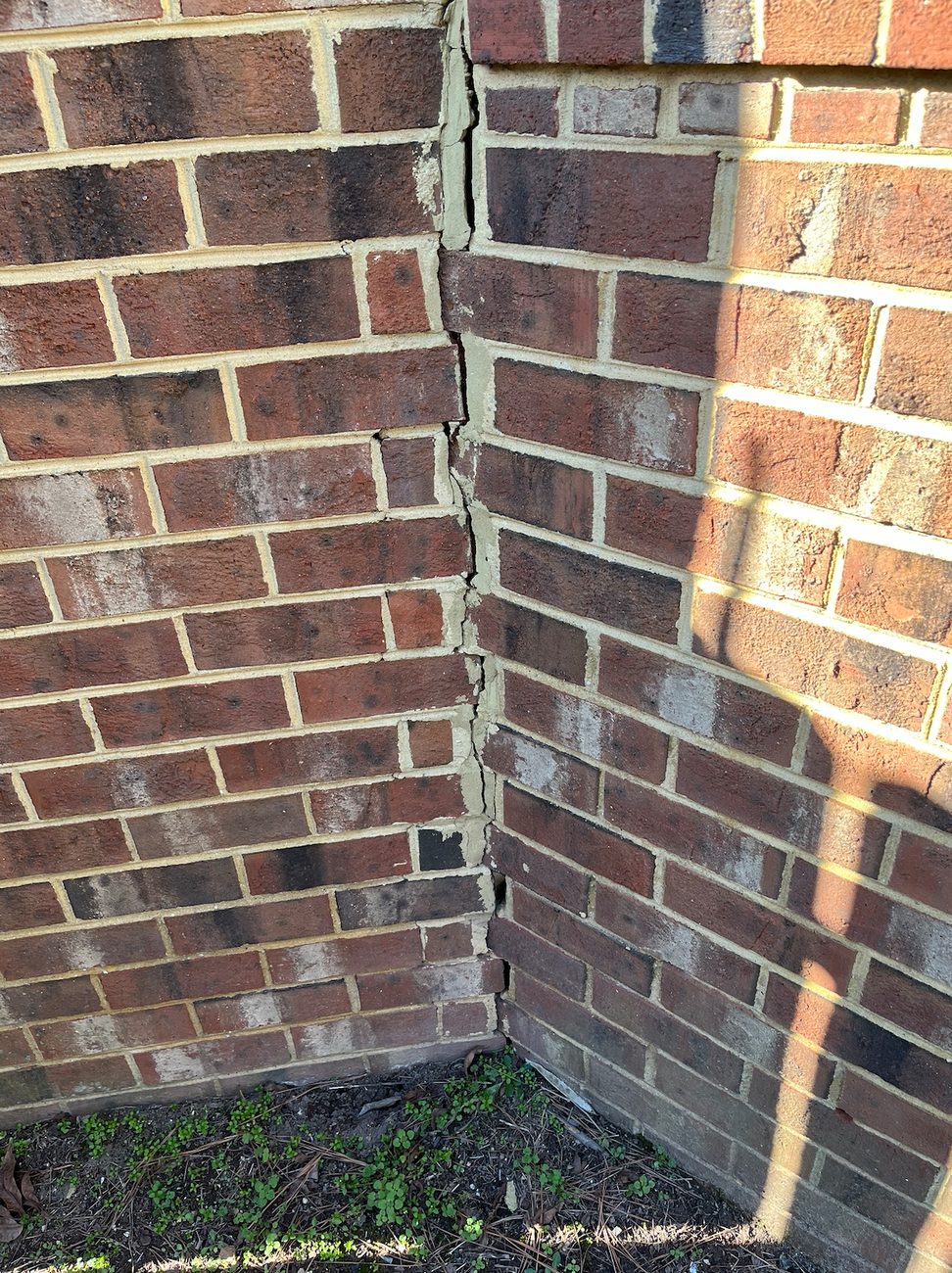
Stabilizing and lifting slabs that have settled, bringing sloping floors and cracked stucco back to level on ground that will carry them.
Learn moreA crack you can trace across the slab, floors running away from level toward one wall, stucco splitting where the house turns a corner. The concrete did not shrink. The ground under one part of it went somewhere, and the slab came down into the space left behind. On the 1980s houses through Murdock that is usually decades of slow settlement rather than anything sudden.
What we do depends how far it has gone. Where a section has dropped, underpinning is the answer: steel piers turned down through the sand until they reach material that carries weight, then the load transferred onto them. Where the slab has voids beneath it but is otherwise sound, grout goes in underneath and lifts it back, which is the usual fix for slab settlement around Harbour Heights.
Neither one dries out the ground. If a downspout, a leaking line or the grade is still feeding water under that corner, it happens again. We look at where the water goes before quoting the repair, because a slab fixed over wet ground is time bought rather than a repair made.
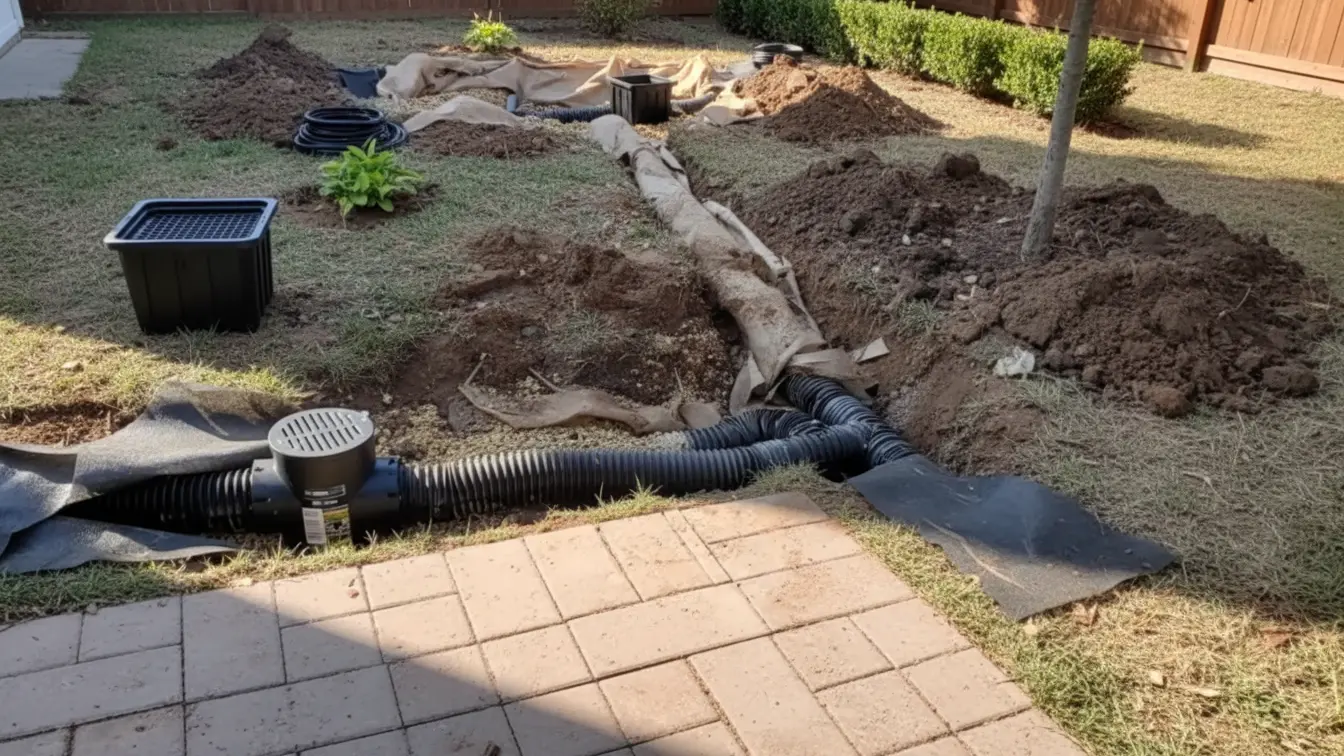
Cutting a drain line that catches water below ground and carries it off before it works the sand out from under the slab.
Learn moreA strip of lawn still soft three days after rain, water standing at the same corner of the house every storm, a fan of sand across the drive once things dry out. On the flat ground through Murdock, with the canal water table sitting where it does, rain has nowhere obvious to go. While it sits it works material out from under the edge of the slab.
A drain gives it a route. We open a trench above wherever the water keeps arriving, lay filter fabric so sand cannot choke the pipe, then perforated pipe on a steady fall bedded in washed stone. Water reaches the stone, drops into the pipe and leaves. In sand the depth matters more than the length, because the pipe has to sit below the level the water actually travels at.
Where it discharges decides whether it works. Ending a line in ground already saturated does nothing at all. This handles groundwater and surface water, not a crawl space damp from humid air, and on some Deep Creek lots regrading is the cheaper answer.
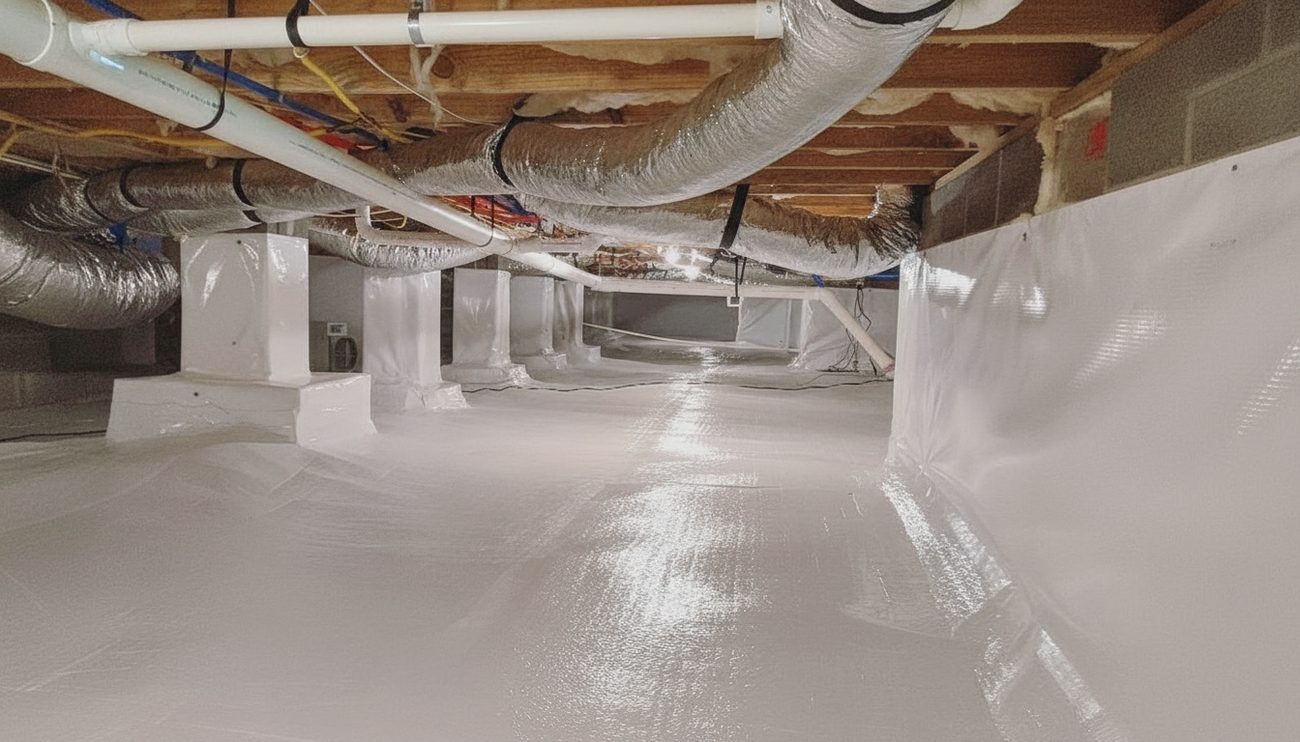
Sealing the open ground under a raised house so the damp stops rising into the rooms and the space stays dry.
Learn moreA smell that meets you in the hallway, humidity the air conditioning cannot bring down, insulation sagging wet between the joists. Under the older raised houses around Deep Creek the crawl space floor is open sand, and open ground gives off water without stopping. What comes off it has one direction to travel.
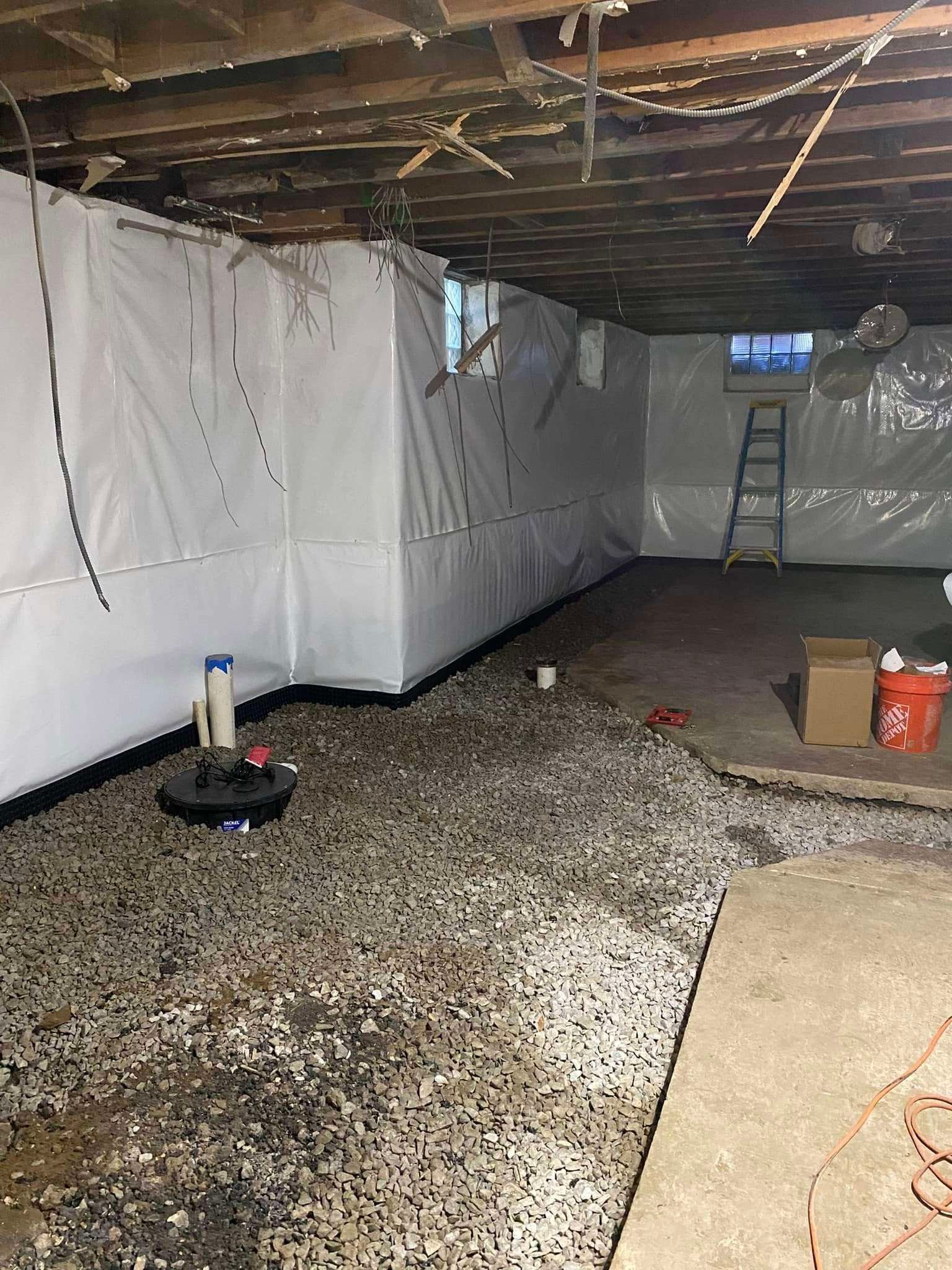
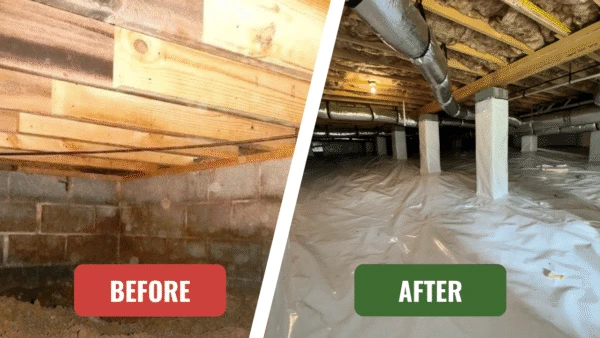
Encapsulation closes it off. A heavy liner goes across the whole floor, up the piers and up the walls, taped at the seams and sealed over the footing so nothing gets in behind it. Vents get closed, because the air outside here brings in more moisture than it ever takes away. Murdock crawl spaces are nearly all like this. A dehumidifier sized to the space holds it there and drains itself. Sized wrong it runs all day and never quite catches up, which is the thing we most often find already fitted.
This is not a structural repair. A floor that already sags needs supports as well as a liner. Where water genuinely stands under the house, drainage goes in first, because sealing over standing water only puts a lid on it, and the smell comes back within the season.
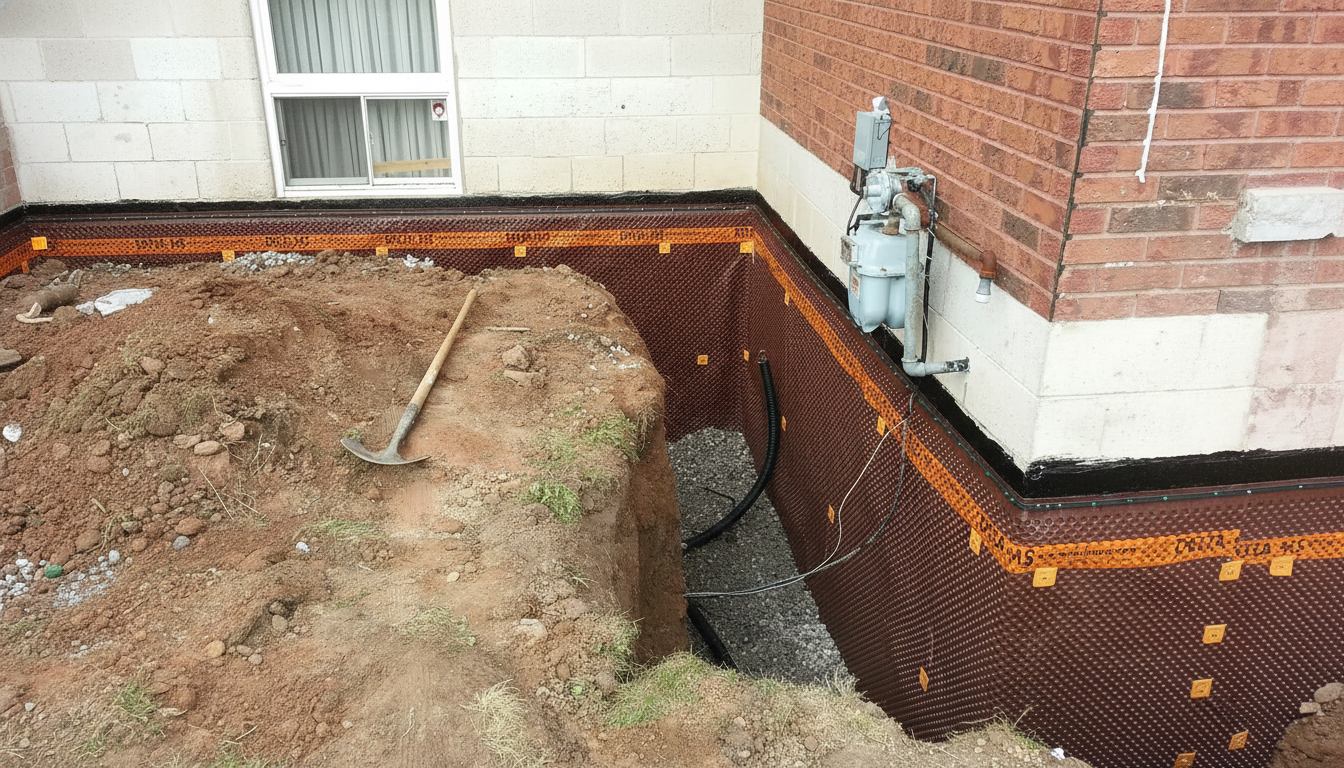
Keeping water off the foundation itself, with a membrane on the outside face and a drain at the footing to take it away.
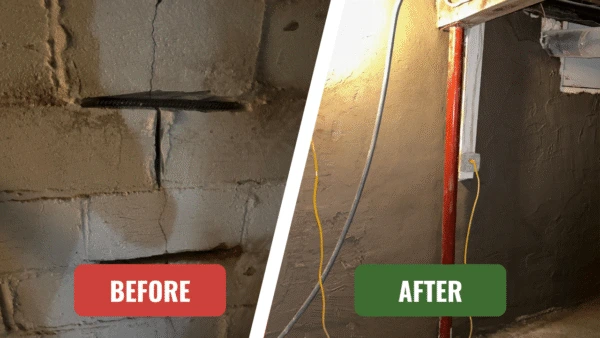
Learn moreA dark band along the bottom of the wall that never fully dries, chalky white powder that returns after you brush it off, damp showing where the slab meets the wall inside. Water is standing against the foundation rather than moving past it. On a canal lot through Harbour Heights the water table barely drops all year, so that is a permanent condition rather than a seasonal one.
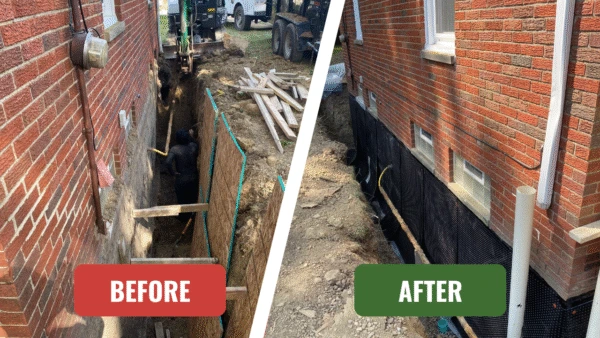
The work happens on the outside face. The wall is excavated down to the footing, cleaned and coated, then a dimple-board membrane goes over the coating so any water arriving runs down the sheet instead of soaking in. A perforated drain sits at the footing in washed stone and carries it well clear of the house.
This is a different job from a french drain out in the yard, and it will not lift a slab that has already dropped. What it does is stop water reaching the foundation at all. Around Murdock, doing it after the fact costs considerably more than doing it once, because the excavation has to happen either way.
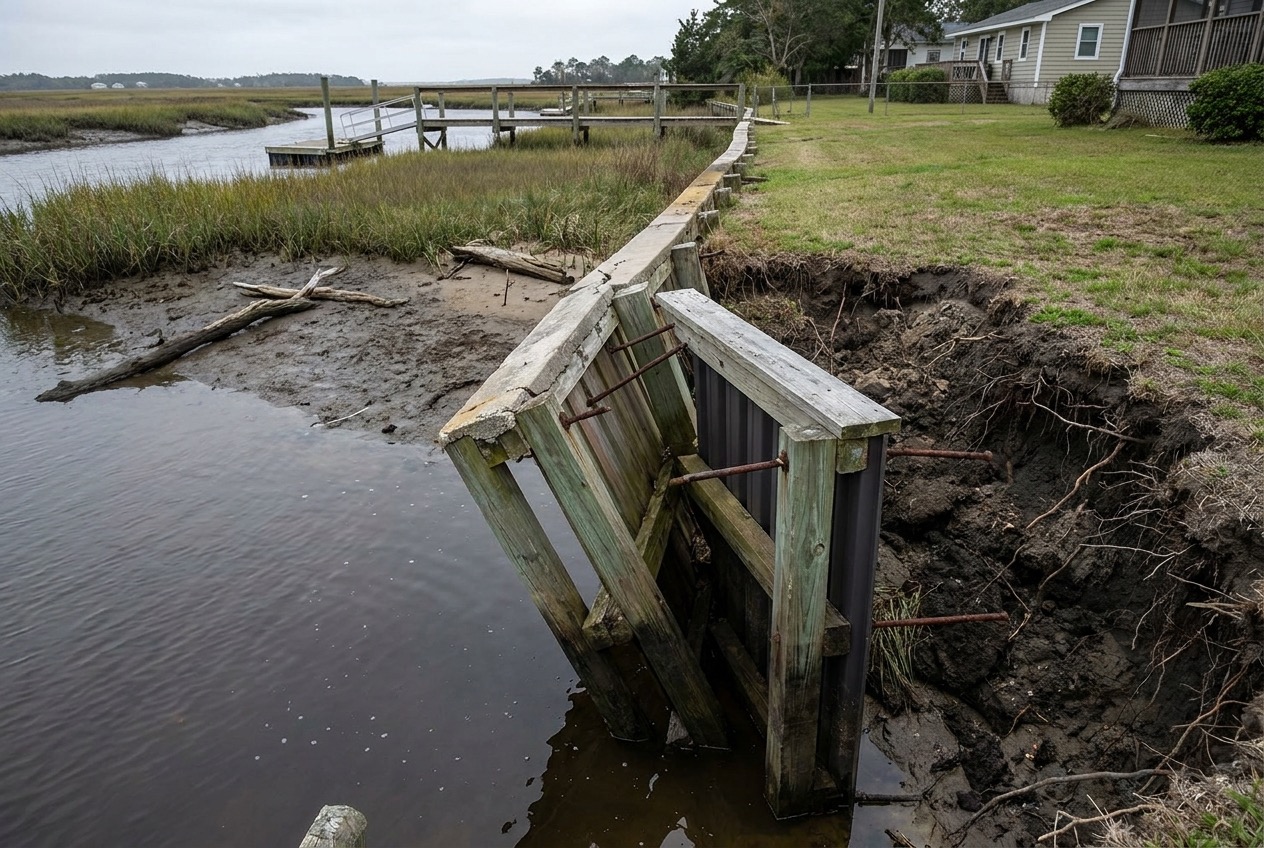
Stopping the ground behind a failing seawall washing out through it, before the yard and then the house follow it into the canal.
Learn moreA dip in the grass a few feet back from the wall, a gap opening where the cap meets the panels, a wall beginning to lean out over the water. Off the Harbour Heights canals this is the failure that costs the most, because a seawall is not only holding the water back. It is holding your yard up, and on the Deep Creek canals plenty of them are now forty years old.
The cause is rarely the concrete itself, it is what passes through it. Once a joint opens, every tide and every heavy rain pulls sand out through the gap and drops it in the water where nobody watches it go. We seal those paths first, then inject material to fill the voids already formed behind the wall, working along it until the ground stops taking any more.
Where the wall itself has moved, tiebacks anchor it back into solid ground behind. What grout cannot do is rescue a wall that has failed structurally, and we would rather say replacement than patch it and be back in two years.
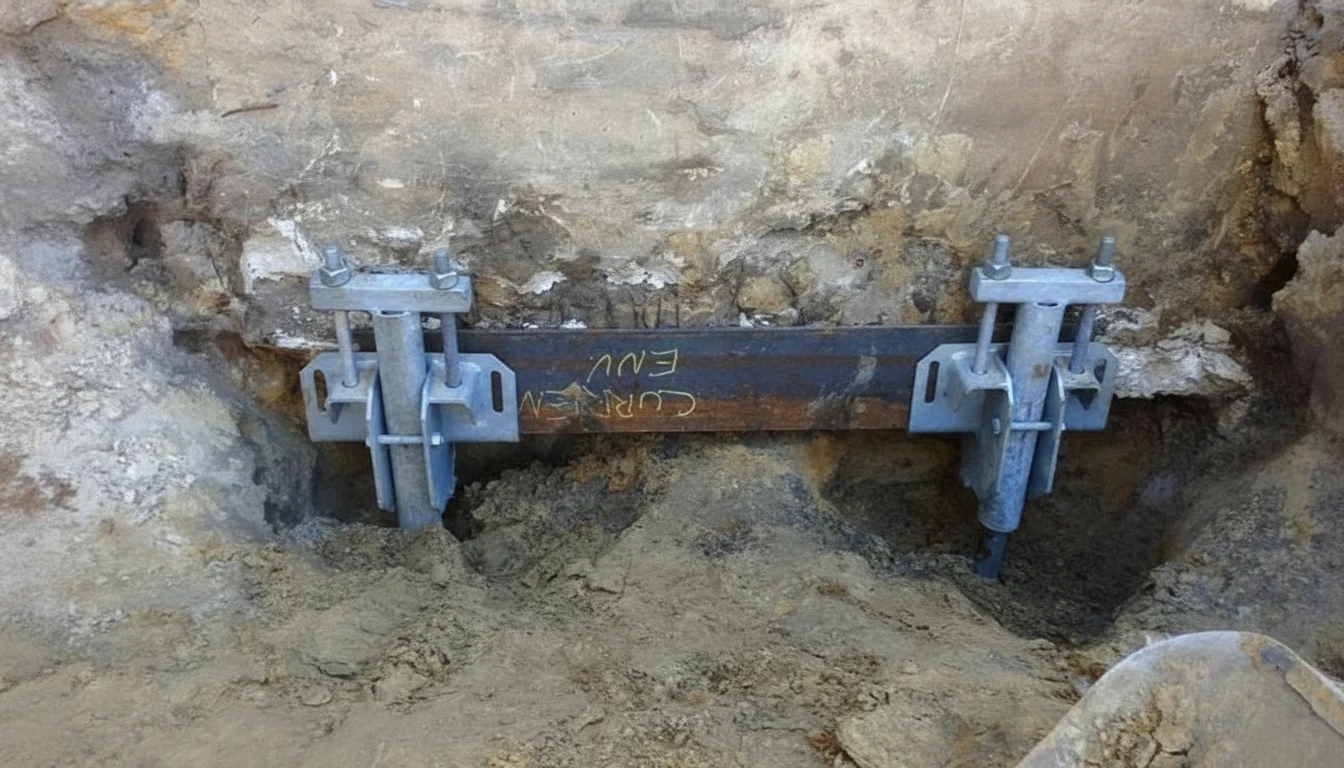
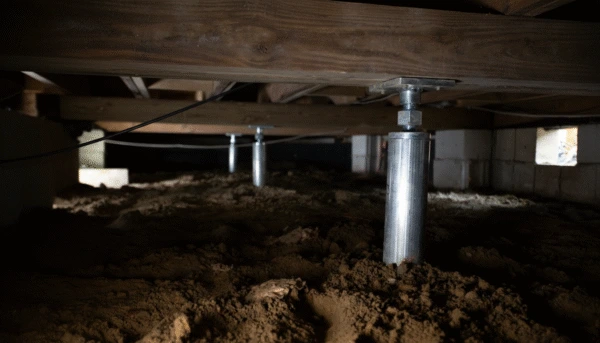
Steel piers turned down through the loose sand to a layer that carries weight, with the house transferred onto them.
Learn moreCracks you have filled more than once that keep returning, one corner that has carried on going down while the rest has not moved, doors on that side that never sit right again. A great deal of ground around Harbour Heights was filled and levelled before anything was built on it, and fill that was never properly compacted keeps settling for decades afterwards.
A helical pier is a steel shaft with wide plates near the bottom, turned into the ground under power rather than hammered. The useful part is the reading the machine gives as it turns: it measures the force the turning takes, and that figure says how much weight those plates will carry. So the ground decides the depth, not a number on a drawing.
Once it reaches a layer that holds, a bracket ties the footing to the shaft and that part of the house rests on steel instead of sand. Piers answer a house going down and nothing else. Around Murdock it is normal for one side to want twice the depth the other did.
Queen Foundation Repair takes on the two halves of the same problem: ground that has moved under a house, and the water that moved it. We are a leading provider of foundation work across the Port Charlotte area, covering foundation repair, french drain installation, crawl space encapsulation, foundation waterproofing and seawall repair.
Most of what we get called to began small. A hairline in the slab that runs a little further each year, a floor that gives in one spot, damp at the base of a wall that never quite dries. Left alone those get dearer, because whatever is moving the sand keeps moving it while you think it over.
So we look before we quote. Someone comes out, goes over the property inside and out, and tells you in plain words what is happening and what putting it right involves. The price is in writing before any work starts. If what you have is cosmetic, we will say so instead of selling you a repair you do not need.
The houses we are under most here went up in the seventies and eighties, and a good share of them back onto a canal. We work those streets daily, and you can see everything Queen Foundation Repair does across Florida. Licensed and insured, the warranty moves with the house if you sell, and looking costs you nothing.
Get your free inspection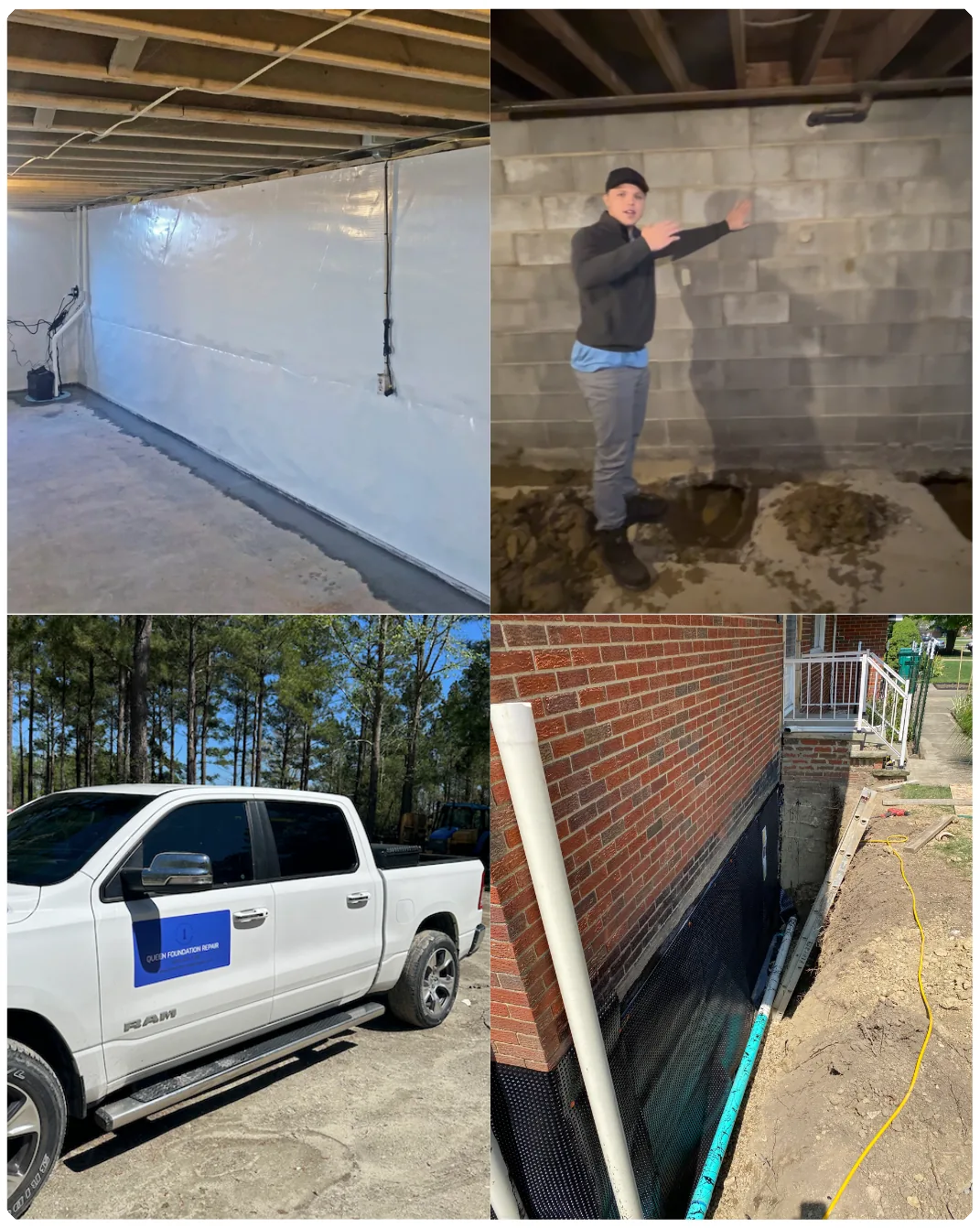
WHAT YOU GET
We pick up quickly and get out to the property fast, so you're not waiting weeks to learn what's wrong and what it costs.
No charge for us to come out, work out what's happening, and lay out what the fix involves. You know where you stand before spending anything.
Licensed, with full liability and workers' comp cover, so the work meets code and your property is protected if something goes wrong.
Every repair carries a written warranty that passes to the next owner, so it protects the value of the house if you sell.
A clear written price before anything starts. No vague ballpark, and nothing new appearing once a crew is already on site.
Most homes here sit on a slab over sand, and a good many back onto a canal. We are on those streets daily, from Murdock to Harbour Heights.
COMMON QUESTIONS
These are the questions Port Charlotte homeowners bring us. What the work costs depends on how far the ground has gone and what it takes to hold it. Murdock or Harbour Heights, we cover it.
What It Costs
Most Florida jobs land between $2,000 and $12,000. Sealing a crack from the inside is the low end and often comes in under $1,000. Piers under a settled corner run a few thousand each, and how many you need depends on how much of the house has moved. A whole-house job can pass $25,000, though that is not the usual call here. We measure how far it has actually gone before quoting, and the figure goes to you in writing.
Excavating the outside face, coating it, fitting a membrane and running a drain at the footing generally comes to $4,000 to $12,000 on a typical Port Charlotte house. Doing one wall rather than the whole perimeter costs a fraction of that. The spread comes from how much wall has to be opened up.
Figure $3 to $8 per square foot with foam. A single sunken driveway panel is a few hundred dollars, a full driveway more often $1,500 to $4,000. Replacing the same concrete costs several times that, which is the whole argument for lifting it.
Waterproofing the Foundation
On a slab house here, the outside face is the answer. Excavate down to the footing, coat the wall, then a dimple-board membrane over the coating so any water arriving runs down the sheet rather than soaking through, with a perforated drain at the bottom to carry it away. Interior sealers look cheaper and only move the problem, because the water is still reaching the wall either way, and the excavation still has to happen eventually.
The code requires foundations to be damp-proofed or waterproofed where groundwater conditions call for it, with the stricter waterproofing standard applying when a high water table is present. On the canals that condition is normal rather than exceptional. Your building department makes the call on any given lot, and we pull the permits.
Almost never. Standard Florida policies exclude gradual water intrusion, seepage and earth movement, which is exactly what waterproofing addresses. What is covered is sudden accidental discharge, so a burst supply line is a claim. Check your declarations page rather than assuming either way.
Slabs and Concrete
Four inches is the residential minimum for a floor slab, with thickened edges and footings carrying the walls. Driveways are usually four inches too, six where a heavy vehicle parks. Thickness is rarely why a slab fails here. What fails is the ground underneath it.
Some settlement in the first couple of years is normal as the fill compacts under load. What is not normal is settlement that carries on past that, or that shows up in one corner only. On lots built over poorly compacted fill, and there are plenty here, it can continue for decades.
Thirty years or more if the base stays put. What shortens it here is not the concrete wearing out but the sand beneath it washing away, which cracks and drops the slab long before the surface is finished. Drainage decides the number.
Living on a Canal
It depends what has failed. Where joints or cracks have opened and soil is escaping through them, we seal those paths first and then inject material to fill the voids that formed behind the wall. Where the wall itself has moved, tiebacks anchor it back into solid ground behind it. Where it has failed structurally, replacement is the honest answer and we will say so rather than patch it and be back in two years.
Sealing joints and filling the voids behind a wall that is otherwise sound runs a few thousand dollars. Tiebacks to pull a leaning wall back cost more than that. The number depends on how much ground has already gone out through the gap.
Roughly $500 to $1,200 per linear foot, so a typical canal lot runs well into five figures. That gap between repair and replacement is exactly why a dip in the lawn near the wall is worth a look while it is still just a dip.
Drainage
Between $10 and $25 per linear foot installed. Port Charlotte sits at the upper half of that because sand and a high water table mean the pipe has to go deeper to sit below the level the water is actually moving at. A short run fixing one bad corner is a few hundred dollars.
It has to discharge somewhere. If the outlet ends in ground that is already saturated the drain does nothing, and that is the most common reason one fails. It also means opening a trench across the yard, and it handles groundwater only, not damp coming off a crawl space floor.
Yes, on your own property. What you cannot do is discharge onto a neighbor's land or anywhere it causes them a problem. Work close to a canal or a seawall can need a permit because it touches state waters, and we pull those.
Cracks, Crawl Spaces and Sinkholes
Wider than a coin is worth attention. So is any crack running sideways rather than up and down, anything longer than it was last year, and anything letting damp through. A thin vertical line in a poured slab is usually the concrete shrinking as it cured.
Cost up front, and it is not a structural repair. A sealed crawl space with a sagging floor still has a sagging floor. It also needs a dehumidifier running to work properly, so there is a small ongoing electricity cost, and sealing over standing water traps it instead.
Pasco, Hernando and Hillsborough, north of Tampa. Charlotte County sits well outside that belt. A slab dropping here is far more often a washout, old fill settling, or a seawall that has been quietly leaking soil into the canal for years.
WHERE WE WORK
We serve the entire Port Charlotte metro, not just the city limits, working the older slab houses along the canals the same as the newer builds inland and on across Charlotte County. Same sand, same water table under all of it. Anywhere in that, the visit costs you nothing.
ZIP CODES WE COVER
Ready to Get Started?
No obligation, fast and easy.
We appreciate you reaching out.
One of our team members will be with you shortly.