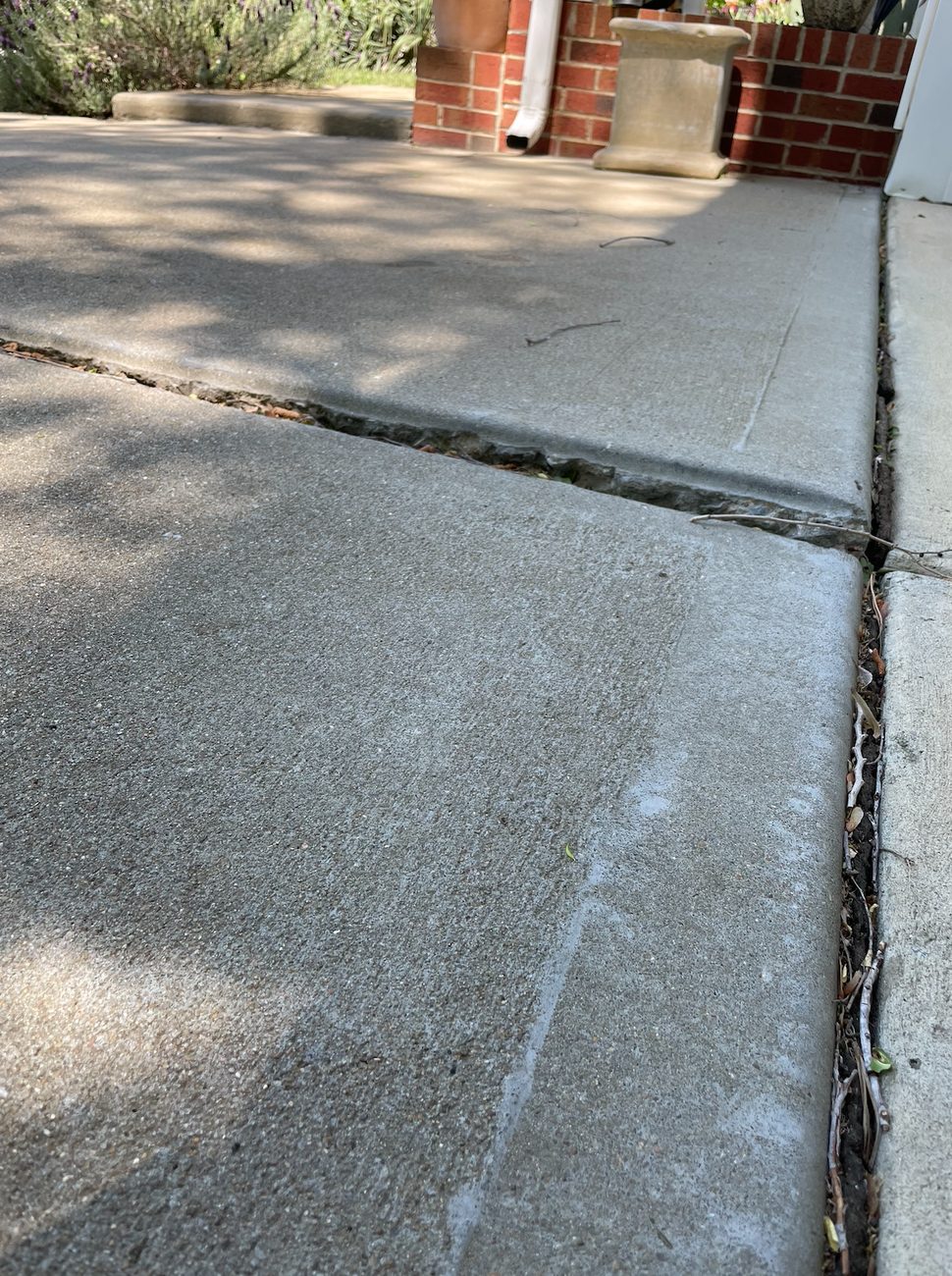
Sticking doors, cracks, a musty crawl space, water after a hard rain, these don't fix themselves. From Montford's older homes to Haw Creek's hillsides, we handle foundation repair, crawl space encapsulation, and basement waterproofing, finding the real cause and fixing it for good, starting with a free inspection.
Get Your Free Inspection
Thanks, your request is in.
Someone from our team will reach out shortly to set up your free inspection.






Warning Signs
A sticking door, a crack that keeps growing, a floor that's started to dip, on their own, easy to brush off. Together, they're how a shifting foundation shows itself. On Asheville's clay and hillside lots that movement is common, and the sooner you catch it, the smaller the fix.
Cracks in Your Foundation or Walls
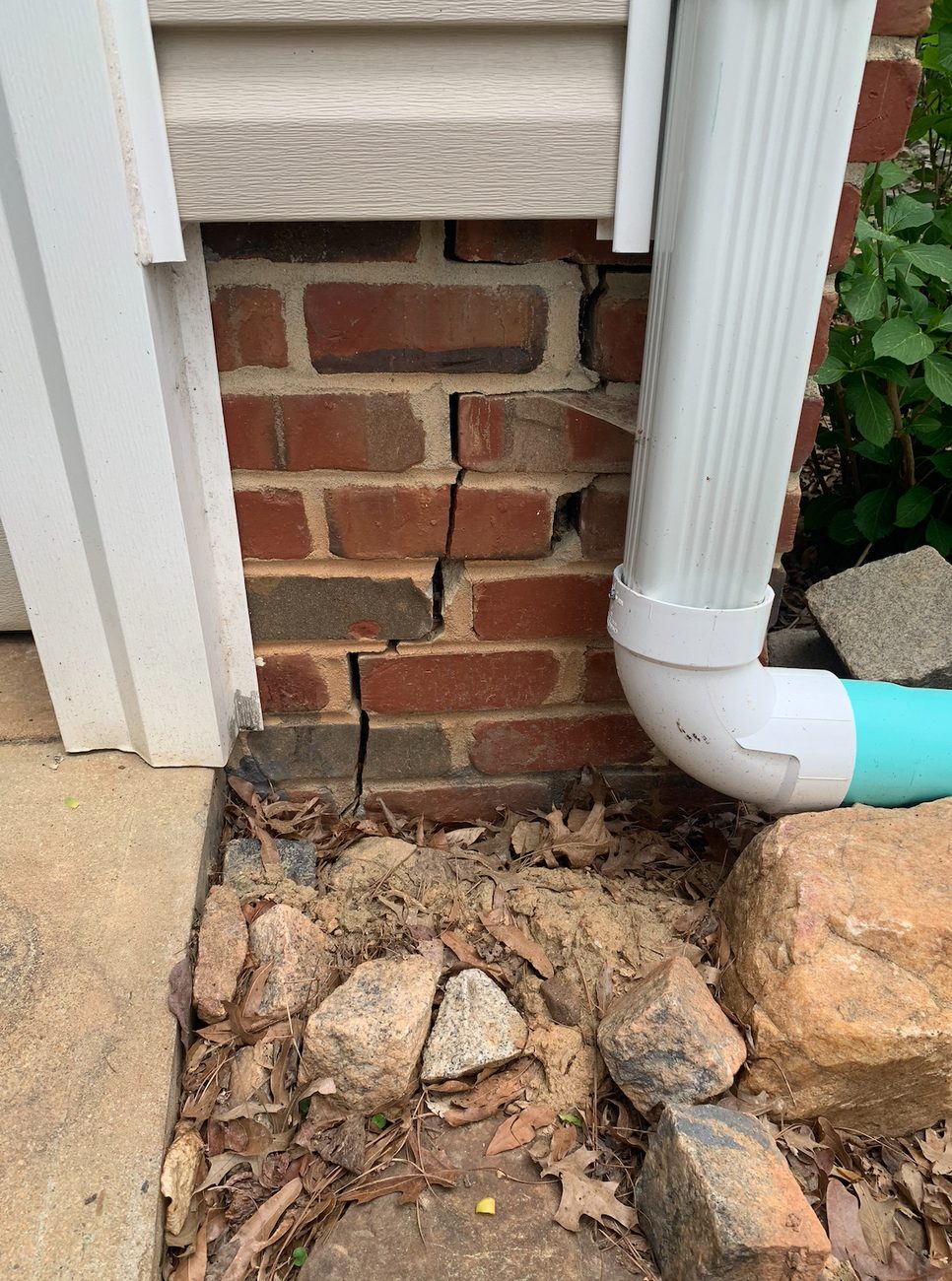
Stair-step cracks in the brick or cracks creeping across your drywall, and the wider they get, the more the foundation underneath has shifted.
Water in the Basement or Crawl Space
Puddles after a hard rain, a damp musty smell, or water seeping in at the floor, signs your foundation isn't keeping groundwater out.
Uneven or Sinking Floors
Floors that slope, bounce, or feel like they're sinking on one side usually mean the supports below are settling or giving way.
Bulging or Bowing Walls
A wall that bulges inward, leans, or shows a horizontal crack is under heavy pressure from the soil outside, this one shouldn't wait.
Water Stains, Mold & White Residue
Dark water stains, a chalky white residue, or patches of mold all mean moisture is pushing through, an early warning of bigger water problems.
Sticking Windows & Doors
When doors won't latch and windows suddenly stick, it's usually the foundation shifting and pulling the frames out of square, not the weather.
Not every crack means trouble, a thin, hairline crack is often just concrete curing. But cracks that keep widening, floors that keep dropping, or a wall that's started to lean are the ones worth acting on. The hard part is knowing which is which. That's what a free inspection is for: we'll tell you straight whether it's cosmetic or structural, and if you don't need the work, we'll say so.
From a sinking foundation to a damp crawl space to water in the basement, we handle the full range of foundation and moisture problems Asheville homes run into, each with a permanent, warrantied fix. Click any service to see how it works.
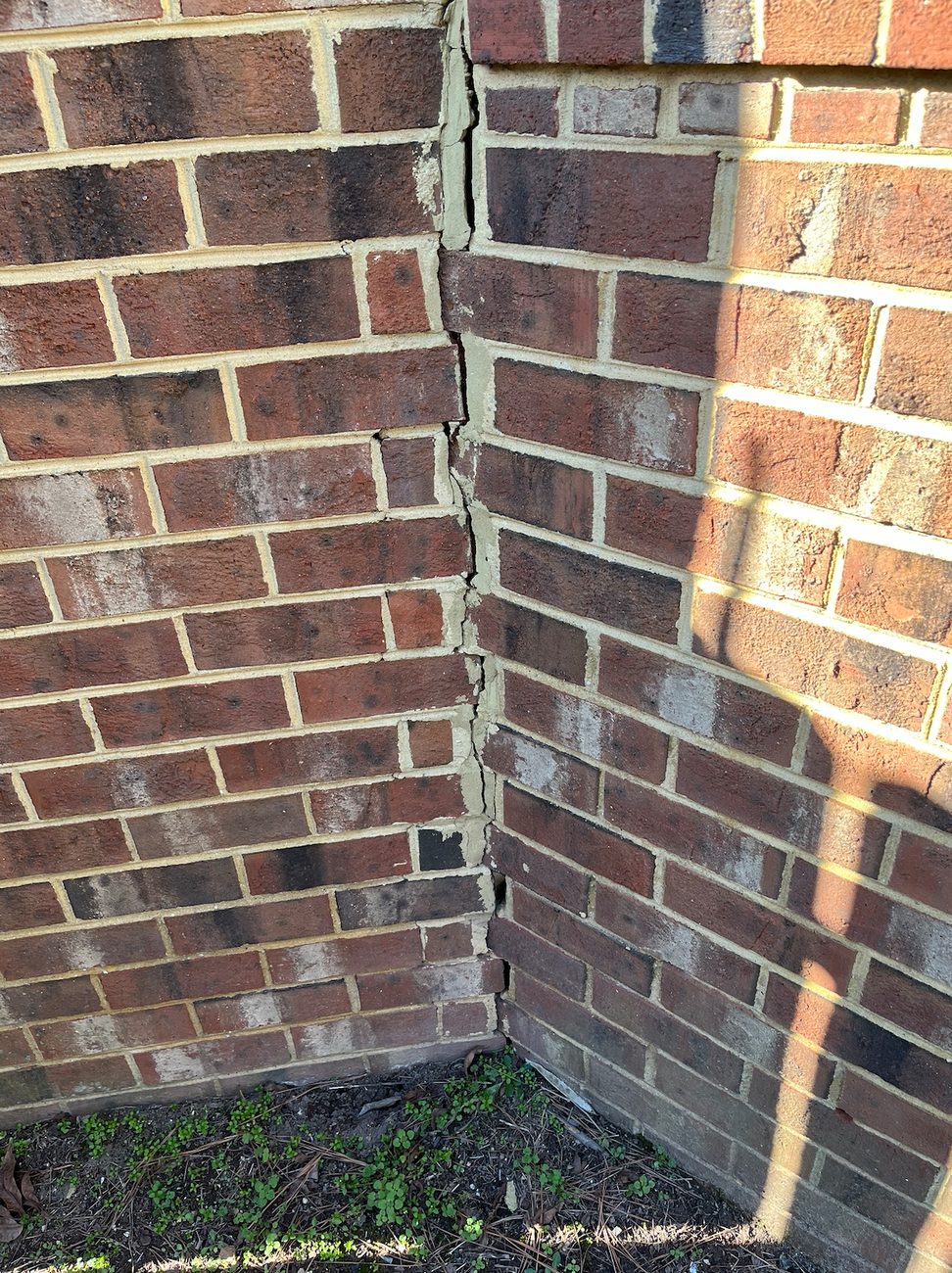
The permanent fix for a settling or sinking foundation, closing stair-step cracks, leveling floors that have started to slope, and freeing doors and windows that stick.
Learn moreWhen one corner of the house starts to drop, you usually see it before you understand it: a door that won't latch, a stair-step crack climbing the brick, a floor that slopes toward one wall. That's the foundation settling, and here in the Blue Ridge it traces back to the ground itself. The red clay swells with every rain and shrinks in the dry spells, and the steep, cut-and-fill lots carved into the hillsides all over town only add to it. Whether it's a century-old home on Grove Park's slopes or a newer build up Town Mountain, the same soil is doing the work.
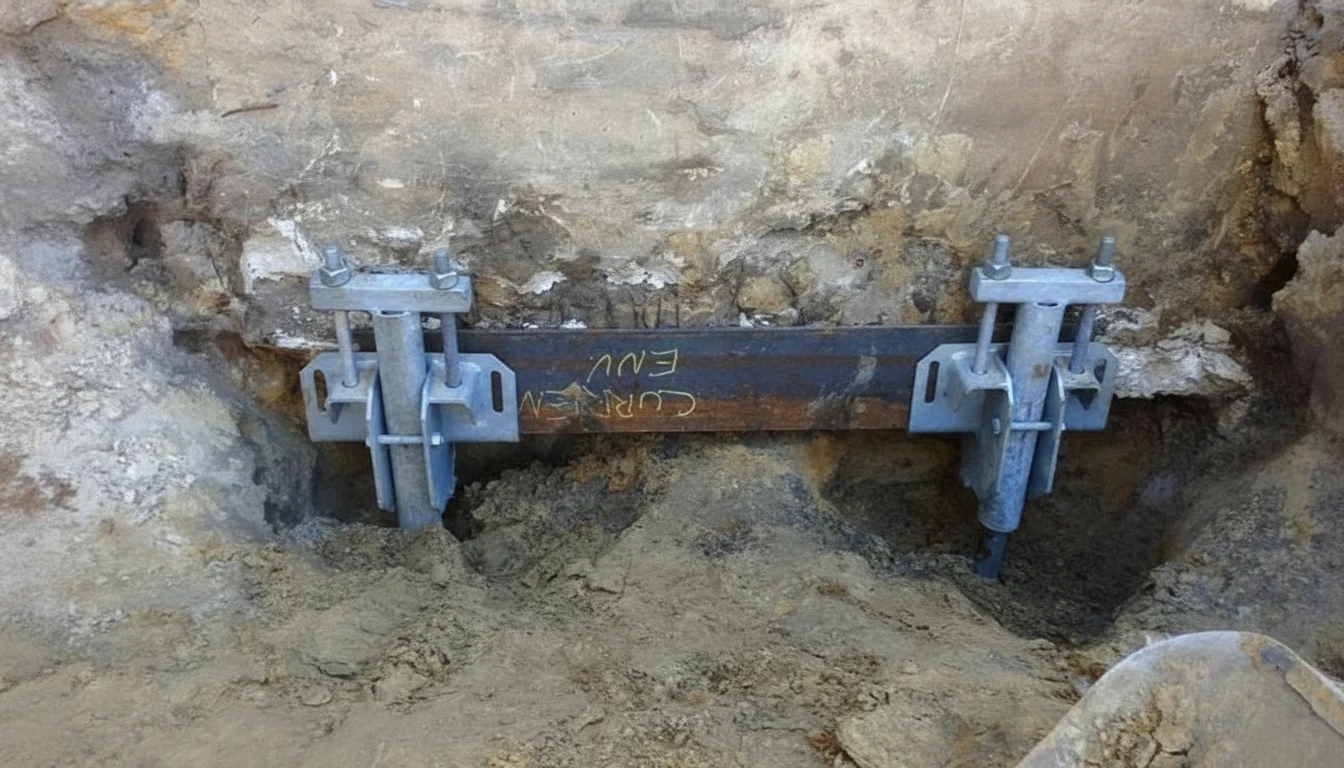
The fix is to get the weight of the house off that failing soil and onto ground that won't move. We drive steel piers (push piers for heavier homes, helical piers for lighter loads and additions) down through the weak layer to dense soil or bedrock, then transfer the load and lift the foundation back toward level. It's engineered and measured, not a cosmetic patch that cracks again next season.
Done right, the settling stops for good: the cracks close, the doors swing true, and the floors come back to level. It's the repair that actually holds on the steepest ground, the hillside streets climbing toward Beaucatcher Mountain and the cut lots on the slopes below Sunset Mountain, because it ignores the shifting topsoil entirely and anchors to what's solid beneath it.
Every job starts with a free inspection, so you get an honest read on whether it's truly settling or just a cosmetic crack, plus a written scope and a transferable warranty before any work begins.
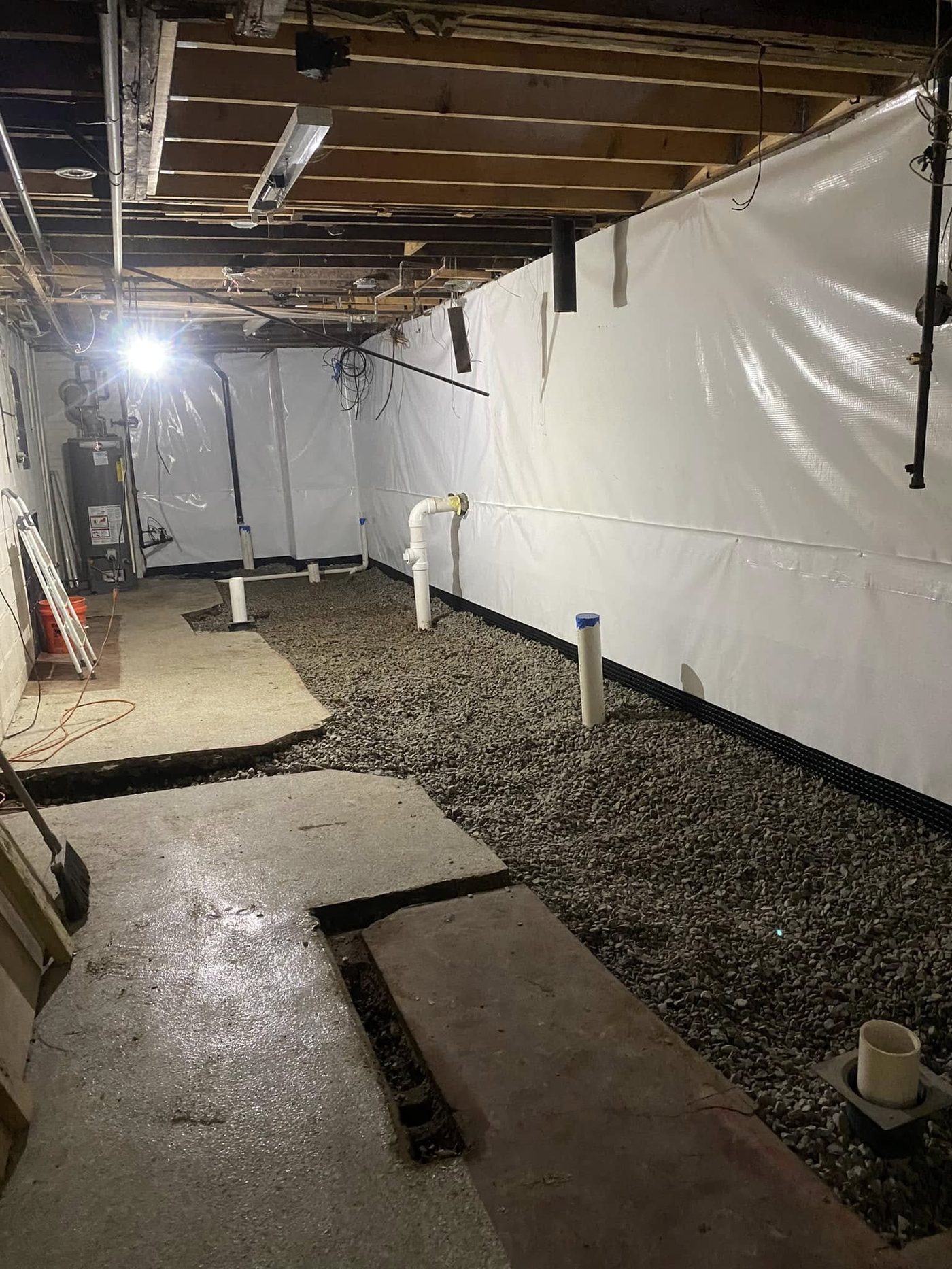
When water shows up after every hard rain, or the air downstairs turns damp and musty, this keeps the space dry and usable enough to finish or store in.
Learn moreA basement that's damp after every storm, a musty smell that won't leave, a chalky white line along the block, or water pooling at the floor all point to the same thing: water is finding its way in faster than the foundation can keep it out. With around 44 inches of rain a year in the mountains, basements here don't just deal with water running down. On sloped and low-lying lots, water builds up in the soil and pushes sideways against the walls.
That sideways force, hydrostatic pressure, is the real enemy, and the right fix depends on where the water's getting in. For most existing homes we install an interior perimeter drain at the footing that catches water before it reaches the floor and routes it to a sump pump that carries it out and away. Where the wall itself is the problem, exterior waterproofing and a proper footing drain stop it before it ever gets inside.
The result is a basement you can actually use: dry, odor-free, and safe to finish or store in. It matters most in the low ground near the rivers, like Biltmore Village down where the Swannanoa meets the French Broad, or the lower edge of Kenilworth, where a high water table keeps the ground wet long after the rain stops.
We start with a free inspection to trace exactly where the water's entering, because the wrong fix is worse than none, and give you a written scope and a transferable warranty on the system we install.
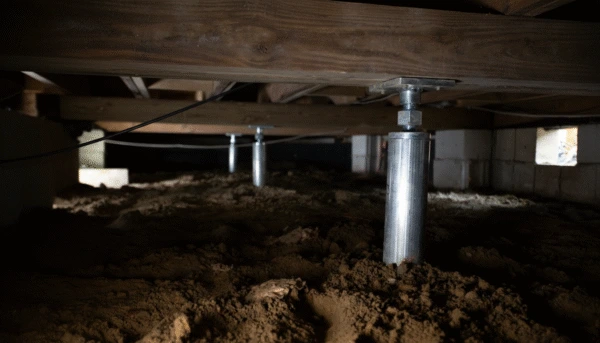
Floors that sag, bounce, or dip usually mean moisture has weakened the wood underneath. This brings them solid and level again.
Learn moreIf your floors bounce when you walk across them, dip in the middle of a room, or feel like they're pulling away from the baseboards, the problem is usually in the crawl space, not the floor itself. Under a lot of older homes west of the French Broad, the wooden beams and joists that hold your floors up have spent decades in damp air, and that moisture slowly softens and rots the wood until it can't carry the load anymore.
We rebuild that support from underneath. Adjustable steel jacks and support posts set on new concrete footings take the weight off failing beams and bring sagging floors back up to level. Where the wood is too far gone, we sister new joists alongside the old ones or replace the rotted members outright, so the floor is carried by sound, dry lumber again, not wood that's slowly giving way.
Once it's done, the bounce is gone, the floors sit level, and the structure underneath is solid. It's a common repair in the city's older neighborhoods, the pre-war bungalows off Haywood Road in West Asheville and around Beverly Hills especially, where crawl-space moisture has had generations to do its work. And since the rot started with moisture, we almost always pair the repair with encapsulation so it doesn't come back.
It starts with a free inspection of the crawl space, where we show you exactly which supports are failing and why, then lay out a written scope and a transferable warranty on the work.
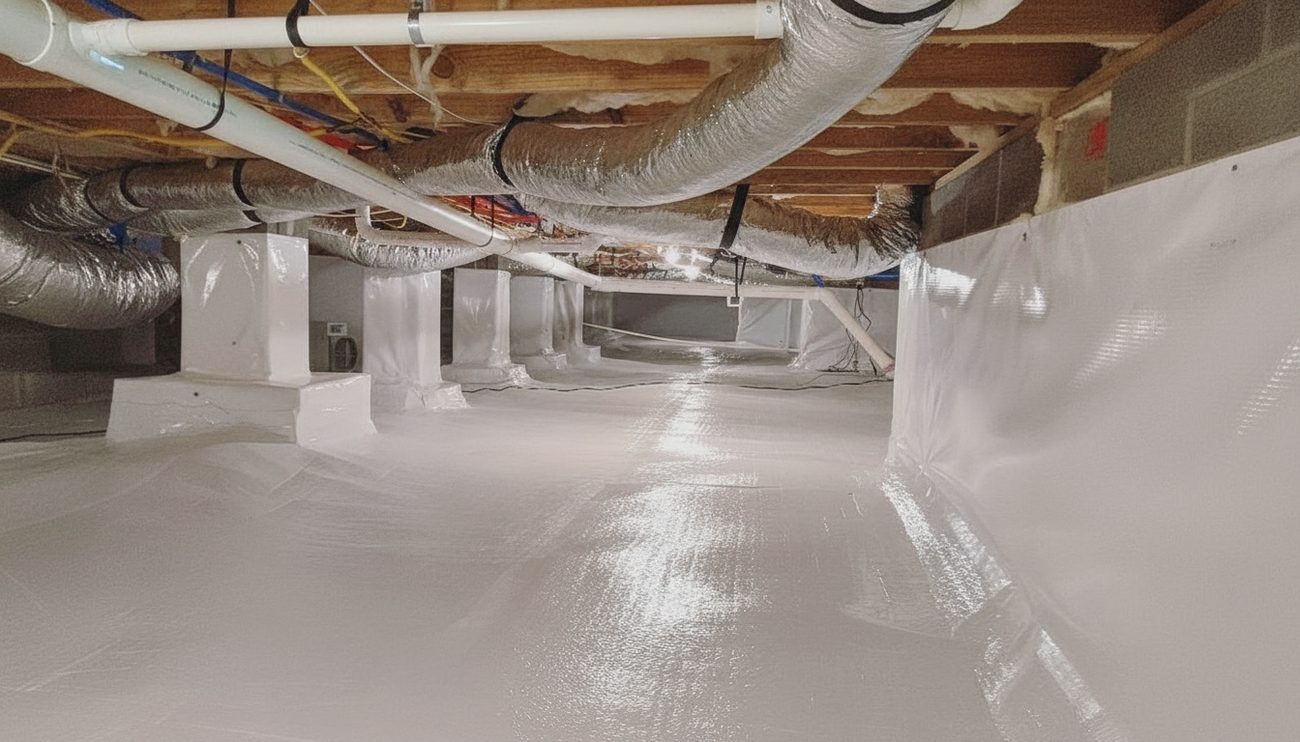
Ends the musty air, high humidity, sweating floors, and slow rot that start in a damp, vented crawl space, once it's sealed off for good.
Learn moreIf the air in your home smells musty, your floors feel cool or bouncy, or your energy bills keep creeping up, the trouble usually starts down in the crawl space. Most older homes around here, the historic houses around Five Points, Chestnut Hills, and the older streets close to downtown, sit over a vented crawl space, and those open foundation vents were meant to dry it out. In our climate they do the opposite, pulling warm, damp summer air in to condense on cool wood and ductwork.
Encapsulation seals the space off for good. We lay a heavy 12-to-20-mil vapor barrier across the ground and up the walls, seal off the vents and every gap, and add a dedicated dehumidifier to hold the humidity down. A sealed crawl space stays around 52% humidity versus roughly 77% in a vented one, the line between wood that stays dry and wood that slowly rots.
The payoff reaches the whole house: cleaner air upstairs, no more musty smell, floors that stop sweating, lower heating and cooling bills, and a foundation that isn't quietly rotting beneath you. The warm, humid summers in the Blue Ridge make a vented crawl space the single worst moisture problem in the region, which is exactly why it's the first fix we recommend for most homes here.
Every encapsulation starts with a free, no-pressure inspection. We show you the real condition of your crawl space (the moisture readings, the wood, any standing water) and lay out exactly what it needs, with a written scope and a transferable warranty on the work.
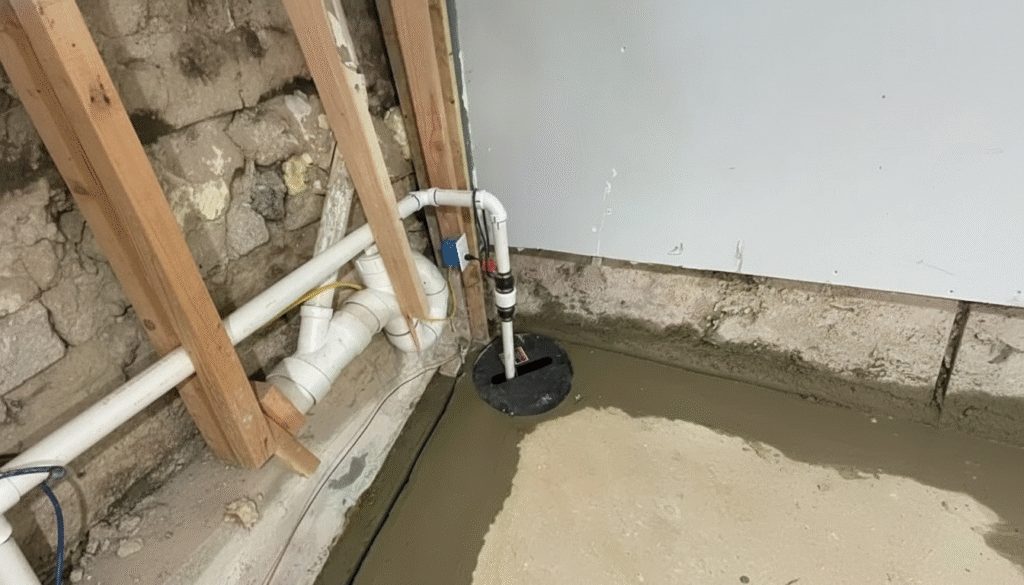
When a basement or crawl space keeps taking on water after every storm, this pumps it out and away automatically, even when the power's out.
Learn moreWhen water keeps showing up in your basement or crawl space after a hard rain, a wet corner, a shallow puddle, a floor that never quite dries, the ground around your foundation is holding more water than it can drain on its own. In the low-lying spots around town, like the creekside lots in Haw Creek or the ground near the French Broad and Swannanoa rivers, groundwater can rise fast during storm season and find its way in from below.
A sump pump is what stops it. We set a pit at the low point of your basement or crawl space, tied into the interior drainage that feeds water to it, and install a pump that switches on the moment the water rises and carries it out and away from the house. For homes that flood when the power goes out, which is exactly when you need it most, we add a battery backup so it keeps running through an outage.
With it in place, the water that used to sit under your home gets moved out before it can do damage, storm after storm. It's the piece that makes a waterproofing system reliable rather than hopeful: the difference between a basement that drains and one that floods.
We start with a free inspection to size the system to your home and water table, and back the installed pump with a written scope and a transferable warranty.
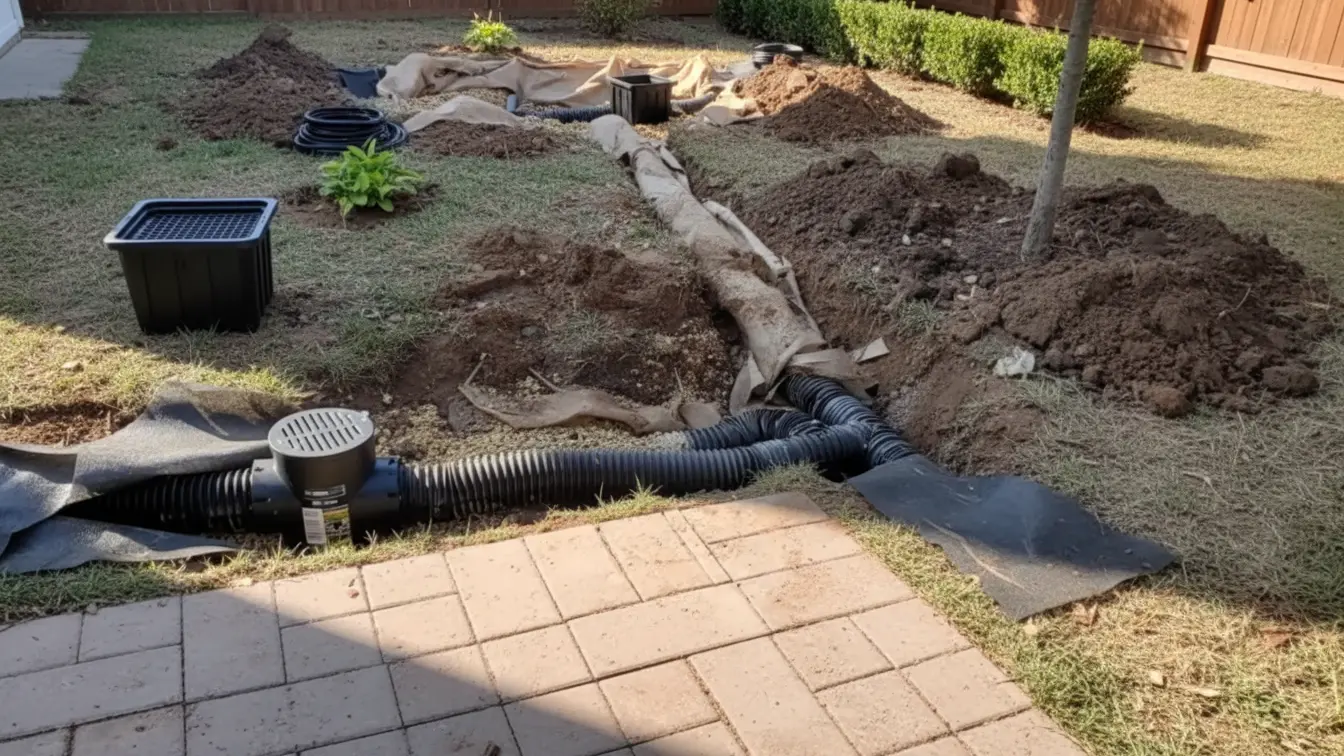
It intercepts the runoff that pools against the house, keeps the yard soggy, or finds the basement after every downpour, and routes it safely away.
Learn moreWater pooling against the house after it rains, a soggy patch of yard that never dries, or a basement that leaks every time there's a downpour usually comes down to one thing: runoff has nowhere to go but toward your foundation. The hillsides here make this worse than most places. In creek-cut valleys like Beaverdam and on the slopes below Sunset Mountain especially, every rise above your home funnels rain straight downhill, and if it isn't intercepted, it collects right where you don't want it.
A French drain solves it by giving that water an easier path. We dig a gravel-filled trench with perforated pipe that catches subsurface water and carries it away from the foundation, whether that's out through the yard or along the footing below grade. We usually pair it with the simple fixes that do half the work: extending downspouts well past the foundation and regrading the soil so it slopes away from the house instead of toward it.
Get the water moving away and most foundation problems never start: no hydrostatic pressure against the walls, no saturated clay swelling and shrinking under the footings. It's the least glamorous service we offer and often the most important, especially on the steep, rain-heavy lots up in North Asheville, like the established properties along Kimberly Avenue.
We start with a free inspection to map where the water actually goes during a storm, then lay out a written scope and a transferable warranty on the drainage we install.
Queen Foundation Repair is a local foundation and crawl space company built on one idea: fix it right the first time, and tell the homeowner the truth about what that takes. We've worked under and around homes all over Asheville, from the century-old houses in Montford and Grove Park to the hillside lots and newer builds across town, so there isn't much about a settling foundation or a wet crawl space we haven't already seen.
Every job starts with a free, no-pressure inspection. If your foundation genuinely needs piers, we'll show you why. If a crack is only cosmetic, we'll tell you that too and save you the money. When work is needed, we handle it with proven methods, from foundation repair and basement waterproofing to crawl space encapsulation, and we back it with a written scope and a transferable warranty. No scare tactics, no upsells you didn't ask for.
A foundation problem feels a lot scarier before someone who actually knows these homes walks you through it. That's the part we care about most: an honest look, a clear plan, and a fix that holds. Queen Foundation Repair handles every kind of foundation and moisture problem in the Asheville area, and it always starts the same way, with a free inspection and a straight answer.
Get your free inspection
THE QUEEN DIFFERENCE
We get out quickly, get your estimate back fast, and keep the job moving so you're not living with the problem for months.
We come out, find the real problem, and give you a straight answer at no cost. If you don't need work, we'll say so.
Every repair comes with a written, transferable warranty, so the fix protects your home's value when you sell.
Fully licensed and insured in North Carolina. The work meets code and you're covered from the first day on site.
A clear, honest quote for exactly what the job needs. No inflated bids, no surprise charges at the end.
We're based right here and work in the area every day, so we're easy to reach and we stand behind every job.

From your first call to a warranty that lasts, here's exactly what to expect. No pressure, and no work you don't need.
ASHEVILLE FOUNDATION FAQ
Real answers for homeowners from the historic streets of Montford and Grove Park to the hillside lots above Haw Creek, on what a repair really costs, how long it lasts, and whether you can safely wait.
Getting Started
A thin, vertical hairline crack is usually cosmetic, just concrete curing. Horizontal cracks, stair-step cracks in brick that keep widening, bowing walls, and floors that have started to slope are structural and worth acting on. The real warning sign is movement: if a crack is visibly growing or you're seeing several signs at once, don't wait, because problems here don't fix themselves. A free inspection sorts cosmetic from structural so you're not guessing, and we'll tell you honestly if what you have can safely hold for now.
For most common foundation and crawl space problems, an experienced contractor can diagnose the cause and make the repair without an engineer. An independent structural engineer's report makes sense for severe or unusual cases, think major settlement, a badly bowing wall, or a permitted addition, and typically runs a few hundred dollars. That engineer is someone you hire directly, not someone we provide or sell you. If your situation calls for one, we'll say so up front and build the repair around their findings.
Yes. Every inspection is free, on-site, and no-pressure. We look at what's actually happening with your foundation, walls, or crawl space, explain what we find in plain English, and show you whether it's structural, cosmetic, or something you can safely monitor. If you don't need work, we'll tell you, that honesty is how we earn the jobs that are real. You get a clear, written, line-item quote before anything is scheduled, and no one pushes you to sign on the spot.
Cost & Value
Most foundation repairs land somewhere between about $2,500 and $8,000, though the real number depends on three things: what's causing the problem, the method it takes to fix it, and how much of the foundation is affected. A few piers under one settling corner sits near the low end. A row of piers along a failing wall, a bowing-wall system, or full basement waterproofing runs higher, and a large crawl space with drainage and a sump pump is its own line item. Asheville adds its own variables too, since hillside access and older, hand-built foundations can change the labor involved. That's why we don't quote sight unseen. You get a free on-site inspection and a written, line-item quote up front, so you see exactly what each part costs and why before any work begins.
Usually not. Standard homeowners policies typically exclude foundation damage caused by settling, expansive soil, or gradual water intrusion, which covers most of what we repair. Coverage sometimes applies when the damage comes from a sudden, named event like a burst pipe, so it's always worth checking your policy. One important note for our area: flood-related damage, including the foundation and crawl space issues that followed Hurricane Helene, is generally not covered by standard homeowners insurance and needs a separate flood policy.
Untreated, yes. Visible cracks, sloping floors, or a damp crawl space scare buyers and show up in inspections, and in North Carolina you're required to disclose known foundation issues when you sell. The good news is that a documented, professionally completed repair with a transferable warranty often removes the objection entirely, because the buyer sees the problem was fixed correctly and is covered going forward. Fixing it properly usually protects your value far more than it costs.
Foundation Problems
It comes down to ground and water, and how they move here. Much of the area sits on red clay, a soil that swells when it soaks up rain and shrinks when it dries out. That constant push and pull is what cracks foundations, sticks your doors, and slopes your floors a little more each year. On top of that, Asheville sits in a river valley ringed by hills, so runoff tends to flow toward and under homes instead of away from them, and we get around 44 inches of rain a year to drive it. Add a lot of older homes, like the early-1900s houses around Montford, built on shallow footings before modern drainage was standard, and it's no surprise foundations here take a beating. The upside: nearly all of it is fixable once you find the real cause.
It's very possible, and worth checking. Helene saturated hillsides and flooded low-lying areas like Biltmore Village and the River Arts District along the French Broad, and that kind of water event can wash out soil, overload drainage, and push against foundation and crawl space walls. Some damage shows immediately, but a lot of it surfaces months later as new cracks, sticking doors, sloping floors, or moisture in the crawl space. If your home went through it, a free inspection can catch hidden damage early, before a small movement becomes a structural repair.
Yes. A lot of Asheville's character homes, especially the early-1900s houses in areas like Grove Park, sit on stone, brick, or shallow footings poured long before modern code. Those foundations call for a gentler, more tailored approach than a 2005 slab, and the fixes are different: stabilizing and underpinning rather than tearing out. We match the repair to how the home was actually built, so it stays sound without losing the character that makes it worth saving.
Repairs & Methods
We take the weight of the house off the failing soil and carry it down to stable ground with steel piers. Which pier depends on the load: helical piers screw down like a giant screw and are ideal for lighter structures like additions, porches, and stoops; push piers are driven deeper using the home's own weight and suit heavier, full-height walls. In some older or minor cases, concrete piers do the job. Once the piers reach competent soil that won't move, we can often lift the foundation back toward its original level and lock it there, which closes cracks and re-levels floors as it goes. Done right, it's a permanent fix that stops the settling for good, not a cosmetic patch that reopens the next wet season. Every plan starts with measuring exactly how far the home has moved.
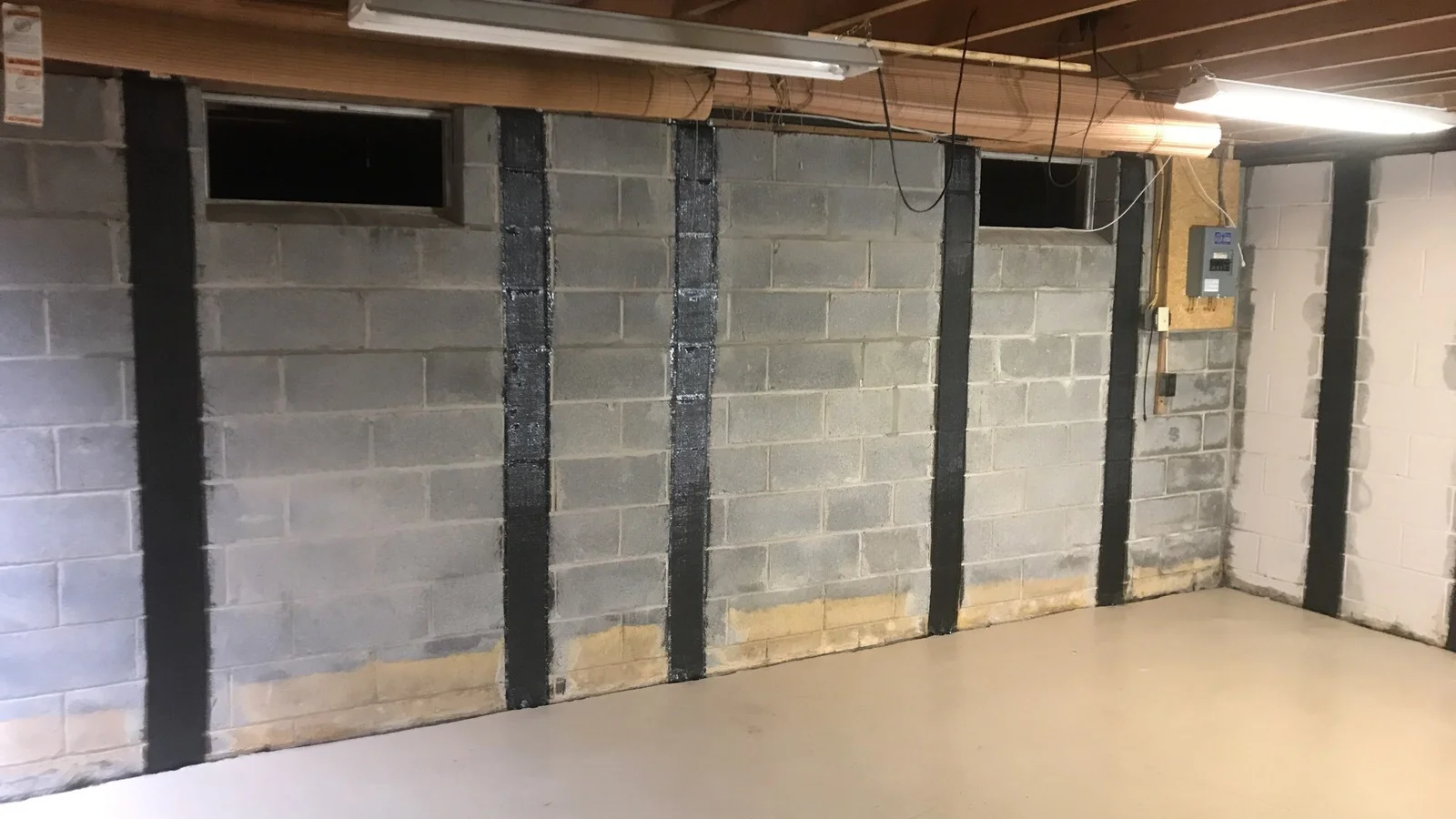
The fix is matched to how far the wall has actually moved, so the first step is measuring it. A wall with minor bowing can usually be stabilized with carbon-fiber straps bonded to the inside face, which lock it in place with no digging. More significant movement may call for wall anchors, which reach out to stable soil in the yard and can slowly draw the wall back toward straight. Severe cases, or walls with no yard access, get steel I-beam bracing. One sign we always take seriously is a horizontal crack running across the wall, because that points to soil pressure pushing in, and it needs real structural reinforcement rather than a surface patch or injection alone. We recommend the least invasive option that will genuinely hold, not the biggest job.
Done correctly, foundation repairs are permanent. Steel piers reach load-bearing soil and don't settle again, and a properly installed drainage or waterproofing system keeps working for decades. That's the difference between fixing the cause and patching the symptom. Our repairs are backed by a written, transferable warranty, spelled out in plain terms before we start and handed to you when we're done, so the protection carries to the next owner if you ever sell. If a question ever comes up, we stand behind the work.
Crawl Space
Encapsulation seals your crawl space off from ground and outside moisture. We line the floor and walls with a heavy 12-to-20-mil vapor barrier, seal the foundation vents, and usually add a dehumidifier, which turns a damp, vented space into a clean, dry, conditioned one. In our climate, with around 44 inches of rain a year and long humid summers, an open, vented crawl space stays wet for months at a time, and that trapped moisture rots floor joists, grows mold, and rises into the living space, since much of the air you breathe upstairs is drawn up from below. Sealing it protects the structure, cuts musty odors, and often helps your energy bills. If your floors feel bouncy, the air smells musty, or you've seen condensation on the ductwork, you're likely a candidate, and a free inspection will confirm whether encapsulation or a lighter fix is right.
For most homes, crawl space encapsulation runs somewhere around $4,000 to $9,000, depending on the size of the space, its condition, and whether it needs a dehumidifier, drainage, or a sump pump added. A small, dry crawl space costs less; a large one with standing water and rotted wood costs more. Rather than quote a number sight unseen, we inspect the space for free and give you a written price that reflects your actual crawl space, not a rough average.
That smell is almost always excess moisture, drawn from the ground and the vents. Bare crawl space soil releases water vapor constantly, and open vents pull in our humid Blue Ridge air, so the space stays damp enough to grow mold and mildew, and standing water after heavy rain makes it worse. Because warm air rises, much of the air on your first floor is pulled up from the crawl space, which is how a musty crawl space becomes a musty house. The fix is controlling the moisture, usually with encapsulation.
Water & Drainage
They solve different water problems, and a lot of homes end up needing more than one. Basement waterproofing manages water that has already gotten inside, usually with an interior perimeter drain that collects seepage at the footing and a sump pump that carries it away. A French drain works outside or in the surrounding soil, intercepting water before it ever reaches your foundation. Encapsulation is the crawl-space solution, sealing out ground moisture and humidity with a vapor barrier rather than pumping water. So the simple way to think about it: a French drain keeps water away from the house, waterproofing handles water that gets into a basement, and encapsulation keeps a crawl space dry. The right mix depends on where your water is actually coming from, which is exactly what a free inspection pins down.
After a heavy rain, the soil around your foundation saturates and creates hydrostatic pressure, water literally pushing against the walls and up through the floor until it finds a crack or joint. On Asheville's slopes, runoff often flows straight toward the house and collects against the foundation. The lasting fix isn't just sealing the crack; it's relieving the pressure with an interior perimeter drain and sump pump, and correcting the grading and downspouts outside so water is carried away before it reaches the wall.
That's efflorescence, mineral salt left behind when water moves through concrete or block and evaporates. The powder itself is harmless and wipes off, but it's a reliable sign that moisture is passing through the wall, so it usually comes back until you address the source. It isn't structural damage, so there's no need to panic. It does tell us where water is getting in, which points to the right drainage or waterproofing fix to keep the wall dry for good.
AREAS WE SERVE
From the bungalows of West Asheville to the older homes around Kenilworth and the hillside lots up toward Beaverdam, we help homeowners across the city fix failing foundations, damp crawl spaces, and wet basements. Wherever you are in and around Asheville, a free inspection is one call away.
ZIP Codes We Serve
Ready to Get Started?
No obligation, fast and easy.
Thanks, your request is in.
Someone from our team will reach out shortly to set up your free estimate.