Johnson City sits in a valley with a thousand feet of mountain above it, so rain reaches the bottom fast and stops at a foundation wall. From the Tree Streets to Boones Creek we handle basement waterproofing, foundation repair and crawl space encapsulation. The inspection is free.
Get Your Free Inspection
We appreciate you reaching out.
One of our team members will be with you shortly.





WHAT WE SEE MOST
Johnson City sits at the bottom of a lot of hills. When it rains hard, that water runs downhill and reaches the houses at the bottom fast. Some houses handle it for decades and some others don't. These are some of the common symptoms that we see in the Tri-Cities. Each one points to a different foundation repair across east Tennessee. Our services cover all of them from one visit.
The ground outside is losing
It comes in low, where the wall meets the floor, and it comes in fast. Ground this steep cannot take rain as quickly as it arrives. Waterproofing solutions move it away before the concrete takes damage. Concrete lasts far longer on a dry home.
Whatever is under the floor is wet
Damp air moves up through every gap and you meet it at the top of the stairs. The wood down there is holding the same water. A dry crawl space protects the whole home above it. Damp below shows up as cracks above.
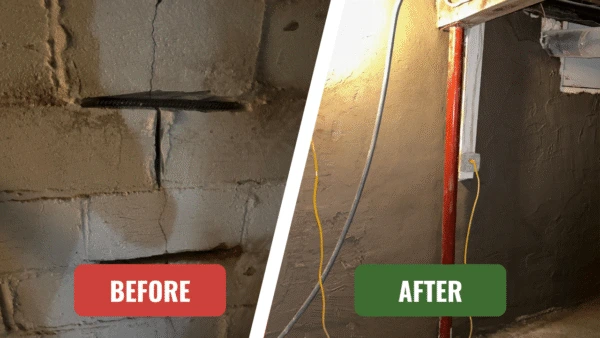
The wall is taking a load sideways
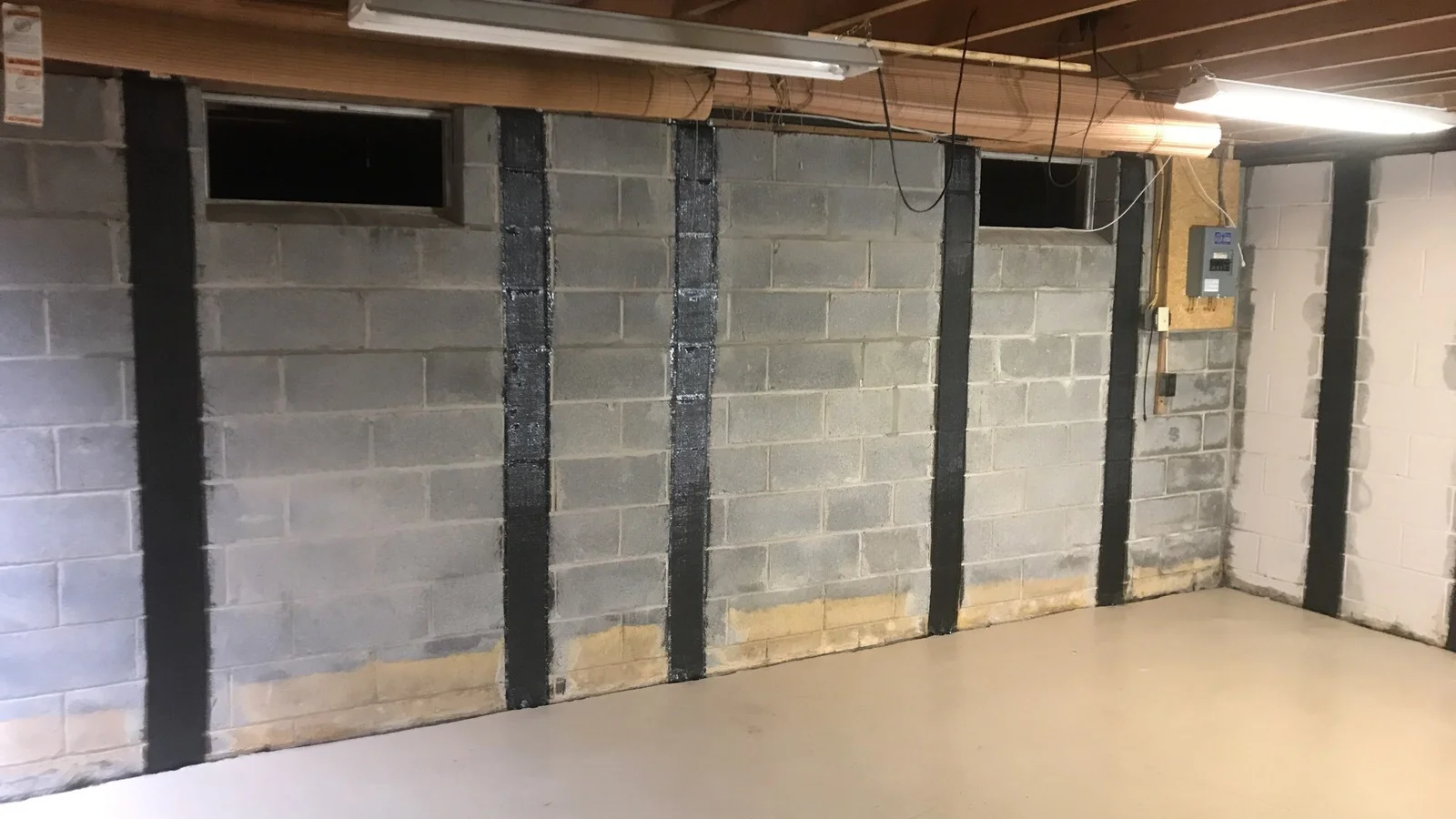
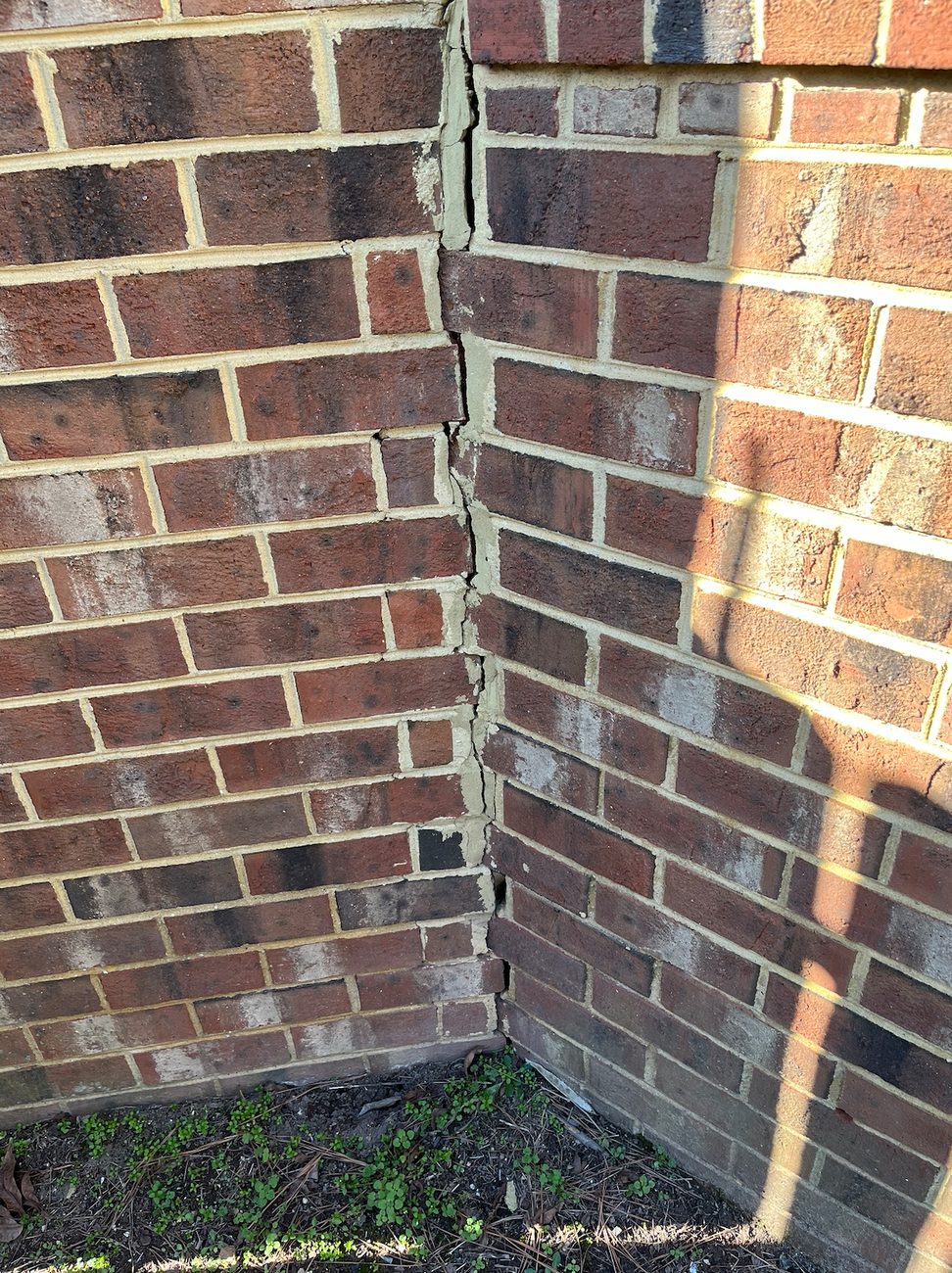
A crack that runs level along a mortar course is different from one that runs down. Level means the ground outside is pushing, and pushing does not stop. Structural cracks widen until the pressure is dealt with. Waterproofing solutions relieve it properly.
It has already moved
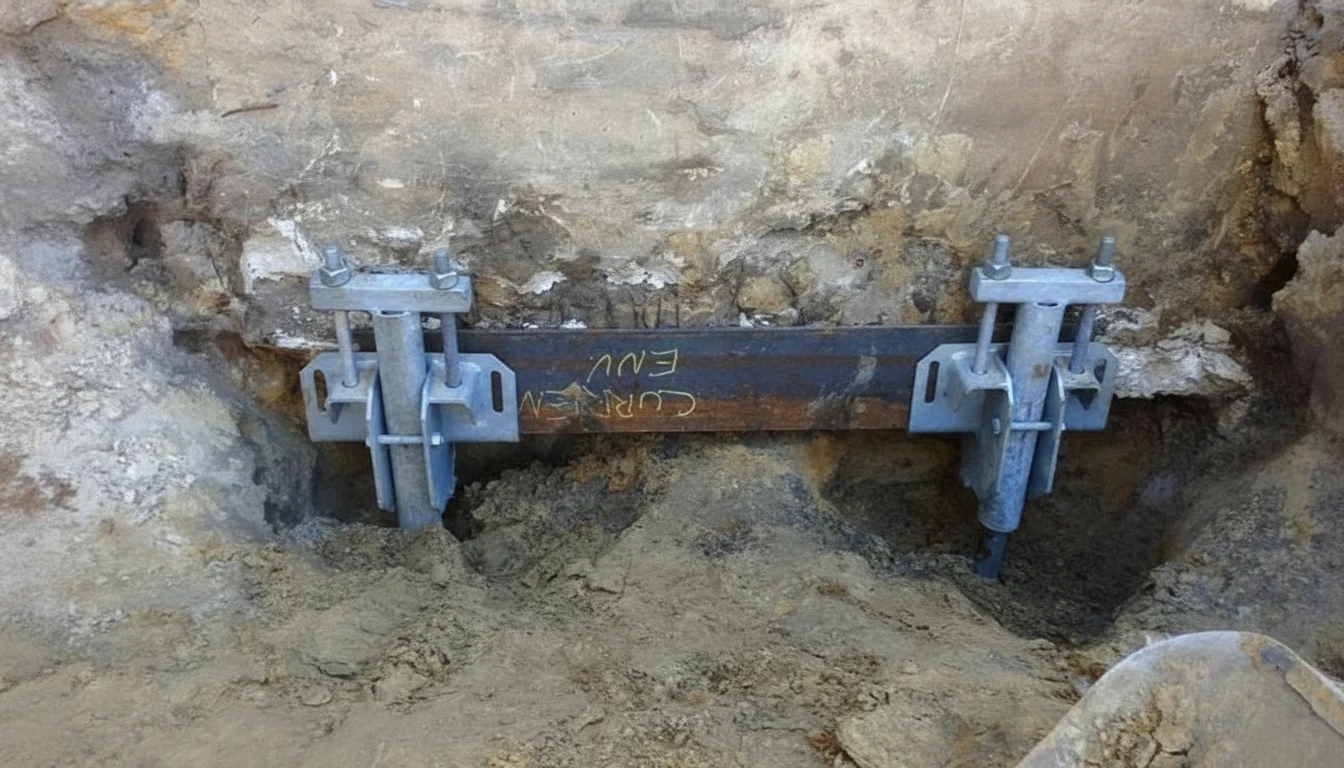
Once a course has slipped out of line the wall is no longer straight, and straight is the only thing holding up the weight above it. Concrete piers carry that weight properly. Structural work on concrete, not on packed fill.
The opening is out of square
You could always close it and now it catches near the top. Something below that side of the house has moved, and the frame moved with it. Foundation repair puts the home back where it belongs. Cracks close as the home comes back to level.
The support underneath has softened
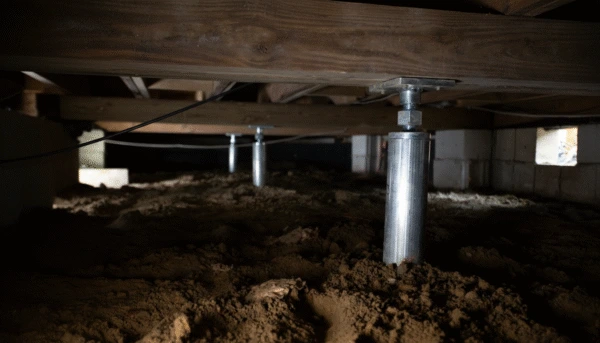
A floor that flexes in one spot is telling you about what carries it, not about the flooring. Damp gets into that wood and stays. Waterproofing and crawl space repair together stop the damage. Two services, one visit, one price.
The thing to watch is whether any of it is changing. A crack that has been the same width for years is doing nothing much. The same crack wider than it was last time is worth attention. When several of them turn up close together, on one wall or at one corner, that is the point to call someone, and it goes for a Tree Streets basement and a Boones Creek crawl space the same. The inspection is free. Our services cover the home, the concrete, and everything between. Nothing gets added later.
From a basement that takes water every time it rains hard, to a wall leaning in, to a floor that gives when you cross it, these are the calls we get across Johnson City. Tap any service to see what the work involves. Foundation repair solutions are priced line by line.
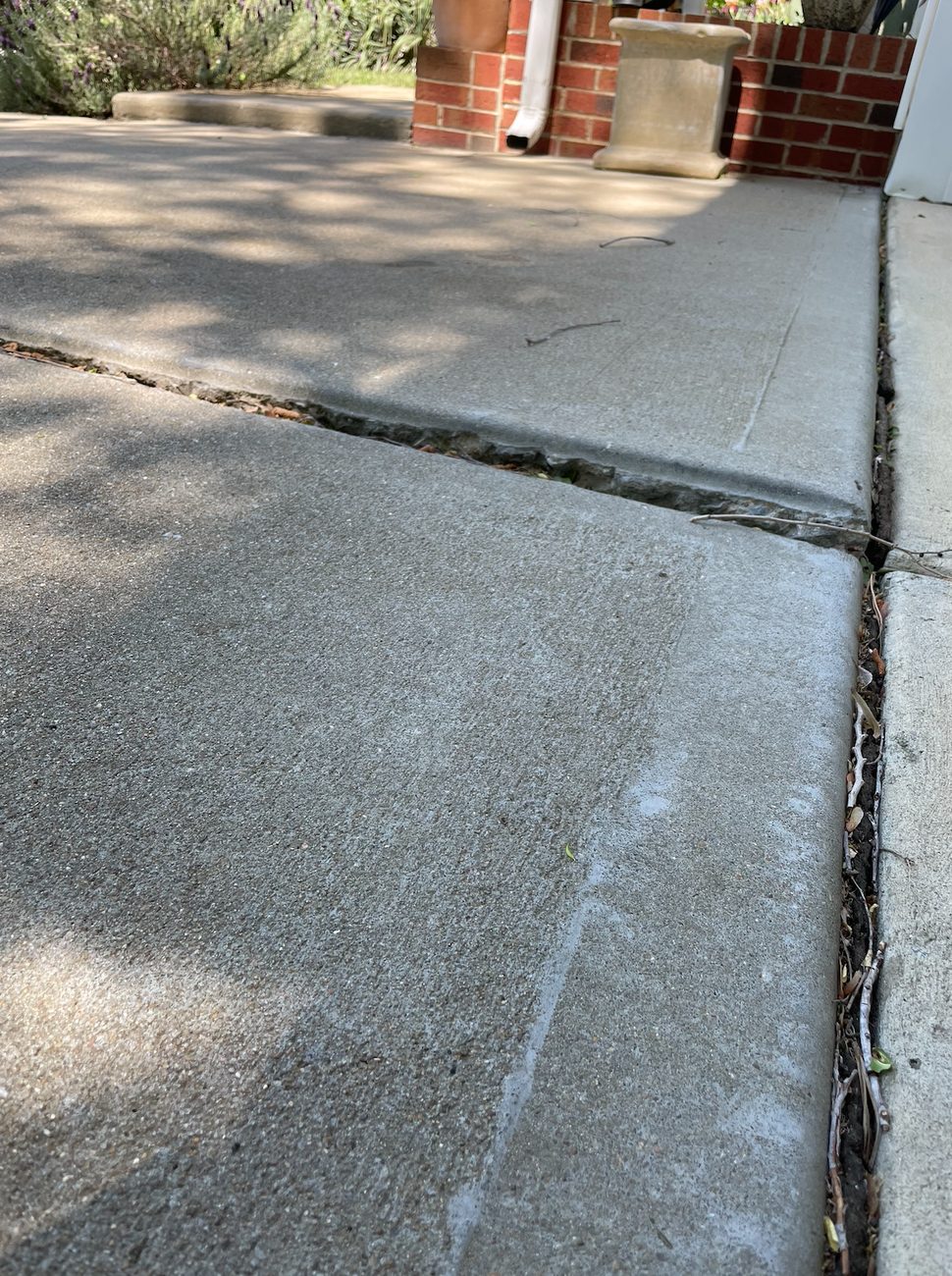
Gets a settled corner back up and keeps it there, once we know what took the support out from under it.
Learn moreA floor that sits low toward one end, cracking through the block, a door that stopped shutting on that same side. On the Tree Streets the footings are old and shallow, and a century of water running past them has taken material away a little at a time. What is left underneath eventually stops carrying the weight. Concrete leveling brings a settled slab back up. Concrete leveling costs a fraction of replacement.
What we do depends on how far it has gone. Supports get driven down past the softened ground to something that will hold, then loaded to bring the corner back toward level. Where a wall has moved rather than dropped, it gets braced instead of lifted, which is the commoner answer on the Boones Creek slabs. And where the water is still arriving, drainage goes in first, because ground that keeps taking on water will keep moving whatever we put in it. Structural solutions have to reach material that holds. Anything less and the home moves again.
The first job is telling those apart. Levels through the rooms, a look underneath, and a walk outside to find where the water comes off the slope and where it ends up. You get told what is moving, what is cosmetic, and what it costs before anything starts. Every home in Tennessee gets the same written scope. Same services, same pricing, every job.
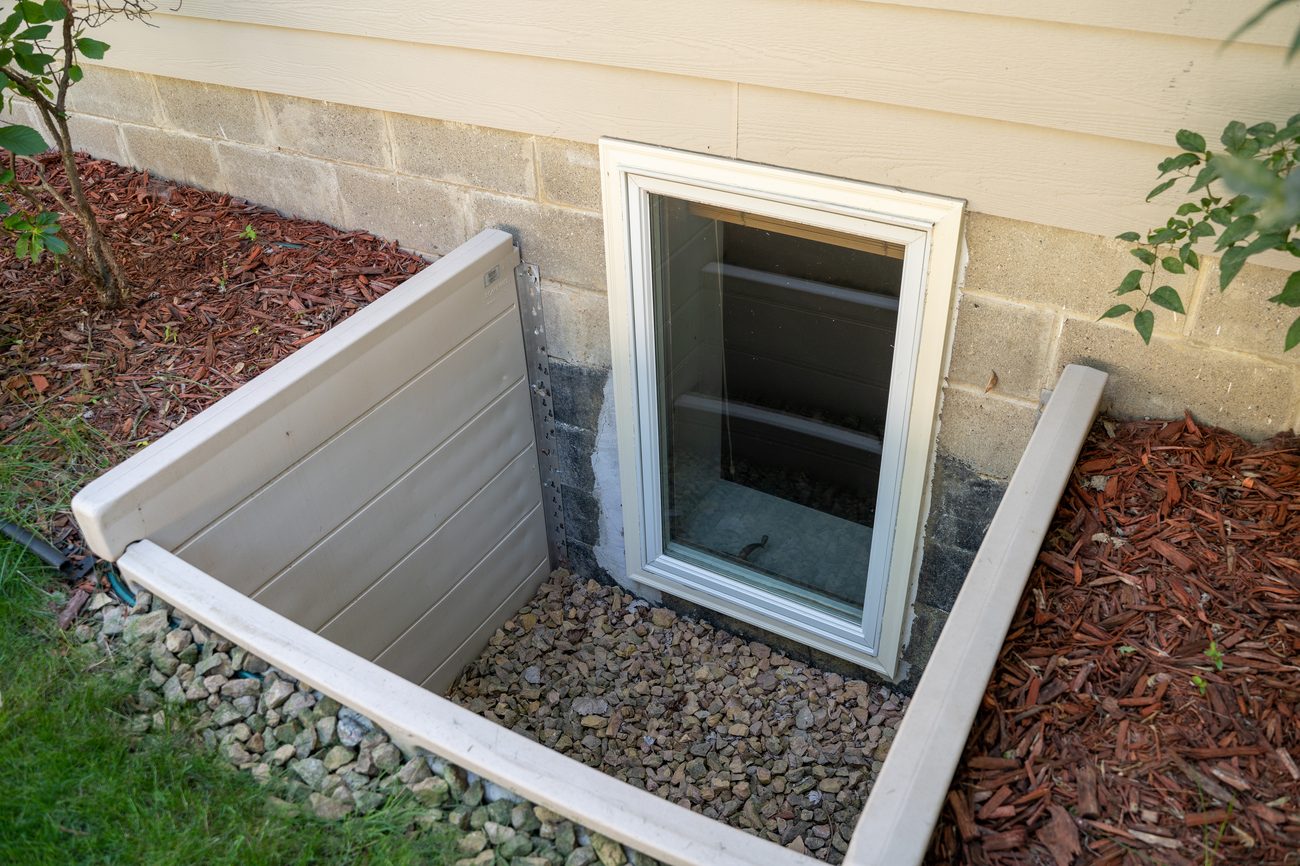
Stops water arriving through the basement wall, instead of mopping up after it every single time the weather turns bad.
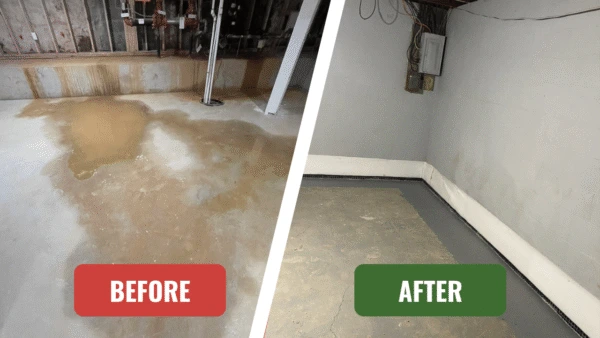
Learn moreTwo questions come with this job every single time: will insurance pay for it, and what is the cheapest way to do it. More people in Johnson City ask us about basement water than about anything else. In a Tree Streets basement water shows at the joint where the wall meets the floor, or halfway up the block, and it shows within a few hours of a real downpour rather than days later. Good waterproofing shows up in the first heavy rain. That is the test that matters in Tennessee.
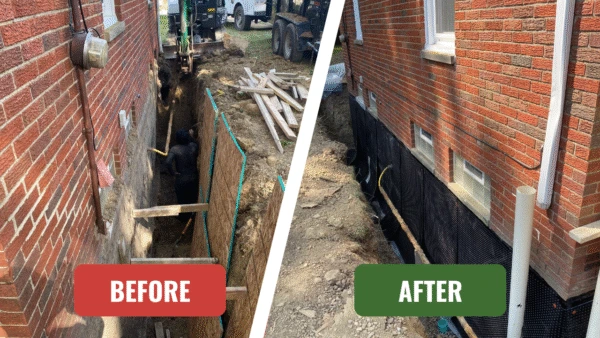
There are two honest routes. From the inside, a drain goes in around the perimeter below the floor and runs to a pump, which takes the water that has already got through and puts it outside. From the outside, the wall gets dug clear, sealed across its face, and a drain laid at the footing so the water never reaches it. Outside costs more and lasts longer. Exterior waterproofing solutions outlast interior ones every time.
Which one is right depends on how much water and where it comes from, and around Boones Creek that answer is different street to street. Interior work is the common answer. Exterior is the answer when the ground outside stays saturated for days at a time. We will tell you which you are looking at. Cracks tell you whether it is damage or settlement. Structural damage and cosmetic cracks need different solutions.
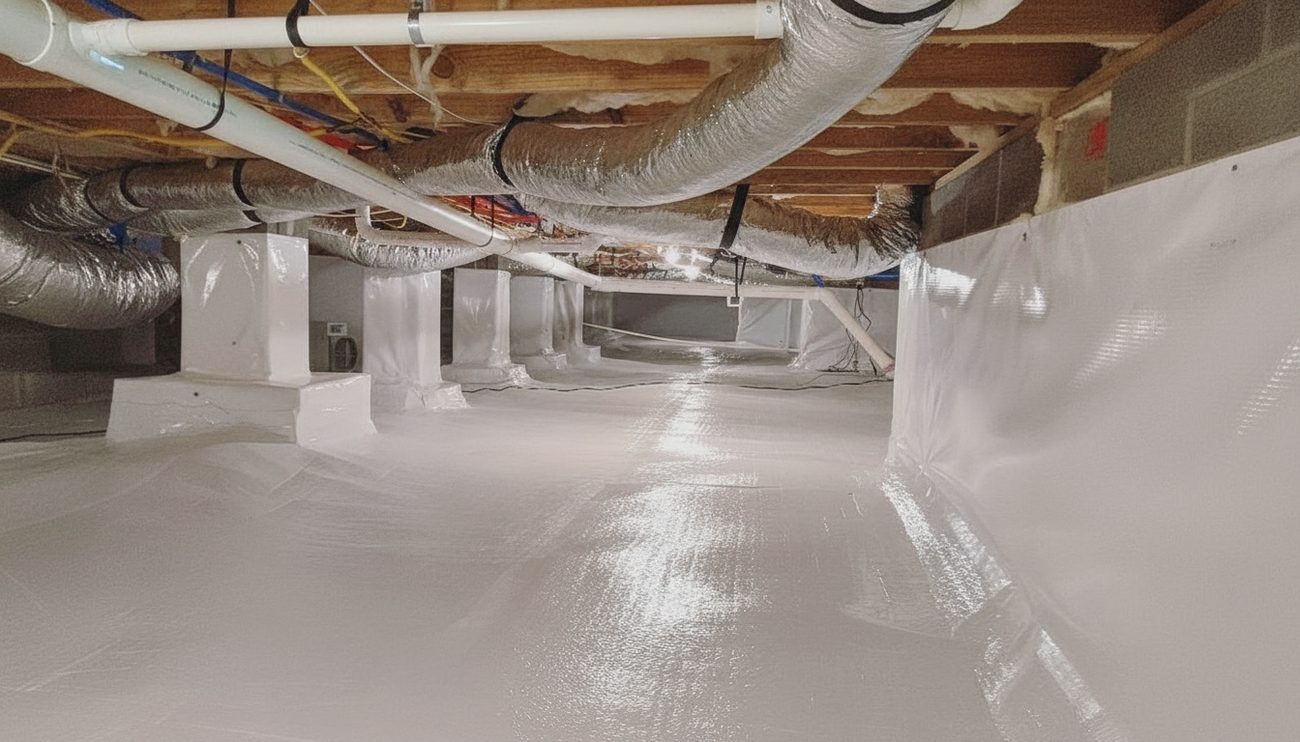
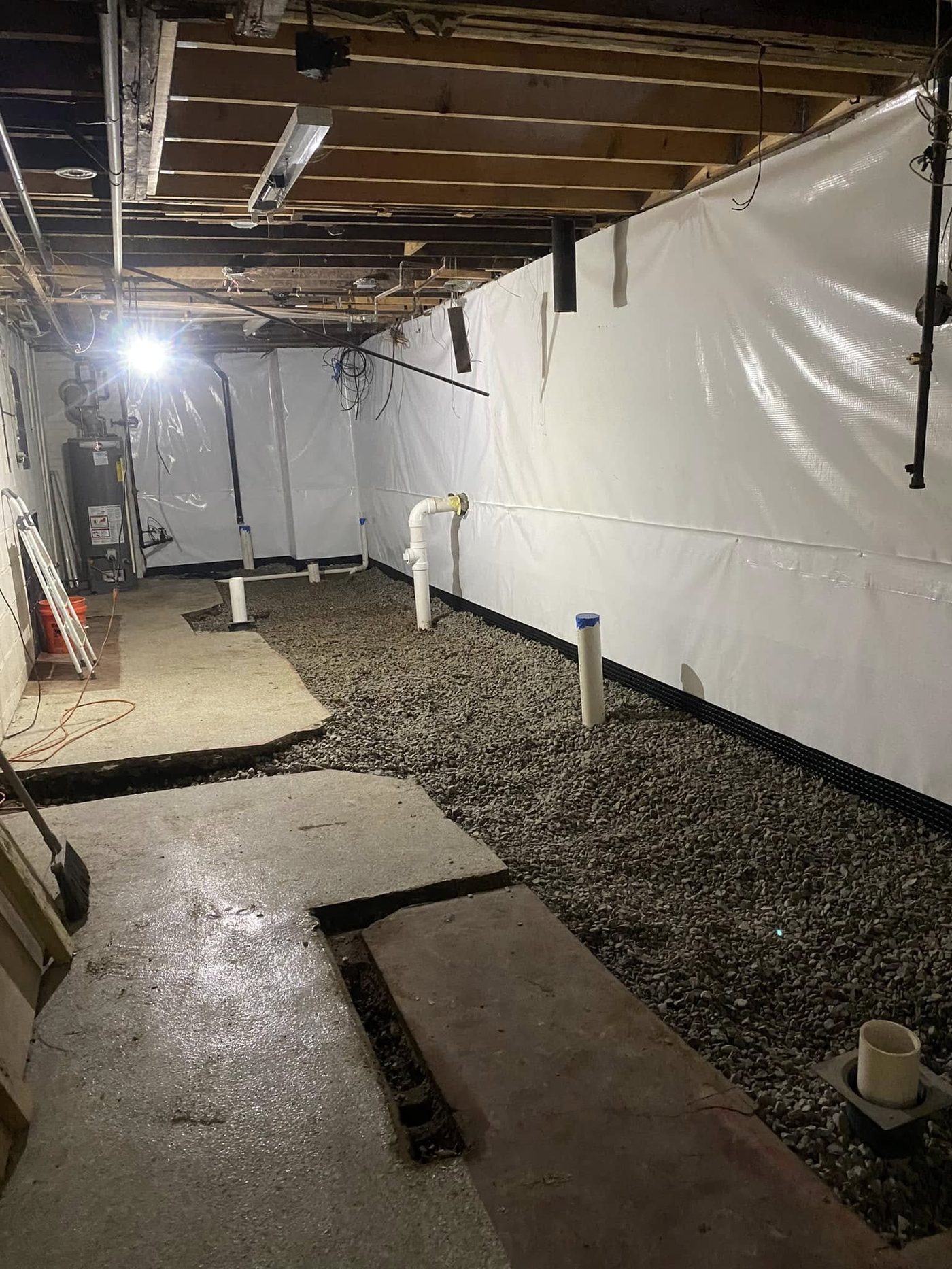
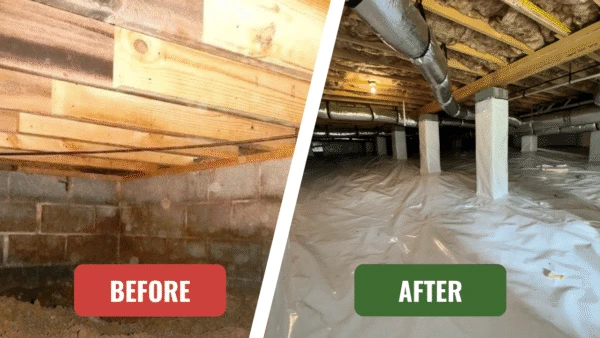
Closes off the bare ground under the house so the damp stops rising into the rooms you actually live in.
Learn moreMore people here search for this than for anything else we do. The signs are upstairs rather than down: a smell that meets you in the hall, insulation sagging wet between the joists, floors that never quite feel warm. The ground under a house on a crawl space is open dirt, and open dirt gives off water the whole time. Sealing it is the cheapest of our crawl space services. It protects the home and the concrete below.
Encapsulation shuts that off. A heavy liner goes across the whole floor, up the piers and up the walls, taped at the seams and sealed at the top. Vents that were letting damp outside air in get closed, and through Boones Creek that alone changes the reading. Where water is actually running in under the house, a drain and a pump go in below the liner first, because sealing over standing water only hides it. Real solutions move the water, they do not paint over it.
The rooms above change within days. The smell goes, the floors stop feeling cold, and the heating stops fighting the crawl space. In the older houses through the Tree Streets it also keeps the joists dry, which is the part that decides how long the floor lasts. A dry home lasts decades longer.
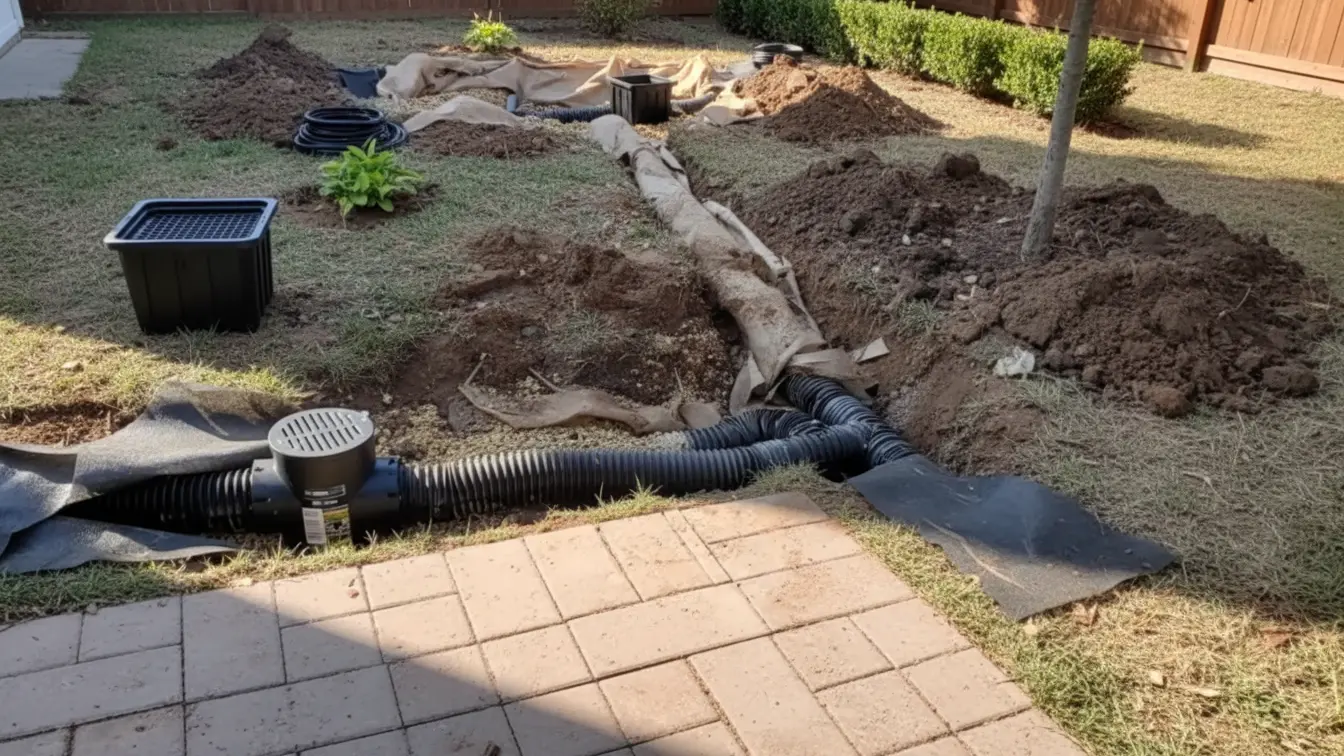
Gives water coming off the high ground a route around your house instead of a place to sit against it.
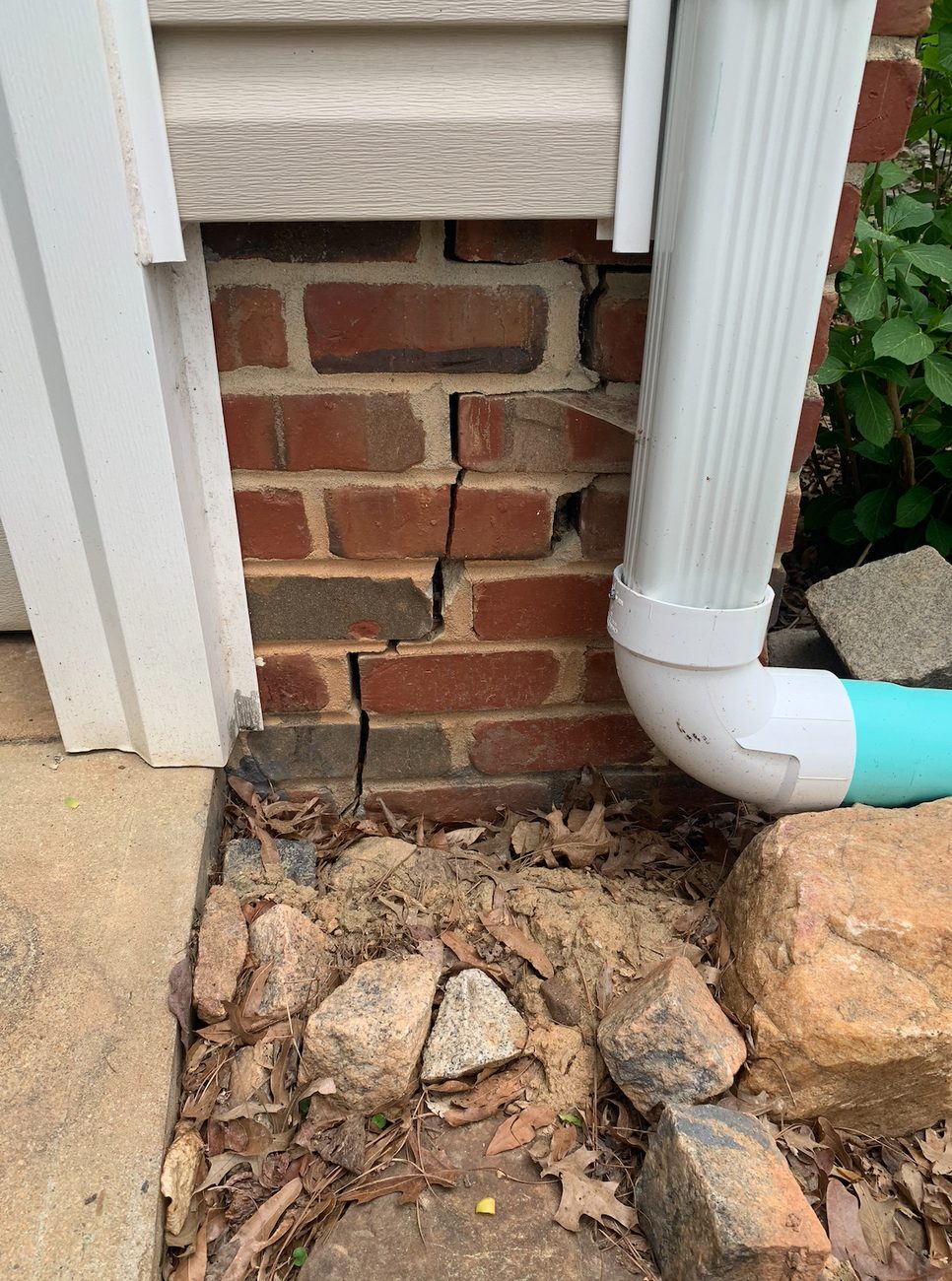
Learn moreOn a slope the rain does not have to land on your property to become your problem. It runs down from above, meets the first thing in its way, and stops there. Around the Tree Streets you see it as ground that stays soft on the uphill side for days, or water standing at the corner where a downspout lets go. That corner is where foundation damage starts on most homes. Fix the water and the damage stops.
A drain gives it somewhere better to be. A trench is cut on the side taking the water, lined so soil cannot work its way in, and a perforated pipe is bedded in washed stone. It is set at a depth and a fall that moves water away under its own weight, then let out well clear of the house. Downspouts get tied in rather than left to dump at the wall. Simple waterproofing prevents expensive foundation repair. Cheap solutions first, always.
Depth and distance from the wall are what decide whether it works, and they are also why the ones people dig themselves stop working after a couple of winters. Through Boones Creek, where the lots are wider, there is usually room to put it far enough out. Done properly this is often the cheapest thing that fixes a foundation problem. Concrete work and drainage together are what actually hold.
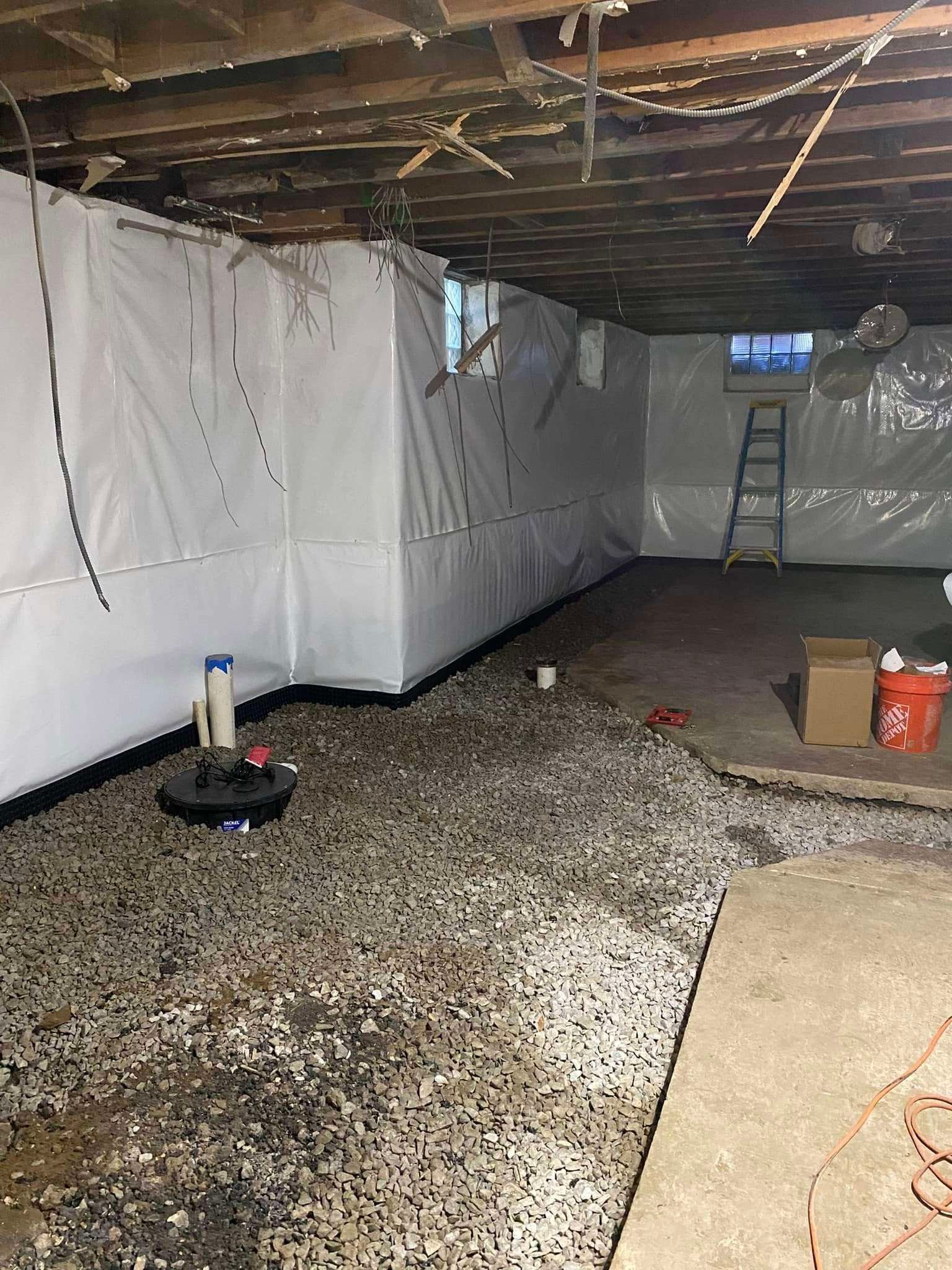
Stops ground moisture coming straight up into the floor, using heavy sheeting laid across the dirt and up the walls.
Learn moreA barrier covers the dirt and nothing more. It is the smaller version of encapsulation, and for a crawl space that is damp rather than wet it is often all that is wanted. The builder-grade sheeting most houses got is thin, torn by whoever has been down there since, and it rarely reaches the corners. Full crawl space repair reaches every corner of the home. Partial work leaves the damage in place.
New sheeting goes down heavier than what came out, overlapped and taped at the seams, and run up the walls far enough that moisture cannot come around the edge. Whatever has been left under there over the years gets cleared first. In the low crawl spaces common through the Tree Streets that clearing is most of the work. Johnson City foundation repair usually starts with clearing access. Then the real structural work begins.
It is worth saying plainly where the limit is. A barrier handles water coming out of the ground and nothing else. It does nothing about damp outside air through open vents, and nothing about water running in after a storm. If either of those is what you have, this is not the job you want, and around Boones Creek it often is not the job we end up quoting. We price the foundation repair the home needs, not the one on the brochure.
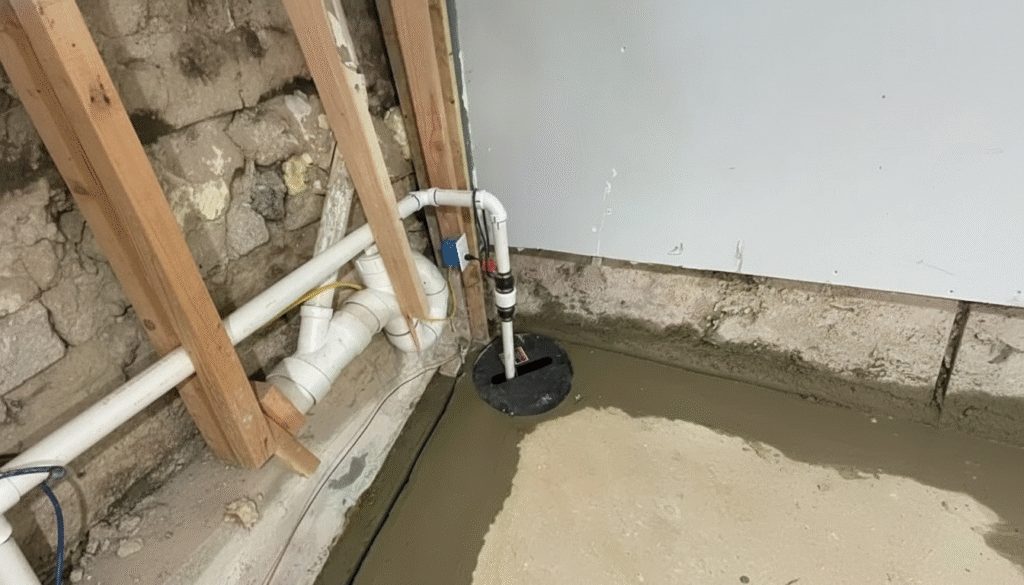
Gives the water that reaches your basement somewhere to go, and gets it back outside before it reaches the floor.
Learn moreThe drain collects the water and the pump is what actually gets rid of it, so an interior system is only ever as good as the pump sitting in it. It is also the part that fails, usually in the middle of the storm that needed it most, which is when people find out the float was stuck or the discharge line was frozen shut. Tennessee winters find that fault every year.
A proper install starts with the pit, sized and set below the floor so water reaches it instead of pooling on a Tree Streets basement slab. A cast-iron pump lasts longer than a plastic one and runs cooler. The discharge goes well away from the house, not to the corner where it can come straight back in. A check valve keeps what has been pumped out from running back down. Good waterproofing solutions handle both directions.
Battery backup is worth the money here, and through Boones Creek where storms take the power out it is not optional. The rain that fills a basement is often the same weather that drops the power, and a pump with no power is an ornament. We will also tell you if your existing pump is fine, because plenty of them are and replacing a working pump is not a repair. Real solutions deal with why the water arrives.
Queen Foundation Repair handles the two things that go wrong under a Johnson City house: ground that has moved beneath it, and water that keeps arriving off the high side. We are a leading provider of foundation work across the area, covering crawl space encapsulation, french drain installation, foundation repair and basement waterproofing.
Most of what we get called to started small. A damp patch at the bottom of a basement wall after a storm, a smell at the top of the cellar stairs, a floor that gave a little in one spot. Left alone those get dearer, because the water behind them keeps coming.
So we look before we quote. From the Tree Streets out to Boones Creek, someone comes out, goes over the property inside and underneath, and tells you plainly what is happening and what putting it right involves. The price is in writing before work starts. If it is cosmetic, we will say so rather than sell you a repair you do not need.
The houses we work on run from the old ones near the center on stone and block to the newer streets north of town. You can see everything Queen Foundation Repair does across Tennessee. Licensed and insured, the warranty moves with the house if you sell.
Get your free inspection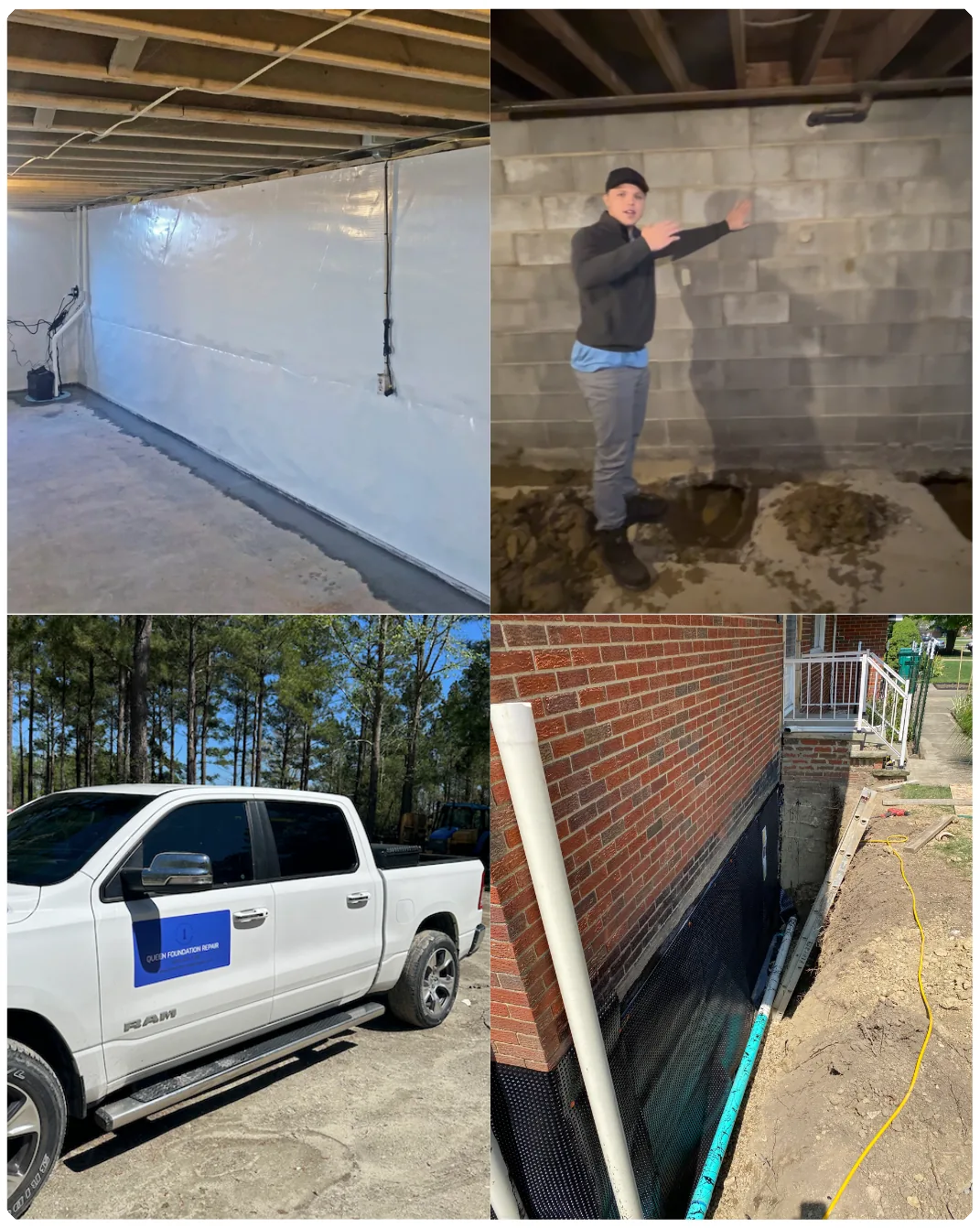
WHAT YOU GET
We pick up quickly and get out to the property fast, so you're not waiting weeks to learn what's wrong and what it costs.
No charge for us to come out, work out what's happening, and lay out what the fix involves. You know where you stand before deciding.
Licensed, with full liability and workers' comp cover, so the work meets code and your property is protected if anything goes wrong.
Every repair carries a written warranty that passes to the next owner, so it protects the value of the house if you sell.
A clear written price before anything starts. No vague ballpark, and nothing new appearing once a crew is already on the job.
From Tree Streets basements to the crawl spaces out through Boones Creek, we are under these houses every week and know what the slope does.
COMMON QUESTIONS
What it costs, whether insurance covers any of it, how long it lasts, and what you have to tell a buyer. Those are the questions people ask before they book anything. Prices are ranges because the number depends on the house.
Insurance
Almost never. Waterproofing is treated as maintenance and an improvement to the house, not as damage from a covered event. Seepage through a wall, hydrostatic pressure and poor drainage are all standard exclusions. The exception is a sudden plumbing failure, like a burst line, where the resulting damage is often covered even though the waterproofing itself is not.
Seepage on its own, no. Gradual water coming through a wall or up at the floor joint is excluded on a standard Tennessee policy. Two things change the answer: a sewer or drain backup endorsement, if you bought one, and sudden accidental discharge from a plumbing failure. Check your declarations page for the backup rider rather than assuming.
Do not guess at a cause or a timeline on the phone. Saying it has been happening for years, or naming drainage as the reason, can close a claim before an adjuster ever looks. Describe what you can see and when you noticed it, and let the adjuster and any report work out why.
Water in the Basement
Common here, but not normal and not something to live with. Johnson City sits below a lot of high ground, so a hard rain arrives fast and with pressure behind it. If water shows up within hours of a storm and dries out a few days later, that is groundwater finding a route in, and it will keep using that route.
Yes, and for most houses it is the right call. An interior drain goes in around the perimeter below the floor and runs to a pump, which removes water that has already got through the wall. It is less disruptive and costs a good deal less than digging outside. What it does not do is stop water reaching the wall in the first place.
Not with paint. Sealants and coatings handle surface damp and will not hold back real pressure, which is why they keep failing and getting redone. Block is hollow, so water that gets in travels inside the wall and comes out lower down. The fix is either an interior drain that catches it or exterior work that stops it arriving.
Cost
Most jobs land between $2,500 and $12,000. A few piers under one settled corner sits at the low end, around $1,000 to $2,500 per pier. Underpinning a whole house goes past $25,000. What yours costs depends on how many supports it needs and how easy they are to reach, which is what the free visit works out.
Usually $5,000 to $12,000, or about $5 to $9 per square foot, so the size of the crawl space sets most of the price. A dehumidifier adds $1,500 to $3,500. If there is standing water to drain first, or old sheeting and debris to clear out, both add to the day count and the price.
Cheapest and correct are sometimes the same thing and sometimes not. Extending downspouts and regrading the ground away from the house costs a few hundred dollars and genuinely solves some problems. Interior drain and pump runs $5,000 to $15,000. Paint-on sealers are the cheapest and the one we would talk you out of.
How Long It Lasts
An interior drain and pump system should run for decades, with the pump itself being the part that wears out and wants replacing every seven to ten years. Exterior membrane work lasts longer still because nothing mechanical is involved. Coatings and sealers are the short answer, often failing within a few years.
The liner itself should last fifteen to twenty years or more if it was heavy enough and taped properly. What shortens it is traffic, so anyone working under the house afterwards needs to know it is there. A dehumidifier running alongside it has its own lifespan, usually around eight to twelve years.
For nearly all of it, yes. Interior drain work is noisy and dusty for a day or two while the floor edge is cut, and crawl space work happens entirely underneath you. Piering is done from outside. The only jobs that get disruptive enough to consider moving out are full underpinning on a small house.
Cracks & Severity
It depends far more on direction than on width. A crack running level along a mortar course means the wall is being pushed from outside, and that one matters. A vertical crack from settling that has not changed in years is usually cosmetic. What we measure is whether it has moved, not how alarming it looks.
Inside works when the crack has stopped moving. Resin injected through the full thickness of the wall reaches the outside face and seals it properly. Outside work is for when water is actively coming through or the wall needs treating across its whole face. A crack that is still opening needs the movement stopped first either way.
Anything that changes how the house carries its weight: piers or underpinning, replacing a wall, bracing or straightening a bowing wall, lifting a settled section. Crack injection, a vapor barrier, a drain or a sump pump are not major, whatever they cost. The distinction matters mostly for permits and for disclosure when you sell.
Selling & Choosing
Yes, if you know about them. Tennessee is a disclosure state under the Residential Property Disclosure Act, and the standard form asks about the foundation specifically. The standard is what you actually know; you are not required to go investigating. A completed repair with a transferable warranty is a much easier disclosure than an open problem.
Cosmetic things a buyer will redo anyway. What is worth fixing is anything structural or water related, because those come up in inspection and get negotiated at a number far above what the repair costs. Getting it done, documented and warranted beats taking the deduction nearly every time.
Ask what they measured and make them show you. Get the diagnosis in writing before any price, get the price itemized, and check the warranty transfers to the next owner. Be wary of anyone who quotes without going underneath, and of a price that only holds if you sign today.
WHERE WE WORK
We cover Johnson City and the rest of Washington County, and the crews run out through Carter and Sullivan counties as far as Elizabethton, Jonesborough and Gray. Most weeks the work is inside the city, where the older streets have basements and the newer ones sit over crawl spaces. The neighborhoods and ZIP codes we get called to most are below.
ZIP CODES WE COVER
Ready to Get Started?
No obligation, fast and easy.
We appreciate you reaching out.
One of our team members will be with you shortly.