
French drain systems move groundwater away from your basement walls before flooding happens. Clay soil in Cleveland gets bigger when it’s wet. This pushes water toward your foundation with enough force to crack walls and leak through basement floors. Good outdoor drainage stops pressure from building up and prevents flooding.
We check your yard’s slope, where your downspouts point, and how wet your soil gets. This helps us design systems that fix your property’s water problems. Our licensed contractors dig trenches, fix the grade, and restore your yard to protect your foundation from water damage all year. Visit page about other drainage services
How does French drain installation work in Cleveland OH?
In Cleveland OH, French drain installation protects homes from water getting in. Heavy spring rain and clay soil that gets bigger when wet cause these problems.
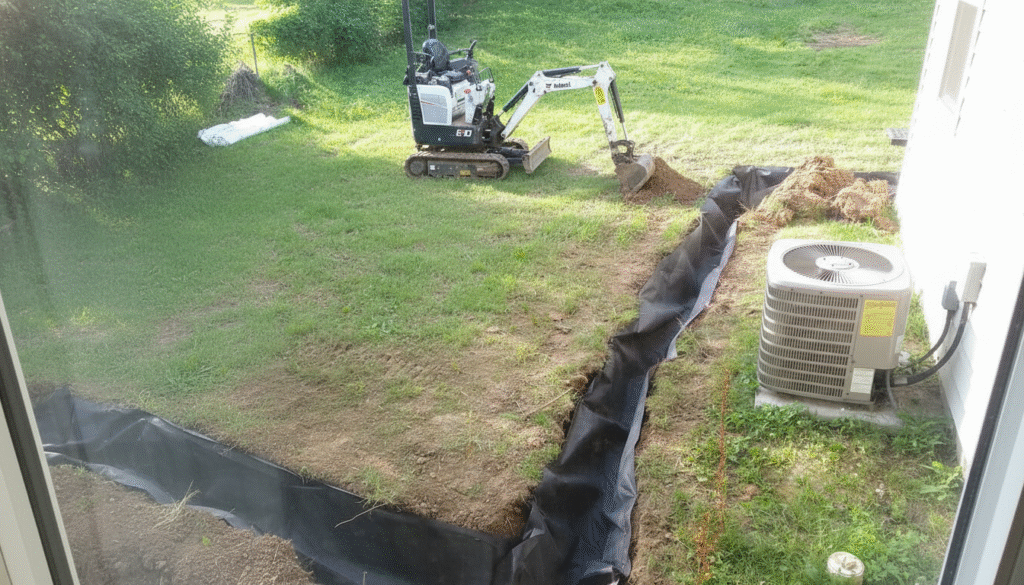
- Contractor digs a trench 18–24 inches deep along your foundation or problem area
- Gravel base goes in first to help water flow toward the drain pipe
- Pipe with holes goes on top of gravel, wrapped in fabric to keep clay from clogging it
- More gravel covers the pipe to make a path for water to flow
- A discharge line takes water away from your foundation to a safe spot
- Topsoil and grass go back on top after filling the trench
French drains stop basement flooding and foundation damage by catching water before it reaches your walls. We put systems around the outside of your foundation, where downspouts connect, and in yards with bad drainage. Free checks are available within 48 hours. We give you written prices before we start work.
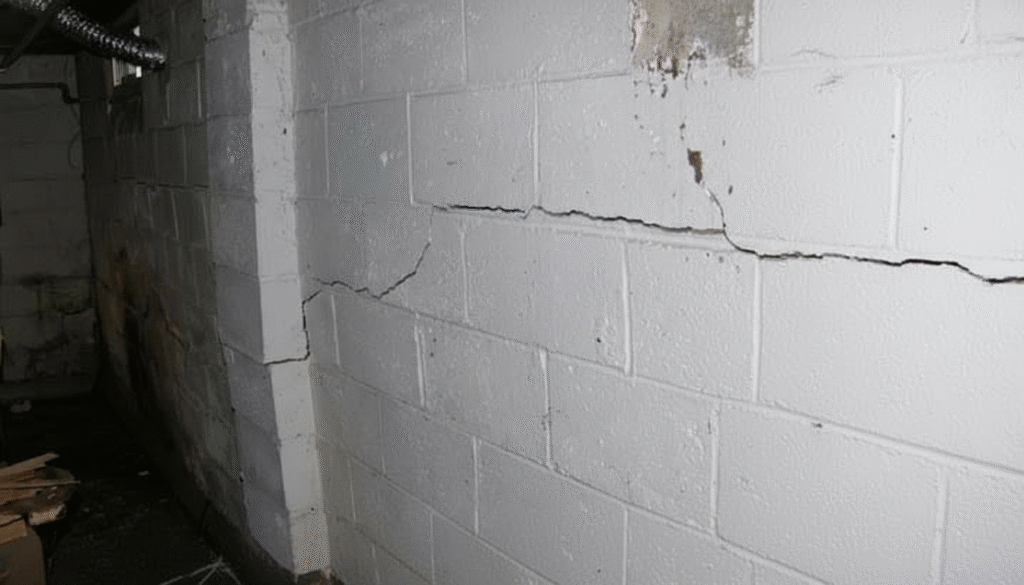
Clay Soil in Cleveland Creates Constant Pressure Against Basement Walls
Homeowners in areas like The Flats and Woodhill Homes often see wetness or wall cracks after rain. Cleveland’s heavy clay holds water longer than other soil types. This creates pressure that pushes against your foundation walls. The pressure doesn’t stop when rain ends. Wet clay keeps pushing until the water goes somewhere else.
French drains get rid of this pressure by catching water before it touches foundation walls. We size drainage systems to handle steady flow instead of quick runoff. Clay holds water much longer than sandy or loose soil. The pipe with holes collects water from wet soil. It carries water away from your foundation before pressure builds high enough to cause damage.
Without outdoor drainage, that constant pressure forces water through foundation cracks and floor gaps. Clay soil gets bigger during wet times. This makes cracks wider and creates new ones in basement walls. Our French drain systems stop this by removing the water that creates pressure.
Exterior French Drains Work Better Than Indoor Solutions for Long-Term Protection
Residents in Detroit–Shoreway and South Collinwood often compare drainage options after sump pumps or indoor waterproofing fails. Outdoor French drains stop water before it reaches your foundation walls. Indoor systems only handle water that already got into your basement. Soil washing away and water pressure keep damaging your foundation even when the basement stays dry.
Spring thaw in Cleveland creates very wet soil that’s too much for indoor-only systems. When groundwater surrounds your foundation, indoor drains and sump pumps run all the time trying to keep up. Outdoor French drains catch that water in your yard. They carry it away before it reaches basement walls. This reduces strain on indoor drainage and stops soil from washing out under your footings.
We install outdoor systems that work with your existing sump pump instead of replacing it. The French drain handles most of the groundwater. Your pump only runs during big storms instead of turning on and off every few minutes. This makes equipment last longer. It protects your foundation from soil movement that causes settling and cracking over time.
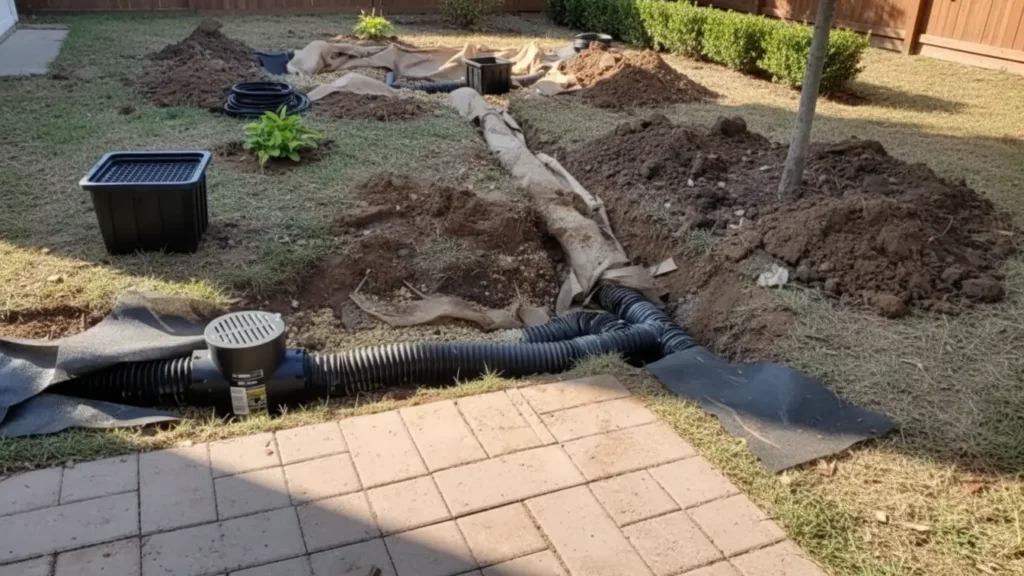
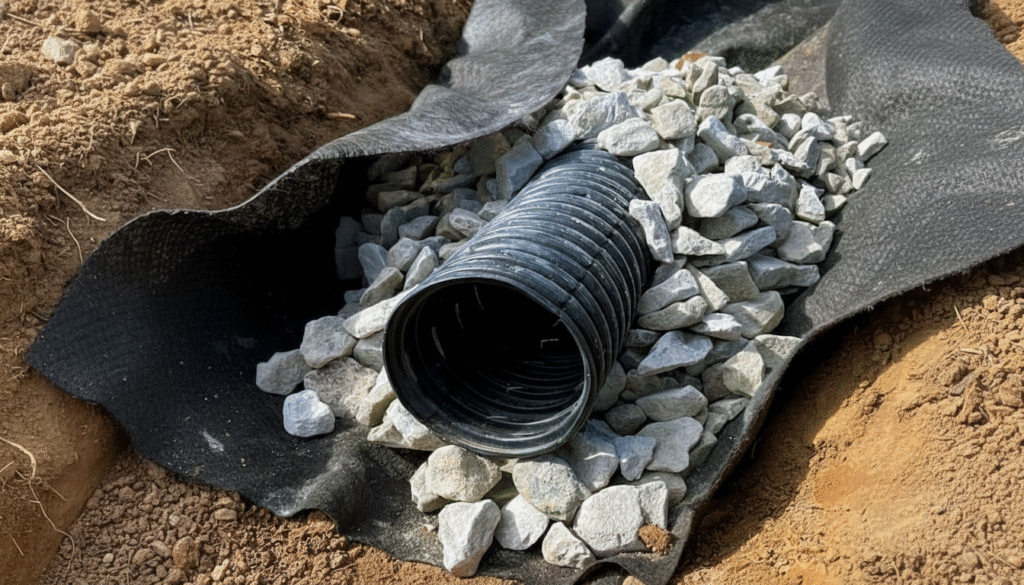
Right Gravel Choice Prevents Drain Failure in Heavy Clay
Property owners in Kamm’s Corners and Industrial Valley sometimes need to replace old drainage that clogged or broke within a few years. The problem usually starts with wrong gravel size or missing fabric. Clay bits get into drain pipe holes and block water flow. Your drainage system becomes an expensive buried pipe that doesn’t work.
We use washed stone and fabric to keep clay bits from blocking the pipe with holes. The fabric wraps around the pipe before gravel goes in. This makes a barrier that lets water through but stops soil. Washed stone means no tiny bits or clay mixed in the rocks—just clean stone that keeps open space for water to move.
Drainage contractors use ¾-inch crushed stone instead of pea gravel for French drains. Crushed stone has sharp edges that lock together. It doesn’t get pushed down tight under soil pressure. Pea gravel is round and smooth. It gets packed down over time and loses the air space that water needs to flow through. Our gravel choice keeps water flowing for decades instead of failing after the first few wet seasons.
Downspout Connections Stop Roof Water From Soaking Foundation Areas
Homeowners in Waterloo Arts District and Buckeye–Shaker often have gutters that drain within 3 feet of basement walls. That bunched-up roof water soaks the soil right against your foundation. This creates the exact problem French drains fix. A typical roof dumps a lot of water during heavy storms. All that water ends up in a small spot next to your basement.
Tie-in lines carry bunched-up roof water straight to French drain exits. We connect your downspouts to special drain lines that join the French drain around your foundation. This stops local flooding around your foundation. It keeps roof water from pooling near basement walls. It stops ice dams from forming during winter freeze-thaw cycles.
Cleveland gets about 37-40 inches of rain and snow each year. This creates a lot of roof water that must go away from your foundation. Without good downspout connections, you fight two separate water sources. You have groundwater from wet soil and roof water from every storm. Our combined approach handles both through one exit point. This keeps your foundation area dry all year.
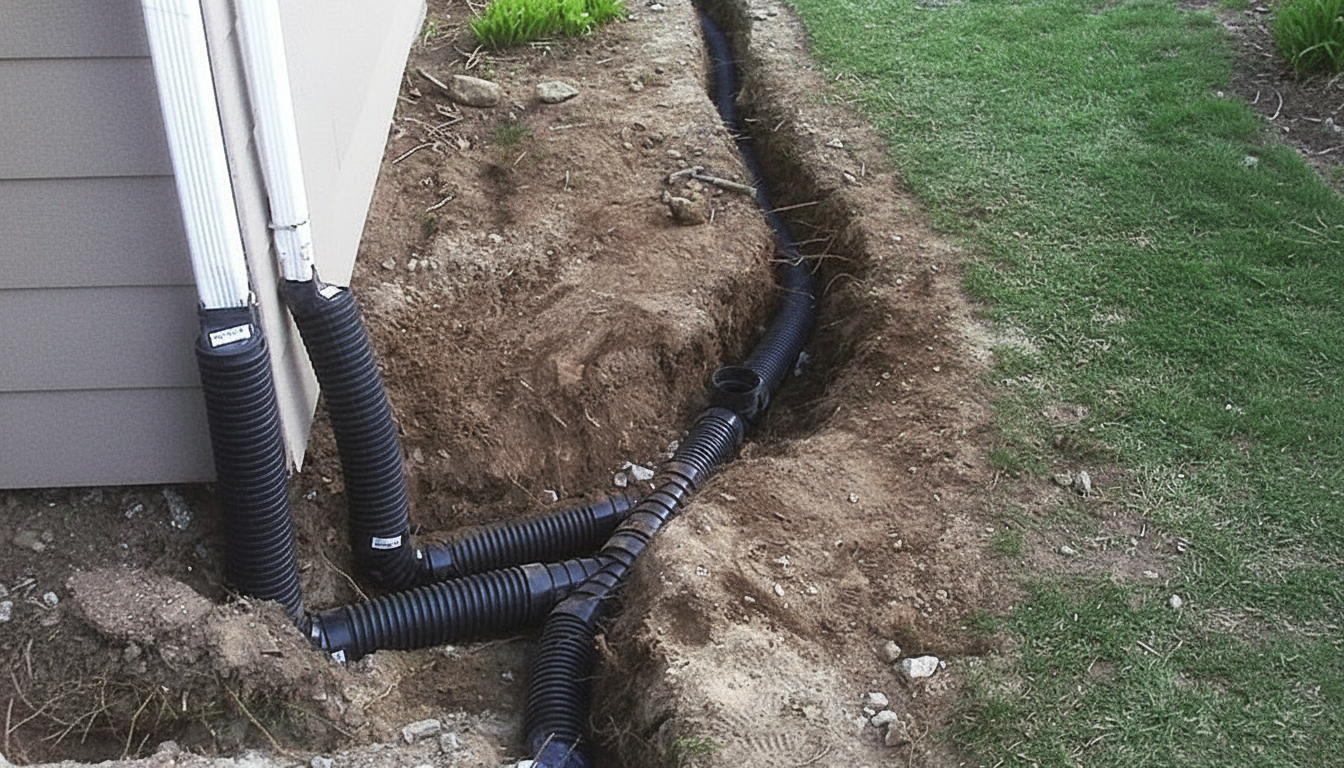
Installation Timing in Cleveland Depends on Soil and Ground Frost
Residents in Cudell and Irishtown Bend schedule drainage work between wet seasons or along with foundation repair jobs. Ground conditions affect how hard digging is throughout the year. Contractors plan installations around how wet the soil is and weather to make sure trenches cut right and pack down correctly.
Frozen ground from December through February stops all drainage work. Contractors can’t dig through frozen layers. Pipe bedding won’t pack down right in frozen soil. Spring installations work when your property has active water problems that can’t wait. Wet conditions may make projects take longer and need more yard fixing afterward.
Summer and fall usually give better conditions for digging projects. The ground is dry enough to dig clean trenches but not frozen. You have time for soil to settle before the next wet season starts. We check your specific drainage needs and property conditions. This helps us suggest the best installation time for your property.
Water Exit Points Must Send Water Away From Neighbors' Properties
Homeowners in St. Clair–Superior and West Park often have small yards or shared drainage areas. We check yard slope and city rules to make sure water exits safely without causing problems. Your French drain needs somewhere for water to go. That exit point must be on your property or in an approved storm system—not your neighbor’s yard.
Local stormwater rules usually don’t allow sending drainage onto sidewalks or next-door lots. Contractors get fined for wrong drainage exits. You could face lawsuits if your drainage system floods neighbors’ properties. We plan exit routes during the first property check. We look for natural slope toward streets, alleys, or approved drainage areas before digging starts.
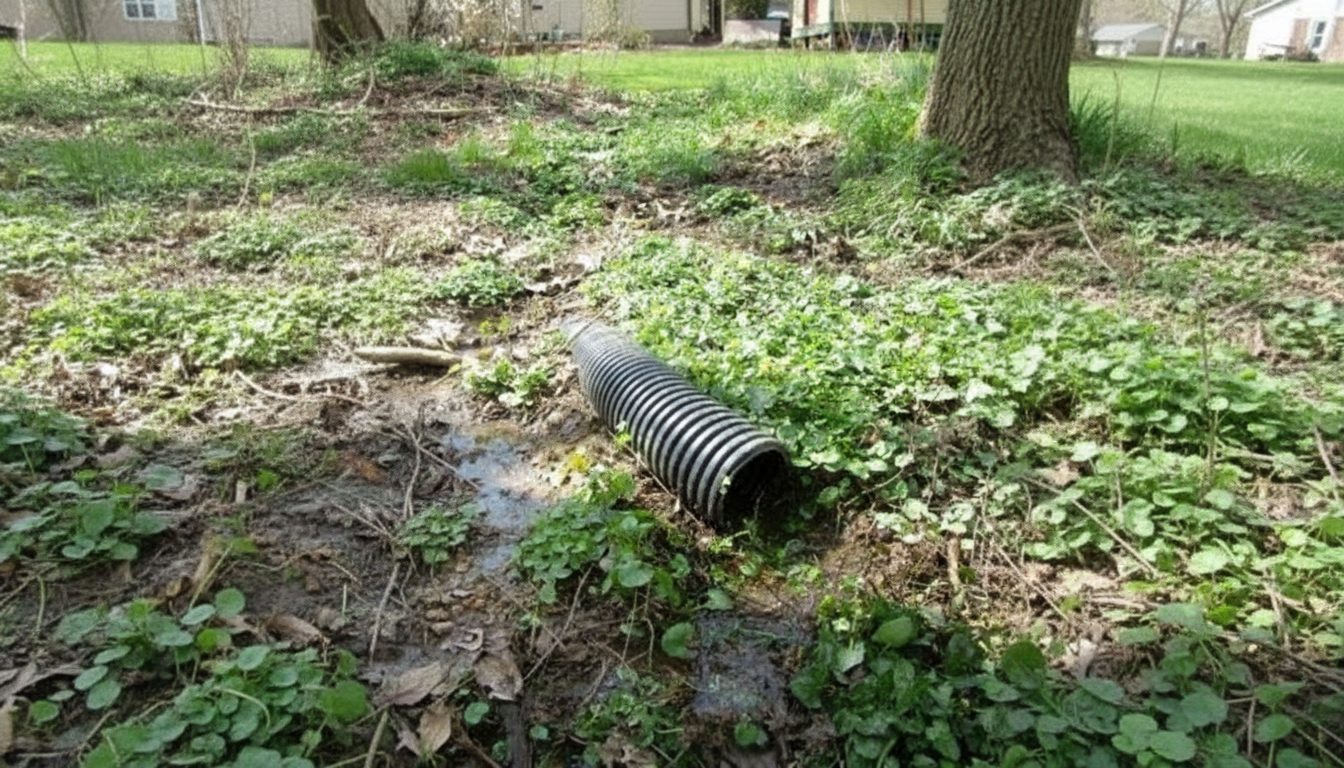
Daylight drains work best when your property slopes away from the foundation. The exit pipe comes out above ground at the lowest yard point. Water flows naturally away from all buildings. When your lot is flat or slopes toward the house, we send the French drain to your sump basin instead. The sump pump lifts water high enough to send it through a special line to the street or storm sewer.
What Our Customers Say
Trustindex verifies that the original source of the review is Google. Excellent work from Queen Foundation Repair! From beginning to end, the crew operated with efficiency and professionalism. Carlos and his team completed the foundation repair project in less than four days, and even our neighbors have complimented the immediate transformation. I highly recommend them for foundation work, foundation repair, and water restoration.Trustindex verifies that the original source of the review is Google. I had a persistent rat problem in my crawlspace. After years of dealing with exterminators, I turned to QFR, and they solved the issue. Not only did they address the rats, but they also fixed some hidden plumbing leaks. Their crew worked quickly and efficiently, performing exceptional water damage, water restoration, and crawl space encapsulation services.Trustindex verifies that the original source of the review is Google. Hi, I had some cracks in my foundation after purchasing my new home and was concerned about them. Queen Foundation Repair made everything a very easy and stress-free process. They came out and repaired these cracks within a day, and the crew, including Dario and Sharon, was very knowledgeable. Thanks very much!Trustindex verifies that the original source of the review is Google. I cannot say enough about these guys—they were a pleasure to work with. Sharon, who was extremely knowledgeable, handled the scheduling, and Carlos and Dario did the assessment and repair of the foundation issues we were having. They answered every question we had, showed up exactly when they said they would, and back all of their work with a lifetime guarantee. Your search for a foundation repair company is over!Trustindex verifies that the original source of the review is Google. I’m very pleased with the results. I can clearly see the excellent work Jason's crew did on our crawl space. His team was friendly and left the property clean. This is the first time I’ve posted a review because I think people should know about them. Call them when you need crawl space repairs in Albany NY!Trustindex verifies that the original source of the review is Google. The customer care provided by Queen Foundation repair was exceptional. From the first contact to the final walkthrough, they were attentive, informative, and very responsive to my questions and concerns. They took the time to explain the encapsulation process and how it would benefit my home. Their crew was respectful and ensured that the work was completed to a high standard. It’s clear that they value their customers and take pride in their work. Our crawl space is now dry, clean, and well-insulated. Highly recommended!Trustindex verifies that the original source of the review is Google. I'm absolutely delighted with the exceptional assessment service provided by Queen Foundation Repair! When I noticed sloping floors in our bungalow, I knew I needed expert help. Scheduling an assessment was a breeze via email, and John arrived promptly as scheduled. His warm and personable demeanor put me at ease, and his expertise shone through as he quickly identified the root cause of our issue. I was thoroughly impressed by his professionalism and knowledge. Queen Foundation Repair truly exceeded my expectations, and I highly recommend their services to anyone concerned about their home's foundation!Trustindex verifies that the original source of the review is Google. I reached out to this company about an issue they couldn’t handle, but they were very responsive. They did a thorough inspection and gave recommendations related to their specialty. They even provided a reference number for another company that could help with our issue. They’re great for foundation repair work, and I’d definitely recommend them.Trustindex verifies that the original source of the review is Google. Germao and his crew installed helical piers and expertly stabilized our foundation. The crew was professional and responsive to our needs. I'm happy with their foundation repair service.
Ready to Work With A Foundation Company Who Puts Your Home First?
How long does French drain installation take in Cleveland OH?
How long it takes depends on trench length, soil conditions, and whether equipment can get to your property easily. Simple installations along one foundation wall may finish quickly. Full systems around your whole foundation with multiple exit points take longer.
Will French drain installation damage my landscaping?
Contractors dig narrow trenches 12–18 inches wide. We put sod or plants back after filling the trench. We pack down soil in layers as we fill to reduce surface sinking. Most lawn damage from equipment heals within one growing season.
Do French drains work in winter in Cleveland?
Systems installed correctly work all year. French drains usually go 18-24 inches deep. This is above Cleveland’s 36-42 inch frost line. The systems keep working because moving water doesn’t freeze—like how a dripping faucet stops pipes from freezing. Exit points may need ice clearing sometimes during long cold periods. But water keeps flowing underground.
Can French drains connect to existing sump pump systems?
Yes, we send outdoor drains to sump basins when daylight exit isn’t possible. This reduces how often your pump runs. It makes equipment last longer by handling groundwater before it enters your basement. The pump only turns on during heavy storms.
How deep should French drains be installed in Cleveland?
Normal depth is 18–24 inches. This catches groundwater before it reaches foundation footings. This depth is above Cleveland’s frost line of 36-42 inches. But the system works all year because water that keeps moving doesn’t freeze in the pipe.
What maintenance do French drains require after installation?
Check exit points every year to stop blockages from debris or ice. Professional inspection every 3-5 years checks fabric and finds any dirt buildup. This matters especially in areas with heavy clay soil. Systems installed right with correct gravel and fabric usually need very little work when maintained properly.
