Crawl spaces in Cleveland trap water from spring storms and summer humidity. Standing water hurts wood beams, invites mold, and pulls cold air into your home. Encapsulation seals crawl spaces with plastic barriers and drains to stop water for good. Homeowners in Edgewater and Brooklyn Centre call us for inspections after noticing musty smells or bouncy floors. Visit page about other moisture services
How Crawl Space Encapsulation Stops Moisture in Cleveland Homes
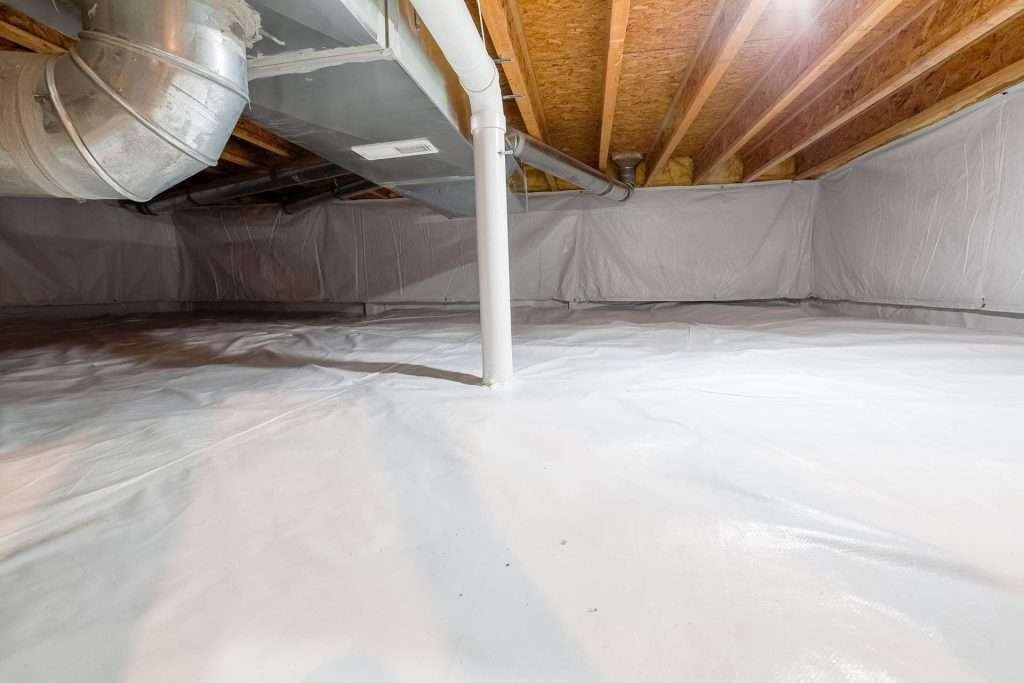
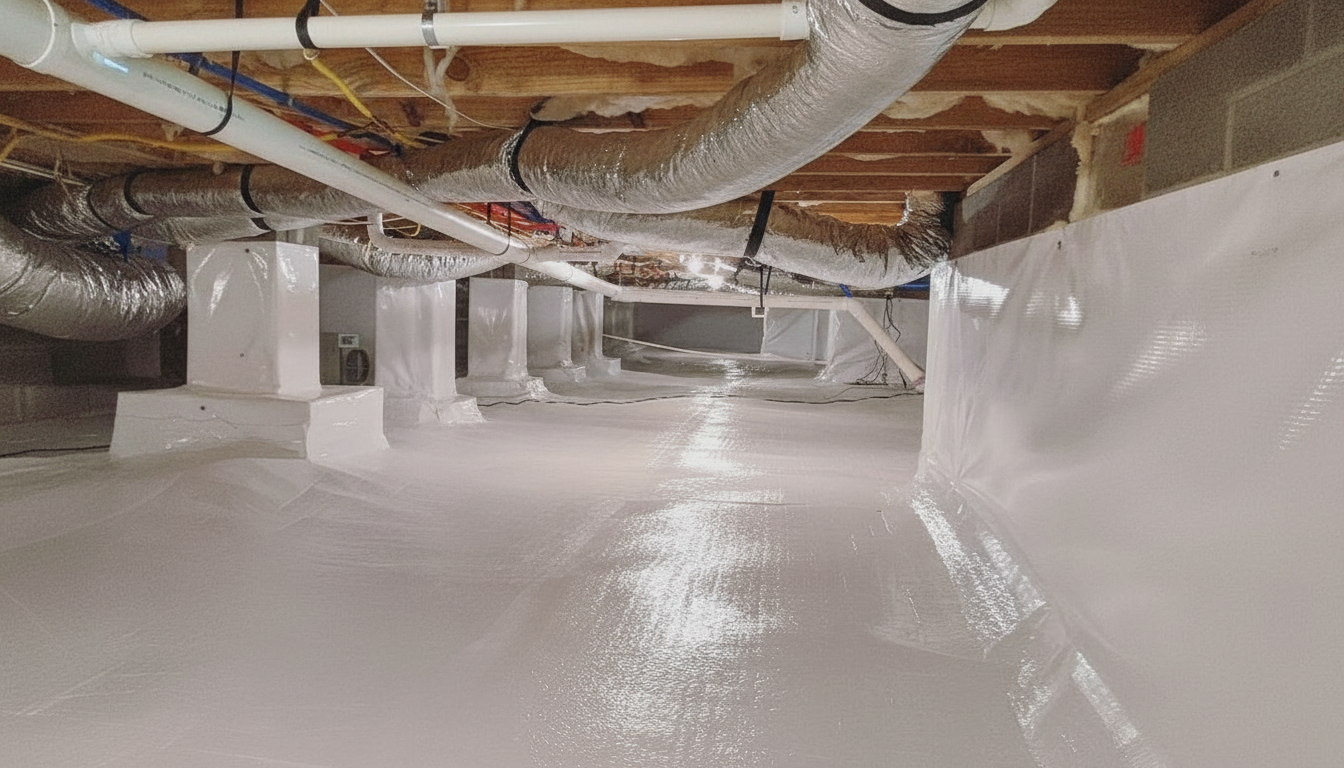
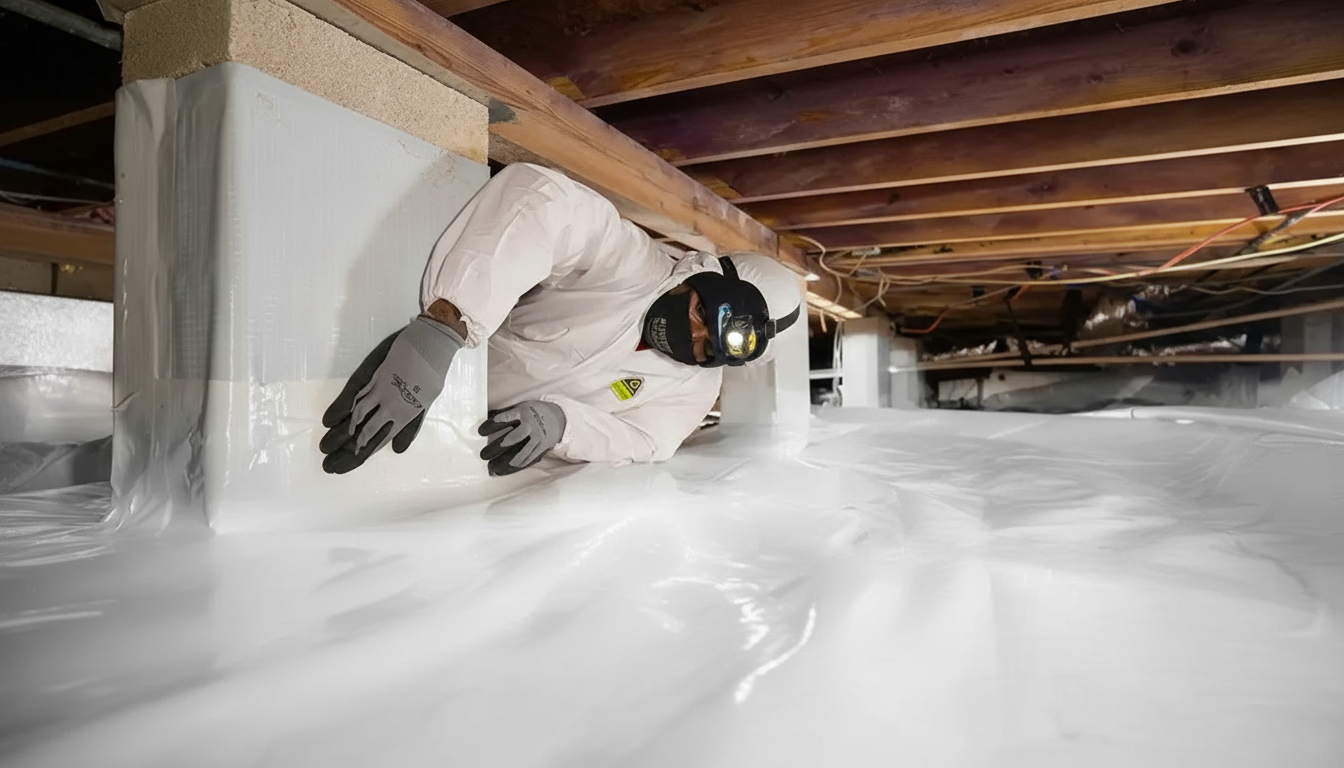
Crawl space encapsulation seals the area under your home with thick plastic barriers attached to walls and floors. Cleveland contractors add drains to move water away from your foundation. This stops water from coming up through soil and prevents mold on wood beams.
- 10–20 mil thick plastic liner covers dirt floors and foundation walls
- Drains around the edges move groundwater to sump pumps
- Sealed vents and dehumidifiers keep humidity below 55%
Crawl space encapsulation seals the area under your home to block ground water all year.
What this page covers:
- Complete crawl space sealing with plastic barriers
- Drain installation and dehumidifier systems
- Mold prevention and insulation upgrades
What to expect:
- Most Cleveland homes schedule inspections within 48 hours
- Encapsulation work finishes in 2–4 days depending on crawl space size
What we do:
- Our waterproofing service protects your foundation from ground water that causes wood rot and settling
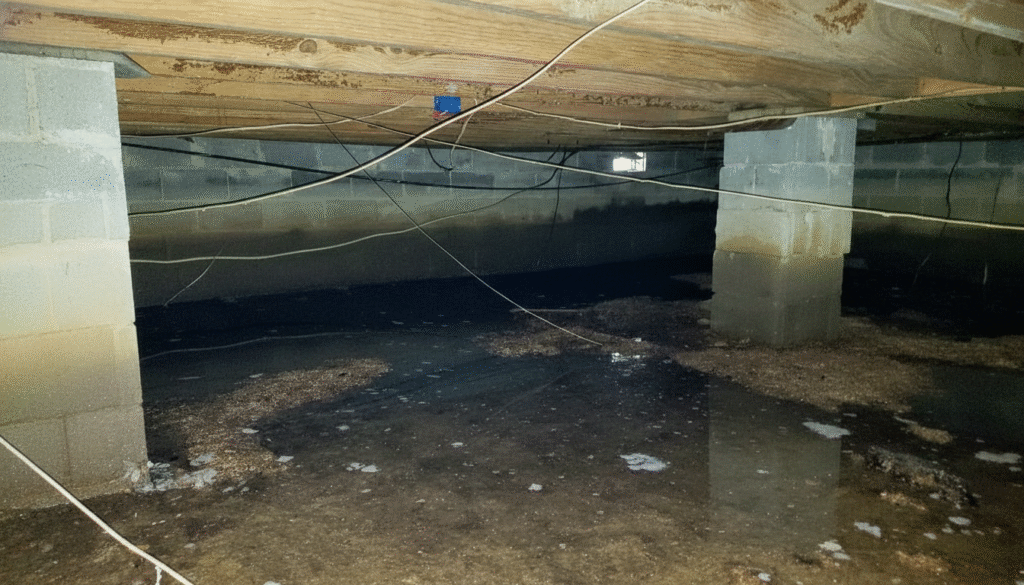
Crawl Space Moisture Causes Wood Beam Rot and Floor Sagging
Homeowners in Buckeye–Shaker notice bouncy floors or cracks in walls when crawl space water weakens wood beams. Standing water appears after heavy rain or snowmelt. Musty smells drift into living spaces through floor gaps.
Cleveland-area soil has clay that holds water after storms. Water pushes up into unsealed crawl spaces through foundation walls and dirt floors. Water vapor soaks into floor joists and support beams over time.
Encapsulation removes water before wood beams weaken and floors need costly repairs. Sealed plastic barriers stop ground water at the source. You protect the structures that hold up your entire home.
Vapor Barriers Block Ground Moisture from Reaching Your Foundation
Homeowners research whether plastic sheeting alone solves crawl space dampness. Properties in The Flats with high water tables need permanent water control. Buyers review mold inspection findings before closing on Cleveland homes.
Professional-grade liners block soil water from getting into crawl spaces. Heavy-duty plastic barriers protect insulation and HVAC ducts from water damage. We attach liners to foundation walls and seal all edges to create a complete water barrier.
Older Cleveland homes built before 1970 often lack crawl space liners. Dirt floors stay exposed to ground water all year. Encapsulation adds the protection these foundations never had.

Encapsulation Work Finishes in 2–4 Days for Most Cleveland Homes
Families in Cudell plan work around school schedules or remote work setups. Homeowners coordinate encapsulation with radon testing or pest control. Real estate transactions require finished work before closing deadlines.
Fast completion means your crawl space stays sealed before the next rain. We work quickly with no long disruption to daily routines. Most projects finish within one work week depending on crawl space size and drain needs.
October brings Cleveland’s heaviest rainfall. Storms total over 1.8 inches on average during the wettest days. Encapsulation becomes urgent for homes with active water problems or visible mold. Sealing your crawl space now prevents damage during the next storm.
Sealed Crawl Spaces Lower Heating Costs and Improve Indoor Air Quality
Homeowners in South Collinwood deal with high winter gas bills from cold floors. Families with allergy or asthma concerns find symptoms worsen from mold spores. Properties prepare for energy upgrades or resale inspections.
Encapsulation stops cold air from coming through floors. You cut heating costs by 10–15% while getting rid of mold smells. Sealed barriers prevent spores from drifting into living areas where you breathe them daily.
Cleveland winters bring long periods near freezing. Temperatures drop to 0°F or below on just a few nights per year. Cold air pulls through unsealed crawl space vents into living areas above. Encapsulation blocks this path and keeps warm air inside your home.
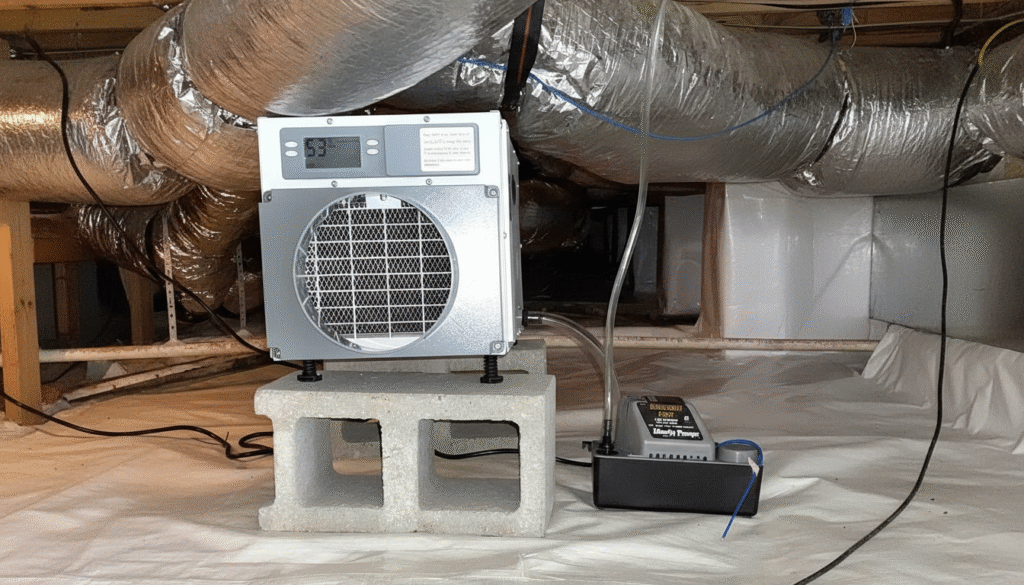
Dehumidifiers Keep Encapsulated Crawl Spaces Below 55% Humidity
Homeowners in Waterloo Arts District check humidity levels after recent encapsulation. Properties with finished basements watch for water moving upward. Landlords maintain rental units with crawl space access.
Automatic dehumidifiers remove leftover water trapped during installation. Units prevent condensation on new plastic barriers. You maintain dry conditions all year without manual adjustments.
Cleveland’s summer months see average humidity around 74%. Mechanical dehumidifiers stay necessary even in fully sealed crawl spaces with closed vents. Outside water cannot enter, but inside humidity needs active control.
Annual Inspections Catch Small Leaks Before Barriers Fail
Homeowners in West Park check encapsulation systems installed 3–5 years ago. Properties with sump pumps need seasonal testing before storm seasons. Buyers inherit sealed crawl spaces from previous owners.
Quick inspections find torn liners or clogged drains early. You prevent water damage that requires full re-encapsulation. We check edges, drain function, and dehumidifier performance during each visit.
Cleveland’s Industrial Valley neighborhoods experience settling from old fill soil. Ground movement sometimes shifts plastic barriers away from foundation walls over time. Regular checks catch these issues before water enters your crawl space again.
What Our Customers Say
Trustindex verifies that the original source of the review is Google. Excellent work from Queen Foundation Repair! From beginning to end, the crew operated with efficiency and professionalism. Carlos and his team completed the foundation repair project in less than four days, and even our neighbors have complimented the immediate transformation. I highly recommend them for foundation work, foundation repair, and water restoration.Trustindex verifies that the original source of the review is Google. I had a persistent rat problem in my crawlspace. After years of dealing with exterminators, I turned to QFR, and they solved the issue. Not only did they address the rats, but they also fixed some hidden plumbing leaks. Their crew worked quickly and efficiently, performing exceptional water damage, water restoration, and crawl space encapsulation services.Trustindex verifies that the original source of the review is Google. Hi, I had some cracks in my foundation after purchasing my new home and was concerned about them. Queen Foundation Repair made everything a very easy and stress-free process. They came out and repaired these cracks within a day, and the crew, including Dario and Sharon, was very knowledgeable. Thanks very much!Trustindex verifies that the original source of the review is Google. I cannot say enough about these guys—they were a pleasure to work with. Sharon, who was extremely knowledgeable, handled the scheduling, and Carlos and Dario did the assessment and repair of the foundation issues we were having. They answered every question we had, showed up exactly when they said they would, and back all of their work with a lifetime guarantee. Your search for a foundation repair company is over!Trustindex verifies that the original source of the review is Google. I’m very pleased with the results. I can clearly see the excellent work Jason's crew did on our crawl space. His team was friendly and left the property clean. This is the first time I’ve posted a review because I think people should know about them. Call them when you need crawl space repairs in Albany NY!Trustindex verifies that the original source of the review is Google. The customer care provided by Queen Foundation repair was exceptional. From the first contact to the final walkthrough, they were attentive, informative, and very responsive to my questions and concerns. They took the time to explain the encapsulation process and how it would benefit my home. Their crew was respectful and ensured that the work was completed to a high standard. It’s clear that they value their customers and take pride in their work. Our crawl space is now dry, clean, and well-insulated. Highly recommended!Trustindex verifies that the original source of the review is Google. I'm absolutely delighted with the exceptional assessment service provided by Queen Foundation Repair! When I noticed sloping floors in our bungalow, I knew I needed expert help. Scheduling an assessment was a breeze via email, and John arrived promptly as scheduled. His warm and personable demeanor put me at ease, and his expertise shone through as he quickly identified the root cause of our issue. I was thoroughly impressed by his professionalism and knowledge. Queen Foundation Repair truly exceeded my expectations, and I highly recommend their services to anyone concerned about their home's foundation!Trustindex verifies that the original source of the review is Google. I reached out to this company about an issue they couldn’t handle, but they were very responsive. They did a thorough inspection and gave recommendations related to their specialty. They even provided a reference number for another company that could help with our issue. They’re great for foundation repair work, and I’d definitely recommend them.Trustindex verifies that the original source of the review is Google. Germao and his crew installed helical piers and expertly stabilized our foundation. The crew was professional and responsive to our needs. I'm happy with their foundation repair service.
Ready to Work With A Foundation Company Who Puts Your Home First?
How long does crawl space encapsulation last in Cleveland homes?
Professional installations last 15–25 years with annual inspections to check liner edges and drain function.
Can you encapsulate a crawl space with standing water in Cleveland?
Contractors pump out water first, then install drains before sealing with plastic barriers.
Does encapsulation stop musty smells from crawl spaces in Cleveland OH?
Yes—sealing water sources gets rid of mold growth that causes smells drifting into living areas.
When should Cleveland homeowners schedule crawl space encapsulation?
Late summer and early fall offer dry conditions for installation before winter water arrives.
Do encapsulated crawl spaces need vents open or closed in Cleveland?
Contractors seal all vents permanently to prevent outside humidity from entering the sealed crawl space.
Can crawl space encapsulation fix sagging floors in Cleveland homes?
Encapsulation stops more water damage, but existing structural issues may require separate beam repair or joist repair.
